3 steps to $50M. Most quit at #1
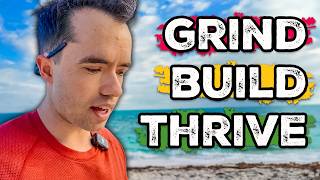
In this monologue, entrepreneur Mike Andes outlines a three‑stage framework that he observes in successful businesses: the Grind phase (the painful first 3‑5 years of cash‑flow strain and extreme personal sacrifice), the Build phase (a period of reinvestment, systematization, and team growth that can last 5‑20 years and scale a company to multi‑million‑dollar valuations), and the Thrive phase (where capital, demand, and a seasoned team enable high‑margin growth, strategic deals, and philanthropy). He illustrates each stage with personal case studies—starting Augusta Lawn Care at age 11, franchising it to 211 locations worldwide, and building software ventures like Copilot CRM and Homeworks—detailing the hardships (workplace accidents, living in a studio, cash‑burn on legal and command‑center costs) and the strategic decisions that moved the businesses from grind to build. Andes warns against the common mistake of trying to become passive too early, emphasizing that true scalability requires a solid foundation built during the grind and build phases. The talk targets young entrepreneurs (25‑35) and stresses patience, relentless reinvestment, and the long‑term value of a strong operational base.
Chapters
So last year, Augusta Lawn care was ranked in the Landscape 100, so the top 100 landscaping and lawn care companies in the nation. And I wanted to go over the three different stages that I see owners consistently go through on their way to building a successful business. And so whether it be the media team and media companies I built, or the franchise or the software side, I, I see it consistently falling into these same three categories. And so I feel like the first three to five years of most entrepreneur's journey is the grind phase. The next, usually five to 20 years, is the build phase. And that really is depending on how big of goals is someone actually trying to achieve. And then you enter the thrive phase until you retire. And so a lot of times the people that we look up to that have been in the game for 20, 30 years, they're in the thrive phase. They can attract capital, talent, able to do deals because they simply have so many years of experience and they are so much better than 99.99% of people that there's like momentum behind them. It's almost like they struggle to stay up with demand because so many people want their products and services. Regardless of who's listening to this, and I think a lot of my audience I know is 25 to 35 years old. Most of us are still in either the grind phase or the build phase. So let me define a little bit more. The grind phase. I see as you struggle to make payroll, every single dollar is being put back into the business. And it's very, very difficult. No one wants to be in the grind phase. It is those first three to five years of starting a business that is just super painful. And most people honestly quit. Most people start in order to try to get to the thrive phase, the third phase. But most people just quit honestly in stage number one. In that first phase of pain and working crazy amounts of hours, there is no work life balance. And this is why most people will not even have a business for five years. They exit the, the grind phase. I'm just in Turks and Caicos for a second honeymoon with my wife, but I wanted to share this message. I'm just headed down to the beach here to take a run. So in the second phase, that's the, the build phase. This really determines the size of the business that the entrepreneur builds because it's how long do they stay in the build phase. This is where you're not struggling to make payroll, but you certainly are still investing back into the business. You're not taking huge long vacations that are Six months long. You're not traveling the world, you're not putting CEOs over your business and letting it run passively. You are still actively a part of the business and you're really trying to retain and attract great talent. Wow, it's really windy. So had a storm last night. Beautiful. Step back over here just so you can hear me a little bit more. In the build phase, this is where a lot of times it feels a little easier. Mostly cause financially you're not being crippled every single minute of the day and struggling to just survive. And if you stay in this phase for a few years, you'll build a seven figure business. If you stay in this phase for 15, 20 years, that's when people build 10, 20, $50 million businesses is staying in the build phase for a long period of time, constantly refining their processes, constantly finding better and better people, creating better training and becoming a talent magnet. And then in that thrive phase, that third phase where everyone really aspires to be, a lot of times this is where you already have the capital. You already have so many leads coming in, there's so much demand for your services. And the best part is now you have a team that's been with you five, 10 years. There's huge amounts of trust built up on the team. So if you have general managers, if you have regional managers, if you have salespeople, you don't have to like start from zero. When you start a new initiative, you're already starting at like 90% because everyone knows what to do. Everyone already has tons of skills. Everyone on your team is crushing it. A lot of times it's when people also start to give. So when it comes to philanthropic or charity, they start to be in that thrive phase where like, hey, I have something to give now. I have, I have the ability and the wherewithal to be able to give something away. So I want to walk you through my three businesses that I run and really show you how they almost always follow the same pattern. The first few years are always extremely painful for Augusta Lawn Care. I've been mowing grass since I was 11 years old. It's been 19 years, I'm now 30 years old that I've been in the lawn care industry. It was. It's been 11, 12 years since I started Augusta Lawn Care and six years since we franchised. So that's kind of like the quick breakdown. So 11 years old, I started mowing grass, went to college at 13, paid my way through college at 18 years old, dropped out of medical school and Started Augusta Lawn Care a few years into it. We growed very quickly at Augusta Lawn Care at my first location, and then suddenly realized it had no systems. And unfortunately, it took a workplace accident where I was caught in the PTO underneath a dump truck to realize my business didn't have any systems and I need to fix it. And that put me on the quest of turning around that business. A couple years later, I was able to take out $300,000 in owner distributions worth 280. And that was a result of implementing pay for performance, having other systems inside the business for the first time, and really making sure it was a scalable. And then that's when we franchised. And so now, fast forward six years, we have 211 locations around the world. That's in the U.S. canada and Australia. But when you, when you look at each kind of starting, starting actually mowing the grass and then franchising, both times, the first three to five years are extremely painful. The first three to five years of the Augusta Lawn Care location, the actual mowing of grass, doing the services, I was working 14 to 16 hours a day, all the time, sun up to sundown. I'm allergic to grass. So, like, I would take two shirts with me in the truck simply due to the fact that I would get like a rash underneath to get super itchy underneath my shirt. So I would use the first one for the first few hours a day. Then I used the second one as like a snot rag after I swapped them out. And that was painful. It was very, very difficult. So it was really in those first three to five years of starting Augusta Lawn Care that I had the workplace accident, had to turn the business around. And it was, it was a struggle. And then once we franchised, this similar thing happened. The first couple years, it was really difficult until we hit over 95 locations. We weren't making any money because we were investing so much into the command center, into the software side, and building up the team and building up like the infrastructure of a franchise. Support, coaching, etc. We were not making money because if you just do the quick math, we were charging 1200 bucks per month per location. Times it by, let's call it 67, 80 locations, like $70,000 a month goes very fast. Once you have to register your business in just about every state and province and in different countries, and you have all the legal fees around franchising, as well as the fact that you have a command center, huge amounts of rent, hiring 40, 50 people, it goes really fast. Like we had over 40 people on payroll when I was doing something like $80,000, $90,000 a month in royalties plus command center fees. We were not making money. A lot of people ask me how we scale Augusta Lawn care to over 200 locations around the world. And one of the bigger reasons was our website. And if you don't have a website, you'll never be able to have premium pricing or have a premium service in your market. If you want to go to homeservicewebdesign.com call. My team will spend 15 minutes with you making sure your website is dialed in so you can get more customers. We were not making money to get through that period. That's when I stayed in the closet of the studio and slept inside there and then would go next door to shower at the gym. There was no hot water, there was no shower. And that was over two years of staying there so that every single dollar could be put back into the business. And then my quote unquote rent for that studio was so that I could have a video student actually start making content. Very, very tough times. Definitely the grinding phase of the movies. And that's many times what leads a business to grow or be built is investing back into the business. And so when you go from 250, $300,000 in owner distributions and they're like, no, we're going to franchise and pour every single dollar back into that model, it's not easy. And that's what allows you to be in the build phase. The business actually starts to grow and multiply is because you do invest back into the company. And how long you do that for is really what determines how big it gets. And I would say that' where I'm at in my career now is the build phase because I'm not struggling to make payroll week to week. But I'm still actively trying to grow the business. I'm still trying to make it better. I'm still trying to actively hire and recruit more and better people. The other businesses I've heard have followed the same trajectory. When you look at the software side, so homeworks, there it is. It's almost three years to the day. When we started Copilot CRM, so Copilot started and it has been two to three years of a lot of pain. Growing very quickly, awesome. But struggling because you got to pay software engineers, developers and designers back end and front end, like it's not cheap and you lose money. Like losing six figures, multiple six figures every single month for a long period of time. It's not fun and it's not easy. And it's really weird because especially if you were going through the grind phase and then you become profitable and then you're like, oh yeah, no, we're going to invest, invest every single dollar back in front of the tank. By investing the money back into the business and constantly growing the business, that's what means you're in the build phase. And we just passed three years and I really believe we're coming out of that grind phase for the software side and now entering more of the build phase where there is a solid team in place, we have great engineers, there's been a lot of recruitment effort and there's a really solid team in place. And I say this because any of you watching, if you have a business, if you're in, in the phase, it's not easy, it's three to five years and it's painful and you want to quit. And there'll be times that you want to throw in the towel. There'll be times that other people don't necessarily understand why you're pouring all this time and energy, money, resources, blood, sweat and tears into the business. They won't understand it. And when you're in the build phase now, people will misinterpret and say that you're unbalanced. And you know, why don't you relax a little bit, why don't you take some time off, why don't you take some chips off the table, why don't you sell a business? And for an entrepreneur, the build phase is very exciting because now things are, you have some momentum. This is when you're starting multiple locations, you're hiring a general manager, you're starting to be able to copy and paste and do multiple locations. You're able to get into new services and new industries. You have a great general manager, you have a great management team in place. It's very exciting. And I think so many people are trying to go for the thrive phase of entrepreneurship too soon without building a solid foundation in the grind or the build phase. And for this reason, one of two things happen. Either someone goes into the thrive phase after a year or two to build a lifestyle business that does 50 to $100,000, maybe on the side platforms like school or Stan creating online course. These are really, really excellent for someone that wants to have a kind of thrive business that's very small. They never really go through a grind phase because high margin. But it's a small business, they don't have to build a big team. And it's great passive income. Once they build up a few thousand dollars a month, that is an excellent business to be able to get to the thrive phase very quickly. But it has no enterprise value because it's easy to build. There is no sellability of it. And the second type of entrepreneur I see people rushing into the thrive phase is from the very get. They're wanting to build a business that requires infrastructure and team and systems, but they are immediately trying to become passive. In other words, they bought in this notion that you can run a business passively. They have a few team members or maybe even build a bigger business, but they somehow bought in this notion that within a year or two of starting a business, it can run without you. And it's just not possible unless you have huge amounts of capital and you have an existing team or existing experience to be able to hire great people that can run the business for you. If you have no entrepreneurial experience, the thought that you're going to have like a year or two and be deep into a business and then just like let it run without you and be passive is crazy. And people rushing to make a business passive that really requires active time and attention in the grind or build phase is set up for failure. I share this all to speak for the younger version of myself that was in the grind phase that wanted to give up and most people will give up during that phase because it's so difficult and it is so hard. The build phase is exciting and exhilarating. It is exciting to be able to know that you don't. You're not struggling, make payroll, there's money in the bank, you have plenty of backups in terms of cash reserves, but you're able to actively invest that into the business and build the team. It is extremely rewarding to have 20, 30 years go by, build a phenomenal business and get into the thrive phase where you have so much momentum behind you, you have plenty of investment capital, you are actively looking to give that money away via charity and giving that's phenomenal. So I encourage you if you're in the grind phase, if you're in the build phase and it seems like it's exhausting, just realize the longer you hold your breath in those phases, usually the bigger the output and the returns when you become in the thrive phase. And so if you look at the best entrepreneurs, the biggest businesses, they have many times been around for 20, 30, 40 years. It's very rare that a business that's been around for like two or three years is crushing the market. And has the best of team. What about these AI companies? It's yet to be proven that these companies are actually going to stick around for 20 or 30 years and they're actually have returns for their investors. Just because they spiked to $100 million in annual recurring revenue does not mean they're going to be around in 20 years. And so the longevity of a business many times is how deep is the foundation. In other words, the grind phase, the build ph, what quality of the materials were used in that construction process? How much did we actually focus on the infrastructure and building the team and building the systems of the business? And that's what these really fast growing businesses are sometimes susceptible to is they don't have the foundation, they don't have the quality of the team and the quality of systems and materials. And so don't get disillusioned in that phase, that phase of the grind, the phase of the building process. Because when it came to Augusta Lawn Care, it took three to five years to grow the business and make it even profitable for the franchise. The exact same thing for the software side of things. We were unprofitable for the first three years and lost millions of dollars before down the road it'll become profitable, there'll be lots of people talking about how much money is made, et cetera. But everyone forgets those first few years. And I know for the vast majority of people watching YouTube and trying to grow and learn, they're in that phase now. And I just say keep going, it is worth every single minute. There will be a lot of energy that you will pour into the business and you will look back in the build and in the thrive phase, specifically in the thrive phase, when you're able to give it away, when you're able to make an impact, when you're able to change the lives of other people and solve their problems and their pains with the money that you've acquired, it is worth every single bit of it. And so stay in the path and one day maybe you and I can come down here to Turks and Caicos and enjoy a little bit of time off. We usually come down here a week after conference, recharge our batteries, get the plan for 2026 this upcoming year. Wish you all the best. Hope you have a fantastic rest of your day, fantastic year ahead. Get ready for the spring rush and I appreciate all of your support here on the channel. Take care.









