70% Close Rate? You’re Not Charging Enough! (Mike Andes Q&A)
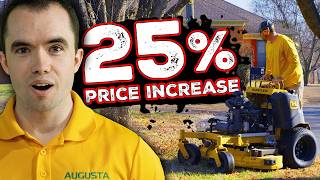
Transcript of a March Q&A session led by Mike Andes addressing pricing, CRM transitions (moving to Copilot), and business growth for lawn/sprinkler/landscape companies. Key advice: use value-based pricing and close-rate signals to raise hourly rates (example: increasing $70→$90/hour can double profit while only modestly lowering close rate), practical Copilot CRM tips (archiving, waitlist, mass texting, data import), and strategic choices between growth vs profit modes (add crews to grow, raise prices to increase profit). Also covers buying customer lists, adding recurring revenue via maintenance packages, and pay-for-performance (P4P) considerations.
Questions this video answers
About 70%.
$90 per hour (Mike also suggested $100 as an alternative).
A 25% price increase produced about a 2% drop in close rate.
$17,000 (for ~22 clients).
He cited paying about $850 per customer (and estimating a realistic $1,100–$1,200 after churn), while arguing he could acquire customers for ~$50–$150 via ads/door-hangers and would pay $300–$400 premium for speed.
Chapters
With the sprinkler company. Have you, what have you seen as a good per man hour rate kind of in the. We're in Kansas. What is there any that you've seen around there?
As high as possible. So really, really the what you're asking is like, you know, how do I price it? This is the thing. You can do it based upon what everyone else is charging. And I could tell you $50 an hour. I can also tell you $300 an hour. It doesn't really do you any good. Value based pricing is what you want to do, which is I'm going to price based upon how much are people willing to pay. Cause that's how you extract the most profit from it. And so what I recommend is using your close ratio as a gauge as to whether or not you are too high priced or too low priced. So like do you know approximately your close ratio, Alfredo?
I think right now it's around 70, but I know that our pricing on the installs it we charge I think 70. We used to do 70 per hour, but, but if you included everything in it, it was more around 50 or 60. So now I'm calculating everything by 80. But I don't know if that's going to shock everybody and lose a whole bunch of people.
So it won't. So there's two things. One, you're really low price for sprinklers. Really low. And the reason is even if you didn't tell me your pricing per hour, I would be able to know that because 70% of people are accepting the bid. And I believe if you want to go to 80, you'll still close like 68% of jobs. And the reason for that is because everyone thinks that if I lower price by or if I increase price by 10%, I'm going to lose 10% of my estimates. Not true. It's not a linear relationship. We, we just raised price by 25% of my location and our close ratio went down by 2%. And so like the reason I say is because if you have a close ratio above 50%, you are in growth mode in my opinion at 70. So are you trying to grow really fast, Alfredo, right now or not?
No, we're actually trying to, I think we're trying to go into profit mode.
As much as we can. We want to be fair. This is gonna be fun. So you're gonna now start charging at 90 an hour, no more, no less. I would actually say 100, but let's just be easy. Let's do 90. Okay, so that's like a 30 price increase. I predict, I predict your close ratio will still be above 50%, but now you're going to double your profit margins. And so now what we're going to do with this little fun little game is you're going to do this for the next month and you're going to tell me in the Facebook group what went, what happened? I can almost guarantee your close ratio between 50 and 60% and you'll, you'll make twice as much profit. Now if you told me, hey, we're trying to grow as fast as possible. We have all these trucks we're not using. We have a bunch of excess capacity employees we're not using. Great, keep at 70% and grow. But if you're trying to make more money, I can guarantee you if you go from $70 per hour to $90 per hour, you will go from a 70 close ratio, maybe, maybe to 55 to 60%. And so I know it sounds scary, but I've seen it so many times. Like, I just have a lot of confidence around it.
The only thing that's kind of working against this is right now our city is under water restrictions. And for sprinkler companies, a whole lot of that, they've narrowed down our watering day to only one day a week. So we're not trying to go that high yet. And we're also trying to transition because just the brand name right now, I don't think we have that, that hundred dollars worth. But I think by the end of this year, we will have the systems in place. We will have trucks are standardized and whatnot.
We could.
I don't know.
I disagree. I disagree. Here's why. Because every single time you send an estimate, the customer votes on your pricing. And right now, 70% of people are voting that you're low, you're too low of price. How do I know that? Because the reason that a customer accepts an estimate is because they see value higher than price. And so every single time you're, they are casting the vote that they value your service more than what you're charging. And so if 70% of people are doing that, I know for a fact I don't care about water restrictions. I don't care about the color of the moon or what the weather is looking like. Your customers are telling you to raise prices. It's like, okay, I'm not guessing. I know 100% with pure certainty that if you raise your prices to $90 an hour, no, no customer will even know, first off, because they only see the price in front of them every single time, you see every single estimate, you see the pricing every single time. That's why you get emotionally involved. Like, I don't know if we can do it this year. Maybe about next year, like, okay, yeah, maybe next year we'll make money. Like just make more money now. And the reason I know that it's because like 7 out of 10 people see greater value in your service than the price you're charging. And so there's, there's a delta, there's a difference between right now your price is here and their value is here. What's going to happen is you're going to raise price, you're still below the value and they're gonna still buy. And maybe it's five or six people instead of seven out of ten, but it's still going to make you twice as much profit.
Right. Thank you.
Yeah, you got it, man. Let's go. Cool.
What's going on? Mike, man, can you hear me?
Yep.
Go for it. So I want to talk about like the, the archive feature twofold, right? And I can't remember if I asked it in my mastermind, but when, if I archive some, does it affect my KPIs? That's the first question. And then the second question is as we get like approvals, say we set our estimates, it gets approved and then it sits there. And when I make a visit from it, I take it in, quarter turn into a job, it just sits there again. But now I have this big backup of stuff that I've already done which just keeps adding on, like, what can I do with that? And if I archive it, will it hurt anything?
Yeah, archiving won't hurt anything. The reason I don't archive anything, sorry, Coach Morgan. The reason I don't, I don't usually mark up things because I don't want a customer going in there seeing archive for some reason and then accepting the job. I would only archive an estimate if, for example, I don't want them to accept it. Now for me, if it's a project, a one time job, I might follow up with them like 60 days later. Because sometimes people like realize they tried someone else or they thought they were going to go and they changed their mind. So I don't usually archive. What I usually do, Morgan, is I will just make an automation that when the estimate is accepted, it goes in, it's notifying me via email. And then if I have to, you know, schedule that job, I know as soon as I schedule the job, I am going to archive that email. So I look as my email is kind of like my to do list. And so, like, that email is going to come to me like, hey, so and so accepted the job. Here's the estimate number. Click this link to get to the estimate. I'm then going to schedule that estimate and then archive that email down the road. What you're really looking for, Morgan, is the waiting list. The waiting list is going to be where when an estimate is accepted, it will just go on the wait list until you schedule the job.
Yeah, because we're moving. We've moved from. From jobber. And so, like, I'm trying to get used to different features in copilot. Like the wait list. Yeah, I just needed. I needed to be away from everything else because it's just, you know, it's just. It almost feels like clutter sometime when there's just so many things I'm looking at and I'm not. And I'm thinking, like, did I look at that? Did I do. You know, and. But yeah, I think that answers the question.
I would use your emails. Like, that's how I did it is like, because an email comes to you saying, hey, this estimate was accepted. Great. I will archive that email once I have scheduled the job. And that way I just have a very clean email. Like, this comes down to more of, like, your email management in this case. But once the waiting list is ready, that's really what you're going to be looking for, Morgan, because then it'll just literally show here the estimates that are accepted but not scheduled.
Okay. Okay. Yeah, I'm getting used to the email, too, because all my stuff gets filtered super fast.
No, that's good. Thank you, man. I appreciate it.
You got it.
Hey, Mike, we just onboarded with copilot CRM and we are going from probably only quickbooks, so everything else was, like, on paper. So there's a lot of stuff going over. We're a sprinkler business, and right now that sprinkler business has a huge brand of, like, the owner. Like, everybody knows the owner. And we're trying to separate from that so that we can raise prices. We're raising prices right now by a lot. And we're. It's getting a little difficult trying to, you know, uncharted territory for the business because it's higher than it's ever been. And we're starting CRM. We're switching over to a whole bunch of things. But what are some things that you recommend that would help us the most? Separating from the owner mentality, like I can just call the owner and, and have them do certain stuff. How would, what, how would the office handle or what are some tips would give for that?
Yeah, great question. So first off, I would never give away your personal cell phone to a.
Customer that is 1500 people have his number, basically. So.
Okay, so wait, just so I'm clear, are you buying another business then the owner?
No, I'm, I'm just coming in as the manager. I've seen a lot of your stuff and I know a lot of what you recommend and I'm trying to push those into this.
What I would do, I would do this case, I would actually take that phone and I'd forward it to the office or make it the office phone number, give him a new cell phone number and when he goes out now, or you got whoever's estimator, they are not the business owner, they are the estimator. And that way they can still use that phone to follow up with customers, make sure their appointments are scheduled correctly, etc. But they are not the owner because as soon as they know the owner, they negotiate, etc. So I would first off, change their business card to say estimator. I would change that phone number to forward to the office and, or make that the office phone number. And then on the website, make sure that there's no face of him about us, doesn't mention him.
You don't have any website or anything. So. But most of our customers know him by face because I think we've been 40 years now, so almost everybody kind of knows him already and they ask for him and all that. So what would you respond to them saying, hey, he's no longer. How, how would you go about that with customers?
Well, cause now the phone number is going to forward it to the office. So they're going to say he's not available right now, I can help you. And they're like, I don't. I only want to talk to him. You might lose that customer. Like one out of a hundred are going to be that way. But you don't want that customer anyways because it prevents you from scaling. So you just make sure you equip your office, you train them correctly so that they can help with 95% of customer complaints or issues or problems. And then eventually, as time goes on, they start to realize, oh, I cannot get through the owner. That's not an option anymore. And secondly, like these people can help me. It's just going to take you training your office really well. And make sure that like never does that owner get involved. So for example, if something goes wrong on a job site, like I want to talk to Billy Bob. Billy Bob doesn't show up. He might help the crew on the back end, but he never shows up to a job site. So it's just going to be a little bit painful. But I think in three to six months you can change the kind of perception. But the biggest thing is going to be moving that phone number. Like literally I would change his phone number, I would give him a new phone number. I would make that phone number go to the office.
Okay, awesome, thank you. And I have a lot of more questions, but I'll.
Hey Mike, how are you doing?
Good.
How you doing right now? So.
Yeah, so we're just have a question about like overall growing. So last year we kind of went into profit mode. Did a little under 500,000 in revenue. Still ended up buying a lot of equipment, like $80,000 worth. But we ended the year gross profit like 90,000, a hundred thousand. So our question kind of is like, should we grow or should we just like do another year of profit? Because if we did grow, it would just be maybe like one more mowing truck and we'd still have to work out of a public storage. So like our overhead wouldn't go up that much. Like 300 bucks a month maybe just to get the extra space. Because like to get a shop space in this area, it's like you're looking at 600,000 minimum just to get one. That's even for like four or five crews. So I just wanted to see like what your thoughts are on that.
Like what eventually do you want to grow like a million dollar business. What's with the long term goal?
Yeah, yeah, we want to, we want to grow, you know, past I'd say like 10 mowing crews and a couple landscape cruises like our goal. So like maybe 2 million.
Yeah, if you, if you can do it profitably, like you add another crew, I'd go for it. Especially because it aligns with the goal of growth. Now if you want to make more profit next year, then that's a different story. I would hit capacity, raise prices. Right. So it, it's simply determining, okay, am I in profit mode or am I in growth mode? If you're in growth mode and we're going to grow to that next level, means when you hit capacity, you're going to buy another truck and you're going to expand on another 50, 60, 70 mowing customers. Right. If you're Going to, in profit mode, you're going to raise prices instead.
Okay, so we, so we already raised our prices this year, like a significant amount, like 10 to 15% for mowing. Just because like we get so many leads due to our SEO is really good in the area. So that's why I'm like our leads aren't a problem at this point. It's like not even equipment. Like we have an extra truck. So it's just sitting there as like a backup and it's a good truck. So our thoughts was just like, do we at this point, like our next, I guess ceiling is the labor and the other crew and would it make sense for us to do that or just save up one more year and try to get an actual shop location next year?
I wouldn't be saving up another year to get a shop location. I wouldn't be doing that. I would focus on the business. You know, buying a $600,000 real estate asset is a completely different business. You've got 125 to $150,000 down payment. I think if you spend that money right now in the business, you could take it to the million dollar plus marker. You'd have plenty of money to buy a couple trucks, et cetera. So I would not go the shop route. I wouldn't try to go in profit mode for the shop. Because if you do a $500,000, $550,000 business, do you have no business buying a $600,000 shop?
Right.
So by growing, affording the shop becomes more affordable as you grow. So if next year you do 750,000, year after that you do 8, 950,000, now you have more crews, now it makes more and more sense to actually go buy a shop space. And then you turn the profit lever on a 900 million dollar business and now you're an extra $100,000 in profit because you raise your prices by 15%. Now you have the, literally the mortgage payment and you go, you go do that in one year. Okay, so like double the size of the business in my opinion, then hit the profit lever.
Right?
So run a little bit tighter the next couple of years, get it to 800,000, a million and then raise your prices and then with that raise of price by 15% on a million dollar business, there's your mortgage.
So I just rebranded my business this year. It was, it was kind of like a high school business. And then I went full time pretty much this year. And I just wanted to know from your perspective, obviously you started Augusta and I Wanted to know if you could go back in time when you first started, what things you would kind of do differently and what you would change in your perspective on the business of lawn care and landscaping. And how would you go about kind of moving forward and trying to grow and scale your business?
Yeah, like one thing that we did well was I focused on a one to one and a half mile radius at the beginning. So we didn't move outside 2 mile radius until we were over a million dollars in revenue. So that's the first, that's the one good thing I did. Everything else I messed up in the first five years. And so I would say in terms of what that is, it's added too many services. So I should have done is taken an extra two or three years to grow to the million dollar marker and just focused on simple services. Instead. I added artificial turf. We did retaining walls, putting greens, we did.
Patios, we did everything. And so yes, it grew revenue very quickly, but that was three years of very painful unraveling. All of that retraining, the team redoing paid for performance like it was a pain in the butt. So yes, you can grow faster by adding more services. That's the number one thing everyone does. Because you could easily have zero to a hundred thousand dollars in annual revenue for any home service business is the easiest in the world. You literally put up a few Craigslist ads, a couple Facebook ads, and you got a hundred thousand dollars a year in business. Now what most people do is they build a million dollar business doing they do $100,000 of bush trimming, they do $100,000 of aeration, they do $100,000 of chemical treatments, et cetera. I would much rather have a business that has $500,000 of one of those services than a hundred thousand of ten different services that equal up to a million. And so I would just really, really focus your core, your service mix and your service offering massively.
Yeah, that's really it. That answered my question. I appreciate that.
Yeah. So Mike, I'm coming from service Autopilot. I've used service autopilot for a number of years.
So I mean, obviously we've got, you know, all of our clients and leads, you know, over 3,000 in there, which, you know, come bringing over to Copilot. I don't see a huge issue with that, the, you know, exporting that, importing it into Copilot. The one thing I have a question about and just wondering what your suggestion would be on how to handle it would be all the Invoices from the past couple of years. Any estimates just so that we don't lose all that. If customer comes back and argues something or wants to have a look at. If we want to go back and look at a quote that we sent last spring, for instance, somebody's revisiting a project. What would be your suggestion around some of those details?
Yeah, so I would really just, like, go to their base level subscription. This is what we did when we moved out. We went to their base level subscription. So we just keep all that data. It's like 49 bucks a month. We kept it for like six months. I believe some of our owners waited like 12 months, but I stopped my subscription after, like, for, I think, 60 days. We never even went inside the account. So I'm like, all right, forget this, let's cancel. But what you can do is keep it there for as long as you want to where you feel comfortable enough to be like, all right, I'm ready to bail. And the reason I say this, because let's just say it's 50 bucks a month. Let's say for an entire year, that's $600. You know, that stinks. However, you manually trying to make sure those invoicing and estimates is brought over and doing it all manually is going to take you like a week or two. And so I would personally just do the base level subscription knowing that if you need to go in the back, you can. But I think we did it twice in six months. It's going to be for that one off customer. That's like, what about last year? I did my estimate. Then you might want to think about it. So I just do it until you're like, okay, I haven't logged in it for like 60 days. I'm willing to move on. But I. I would probably move. Go that route to be safe.
Yeah, okay. All right. No, that makes sense. And yeah, my honestly, been one of my biggest holdbacks of switching from service to copilot. I've watched copilot for a while now, so. Yeah, but yeah, that makes sense. No, I appreciate that. Thanks, Mike.
Yeah, you got it. One thing I also add, I know I mentioned in the presentation about off seasons using those, which are really helpful. The other thing I would mention, and the big reason we moved over from previous CRMs, is the mass texting. If you guys aren't using mass texting, I highly, highly, highly recommend it. It is. It'll convert 10 times more than email. You have an open response rate, open rate of about 98 to 99% versus an email. You're lucky if you get 30 or 40%. And so if you haven't used mass texting. Here's the thing. The reason I'm saying this because in a matter of a few months, we will have to start charging for this feature. Right now it's completely free to send out text messages. It doesn't cost you anything extra. It has. There's hard costs of $0.04 per text that we pay to Twilio and so we will eventually have to pass that on to all of you. Right now though, there is no additional costs. So like use the thing. It's so good. Like we had a member inside Augusta. He has a business, has about 700,000, has about 2 or 3,000 contacts, sent out a text message, got 30 estimates back within about 15 minutes because people will respond very quickly. So send a message out, be very personal. Hey, merge tag Mike. Been on your property the past couple of weeks. Looking forward to servicing this upcoming spring. Wanted to see if you'd like to get on the calendar for a. A spring cleanup. We're booking out pretty far, but I was thinking of. Yeah, would you like that? You will get bombarded. So please, please, please use the texting, the mass text feature. It is the by far and away. Like just for my one location that I have when we were going to go into mailchimp and do texting, to be able to do that, it was going to cost me 400 bucks a month just to be able to have my contacts inside of there and do mass texting the way I wanted to. So like, please use texting. Eventually we are going to have to have some sort of a cost associated with that because there are people that are sending out 500 worth of texts on a $279 subscription inside Copilot. But just as a side note to all of that, so my question's more about the CRM. So I am using the free version right now. And as I was signing up for the free version, of course it brought up some merchant services. So I went with Stripe. And in the free version, those two are not tethered together.
Right.
So I can create an estimate in my CRM and then I have to go create, you know, an invoice in Stripe. So I guess my question is if I step up to the paid version subscription, will Stripe tether over or will I start with the new merchant services through Copilot? How does that work? It does. It does Tether. So there might be something misconnected on your end. Mario so feel free to talk to, to Air traffic Control. But like, even on the free account, you should be able to connect to Stripe, send out an invoice, no problem. The challenging part with the free version is you don't have the ability to email them. So you have to copy the link and, you know, send it out yourself that way. But you don't have, you won't have a problem with Stripe and like collecting money. That's totally fine. Okay. Yeah. If you are having that problem, reach out to them. They'll make sure you get, get set up correctly.
This is a question based on like client list acquisition. What would you, like, how would you go about that and when? Like, how would you figure out what is the appropriate number to.
So give me some numbers. So like, is there someone you're thinking about buying out?
Yeah.
I found this. I found this little side side business that's selling this. I was pulling it with a Santa Fe Hyundai Santa Fe with a little makeshift trailer. But I, and I, I specialize in hardscape. So I was looking because winters are brutal for hardscapers. I was looking on bringing on a grass crew, much thanks to your videos. And then anyway, I would just to hit the ground running. I was thinking of, I was thinking of buying this company. He's asking around 7,17,000 for 20. About 22 clients.
Yeah. So like there's two ways to value a business. Really basic. Well, there's a lot of ways to value business. The two ways I like to think about buying my accounts as two ways. One is through customer acquisition. Two is through buying the business. Now the business, I'm assuming the $17,000 that he's asking for is just for the customers, Is that right?
Yes.
So we are, we are paying about $850 customer acquisition cost right now. Now we are assuming they all stay with him. I'm going to say about 10 to 20% are not going to stay so realistic. We probably pay like 1100 or $1200 customer acquisition cost. My, my philosophy is like, well, if I can go get a customer for $100 using every door, direct mail or Facebook or Google, why in the world I give this guy 1200? The only reason is for speed. Right. So you're willing, like I do not care. I'm going to, I'm willing to dump money at 22 customers. I would, I would venture to believe a Facebook campaign and a couple of door hanger campaigns. And you spending 10% of this, you could probably get these customers. So it's your confidence in your Marketing Also the fact that, like, there's still time involved with, like onboarding these new customers, figuring out like, hey, you're no longer being serviced. This guy, you're serving as us Santa Fe is coming to your house. We are like that confusion. So, like, that's where I'd be careful. I think if you're trying to negotiate with this person, you say very clearly, I know I can get a customer for a hundred dollars. I'm willing to pay a premium of $300 because you're an awesome person and I want to do this faster. So 300 times 2100 or 21, 22 customers. Oh, and by the way, ideally I want to pay $400 per customer, but it's based upon how many stay with us. So now all of a sudden 15 people stay. You can actually protect yourself. And so I'm willing to pay up more premium if someone's willing to take the downside with me if people don't convert over. But I'm usually not willing to pay more than three or four hundred dollars, even if I'm trying to go really fast, because I just know that I can go out and do ads and get customers for 50 to 100, 150 max. Yeah.
But the main problem is, is also cash flow to keep, to keep employees. So that's the hardest part. Like, okay, I do pretty good in, in the hardscape, I'm doing about a hundred 100 and between 100, 150 in hardscape. But the tick, it's a bigger ticket item. So even though that sounds like a lot of money, there's not enough time. Like, there's too much downtime for employees where it's hard to keep them on board.
So two, two things I would say, first off, given that information, I would definitely not buy the. I would not buy 22 customers for 17 grand ever each side. Secondly, I would say even if you don't add mowing, you can add recurring revenue in the business model. Have you, have you had a chance to watch my workshop mike.com workshop by chance? Okay. Highly recommend it. It's free if you go there. I really recommend watching it because it's going to talk specifically about landscaping and hardscaping. When it comes to recurring revenue, you don't need a new mowing to fill this in. What you can do is start selling packages of recurring services to the projects you install. And I happen to believe if you've done this for a while, you could probably go back in time and sell quite a few people on maintenance just for their landscaping. Now, if you have a mower and you have a mowing crew, it's going to be helpful Because a lot of times, if they're going to want you to trim bushes and install mulch, they're going to have a lot. Exactly. So I happen to believe, though, you get 15 or 20 customers. If you just went back in your rolodex, you send them all a text. Hey, groundworks is now offering lawn mowing. I Bet you'd get 10 to 15 customers just like that, and you wouldn't be spending no $17,000. So I would personally use the text thing inside of copilot. I would have them on a drip sequence for the next, like, two weeks as you go into spring rush trying to get them set up on mowing. I would then also have a drip sequence and automation Based upon my landscaping jobs getting completed, getting a review, and then immediately going into, like, how do I upsell this person to a hundred, two hundred subscription on a monthly basis year round to be able to come to their property every two weeks. So I would personally, I would sell all of my hardscaping jobs with good, better, best model. Good is I installed the job. Better is I installed the job and I warranty the job because, like, I will sell the warranty. Like, I will warranty forever my wall, but it's going to include extra cost. The third one is include maintenance. So good, better, best, the best being we install, we maintain. And I am going to. Sorry. We install warranty and then maintain. And so that third, the best model is I installed this, I will warranty it for life. And we are going to come every two weeks and maintain the property.
That's a good idea as well.
The workshop will walk you through, like, how to package this, how to put it on your estimate, the whole nine yards. Okay.
Awesome.
Thank you, Michael.
You got it, man. I'm gonna mess this up. Sorry. Abilio. Go ahead.
Yeah, that's me. Well, I'm really new to copilot and new to business in general. And I'm just a teenager starting my business. Hope that's not a problem. If it is, Dude, I started when I was 11.
Don't worry about it.
I'm just really new. I don't have much customers. I know this a pretty common question. I would not like to know how to get more clients or stuff like that, how to expand, what ways to do it and stuff like that.
Hey, first off, I would say, how old are you?
I'm 15.
Cool. Have. Are you Inside the teen give back program. No, I'm not. So you can get free in copilot. Just FYI, you can upgrade for free. So just go on the pricing page, scroll to the bottom. If you're a teenager, you get. You can get in for free. So Christian will help you get set up and everything like that. If you're a teenager, you know, I'm, you know, you're in. So secondly, go to mikeannies.com and watch my courses. They're all free. Landscapebusinesscourse.com is in there. It'll walk you step by step on like. Like what you just asked me is like, how do I start a business? Go there. There's like hundreds of hours worth of content and it's all free. So that's what I would do.
All right, well, and my second question is I have made some business cards right now and I did put like since year earlier. I had. I heard this. I have my personal number on there and I have a little section there. I'm. I'm the owner. I would like to know what do I use to link my number to a different number that if a customer calls billing to me, but it's not my actual number. I would like to know.
Yes.
Is there something for that?
Yeah, you get like Grasshopper. You can get like a lot of apps that you can get a phone number. It'll still be on your device though, so you have to get a different phone. So get an app. Just let's search up, you know, phone number, app like Ringcentral gets it Grasshopper. I would recommend grasshopper. It's relatively cheap. 30, 40amonth. I will also say, don't worry about. This is a problem that you will think about down the road. And that is like, how do I become more anonymous with my customers? Right now your unique selling proposition is that you are 15 years old. So lean into it. It's okay to put your name on there. It's okay to say, I'm 15 years old. I'm saying for college, like, lean into it, man. Because, like in three years, people won't care about your age. And so use your unique selling proposition to grow the business and then realize there'll be a transition period where people. You might lose a few of the customers that join because you're 15, as you transition to having employees and crews, et cetera. So again, landscape business course will walk you right through this part about unique selling proposition and leaning into it when you're younger.
All right, that's good.
All right, thank you all right, Next up is Jeremy. Go ahead. Jeremy's iPhone.
Hey man. So I'm coming. Oh, Jesus. I'm coming from Real Green.
Okay.
And so I have enterprise with Copilot. What should I do with all my. So I have 40, 000 marketed customers inside Real Green.
Yep.
And probably 5,000 one off one time jobs that we've done. Obviously I can't transfer them all over. Real Green is going to delete them as soon as I cancel. What would you suggest as far as. I mean, of those 5,000 one time one off jobs, they probably call every other year and we do service for them.
Okay. So just so I'm aware, 40,000 is just leads. 5,000 you've done service for, is that correct?
Yes. And then so on. So we're only moving over reoccurring right now, which is like 500 customers.
Got you. So you should be able to move all the customers in as long as they export into CSV or Excel from Real Green. Okay.
So I know we moved in 14,000 in my location. So I don't see any problem with 40. If there's 5,000 I would do if I was you, Jeremy is I would import everyone that was a lead and not a customer first. I would tag them as like lead. Or you can change the customer type to like something else and you can customize that in Copilot too.
Right.
Then I would import the 5,000. I would change the customer type to like past customer, something like that or tag it. So you should be able to do this pretty easily because it's so many people and you don't want to make a mess. I would make sure you're doing it right with atc even just book a call and have them do it with you. Yeah, it's not super difficult right now. We're not because it's in the middle of spring rush. But if you ever need us to actually do like for example, if you're like, hey, I'm just gonna move 500 in and start operating. Cool. Usually by the end of April, we actually will just do this for you and we will take a few days and just knock this all out for you 100%. So if you're not like 911 status, you could just wait. I'm going to guess four to six weeks when the support team is able to do this for you. We did it up until the spring rush, but then we get so many people joining, the backlog gets too long. So you could wait or I would say it'll probably Take you like I did ours, and maybe an hour or 2, 14,000 customers, and I did, in, like, different segments and then just tag them differently. But if you did a call with them, I think you have a pretty good understanding. They'd be able to look at what you're importing in terms of CSV file and see how long it's going to take. Right.
I think the biggest thing right now was us to get our reoccurring in, because we're gonna have to run software side by side for at least a month.
Yeah, that's a pain in the butt. So whatever we can do to kind of, like, help you move over, let them know. And then if you do wait a month, maybe check in with ATC and just be like, hey, are you guys available now to actually help me import? And they'll tell you yes or no.
Okay, yeah, sounds good. Thanks.
Yeah, you got it. And then what I would also say is if you have 40,000 customers, use the texting feature before we have to say no, that we. So we have to start metering that, because, like, yeah, if you send out, let's just say 20,000 will have a phone number. You will get so much work from that, like, with the mass text, like, it's insane. So I just highly recommend.
Yeah, we're already using it on estimates, so.
Cool.
It's awesome.
Thank you.
Yeah, you got it. Alejandro, did you have one too? Go ahead.
Yeah, I just joined it with copilot. I'm currently with Jobber right now.
The last three months, actually. Join element. And so during that transition, I noticed that if you don't have everything really organized with your accounting, it's just gonna become a big mess, and it's gonna affect budgeting and my prices. So it just kind of been, like a, you know, kind of disappointing moment. Like, I've just. And then I started looking at your content and everything and decided to go to co pilot, I guess. I saw one video you had where you kind of broke down different CRMs from jobber to element. Just pretty much. That was a couple years ago. And I want to get some feedback on what you think as far as me making the right decision. Go copilot. I mean, currently our business, we're doing about $3 million in sales per year. We're a full landscape company. Turnkey. We, you know, based strictly on recurring, but we do, you know, service our commercial clients with, you know, mulching and cleanups and landscape enhancements and stuff, and irrigation and as far as well as chemical treatments. We do do projects and landscape projects about you know, somet 50,000 or a little over $50,000. But it's not every month. It's not like we're doing big two $300,000 landscape projects. So what, what would you, what can you tell me that you think that as far as me making this transition to co pilot would benefit me versus my original plan with lma.
Yeah. So kind of pretty accurate still in terms of two years ago when I made that video. If I would say a little more definitively though, if someone's not trying to do about $200,000 in annual revenue, they just stick with Jobber. Jobber's nailing that market. It's so good. Like we're not even trying to compete with them on that market because they're so good at simplification and keeping things really basic. So if you're trying to do under 200,000 and that's all you're going to grow to stick with them. If you're doing product over 50,000, I would still say stick with Element because their job costing is so much better than ours and it's really built for hardscaping and like those big jobs. I would say if it's one off maybe you'll be able to skate by like if you're like hey we do a couple jobs that are really big a year and it's not a big deal, then you could probably still skate by inside copilot. The advantage in copilot compared to those is going to be it's kind of a mix of two. Like you have some of the higher end features but the thing that I actually like the most is going to be the thing is like the bulk texting, the deposit thresholds, credit card and file requirements. Those are the reason I like we switched over from service autopilot for example. But you know, I would say you're going to feel a little bit of pain on the big projects I would say because we do not have the, the level of job costing that they have. And you're going to also feel a little bit of pain on project management, things like gaunt graphs and be able to track that a little like over a quarter of six, eight week period. Those are really nice inside element. So that would be the pain point you're going to have. And I think it's just a matter of is, is the, the marketing functions that we have going to outweigh that? That's really a decision you have to make there.
Yeah, like obviously these jobs come in and we, we Take them. But I want to base the next. The future is more recurring based services. Even, even you know, my irrigation, you know I'm coming up with irrigation packages, recurring, you know, pest control, you know, top dressing, you know, trying to sell, you know, try to sell it to give better prices but get them locked in for twice a year and top dressing aeration. You know, I'm really trying to get more pushing recurring. That's kind of my where I really want to grow. But also it's hard to turn down when there's a potential hundred thousand dollar.
Landscape projects. But I do want to make sure because I have had those issues in the past where it's a big number, you get excited and then once you go in and do all get to all the, the material labor and the time invested not just in, in my daily, my crew members but in management, you know, sometimes if you kind of compare it to what we're doing recurring I'd rather just jump in and get these quick three, four, five thousand dollar landscape cleanups and mulch versus those. But, but we do, like I said, we do have those projects and just other than that, I mean I just kind of like I was kind of excited Element kind of felt disappointed with the onboarding situation. I really like the community what you're building here with Augusta Lawn Care and with co pilots and the P4P. So I'm excited for the P4P trying to get this co pilot onboarding. But. But yeah, thank you. And I had another quick question. I'm going to be starting to add in all my recurring projects first customers. What about the one off jobs? I mean we have quite a bit jobs already sold on schedule. Do you recommend transferring them to copilot or just leaving them on jobber while we cycle through them and, and then any new jobs that any new leads that come in, let's start selling them on co pilot and then kind of cycle everything through jobber or switch the old one off jobs.
How far out are your are the one time jobs booked out? Three months. Okay. Yeah, like so yeah, like what we did is we said okay, we know in the future this is the date we're switching. And you'll see in the recording later. Alejandra, I kind of talked about this like setting a launch date. I would just say okay, after this date, let's just call it May 1st, I'm going to put those one time projects in. But up until then I'm going to just complete the mountain jobber.
Okay.
And then, and then you know like Starting that date, everything is in there. And then from you just need to know the scheduler, hey, anything after May 1st is going in. Yeah. Is going in the new one. And then that way you. You would just keep everything the same until that date. Rip off the vanity. Everything's now set up correctly and you're not in between two. You don't want to be in between two. Is so confusing. So we did this 150 times with some big businesses and it's like you want to have a launch date. You want to keep. Keep jobber open for six to 12 months as a low level subscription so you can get the access if needs be if worse comes to worst. But I don't want to be in between two. I highly recommend not doing that.
So pick pretty much, let's say from March 1st, everything goes to copilot and over anything past May 1st.
May 1st.
Yeah. Prior stays in Jobber until we cycle them through.
Yeah. And the one thing I would say, Alejandro, is like especially your size when it comes to the mowing use off seasons. I talked a little bit in the presentation like off seasons, like Copilot allows you when you set up mowing just to set infinite, infinite ending. And then set up the off season so that we don't have to stop the recurring service at the end of the year and then start it again next spring. Sorry.
No, we're so we mow year round. I mean it just goes. It just goes from weekly in the summer to buy.
Easy peasy lemon squeezy.
Yeah, I got a question about that. So we're recurring. If I do set up recurring for weekly, do I have to manually then when we go into bi weekly, change the. The the to bi weekly manually or is this something I can set up on automatically?
Great question. So right now if you're going to try. Yes, you can do it like where you say I'm going to go through everything and change into bi weekly. You could do that. I've seen some people use the off season feature as a way to get around that. So that what they do is they say, okay, I'm going to set weekly service for these months and then I have an off season and then I name the off season bi weekly service period. And then they do the opposite for so then then all that's happening is they have two recurring services. One that's weekly, one that's bi weekly. And then what you can do is change one date in the settings and it'll move it all around.
And then I had one more question. So I. Last year and beginning of 2024, I acquired a water filtration company. I thought, just as I did irrigation, kind of a mistake, I thought I can kind of, you know, irrigation team because we would get some house calls, we'd have a lot of wells in our area to, you know, fix their water on their house pump and stuff like that. I realized there's two different businesses and I kind of want to separate because my irrigation is very mixed with my landscape jobs. I mean, we sell, we do a landscape installation, we're selling irrigation and we're selling pest control. It's all kind of combined or we have contracts that have mowing, pest control, irrigation. So I'm in the process of completely removing water filtration service autumn out of my company and opening up a new venture, new brand new website. Just, just running as a whole different company for water filtration. Right now we have water filtration with Jobber. Do you think that copilot would be a good fit for the water filtration business?
It really just depends on how you're setting it up. Like, do you have recurring services? Do you have routes on that?
Yes, we do. We do water exchange tanks and we do monthly services on servicing their filters and adding salt and chemicals.
Yeah, like, if I was you, I'd probably do the first one, like the landscaping side. And if you like it and get used to the ui, you could move it over. Like today I think almost everyone's landscaping, but like I'd say 40% of members inside COPA are not. So there are handyman services, there's water filtration companies, there's pool services inside COPA too. So it could work, but it's just a matter of like how you use the system. But I don't see any reason why not.
You do have a water filtration company with copilot currently.
They do mostly backflow, like backflow testing, a bunch of other like water related things. And I think they even do irrigation. They do like anything with water. They do water like softeners and like a whole bunch of other stuff. So feel free to try to reach out to them. But I would say like, when it comes to home services, we're selling labor, we're adding some materials, we have subcontractors. Right. So that's why pretty much any home service has been able to work with copilot. It's when they get a massive project. That's where I'm like, there's some other stuff that you might feel a little bit Lost on.
Okay.
And then we had issues with the taxes. We have to charge sales tax, especially with irrigation and water filtration. With Jobber we had that when they were sinking with QuickBooks it would be off by like a decimal point and will create error errors on our end. And it's just, it's just we're trying to clean it up. It's just really, really difficult. And Jobber's not really giving us any solution. And that's kind of the reason why we kind of jump with copilot. When I had the onboard, you know, the meeting with the person that introduced me to Copilot, all that, he's basically said, you guys already had an issue similar to that and took care of that. That's something really important because it's driving my team insane in my account.
The challenging part is with QuickBooks is. And the reason Job doesn't have an answer this is we are at the mercy of their API and so we connect to them too. And if there's something messed up on their end, there's not a lot we can do. And unfortunately it leads us happening is Jobber or us will point at them and they will point at us. And you have this game of like nothing happens. And so personally I don't recommend a quickbook sync. The reason is because there's really no reason to sync it over quickbooks given the fact that you can simply run a report inside of Copilot and then do a journal ent. And so we don't sync with Copilot. I don't recommend it mostly because if I can see, I see duplicates all the time. I see alerts all the time. If I do one thing, it doesn't sync over correctly. Now I have three things. It's not lining up and it's just so much frustration. So I don't recommend syncing the two up. You don't need it from a tax perspective because the IRS or whatever is just going to go off your income, which is just a report inside of copilot. So if that's like your main reason for switching, I probably wouldn't switch. Honestly, what I would do is potentially put hook up our sync that we currently have. What Christian was probably talking about too is we're switching to a one way sync now. This is coming later this year.
And that is going to probably eliminate this problem because it doesn't bounce back from QuickBooks. That's where we all have problems. From a market development perspective, that's where we have problems with QuickBooks. Is how they bounce stuff back as a two way. Two way does not make sense in this scenario. That being said, I personally don't Recommend syncing with QuickBooks because you're going to always be caught in between two softwares that point each other and say it's their fault.
So basically once the month ends, pull the report from copilot and sync it in and add that to QuickBooks. Basically it will be the sales revenue. And then what would Copilot create a report on the services line items.
So like correct. Exactly.
Yep.
And inside QuickBooks you're going to do expense categorization. So there's all your expenses and you're going to have revenue and you can either a like I just have all of mine going into service revenue and if I want to see a breakdown of that, I just go into Copilot and I see the breakdown based upon line item.
Right, right.
So like I just go with two, two documents. One's my P L from cookbooks, one of which is the sales revenue for everything. And then I can have that broken down with a report from copilot.
Right.
And you, you mentioned like not switching. I mean that's one of the reasons we really want to just get out of Jobber right now. Obviously you think Jobber is a company that I'm trying to shoot for a 5 to 10 million dollar company in the future. I mean, I mean is Jobber that company for me or you think co pilot I could be a better fit. The other reason why I wanted co pilot was I do want to definitely try the P4P and I and I like things automated. I don't want to be able to pull a report from P4P and add it to robber. I want to be able just to have it linked together.
That's another reason. Yeah, like if right now the only pain point is a tax thing, I would not switch over if I was you. It's not worth enough pain. The pain that is required on a $3 million business because of a decimal point. You can journal entry this stuff in QuickBooks. It's not that difficult and so I would not switch over that. Now if you switch to PvP, you're probably going to save yourself 10 to 30 minutes of admin time a day on that size of a business. Just calculating pay for performance, sending out reports, etc. There's not budget hours in a separate field inside of of Jobber in terms of like being poor reports on budgeted hours, which is a big piece of paper performance. So I would probably say right now, if you didn't change anything, I would not switch. I would switch. If you start doing pay for performance, if you want to start using mass texting, if you want to do more the recurring side of the business and doing automations, that's when it starts to make sense. And dispatching multiple crews, et cetera, like as you grow and scale, that's usually where we see limitations inside Jobber. So when we considered it before I even started, that's where we kept running up into issues is our larger companies. When we have 10, 15, 20 crews, it's very difficult to dispatch and the automations just weren't where we needed them to be and we can't do mass texting from inside the app. So it's just, it's a, it's a pros and cons for me. Alejandra. I'd probably say right now I'd stick with Jobber if the tax thing is the only problem. If you start doing P4P and say you run one or two crews inside P4P software, you're like, okay, this is going to really make sense, really helpful and I believe it's worth it in terms of just the pain of the transfer and educating your crew. Then it makes a lot of sense because you're going to save 30 plus minutes a day just in data transfer by being able to have it all synced up.
Yeah, I never tried the P4P. I definitely want to do the free month and kind of do like a.
Trial before I do that first. Do that first. Don't switch over to copilot thinking like, oh, one day I'll switch to P4P. You know, you can do job or run one crew or two crews manually. For now, it'll take you a little bit of time and then just see is it worth like actually switching over like that side of the business. I wouldn't take it easy. I wouldn't just like flipping a coin. I'd be like, what are my actual pain points for leaving? If it's just the tax thing, I'd leave it. But if you start doing paper performance, you start wanting to have multiple crews. If you really like the master texting feature, like that thing alone will pay for your subscription. Like you, you just get so many estimates from it.
So yeah, that is one of the biggest reasons. But I mean, I don't, I obviously I'm looking. I mean you're saying P4P is working for a lot of people. I mean you're, you're, you're Using it, I don't. I don't see why. And in my business, I know that people get. I've always been wanting to find a way to motivate people, because when people are motivated, they're going to work harder. It's just. It's just.
I would do it for one or two crews. I would do it for one or two crews manually and then make that decision. It just. I know the amount of effort goes into switching a software at $3 million, and, like, I would just take it slow. Like, really, like, you don't mess things up. So I would. I would make sure P4P is what you want to do. And then is that worth switching softwares over? There's. There's no rush. You got a good thing going.
Okay.
All right.
Yo's iPhone, go ahead.
Hey, Mike. Scott Howard out of Savannah, Georgia. How are you, sir?
Good, good. Is this your rice iPhone or something? Come on, now.
I just put. Yo, when I start sending, at church events, I would send. Send pictures and whatnot. Nobody would know what I was doing. But, hey, first I want to tell you, man, you are good soil. And what you're doing is creating deep roots for the landscape industry. And. And then just like the Bible says, it'll produce a multiple, you know, harvest.
Thank you, man.
So my question, I just. I just started with you guys. I'm. I'm with Jobber. I'm transitioning from Jobber. I'm gonna give it a month, but I've got one customer that. We've got a hundred houses right now. And that customer is a. When they. When they. People buy the houses, I can keep them, but they rent them out when they're not rented. The management company pays me. When the tenant goes in, the tenant pays me. How would I input that into transition that on the property? In your software?
Yeah. So you can transfer properties between customers. And then what's going to ask is like, there's a. There's a whole video on this. When you transfer a property from one customer, another it's going to ask like, hey, do you want this information to go into the new customer or do you want to stay? So, like, there's a whole process around this. If you need. Because it sounds like there's a big. A huge customer for you. Have ATC walk you through one or two of them. Like, hey, this. This customer specifically I need moved out of this prop. Like, these property out of this customer now. And they'll walk you through the whole process. But, like, there is actually a button that you gotta click to make sure Steph transfers. And do you want it to transfer? Because you might not want to because it's like a new customer technically. So those properties and customers, they can follow each other or that you can kind of sever ties when you move the property out. So just talk with ATC and they'll walk you through that one.
Yeah, I mean, I just started. I'm just manually inputting customers, kind of getting the feel of the software instead of importing them. I just want to get a feel of, of the software and the whole budgeted hours and going to P4P for. Because I'm a full time firefighter with Savannah, Georgia and we started this lawn care company and it's. And it keeps growing and we're doing a slow growth model. But this year between the three, my three sons and myself will have a full time crew. So I'm looking at. Because we do paper performance with the city of Savannah. And so I'm looking at doing p per feet. P4P with my crew in 2026. So I appreciate that question because that's really. That's my biggest customer. And it transitions all the time. And with Jobber, it was. It was horrible. It sucked.
Yep. Yeah. Give the, Give the ATC a call. They'll walk you through the first couple and then even if you just have a few sample customers in there, they can show you what to do and then you can make a judgment call and like, is this going to save me time or not?
Okay, man. All right. Have a great weekend.
You got it. See you guys in the Facebook group on the Mastermind. Looking forward to next week sharing the new customer portal. It's going to be fantastic. And we will see you all in the copilot universe. In the universe, the sphere of copilot.









