8 BILLION Dollar Sandwiches - Episode 084
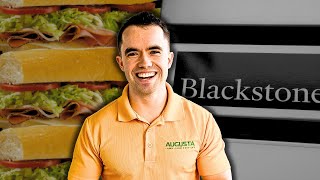
Episode 084 of '8 BILLION Dollar Sandwiches' — Lee and Mike Andes discuss Blackstone's reported acquisition of Jersey Mike's (~$8B), contrasting its unit economics and valuation with Subway (cited ~37,000 Subway locations; Subway sale cited ~$9.5B). They explore likely PE strategies (LBO structure, franchisee fee pressure, territory dilution, possible real-estate angles), note store-level figures (3,000+ Jersey Mike's locations; store opening cost $200k–$1.3M; typical store sales ~$1.2M), and debate founder retention (Peter Cancro retaining ~10% and staying CEO). The episode closes with leadership advice on employee gratitude (annual turkeys/pies), and personal routines (diet, exercise for energy).
Questions this video answers
Saturday, November 23 (year implied 2024).
More than 3,000 locations (open and in development).
Approximately 37,000 locations (as mentioned in the discussion).
About $8 billion (reported/accented by hosts).
Approximately $9.5 billion (mentioned during comparison).
Chapters
Alrighty. We are back. Another episode. C Suite Unfiltered. We're gonna act like we didn't just have a 45 minute brain dump on each other of sales ideas, strategies, tactics. C Suite Unfiltered with Mike Andes. How's it going?
Good, man. How much longer are you out of town for?
2 more weeks, I believe. Yeah, about halfway. So, yeah, I'm out of town. It's been good. I've been adopted into the South. I went to an SEC football game last Saturday. Yeah, dude. Went to Tennessee. Oh, Tennessee. Went to NE stadium. It was iconic and amazing. Loved every second of it. So I've been adopted into the. To the South.
My wife likes to joke because she's originally from Tennessee, so we're here for the holidays or for Thanksgiving. She likes to joke that she met a boy from Washington who is the most southern boy not from the South. So these are my people down here. I love the South. But anyways. All right, we're going to jump in here. So some big business news recently happened. This is an article published this last Saturday, November 23, titled from CNBC. At 17, he bought a sandwich shop for $125,000. He renamed it Jersey Mike's and just sold it for $8 billion. So what do you know about the sale of Jersey Mike's?
I don't know a lot about it. I will say that their valuation is far better than Subways. So their margins, like the difficult part about Subway, the margins are so thin for operators, it's really not a great, like the unit economics are not great for the franchisees. And so this is like a big point that I've been focused on this past year after talking with Alex is like, we need the owners to be making $200,000 in profit. And like, I've then identified that the thing that blocks I.e. q4 collapse in the winter. So, like, that's my only focus for the next two years. And then it's like, okay, then how do I get them 200,000 profitability? They need to be doing at least 7, 800,000 revenue. It's like, how do we grease the wheels to that? So I think that this is a key. A key different. I'm gonna look it up. Jersey Mike locations.
Oh, I got it. I got all. I got it.
Oh, you got all the information?
Oh, I don't have. I don't have versus Subway. But Jersey Mike's has more than 3,000 locations open and in development nationwide.
Yeah. So get this. You want to guess how many Subway Locations are.
Aren't they decreasing?
They're decreasing, yes. But guess the total.
I think it's isn't like 12, 000 way more. Okay, I don't know.
37, 000.
Oh my gosh.
So think about the multiples of this, right? Because Subway, let's just look at their. They just sold too. So Subway. So I think it was. I want to say it's 6 to 8,9 million but like let me just check. Subway sold value. Let's see here. 9.5 billion. So this is, this is the magnitude of just how important like unit economics, profitability and also how a business is run, not just the size of it because Subway just crushes them, crushes them in volume, crushes them in brand awareness. Like there's so many metrics that they beat them on and yet their valuation is relatively the same. Yeah, this is the difference between like a business that say for example does recurring services where you have predictable revenue, you have price flexibility, et cetera versus another model that is one time jobs, for example, the valuation of that revenue is handled very differently.
Now I'm not going to call Jersey Mike's high end subs. I have had it but I'm not going to say like, oh, it's like you know, high end dining if you will. But they do tout that they are like they bake their bread in stores, they have the grill where they actually will cook the meats on and melt the cheese on and they also do real cold cuts in the store. So do you think that there are almost different brands in that regard that Mike's or. Yeah, Jersey Mike's is more of the kind of high end fresh sub sandwich experience. And Subway is almost the McDonald's model of. It's quick, it's going to taste the same everywhere. It's not great, but it gets the job done.
Yeah. Premium product for a premium customer at a premium price. And somehow their valuation with a tenth of the locations is almost the same as Subways. Like yeah, this is the same thing with Dutch Bros. Right. If you look at their number of locations, their revenue, their valuation versus something like Starbucks, it's just so interesting.
That's super cool. Now that you've mentioned, I'm going to do a huge deep dive on this tonight probably.
Yeah, it's good. It's good.
Well, I saw the headline and I get this thought process in my brain but I never like dug into it tonight. Tonight.
That's.
That's dedicated. This.
Yeah. So Peter Cancero, I believe I'm Saying that. Right. Is the CEO of Jersey Mike's, and he's from Blackstone still kind of on retainer as CEO, as acting CEO. So Blackstone bought that.
I did see that. Another. Another huge acquisition by pe. Let's go by franchising. Just hurt, though. You just know what they're gonna do to it in the next three years.
Yeah, exactly. So it is. Some people are saying it's positive that they're bringing. They're. They're keeping Cancro on because he is obviously the original founder or not the founder, but he bought the business that was one location at 17 years old. He got funding from his high school football coach to help him buy it, which is very cool. Very regs to riches, classic American dream story. But people are saying that is a positive that they're keeping him on, but they are worried about the classic kind of pe. What are they going to do? And are they just going to gut it? And that's where I kind of wanted to go with this conversation. We can go in any direction, but, you know, I was kind of doing a deep dive. In terms of what does PE do when they buy out these. The first thing they do is typically try to sell off assets to increase the turf terms at which they can pay down the debt. Is that accurate or is that what you think they're going to try to do?
Well, this is what I'll be looking at tonight. Like, what are the terms of the deal? So, like, I. I would imagine this is an LBO leveraged buyout.
Yes.
So they're not putting 9 billion down. They're putting like 500 million max. And so then how do you, especially at these interest rates, like, you've got to do something pretty substantial with the debt that you bring on. So are they going to go growth strategy? So then what they're going to do in that case is they're going to dilute the territories of the franchisees. They're going to cut them or reduce them completely. Subway has, for example, no franchise territories. So one thing Jersey Mike's to do is just come in like, hey, there are no more territories. You can do this. You can just, like, wipe it off your fdd. And we are now going to sell Ed everywhere. You can have someone across the street, they could do that. I don't think they would raise prices in that more guard because they'd be going after growth. So they would probably launch a massive campaign around selling franchises, and then they would start adding fees. So they'll add. They'll add A but they'll tech enable the company more with the Blackstone thing and they'll raise prices substantially to the franchisees because they, there's margin that they can take away from. And if they can go from say, let's say a location does 16, 17% profit margin, blended 15, maybe they're like, okay, well, subways at 8 or 9, we can get our, like, take another 2 or 3 percentage points from our franchisees. By doing that, we will double our revenue. So, like, these are the math that's going. This is the math that's going on in the background is like, how much can we compress franchisee margins by taking more from them in terms of fees or royalties and then in doing that, be able to increase like this to a 15 billion cap in the next five years. And so I'm going to guess that's what they're thinking, but I'll look at it tonight.
Yeah. So the CEO Cancro said and quote, we believe we are still in the early innings of Jersey Mike's growth story. These days, only 1% of people who apply to owner Jersey Mike's franchise are approved. The company told Forbes. Opening a store will run you anywhere from 200,000 to 1.3 million. And most stores on average can bring in 1.2 million a year in sales with consistent margins. Now, Cancro is going to retain a minority but significant equity stake in the brand and will continue to lead as CEO following the completion of the acquisition. So there are positive signs. Everybody freaks out that there's this buyout and they're going to sell off assets, they're going to raise prices on their franchisees and on the consumer. They're going to reduce quality. They're not going to bake the bread fresh in store. They're not going to do fresh cold cuts anymore. Right. Cut costs, save a little bit here, save a little bit there. But it seems like the, the CEO Cancro is really thinking, no, this is his step to take it to the next level. If he can still stay in the.
Driver'S seat, we'll find out. Yeah, typically at all, like during, during an lbo, during any sort of acquisition of merger, like, everyone's talking their book and so do I believe that he'll still be CEO in five years? No, they'll bring in someone that's going to be much more cost cutting, that's going to think less about the vision and more about how they can derive more value. And we see this in software, too. So in this vein of thought, this past week one of the biggest landscape software companies have been, has merged with another company and the same thing is happening. Like you are, you have the founder basically saying like hey, this is great, this can be so good. And like I know that's going to look like in three years I've seen it. Like we've, we've seen it many times. And so, you know, it goes back to, you know, a previous founder that had exited. And I interviewed, and you mentioned this, this interview in a different context at franchisee training. But I specifically asked him like, do you think a founder led a, a VC or PE equity PE firm can run a company as innovative as a founder led company? And he just said a flat out no. And he's seen it from both sides. And he joined a current, joined the company once it was under. He stayed on with the company once it was owned by PE and he saw what happened. And so yeah, yeah, so we'll see.
And this is another article here. And this, this is telling where I got this article because I was like, okay, like where do we get the valuation? And since it is pe, it's very hard to find those numbers. Right. In terms of how they got this valuation of 8 billion. The most detailed article I could find was from a real EST website. So that is telling that it's almost like a real estate play because they have so many locations and because it is a fast growing brand. The assumption is based on this article that a lot of these locations either have bought that territory or have long term leases in their territory. So it's kind of a solid real estate play. But this was something interesting. In this article I found the second article and this is from realestate new jersey.com and that is Jersey Mike's has been recognized as one of the fastest growing fast casual chains in America. Ranked number two in the franchise 500 category for this year 2024. It's now poised to become the latest Blackstone owned franchisor, following in the footsteps of brands such as Hilton Hotels Serve Pro, as well as the firm's recent investments in Tropical Smoothie Cafe and Seven Brew. So it looks like Blackstone is also making these kind of micro real estate plays with these smaller fast casual restaurant chains. Smoothie coffee, things of that nature. Cool.
Yeah. So at a quick Google search here, Blackstone is not acquiring the real estate. Oh, okay. Yep. And the, the founder and CEO Peter Cancro is still keeping 10% of the company. So that's actually a good sign. It's not like he's just cashing out, so.
Yeah. Well, that's good. I'd see. I didn't know about the real estate play. This was an article that is. This is about a week old, this article. So some of these details have probably come out, but it is interesting to see them going into more of these, you know, restaurant brands or food brands as well. Kind of a pivot, some people are saying, for them as an investment firm. And then they also have servpro, which is, you know, home services. So another one bites the dust, if you will.
They have so many, like, I'll talk a little bit at conference. A little bit. But like, man, these KKR and Blackstone, like, they are buying out every franchise possible.
Yeah.
So I don't know if it's a good thing or bad thing yet. Like, well, I can, I don't know if it's good for the consumers. I'm thinking more about the owners. I just want to make sure like, like.
The brand of the franchises will usually go up because they're trying to expand, they're gonna more locations, etc when it comes to franchising. So it will elevate the notoriety of franchising. The problem is everyone jumps into it and because everyone jumps into it thinking that it's like a great model and not like. So, like, for example, last year about 400 new franchises started, like franchisors. Like, 395 of those will not survive three, three years and. And they will not get past five locations. It's just, it's just the simple math of it. And so when you have all the people that buy into the franchise of the first 5, 6, 7, 10 locations of the 395 that fail, that gives a horrible reputation to the franchising world. And so there's like the pros and cons. Like, do I Hope that the 5 becomes so big it still gives franchising a positive name. Yes. But also, like, there's so much scum out there in terms of, like, people are like, yeah, for 50 grand. Like, I get contacted every day by people like, I want a franchise. I want to pick your brain. It's like, bro, you, you, you, you literally have been in business for a year. Like, you're gonna get in the franchise or game and you don't know the business model. You don't understand the industry. Like, even before we started franchising, I had been doing lawn care for like 14, 13, 14 years. And so, yes, now I have soft hands. I don't work out in the field. Yes, you're right. But like, I did understand the industry. And so anyways, that was a long story.
But can. Can confirm Mike has soft hands.
I do too.
I commented. Someone said that and I said I can. I can confirm this.
But there we go. I love it. So, yeah, it's just interesting to see these buyouts, obviously, because we are kind of growing. You are growing a franchi brand and seeing how that plays out versus PE versus going public and things of that nature. I did want to throw this out there. Have you heard of the brand 7 brew that Blackstone is? I don't know if they're acquiring or if they're just investing in. I'm not sure the layers to it, but have you heard of Seven Brew? They're 100% going the Dutch bro style. So I just pulled up their website. So I just went to my first one because I'd heard about it before. I just went to my first one. They have one here in Tennessee where I'm at, and this is their branding on their website. Our story cultivating kindness since 2017. Our secret sauce is not a flavor, it's a feeling. They're going the Dutch Bros route and the drive thru, same thing as Dutch Bros. They come up super energetic. How's your day going? What are you getting up to? Oh, man, Great drink order. All right, bro, here's this. Like, let me know if you want to leave a tip. Appreciate you. But it works. Like, it's very high energy, the drinks are delicious, it's quick service, you're in and out. But they're 100 copying Dutch bros. But I'm here for it. If it works, it works.
Yeah, yeah. There's always room for a fast copier and it helps the consumer because otherwise prices can go up. So it's healthy.
But yeah, it's a matter of like when you're selling a commodity, it is about brand, it is about price insensitivity. It is a matter of how do you deliver the customer's experience. So when you're selling for something like lawn care, for example, it's not so much like the grass getting shorter because like everyone can do that the same way that everyone can give a decent cup of coffee. Especially if you start scaling, the coffee starts to look pretty much the same, the stores all look the same, etc. So it's a matter of like brand consistency. It's a matter of like brand confidence. So like, do they having more locations, does it actually give more confidence to the consumer? The ability to purchase fast and take less Time. So the drive throughs are a thing. And so that's what I think about. When you're selling a commodity, the differentiation is never the actual product. Well, it's rarely the product. It's more about the delivery, it's about the customer service around the branding, it's around speed of delivery, et cetera. And so anyways, that is my thoughts.
Yeah, well that is your franchise. Jersey Mike's buyout. Have you ever had Jersey Mike's? I know you're not much of a carbs guy, so.
Younger Carnivore dude.
Yeah, yeah, I saw that you posted. You're going Carnivore for straight two months until the conference.
So I'm, I'm going on two weeks here, so.
Nice.
Yeah, like last year I started doing the 3am wake up thing leading up to it mostly because we were going to Louisville. So like I knew I was only three hours ahead and so I was okay, I'm gonna be dialed in like there's no way I'm not gonna be getting on stage at you know, over there, 8:00 o' clock and be 5:00am My time. Right. So yeah, that's when I started and that was great. I've changed my schedule based upon that. Yeah, like I'm now flipped everything. I used to work out in the evenings, now it's always in the mornings, etc but yeah, they're now, now doing Carnivore. So.
Nice.
Yeah, I love it. Dude.
Let's go, let's go. Let's get it. All right, the last topic I have today, another short pod here because you know, it's. We're busy guys. You' busy guy is. I, I just wanted to ask, I don't know if this is, this is more of an open ended question. We'll see where it leads. I know you don't think about these things often, but one thing that you have done philosophy with Lee.
Here you go.
No, no, no, no, no. Here, I'll foreshadow. You know, we're in, in the United States, we're going to celebrate Thanksgiving this coming Thursday. Maybe this is when the pod will drop. So happy Thanksgiving to you and yours out there. But you have kind of started a tradition if you will, where you buy all of your staff either a turkey or ham, a pie, cider, maybe some other stuff. You've done that for what, five, six years now? I believe for pretty much all of your staff. Or you can explain more. I guess the reasoning is like why do you do that?
Like just get right to it. Who do you think you are.
Let's talk about the good things you've done. I don't know. Like, a couple of things. So first off, it was. We started it because we didn't have a lot of money. I was like, look, during Christmas, everyone gets a bunch of gifts. And so, like, it kind of gets diluted because you're so used to gift giving and receiving gifts. So it's kind of like it'll stand out a little bit more. And, like, if we don't have a lot of money, it's relatively cheap. Like, if I, for example, raised wages by a dollar, like, that's $2,000 a year. Like, I can't maybe afford that for 100, 200 people. But, like, if I spend, you know, 60, 70, $80, I can get someone a very good Thanksgiving meal that is meaningful and it's shared around. A holiday, I think is, like, super positive.
Yeah.
You know, Christmas has been very commercialized. Obviously. Thanksgiving has, too, but, like, less so. It's like, the core concept of it, and, like, it's in the word Thanksgiving.
Yeah.
So it's also my way to make. I'm thankful for what they've contributed through the whole year and being part of the team. And so it's not really like Mother Teresa over here. It's just a matter of it's relatively cheap. I would like to do it. And. Yeah. So you know what? Actually, when. When we had to. We do a very hard layoff one time.
I remember this. At the Bellingham shop. Do you remember this?
How about how long ago?
A few years ago. And I remember in the chat. Oh, no. Someone sent a screenshot of the guys in their own chat, and basically, like, some people were mad, obviously, but then one person basically said, like, no, like, he cares, and here's why. And. And one of the things, the main one thing was, like, he got everyone thanks for Thanksgiving. I was like, I didn't even think about that. Yeah. And so, like, it was like, it wasn't. No, they didn't mention the money. They didn't mention anything like that. It was just like, that's stuck in their head. So it's like, how do I get more moments like that, that I might not be able to provide all the money in the world, but, like, I can show that I care. I do think about everyone. Even though I might not be able to talk to everyone at all. I'm not great with names, etc. How can I show I still care? Is. It's. It's an easy way to do It, Yeah, yeah.
And like this, this obviously wasn't try to like, put you on the spot or put you on a pedestal. Like, obviously I'm thankful that you have done that and a lot of the team members are. But what do you, what are ways that you think owners can show, I guess, more thankfulness to their employees and also for the employees? Right. Flip the script. Like, it should go both ways. Obviously, yes, at the end of the job we can look at, or at the end of the day we can look at jobs as very binary. I am exchanging my time and you are going to pay me for my time. But there is a relationship, especially if you've been working with folks for so many years, like, if we hadn't worked together so long, like, we wouldn't have a podcast together. Right? This is a relationship podcast, if you will. It's not just an exchange of value. Right. Like, you're not paying me to do this podcast. So how can business owners show more than thankfulness, gratitude towards our employees and vice versa?
Well, like the goal in, in doing things outside just the straight cash is like you're trying to unlock discretionary effort. And so from a monetary standpoint, you can actually reconcile these expenses very easily. And like, it's like, would you work harder for someone that you trust? Yes. Well, how do you trust? How do, how do you build trust? And then it's like, well, I would not be dishonest. I would share all information, I would care about them personally. I would try to connect with them on an individual level. So I think one on ones is probably the most important thing in this regard. I think is like, it doesn't cost you anything. It might cost you 30 minutes a month. But like making that personal connection, then aligning the goals of the company with them, or at least trying to usually that's around like, how do they get to the next stage of their career? What do they need to do in terms of skill enhancement? What books do they read in order to be able to get to the next stage. You know, creating a, not a hierarchy, but like a ladder for them to grow up inside the company as you get larger and making it very clear, like, these are the benchmarks, here's how much you get paid, here's the expectations so that when you get in a one on one, it can be like, oh, so you're having a kid. Okay, great, like, how can we make you more money? Okay, these are the things that we would need to see and then that would unlock this next position. And so I think it's more managed, like, caring. Like, if you just care. Like, this is one of those things where it's, like, very difficult to actually, because you either do or you don't. And so I think if you don't. If you genuinely do not care, like, you just do not care. Like, I just want to make money, then I would say you need to get someone in operations. So, like, I honestly. Hands up. Forgot about the Thanksgiving thing this year. Liz knows.
Shout out.
Yeah, Liz knows I want to do it. So, like, she operationalized it. I just forget about stuff like that. And it's not that I don't care, just a matter of, like, I do forget stuff. And so if, you know. And she didn't even ask me to do it, she just knows that that's what we always do. And so I'm like, oh, man. And thank goodness you remember, because I didn't remember his Thanksgiving until, like, two days ago. And so, yeah, I would just say, like, if you. If you like, I only care about money. Great. Okay. I can make 10 arguments as to why it'll make you more money if you care about people, and I can try to convince you of that. But if you don't care about people, it will come through, and it's indicative. Like, for example, like, you know, I mentioned it last week. Like, we are. We are bleeding a lot in terms of, like, the company money, and I'm putting a lot back in, et cetera. So if we had cut, for example, something like the Thanksgiving thing, it would kind of show. It's like, hey, look, when we don't have money, we will not care. And it's also a point of like, well, there's also a certain amount of, like, constraints. Like, if we actually didn't have the money, we would not be able to. And, like, there's bigger costs that we have had to cut, and we have to trim the fat in order to be able to get by. But it's like, this is a small thing, but it shows that, like, there's a little bit of a connection there. And I've always tried to do that. It's just. It gets more difficult as you grow to try to operationalize it.
Yeah. Yeah, I like that. One thing that has always stuck with me. So it shows that the little things can have impact. If you're like, well, Mike, I can't afford, you know, drop in 70 bucks on every employee every. Every Thanksgiving, totally fine. This is one thing that really stuck with me. I had a teacher in high school who I wasn't the most fond of. And I never thought like, he was like, like the greatest teacher. We didn't have a great relationship, but on the first day of school in his class, we filled out like a survey and it was kind of, it was about the class, but then there were personal questions. One of the personal questions was, what's your favorite candy bar? And what he would do randomly throughout the year is tape your favorite candy bar underneath your desk. Right. That cost him a buck fifty. But like I still remember to this day when I walked in and there was a Butterfinger under my debt taped under my desk. He was like, hey Lee, look under, look under your desk. I was like, oh, cool. Thanks Mr. Ames. Like, that's awesome. And like I remember his name. So like little things like that. And that's what I tried to do as well as your general manager when I had the team directly under me, I would on a Monday be like, hey Leon, what's your favorite energy drink? And he went, oh, it's the rain Creamsicle. I was like, cool. Friday morning. What did I do? Went and picked him up that energy drink. So that way his Friday just got a little bit better. So there are little things you can do to just like you're saying, show that you care. Like, yeah, you don't want to put a dollar amount on care, but you can do the little things of just remembering and asking questions and giving little gifts here and there's.
Yeah, and I would say that doesn't substitute paying well. And yeah.
Because like, yes, you can short term band aid it. But like ultimately like I've always been like, okay, if the goal of the business to make money, I want people that want to make money. Therefore I need to be able to compensate at or above market rate. And I'm going to try to keep it as competitive as possible and keep those raises above the, the inflation. I think that's like, ultimately that's very important to me because it matters to me to make more money. It matters to the company to make more money. I want team members that are also like, I want to be able to be paid well if I perform well. And so just, just know that like getting people turkey once a year is not going to make up for not having benefits, not paying well, being shady, not having performance based pay, not having bonuses, not having any sort of infrastructure to grow up inside the company, no way for them to grow their skills. Those are, those are the people come and get a job. I just want to make that clear.
Yeah, we're talking in the context of Thanksgiving.
Right.
We want to have a little express a little gratitude. No one wants to get paid in.
Turkeys and pies all year round.
No, no, not at all. So. All right, well that, that are my. Those are my topics for the day. I know, shorter pod, but you know, for people listening. Go spend time with your family. Be thankful. Do you have any not financial advice for the people?
Go ahead.
I have a quote that I heard from the great Denzel Washington and I love it. I might incorporate it into my topic actually at the summit. And it is first you got to learn, then you got to earn, then you got to return. So learn the skills, earn with the skills and then return either by teaching those skills or monetarily giving back to your community. I just really like that. Denzel is very outspoken in terms of community support, charities, nonprofits. Obviously he's a multimillionaire. He's a well known name and he really does try to give back, which I think is really cool. So first you gotta learn, then you gotta earn, then you gotta return.
Cool. Okay.
My non financial advice, take a 10 minute sprint on a treadmill to get a second wind in the day.
Oh nice.
That's in my move recently. I usually now leave the office at four and so then I my four hour block of like personal time. But if I can run right at four, dude, you get a second wind, bro. Yeah, let's go. You can, you can, you can stay up till at least 2 or 3am and VO just fine. So yeah, that's the move. So I've been doing that last couple nights and then like last night I just walked on the treadmill, researched AI a bunch. That's like my Netflix and Chill is researching stuff about tech. So that's what I did last night.
It was great. Cool. I love it. Well, that's all I got. Happy Thanksgiving to everybody listening. Hope you have a blessed time with your family and always like and subscribe.









