$900K Landscaping Business BLOWS Daddy's Money
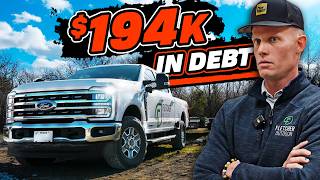
In this episode of The Business Turnaround Show, host Mike Andes consults with Will Fletcher, owner of Fletcher Outdoor Solutions, and his father Andy Fletcher, a retired lawyer who has been financially backing the business. The company generated nearly $900K in revenue last year but is cash‑starved, with only $2,000 in the bank and $194,000 in liabilities, including $82,000 in short‑term loans and significant equipment debt. Mike walks through the balance sheet and profit‑and‑loss, exposing mismatches between reported cash and actual bank balances caused by poor bookkeeping. He highlights structural problems: a heavy reliance on 1099 contractors while using company‑owned equipment (a legal risk), an under‑resourced admin function, and a sales‑only focus that yields mostly one‑time commercial jobs with no recurring revenue. The discussion introduces the 4L framework (Liquidity, Leads, Labor, Leadership) and repeatedly stresses the need to create recurring maintenance contracts, clarify role delineation (sales, operations, admin), and bring in a dedicated operations/project manager. Mike recommends shifting the website to attract residential leads, implementing a CRM (Jobber or HomeWorks), outsourcing bookkeeping/payroll, and establishing a premium $1,000‑plus monthly maintenance offering tied to large installations. He also addresses the equity split (currently 85/15 in favor of Andy) and the potential for the father to forgive debt in exchange for equity. Throughout, the tone is analytical and candid, with a mix of supportive encouragement and critical warnings about cash burn, legal exposure, and scaling pitfalls.
Chapters
Oh, we're good. We're flush. We got money.
I don't want to continue scaling a model that loses money.
And there's $1 million right here.
We have a big debt issue right now.
I tell you the truth, and I hope you actually don't use this on your video.
Well, you better not say it.
Today we're in Texas visiting Will from Fletcher Outdoors.
I'm not making nearly enough money.
Because the business is worthless.
It is worth basically nothing.
People like this got wiped out in 2008.
I told you that. There's a 10% chance the phone could never ring again.
His landscape construction business made almost $900,000 in annual revenue last year, but they only have $2,000 in the bank.
I like off a whim just quit. Like, what are you doing?
And I just remember you rolling over and be like, well, I quit.
Well, I already did it. My wife thought I was crazy. I kind of thought I was crazy.
It's looking like 10% profit.
No, no, no, no, no. It's, it's, it's got— it's, it's probably zero.
The business has over $200,000 of debt, and his dad is stepping in to bail him out.
We don't have a line of credit or anything like that yet, so I'm kind of that. He's been the bank. If this If it was my gig, I would be going much slower. Daddy is behind the scenes.
Oh, this will be the main topic in the comments. When I heard that, I hadn't heard that before. When I heard that, it's game over. You're just wasting money.
Thank God it's your fault.
This is the Business Turnaround Show. My name is Mike Andes. I'm the founder of Augusta Long Hair and HomeWorks Software. I travel the country fixing struggling businesses. I'm sorry, it hurts my soul, but like this won't scale.
Breath of fresh air there. I agree with you though. The thing that I would look at is, oh my gosh, that's a great idea. He says it like this, it's like, gosh dang, if he's right, man, this is, this is a lot.
Our goal is to give Will a strategy to turn around the company in the next 6 weeks. Okay, so we got Will Fletcher.
Hey guys, my name is Will Fletcher. I'm 35 years old. I own Fletcher Outdoor Solutions. You know, started really small. I actually went to the hospital on my very first job, had heat stroke. I was doing a sod renovation in July. Literally. And I have a video of like me being wheeled into the hospital because I was so dehydrated. But our first year we did, uh, $300,000. Last year we did a little over $800,000. And this year I think we're gonna do between like $1.2 and $1.5.
$1.2 million in revenue. I'm interested to see if that is his revenue or if that is all the revenue of the projects.
I have 4 kids, and that's significant because like 3 years ago when I started this, I was working a corporate America IT sales job making some pretty good money, and One day I just woke up and decided that I didn't want to do it anymore. My wife thought I was crazy. I kind of thought I was crazy. Like, I didn't really know what I wanted. I just knew I didn't want to do this. We have got a bunch of potential, man. We have a bunch of potential.
I will also say, just as a side note, whenever someone says there is so much potential, I can't— I just— it just hurts. It hurts my ears. Okay, timeline and current situation. Okay, notes on the financials. The top line revenue is very close to accurate. Cost of goods sold should include the amounts for equipment rental and contract labor currently shown. Also further, the supplies should be coded for COGS. That's fine. The bottom net income line does not reflect approximately $100,000 I took as owner draws, leaving $106,000 in income. Not clear yet why it shows that we should have $100,000 in the bank when we should only have about $8,000 in the bank.
It seems like we're always running out of money. It seems like every time a tax payment's due, I'm like having to scrounge to come up with it somehow, some way. I just don't understand how doing $1 million a year, that like we're always running out of money.
Let's look at the balance sheet. So he's saying, okay, so this is $112,000 in the bank. He's saying, nay, nay. He's saying that's like under $10,000. And then there's the credit cards. So unfortunately, this is the problem when you don't reconcile your books. Reconciling your books means you take everything that is inside of QuickBooks that every single week or every day you're processing and categorizing. But then you got to make sure it matches with your bank account. You look at your bank statements and you match everything up. And that's why you pay a bookkeeper or an accountant or someone to do that. So that way you don't have to give me 10 disclaimers as to why things should not be the way that they look on your balance sheet and your profit and loss statement. Because if I don't have a clear balance sheet and I don't have clear P&L, I can't help you because I can't be like, okay, the $112,000, yeah, kind of like wipe out $100,000. Okay, so we went from $112,000 to less than $10,000 in the bank. Okay, so the rest of this balance sheet is basically worthless. Well, he's a lot of equipment.
You know, I've never been the best manager of money. We've gotten ourselves as a family into some credit card debt a few different times, worked ourselves out, got back in, worked ourselves out, got back in. We don't have any employees. We do have a T-76, an MT100. We have a dump trailer. We have a flatbed. I've got the 250. Don't have any employees, but I've got 2 or 3 crews that are dedicated, 1099.
See, this also tells me that he's probably not supposed to be doing these 1099s because he's buying all the equipment. They're using his Bobcats, his trailers, and all the rest of it. And you know, you got a $93,000 2025 Bobcat T76. I'm going to go on a limb and say your contractors are using that, but that also likely means that you should be having them as W-2. You've got a lot of loans. Well, this is the fanciest office I've ever been to. Mercy goodness. Got it. Will, what's up, man? Good to see you, dude. Good, man. This is a crazy office. This is cool.
Hey, welcome to McKinney.
Yeah, man, it's great. We love it here.
All right, Mike, uh, this is my dad.
Hey, Andy, right? Yes, great to meet you.
Yes, so he stepped in, I would say it's been probably a year and a half that he has been a part of it, owner of the business, but really it's just like from a capital standpoint to kind of help us get going on some equipment. And he's been the bank in some situations.
I think I told you that I was sort of trying to stay as removed as I could. I wanted him to get credit for any great thing that happened with the company.
Yeah, so we started in '23, June of '23. I like off a whim had a pretty decent little corporate IT career and just quit. My boss asked me on one Monday how I was doing and I just like for whatever reason that day felt like being honest. Don't want to be here, don't love this job. Dude, it was a little crazy at the time. It was like, well, hold on, you're making $150,000, $175,000 a year and you're going to go be a landscaper. What are you doing? It was a little bit of not wanting to go back. It was a little bit of also wanting to kind of prove everybody around me wrong. Maybe like, pretty good opportunity to be a landscaper. Like, what are you doing? And it's like, I'm going to show you. I think even he at the time, if he was being honest, probably had a little bit of that.
The way we— the way I started was, you know, he's my son and I have a lot of faith in him and I want to support him and I know he's smart and all that. But I wasn't really sure that this was, you know, okay, Dad, I want to be a landscape guy, and I'm like, well, okay, let's, you know, I'll support you and we'll, you know, do— but I was kind of hanging back.
What was your background, Andy?
I'm a lawyer, so just retired about a year ago, and so I have time now to kind of be on the back end.
It's the opposite of let's go start a landscape business.
Well, and that's why there's been kind of some yin and some yang here, and most of the time it works pretty well. Sometimes we're at each other's throats a little bit.
For a year I've kind of been hanging back, and then all of a sudden this thing exploded and he's got a real business, and I'm like, okay, This is really something that if we don't manage right, you know, he's going to lose a huge opportunity.
We have a big debt issue right now because there's tens of thousands, potentially maybe a few hundred thousand dollars. Let's see here. According to this balance sheet, which we now have no faith in, the total liabilities are $194,000. So I would be very concerned if we had $194,000 of debt. And according to this, There are short-term business loans of $82,000.
Especially because it's sort of become a real business and we don't have a line of credit or anything like that yet. So I'm kind of that.
That's what I meant when I said the banks. So we're floating these like quarter million dollar commercial jobs and all of these terms are like net 30, net 60.
Oh, this will be the main topic in the comments. When I heard that, I hadn't heard that before. When I heard that, it was game over. That's what I'm trying to defend him, but they'll still rag on him. Okay. So his dad basically bought him the truck and then put money into this to get him started. And then they have taken on debt throughout the past couple of years and grown it very quickly. And now his dad's going to basically probably say, hey, a couple hundred thousand dollars, I'm going to forgive the debt, but now I want equity in the business. So I don't know if he's at 20% or 25% or 50% or 2%. But he's basically going to forgive the debt. Yeah, I think like what we can do is we can kind of look at all aspects of the 4L framework. So liquidity, leads, labor, leadership. We'll kind of see what are the current problems and then we'll go through solution space of like how do we fix some of this stuff? Just before we get into this though, I want to, I want to just like make sure we're all on the same page right now. I want to be really clear in terms of the role so that way I don't step on anyone's toes. Are you doing sales and operations?
For me, it's selling pipeline. It's— I'm kind of establishing what our prices are and then a lot of the operational stuff.
And then he's doing all admin?
Yes.
Got it. Is that very clear roles right now? Like, are you doing any admin whatsoever?
Uh, the only admin that I'm doing is when he calls me and he goes, what was this for?
He does get in and create invoices and all that in QuickBooks, which kind of creates a mess. So we're, we're in the process of getting that Delineated.
And right now, when you assess the business, first off, what's the goal? And then where's— where do you see the problem in the business right now?
Again, goal is, is just to clean, systemize, stabilize what we have right now. Problem number one, I think, is just the bit— the, the industry itself is cyclical. Uh, no recurring.
Yeah, like, I think I'll probably be looking at how do we create recurring revenue so he can actually build a business that runs without him instead of being chained to it.
And then I think we got a big, big problem on the admin side. Like, and that— and again, I don't— that's not a shot at you. He's—
no, I— and I'm not an admin person. I've had an admin my whole life, and I'm having to kind of do all that because I want to support him until we can afford it, you know. So, and we're kind of there now.
So it's like, we need an admin, but a really badass admin is probably $70,000, $80,000. And like, where's— like, I had a million dollars in the budget. Surely we can find $70,000 or $80,000 somewhere.
Will is right. Usually it takes $70,000, $80,000 a year to hire a really good admin person that can do all the tasks you need them to do in a day, which includes everything from opening up email, answering phone calls, sending out estimates, text messages, payroll, QuickBooks, all the rest of it. One way you can reduce that cost though is to reduce the amount of skill required for that admin person to be successful in their role, meaning take some of the more complicated tasks that you need them to do and get those subcontracted out or get a third party to do them. One of the easiest things to do is bookkeeping, your taxes, and your payroll. That's something that is much more skill-oriented instead of just answering the phone, doing emails. Those, those tasks you can train someone in a week or two. For someone to get their QuickBooks Pro certification, really understand how to do reconciling of bank statements, that can take months. And if you're going to require admin person to do all those things, including running payroll, understanding taxes, and all the rest of it, you could be paying $10,000, $20,000, $30,000 more a year for that person. And that's why I really recommend until you have over $3 million in annual revenue, use a service like Home Service CPA to have your bookkeeping, your payroll, your taxes done for you for a couple thousand dollars a year. It's all going to get done. And that way you don't have to spend an extra $20,000 or $30,000 a year hiring someone with admin experience, doing QuickBooks, understanding taxes and payroll and everything that goes into reconciliations. So go check it out. Home Service CPA for under $500 a month. You can get all this taken care of off your plate and then reduce the amount of skill required when you do hire an admin person. So let's start with liquidity on the financial side and then we'll work through each one of these. So from a liquidity perspective, right now on the books in terms of debt, from what I'm seeing on the balance sheet, which I know there are some— we're still moving some things around. If I'm, if I'm not mistaken, it's about $80,000 to $90,000 of short-term loans. And then the rest is equipment debt. Is that correct?
In a manner of speaking, it's anything that says short-term loan is me.
Right.
And so I don't— I'm not really expecting when the business can afford it. Maybe I'll take some back, but it's all tax. Got it.
And what is the price? Is it $150,000? Those three things combined?
It's $86,000 on the big one. It was like $30,000 on the small one. The dump trailer was another. I don't know what, like $10,000. It's close.
$125,000, $130,000. Okay. I think he has a bad spending habit on the personal side. He's been racking up a bunch of personal credit card debt. So again, like, this is why you gotta be careful when you get a bunch of money and there's not consequences to spending it. If you then go to your personal life and start spending money now, it does affect the business. I think he has a spending problem. He keeps pointing at like admin. I don't think admin is the problem here. Everyone can improve in admin. Admin is always one of those things you can always get better at. Systems everyone can get better at. But I think there are structural, structural things we can change in the business that'll set them up for success. And I'm mostly concerned about his spending habits because like if you're going to scale this thing to $10 million, dad's not going to come probably bail you out when you have $2 million of debt. So the business model needs to be profitable from here on out, not constantly just digging more debt as we grow the business. And let's make sure it's legal so we don't get sued out the wazoo one of these days when a subcontractor gets hurt on the job. I've seen so many times when it starts off like that and as things actually go well, it's like we need to have clarity on what's going to happen.
Oh, 100%.
And I highly recommend talking to CPA because it's mostly actually probably for you a tax thing.
Yes.
Like, how, how do— should we treat this?
Well, it's the reason that I own 85% of it, because he can't take advantage of all the depreciation losses and all that, right? So I can.
Okay, so from an equity perspective, that's the split now, 85/15? The expectation down the road will readjust that.
Yeah.
Okay. That helps me a lot. Understand that. Okay. So for now, you can at least take advantage of the losses. Got it. Makes total sense. Now, from the business perspective, let's wipe the balance sheet for a second because that's basically got cleaned up and that's kind of a non-issue just given the things. And I want to be really clear, even for like the video side of things, from my perspective, I don't see it as a negative thing. And I know it's sometimes like, oh, like what commenters will say is Daddy gave me money. I look at it as use whatever you got. Look, you got to use whatever is given to you, and it sounds like his dad is able to bankroll the business and is going to basically roll the debt that he owes into the business so he gets a piece of equity. Like, look, look, I'm not going to hate on anyone that has money or their parents have money. Use what you got. I just want to be really clear, I don't look at it as a negative thing. I think everyone has advantages and everyone should use them. And Shaquille O'Neal is not apologizing for being 7 feet tall. 7 foot tall, right? And so, you know, if he was 5 foot like me, like, he would have no career. So no one's feeling sorry for him. The liquidity side, I'm not concerned about on the balance sheet. Let's look at the P&L. That's the part where I don't want to continue scaling a model that loses money. That's where I focus in on, because eventually the balance sheet does become a problem if we're draining off— now at a $10 million size, we're losing $1.5 million a year. Look, let me just say this. Everyone in the comments is going to hate on Will because his dad gave him a bunch of money to start the business and is wiping out the debt. But everyone has advantages and disadvantages. Use your advantages and just go all in on them. So don't hate. Don't hate the player, hate the game. You know what I'm saying? And so the liquidity side, when we look at P&L, last year on the P&L, it looks like $200,000. I know you said the $100,000 you're taking out on top of that. So like, it's looking like 10% profit. That's not showing up though in the bank. No, no, no, no, no.
It's, it's, it's got, it's, it's probably zero.
So liquidity, the big problem is we don't have enough money in the bank.
Right.
And we are losing money. I, if I had to imagine, we are probably losing about 5 to 10% of cash. So as we scale, for every dollar we grow, we're probably having to spend $1.10, $1.15 to fuel that growth right now.
So here's what happened. This kid, we saw a ton of promise in him and we still do. And I hope this is one of my top guys moving forward. I had subbed out a couple installs in the past and I felt like I was losing a lot of the profit. So I was like, okay, I need to like organically build my own irrigation team so I can start capturing all this profit. Well, we got on this huge job and of course it took us like 2 or 3 weeks longer than it was supposed to. And I paid probably double what I should have for that system. Whoops. The other guy was trying to move that pile over here so they can clear the driveway. Well, we were just moving it the wrong way. So it's not here's the job, here's the job notes, go. It was like me kind of walking it with them a lot. Of last year, breaking even on a lot of those commercial jobs. I bet you that profit margin was real close to zero for that reason. Yeah, we, we talked a lot about you, Ernesto. Oh man, Ernesto, he's the best, and I hope he sees this. He is the best, an absolute workhorse. He sees problems and solutions the same way that I do, when like I didn't even know that the problem existed and it's already been solved. That is the best. I try to do that for my guys. When people do that for me, it's like, that's just Ernesto to a T. So if anything, I probably slow him down a little bit. Now what I have done in the last 6 months is basically said, okay, we got this 45,000 square foot measurement for sod. That's going to be 78 pallets. What's your price per pallet? Okay, well, I'm taking X percent on top of that, and that's the price. So I don't care how long it takes you. I don't care how many guys you bring. That's what you're getting.
The thing that you want to be careful of if you have access to a lot of capital is to just throw money at the problem. So he's got a lot of equipment, he's got a lot of debt on that equipment, but it doesn't sound like he actually has the skill to even do some of these jobs. And he's only been doing it for a couple of years. Not to say that you can't learn that fast, but many times when people grow so fast in top line revenue because they have artificial money behind them, it's actually just propping up the fact that you have a lack of skill. We grew from $1 million to $2 million next year. We'd probably have to put another $100,000 into the business just to fund the growth.
And like funding and admin or funding this or that or—
General, just like not even that taking that consideration, just the cost of growth right now.
Okay.
Right. So when I look at it like in the perfect world, if I can bootstrap a business for every dollar I grow, I'm able to at least make that dollar back to me. That way I don't have to keep going into debt or I have to keep taking on investors' money. My objective is that as we scale this business, it can bootstrap itself financially so you can get to $10 million without having to go into another million of debt. And that, that's where this model with contracting is very opportunistic, but it can also be a very big trap if you start scaling a wrong model. So all of that to say, we got to fix the cash problem when it comes to leads. So we will do problems and they'll feel like we're in this problem space, then we'll figure out solutions. So all of these things in the background, I have ideas, but we will get to those.
Sure.
From a leads perspective, I 100% agree we are in this problem of going after one-time jobs. It's feast or famine, and right now this area is booming, but that can switch very quickly and we are in a world of hurt, especially when we have debt on the business.
You get into the— that he's sort of moved into the commercial project, you know, and none of that is really recurring income.
So we kind of joked that there's a 10% chance the phone could never ring again, and that's When I look at even when families get involved, I don't want that to happen. And now that comes strained because what was expected doesn't happen. And so I always am looking how can we create recurring revenue to at least cover our bases. So if tomorrow we have no more new jobs, we can cover the bills.
Now, my way of like defending against that is if I go meet enough builders, I can kind of stabilize what is usually a pretty cyclical revenue stream, but none of it's recurring.
So recurring revenue, we don't have any of that now. When you're getting leads currently, where are they coming from?
Almost all commercial, 100% word of mouth.
And that is mostly contractors.
So on the commercial side, I actually broke it out right here. This is all 30 days old and there's $1 million right here. It's just like— and this is like just a couple of builders. So what happens in a couple of years from now when I'm just out and about and I've met 5, 10, 15 of these guys? This list is going to be huge. 380 of it last year was commercial landscape and irrigation.
Okay.
$200K turf and pavers basically, and the rest of it, which was basically just like small little landscape jobs. So this like commercial model that I've talked, that I'm talking with you guys about now, it's really only in the last 6 months that it's really started to sway very heavily over to the commercial side. So I do want maintenance, but I don't think I want residential maintenance. I have just had every landscape owner I've ever met is they're just like, oh my gosh, get like residential maintenance, run. And what it is is it's 2 or 3 of these builders that are just $50, $100 million companies, right? And they go build turf baseball field for $2 million, and then they hire us for $75 grand to just go rebuild the irrigation and the turf around it. Well, they have, they have 10 fields. Yeah, thank you, thank you very much, Chris. I appreciate that, man. Like I said, tonight I will definitely get you the pricing on, on the irrigation stuff. We'll get all that squared away. So that, yeah, that's a really, really big builder, and it's a family-run operation. And they do a lot of really big projects here in Dallas.
So if we, if we finish this, this, this out though. So for example, here we got close rate 48% on turf and pavers. That's making up about 20% of revenue. Yeah, 48% close rate, average size $16,000. This is residential.
Yeah.
On the commercial side, what do you think our close rate is? Is essentially everyone that gives you a job?
It's, it's a super high close rate.
Yeah. So like, let's just call it 100%, but the leads are few and far between, right? Got it. And the average size, that's what? 60, 70, 80 grand?
Yeah.
Okay. And then for the landscape side, which is making up currently about a third, more than a third of the business, close rate on that, probably around this, do you think? 48, 50%?
No, it's not that high. It's low. Maybe 30%.
Okay. And the average size on that is what?
Smaller for sure. There's way more of those jobs. 10, 10, 10, 5 to 10.
Okay. And you're moving away from this towards this.
That's what I want to do.
Okay. Okay. And your logic behind that is the fact that you have 100% close rate. That's nice to work with. People just giving you the work.
Yeah. Okay, look at that pipeline. That pipeline is 30 days old. There's not an opportunity on there older than 30 days.
These are estimates sent out?
Yeah. Everything from here up is one. We're starting this next week. Everything down here is just, you know, okay.
And this is all middle schools and high schools?
Yeah. For one— this is one builder. And so like figuring out how to solve some of these, like our books actually are kind of a mess right now. Figuring out how to solve that problem to get ready for all of this that's about to happen because it's coming. And it's like, what happens when I meet 3 or 4 more of these guys? 10 of these guys, right? Yeah.
The challenging part is this can also be flipped off. That's where I feel risk.
Yeah.
Okay. And you're saying like now these jobs, you're closing 100%. So these ones up above here somewhere, these are closed. These ones are in the pipeline. You've sent the estimate in the past couple of weeks.
Yeah.
And your confidence level on closing is pretty much 100%.
No, no, no. Some of those the builder hasn't even won. You see what I'm saying?
They want— they're collecting bids so that if they win the job, then you get it.
Yeah, but I'm with you. Like, it can be turned off and I've got to defend against that and I don't know how.
And then, like I said, on top of that, we've got to get this other recurring income stream started because a business is worthless without that.
It is worth basically nothing right now. It's worth a little bit with me and my relationships and like the couple of skid steers that we have. But outside of that, it's basically worthless. I want to be in this like for the rest of my life, so I don't care how long it takes, you know, in terms of the residential, because technically speaking, residential still makes up 50% of revenue as of last year.
Assuming all of those commercial are outstanding, residential, there's two bids you've put out.
Yeah.
Okay. Do you anticipate, assuming we don't change anything, that next year you're going to have a 75% split of commercial, 25% residential?
Yes.
Okay.
All right. That's what I hope for. And I'll tell you what, and it may be like if I hired a full-time crew and we got the maintenance thing going, the recurring, and I had someone else to deal with all these problems, maybe I would feel differently. But what I can't stand with this landscape stuff is when somebody calls me because their flower died or they didn't water it or they didn't do this or—
residential or commercial?
Residential. It's like such a time suck. It's like I'm not making nearly enough money doing this. I'm going to stick with these commercial guys.
That makes sense. Labor. So right now we feel like there's pressure at the management level to get some sort of help, whether it be in operations or an admin. There needs to be some help. Okay. When it comes to out in the field labor, that 1099 situation, walk me through that. It sounds to me Like you have a one guy you pay.
Yes.
And then he pays his technicians.
I feel like I have done a— I've started to hand off more of the operational stuff to some of my lead guys, none of whom are employees.
And that's another thing we're going to talk about. They're all 1099s, brilliant, you know, great in the industry. But, you know, what do we do there and how do we lock them up?
These are talented guys that are 1099 guys, but they only work for me. Like, we keep them busy enough, I guess, is what I'm saying. Um, but I think you could make a case that they probably should be employees.
Classification for W-2 employees: who controls how the work is done. If you dictate schedule, methods, materials, uniform, pricing, and require approval before changes, likely a W-2. If you provide trucks, trailers, mowers, skid steers, fuel and supplies, W-2 signal. Can they work for other companies? Okay, so if the worker can work for other companies, then you're probably a 1099. Okay. Hourly or weekly payroll with steady income, W-2. If it's a per project, per contract with profit and loss exposure, more consistent with 1099. If they perform the main service your company sells year-round, indefinitely, highly high W-2 likelihood. Yeah. Here's the— this is the one question. Do you dictate schedule, methods, materials, uniforms, pricing, and require approval for changes? You're probably W-2. If you provide trucks, trailers, mowers, skid steers, fuel, and supplies, W-2. I'm gonna go out on a limb, say those Bobcats are being used by his contractors because he's not in the field. So it's probably gonna be a W-2 situation, to be honest. But right now, are they showing up? Like, do you have trucks for them?
No.
So they just show up at the job site and Totally permissible on a commercial site because everyone just meets at the job site.
Yeah.
Do they have their own equipment and trucks?
No, they're using all mine.
Now, then the people that he hires, like he distributes the money to— yeah, what's your relationship with them?
Uh, just like nice. I mean, no, there's really no—
there's no connection. That's good from a 1099 perspective.
Well, Ernesto, his whole family, all of his brothers are underneath him essentially. Yeah. So I mean, he has relationships with most of those guys.
Does he work for other— does Ernesto farm out to other contractors?
Yeah, not nearly as much as me though.
Okay, so you're his main—
yeah.
Now is it 100% you or— okay, so that's good because the reason is because most time I walk in the situation like you're not a 1099. There actually seems like there's a real reason you could— you have reason to say this is a 1099 relationship. Yeah. And that is he— if you don't provide the trucks, you don't tell him you have to be here and you can't have other contractors and you can't serve other vendors, like that would then be like you are now stepping very closely on the W-2. The one thing that you're doing that is potentially very gray is using your equipment. Yeah, that is a huge red flag from a legal perspective as to why you'd have to be a W-2.
What have you guys been doing? You were welding? Looks good, man. It looks good. He's just basically going to move that pile from there to— Yeah, yeah. Hey, 4K squeak squeak. Porque maybe necesitamos grease, maybe.
Squeeze, squeeze, squeeze, squeeze, squeeze.
Okay.
So I would recommend making some sort of relationship down the road if you stay contracting where they're renting that from you in some way, shape, or form. Just make sure that they're not using your equipment as, yeah, oh yeah, we use their equipment and then we also do 1099. That can be a big red flag down the road, and you don't want 5 years to go by and then you pay back taxes on 5 years worth of W-2 income. Yeah, it's like 45% of his revenue is going out the door to just the contract labor, which again, I'm not like— it's— I'm like, that's— it's not horrible because if you're paying employees, you want to get under 40%. The difference is when you have contractors, there's usually more management required to make sure that the subcontractors actually do the job well. I think you're going to need control as a mid-level crew lead management level. And so those people, I would say you give them a truck, You give them a good salary, you give them some sort of incentive around revenue goals and getting on budget for projects, but you need more control of that stack. Now, who they— the technicians, I'm a big fan when it comes to commercial of trying to keep the 1099 relationship because now I don't have to do workers' comp. I have to worry about injuries on the job site, safety training. It's like, hey, if you want to come do this job, you can work for other people if you want. But when there's work, I have it for you and you have to build infrastructure for 50 people. I'm looking at this and I'll be blunt. You are not good at operations and you crush at sales. Yeah, you're really good at it. So I want you— assuming we're going to grow this business to $10 million plus— you got to focus on sales.
Yes.
To do that, you need confidence in your operations so that you're not chasing your tail and having bad reviews all over the place and losing people that are bringing all this revenue to you. And that's going to come in the form of controlling project management.
I was a little nervous to kind of do this whole thing. I just, I don't love being in front of the camera, but I'm glad that I did it. And we had a great experience.
Because you're serving as project manager now. And I would lock in a very good salary because these are very skilled positions and very stressful. You're project manager. And the reason right now you feel spread thin is because you have no one that can— you can be like, you're going to be here at 8:00 tomorrow. You're going to check on these 3 sites. You're going to check in with me and follow this checklist. Yeah, that's the positive of bringing a W-2 on. You now have full control.
Hearing a young guy say some of the things that are so full of wisdom seemed very trustworthy, very authentic, very just a good person to be around. And, and those are the kind of mentors and, and examples I want my own son and my other kids to always look up to. So you never really know what you're going to get until you meet somebody. So, you know, we were not surprised but very pleasantly— I don't know what the word is— happy that it, that it was what I was hoping it would be.
And so you relinquished control in exchange for a very flexible working condition and low overhead. Cool. Scaling. Now we got to invest a little bit in overhead, i.e., these project managers, so that we can really scale up.
Yeah, yeah, yeah.
Right. Because you could double this business, triple it probably, if you had a really solid project manager that you controlled and you could say, you're at that, you're working from this time to this time. Here are the products. They know all of this.
Yeah.
They know the structure of the business. They know where the materials are at, where job sites are at. Who's behind, who's ahead, things like that.
Yeah, yeah, yeah.
That's what triples the business, probably, overnight, is a good operations manager. I would probably just call them a project manager, though. Yeah. Down the road, if you ever had 4 or 5 project managers, you'd then have an operations manager above them. And so I would love to get that role for him because I think then he can just focus on his superpower, and then his dad in the admin role can systematize that and keep any sort of drama on the job sites or things going wrong away from the salesperson. 'Cause the last thing you want your salesperson hearing is all the negative reviews, all the things going wrong on the job, and those things will happen no matter what industry you're in. Operations, doing the actual work, providing the service or product to the customer, there will be complaints. There will be mishaps. There will be times that you drop the ball, but you don't need your salesperson hearing about that. They're out supposed to be getting new work. They don't need in the back of their head that Billy Bob and the person they sold last week is having a bad experience. That's an operational problem that needs to be solved and go hire someone that has 20 years of experience doing it so you can just go focus on crushing it on sales. The reason that you are somewhat afraid of getting a project manager is because that fixed cost of a truck and fixed salary becomes a huge liability when the— if and when the work drops. And it will. It's just a matter of is it in 5 years, 10 years? Who knows?
Yeah.
Like, people like this got wiped out in 2008. Like, it basically reset the entire market around commercial projects, especially at this size— $1, $2, $3, $5 million. The $20 million guys, they figured other stuff out.
It's like one of the jokes I thought Mike was going to crack on me. He's like, dude, you're not that good of a sales guy. You're just underbidding everything. You know what I mean?
I think Will is really good at sales. That's why his whole background is in that. And so he needs to understand that's his strength and he should double down on that. But the operation side, like you're doing these huge projects and you literally have a couple of years of experience doing it. And that's why he's bumping up against this million-dollar problem. I.e., the business can't grow anymore, is because operationally he just doesn't have the skill and they don't have any control over their 1099s. That's why I really want him to lock in that project manager as a W-2. And because of that, you're causing admin problems.
Yeah.
Right. So things going wrong on job sites, behind on production, materials not being where they need to be at, equipment failures, maintenance, all of that. You're just not good at.
Yeah.
And it's okay to say that because you can still grow a $10 million business without having great operation skills.
Breath of fresh air there. I agree with you though.
Yeah.
Yeah.
Okay. So operations is our weakness, is the thing that's actually causing the problems on the admin side.
Interesting.
Because if someone knows what they're doing and they're not looking up on YouTube, which no shade, I started there too, but that, that happening causes so much frustration for admin because it's just, it's a mess.
Yeah.
Like the mess in admin is almost always caused by poor operations and poor operations caused from sloppy sales.
Thank God it's your fault.
Okay, so we see some operational weaknesses, and I think that there's an opportunity around operation management/project managers.
That is so interesting, diagnosing the sickness, not the symptom. I was pretty nervous about having him come in here in front of a big audience and tell me about all the stuff I'm doing wrong, but that's a very, very small price to pay for, like, a business a healthy business, which is if somebody is thinking about inviting Mike onto their show, they probably don't have a very healthy business. So it's like, what do you have to lose?
Leadership side. So I think the sales, operations, admin delineation needs to be really clear. Now, I think we can clean up a lot of the problems that has been caused by the murkiness between those three departments by fixing operations. I do think that.
I was a little bit nervous because I feel so responsible for kind of the back end and the books and all that because William's out selling. And, you know, and they're kind of a mess because we're both in it and we're just kind of learning the whole QuickBooks thing and all that. So if I had any nervousness, it was that Mike would come in and say, oh my gosh, you know, this is a mess and it's, you know, you guys need to, you know, whatever. Otherwise, I really wasn't that worried about it. And as it turned out, I I think we got some amazing information and guidance.
However, I think it'd be really healthy for the both of you to look at everything you do on a daily basis and just literally on a whiteboard, it's sales, operations, admin. It is getting the work, doing the work, and getting paid for the work. 3 very simple functions. The thing that goes— that always people bump up against a million, getting to 3 million, is delineation of those 3 roles. And usually by not delineating the roles, that creates a mutiny between the leadership.
Would you consider creating a bid, like looking at a construction plan, creating the bid, takeoffs and all that, is that admin or operations?
Depends on how you structure it. If you have really good systems around pricing, it can become admin. And you would prefer that 'cause admin is the lowest leverage task in the business. Right, I don't want my salesperson, you, figuring out pricing and going through and figuring out what's the cost of this tree, etc.
Interesting, that's, I've always done that.
The reason is because your time is so much more valuable than someone you could go hire for $20, $30 an hour to do that. If you have a system in place for the pricing. So if you have a spreadsheet that has all the materials and what the cost is and what the price is, if you have that, you should be able to go to a job site, make a video of the project and say, hey, here's the material list. Boom. I'm not thinking about pricing, cost, what it is per month, nothing. I am giving that to my admin person and they're going to spend 20 minutes making sure they do the spreadsheet. Okay, 5 of this material, 4 pallets of this, 36 yards of material, this. And then they come up with the price, they send it to the customer, and now they can do it more personalized. They're going to take a video. Hey, Mr. Jones, this is Bob over here at Fletcher Landscapes— Fletcher Outdoor, sending over the quote. Got the quote back information from Will. He was really looking forward to getting this over to you. If you have any questions, let me know. That's attached to the estimate and sent to them. Now, if there's any communications between admin and the customer, customer, and they're thinking, okay, when can we get on the schedule? What's the deposit like? All of that's admin, not you. So it goes sales, you hand things to admin, admin sends the estimate, gets it sent to the customer, personalizes the information. That is way faster because this person is sitting in an office, you're out on the job site, you complete that very quickly, and within an hour of you leaving a $50,000 job, they have a bid, they have a customized video from admin. And then if the question is, well, that's going to be very difficult to standardize my pricing, Anything that goes way beyond what you can, can't do in a spreadsheet, you shouldn't be touching it. That's where you're causing all the problems for operations. This is where this guy, this operations guy between sales, operations, admin, he gets mad because you get in there and start customizing your quotes, doing random little pieces of material or types of work that you usually don't do. That means I can't hand it off to admin because it's so customized to what I'm doing. So if you can't create a system for it, you can't delegate it. And that's what we've created. Everything right now is like pricing is you're coming up with it. Anything that you can't create a system for, you can't delegate. And so when you go through all the types of jobs that you do, if you say, I can't do that in a pricing template, I can't create a system around that, I can't hand that off to him, we don't do it. What you see with Will and his father, you can already see as the business is growing, there's going to be pain points when there's not delineation of roles. And so I think like a partnership in a business, the same thing is true when it comes to a family. If you don't have clear roles in terms of like, I conquer this, you conquer that, and it's like, well, we kinda do the business together, but then we also kinda parent together, we also expect each other to like coach together, like the kids' practices and going to their recitals, versus being like, this is the delineation, like I will go out and do offense, you will do defense. And that doesn't work for everyone, but it worked for them, and I see that as, for most people, being a really good way to delineate roles. Just like we talk about sales, operations, and admin, it's like, as a family unit, as a partnership, what are you killing? What are you conquering? What are you going after? What are your goals? And then what are mine? And then being really clear what those are instead of just being like, we would just kind of do everything together and then we are constantly stepping on each other's toes.
You know, I, I, I, I don't— I think some families I've seen in my personal experience, some families just can't work together. You know, personalities, you just have to take that into consideration. But working with him is, or families, father-sons, it's all about personality and respect. I think you have to have a mutual respect. I think a lot of friends of mine, fathers, still sort of act like they know more than their 30-some-odd-year-old children. And I don't think you can have a working relationship if the father thinks he knows more than the 35-year-old son. So I, you know, I had to consciously respect his strengths and know his weaknesses. And same thing with me.
Anytime like, well, I have to send this quote out, off the table.
Yeah.
It needs to be where it's in a spreadsheet, it's inside the CRM. And that's like a whole other conversation around the admin side. Like down the road, you gotta get in a CRM. This, I'm sorry, it hurts my soul, but like this won't scale. Right. The whole like these and above are accepted.
Yeah.
What does that mean? Right. It needs to be— we have our estimates, we can see when they were sent, whether they've been accepted. They're in an automation sequence to follow up with the customer. I can attach a video to the quote. The customer can see the customer portal. They can see all their quotes inside of there. That is a no-brainer. You can solve that problem really fast. So I'm not even going to talk about it because I think that's a given. I think you both know we need to go with CRM.
Yeah.
Usually I recommend Jobber for anyone that's going to grow a business about $250,000 in annual revenue. It's very simple and it's just really easy to use on your mobile device. And as a solo operator, you're out in the field a lot, so you want to be using your mobile device. As you grow, you want custom automations, text blasts, and more features around the dispatch board when you have multiple crews. That's where HomeWorks is a great alternative. When you start getting about like $4, $5, $6 million and you're doing big projects, sometimes there are better softwares built specifically for construction for whether it be job costing or like project management of jobs take 6 months or longer. And right now, HomeWorks isn't the best solution for that. But I also know if I tell them to go do that, they're probably not going to actually use the software because it's such a huge step in terms of organization. HomeWorks would be a great alternative for them right now and allow them to market to their database of customers that they've done work for in the past and they could upsell into the maintenance package. It becomes a different business. Right now it's handshakes and sales is your main thing because you're selling contracts. Yeah, right. You have the 1099 labor, like you have some equipment, so you already have a little bit of this happening. But like, it is a whole different business model to be managing a crew, managing routes throughout the day. Whole different business. The thing is, no one's gonna stop maintaining their property when the economy goes to hell in a handbasket.
Yeah, we need it, there's no doubt.
And so I would be personally looking at this not as a moneymaker. It will be a pain in the butt because it won't scale as fast as building a $10 million contracting company. That $10 million contract can literally go to zero tomorrow. And we're all out.
Yes.
Right. And so it's an insurance policy. And then I think as time goes on, you get good at it. You can make it a profit center, but it is painful because you're so good at the construction and contracting side. Now, I think he can really take the business to the next level by hiring an operations manager or a project manager that really knows operations well. Because in my opinion, admin, his dad is actually pretty good at it. Will is excellent at sales, but operations, he's been doing this for a couple of years, learned mostly off of YouTube University. And honestly, if you don't have solid operations, if you hire an admin person, you're just going to frustrate them like crazy. And so by getting an operations person and hiring that role in the business, I think they can take the business to the next level.
Would you— and we definitely need sort of somebody else to focus on that side of the business. Would you look for like struggling company or, you know, a guy with a truck and a lawnmower in the back of his truck to buy his 50 yards or whatever that he's doing to start out, or would you start organically from just day one, one yard?
I would not do yards. I would do landscape maintenance only. And what I mean by that is I'm not gonna go out and get a commercial residential lawn that's a $50 cut. I'm not going after that. I'm going after the customers. I have installed their, their landscaping. I'm going to maintain it. Now, that angle will include usually mowing because they're like, I don't want to have a mowing company and you. But the advantages back to your biggest pain point around residential is like, my bush died. That's a pain point for them. You can take advantage of that by selling them a warranty around installing of the plants and the irrigation if you get on our recurring maintenance plan. And so now the thing that you kind of hate, which is like residential stuff, you use that as every single person that you sell a $125,000 turf job to say, oh, by the way, we guarantee the turf for life as long as we come on a quarterly basis, we clean it, and we do all your landscape maintenance on your entire property. And here's the bid for that: $1,500 a month, whatever it is. And if you sign up for that, we warranty everything. You know that you can cover the damage or the issue or something that happens, pops up because you're there so frequently. Ideally, I'm getting them on the landscape maintenance side, which is I got to be there usually every week or two. And so now I can increase the recurrence, but I can charge a premium price because I'm guaranteeing something around the installation. I believe he can actually connect all the dots of create a sales system to upsell a one-time project into recurring revenue. I think you can connect the dots, but ultimately I need him to on the initial estimate, convert the customer from, hey, let's get this big $100,000 job done, to after this $100,000 job, you need us for maintenance. I want them on the initial upfront estimate, but I also want it if they don't accept then, on the walkthrough of the project when they're super thrilled and you're like, yeah, you need all this other maintenance done in the future and we can do that for you. Because you're installing irrigation, which is a huge pain point as a business or as a customer, is okay, great, I got the irrigation, clap, clap, clap. I need someone to turn this thing on, turn it off, blow it out, fix the broken heads when my kid drives over the sprinkler head. And what happens if it freezes like it did a few weeks ago? What happens if one of the controllers stops working? What happens if the pipe breaks? All of this is pain. You just outline that and say, hey, by the way, we can take care of that as long as we maintain it. We do all of this completely free. And then they are like, oh man, I should go bid that out. No, I won't, because now I don't have to think about all this other stuff. And the people who installed the system are now working working on my property. So if something does go bad with the irrigation, if something does go bad with the turf, they know exactly what's underneath the ground. And you can just be honest with people, like, hey, by the way, because the irrigation, you can totally get someone else to do it, but we know where everything's at. Yeah, because right now all the leads are coming from commercial. Yeah, I'll be honest, that's 2 customers. Yeah, in my mind, 2 customers commercial, 2 customers residential. Yeah, it just so happens that you've got 2 massive builders that are in growth mode around here and just like throwing money at you. Great, but when that dries up, I need to be— have some residential people coming in. And ideally, out of those two, one of them accepts a recurring maintenance package for $1,000 a month.
What I love about commercial work is that the guys are taken care of. So the projects take a little bit longer in duration. So, you know, we're on one job site for 3 weeks or 6 weeks. So like from the business development standpoint, I don't have to worry as much about where the next job's coming from.
I would personally literally start at $1,000 a month for recurring maintenance. Nothing below that. It's very premium and it's only going to go to the people that you're installing big projects for.
Okay, so can I pick your brain on how to find them real quick? Like, like mailers, door hangers, like—
No, your website is screaming commercial right now. That's why it is.
Yeah.
Right now the website is attracting the type of customer that they aren't even getting leads from the website. Like, They literally said zero commercial customers have come from the website. So why in the world does the website look like we're attracting huge commercial projects? So right now, if you go to your website, first off, the design is messed up. I don't know if you've seen on desktop, like the menu bar covers the logo unless you're zoomed out 75%. Okay, so little things like that we can tidy up. The reason it hasn't become a problem is because you get two customers just throwing work at you on big projects. Like, forget that. Yeah, right. I think two things The biggest thing around getting leads is your website has to be dialed in for residential right now. Does that mean you abandon commercial? No, but they're coming to you anyways. They're not looking at your website. They're shaking your hand and saying, yes, I have a $100,000 job. And the world of commercial is a lot of that. You know, they don't even look at your website. Every single residential customer will look at your website.
So funny when we had this, you know, spent a couple of thousand dollars with these website people. And my whole thing was like, I want to make this like so commercial because this is the route that I want to go. But what you're saying, and I totally agree with it, is no, don't worry about that because they're coming to you anyway. So yeah, just keep doing what you're doing.
My objective is to be able to get the, the good in this boom of these guys just sending projects. I want you to be able to take advantage of that and grow a big business that's profitable. I want you to take advantage of that while also slowly building a sustainable business that without those people you crush. And more importantly, make it easier for people to actually give you money. The only 3 things a customer needs to know is Do they do my service? Do they serve my area? And can I get a quote from them? Do that all in the top half of the page when they come to the homepage. It's not really optimized for collecting leads or conversion rate optimization. Everyone thinks about their logo and the truck on the pictures. It's like, look, the only reason the website exists is to turn a prospect into a lead and collect their information. So make that as easy as possible. If you look at your estimate request forms that come from your website, I would guess that 90% of the residential people and maybe you've got 1 or 2 people coming from commercial.
Yeah, I don't think I've ever gotten a commercial one on there. Yeah.
So let's make the website for the people that are actually submitting bids from there. Gosh, if you do that, you'll like 5x the leads from just residential like that.
I am excited about the challenge of building value for my business. So, you know, we're taking on high-ticket jobs right now, but as soon as that job is done, there's no value for the business. So we were talking earlier about legacy for my family long term. The only way, the real way I'm able to take care of them from a legacy standpoint is through building out a recurring revenue stream. And that's, it's going to be a big challenge, but we're going to do it.
I want to, I want to kind of like get past this like, oh, we don't have residential customers coming in and we do mailers.
No.
We need to change the fact that if you went right now to how many people are coming to your website, I'm gonna go out on a limb and say it's a few hundred a month, and you're getting 1 or 2 estimates from them. So your conversion is like 1 out of 300. You can get that to 1 out of 50 and 6x the amount of leads that you're getting. So instead of thinking about how do I get more customers to my website, i.e., door hangers, Facebook ads, whatever, let's just focus on once they get to my website, let's convert more of them. So conversion rate optimization is what we think a lot more about than like SEO and like driving more traffic and ads. I'm trying to get every person that showed up to my website as a customer. Yeah, right.
Can you think off the top of your head, maybe yours, one of your clients, somebody you've done this for who's got a website you really like?
Yeah, if you just go to Lawn Care Web Design or Home Service Web Design, go to our work tab. That's where we build all our sites. You're gonna get a bunch of inspiration for those. We do it. It's a subscription, $499 a month.
Um, oh, you do the website work?
Yeah, we do like 600 or 700 websites.
Oh my gosh.
Yeah, so like even if you just get some inspiration from that though, but the bottom line is if you put an estimate request form at the top of that page, you will double your leads. And if you just focus on highlighting residential work, residential people will fill out the estimate request form. Like I would never fill out that form as a homeowner because I think you do big projects, and you do for 2 people. Yeah, but we need to get all this back. Like I think you literally 5 to 10 extra leads just by doing two things. One, change the pictures on the homepage and move the estimate request form up, like up to the top. If you do those two things, you'll 5x the amount of residential customers you're getting.
I'm not as dumb as I look. I told him to change that picture.
That's okay, he's a sales guy. He shakes hands. You do admin and you tell the people on the back end what to do.
Okay, I knew we needed that, but I wasn't quite sure how to get started, and now I think we have a roadmap, and so that's pretty exciting and doable. I, you know, what I like so much about Mike is in this interview was he's very practical, very pragmatic. You know, it's not pie in the sky kind of stuff. So I think it's something we'll be able to execute on and really see benefits pretty, you know, maybe certainly within the year.
Okay, so let's do this. So we're going to fix the website, drive in more residential. Then what I need to do on the sales side is build sales system for maintenance upsell. So you're going to do it when you initially show the project. You will win more jobs by having this because customers already are concerned about who's going to maintain it before they install it. Okay, so I need you to build the sales system for that though, which is now when the estimate goes out, there's another line item inside of that quote that has the recurring package. I want them to accept both line items, the project install and the maintenance. Recurring maintenance. A bunch of people, 20 to 30%, will just accept it in the original estimate. This is why having a CRM is so important, because I need them inside a customer portal having the project and the recurring maintenance. And how we do it is everything defaults to on. They would have to turn off the maintenance program before they click accept. So now when an estimate goes out, this is like the rule now: no estimate for one-time project on residential goes out without a recurring maintenance package attached. Like, in the perfect world, You put these all inside of something like HomeWorks or CRM and you literally text them all and like, hey, I went by your property the other day. I went ahead and created this new option that we have. It's a budget-friendly way of making sure all your property looks good year round and you don't have to think about anything we've ever installed for you because we warranty it, guarantee 100%. I would then have a start date for about 2 months from now because then you're going to sell 20 of these and I'm going to go find an operations manager to run it for you. There's a lot— this is like very difficult, by the way. What I'm saying right now is it's very hard to achieve. But what you, what you'd have to do is put your sales shoes on, go sell it, say your date of service starts on this 1st.
April 1st.
Yep, and then you're gonna go do it very quickly, get 20 or 30 of them so you can afford an operations manager to run the maintenance department.
That makes sense to me.
Okay, so we're also going to contact database. So we're gonna contact the database. If you think there's 100+, the more individualized you do that sales process, the higher percentage. If you go through each one and you make a quick Loom showing their property on Google Earth, you in the corner like, hey, Mr. Jones, we really appreciate doing—
Oh, you're saying like an overlay video?
Yeah.
Okay. Talking about their property. You could even have the work that you did for them last year for $48,000.
Oh my gosh, that's a great idea.
And that's going to take you 10 to 15 minutes per client times 100. So we're talking about 3 solid days of making Looms. Ideally, I'm first going to focus on customers I've done work for. 'Cause there's probably 30 to 60 of those that are targets for recurring, and you've done service for and they were happy. I'm going after them first. The other 50% in your database, they didn't accept the quote. You can still go after them 'cause they need service done. Like, you're not happy with your current provider. That's what you're going after. And they're like, wow, man, we're paying about $600, $700 a month. It's $1,000, but you know what, they do all this stuff and we know they do good work, and Billy Bob over here, we can't get his phone number, Answer anytime.
I think most people don't realize how much they're spending because you pay your yard guy $100 a month, you pay your fertilizer guy, you pay the guy to trim your bushes, you know. Yeah.
And again, I don't want you to have to figure all that stuff out. I want you to get the operations guy. That's why the ability for you to sell this— like, this is like a— I would give you a 25% chance of pulling this off. That's not easy. And that is basically go pre-sell at least 15, ideally 20+ of these, and then go get an operations manager. Now, if you sell 10 of them, I would still take this. Just know you're going to have a little bit of a burn when you get an operations manager, but he'll be able to single-handedly take care of all 10 or 15 properties. You see what I'm saying? He's not going to be like sitting in here like thinking about work. He's going to go do the work and he can at least cover his wages with the revenue. Like, you probably need 8 properties to cover that guy's wages, right? Because I really do believe next year this time you'll need to get rid of admin. Admin. Like, you'll need someone in here, but you'll be able to give them a solid roadmap and a playbook because now your operations is dialed in.
So that was one of our original questions too.
You think the operations guy before the admin, mostly because I think your operations is broken. That's why I actually— I haven't even gone into like your pricing on commercial because I think you have a lot of, a lot of inefficiencies baked in your operations right now. Simply because of lack of experience. Nothing against you. I've been there too. I did projects and lost my shirt on them. If you get someone in here that has skin in getting that job done efficiently, you're not going to have the swings of I lost $10,000 on this job, I made $40,000 on this job. You're going to lock that out. You're going to give them incentive of staying on time and on budget. And he has all the control of his subs.
Yes.
So hey, right now we only got 10 or 15 clients. Okay, we're looking at $10,000 to $15,000 a month in revenue. You should be able to do that by yourself.
Maybe I would, but I don't think that's going to happen. So if I have 7 or I have 10, and then I have this Ernesto guy, He's like running those 7, but then we get busy on a job. This builder's calling, we got these 3, you know, like—
That's why I think Ernesto is probably your operations manager or slash project manager for the projects. That's what he seems like he's most capable of.
Yeah.
You don't need that level of skill for the person that's doing maintenance.
So that's the tallest ever got?
Yes.
Okay.
Yep. I believe that also that person is probably going to cost you about $8,000 as a W-2 employee, including taxes and all the rest of it. Let's call it $7,000. 7 grand. You can probably get that around here. If you put, if you put a job out for 5 grand a month as W-2 employee with taxes and some truck, etc., let's say they're costing 7 grand. You need 7 clients. I think you get at least 5 if you just went after the 30 people that you just said are like $2 million plus houses you've done big projects for. If you went one by one to 30 people, I bet you'd get 5 or 10 and you'd cover his wages.
Yeah.
Right. So I would first think that that should be the the standard, like what we're trying to shoot for. Cover the wages of that guy. Have a start date of, let's call it April 1st, because that's when about the spring rush starts around here. Have the equipment ready to go, the truck, etc. But that person knows they are fully responsible for everything, the operations, meaning that when admin gets a phone call, because you will increase admin time on maintenance compared to projects, when admin gets a call about someone being unhappy about something on the maintenance, they do not go to you. They go to the operations person, right? This is why the clear delineation is so important. You get the work, they do the work, and if there's a problem and they get a call, they're going to the operations person. You will never— you should never hear about problems in the field. Same thing down the road with an operations manager/crew manager on the big projects. That's down the road because I want you to first build this safety net. I think down the road could very well be towards the end of this year.
Yeah, yeah, yeah.
Right? I just don't want to build infrastructure around this. Two customers that are throwing stuff at you now and could literally tomorrow change their mind. Interest rates go up, something crazy happens, a war breaks out, and you just lost your business. Like, it stinks.
For instance, the recurring income thing I knew was going to be an issue, you know, because in my business, I'm in the leasing, basically non-bank lending business. I was. So we've been through those cycles, and I've seen businesses almost go out of business and we've had to work through, so I get all that. And that was one of my concerns with this current structure that is all construction. They're just, it could stop any day, especially if the economy tanks. So when Mike brought up, you know, basically gave us the plan to create a recurring income stream, the light bulb went off. Okay. I knew we needed that, but I wasn't quite sure how to get started. And now I think we have a roadmap, and that's pretty exciting and doable.
I was a little nervous to kind of do this whole thing. I just don't love being in front of the camera, but I'm glad that I did it. I feel great now with the plan in place to move forward, similar to the way I did when I started this whole thing, scared to make the jump, but I'm glad I did. So chase your dream and tackle your fear. Man, this is, this is a lot. I'm just so—
it's a lot. It is a lot.
Absorbing everything.
Yeah. I think the things that I would look at is the thing that you can do immediately.
Yeah.
Right. So some of this seems overwhelming because in the next 12 months we're trying to change the business model.
Yeah.
In the short term, we fix the website. You're going to go build a sales system for how to sell maintenance before and after a job. We're going to go get your contact database inside software so that you can reach out to them and even sell it. And at least go through those top 30 clients that you know you've done work for and they're very high value. The first 10 are gonna hurt. Yeah, you're not gonna get it. Yeah, but pull up on your screen what you did for them a year and a half ago, the pic, their Google Earth of their property and you. Yeah, and you make a video. Hey Mr. Jones, this is the work we did for you a couple years ago. I just want to let you know that Fletcher Outdoors is moving into the maintenance space and we'd love to be able to maintain the property that we installed for you. Because you're one of our first customers that are taking this, we're giving this promotion for you, and anyone that signs up and starts April 1st is getting this deal.
All right. I think that's all I needed because we need to get that done.
Well, that was perfect timing.
Those are the brains of the operation.
Yeah.
Yeah. Great to meet you. What was your name again? Jordan. Jordan. Awesome. Fantastic.
What's your name?
Mike.
Mike. Nice to meet you.
Thank you for keeping him in order. Yes.
I mean, it's, it's rare that we're like, oh, we're good. We're flush. We got money. We got— I mean, Yeah, it's like every day is a fight, but you're— and this is advice I have for other people looking to start businesses. It's like, dude, make sure that your partner, your wife, spouse is in the trenches with you, because those tough times will be a heck of a lot easier if you guys are rowing the same direction. Where do we just like some amazing advice?
Yeah, he's gonna— he's gonna take it out and do it now.
So basically said your wife If he needs to do all the admin.
No, yeah, right, right, right.
I think the main thing is just to be in support. I think when he comes home, being excited to see him and encouraging, I think that's the biggest thing because he's not going to want to keep doing what he's doing if he doesn't feel like he has support. Or like if he comes and he's like, I don't know if I can do this. I'm like, no, you got this. Like you're doing awesome. Awesome.
Another thing you said, which we knew this, that we've been growing like, but like we showed him this list of all these jobs that we're about to do and it's like, it's a bunch of money but really, and when he says it like this, it's like, gosh dang, he's right. It's 2 customers.
Yeah, yeah.
Yeah, that's crazy.
But I love the way he just kind of brought it down to, you know, if you get 10 people at $1,000 a month, that pays for your operations manager. It basically pays for your overhead.
Yeah. Yeah, I think overall it was an incredibly productive conversation. It was just a lot. It was just a lot.
Well, I hope you know how much we appreciate you guys, because that really— that day served to really, I think, help us both kind of narrow the focus of what we need to be really focused on to grow a business that's going to be, you know, really successful someday.
Okay, so we do have more than $2,000 cash in the bank account today, so that's a win. Uh, as far as the leads, so he wanted to get us recurring revenue going. You know, the recurring model is something that's— we know it was important, we know we have to crack that egg. Um, but it, it's just been so crazy. It's April— what, April 3rd? And I've already sold more this year than we did last year. So it's just crazy. And I kind of feel like, you know, taking my attention towards what that recurring thing needs, which is spending a bunch of time building out the sales model and just doing— I know I can do it and I will do it. It's just been insane. So that was another piece we focused on with Mike was, hey, get out of operations. That's not your strength. Go bring somebody in who can do that well. We're still kind of working out the details. Well, actually, I say that— I mean, we've got the finalized offer right here and kind of verbally accepted it. So officially we haven't brought on the operations manager, but unofficially I have really separated myself from that side of it. You know, there's still like a lot of client communication that happens. And so I'm involved there, all that stuff. But like, as far as doing the work, I am out of that. At some point we're going to get the recurring thing going. It's just too hot right now. On the construction side to take my off. I feel like maybe I'll look back and feel like I was wrong about that. But right now that feels like the right decision. So, so the next one is labor.
Yeah, I'm still the admin for the moment and I'm not enjoying it, but a lot of things are getting missed and a lot of things are not getting done because that is such— there's just so much to that and you know how fast a day evaporates. But that's kind of next on the list.
So we're looking for that person, which then takes us into the leadership and that sales operations delineation. I would say that I'm not totally removed from operations, but I'm a lot more removed than I was probably when Mike was here. So I do think we're moving in the right direction there. We don't have an admin yet, like he said.
I mean, I'm at a point where I feel like we need a really strong office manager who can do a lot of different roles. That's expensive.
Yeah, we're just— we just can't really afford that yet.
So that's That's kind of what the delay has been on that.
Yeah. Okay. So the next piece of leadership is software. And I had my pipeline when Mike came written on a whiteboard. He was like, wow. So we have started using Jobber. Every step I'm taking is in Jobber right now for the most part. And, um, which has helped a lot. It doesn't really talk to QuickBooks that well. Through our bookkeeper on the back end is having to deal with that. So fix the website. Residential. We did that, or we changed the picture from, from a big office building to a really nice house. We're definitely got it more residential focused. Uh, build a sales system for maintenance. So we did not do that. That is absolutely going to happen. I just don't know when.
You know, one of my thoughts is why are we recreating the wheel? Maybe we could find somebody out there who hates the back end and doesn't want to deal with that, but they've already kind of got a system in place and we just buy that and kind of jumpstart that whole process. That's in the mix. I don't know how that's going to play.
It's funny, Mike actually recommended Loom for being used as a sales tool. I actually did my first Loom video the other day and like, light bulb. Oh my gosh. Like if I started using this more, how much, how that would kind of set me apart versus just like delivering the kind of standard quote or whatever. But, but we have to have recurring revenue coming in. So 3 to 5 years from now, I want to be bigger. I want to be more stable. I know we can do it. It just seems like boiling the ocean a little bit right now because there's just so much going on.









