Best Mower for Your Lawn Care Business ($500 to $12000 Budget)
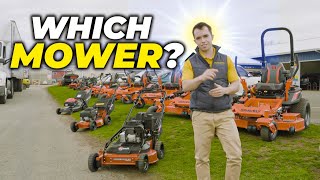
A on-location YouTube walkthrough by Mike Andes (landscapebusinesscourse.com) showing mower options for lawn-care businesses across budgets from roughly $420 to $12,000. Andes contrasts residential vs commercial push mowers (Honda GCV170; Exmark 21" with Kawasaki FJ180; 30" commercial push with Kawasaki or Kohler engines), then explains mid-tier zero-turns and stand-on mowers (Gravely ZTHD 48" and Gravely Pro Stance) and high-end commercial zero-turns (Gravely Pro Turn 152). He highlights trade-offs: deck width, build quality, engine type, fuel capacity, warranty, productivity (speed/area per hour) and when each class is appropriate for growing businesses.
Questions this video answers
March 19, 2021
Honda GCV170 — about $420 (residential-grade)
Exmark 21" with Kawasaki FJ180 engine — about $1,100
Exmark 30" (Kawasaki version) — about $2,200; Kohler-upgraded 30x version about $2,500
Gravely ZTHD 48" zero-turn — roughly $5,000 (entry-level, limited commercial warranty)
Chapters
Now that our camera guy almost got ran over by this truck, let me show you this fuel tank. This thing is huge.
Hey everyone, Mike gandies here with landscapebusinesscourse.com today I'm at Carl's Mower here in Ferndale. None of this today's episode is sponsored or paid for in any way. I'm just going to give you the different options when it, when it comes to buying a mower. Whether you're just getting started or you're been in the industry for a while and you're looking for what mower to buy, I'm gonna talk you through everywhere from a $420 mower all the way up to a 10,000 plus dollar mower and what those might look like and where you might think about buying these different mowers. Alright, this is the GCV170. This is a Honda mower. It's not even a commercial mower. Okay. So this is actually the first mower that I started with when I started Andy's lawn care at 11 years old. So it's very, very light. It's cheap though, like plastic wheel.
Definitely not grade construction for commercial type work. Everything from the deck, just this quality of the build, et cetera, the power on this thing. It's really not meant to be mowing all day every day for weeks on end. So if you only have 10, 15, 20 lawns that you do, it's a really great option when you're just getting started. It's cheap, it's light, has a great self propelled system here at the top. And the thing I love about it the most is it's very light. So for example, if you're just getting started, you, you can actually pick this bad boy up pretty easily and put it in the back of a truck. So you don't need to get a big fancy trailer or a ramp rack or anything like that. You can literally pick this thing up and put in the back of a truck if you need it. So that's $420 a residential grade mower and it's definitely not gonna be used if you're starting to grow really big. Now let's move over to a commercial mower. This is an exmark, exmark 21 inch mower. 21 inch mower is pretty standard when it comes to push mowers in our industry. So again, I don't really care about the brand, I'm just trying to talk about the general price ranges that we're talk now. We're stepping up the game to A commercial grade mower. So now this deck is much, much more solid. It's probably three times as thick. Now, these wheels are very, very heavy duty. They come right out and they're just wider. So they're not gonna leave as many deep imprints into the lawn. They're rubber. Just a heavier duty build on everything on this mower, including the engine. So now we have a Kawasaki engine on this bad boy. This is the FJ180, the engine on the 21 inch mower. Now, there's upgraded version of this that has a bigger tank and all the rest of it, but this thing's only gonna run you like eleven hundred dollars. So it's almost three times as expensive as our first mower. But again, you got commercial grade. You can use this thing all day long. And this is the mower that I started with when I really started getting serious about Augusta Lawn Care. So that was the early days of Andy's lawn care. This was the early days of Augusta lawn care. Because it was a commercial grade, I could run it all day long. The bagging system was actually built for commercial use. To be able to be opening this thing up 100,000 times in a day as you're mowing your whole route. Also, what's really cool is it allows for two different types of up top here to both move and engage the blades. So you can actually run this thing without the blades actually turning. So great option. Again, 11 to $1200 on this bad boy. You got your primer on the side here. And overall, this is what you're gonna be looking at when you start getting 30, 40, 50 mowing customers, you definitely are going to need one. Now, does that mean that you need to start with that one, then move to this one and then keep going up? No. If you know you're going to grow, you're probably going to want to start with something like this. If you have the money, go ahead and start with something like this. But if you don't have the money and you're wanting to get started, that is a great option to get started. Let's move on to what we now currently use for our push mowers at Augusta Lawn Care. And it's a 30 inch mower. Now, there's two different variations of this. This is the Kawasaki, so a little bit of an older edition, and it's going to run you about 2200, 21, $2200 depending where you get it. We actually recently upgraded to the Kohler engine that has a little More power, because in our market it rains a lot and we need the extra power to get the clippings banged. But this is gonna run you about $2100. So again, we got 420, 1100, and now we almost doubled the price all the way up to a 21 $2200 mower. But now we get 30 inches wide. So you'll notice this is a lot wider. We went from 21 inches to 30 inches. Also now we got two blades underneath on the deck. So now there's two blade system. Makes the cut look really nice. And it has that same quality build as an X. As the X Mark 21 mower that is commercial. You have this bar in the front that protects the engine from getting hit. And you also have the ability to have a lot more bag clippings because this bag is so much bigger.
Look at this. Come around here. Come see this. A bag here. You can see how much bigger this is in comparison to those other mowers that we had in the past. It's going to have a lot more capacity, which allows you to do bigger jobs when you get hit.
Now that our camera guy almost got ran over by this truck, Let me show you this fuel tank. This thing is huge. Again, great for commercial use. To be able to run this thing all day long without having to constantly refill. If I'm using that four hundred twenty dollar Honda, I'm probably gonna refill it three or four times if I'm using it all day long. Now, with this bad boy, you fill this thing up one time, maybe twice throughout the day, it'll run all day long. These commercial mowers, they're meant to run all day so you can grind them into the dirt. Run 20, 30 lawns in a day, and they're just fine. Again, this is the Kawasaki version of the Exmark 30 inch mower. There's a 30x mower that has the Kohler engine a little more strong, but that one's Gonna cost you 2,500. This bad boy costs you 2,200. Now let's take it up a step further. All right, so now this is the gravely ZTHD 48 inch mower. Again, I'm not getting sponsored to say any of this. I'm just giving you the different price ranges that you might be thinking about when it comes to buying a mower. So now we're getting really efficient because we're not dealing with 21 inches or 30 inches. Now we're at 48 inches. So we're getting a lot more capacity. And when we do make one stripe on the lawn, we can get a whole lot more done. Now it's even better though in terms of the quality of my life. And I don't have to have to walk behind these mowers all day long. I can sit down much more simply go much faster on this thing because this thing is going to be able to go five, six miles an hour versus me. Walking all day long takes a lot longer. So the capacity, the amount of you can get mowed in a single hour is going to increase dramatically when you get this is called a zero turn mower. And that means that I can basically turn on a dime. These go back and forth. I can turn really great system here. Now this is going to run you right around five to six thousand dollars depending on the different upgrades and features and what type of motor you get and things like that. But this is going to be a great place to get started if you're doing commercial and you need a big zero turn. If you have properties that are running over 5, 6, 7,000 square feet in their turf square footage, you're probably going to need a zero turn of some sort. Now you might get a stand on, which we'll show you in a second, but this is going to be something you're going to need if you have large properties. If the average lot in your area is like a quarter acre, you're definitely going to want something a little bit bigger. Now I will say this, the ZTHD, although it might be only $5,000, it's still not commercial grade. On this deck you have a three year commercial warranty, which means they don't really expect this to be used in commercial settings, but they do offer a little bit of warranty. There's a year on everything else. Like the actual body of this only has a year warranty, so it's not really built for commercial. But it's a great place to get started. If you only have 15 lawns in a day and four or five of them need a zero turn like a big mower, you might want to go with this. There's only $5,000 in comparison to the bigger version, which is literally double. So great place to get started. If you're just starting your business, you need a commercial mower, but you don't really have the money to spend $10,000. Go with the $5,000 version. Use this for a couple years, grow up your clientele until you're actually using this consistently all day long and then you can upgrade. Let me show you now the stand on version which is also going to run in that price range of five to six thousand dollars. This is the Gravely Pro Stance. Very similar in price. But now instead of me sitting all day long, I'm actually standing here on this platform. It's called a stand on mower. What I really like about the stand on mowers is I can sit all of my tires in my periphery vision. So much less likely to back into things, less likely to hit things accidentally like sprinkler heads. So I really like this. A little bit more wear and tear because I'm standing all day long. However, these platforms have great springs, lots of suspension. So as I'm going over bumps and things like that, it's not going directly to my knees and my hips. So again, another option in that 5 to $6,000 range. What's really cool about a stand on is it's a lot more compact than a zero turn. A zero turn like this one, Much, much more long, a little bit wider. Whereas this is very compact and get in and out of backyard gates. And it's just a great mower at that five to six thousand dollar range. Most stand on mowers when it comes to bagging has what's called a side discharge unit. This is aluminum, so it's relatively light. And then you can just put it right back onto the mower deck and you're good to go. So if you don't have to bag clip ins, don't have to worry about this, but great for leaf collection as well as bagging clippings and the holes. The perforation allows the air to get out and the grass clippings to be caught inside the bag. Now let's go look at a sit down zero turner that costs $10,000. So this is the Gravely Pro turn 152. So there's other higher, even more expensive versions. But the 152 is the first commercial grade Gravely mower that they make. Now this thing's Gonna cost you $9,000 to get started with this thing. So if you're using this all day long on big properties, this is going to be a slightly higher grade of material and quality compared to the $5,000 version. There's more quality in the build. The deck is thicker. Everything is just heavier duty. Everything from the bearings on the wheels to the motor power, everything just built like a tank. So you're going to pay for it though. We're looking at $9,000 just for this mower. You're going to be using this. If you have properties that are consistently above half an acre, an acre or larger, this one's 52 inches wide, you can get 6 inches or more, but again, the cost is going to go up. So $9,000 is where we're starting with this guy. Now you can actually, if you have a bagging system like the one over here, it's actually going to run you an extra 1800-2000 just to get this bagging system on here. So at the end of the day, this mower, once you have a bagging system on it, is literally going to cost you $11,000 plus tax after tax. We're looking at $12,000 for this mower. You can do the math on that. And literally we're spending 30 times what our initial Honda little push mower cost. So the question is, is it worth it? Is it worth getting a big mower like this? It is. If you're doing big properties, you're consistently using it. What I hate to see is having this $12,000 piece of equipment sitting on a trailer for eight out of 10 hours on a day's worth of work. Your crew goes out for 10 hours and eight hours. Things are just sitting on the trailer. This thing makes money when the blades are turning. So if you have big properties, lots of lawns, tight routes, getting this type of efficiency is going to be much, much better than getting a cheap mower. But even this thing right here, it's still literally four to five times more expensive than our 30 inch mower over here. That's also commercial grade, also has 30 inches of deck width, but definitely is not going to be as fast or as efficient as a big zero turn. So great. This is a great mid size mower. We have our early adopter at the beginning when you're just getting started, as the business grows and if you have large properties, definitely moving to a zero turn is gonna be something you need to do in the future for your mowing setup. I'm Mike Andes, landscapebusinesscourse.com comment below which mower you're choosing to buy and why you love the brand that you currently use. Thank you so much. We'll see you.
Sam.









