Breaking Down a $650K Lawn Care Business LIVE
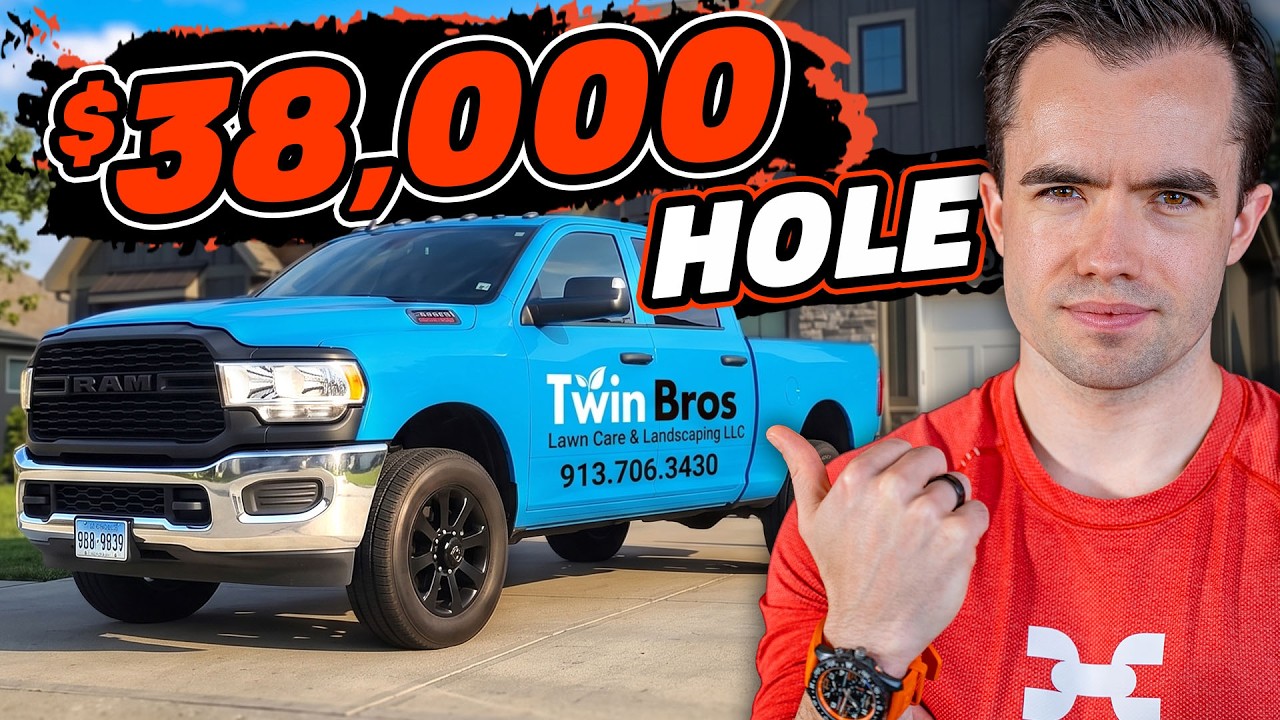
In this live episode of the Business Breakdown Show, host Mike Andes reviews Twin Bros Lawn Care, a four‑owner lawn‑care company generating about $650‑$800K in annual revenue with $200K of debt and $4.2K per month in advertising spend. Mike evaluates the company’s website, financials, and operations, identifying key pain points: a slow, unreliable quote‑request form, no cost‑per‑lead tracking, low conversion from ads, seasonal cash‑flow deficits in Q1, and a split between recurring mowing revenue and one‑time landscaping projects. He recommends technical fixes (replace the Jobber form with a fast JotForm, add tracking pixels, place the estimate form on the homepage, and split‑test ad destinations), SEO improvements (highlight Overland Park in titles, increase Google Business Profile posting frequency using AI‑generated images), and a focused sales motion to sell winter services to the existing 300 mowing customers to eliminate the off‑season loss. Mike also discusses the owners’ roles, the possibility of hiring a general manager, and whether to expand to new locations versus scaling the current market. The overarching 6‑week plan centers on establishing accurate lead cost data, boosting conversion rates, and converting at least 150‑200 customers to winter services, which would stabilize cash flow and set the stage for profitable growth.
Chapters
These four guys own Twin Bros Lawn Care and Landscaping. They'll make over $800,000 in revenue this year, but they have almost $200,000 in debt and they spend over $4,000 every month on advertising, but they don't know their cost per lead. This is the Business Breakdown Show where we take real home service businesses and analyze exactly what's holding them back. Our goal is to give Twin Bros a strategy to turn around the company in the next 6 weeks.
Hey! Hey!
What's up?
We got a whole crew. It's not just Luke. Which one's Luke?
I am.
Okay, cool. All right, I will not remember all 4 of your names, so I'm not gonna attempt that one. Okay, cool. So is, are Luke, Luke, are you the owner then?
We're actually all 4 owners.
Okay, cool. We all. So the Twin Bros is not twins then. I'm gonna guess you're not all brothers. Is that correct?
Correct.
Yeah.
I'm the twin with this one here, but these, These two on either side of me are brothers.
Oh, it is actually the twin bros. Okay, that's awesome. Let's go. So yeah, let's just jump right in. And so I got your application, I have your financials and all the rest of it. We will, our goal is to kind of get you a 6-week plan to kind of improve the business. I wanted to first just go ahead and look through your website, then we'll look through your financials and then we'll kind of jump into solution space and trying to fix some things. So first off, like on your website, like when I look at it, it's super good. I love it. And the pictures are really solid. The blue, the blue solid throughout. You guys use photos of yourself and your crew. So I love that a lot. There's a couple times when I click request a quote, the form takes a while to load. I don't think it's necessarily your fault, but I've tried to click on it several times. And like sometimes, for example, like this one I'm clicking on now, it just spins. I know that's going directly into Jobber, but usually I say just like build it on Jotform or something. I know it brings the data in directly into Jobber, but like, there's probably about 20% of the time I've clicked on this button and it doesn't load, the form. And so I would recommend like doing a JotForm, just a simple basic form. And you could just do Zapier, okay, it just pulled up. So that took like 20 seconds to load. Most people won't stick around the contact page for that long. But other than that, like the site looks great. I like it a lot. One question I had though, in your market, do people call it Johnson County or do they say like Overland Park?
So Johnson County encompasses Overland Park, and then there's another couple cities that are next to us called Olathe, Lenexa, Shawnee, and Leawood. But Johnson County is technically a really big area, so I could definitely see if we should shrink it down. It's just kind of hard because again, we cover— we actually kind of have a bigger service area, kind of like 6.5, like 7-ish miles. So we said Johnson County because we kind of wanted to incorporate all those cities, which I thought would be a little hard, like listing them out each one individually, but maybe it's best to do that.
I think it just because it's in your, like the title of the website, I would probably say trusted local experts keeping lawns healthy and landscape beautiful across Overland Park and Johnson County. That Overland Park, I would assume, like just correct me if I'm wrong, is like 50, 60% of your customers are in Overland Park?
Yeah, I'd say that.
Yeah, so like I think a lot of times people are searching for that city name. They're not usually searching for their county name. And it's fine to put it in the title, like the, of the website, just so people have clarity. Hey, I do other areas, but I would try to use the Overland Park inside of there just for the sake of ranking well on Google. So just very small little thing. Overall, the site is great. I'd give it like an A if I had to grade the thing. Um, so really excellent work on that. Yeah, I like the blue, like you guys are consistently using that throughout. Are your trucks wrapped in blue by chance?
Not yet, not yet.
Okay, are they magnets or just like— they're just white right now?
They're just white or multi.
Okay, cool. I would love to see 'em like a blue truck would really stand out. I think down the road we could look at that. In terms of like the social media side, it feels like you're posting maybe couple times a month. That's fine. I'm not gonna like rag on you for that. Overall, that's good. You guys are showing you guys doing the work. You put your badge on there. I think as long as you're doing it, you know, once or twice a week, ideally the goal is just to be able to make sure people know, hey, they're open. When it comes to your Google Business Profile, are you posting those photos also on there?
I do run the Google Business Profile. I try to post probably once a week, but I'll be completely honest, it's probably more like every other or less.
You're good. When you search like Johnson County, Kansas City lawn care, you guys show up in the Google Maps area and then you're about somewhere between like 5 or 6 spots down on the organic. So that's the part that I'm trying to improve. There it is. 1, 2, 3, 4, 5, 6, 6. Which is not horrible. I think if you do call out Overland Park on your website, you will probably rank much faster just in terms of like the native search, just like that small tiny little change. And then by feeding Google, if you're able to get to say 2 or 3 times a week even, even if you have to use AI, you guys have a really strong, like the colors of your uniforms. What's nice about that is then you can feed your AI a bunch of images of you guys working and then it can create iterations of you guys doing other services. And so if you give it the logo, if you give it multiple images that you guys already have of you guys doing services, it'll be really good at keeping the logo and the brand consistent. And then that way you can create like 30 posts for the month really fast.
Okay.
So as long as you're posting that on your Google Business Profile page just to keep it active, like Google just loves data. I think those two couple little things alone will allow you to rank a lot higher on Google. Small little tweaks though. Overall, really good.
Sweet. Yeah, no, that's great.
Cool. So on the website, or sorry, on the profit and loss statement for the past 12 months, I see about $650,000 in revenue. It says $39,000 in profit. That's after depreciation. From your guys' perspective, where's the current pain in the business from the financial perspective? Or is there pain? 'Cause there's like, there's about $200,000 of debt, but is that even, is that causing hurt right now?
It's not really causing hurt. Like the payments and whatnot are pretty easy for it. I think when I look at the P&L, the, the pains are the revenue to the labor sometimes is not great. Um, need to get better at consistent pricing, and that's something we're doing a lot better this year, whereas last year we weren't doing it as well. And then there's sometimes where it's just there's a lot of unnecessary expenses. I feel like, like, I know our uniforms, it's a really big thing for us, but we're spending a lot on that. And so I think there's like random little things that we can cut to really get the profit margin up. But I think last year, yeah, our labor and our cost of goods sold were just not accounted for very well. So I think what the labor revenue is, or the revenue in general, to our cost of goods, I feel like our cost of goods sold, I feel like that ratio isn't great.
So like on the P&L, I'm seeing $150,000 in employee wages. Let's just add taxes in there. So like, let's call it $175,000. $650,000 revenue. I'm going to assume though that you guys are not in employee wages, like the 4 of you. And you're just taking distributions at the end of each quarter or month or something like that?
Well, are you looking at last year's return or this year?
I'm looking at the 12-month rolling. That's what I'm looking at currently.
This last year, I'm looking at the P&L last year. So I changed, separated in the top of it, the cost of goods sold. We were on the employee wages. Now we're getting W-2s because we're an LLC elect S corp. So there's a separate for us, but also I decided to separate them because it's more— so I don't know if it's going to show that in the 12-month, but it will If you did this year, it's like any month of this year, it'll show up.
I did submit like a year. I think I did a year.
$135,000. That's including us as well and employees.
Okay, so— Okay, got it. Okay. Yeah, I'm looking at employee wages on here. Like even the past 4 months, it doesn't look like it's in there, but I might be just missing something. Oh, I see. Owners pay $8,000. Does that sound accurate in April?
If that was for this year, yes.
Got it. Okay. I see it now. I see it. So starting in like February, March, get started doing owner's pay. Got it.
Okay.
That makes sense. Okay. So to wrap up on the financials, I would give you guys a solid B+. I'm happy you guys are in QuickBooks. You're keeping track of everything and you are separating out the owner's wages versus the employees' wages. So solid B+ there.
All right.
We looked at the website for Twin Bros and we looked at their financials. Now let's go over the 4L framework. This is the 4 reasons why every home service business stops growing. It's either a lack of liquidity, a lack of leads, a lack of labor, or a lack of leadership. Let's identify their areas of opportunity and then create a 6-week plan to turn the business around.
Back in March and April, we were struggling with labor, so probably half of us were in the field on a given day. But right now we're doing a lot better. We brought on some great employees, so now we're pretty much completely out.
Yeah, we were probably like in the field grinding out everything, like 80-hour work weeks for probably like most of April and like probably a little bit of like beginning of May, like maybe that first week. Like Andrew was saying, we got a bunch of employees, we kind of hired a lot of good talent now. So like we're out of the field a lot more now, which is kind of nice, so.
Okay, and right now how do you divvy up the 4 of your roles in the business?
Mainly Aiden does the estimating. So there at the end, he does mainly all the estimating. Jonathan does a lot. He's right here. He does a lot of the financials, payroll, stuff like that, the accounting. Luke, he does most of the admin stuff. So communicating with the clients. He also does the marketing kind of with me.
And invoicing.
Yeah, invoicing, payment scheduling, all of that. Mainly just your admin. And then I myself, I'm kind of like a flex player, if you will. I go in the field, help the employees sometimes. I help with marketing.
And then how many field workers are there right now?
6.
Got it. Yeah, I think like the challenging part with having all 4 of you out of the field, it's just gonna be tough from a labor perspective. Like, I'll just be blunt. Like, is it a full-time job doing all 4 of those things?
No, I mean, we definitely have a lot of free time now. It's really, we're really getting into this in the past month where we have all these new employees and now we have so much free time. So we definitely find ourselves with a lot of free time now. Okay. Where months ago, you know, 1 or 2 rain days throws off your week and everybody's in the field and it's just craziness.
Yeah, like we were, we were working Saturdays and everything. So like, definitely like just now we're starting to like actually get the free time. Got it. We just got employees.
And do we want to turn this time, this free time into being more profitable, i.e., I'd probably push you to go back in the field, or are we trying to like, hey, we're young, let's just gas this thing and grow as fast as possible. Which way are we leaning towards right now?
Definitely often we're just trying to full throttle on the gas and just grab as much as we can.
Okay, cool. Yeah, like I think if I was looking at this from the vast majority of people, they'd be like, I'm a little bit, you know, I'm cash constrained, I need more money. But I'm very much aware that, hey, when you're younger, you want to be pro-growth. Let's just grow this thing to the moon and you can afford to do it. So, I will follow your lead in terms of what your goals are for the business, which is like just grow this thing. So right now I'm gonna focus then pretty much on leads exclusively because like liquidity, I give you a check 'cause you, you have $30-ish thousand in the bank. For someone that is very conservative, $200,000 of debt on an $800,000 annual revenue business here, it's not like super bad. So like again, I can kind of give you the pass on it, especially 'cause you're like, we are focused on growth. So I wanna look at leads then if we're, if that's the focus and if you guys have bandwidth and free time, I want to figure out how can we double the business using that time? Because otherwise, like, idle hands are the devil's playground. And all of a sudden, like, that's when I start seeing like owners start disagreeing with each other, stepping on each other's toes. There's not clear role identity, like, what are you doing? There's disagreements that pop up. So right now, from a point perspective of getting more customers, what's the current marketing motion that you're using?
So we're doing a lot with Google, with the Google page, um, and Google Ads. And then we also do Facebook ads. Um, it's mainly those two. We've tried a lot of door hangers, um, Every Door direct mail, a couple of others that didn't do super well for us. So it's mainly just that online presence that we're really trying to utilize.
Okay. And right now, are you driving them to your website, or were you sending those customers—
yeah, mainly to the website. And then some of them, like the Facebook, we'll just have them like send us a message and, um, deal with them on Facebook. But mainly to the website, yes.
Do you know what your cost per lead is right now on those?
I do not, no.
Okay.
Do you have a pixel, like a Facebook pixel or Google tracking code set up on those?
I have the Google tags implemented in there, but we use Jobber's software and they don't have a feature in the Jobber. I guess how it's supposed to work is like you have a landing page after they submit the form to take them to, and that's where the tracking's done. And we have the page, the tags are in there and everything, but Jobber doesn't have the feature. So after they fill out the form, it takes them to that landing page so we can track that conversion. So we don't have a way to really track other than like the couple analytics, which in videos we've watched in the past you have always never really recommended, which is like tracking how many— your cost per click or something like that.
Or yeah, if you give it— if you give the goal of the campaign that to optimize for clicks, you'll get so much trash leads. And so you really want to convert, optimize for leads by putting that conversion tag on there. And so right now, what is our current spend when it comes to Facebook and Google? Do you know?
I know Google's 120— Google's $120 a day.
Okay, so it's about $4,200 per month. Okay, is what we're—
between the two of those?
Yeah.
Got it. So I'm gonna guess like 75% of that's Google.
Yeah, yeah, yeah, closer to 80% at this point.
Yeah. Okay, so about $4,200 per month, 80% is Google.
Okay.
And when someone goes to the form or signs up, we really don't know where they came from then, right? There's no lead attribution on the form.
You have where they heard about us, but a lot of it is like Google. So we don't know, did they come from the Google page? Did they come from Google Ads? We don't really know where they came from. But yeah, we have Google, Facebook, any of our other outlets as well on there.
Got it. Yeah.
So we would—
they fill it out like they came from the business profile or from a Google ad or like just a quick search or something like that.
Or they saw your truck, searched on Google, then found it that way.
Got it.
And if you had to guess, on those Google— on the Google and the Facebook, are you sending most of that traffic to your website? Or like how much? I guess Facebook would be the only one you're probably doing send message to. So most is just dumping this onto your website, is that correct?
Yes.
Yeah. Got it.
Okay. So first thing is I would recommend doing a Jotform on your website so you can fully customize what those fields are. Put the tracking codes on the thank you page. We got to actually know where we're on the $4,200 per month, how much it's costing on Facebook, how much is coming from Google, and have like really clear insights. Also, if you're not having the codes like the tracking codes, Facebook and Google doesn't know how to optimize because they don't know who's actually hitting your thank you page and they don't know who to like. There's no feedback mechanism for like, hey, this person converted. Oh, show it to more people like that. This is why a lot of times Facebook ads will are hard for people to scale is you kind of select your local area. It's optimizing for people getting to your page, but it's not seeing which type of person actually is converting and submitting the form. Part of it is like tracking the data to know what your cost per lead is. The other part is though getting the information back to the algorithm so it knows who to show the ad to in the future. Does that make sense? Mm-hmm. So I, I think you could do the Jotform, like you could definitely use something like Zapier and tie it in so it still pulls your lead into to Jobber. I also think that for a lot of people, taking 20 seconds to copy and paste it is not a huge deal, especially at your size. And like, we're saving thousands of these a day. And so I would rather just take that time. Also, so it loads correctly on the site. Like the fact that it took 20 seconds to load, like you're going to lose any traffic you're driving to that page with the 20-second load time. One side note, you could definitely bring— if you make it on Jotform too, you could then bring the estimate request form onto the front homepage of the website. 'Cause right now you're putting on the Contact Us page 'cause it's pretty long and bulky. So I agree you should do that. But if you build it in Jotform, you could build it off to the right-hand side of the homepage, just like a small box. So that right when they get to the page, they immediately see where to put their information instead of having to click out of that page and go to a contact page. Right when you do that extra one step, you'll lose about 30% of your traffic. And so, like right away, you can increase your lead flow by 30% if you're driving ads to a page just by having the form right there versus them having to go to a different page.
Okay, so you're like, we should just have it basically the ad set up so that's taking them directly to the, like, the, the form.
Yeah, great. So two, two things to that. One is the separate URL from the Jotform. You can have traffic from an ad go straight to the Jotform. So that's the first thing I'd be testing. The other thing to test, 'cause the quality of a lead does matter, uh, that will, that will maximize your cost per lead. Like, that will bring it down lower. Driving them straight to the form. I would also, though, test driving it still to your website, but then putting the estimate request form on the homepage above the fold, right at the top there.
Okay.
And now that you're building the form in Jotform, you'll be able to customize what it looks like and it'll look just fine right above the fold on the homepage to ask for the quote. Does that make sense?
Yeah. You're saying like on the poll, like basically the first thing they do when they pull up onto our website is it being like right there.
Exactly. Because as soon as you put that estimate request form on a different page, we just know like your conversion will drop by 30% because people are not going to a different page. They're seeing your ad. Oh, I want lawn care. They go there like, well, how do I contact? I'm going to click another button. You just added literally your cost per lead just jumped 30%. And so if you can just put that as a request form on the homepage, I would then split test your ads, one of them going to the Jotform that is just a separate URL by itself, you're going to have a very low cost per lead, but the quality of those leads will probably be a little bit lower as well. Whereas if you drive them to your website like you are now, at least putting that estimate request form from the Contact Us page onto the homepage, making it in Jotform so it's customizable, you can make it look pretty. That'll increase your conversion just by 30% right there.
Okay, that makes total sense. Yeah, just cut down on that, that like time to quote ratio.
Yep, exactly.
Okay.
Okay, so that's like from a, from a conversion perspective, I think we have a pretty easy double of just like, let's make sure we have the tracking code set up, building in Jotform, split testing between the separate URL of Jotform versus the estimate request form being on the homepage. Once you do get someone sold though, or like, what's the motion after the estimate request form has been submitted? What are you guys doing?
So if it's mowing or like aeration, overseeding, some of those services, we're really quick at getting back to requests. I mean, usually within hours, if not, I mean, at least the next day. So I feel like we're really good at getting towards them. But if it's like a mowing, we definitely just, we just measure the property and we have something built and sent over to them in like 10 or less minutes. Even if they call us on the phone, like we just collect exactly what we need and then we get something over as soon as possible. If it's more of a landscaping project like mulch installation, rock installation, maybe like cleanup work, then we try to either meet with them in person depending on if it's like kind of complex. Usually like in the fall, like with leaves, for example, we do what we call like the drive-bys where we'll just like swing by. Nestor will just get out, take a look at it, and then evaluate it and he'll send over a quote later in the afternoon. But we probably do a little bit more in-person quoting this time around just because the landscaping projects are a little bit more detailed. You kind of need someone there to walk through with the client because they usually prefer to walk through anyways.
What percentage of revenue right now is coming from those projects versus the recurring revenue?
We're split.
50/50?
Yeah, I think it's pretty much just 50/50 on the dot.
Okay, cool. And how many mowing customers do you have now?
Uh, we take care of about 300 properties, just under 300.
Okay, cool. Okay, so the other part that I see as a gap when it comes to the lead flow, like, you know, grow, is you guys just— Q1 is the part where you lose all your money. Like, if you guys just solve Q1, the business looks really good. Because like, if I look at, say, for example, January, February, March, April, for this year, we have $1,000 in profit, negative $17,000, negative $7,000. Basically, you get to break even about May or June. And if we could just stay profitable in January, February, March, April, we'd be good. And so right now, what are you doing for the offseason? Is there any sort of other services? Are you doing winter services and selling those to your existing mowing customers? What's that motion look like?
Yeah, we do snow removal. We actually started doing that last year and that was really good. So we're definitely going to double down on that. We're also really gonna try and extend the amount of time we're doing leaf cleanups. But something we've watched on your show quite a bit is you talked about doing the subscription-based, like weekly, biweekly, monthly, coming out, pulling weeds, cleaning up the yard. And so we're really gonna try and sell that this off-season as well. But we also are interested in maybe trying lights. That was something we previously had tried, but we kind of decided to move in a different direction with our off-season services because we weren't sure if that was going to be too complicated and maybe a little too risky and too expensive for us to try.
Like when I look at the different options. So you mentioned like snow, for example, that's an adjacent service. The Christmas lights is a whole new brand. Like it's a whole new service, completely different, right? And so I would rather do snow before I do Christmas lights. But even before I get to adding adjacent service, I want to see if I can just keep selling more stuff to my existing customers. And so I think the winter services would definitely be— there's a lot of juice to squeeze here. I will ask this, when it comes to snow removal, is that residential or is that commercial?
Residential mainly, yeah.
Is that for mostly your mowing customers or just like other random people?
Usually probably 50/50, but mainly mowing.
Okay, people that would— landscaping, every once in a while you get some new people.
Okay, so I would highly recommend doing winter services before you start doing something like Christmas lights because Christmas lights is a whole new service.— it's a whole nother beast. What's nice about winter services in your market is you can kind of blend it with snow removal. And basically, if there's snow on the ground, here's the services we do. If there's not snow on the ground, here's the services we do. And it costs the exact same amount as you're currently paying for mowing, and we stay on the same schedule. And so you can roll from mowing directly into winter services. And if you do this right, you can easily get 30 to 50% of your customers to convert. In the future, for new customers, we can usually get 70 to 80% of them to convert. Into winter services, but you have customers that you probably have had for years that have never had this service. So 30 to 50% is a much more likely number that you'll convert. But if you can get 120 to 150 of your mowing customers to convert into winter services, we solve our off-season problem really fast.
Yeah, that's not something we struggle with because we have— we did the snow and like it only snowed twice here in Kansas because that's where we're at. And we're like a terrible spot where like it snows, but not enough like you can just do that full-time like up north. So yeah, we're trying to figure out how like we can get— like February is easily the slowest. Like usually December, like all December we can be doing leaves and cleanups, and even a good portion of January. Um, it's something we're trying to bring on next year is like, uh, applications. So like having an actual like lawn care treatment program with like weed, you know, weed control, fertilizer, that kind of stuff. And that's something we'll bring on, but we definitely need to like to figure out And I was kind of curious, what are— how do you exactly sell that to the customer? Like, what do you guys do for them?
Yeah, no, you're good. I would say before I add treatments, I would definitely be trying to solve my off-season because treatments are going to compound your current seasonal problem. Everyone wants treatments and needs treatments during spring, summer, and fall. It's the winter that we're trying to solve for. And so I would highly recommend before you even do treatments, before you add Christmas lights, take your current customers and sell them into winter services. And so to your point about snow, I would use that to your advantage, which is like, hey, we now have a budget-friendly way of being able to keep your property looking good all year round. You stay at the same price, at the same frequency that we've been showing up doing mowing. And here's all the services we do if there's snow on the ground. Here's all the services we do if there's not snow on the ground. And then that way, if it snows twice, what you're going to do, you're like, hey guys, we're going out and doing snow. You then pull the next winter services forward to take care of that snow on their property. And you could even just make it worth, hey, it's shoveling the walkways and salting. That's it. So that way you're not actually plowing, or you could do plowing. Like if you guys got plows already, you might as well drive their property, do 2 strips of the driveway and throw down some salt and shoveling. But I'm much more interested in getting the $60 every other week from them on winter services than the $100 for the 2 times I'm going to plow their driveway in the winter. I can't depend on that revenue at all.
Yeah, no, that makes a lot of sense.
Hey, are you worried about losing on the snow? Like, do you worry about like, what if I hit a big snowstorm? And like, you know, like here we probably, it's like an average is like 3, maybe 4 inches. It's like a good snow. But I don't know if like, if something big came along and you're like, you know what, it's fine. Like if it snows 9 inches, you just kind of eat it. It's gonna be okay. It's better to just have the recurring revenue.
You could put something in there. It's like, hey, anything over 3 inches is going to have this an additional cost. You could put something like that. Some of our owners are also saying if there's a certain amount of events in a year, then there's additional cost because our objective is to be able to keep the recurring revenue. And then if it snows today and they're supposed to be on the schedule for Friday for winter service, I'm going to pull that Friday to today and go get it done so I can serve the customer when it comes to the snow being more immediate. To your point, if there's like 4 events in a week, now all of a sudden we're pulling events way forward. And so you could just say, hey, anything more than 1 event per week, you're going to get charged X amount or there's going to be an additional cost of— and I would just keep it the same exact cost as your mowing price. So if it's— if you're paying— if they're paying $70 every 2 weeks, hey, we're gonna be coming every 2 weeks, it's gonna be $70. Here's the services we're doing. If it snows, we're gonna get that service done for the week. If there's more than one event per week, you're gonna charge another $70.
Okay, yeah, no, that makes sense.
That's great.
And how you can— how you can present this is like, hey, we're tired of charging people for doing nothing during snow season if we charge flat monthly year-round. And so what we do is we just We're going to keep your exact same price that you use for mowing because they already have their budget, right? Everyone always just budgets by the month. So like, okay, I know I have $150 set aside for lawn care. Well, it disappears for 3 or 4 months in your market and it's like, oh wait, now it's back. They already have it in the budget. Just say, hey, you just keep paying us, but now your property looks really good. And then what you can do is compare the cost of a property cleanup versus just staying on winter services throughout the year. And so this is really what it comes down to. Like out of your 300 mowing customers, The difference between doing this right and getting 150 of them to convert versus doing it really sloppily and getting 40 or 50 of them is going to be what your sales motion is to sell winter services to your existing customers. It won't cost you a single penny. And so I'd rather you just focus on this versus like adding treatments or adding snow. I just think, how can we sell 300 people? Now, again, the most— the highest conversion is you calling people, explaining winter services to them one by one by one. That's going to be your highest conversion. And then the next below that is you could do a Loom video, show their property. So, hey, this is what we'll be doing. Here's the cost of it. Here's the cost of what it would cost for a property cleanup. You're going to save like $200 for the year and your property will look good the entire year. So you don't have to like wait for us when we're 6 weeks booked out in the middle of spring because your property will already look good. And if it snows, we got you. We're taking care of you.
Okay.
And you recommend just having them do like that payment biweekly and not weekly, or are you like trying to get them for some sort of weekly recurring maintenance or just We typically put them on biweekly, mostly because if we put them on weekly, there's not enough for us to do every week and they end up canceling. So we typically say, hey, your biweekly price is this, it's the exact same price as your mowing. Here's all the things that we're going to be doing. And you can really list it off like we're going to be edging the lawn, we're going to trim any branches off or any foliage off the house, any branches that come in a windstorm. If there's a snow event, we're going to be coming and doing salting and shoveling your walkways. Like you start listing it off. We've done it before. It's like, We'll shake out their mats. We get cobwebs out of the eaves. We check the downspouts of the gutters. Like, you just list them all off and you say, hey, here's how it works. We spend the exact same amount of time on your property as we would for mowing. But instead of doing mowing, we're doing all these other services and we're going to start from the top and work our way down. Meaning there's going to be times where we only get through the top 3 because you just had a windstorm. There's going to be other times you finish the entire list.
Okay. And did you recommend just starting that after, like, the cleanup process? So for instance, like, we could, probably do property cleanups with like, I would say like at least mid-January. Do you just recommend trying to just get them on like a little portion or are you like, man, you should just start that like beginning of December or when would you recommend starting and ending?
I want them to roll directly into winter services from mowing. So about 6 weeks before you end mowing season, that's when we're gonna sell this. 'Cause if you wait too long, people have already started to pause. They've called you like, hey, just pause me and see you next spring. I want to get ahead of that. I want to be like 6 weeks before people start canceling is I'll be like, hey, here's what winter services is, here's how it saves you money, here's why it's so awesome. You don't have to do anything, it's the exact same price, and unless you tell us otherwise, we're going to continue doing this starting October 1st or whenever it is.
And are you worried though, like, if we don't— like, for instance, we have like— I know you guys say like do leaves and stuff. Are you nervous like we won't be able to get all the leaves in the amount of time we have to spend doing the cleanup? So like, will they I feel like that would usually frustrate the client. They'd probably get angry.
But yeah, what we're trying to prevent against is the spring cleanup, right? Like preventing them have to do a spring cleanup. For the fall, if we're not getting to all the leaves, for example, which is usually about a third of our, our winter services, we send them a quote for a property cleanup. Cuz remember, winter services is to maintain the look of the property. And we explain to them, hey, we spend a certain amount of time. If this property cleanup is a 5-hour cleanup, we need to get it up to snuff, and then we will maintain it the rest of the year. So that way in the spring you're not doing another one.
So maybe it makes sense to do like, to try to get them to do one big property cleanup and then the maintenance from there on.
Correct.
Yeah.
Okay, okay.
But then the way, because like if you still, if you had 300 people on mowing, I'm gonna assume like 50 to 100 of them do property cleanups. I want to get the other 200 on winter services. That's the juice to squeeze, because like the person that does the, the one-time cleanup, you're kind of making the money from them already. My goal is now to get them on the cleanup and then they're like, hey, you just paid us $800, why don't we just continue maintaining this all, all throughout the winter. So you don't have to pay $800 again next spring and we'll keep it looking good all throughout the holidays.
Yeah, that makes really good sense.
It really comes down to explaining the whole process of like, hey, we don't do all these services every time. We start at the top and we spend the amount of time on your property as we would usually on mowing, because otherwise customers are going to call and be like, they didn't do— they didn't trim the bushes. Like, well, yeah, because you had a windstorm yesterday. We just picked up branches the entire time that burnt through the entire 40 minutes that we're on your property.
Is that how usually you would handle it if someone called you like that? You would just— Try to explain the process. I mean, I guess you probably need to have it really clear in the terms and disclaimers and description.
I would actually say it's more about the sales motion because if you put in the terms and conditions, you're just gonna make people mad when you say, yeah, it's in the term. You gotta explain the whole thing to them. And that's why the difference between getting 40 and 50 of these people, which is like sending an email to everyone versus we would actually go to their house a lot of times and explain it and just like have a laminated piece of paper where like, hey, this is the cost of a property cleanup in the spring. Here's the cost of us just coming as usual on your exact same budget. And here's exactly how the process works. If you do that, you spend a solid like week and a half to 2 weeks explaining to everyone, you will solve your off-season and you won't have as many cancellations. The people that just send the email out, they're the ones who get all the customers calling back being like, I don't understand this. Why did you guys leave after 20 minutes? There's so much more to do. If you can spend as much time as possible explaining it to them, that's what sets up for low churn during the winter.
Okay, that makes sense.
I kind of identified mostly lead stuff. From your guys' perspective, is there anything else I can help with before I kind of just kind of recap the growth side of that?
We're looking to try and like start training, um, GMs. And so a question we have is, how do we pay a GM when we're in growth mode?
It really depends on what your all's roles are going to be, right? With 4 owners that are out of the field, realistically, I'm looking for a $3 million business. I really don't think it's very profit— like, you can't be in making profit. Um, now if this year you guys do $800,000, next year you do $1.5 million, and you're doubling that fast, you know, it takes a lot more effort from all of you. But I would not be thinking about a GM right now because like I would imagine the GM is more of an operations manager because you guys are doing GM functions, the four of you.
Yeah, there is a little bit of context with that question with going back to just full throttle on the gas, trying to grow it as fast as possible. Next year, we're hoping to start at least 2 new locations close by us. And so it's more of, you know, 3 locations growing together than just this one location. So that's kind of where the GMs would be taking care of those locations by themselves. So that's kind of the move there.
I'm not opposed to that. I think that with 4 owners, I get a little scared from a profitability perspective unless you had a lot of cash. The 4 of you, until a business gets to $3 million, it's probably not gonna make a lot of profit, which I'm fine with. I understand you guys are in growth mode, but I would hate for you to extend yourself to 2 or 3 locations, have multiple GMs. Now we have like 6 or 7 people out of the field, and if we're only doing $1.5 to $2 million, we won't ever make money. I think what would be really cool from my perspective is the 4 of you determining who's gonna take the GM at the first location. And then the other 3, if that's how you wanna start it, like I would usually look at you guys as like one person owner. And I would usually say the owner ramps up a location, gets into profit mode. So this year you're going to be over $800,000. You raise prices next year, you stop spending money on marketing, you do $1 million next year very profitably. I would, I would say, can one of you be the GM at that location and the 3 of you others go start the next location? I'm not saying that as like what you should do. I'm saying, could that be the case?
That's definitely the goal. I guess the goal, maybe I guess our sort of plan was break, like 3 of us would break off leaving one of us here while we all go to start a new location. We were thinking maybe we have a GM in training with us so that in a couple of years he's got the experience he needs to, to take over and then we can leave again if needed.
Yeah, it usually doesn't take a couple of years to train a GM if a location's in profit, right? Like if you take this one location, you have, you know, 8 technicians, it's doing over $1 million. It's been profit mode for a year or two. I don't need 2 years to train them. And it's unlikely that if you're like, this is the person, I'm going to train them for the next 2 years, it's unlikely in 2 years they'll be with you. Just statistically speaking, if they're going to be in the field with the bait of 2 years from now I'll be the GM, that usually doesn't last very long, to be honest with you. And so I would much rather just like focus on let's get it into profit mode, let's get that one location at, let's call it, $1 million in revenue, 8 technicians, simplified services, not to add a whole bunch of other stuff. Making sure we solve the offseason problem with revenue with one of you there, then it looks very like if you have one year where I see a solid 20% margin on that location, that's like, yes, go get a GM. Whoever was there as the GM probably is going to go take over the second location and do the exact same thing.
Do you think it's more valuable to have a GM come in after the location is established, or do you think it's more valuable for them to come in and kind of grow with it and see that process?
Well, it's more, quote, valuable for them to see the whole process. The likelihood of them sticking around is the hard part because anyone that's— if you expect a GM to grow a location, you're going to pay way more, way more for them, harder to retain them because it's like a dynamically changing environment versus one of you getting it up to profit mode, getting it to $800,000, $1 million revenue, you reducing ad spend, reducing new leads, simplifying services, and then being able to hand it off to someone. That person is less skilled, way easier to find, and usually one of your technicians that have been through for a long time and can just take over operations. One question real quick. In your current market, what's the population of your current market?
I'm not exactly sure, but it's really— yeah, it's very, very big. In our service zone, it's probably close to 800,000 to 1 million, I would guess.
Okay.
It's— yeah, we're in the suburbs of Kansas City, so there's a lot of people here.
Yeah, there's like, like $50 million companies.
Okay. And because there's 4 of you, typically that really lends well to having one large shop in 800,000. That's a very populated area. What's the logic behind doing the multiple locations? Are you trying to like get away an hour away?
No, it's mainly just we want to shrink the service zone of this location and have, give a little bit of the service zone plus some more that we don't already service. To these new locations. Um, and then yeah, just grow them all at the same time. That's kind of the thing. They're up with 4 of us, like we've been kind of talking about.
There's all—
we have a lot of free time, we have a lot of time to do NRI stuff like that. So it's kind of just all gas and, and see how we can grow it essentially.
Cool.
I'm in favor of that. Like, I think it's, it's very high risk, which is fine. Like, that's what you do when you're younger. I think before I do that, I definitely want to make sure I know my cost per lead because you can't go into a new market and not know what that is. Otherwise you're just gonna go over there and burn a ton of money and not gonna know where it's going. And so like right now, are you guys using an agency for this or are you doing it yourself?
Ourselves.
Okay. Either A, hire someone on like as a freelancer. The challenge you probably with that is you don't know what good looks like. You might do an agency, but don't pay them like gobs of money, like less than $1,000 a month ideally. But especially if you're spending over $3,000 a month on Google, like you wanna make sure it's optimized. 'Cause especially with all the like their AI features, it's very easy to spend a bunch of money without getting any return. 'Cause like you'll just like toggle a bunch of stuff on, all of a sudden you're showing leads. It just is a waste of money, honestly. Definitely wanna make sure you have tracking before you go to another location because we need to have like a, what does a location look like in terms of cost per lead, money in, and then our lifetime value? And right now, if we can just fix the off-season without losing money, that'll set you guys up like massively. If we can then know how much it costs to go get another location started because we know our cost per lead, That would be the big unlock then.
Do you think, like, what would you recommend if you had to give advice? Like, do you think it'd be better to just like, hey, I would recommend you guys just do one location, grow that to $3 million, and just lock in on just profit mode and just making as much profit as possible and then expanding? Or you're like, hey, maybe, you know, it's fine if you expand, you just need to nail down these couple things?
So traditionally, if I was talking to one owner I'm okay with copy and paste because there's only one overhead position moving the second location and getting ramped up. With the four of you, that makes it like you either have to scale extremely fast in multiple locations or most of the time it lends, especially with 800,000 people in your market, you're just growing one location bigger. A lot of times what people do when they do multiple locations, or more importantly, like you've been at talking about adding services, is 'cause you don't have any good way or plan of getting like tripling revenue. Without changing something. It's like, well, we've gotta go add more services. We've gotta add more service area by adding more locations. When I believe with 800,000 people and 4 owners, I think you guys can easily get to 2 million without doing anything different in terms of like location stuff.
Okay, you think it's kind of more of just a time game and just honing in on a couple, like a Stacy been there and just getting to 2 million is kind of better than going multiple location for our situation.
Yeah, if you were one owner, I'd be like, okay, great. Let's put this thing into profit mode. Get it from 50% recurring revenue to 80% recurring revenue. Simplify services. Give this to a GM. Let it print $150,000 to $200,000 in distributions. And I'll go start a second location. But when there's 4 of you, I would just rather be like, hey, who's sales? Who's operations? Who's admin? And the 4th person, like, I don't know, like whatever your strength is, I would figure out that for one location and then just scale that thing up. Because then down the road you could always, if you're like, hey, for whatever reason we have a great GM or this area is 50-minute drive, for us to get into, it's really bad traffic. Okay, we could always break a location off, but now when we break it off, it's a solid $700,000, $800,000 in revenue and it's profitable. Instead of what is going to happen is if you guys go to a second location, your profit will drop to zero because there's 4 of you overhead. And then if you're gonna go find a GM, that's 5 people overhead and you might do $1.5 million in revenue. So generally speaking, when I see a territory has 800,000 people in it, I have 4 owners which are trying to all be out of the field, which is totally fine if you're going to scale fast. I'm not beating you up on that.
I would usually say stick with one location and then you're like, when you're service zone, once you exhaust the service zone, you've exhausted the leads. That's when it's like, and you've kind of like, you've kind of reached that ceiling of revenue in that area. That's when you would be like, okay, now we should look at—
Yeah, like at a population, at a population of, you know, 800,000 people with 300 million customers, like We're nowhere close to that. If you had 100,000 people in your market or 50,000, I'm like, okay, this is a perfect case as to why we should copy and paste it so our cost per lead doesn't keep going up. But I can't confidently say you've exhausted the market until I know my cost per lead and I've tracked that as I spend more, my cost per lead just starts going up. And that typically happens in a much smaller market. And that's why it's a great opportunity to break off to another location. But in 800,000 people in that area, you guys aren't scratching the surface of it.
Okay, so that you would even say that's a telltale sign of like our cost per lead. Like we were to start tracking that and then over the course of like months, years, it's just gone progressively up. That's when we would know we've kind of like reached it.
Yeah. In terms of growth, like, like I would always be trying to optimize it. I was always— I would always be trying to like change the creative. I'd be trying to optimize it. But if you put $5,000 on an ad and then you get 100 customers, let's just say, and then you spend $10,000 and you get 110 customers, you might have hit saturation. I don't think you're anywhere close to that. Even spending $100 a day. I don't know what your cost per lead is and we don't— just don't have that number. But I would— I would just love for you to be able to start spending that money towards knowing that we're driving towards recurring revenue. Because the other part of this whole equation is if you're trying to get a general manager to run this or you're ever wanting to do multiple locations, I want as much of this revenue as possible recurring. And more importantly, that recurring revenue that you get in terms of like mowing, for example, if we create a good sales motion, we know we can get them into winter revenue and solve that. And like the only thing, if I was you guys, only thing I'd focus on is solving the off-season. Because right now, if you literally just broke even for 4 months of the year instead of losing money, you have a— like your business will look totally different. You'd go into the spring rush being like, oh, now we know our cost per lead and we're not losing money. So we have plenty of confidence to just dump money on ads. And that's when you can really scale.
Are you like, man, when you're, when we hit profit mode, what is that? What do you recommend? Or do you want to see like the recurring revenue? You said something like 80%, so like 20% landscaping, 80% like mowing treatments.
Yeah, that's why I'm like anything recurring. So whether it be bed maintenance, bush trimming, mowing, landscape maintenance, even treatments, like all recurring revenue as much as possible. It's just going to be easier if you, if your goal down the road is to hand it to a GM. I will also say because there's 4 of you, you could likely allow for more projects to happen As long as that money is being funneled into marketing and that marketing is being used to get recurring customers. But I would try over the course of time to shift more towards recurring. I would avoid trying to add any more complexity to the business because it's very easy to do that when two things happen. One, you don't know your cost per lead, and two, you feel like you're hitting a growth plateau. So you start adding more services and adding more service areas.
Exactly what we should do. Yeah.
Like, I think you guys could easily get over $2 million, just the four of you at that location. By nailing down what is our actual cost per lead, what does our website look like in terms of that sales motion. Like, you guys, four of you, like, I would get so nailed in on selling this winter services to 300 people. This, like, your whole business hinges on this. If you can figure this out, you'll go into next spring with plenty of cash and confidence to spend it because now you have an accurate cost per lead and you know that you're not losing money for 4 months. If you fix those two things, like, everything else just solves itself. Like, I know we could talk about labor and all the rest of it, but like, if you guys just can make sure you know what you're spending per customer, and then when you go into next spring, you don't have negative cash flow because you figure out winter services, the business will look very different in 12 months.
Yeah, I love how you talked about the recurring and combining that with Snow and doing that. Well, we'll definitely push for that. That'd be great.
Yeah, we'll definitely have to do like in-person sales or something.
Yeah, yeah, we kind of felt like in-person is like the best. You'll get your highest conversion because you can literally show that to them. Then right below that is like a personalized Loom video. So we just like go on Google Earth, we look at their property, we pull ourselves up in the corner and we just say, hey, Mr. Jones, it's been great doing your mowing season. We got a couple more months of mowing. We now have this new budget-friendly thing and here's what we're going to do. See this bush over here? We'll make sure that's trimmed back. And we explain the whole process of like, hey, here's all the services that we do, but we start at the top and we work our way through it. We spend the same time that we would usually on your property. And then you guys know which of your customers are already doing property cleanups like they did them last year. You just, you just now pitch it as like, hey, after your, your fall cleanup, we now do this other thing that will make sure you don't have to do a spring cleanup next season. And it looks— the property looks good all season long. If there's snow, we get salt down, we shovel the driveways, whatever it might be.
And are you usually— are you texting that video over? Are you emailing that? How are you getting that video to them?
Yeah, if you're doing the Loom video, just Text them, put them a link to Loom. You can see if they open it up too. They'll respond a lot better on iMessage if you're doing it that way. But yeah, you can just text them the link.
Yeah, that's awesome. I've never heard of someone doing like a video.
What you're doing there.
Yeah, like the 4 of you broke up, you know, 300 customers. We're talking about 100 customers in a week, like 5. You could easily do this within a week. It's just a matter of like doing it right and really taking your time to explain to every person, keeping track of who do we contact and explain it to and they said yes or no. Who do we like leave a voicemail for? So we didn't really convert them. We've got to keep, like, we've got to call them again. We got to text them again. We got to send them a video. We might show up at their house if they don't respond because I've got like that level of granularity of that sales motion into which services will be the really the deciding factors whether or not this is like, eh, it's 40 or 50 customers versus I believe you can get 200 plus.
That's good.
Yeah. Cool. Let me recap. Let me recap this. I think it's been really leads focused, which is fine. You guys are, young and crushing it. So being able to scale as fast as possible. So first off, let's use Jotform to create our estimate request form, and that way it loads correctly on the page. But more importantly, we can put tracking behind it. So your Google tracking code, your Facebook pixel, we're going to then split test our ads. One is going to go to the Jotform directly. Another one's going to go directly to the website. But now the estimate request form is going to be on the homepage so they don't have to switch to a different Contact Us page. So that's more of a web designer fix there. And then lastly is really focusing on winter sales, winter services sales motion, trying to get 300 of those customers. If you get 150 plus, it'd be like such a huge win. You guys would fix your off-season and next spring you would then know what to spend, what you need to spend on getting more customers and you'd have the confidence 'cause you don't have negative cash flow. Like if you do all those things, a lot of other stuff will fall in place. I would personally not add to the mix, the complexity of starting a second location, getting a general manager. You guys got 4 owners. I would scale this past $2 million, and I think in that market of 800,000 people, you can do it.
And one question, when you said the request form on the homepage, are you just saying, you know, you scroll down a little bit and it's right there ready for you to fill out? You're not hitting, you know, get a quote, it's just right there?
Yeah, that one step alone, like, of switching to the contact us page drops conversion by about 30%.
Okay, well, yeah, I was thinking the same thing. Insane.
And on Jotform, like, you guys could have one that's a little bit longer that you put on your Contact Us page, but then make a really condensed one that you put on that homepage, right? Especially, again, that's if you're driving ad traffic to the homepage. The only thing they need to do is convert. So like, let's not hide that form on a different page.
Yeah, that makes sense.
Yeah. And there's no hate at Jobber. Like, I would tell you, even if you're using HomeWorks, don't use our work request form as that main one on the page. It's too long. It has too much information. I just need to get their information and what services they want so I can get them a lead as fast as possible.
And how would you— and you would track that by basically using the Jotform? Like, we'll be able to track once they fill that out. Okay.
Yeah, you can put your tracking codes on your thank you page, make sure it's connected to your Google. Like, if you guys still want to do your ads, go on Upwork, get a freelancer, pay $1,000 for them to set it up correctly and walk you through how to do it correctly on Jotform. No problem. Or you go get an agency. I think there's 4 of you, like you guys got enough overhead to be able to do this. I would just say go hire someone that's going to help you set this up correctly. You've got to know your cost per lead for Google. You got to know your cost per lead for Facebook. Otherwise, like, don't spend $4,200 a month on it because we are simply guessing right now and I don't like it.
Yeah.
So you're saying you might even recommend getting somebody to set up all that in the website and then hand it off and show us how to do it.
Exactly. Yep. And you go into like upwork.com, there's other places you'll spend a couple thousand dollars, but I can guarantee you within 2 or 3 months, not only will you know your cost per lead, your cost per lead will probably go in half. For example, when we, when we take on new sites for Augusta, like we do their ads, we just put in net sites we don't want to show up on and we usually drop their cost per lead by like 30% because like there's like 9,000, a list of like 9,000 websites we don't want to show up on, like gaming sites, kids sites, I don't like my ads being shown there. And so I'm paying for that for the random kid that clicked on my ad, right? Because they have ad blocker on. I don't know their age. They're clicking on it randomly. I'm paying for that. Again, the AI features really expand where you're being shown, but they don't really necessarily show it to the person you want. So little things like that, someone that knows what they're doing will just get you right on the right foot and then you guys can optimize it later on. Keep crushing it, gentlemen. Proud of you guys.
Great work. Thank you, Mike.
Bye.
If this video is helpful, but you'd like it tailored to your exact business, feel free to go down in the description, click on the link and apply to be on a turnaround show. I'll actually come out in person for free, fill out this document for your business and give you a 6-week plan to take your business to the next level.










