Budgeting, IRA’s, and the Federal Reserve (Team Meeting at a Landscape Company)
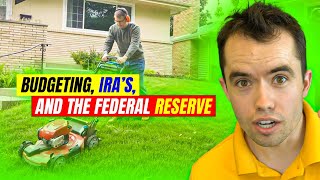
This is an informal team meeting led by Mike Andes (Midweek Motivation) at Augusta Lawn Care about personal finance. Andes presents an alternative to traditional budgeting—treating personal finances like a business by tracking past-month expenses (using tools like Wave Apps)—and answers crew questions about IRAs (tax benefits, contribution caps, penalties for withdrawals before 59½) and the role of the Federal Reserve (monetary policy, inflation targeting ~2%). The tone is practical and opinionated, focused on educating crew members on investing, saving, and macro risks.
Chapters
Good morning, everyone. It's Mike Andes here. Landscape business course. Today we're at Augusta Lawn Care in Whatcom county. And on Wednesday mornings, we have a quick meeting. It's an optional meeting for the crew and the team to be able to just learn about personal finance stuff. We talk about stock market, real estate, just anything and everything. So this morning we're going to talk about some different strategies for budgeting and kind of a different look at that. Some people I know hate budgeting. I'm one of those people. And doesn't really jive with the way I think so just kind of a different alternative way. At the end of the day, money follows attention. And so just getting, you know, some of these guys are young, haven't really had invested before, so I'm young, too. So, like, we're still all learning together. That's a big part of what we're trying to hear at August is just give them as much information about not only just work and lawn care and landscaping, but investing in themselves and their careers and their personal finances. So hopefully this is helpful to you and kind of inspires you to hopefully do something like this with your team where you try to help them. Maybe, you know, if someone asks you a question and you don't have the answer, that's fine. I got. You'll see in today's episode, I think I said 65 instead of 59 and a half for an IRA. When you cash out, like, yeah, you make mistakes. You don't know everything, but you're trying to invest in your people and help them get to the next level in their career. So hopefully this is helpful. And welcome to another episode of Midweek Motivation. So I want to kind of talk about today was kind of a different way of looking at budgeting and just like an alternative, because I think it's really important to obviously focus on something. Anything you put your focus on or your attention on, like, money follows that. So if you're, like, always putting your attention on, I don't know, clothes, like, if that's all you're looking at and, like, it's like, all your attention's on clothes. You'll probably end up spending money on clothes. It's pretty much, you know, that's what's gonna happen if you put your attention on cars. Like, traditionally, the person who is always into cars goes and buys a car, spends money on parts on a car, et cetera. In my mind, when you put your attention on your money.
You'Re going to make more money. Attention just follows that and so when it comes to budgeting, I don't budget the traditional sense, but I think it's really important to keep your attention on what you're spending, what you're making, and just be very aware of it.
All I want to talk about is kind of a different way of looking at budgeting. If you've always thought about budgeting being like, oh man, I can't do that. There's no right or wrong answer. And if you're the traditional budgeter, kudos to you. I can't handle it. Like, my brother is a really good budgeter. Everything from the envelope system to using Dave Ramsey, using mint.com, which is an app where you can track all your accounts, track all of your different, you know, where you're spending in each category.
That's great. That's great for some people. For me, like, just would annoy me up to wazoo. Like I just can't handle it. So how I kind of do it is I kind of run, I run my personal finances like a business. What I mean by that is instead of budgeting, which is basically like, okay, first of the month, I'm looking forward and this is what I'm gonna spend. How I kinda do is I look on the 30th of the month, look backwards, track my expenses like a business, and basically put them into categories and then basically make certain conclusions or changes based upon the information I gather at the end of the month. Cause in my mind it's like, why would I say I'm going to spend $200 on food this month, but then I have an opportunity to meet some very important person or like some opportunity comes up and I need to have food with them. Am I gonna be like, oh no, I don't have a budget, I'm not gonna spend money there. And I would much rather just be constant. I'm always thinking about like, I don't want to spend too much money on stuff as long as that's like a lot of times the budgeting where you're like, hey, I only have X amount is really good. If you have a problem in a certain area, like if you just know you tend spending in a certain area. Having the method of like, I only have so much money in this account or I have so much money in this envelope and like after that it's done. That's a really good method. But when you get start getting a lot of expenses or you especially when you start running a business, it's like, I don't have the time first of all to be like, at the beginning of the month. Think about it. But also the big thing is keeping track of those expenses in a, like, actual business type of software. So, for example, like, I just set up Josh with this called Wave Apps. Just called Wave Apps, completely free. You put your bank account, you put your credit card information, transactions come in and just allocate them to different categories like a business would. That's what Wave Apps is used for, is for businesses. But it's a different way of basically budgeting. So at the end of the month, you can sit down and be like, okay, my paychecks are my income, and my expenses are all the things I spent money on. Was I profitable the same way that a business would do that in terms of, like, what's my expenses? How much money and revenue did we make? Think of yourself as a business, and your income that you make as a paycheck is your revenue, and your expenses are your. It just goes in the place of payroll and advertising, all the other things a business would have. Think about the same thing for your personal finances. Right? You know, I got income. That's my revenue. I got all these expenses. Those are, like, the things that a business would have an expense for. So. And just think of yourself like, was I profitable this past month? And if you run profitably, you are the business you are. You know, at the end of the day, it's like, you know, this is Market llc. This is like, you know, how much revenue he makes, this is how much his expenses are, and this is how much profit he made at the end of the month. Right. And so that's one way to look at it. So just that's kind of like an alternative way. And it's always worked really good for me. I think the bottom line is just staying, you know, keeping your attention on it, because attention, you know, money follows attention. And so, yeah, that was my 2 cents on budgeting this morning. Cool. Frank had a question. I told him to keep it. Very good. Yeah.
Would it be wise to maximize IRA accounts, like a Roth traditional 401k included, and then invest in the stock market? Or can you kind of like double.
Dip at the same time? Yeah. So thing with an ira, the reason you would want to invest in IRA is because it's not taxed. So basically, you can spend up, say, let's say $5,000, you put into your Roth IRA over the course of a year, and there's certain caps. You can only put so much money into the account each year. What's awesome about that is that $5,000 is not taxed. So let's say for ex. To make the numbers simple, you're at 50% in tax, which none of us are at 50%. But like, let's just say it's 50%. You put money into, you know, you keep $5,000 in your savings account. Well, 2,500 of that just went to the government. So what they do for retirement, they allow you to Invest into an IRA where you can put $5,000 in there. It's completely tax free. The money stays there. You don't have to. It's 5,000 in that account. You don't have to pay taxes on it. Now, the thing with the IRA is if you take that early.
Before you're 65, is it 65 or 67? I think it's 59 and a half. You're right, yes. 59 and a half. Before that date or time when you're that old, you would pay a penalty. And those penalties are basically taxes plus penalties for taking out early. And so the question that I have for people when they're 20 is over the next 40 years, could you make more money keeping that money and investing in yourself? Number one, that's the biggest ROI of any investment you'll ever make investment in yourself. Secondly, could you invest it into stocks, real estate, business, something else, and make more money than it would be sitting in an ira? And for most of us, that's a yes. But I think the IRA is a tax thing more than anything. Like, for example, if I get to the end of the year and I'm like, okay, this is my, like I get in December, I meet with my accountant and I'm like, hey, what's our tax liability kind of looking like? And if I thought that, like, I don't have anything else I could spend money on to make more than what an IRA is gonna give me, I'll put into an IRA just to keep it safe from taxes. I look at the IRA as strictly tax stuff, tax related. But like, some people think otherwise. I wouldn't look at it as like a wealth building strategy unless you have a really big problem with spending money. And it's like you can force yourself to do it. And so that when you do retire, you do have a nest egg. But if you plan on taking that money out before 59, it's like a wash. Like you're spending money on taxes when you pull it out now and you got penal. And so when people are young sometimes and they want to start a business, I Say, hey, look, you got 10 grand, 15 grand in an IRA that you've been kind of stashing away. If you take that money and go start a real estate deal or do a business or do some stocks, maybe that's the potential of becoming a whole lot more than what if you just let it sit there for the next 40 years. But that's just my point of view on it. And I'm more pro growth, so I would be more inclined to take any cash I have and put it into something myself. And I think personal opinion, not conspiracy theorist, but it's kind of like the government is like, hey, we want the stock market to do well. So what we'll do is we'll give people a tax benefit to keep their money and keep it there and like literally put a lock and key on it for 40 years. Like, I do not want that happening. The last thing I want is I have money locked away and I need it, whether it be a health issue or an opportunity comes up and I oh no, I can't spend that 15 grand on the best real estate deal I've ever seen in my life on a deal that's gonn worth 50 grand in three years because I got penalized when I pull it out. I just don't want that. And so I'm not saying it's a conspiracy theory. I just think that the government and stock market are definitely in bed together and their big agreement is like, hey, why don't we make this tax deduction for all our people if they keep their money with the stock market for decades and that keeps the stock less volatile where there's other people trading in and out, in and out, got people locked in. I don't like that. But that's just my opinion. And I can't control in that IRA where that money is going. Like, let's say the IRA is going to invest over the course of all these index funds. Well, inside the index funds is a lot of companies I would never want to invest in. I don't agree with their future prospects. I don't agree with what they do, like tobacco companies or whatever, like what they're doing to people, alcohol. I don't want to invest in those. And I don't think their future prospects are that great. So I'd rather choose 10 or 15 companies that I really believe in that are going to do really well in the future.
Cool. Any other questions about anything and everything?
Marcus about to have questions.
What do you think about the Federal Reserve?
What about it?
What do you Think about it.
Oh, you want to be in like conspiracy theories. Yeah, I'm not really into that stuff. Yeah. Like, so the Federal Reserve, basically, at the end of the day, all it really does is like, it gives the consumer confidence to like put your money into a bank because it's backed by the Federal Reserve, right? So if you go to the bank, there's always that badge usually right next to the clerk that says federally backed, blah blah blah, FDIC insured and all that stuff. Basically up to $250,000 in your account, they'll back it. Which basically means if the bank goes insolvent, that the government steps in and is like, hey, we have money. Yeah. And then the Federal Reserve also works with politicians and things to make sure that the inflation rate isn't going too high or too low. Right. So that's like the monetary policy of the country is kind of governed a lot by the federal reserv. Like, okay, we need to print so much money, we need to like restrict so much money to keep inflation from. If they just, for example, if they gave everyone right now like 20 grand, like, hey, we're gonna have 20 grand every single resident. Cause this whole virus thing is messing people up. Well, that would cause hyperinflation. And what that means is like you'd probably have 8 to 10% inflation, which means everything would go up in cost by like 10% because there's just so much money in the system. So what happens? Like there's a trickle down effect. Like if I give you, if I give you 23, everyone bought $20,000. What would happen is you start spending more money. And when you start spending more money, it creates more demand for products and services. Like the cost of real estate would go through the roof because now everyone wants to buy a house. Well, when the demand goes up, the price goes up. And so everything would go like through the roof in price. And then you look at like Venezuela or other countries where they've had hyperinflation where eventually it doesn't matter how much money you have, you can't buy anything. Like people coming with pictures of people coming with like wheelbarrows of cash. It's because the value of their currency was nothing because the inflation is shot through the roof. So the Reserve basically like manipulates and make sure that, hey, we're not going to put too much money out in the system because it caused hyperinflation. But they restrict like right now, if they don't spend money and they didn't like a few months ago, there's a really good chance we'd be in a deflationary period. And it all changes, but it's really complex, right?
But there's like a 2% inflation every year.
Their goal. That's their goal. That's what they're always shooting for, is 2%. But they have to. That's what they were manipulating the money supply to try to hit that number. But that's not, like, consistent. Like, if you look at, if you look at inflation over the past 10 years, it's more like 1%. It just depends on the year. And they're governing that based upon, like, taxes and all the rest of it.
Over a long period of time, though, aren't we getting to the point where we're going to need those real barrels of cash or does it deflate itself somehow?
So it depends if you're a pessimist or.
Some people would say, yeah, that's definitely where we're going. We're going to have to go back, back to the gold standard.
I personally am a little more optimistic and I generally believe that, like, assets over time will be okay. And the thing about hyperinflation, like, the thing about hyperinflation, right, like, the worry of that is buy assets, because if things hyper inflate, you'll have something that goes up in value. If you have a bunch of junk they don't that won't go up in value. But if I have a piece of real estate and like, yeah, we have hyperinflation, the value of that real estate will go up or the value of those stocks will go up, up. Right? And so.
I think basically the Reserve recently has said that they're willing to pump enough money in the system to get us to like, 4 and 5% inflation, which is unprecedented. Usually that'd be like, people would be freaking out over that. But they know that they want to see that over the course of a quarter or two before they pull back interest rates. So traditionally, if you pull interest rates back, and as you probably heard this in the news, like, interest rates are the lowest they've ever been. The reason they do that is because it makes people want to borrow money, therefore go buy stuff that stimulates the economy. Right. And so that they're doing that because if they would have kept interest rates high, people stop buying. Now we go into deflationary, period. Right? And so, but right. And so they got to manipulate the interest rate to make sure that they don't go too high or too low. And I don't want that job in my Life. Yeah, sorry that we're going a little bit long. Any other that. Go ahead.
My one question because like when I research recently got married, I had to really figure out a lot with budgeting and like I just googled it again to see if you, if you Google like budget rules or budget like ideas or budget formulas, one of the first things always pops up is the 50, 30, 20 and I think that's so dumb. So yeah, 50, 30, 20. And I just kind of want your thoughts and if anyone else has experimented with it but saying like 50% of your income basically goes to your needs, 30% goes to your wants and 20% goes to your savings. And for me, 30% of my wants is like an insane amount. That seems so dumb. But I guess that's like if you're really into like you said, like cars, you're gonna take that 30% that you made and be like, well what new car parts can I buy, right?
I don't know.
To me that seems like 30% of what I need every two. If you think about it in a two week period, that's like so much money, right? Like take just for example, if someone made like 1500 a week, that's 500 bucks every two weeks. They're just spending on whatever. That's insane. So I don't know what your thoughts are on that.
Well, my thoughts, like the thing is a lot of those, those ratios, things that are out there about budgeting is for the general population that is going to work for 40 years in a same job, they're going to retire and they need to have an IRA and like that's, they don't, they're not very good at saving, for example, or investing their money. I'd much rather, I'd be like, hey, spend 10% of your money on yourself. Another 90% best. Like that'd be my ratio, right? Yeah, same. And so it's just a matter of how quickly what your risk tolerance and what you want to grow if you want to grow the money, right? Some people, they do not want to get involved in the stock market because they would wake up every day stressed out of their life, what their money was going to happen. And that's fine. That's for them. There is no right answer. Anyone that says you have to do it this way is messed up because it just depends on your risk tolerance, what you're willing to learn and educate yourself about. And if you want to retire when you're 70 or if you'd rather have more financial freedom when you're 50. Like, that's just a decision that you have to kind of make. Yeah. But yeah, budgeting ratios and it's much for the general population like Rene Ramsey, Suze Orman, they're going after the general population that needs a budget that isn't really so much into investing. They're more into saving.
And so it's just a matter of what's right for you. And at the end of the day, it's like, I would not be like, oh, I have to spend 50% on my needs, so I should increase my water bill because I'm at 48%. That doesn't make sense. I'm just going to try to minimize those first two categories as much as possible so that I can put as much as possible in something that's going to go up in value, like we talked about last week.
Cool. Awesome. Have a great week. Thanks, guys.









