Chick-fil-A Starts a Home Service Business | C. Suite Unfiltered 110
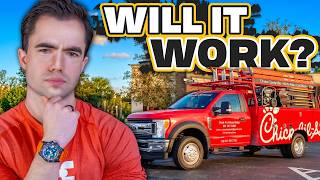
Mike Andes and Speaker A discuss Chick-fil-A's rumored entry into home services with a brand called A Crew, exploring why a fast-food giant would launch a handyman business through its venture arm Red Wagon Ventures. They also cover the C-Suite Unfiltered rebrand under Home Service Millionaire and Speaker A's 21-day fasting experiment.
Chapters
Welcome back. I don't know where to look. There's so many cameras.
Just look at that one. Welcome back.
Another episode of the C-Suite Unfiltered with Mike Andes in his studio. Welcome back, sir.
Yeah, man, we brought— we brought the podcast inside of HSM now.
Yes. So our network channel, we're rebranding. Well, it's still the C-Suite Unfiltered, but we just made a deal. We didn't shake on it. Just made a deal. Multimillion-dollar deal signed on as content creator Mike Andes Media.
TVPN. It's a podcast they use for $100 million.
Really?
OpenAI. It's in stock. Okay. But it's so funny because it wasn't like a huge podcast. So now everyone's like, hey, I'm worth like at least $20 million.
Yeah. So yeah, so some changes are happening. You know, Mike is cheating on me with Jonathan Petoschnek. No, all fun and games. But yeah, Mike's launching a new podcast with Jonathan Petoschnek. We literally just decided as we clicked record that we'll move the C-Suite under the Home Service Millionaire channel. As well as— so your podcast with Jonathan will be on the Home Service Millionaire channel for now.
For now. Okay, cool.
So I guess walk us through that. You announced another pod, so let's talk about your other pod on a pod.
Talk about like—
yeah, this is the most like—
this could look so egotistical.
So on this podcast, let's talk about your other podcast.
I'm podcast curious.
Yeah. So why are you launching a pod with Jonathan Potocznik?
Oh, well, okay, different turn. So let me talk about the first one. So the first part was The first 3 episodes will be on HSM. It's a pilot project. We have the infrastructure in our team with the media to do this, no problem.
Yeah.
He is finding his first person. And so he was originally going to start another podcast with 2 very big names in the home and service industry. I don't know if he wants me to say their names, so I won't say it. Fair enough. But he was going to, like, a year and a half, 2 years ago. And he was pretty excited about it. They had the name. They were like, let's go. And it just didn't work out. And he was putting a lot of effort to it. It didn't really go anywhere. I didn't even get to recording. And so I'm like, hey man, I have the infrastructure. We will do this. Like, if you say yes, it's happening. So we figured we'd do the first 3 on the Home Service Millionaire podcast. It's not really fair to him if it's on my channel that I own 100% of.
Fair.
So we will probably eventually make it a secondary thing, but we want to make sure, like, can we— does it— do we jive? Is there an audience for it? Do people enjoy it? Do they get value from it? It's a place where we want to talk about higher-level topics, we want to talk about entry-level topics, and we want to talk about topics outside of home services.
Cool.
Each podcast, when we're creating the docket, we have like our notes app of shared ideas. And then when we put it in, it's like we want to be able to talk to someone just getting started. We want to talk to someone who's doing $5-10 million in annual revenue, and we want to talk to people that are outside of home services. And so for now it's on the Home Service Millionaire podcast because I'm taking all the internal work, but I am open to it if he ever wants to like do a secondary, complete third party, kind of like the All In Pod. They, they have all their own stuff. Yeah. And then they have the All In Pod, which is like, hey, we all share this.
Yeah, that makes sense.
So we'll see where it goes. For now, I just want everyone to watch it, everyone to comment on it, everyone to share it so that way he's like, this is worth my time. And in terms of why we're doing it, I want to be really honest and upfront with him about that. And so from his perspective, he wants people on Five for 50, which is his YouTube channel. He wants to— and he has a lot of passion for especially younger kids to be able to learn about entrepreneurship, dedicate 5 years of their life heads down to be able to, you know, live the next 50 in a way that most people wouldn't. And so that's his passion. And so I can help him do that in terms of like, we have the immediate infrastructure, we have the channel and the audience. He's been out of the game in terms of media for quite some time. A lot of the OGs, the big guys, the big, bigger companies, but older demographic know him well. And so a lot of my age, 20s, 30s, don't know him. And so I'm hopefully introducing him to them and then his audience of much more sophisticated, larger operators, been in business for 20, 30 years, them getting introduced to me. So it'll be a good cross-pollination. And then it will be the fact that too, like, it was funny, I mentioned this on the owner's mastermind, but like Brianna asked me like, who are the two people you want to talk to in the world? And like, if you could talk to anyone, I said Dr. Kashi and Jonathan Potocznik.
Nice.
And so it's been a years of us kind of like been around each other's ecosystem. We visited, we went out recently with him and his wife for dinner and now it's like, hey, it's like there's something for us to unite around. And then now he's completely divested outside of Service Autopilot. So it doesn't— it's not bad for us to publicly be together because obviously we have homework.
Yeah, cool. I love that. Well, very excited for you guys doing that. Switching gears to this pod, the humble beginnings of the C-suite, you know, it's falsely named. I'm not even in the C-suite, you know, it's fine. But JP listens to C-Suite Unfiltered. I love that. Shout out. That's fantastic. So what the direction of this— let's just talk about that for a second. You're thinking bring it under the Home Service Millionaire channel, but keep it light and loose. What C-Suite has been, which is like not always business content.
Yeah, I think you brought up a great point. Like Dave Ramsey's show has a bunch of other shows underneath it. So for now, Home Service Millionaire is like the umbrella. Yeah. And for now it'll be C-Suite Unfiltered. Maybe you'll have Jonathan and I underneath it down the road, but like You know, it's just also simplification of your life. So the media team can just like— it's— that's the nice part about building the infrastructure. The media team is like, yeah, I can do everything. But yeah, also we have like 12 or 13 people and like we have a workflow that when this gets done, cut it, it will go into graphics and it'll go thumbnails. Like, I do believe it'll get 10 times the views.
Yeah. So which is great. And that's where— here's what I will put a charge out to the audience is if you were in my shoes, like, what would you do? In all honesty, like, if you were in this position, like, you have access to Mike, you're willing to give me, you know, 45 minutes, an hour of your week to do this. And I greatly appreciate it. It, it's like, what do I do? Because I'm not a big personal brand. The inception of C-Suite was show you in a different light because I get to see you in a different light when we talk about stupid things we saw on Twitter, when we talk about funny content that we saw, when we talk about world economics, whatever it is, stocks. When you drag me for my stock picks, which was, you know, one of the most shameful episodes we ever recorded.
You still have the best stock pick ever. You chose NVIDIA and I chose Disney.
That is true. I will take that. But it was to show you a different light. It was never about me, my personal brand. I wanted the world to see like the lighthearted side of Mike Andes and what we do on a daily basis because business content can get dry. Yours isn't, but it can. When it's just numbers, facts, figures, numbers, like it can, it can feel that way. Like there are times where I'm like, okay, I got to break up this, this podcast into two listens because I'm like, I'm starting to not— I'm starting to not listen because it's so dry on the content. Like it's, it's good content, but it's dry. And then it's all like, I'll break it up if it's business-heavy podcast. So yeah, C-Suite is going under the Home Service Millionaire channel. Very excited. About it.
Acquired.
Acquired. It's been acquired. We're going to pen a paper multimillion-dollar contract for a content creator like myself. But yeah, in the comments, let me know what you would like me to do. Do I take C-Suite a more personal brand? Do I bring on other people? I have been thinking I would like to bring on the most senior employee of Augusta who has been with you for 10 years.
That could definitely live on.
She has never been on the C-Suite, and I think that's only fair.
You should bring it on.
So yeah, so I got ideas.
I got ideas underneath HSM. It would totally work.
All right, perfect. So with the Jonathan Patoschnick podcast. Last question on that. It's going to primarily focus on business, though.
Oh yeah, business. That's all we care. Great. Fantastic.
Let's switch to not business here. It'll be well.
So like part of, part of the like— so we have the 3 sections, right? The one part is like health and wealth.
Yeah.
So cool. There'll probably be some health stuff popped up occasionally and then like how to manage money. Like one of the topics he put in there, like I'm really interested in is like basically how the ultra wealthy manage their money. I love that because I know like, like he has access to even like JPMorgan or like Goldman Sachs, etc. Like Why do I pay them hundreds of thousands of dollars? Because they can get you to, like, access, like, Anthropic pre-IPO. So little things like that would be very interesting to get that on recording.
That would be really helpful too, because you can share your perspective. And not to say like you're behind Jonathan by any means.
100%.
But I'm saying, but like from, from like a perspective of like companies, these bell exits that he has had, you are hypothetically behind or realistically either way. I'm just trying to be kind here. We're in studio, you know, I'm worried, you know, but he goes from this guy like, yeah, we're going to talk about stuff that's happy on Twitter.
We laugh about like, yeah, you're behind him and you're— he's here.
So what I'm thinking is though, is I think that's really valuable because like what an economist or investor that I like to follow, Scott Galloway, because I disagree with him on a lot of things socially, but he's obviously one of the smartest minds in terms of modern economics. Like you can disagree with a lot of his projections, whatever. But sometimes when I listen to him, it's too high level. I'm like, I'm not even I can't even grasp the concepts he is describing because like, I don't even have that level of wealth and I don't know if I ever even will. But he's good at dumbing it down. But I think— and not to say you and Jonathan are going to dumb it down, it's just going to be more attainable to be like, hey, we've been in this industry and we know how you've built your businesses and your assets and the way you manage your money up to this point. Now let's help you get to the next level. So I think there's a ton of value there.
Yeah, I think Jonathan, one thing that's really unique about him is even as he has grown the businesses, he has always been able to for lack of a better word, dumb it down, but more or less make it digestible to the everyday business owner, whether you're starting out at nothing or at $1 million or $10 million or $100 million. And so I think that's a skill that I've always tried to— and I've said this to his face, like the way he interacts with people that are even at conferences, that they'll just talk your ear off and, you know, they have one employee and he's just fully engaged with them. And so I respect that a lot in terms of how he communicates, but also how he answers questions around business to make it useful for the everyday person, not at a high level where they just use big words to make them sound good. And so as I've gotten into these rooms, I know the people that are trying to look good because they have— they have the— you have it behind you and like Jonathan has it, but he doesn't portray that in the way he talks to other people. And sometimes the way you talk to other people when you've reached a certain level of success, you don't say negative things about them, but you make them feel bad or you make them feel less than because you put yourself so high up there and you use different terminology or you say things that just makes them feel separate from you. And that's not how he is. And I want to emulate that just like my personal life and like the way that I communicate with people. I don't know how we got there, but—
No, you're fine. No, it's good. It's bridging the gap is a term I would use. It's not dumbing down. It's like bridge the gap. You're at A, you want to get to B. Well, I've been to Z. So I can show you how I got from A to B and then we can work on getting you to Z. So I think that's really cool. Digestible, bridges the gap, whatever we want to talk about. Now let's get into not business. Let's get into some philosophy because this blew up here. This is what the C-suite is for, right? We're not here to talk facts and figures. We're here to talk tweets from MrBeast.
Okay, so I just want to interject here. Recently someone was saying that they felt like a lot of my content was sort of forgetting about the small guy, the person just getting started. And I wanted to just say that a lot of times the reason I make the content for the million-dollar business owner, the person that's trying to scale multiple locations, trying to have a business that runs without them, is because a lot of my audience has watched my content for 5, 6, 10 years that I've been making content now. And now they're experiencing different problems, ones that are more around leadership than just getting their first 10 or 20 customers. And I've made over 5,000 videos and thousands of them are like how to start a long-term business, how to start and get the first 10, 20 customers. Now, That being said, I have recently just made a brand new tool for those of you who are just getting started. And you go check it out, MikeAndes.com/start. It's going to give you everything you need to start a business, including how to get leads, a website, how to organize them, software, as well as the education required. And that's Landscape Business Course. So it's a 3— I call it the ultimate starter pack. So if you're looking to start a lawn care business, and you got basically $1,000 to your name and you just want to get started, go check it out. MikeAndes.com/start. And is funded by everything that I do, whether it be at HomeWorks or Home Service Web Design or the franchise. It is all enabling me to be able to give back to the 18-year-old version of myself that didn't know how to run a business and almost got myself killed because I didn't have systems in the company. So anyways, sharing that resource. Now back to the pod.
So MrBeast tweeted, you got to listen carefully. Everyone on Earth takes a private vote by pressing a red or blue button. If more than 50% of people press the blue button, everyone survives.
I heard about this.
If less than 50% of people press the blue button, only people who pressed the red button survive. Which button do you press?
Yeah, that hurts my head. I heard this being talked about on TV. Yeah. Like, so basically The blue is everyone survives with more than 50%, but you're banking on everyone being more than 50% that would click the button.
Correct.
Right.
If more than 50% of people press the blue button, everyone survives. If less than 50% of people press the blue button, only people who press the red button survive. Which button do you press?
This stuff hurts my head, dude. I'm telling you.
But think about it. Okay.
Okay.
Red. You push the red button.
Okay.
Guaranteed no death.
Okay.
Guaranteed. You push the blue button, you're kind of gambling that everyone else at least 50% of people are gonna push the blue button with you.
Right, but in what scenario would this happen?
It's just, it's hypothetical.
I know, I don't like living in hypotheticals.
I know you don't, I know you don't. But like, it caused quite a stir because here's the results of the vote.
Okay, let me guess, let me guess what the results are, 'cause I did not see this.
Okay.
I think that most people would say blue, but they would actually do red.
Yeah, and that's what like a lot of the arguments are. So blue is 56%, 56% of people say they're pushing the blue button. We're alive. Yeah, but here's the thing. Here's where, like, my logical brain comes in, is that— but everyone had the chance to push the red button. So why are we gambling? Everyone had the exit. Everyone can push the red button. If you push the red button, you're not dead.
Yeah, but, but if you push the red button, you're killed. You could potentially kill the blue people that are altruistic and actually trying to look out for the best of the world.
And that's where it becomes like a very, like, social, politically charged conversation of people being— people saying like, oh, you're just pushing the blue button because it's, it's performative empathy. Like, oh, I'm gonna push the blue button 'cause what if someone doesn't understand the question? What if they don't know which button to push? I need to make sure I'm in that majority to save them. And then it's pitted against the people who push red that it's like, you only care about self-preservation, you're sociopathic. It's like, but then I'm like, but doesn't it just get on the fact that like, if everybody pushes red, nobody dies, nothing happens?
Yeah, I don't know, man. This philosophy hurts my head.
I knew you wouldn't be into it, but I was like, I have to ask you 'cause I'm really interested. But I just think it's like, it's a funny social experiment when you take these situations And some people are like, I will solely look at this from a logical perspective. Everyone pushes red, like, and it's my bias. Like if everyone pushes red, no one dies. But there's like, well, what if someone doesn't understand?
Right?
And it's like, okay, well then yeah, let's all push blue. But then what if 70% of people push red? Then I'm just dying for nothing. Right.
Yeah.
It's a weird concept.
True.
It caused a big stir. I know you're not into these conversations, but here's where I, here's, here's, I was having a conversation with someone earlier, Nick. And he was like, his instant reaction was, yeah, you push the blue because you want to make sure you save anyone. Yeah, anyone you can. And I was like, yeah, but if everybody pushes red, no one dies. And he was like, oh yeah, you're right, everyone just push red. So like, it's weird, it's worded in a way to kind of trip you up. But here's how I thought of it. I was like, okay, let's take it in, let's take into account people that are in your charge. So i.e., a child, right?
That's all I was gonna get to.
If, if, if people under 18 are the, their vote is cast by their parent or legal guardian, you can bet I am pushing the red button until my hand bleeds for my son. For the kid.
For my son. Yeah, yeah.
I'm not Gambling.
That's what I was thinking. Yeah.
And then so then it's like, well, is that me doing performative empathy for my son or is that self-preservation for my son and my, my family line, if you will? It's like, well, it's my kid, so like why would I chance his death?
Right.
And people are like, well, why would I chance a stranger's death? It's like, but you aren't. The stranger can just push red. Anyways, I'm excited to die. Anyways, I know you're not into it. I just thought it was funny cuz it's like really blowing up. Like people are really making it a whole political thing and like someone's going to jump. You should have made like green and purple or different. I I think that's part of it, too. Honestly, the way I look at it is like, you push red, nothing happens. You push blue, you're gambling with your own life.
I'm sure someone's like, oh, that's going to determine the election. Yeah, 56%.
Anyways, we can leave that there. We can leave that there. Here is something completely different. We'll switch off MrBeast philosophy because he's the greatest modern philosopher of our time.
Right.
Here's a little rumbling that I saw recently. So I had to do some research. You can't find much on this. Have you heard of a brand? It's not— it doesn't exist yet. Have you heard of a brand called A Crew?
No.
Capital A space Crew?
No.
Okay. Context: home services.
Okay.
Is it ringing a bell? Anything? Chick-fil-A is planning to launch a, quote, home service brand, and they're testing with capital A space Crew. And the goal is that it would be a handyman-type service fix leaks, unclog drains, basic, basic handyman, almost like a TaskRabbit-type service. But the goal would be Chick-fil-A's level of service, that customer service that Chick-fil-A has, a very, very, very high-quality customer communication and care. Now, I did a ton of research on this.
Really?
10 minutes.
I was going to say.
I did a ton of research on it. It's not— there's nothing publicly available.
This is all like speculation. This is all speculative through— just where Lee likes to sit. Through—
yes, through the innovation arm of of Chick-fil-A that is called Red Wagon Ventures. And there are little leaks here and there on podcasts and newsletters, investor newsletters, that this is in an experimental venture stage and details are very limited. There's no indication yet that you can, you can open an app and book Acrew to come to your home or buy their services. There's no website for Acrew, but it is cited in various startup newsletters and leaks from people in Red Wagon Ventures. Which is the innovation arm of Chick-fil-A. So your initial reaction to hearing this for the first time— I'm glad I got some news before you did. Your initial reaction to hearing this?
It all will come down to whether or not the product is good. The reason that Chick-fil-A is what it is is not because of their service. It is because their, their— the food is good and people love the food. And if the food was horrible, no one would show up. Don't— I don't care how many times someone said, my pleasure to you. If that chicken sandwich wasn't good, you wouldn't go back. Mike Andes. And so it'll always come back to the product. In the short term, things like this can blow up, or like in the short term could do well because of brand equity or because of a spin on something. But at the end of the day, it's whether or not the product is good. And so whether or not the clogged drain actually gets solved and these things actually happen, I will say that it is harder to systematize home services than it is the manufacturing plant that is called a Chick-fil-A restaurant. And so that is always the hardest part because for them, their constraints are much more around building that manufacturing facility than what is the constraint for home services, which is supply, which is labor. You need very skilled people to unclog these drains, etc., assuming you're going to do a good quality product. And if you don't and you're going to make this a TaskRabbit, it'll do exactly what TaskRabbit is, which is getting the lowest, cheapest customer. Whereas I'm never going to do that because I want someone that's insured. I have 5 stars or 1 stars. I can, hold over their head. Like, it literally happened the other day. Bad service. And I'm like, one star. Immediately they came and fixed it. And like, I want to be able to do that. Now I want some random TaskRabbit person. And, and also, are they going to be W-2 employees? Are they 1099 contractors? Is this going to be underneath the Acrew brand or is this going to be an app that people log into and use? And then it's like, yeah, a lot of these innovation things are hyped up because of companies like Google that have invested in companies like Anthropic and SpaceX and their venture arm is extremely successful. And so anyone that has some money is like, oh, I should just like do these random moonshots. And then they forget that if you're spinning up the brand and not doing just actual venture capital, which is throw money at someone, you hope they do well and you maybe do JVs down the road. If you're actually building the brand, it's a different business. And so my question is, does their current business model somehow get helped by this? Like the current main thing, or is this a distraction?
Yeah, it's a good question because you can start looking at it from like very specific business principles. It's like, okay, well, do they have distribution? Well, not really. Like, I guess they have, you know, a lot of people's contact information, right, that sign up for the Chick-fil-A app or have a rewards account.
But like, you buy a chicken sandwich, are you going to cross-sell?
Do you have leaky pipes? Okay. Is there a clear, like, line of, like, distribution? Like, I have a painting business now. I'm going to do a gutter business. Clear, like, distribution lines, like very similar product. Chick-fil-A sandwich to like fixing your TV.
Yeah.
Like, not like I could see like food delivery.
Yeah, I could see like I could honestly I could see things like electric car charging because they have like the whole system around like people waiting for so long. I could see things like that. It builds the current, the main thing. And so, yeah, I think there's like one of those moonshot things. Do I think it will ever work out? I don't know. Yes, I'm not.
Why do you think they're exploring it? Just because they have the venture arm and like they're very profitable. And so it's like we have to start kind kind of testing the waters of what's the next phase of Chick-fil-A?
Or in my opinion, the best use of an innovation arm or a venture arm where you have lots of cash and you're like, we need to use this in some, you know, good way, is you got to put yourself out of business. And so I'd be— if I was them, which is like, my goodness, I'm some idiot. Like, if I was them, I'd be looking at my innovation arm like, well, how do we put ourselves out of business? Like, can we make this— like, I'd be creating an MCP for my app to where from Claude I can be like, hey, I want a chicken sandwich. And then like, it gets delivered to me.
Yeah.
Those are the things I'd be exploring. Like, how do I put myself out of business instead of how do I create new businesses? And so there's like recently, like even the past year and a half with Augusta, it's like, okay, if we're going to get all wiped out because a chatbot is choosing one provider instead of seeing 20 links, let's not be focusing our time on how to optimize SEO. Let's figure out how we are the one person by giving it as much information on pricing as possible, because it's the question that the customer actually wants to know. Mm-hmm. And so that's been really working well this year, and I feel like that is me trying to put myself out of business. In a, in my business versus like, okay guys, hear me out, we're doing taxicabs. Yeah, like I can, you could do a big— yeah, we're yellow, we're yellow, we drive on the road.
Yeah.
You know, but like, I think it's a reach.
So yeah, it's kind of— I liked your— I was trying to think of an analogy for you saying like, okay, if a chatbot is going to give me one result instead of showing me 20 links, it's kind of— is a bad analogy. But I'm thinking like if I were to go be an Olympic sprinter, yeah, which I would never crush it, I wouldn't look at my competitors' times. I would look at the world record.
Dude, did you see that recently with the world record with the marathon?
Yeah. Yeah, yeah.
Bro, that was crazy.
The shoes are wild, dude.
The fact that like 2 people broke it, I feel so bad for the guy that broke one. Yeah, guys, now we're going to know about it, but he beat the world record.
Yeah.
Oh man.
But the analogy is that like you focus on like what actually gets results, not what everyone else is doing. Is that kind of what you're saying? Yeah, everyone else is focused on SEO, so like I got to beat them in SEO. You're like, no, just become the best.
I think, well, here's what I'm saying. I think for most people they should just be the best at what's working. Yeah, like right now still for the vast majority of people, 90% plus of their traffic is coming from Google. So it probably makes the most sense for most people to do that. But when it comes to like a bigger brand, like I need to be thinking about a few years down the road, like people pay franchise fees in a way for me to be thinking about that so they don't have to. And so we've been thinking a lot about AI and we got almost too far ahead of it with the whole AI phone thing back in 2023. That being said, which I talk about with Jonathan next week.
Nice.
It's great. The thing is, I am trying to put myself out of business using a chunk of money that I get from owners. And so as a brand gets bigger and there's, there's a fund that is dedicated to that, I feel the best use of it is like put yourself out of business in 3 to 5 years from now of what's currently working. And so Yes. Like we were able to get good domain authority in SEO and like rank on Google. It's like, well, is that going to even happen in 5 years when we're all using an AI and it's giving us one result and we need to prepare for that now, which is going to redo the whole website. Like, it's a lot of money, but like, that's my innovation fund is like put myself out of business, not create a new business.
Got it.
Or can I create a business that could somehow elevate my current thing then to maybe a little more synergistic? But I think this is like a very much like Yeah, we're over here now. And sometimes it's just a matter of— what's funny is, for example, Slack was not what it was supposed to be, right? It was a completely different product and it just became that because it was completely separate. It was like Scratch Search and became their business. Do I think Chick-fil-A is going to become the next Roto-Rooter? Not really.
Yeah.
No. So, yeah.
And to kind of wrap it up, it's basically Chick-fil-A has been quietly trying to expand beyond fast food, testing new businesses. Through its venture arm, diversifying revenue, applying its hospitality to other industries. So it's not like that's the only one they're testing. Obviously, I'm bringing it up in the context of urine home services, but it's just interesting to see like a very established brand. It's like that seems way out of left field for them, but their hospitality does speak for itself. So we'll see what they do. If there's anything substantive, I'll bring it back up and we can discuss. Hey, crew, that being said, we just launched a B Crew.
B Crew. Yeah.
So anyways, a lot of thoughts about— anyway, We'll leave it there. First time in the new studio for the C-Suite Unfiltered. Give the people some not financial advice.
You always start.
Go ahead. Okay, I'll start. So here's a fun one. I didn't talk about this because we took a 3-month hiatus. I didn't talk about on the last one. Fasting. Oh, dude, try it, bro.
You got to tell them what happened.
People should look into fasting. So this isn't— this isn't about me. I want to make sure it's very clear. My church hosted a 21 Days of Fasting event. And so I did that in January. It was fantastic. Obviously, I got some weight loss results, which were great.
At conference. At conference.
Yeah.
So for anyone in Augusta, the most stressful month of the year is January with all conference and then two trainings. Yeah.
And I spoke on stage at conference. Yeah.
You were not doing well after that.
No, I was white. I was white as a ghost. I was sweating. Yeah.
In case anyone saw you playing basketball.
Yeah.
He, like, sprints down the field, comes right back down the basketball court, and then, like, literally I just see like it just like hit him like, oh man, I'm gassed.
Yeah, he went out right away. So it was fantastic. That's my non-financial advice is fast. Here's a fun one for you though. I decided after doing it for 21 days, obviously I had, you know, I had some extra stores to work on to make it 21 days, but I really enjoyed it from a spiritual perspective, from a psychological perspective, a mental, physical, the whole nine. I really enjoyed it. So I decided I would start fasting once a quarter. So as of today, today's day 5.
Oh really?
Yeah, so I'm gonna do a 7-day fast once a quarter.
Wow.
Just like reset the body. And I would say day 5 is when it starts to hit.
Really?
Yesterday I was hungry, I was tired, I was like, you know, very unclear thoughts, like very foggy. But today now it's like it hits. I don't know, for me it's day 5.
So do you have any vitamins or water?
Yeah, so I'm taking daily multivitamins, magnesium, vitamin D, a few other, like a men's health vitamin, like a very generic one. And then I am supplementing with like caffeine, some orange juice, or like Whole Foods makes a really good sweet greens juice. But like trying to stay like low calorie, like nothing substantive, not a smoothie, nothing thick. Like it has to be a liquid. It's like the sweet green juice from Whole Foods is like cold pressed, like kale, spinach, pineapple. So it's a little sweeter, but it's like, it's just cold pressed greens with some pineapple and I think orange in there to give it a little sweetness. So yeah, and like, same thing, orange juice, like 8 ounces at a time. I'm not chugging like 24 ounces of orange juice. So it's good. I'm enjoying it. So it's my— it's my new thing. I don't know. I don't know why. I just really enjoy doing a 21-day fast in January. So I'm going to do 7 days every quarter for the time being.
It's a prerequisite to being in the C-suite is you have to start thinking about health optimization. Yeah, it's because body composition.
So my not financial advice is try fast.
Next thing I'm going to see is a hyperbaric chamber down here.
Oh, please.
No, no, no, no. Red light therapy.
I got one of those red light therapy masks. Yeah, exactly. Just leaves open. On a sales call.
Just takes off the call.
So that's it. Try it fast. Start 24 hours, 48 hours, 72. Like, you know, don't go off the deep end. Do your research, obviously, from a health perspective. For me, it was more spiritual. Health was secondary. But yeah, I'm enjoying it. So that's, that's my new thing.
Let's go. Yeah. Okay. My non-financial advice. This is pretty old too, but Whisperflow, it's an app. If you're doing a lot of computer work, definitely recommend it. It's also good for your phone. It's on a keyboard, which is still, I wish you didn't have to swipe back. It's annoying on the phone a little bit, but holding the control button down on your laptop and it'll talk. I'm always with a microphone next to me, so it's really been useful. I've done it for quite a while now, but it's, it's, it changed a couple features that has now been like super useful. So Whisperflow.
Nice. Awesome. Fantastic. Well, as always, thank you for listening. Like and subscribe.
Let us know. Let us know what you want to talk about in the C-Suite Unfiltered. Yeah. Where's the direction of the future of the pod?
Just let us know. All right.









