Cognitive Tunnels Are Keeping You From Business Success
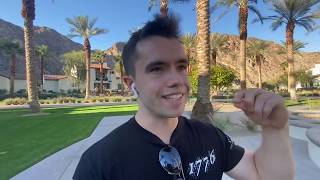
Mike Andes (video/vlog) records from Palm Springs after attending Landscape Summit 2020 in Bellingham. He used the summit kickoff to introduce the idea of "cognitive tunnels" — mental mindsets that blind leaders to better options — illustrated with anecdotes (Hiroo Onoda, an Air France crash, Yom Kippur surprise attack). He connects the concept to landscaping business practices: shifting from hourly to pay-for-performance (P4P), delegating, project management, and franchising. He also announces operational developments (P4PSystem.com v2, franchise training Feb 14–16, Canadian expansion) and closes with gratitude and calls-to-action.
Chapters
Hey, everyone, it's Mike Andes. I'm out in Palm Springs today. Show you a little bit around where I'm at. Look at this place on Airbnb. It's just a gorgeous place here. What's great is there's no one here. I'll show you around a little bit, but I wanted to hop on here. Kind of the first video of content I've made Since Landscape Summit 2020, which we had last weekend in Bellingham, Washington. Show you around here real quick. It's a beautiful, beautiful place.
So I've been here for the past few days. Finished out Thursday, Friday and Saturday. Last week was Landscape Summit 2020. And then I flew out here first thing Sunday morning and just kind of get away, refresh, relax, get my voice back and also just get a lot of things done that I've been pushing off over the past couple weeks and so done some really cool stuff the past couple days, really is working here from this resort here. I think literally I paid, I think $70 a night for the at this resort here. And it's kind of like a community out next to Coachella.
But there's like, no one here because it's the middle of winter. And so we got like hammocks in the whole bit, just completely deserted. So it's been really, really nice just to kind of get away, relax, get some sunshine. Because right now in the Pacific Northwest, we aren't getting no sunshine, that's for sure. Just finished a snowstorm. But I want to jump on here, say thank you to everyone that did come to the summit and kind of recap also kind of some of the things we talked about for those of you who were not able to make it. So Thursday night, when we first started at the summit, I wanted to make sure we talked about something that was really important to me and that was kind of setting the tone for the entire weekend and what you're going to be talking about and really getting the mindset of everyone that was in attendance on the right page. And so we talked about cognitive tunnels and mind blocks. And there's something that I feel is really important to establish before we even got the weekend started was what's holding you back in your own mind? And so often we can think about, like, whether it be hiring issues or economic issues or things are happening in your marketing or whatever, and we kind of put blame on those things for why we aren't growing, why we can't find anyone to grow our business. We can't find that right. One strategy, that one thing When a lot of times it's our mind and our cognitive tunneling that really creates that block for us. And so some of the examples we talked about. One was Anodo. This gentleman was actually the military for Japan in World War II. And he was deployed out on a Philippine island and basically told by his commanders to.
Not that basically not to give up, and that they would come back and get them when they were done. And what happened is, obviously, Japan lost the war after Hiroshima and the atomic bombs and everything. Well, they obviously forfeited. The war was over. But for 29 years after the war was over, Onoda was on this island by himself, fighting, hiding. He killed 30 innocent civilians. And for 29 years before finally they were able to get in contact with him and.
Able to actually bring his commander from Japan and have him formally release him from duty. It was just an incredible story, and I kind of felt like split two different ways for Noto. One was just, you know, the amount of courage and valor and.
Loyalty that he had to his commander and to his country and everything that they stood for. But on the other hand, I also have, like, there was so much wasted time. Like 29 years of fighting a war that didn't even exist. And in that time, he killed 30 people. And what I talked about that first night is really his cognitive tunnel was that Japan would never give up. And yet they did, because they wanted to preserve life, they wanted to preserve liberty, they wanted to keep their country free, keep it from all the disaster of war.
And so for 29 years, he fought that battle. He killed 30 people. I was thinking about how even as business owners or as entrepreneurs, we can get so almost like a martyr, just like. Just like put our head down, grind, push, do whatever we can, work more hours, put in the time, grind, hustle, whatever it takes, all that good stuff, which is usually a positive thing. But I feel like sometimes we just do that without ever realizing that we're just creating a cognitive tunnel in our mind of that's the way it has to be. We have to keep working, we have to keep doing this, when really there's an easier way. Like, Onoda didn't have to waste years of his life. He probably missed his children growing up, his grandchildren even at that point. And I think as business owners, sometimes we miss out on these important parts of our life because we have this cognitive tunnel, how we think it should be, or.
That we just got to grind and hustle and keep doing what we've always done. And really, the sad thing about the story is the casualties that were created from Onodo, 30 innocent civilians that he killed in order to continue to eat and continue to. He still thought he was in a war, still thought he was part of the military. And so I think sometimes as business owners, we get in that mindset of just like, we just got to work harder, we just got to keep grinding, when really is there a different mentality that we need to be having that's easier, that's going to give us a better quality of life and things like that. So I talked about that the first night, cognitive tunneling. We also talked about a pilot Air France flight that basically killed the entire everyone on the plane and went within three minutes, went from 37,000ft above the ocean, flying from Brazil to Paris. And three minutes later he's at the bottom of the ocean, wrecked this plane that was brand spanking new, sophisticated technology, very automated.
And he did it because he had cognitive tunnels. He heard one alert which was stall. And when he heard that stall warning, immediately he thought he, that he needed to pull up on the stick and they needed to increase the thrust, when that was exactly the opposite thing he should be doing. But because he had a cognitive tunnel of when I hear that alert, I've been trained to do this, it led to the.
Absolute devastation of that entire plane within a matter of minutes. And literally when they listen to the black boxes, they hear the other pilots literally talking and asking like, are you asking exact telling him exactly what he needs to be doing? Nothing on his instrument board went wrong. Nothing with the altitude or the speed. All the instruments were working just fine. Yet his cognitive tunnel created this massive calamity.
I think sometimes in our business, it's the same way all the information is in front of us, and yet because we have a cognitive tummy, the way we've always done it, or the way we've been trained or like, our immediate response or our instinctive response in times of emergency can create just a whole lot of havoc in our businesses, in our life. I also gave an example.
Of Yom Kippur war and how literally a war almost decimated Israel in a matter of two weeks. Because the general and the military leaders had a cognitive tunnel that prevented them from reacting to the risks and the threats of Syria and Egypt that were literally gathering hundreds of thousands of troops and bridge building materials and equipment and tanks all along their border. And yet they had this cognitive block, cognitive tunnel of.
What they should be doing and that they should just try to be protecting the public, get people all alerted or worried and Somehow that blocked them from making the right decision and literally as a matter of two weeks, almost wiped out Israel in October 1974 on Yom Kippur, which is a holy, holy day for them.
And just thinking about those things. So that was Thursday night. That set up the entire weekend because we were talking about things in their business that really took the. Had to take, take a whole different perspective like pay for performance instead of hourly show you here.
Beautiful place out here.
You can see there's like no one here. It's great.
I wanted to set them up on Thursday night to really get a whole different perspective on their business and be willing to challenge the things they've always been doing and challenge the.
Mind blocks that we create. Because what happens is people know they need to change from hourly to pay for performance. So they know that they need to make a change in their business and start delegating. They know that they can't continue to work 100 hours a week and yet have a decent family life or cognitively and emotionally stay stable. They know that. And yet the cognitive tunnels they've built.
Disallow them from ever achieving or changing their course of action. And so those are some of the things we talked about Thursday set up for an incredible weekend of really challenging a lot of the different ways that we look at our business, the way that we delegate, look at our team, our culture that we hire, and how can we step out of the business on a day to day operational level. What are the cognitive tunnels that are going to prevent that from happening? And so like when you think about a tunnel, a lot of people like this is dark in a tunnel. It is. And inside of a tunnel we talked about on Thursday, you can't grow a plant because there's two things lacking, number one, sunlight and number two, no rain.
And so you can't grow a plant, can't photosynthesize and you can't. I talked about you can't grow a business.
Can't grow a business inside of a cognitive tunnel. If you have certain things in your mind that you've built up that keep you from seeing everything else the way it ought to be, it'll keep your business from growing because you don't have the perspective, the sunlight and you don't have the resources, the rain. You can't grow your business inside of a cognitive tunnel. And you're like, well, no, I'm always, I'm chasing the light at the end of the tunnel. And there's always something I'm trying to go for when in reality, there's light all around you. Like if you look at yourself in a tunnel, you say, well, I'm gonna, I have a cognitive tunnel. There's something blocking me from achieving what I'm kind of set here to do.
If you say that and you recognize that.
It'S not that light is, you know, say it's dark inside of a tunnel. I can't build my business because I don't have the sunlight. But if you're inside of a tunnel, it's not that light's not around you, it's that you built the tunnel. Like, it's not the absence of light that makes it dark inside of a tunnel, it's the presence of a tunnel. So instead of trying to get wrapped up around the fact that you don't have the resources or you don't have the perspective to create your business of your dreams is you really need to detonate. This is what we talked about Thursday. Detonate the cognitive tunnels that are preventing you from growing your business, that are keeping you from seeing the light and the opportunity all around. Even as I step out into this kind of opening here.
Now, if you're in that tunnel and you're looking, when you're in a tunnel and you're going after the light, you really are looking way off. And you're looking at that one little thing, that one little bit of light, when really all around you is light. You just built up a tunnel in your mind. You can't see it and prevents resources and things from flowing in your way, your direction. This is just gorgeous here. Look at this. Fantastic. Not a single person. This is the time to come to Palm Springs, I guess. But it was an amazing event. We talked a lot about pay for performance for the landscaping industry.
Talked a lot about project management, videos, how to get out of day to day operations, how to delegate to your team. And it was a great, great weekend. So thank you all so much were able to make it out. I learned so much even in the weekend too. Like, so we were teaching pay for performance and we sold five more franchises on the Saturday night of the conference. And so which by the way, if you want to join the franchise, February 14th, 15th and 16th is going to be our next franchisee training. Come here for three days. Not here, come to Bellingham for three days. And so we'll get our next group of 10 franchisees in February. And after this weekend, I took the plunge on, we're developing P4P system.com version two, which is going to be a fully integrated software Solution for your payroll based completely on pay for performance for the landscaping industry.
It's going to make a huge difference. No more Excel, no more manual entry for P4P. So this is a gorgeous place out here. My goodness.
Just really thankful for this opportunity even to get away out here, you know, like, really, this is the result. You know, being out here is a result of the stuff we talked about last week. It's a testament to everything that we discussed at the Landscape Summit. You know, I'm out here. We just did a big acquisition back home. The team's amazing. They're going to take care of things, but it took a lot of hard work to, like, definitely delegate and, like, let things go and realize that you're not the best at every single aspect of the business. That's not easy to say. It's not easy to kind of come to grips with, but it's exactly what we talked about. The conference, everything that. The reason I'm here today in Palm Springs is a culmination of everything we talked about at landscape summit. Delegation, P4P, allowing other people to take roles within the company, doing project management videos so you don't have to go back and check up on jobs doing the yellow slip system. All those things are.
Really testament to what, what why I can even be here. And so I'm very appreciative for the team I got back home and very appreciative for kind of this, this time away and thinking about what the businesses need to look like. Literally this weekend, been able to get a lot done. Like, we just grew into Canada, so we're now franchising the company, Augusta Lawn Care up in Canada. So if you're Canadian, you've been waiting, you can now do it.
Really looking forward to that. We pulled the trigger on that. We also did the P4P system, version 2. Hire a company out of Kentucky to build that whole software system for us, a mobile app as well as a web app that's going to automatically do your daily metrics based upon P4P. Our goal is 30 seconds or less per employee to get the P4P calculations, and then it'll automatically give notifications to the employee on what they made in their production, what their daily dollar amount that they earned using P4P was. And so we did that. We're getting ready for a big food show that's gonna be in March for ketosiscups.com Some other stuff we did this week past weekend, just, just been really, really getting a lot of stuff done. And I'm really appreciative of everyone that came to Summit, but I just want to check in and say thank you to everyone that showed up. Hope to see you guys there next year. But again, if you guys want to join the franchise February 14th, 15th and 16th, just go to augustalongerservices.com franchise and take advantage of the command center P4P system.com, the stuff that we're building there. And I really look forward to the future. So hope you all have a great rest of your week, great 2020, and really start to implement a lot of things that we talked about at Landscape Summit. Have a great evening. Take care. Thanks so much.










