Competitor SINKS his $14 MILLION Family Business
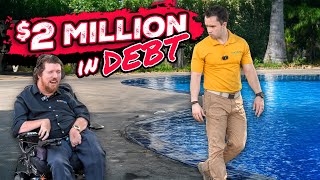
YouTube video (Mike Andes host) visiting Lifesaver, a pool-safety fence manufacturer/distributor led by Eric Lupton. The company made roughly $14M revenue last year but faces a sharp drop (seasonal revenue from ~$2M/month to ~$400K), heavy high-interest debt (payday loans, lines of credit), $1.2M owed to a supplier, and customer defections after a low-cost knockoff appeared. Mike outlines a six-week to 12-month turnaround focused on: raising near-term cash (target $1–2.5M), converting select dealers into higher-paying franchisees, launching an installer channel and in-house sales team (sell jobs, not leads), revising franchise economics (flat fee vs. percentage), and using gated discounts/flash deals to incentivize conversions. Operational moves already taken: layoffs (16 roles, saving ~$80K/month), a week-long out-of-season promotional event that raised ~ $1M, hiring an in-house salesperson producing $100K+ in 60 days. Key financials and facts are captured as topics/answers for later retrieval. Format: video transcript with speakers (Mike Andes, Eric Lupton, Michael Dasher, Speaker C). Sections seen: on-site manufacturing/warehouse tour, product explanation (removable mesh pool fence, powder-coating, production flow), business background (history, channels), finances/debt, franchise model and training, proposed rollout and tactics.
Chapters
We go from doing 2 million a month to 400k. Whoa. Yeah. This sucks.
It sucks. Today we're in Florida visiting Eric from Lifesaver.
I've been in business for 37 years. I feel like I've screwed it all up.
They manufacture and install safety fencing for pools.
Drowning is the number one cause of death for kids aged one to four in the United States of America.
We sell this product that saves children from drowning.
Last year, the business produced $14 million in revenue.
We're bringing in new franchises.
Big boogeyman right now is the over 2 million in deb. High interest debt, personal loans between employees and families. It's getting very messy. And then we have about 1.2 million in payables. But this year, a knockoff product undercut his prices and took many of his customers.
All my worlds were colliding. I just tell them they're the same. This one's got a better warranty.
But you allowed them to use the logo that kills.
We lost, like, several large customers, but didn't know we lost them. And we laid off 16 people. We have three warehouse guys now, which hasn't been that way for a decade, probably. We're a much smaller company than we were a few weeks ago. Yeah, we're struggling.
You have all this debt mounting up.
I owe the Chinese vendors a sh t of money and I'm slow paying them.
We don't do something pretty drastic in the next six to 12 months. He won't see this time next year.
He just calls me every now and again and begs me to bam. And I'm like, yeah, one day.
This is the business turnaround show. My name is Mike Andes. I'm the founder of Augusta lawn care, a franchise with over 190 locations around the world. And I travel the country fixing struggling businesses. If we can get a million dollars, that would be the goal. Ideally, it's more like 2.5 if we're going to also be trying to pay down some of the accounts payable.
Right.
Our goal is to give Eric a strateg to turn the company around in the next six weeks.
Eric is the second generation owner of the business. His dad started this 35 years ago. About 20 years ago, he took over.
I've grown it from a million revenue to last year, we almost did 14.
And has grown it all the way up to last year being 14. 15 million in revenue. This year, 8. 9 million in revenue.
Cash is an issue. Revenues are way down, which we did not expect.
I've gotten to know Eric pretty good. He Has a disease called cerebral palsy. So he's in a wheelchair. Very inspiring to see someone like that that has a handicap to be able to lead and push and grow the business to what he has.
And for me, right, I'm in a wheelchair. I'm super palsy. So if I don't make this work, I think it's real tough for me to start over. To get a job somewhere would be, like, almost impossible. I feel like I've screwed it all up and it's really sad.
There are very few franchisors that have, like, about 20 locations in home services. I'm really looking forward to talking today because I understand all his pain points. I. I've been through all these problems. I had big uprisings from franchisees. I've gone through this stuff. So I feel like we can help a little.
Hey, Mike.
That's hilarious. Wow. Where is this guy? There he is. He is. Oh, man. What's going on, dude? Good morning. Well, hey, it's good to finally see the place.
Yeah.
This is it. You made it.
Are we doing a bit of a tour then?
Yeah, we do a bit of a tour.
Let's do it.
So Michael Dasher, you said when you were here for the conference should be owning, like, three businesses. He is going to give you the tour.
So welcome to Lifesaver. I'll give you the tour now. Show you guys how the sauce, you know, I've got some here, a sample. You can take this home with you. It's totally fine.
It's hilarious.
This is where we receive our aluminum. It's all sourced from local American mills. Aluminum will come in here and then we'll start getting it ready and prepped for different orders that are placed. We'll have our square tubes, our round stock that we cut down and we'll use for gates. We also receive our aluminum poles, different types of poles for different lines of fence.
So all the fencing comes in mostly raw and then you're cutting it to size, etc.
Correct. So all this, all of our gate stock, we cut it to size. The poles are actually manufactured to our correct heights.
The full mouthful name of the product is a removable mesh pool safety fence. A removable mesh pool safety fence is made with the specific intention of preventing children under the age of five from accessing the pool. Drowning is the number one cause of death for kids age 1 to 4 in the United States of America. So it's a very urgent and serious issue that we're providing a solution for.
What's crazy is When I was three, I drowned in our pool in Arizona. My family knows that whole story. And so after I drowned, my family, they're like religious about putting us through swim lessons. And I went all the way up to a lifeguard.
It helps a lot, you know, at the end of the day to know why you're doing it and that people are getting a good benefit out of it.
So are you guys familiar with powder coating? Powder coating is essentially, it's a coating to give an aesthetic appearance and also give it like corrosion, an extra layer of protection or corrosion resistance. With powder coating, it's essentially using sag electricity to bond a layer of plastic to the metal. So we've got our poles here, right, which are metal. We've got our metal rack, we have our conveyor which is metal, and we normally have our metal hooks that are on the conveyor. So from there we take our fully metal rack and poles. We're going to hang it on the hooks and it's going to go through a two step wash process. First step is going to be an acid and detergent. The detergent is going to remove any of the greases, dirt, oils, contaminants that are on the surface of the poles. Second step of the wash process is a ph neutral rinse, right? That's going to remove any of those excess dirts and chemicals. And from there it's going to allow it to start the drying process. The last step is the drying. So here we have actual gate frames, uprights, poles that are drying for an order. Behind it you can see we have our wall of color. So different boxes of colored powder coat. From there, the powder coat will go into our spray gun. As the powder flows through the gun, there's an electrode at the end that positively charges the cloud of powder coat. The rail up here, actually you can see the negative wire that negatively charges the rail. So you've got positive cloud of, of powder coat, negative rack. As it sprays, that positive cloud of powder coat sticks to the negative rack.
Is each of those usually a custom orders as they come in or just certain parts of it have to be custom.
We obviously have a periods where we stock up, right? And we make our stock of bread and butter, like stuff that we sell every day. And there's, you know, large amounts of it. But custom orders, they come in because we can't foresee every combination. Those are made as needed.
I think that there's a fundamental problem with any product based business that stays in the product business only and doesn't innovate. Because eventually someone's going to rip it off. And I do think that over the course of 35 years, there's just elements of you get kind of comfortable and you just expect the product business to keep going and growing and people wanting the product more. And then what happened this year is someone came along and basically did the products for way cheaper than him and just texted all of his franchisees and dealers and said, hey, buy my product.
So if you guys come this way, we're going to show you our shipping lane. So typically, we'll build a lot of orders here. We have a lot of finished fence here. You know, in the off season, we stock up, we prepare for the on season. And I know, I know we don't like Seasonitis, but I'm just letting you know that's how it kind of works. But, you know, we have those. So we can easily load up the orders, build them to however they're placed, and from there, if there's custom things that need to be made, we can focus all of our energy really on those portions so we can get the order out the door as fast as possible.
And does this process change at all for direct to consumer through Amazon versus direct to lead dealer or franchisee?
So the direct to consumer, there's no custom at all. And that's one of the ways that we're able to keep the costs down on that and capture that portion of the market share.
So Lightsaber Pool Fence manufactures and distributes removable mesh pool safety fences to a network of dealers and franchisees around the country who sell and install our product. We also have a separate line of the business. The accounts are about a third of our revenue, where we sell the products directly to consumers that we sell online and we also sell it to Amazon.
My history with them is basically I've talked to two of their conferences. So I know their business model, I know their products, I know a lot of their franchisees and their dealers and some of the pros and cons of their model. And the pros are they have very high profit margins. One installer can do $500,000 in revenue a year, but they're very, very seasonal for three months of, of the year. And so they have a huge problem with Seasonitis. So it's very difficult in terms of revenue.
Got our pool fence table, right? This is, this is kind of like the part that revolutionized making pool fence. You know, Eric's parents started the business in their garage. At some point, like a pool fence table was built.
All right.
And it Made stretching the fence sections easier so that the sections could be more uniform and look that much nicer and be produced that much faster.
So the fence is actually usually installed with the poles prior to shipping out.
So we put all these poles on the table. From there, we lay out the mesh, we attach our end poles, we stretch it, and then we attach all the rest of the poles and moldings.
So they could still make it on site if they wanted to. It just. It wouldn't have the stretched uniformity.
They could do it. Is it tedious? Do I advise against it? Yes. We try to do the bulk of the work here so that they can. They can focus on, you know, like getting the actual installation done and not have to worry about the manufacturing of it.
Got it.
So here we've got our. Our mesh table, right. We have to make fence. And when we're starting it, we'll pull our mesh down the line, stretch it out to 15ft. You know, it rolls off the end here. And then once we have it out, we'll make a straight cut with this. It's just very fast and efficient. So mesh. After it's cut, we'll go on to our sewing tables. We've got our white thread on one side, black thread on the other. And you can see our different rolls of mesh back there. Vinyl border. And you can see on the edge. When I say vinyl border, I'm talking about the. The edge finishing pieces to the mesh themselves. So that also helps with the strength of the fence.
It's not the same thing as a fence around a pool. Your wrought iron, your aluminum, your decorative fences, those are made for looking at. They're not made for child safety.
The mesh fence is designed to be not climbable. So if you had like a chain link fence or one of the fence that Mike mentioned, children are much more capable of climbing that type of fence or that style of fence and getting over it than our mesh fence. Because there's no handholds, there's no footholds. There's nothing for them really grab onto.
During, like the slower time when people aren't installing. Is that when most of production on this side happens? And then like we switch that to shipping out during the busy season because there's just so many more orders coming in.
We don't do any installations here.
I mean, like in terms of the installations from the franchisees, like the orders going out, does that same team also do the manufacturing?
Yes.
Oh, yes.
But not the installation crew.
That's like you kind of move them between the two yeah, especially right now.
Like I mentioned, we laid off 16 people.
Right.
So we have three warehouse guys now, which hasn't been that way for a decade probably. Yeah, so, yeah, all three shipping guys do everything. You know, over the last six weeks, we laid off 16 people. We're a much smaller company than we were a few weeks ago. Yeah, we're, we're, we're struggling.
So recently they laid off 16 people at the headquarter building to cut costs because they're bleeding so much money. You know, you can cut so much, but then you also have to realize, like, your business model might need to change.
So.
Yeah, this is just one of our warehouses holding a lot of the DIY product.
Is there much changes on the manufacturing side or. More or less, like, hey, we just got to package this differently for the diy.
It's made entirely different.
Oh, really?
I mean, not entirely, but like, I would say, like a good portion of it is different. Got it.
The pole is different so that you can use a different tool to install it.
Got it.
This requires a hammer drill as opposed to a diamond core drilling machine rig. So a homeowner can put it in fin this house.
Yeah.
Right now it looks like we have a lot of material. This is actually barren to us. So, like just before season and throughout season, this warehouse will be so tight with a product that you can't even walk. A certain week, we could ship out anywhere between like 45 and like 60 pallets of just this material.
Pallets.
Pallets.
You know, it's weird because during season you said you can't even walk even now. I still can't.
Yeah. Each pallet holds like 72 sections of fence. The average pool fence job is probably about four to five sections.
And so if someone's doing a DIY and they're buying it, they gotta basically just know their linear feet. And that plugs into how many boxes of material they're getting.
Yep. We actually have a really intuitive tool on our. On the poolfence DIY.com website. It'll ask you a series of questions, about 14 questions. And at the very end of it, it'll spit out a list of all the tools, materials, everything you would need to complete the job. And you can click a single button and add it all to cart.
And what percentage of the direct to consumer DUI stuff is going from Amazon versus the website that we have?
So Amazon does probably double the website.
Okay.
Directing consumer stuff is about 40% of the business.
When you stop doing ads on Amazon, do you still get consistent Web traffic or do you think there's some cross pollination from Amazon?
There's definitely got to be cross pollination. There has to be.
There definitely is. I answer the phone calls.
Yeah. Yeah.
How many years you been at this office, though?
1999.
The same one, yeah. Wow.
And we've grown, you know, we were just in one of the bays, you know, which is why we're kind of disjointed. Right. Because it's kind of everywhere.
So we've got pretty close to 20,000 square feet of space. In the years that I've been here, that number was doubled. We're doing more business, we're becoming more efficient, so we're using the space that we have even more wisely. It's pretty cool to think about how much we've grown and how much we're going to grow, you know, in the years to come.
So many things have changed. We were a much smaller company administratively when I first started here. But probably the biggest thing that's changed is the franchising program that we launched at the beginning of 2023. We've probably got three that are gonna.
Sign in August for the franchise side. Our constraint is we can probably only train three at a time.
And what the constraint for having three franchisees at a time is that mostly just for like the hands on training.
Yeah.
Got it.
Probably a banner year for franchises. This year. I think we're gonna hit 15.
Really good.
Yeah. Which for us is a lot.
Yeah. Cause before this year you were at like, was 7, 8.
So this year we started the year with, well, we'll add another 59 by the end of the year. Every franchise brings in another 100 to 200 grand in revenue. Pretty close, pretty quick. So at revenue 10, we get another 1 to 2 million. And I feel like it's just a matter of ramping up quickly enough.
Hey, everyone, it's Mike Andes and I want to invite you to a private event that I'm holding on Black Friday. It's reserved to the first 500 people, so you don't want to miss out. It's going to be over three hours. It's a live stream. I have three massive announcements and something I've been working on for over a year I want to share with you. Go to mikeandys.com black Friday and register today. So he's been trying to move away from the dealer model because the dealer model is essentially, he only makes money if they buy from him. After they ripped off his product, someone else came along and did a Cheaper version. A lot of the dealers left, but he has almost 20 franchisees that are okay with having the more premium price because they get support, they get coaching, they get website, they get lead gen, they get conferences and training. And so I think that's what he needs to lean into if he's going to keep the brand as premium as it is. And he's not going to go after the commodity of manufacturing fencing. Most of his revenue comes from selling the fence and I would like it to move more towards the fence is the commodity that he sells. And there's the training, the coaching, the infrastructure, the community. That's the part that keeps it much more sticky. Revenue. Instead of these massive dives, going from like 14 million last year to like 9 or 10 million this year, like taking a 30% cut in revenue because a competitor popped up is brutal. Is that usually a week long, Eric, for the training?
Yeah, six days.
And then here is all the in person stuff. Yeah. On the training, is it like three days in here, three days out in the field?
No, we do half days. So half day in the classroom, half day in the field, back and forth.
Got it.
People absorb better.
That's super nice.
The guy who does the training, so he flies down from Long island, he was a teacher for 20 years.
Okay.
He lost his son to drowning, so he's super obsessed with water safety.
And he flies up here for just the training.
He does. Yeah.
Oh, wow. So usually one to three new franchisees.
Yeah. And this isn't the constraint. We would fit more people either in here or somewhere else if we had to do, but three's enough. I mean, if we, if we did 36 a year, like that would be huge.
Yeah.
You know.
Yeah. Oh, yeah, that would be great. There are only four reasons why a business will stop growing. And we call this the 4L framework. It's either going to stop growing because of a lack of liquidity, a lack of leads, a lack of labor, or a lack of leadership. So in terms of this year, are we shooting still for like 8, 9 and that's one of the goals?
No, I think we're going to. So last year we did 13.8, you know, and I think we end up being 11 to 12 this year.
Yeah, it's still just now the debt that we.
Yeah, so the debt is a problem, cash flow is a problem. Even though I laid the people off, you know, profit is quite where I like it.
And so for direct consumer, this year, what do we think we're going to hit?
5.
Okay. 5 million direct to consumer, mostly through Amazon.
Yeah. Like 2 million. The website.
3 million, 3Amazon and then the dealers.
I sent you the 2024 panel, correct?
Yeah, yes. I'm just trying to think like where that some of that has shifted like from last year. This year in terms of the dealer selling the fence, how much do you think we're going there in terms of revenue this year?
It's probably about six.
Okay. And then whatever's left over is like franchise fees, royalties, etc.
The franchisor is a separate entity.
Oh, it is, yeah. Okay.
Yeah. Like their franchising houses, all the revenue and for the royalties and the franchise startup costs.
Got it. And today this year made 1 million.
We're probably going to hit like 320 in startup piece.
Okay.
And we're doing about 4,000 a week right now in royalties.
Royalties, okay. So this year maybe we hit 5, 600, 600,000.
Yeah. That's all right.
It's small, but it's the growing portion and that's the stickier revenue because they have to order the product.
Right, Got it. But that's just the royalties and the starter fees. They're also buying fence.
Right? Right. Yeah.
And they're buying it much better than the dealers. The dealers are. And they can't go anywhere. As one of the dealers who defected and started buying from the other guy told me, he's like, yeah. He goes, your franchisees are your prisoners. And he goes, I think eventually they're going to be pissed off. They all seem pretty happy.
Yeah.
But he didn't seem to think so.
From a balance sheet perspective right now, given this sort of like the revenue breakdown. Direct to consumer, dealer, we're basically almost half, which I direct to consumer is bigger than I thought.
Yeah.
The challenge part is margins. Right, Right. On like Amazon, what is. Do you think your actual blended margin is on that?
It's tough. I think it's probably 30% maybe since.
It'S inventory, shipping, getting all that stuff.
Yeah. And they do their fees. We were spending a ton of money on advertising on Amazon. Amazon has an in house pay per click platform and you know, but there's not that many pool fence, you know, options on Amazon. There's a handful.
Yeah.
And we have those reviews and we're that best rated. So the thought was if someone searches for pool fence, we're coming up whether we do the paper click anyways. So rather than spending five grand a week, ten grand a week in season, we can save that and we'll probably still show up. And I don't think there'll be a big gap. I think the organic SERP will be enough to make the difference. I was terribly wrong. We didn't advertise and the Amazon sales plummeted. It was disastrous. So I ended up turning those back on after a month or two of realizing I was an idiot.
They're in a weird spot because they got dealers, they got franchisees, they sell direct to consumer on Amazon. The fence. Now they're doing the franchising thing. It's also very difficult from a leadership perspective to be focused on all those things at the same time. All four of their channels are in, like, a tough spot. He's spending like 30 to 40% of the revenue they make on Amazon on just Amazon ads. He turned it off. Their revenue dropped by 80% on selling on Amazon. That's struggling. And then from a balance sheet perspective, from what I'm seeing is there's still around like 5, 600,000 lines of credit.
Yeah, there's a lot more than that. So we took out the SBA loan from COVID and we maxed out. You know, we got 2 million from that. So we have 1.7 of it, probably. Yeah, we have a $650,000 line of credit. We have another. It's a business equivalent of like a cash advance payday loan of 650k that we're paying out 9 grand a week on. I paid back all the friends I borrowed money from, which thankfully, apparently, I have more friends of money than I thought because I literally hit everybody I knew up and I was able to raise like 600 grand, which was cool.
And you paid them, you know.
Yeah, they all got paid back. Yeah. And they're all. They all want to do it again next year, which is probably. I might do.
Yeah, because they got.
They got 10% for eight months.
Oh, really? Yeah.
So, you know, for them, it's a hell of a deal. It's better than the stock market.
So really, like the line of credit, that's decent. The payday loan is the hard part. The sba, like, I'm assuming you're going to let that run forever.
Yeah, it's 30 years. Okay.
Yeah, I'm not even, not even going to take into consideration because you can put that money in the stock market and make more than interest. So. Yeah. So line of credit is 650. Payday loan is 650.
Yeah, that was the killer.
Right now, Lifesaver has $650,000 in payday loans. They're paying $9,000 a week on that debt. That's the most toxic high interest debt you could possibly have. We've got to get rid of it as soon as possible. We also have $650,000 worth of lines of credit. This is common for a manufacturer to have to be able to bridge their cash flow, but still they're paying interest on it. And the challenging part is we're at the end of this.
And then I have another 500.
Also like an SBA loan and I'm applying for another one for 350.
Okay. We also have two major loans to the SBA. One that's about 850,000 and another that's over $2 million. The $2 million loan is the EIDL loan, which is 30 years long and very low interest. I'm not super concerned about that debt. It's all this other debt I'm trying to get rid of. So that would be a second SBA. So basically there'll be 650k is payday loans. Then we have the lines of credit. 650, which you need anyways for inventory.
Yeah. And I owe the Chinese vendors a.
Money probably like 1.2.
Yeah. And I'm slow paying him. Like the one guy who I'm not getting anything for for a long time, he just calls me every now and again and begs me to pay him and I'm like, yeah, one day. And the other guy who we still want to use regularly, so I send him like 20, 30 grand a week.
Also the main supplier that Eric is using for all the pool fencing, he owes them $1.2 million. And if that person ever decides not to give us fencing, we're going to be in a pickle. So that's also something I consider a problem in the liqu liquidity side of the 4L framework. So payday loan, 650 line of credit, 650 SBA. We're at 500, going to 850 shortly.
Yep.
And then inventory is not really like debt, but it's there. We got to pay it. It's really just cash flow.
It's just cash flow.
I think he probably has around $2 million worth of debt, all said, between lines of credit, high interest debt, personal loans between employees and family. So it's getting very messy. Even though I think over the past month he's taken some of what I said and like really cut to the bone in terms of savings and starting to change of the business model, I still think there's a long, a long road ahead because when the bulk of his revenue has come, which is the fence product, there's now a competitor in the market that's willing to do it for half the price. He's going to have to diversify where that income is coming from or just get really efficient in terms of the convert. Like trying to pay this down.
Yeah.
Because it sucks.
It sucks.
And you know, and you know, I cut payroll.
Yeah. And that's been what, like probably 100,000amonth?
It's like. Yeah, 80,000. 80. 80 to 100. Yeah.
From a profitability perspective, we kind of. We're not at least where we were three months. Right.
And I should have done that two years ago, probably. You know, it was stupid.
When it comes to 4, 0 framework, the next constraint we have to growing the business is labor. And in the past, Lifesaver was spending way too much on overhead expenses when it came to the warehouse and the corporate side of the business. And recently Eric laid off 16 team members. And that was difficult and that was hard. But saving him over $80,000 a month.
Because as you saw, like, we're still showing orders, right? Yeah, there's just nobody in that warehouse.
And they haven't really felt the effects of it. Orders are still going through, things are still getting packed, everything shipped out just fine. And so we're able to save $80,000 in unused labor. That's a huge win for the business and puts us back on track to be able to pay off this debt. So one opportunity like I kind of see is like, because the big boogeyman right now is the over 2 million in debt, and then we have about 1.2 million in payables. I kind of look at it as like, in terms of initial cash injection, if we take profitability, because I think that's actually fine. Like, when I look at the margins, like, I see it's fine, especially now you cut 80,000amonth in payroll. Like, I don't see it being a huge problem. It's just that this is going to suck all of our CA for five years of compete, just trying to chip away at it. Right. The challenging part on this one is I can't reinvent the business model over the course of 12 to 24 months because the business will be bankrupt by then. We have all this debt mounting up. All of the interest payments and debt payments are sucking out all of the cash flow. And so if we don't do something pretty drastic in like six to 12 months, he won't see this time next year. I see as if we can get a million dollars. That would be the goal. Like if we could just magically make a million dollars. Great. Yep. Ideally, it's more like 2.5 if we're going to also be trying to pay down some of the accounts payable.
Right.
When we sign up a new franchisee, how much are we earning per franchisee?
So the franchise startup fee is 35k.
And they're usually making that initial order though, too, right?
No, they place an order for like five grand. That initial 1,000 I mentioned is their first 12 months of purchases, which is, you know, compared to a new dealer. Before the franchise system, we didn't have any system for getting new dealers. We weren't advertising. They just came to us somehow, word of mouth. We would train them all the time. Most of them bought nothing. And the ones that did, you know, if they were killer, they'd buy 60, 70 grand in their first year. And we thought that was tremendous.
Right.
The franchisees, they start up. Almost all of them do at least six figures right off the first year, and they seem to get to 150, 200K, you know, shortly after that.
So realistically, assuming you're able to get about $100,000 in product, but the initial upfront, if we're generating a million dollars, we would basically need about 30 franchisees. Correct. If we got 30, I think we'd be able to get the rest of this pretty quickly. Due to the fact they're buying. Buying pens. Right. So increase revenue, increase margins on the back end. Right. So, but the nice thing about the franchise, you get the money up front. So, like.
And the royalties, correct?
Oh, right, yes.
The royalties are going.
Yeah, yeah, yeah. I'm just thinking more like short term, because if we get a million, at least get like the payday loan paid off and then have money ready, a little more cash in the bank, essentially. I feel like that'd be a win this year. I have learned this the hard way. And that is, like, the only thing that matters when it comes to franchising is making sure the franchisees make a bunch of money. There's no money. And so we need to make the franchisees more money, and they need to be making at least three minimum. Like, I'm shooting like 400,000 in annual revenue. Should be the average. If we can get that, they double the amount of revenue for the franchisees, which would double the product buys from the franchisor. The challenging part is we are going into the off season. Yeah, Right. And that's where I kind of. This is going to weigh us down like a lot. From your perspective, is the next eight months the most critical? Because you're basically. This is when revenue goes down.
Yeah, it drops off like a rock. We go from doing 2 million a month in March, April, May, and June to 400K. Whoa. Yeah.
Okay. Okay. Wow. The fact that I can see the year to date and I've already lost about 120, $130,000, it's like, oh, that's not so bad. But I know that the next six, eight months is where all their losses are going to come from. Even though the numbers don't scream at us this year, he knows what's coming and he's smart enough to know they had the slowest months ever and a huge cutback in revenue this past three months. And now they're basically at break even for the year, but their slow season is coming up. One thing is how do we convert the dealers into franchises? Right. So it was like, it's just a couple of them that converted over.
Yeah, we had one in Texas is a family who lost a childhood drowning. And I think they're just really committed to the idea. They're better now. For the first year, they felt like they got screwed by switching. They're like, yeah, I'm paying all these fees that none of the dealers are paying. And I asked them, you know, what service, which of these services wouldn't you use? Like, well, all of them. I'm like, well, then you're not paying anything extra. You're using services you would have used otherwise. But yeah, so we had one. One real conversion. One guy, of course do, because, you know, I've known him since he was four and. And then. Yeah, just literally yesterday. But they're doing it because that deal gets them into the territory.
How do we make it where these dealers feel more pressure to join? Right, right. Especially the ones that are actively using it. Say there's 20 eligible that could, like, realistically, they should be buying a franchise.
And the dealers don't pay a franchise starter fee.
Oh, they don't. They just get a grandfather.
Yeah, they grandfather.
They just pay the royalty. But the royalties are way behind because the existing dealers didn't switch.
From the dealer's perspective, they only see it as like, I have to pay more fees, I've got to wrap my truck or vehicle.
I use this dumb software I don't want to use.
Right. I get the.
I get it now works.
Yeah. And then the biggest thing is though, the leads, like right now they're getting them. No Matter what.
Yeah, well, now, so the franchisees get them for free. The dealers pay 45 bucks for them, which is nothing. Which is nothing. They think it is, but it's nothing.
Yeah, it's nothing. They're just wrong when it comes to leads in the 4L framework. Right now Pool Fence is selling these for $40 a pop to the dealers and then they're giving them away for free to the franchisees. $40 isn't even covering the customer acquisition cost that they are paying to get these leads. We've got to increase that or convert these dealers into franchisees that are paying higher royalties because we can't afford to be losing money on every single lead. How can we put pressure on those dealers to switch over? Yeah, I, I think you gave the offer for them all to join, like first come, first serve with no fee. I, I would recommend pull that because I think we can put enough pressure on them eventually to switch over to being a franchise and collect the million dollars to do that though, like we are giving them way too good of a deal with the $40 per lead or whatever that is. If I don't give it 100, it's too good.
Yeah. You think I should go to the model where I'm. They don't get the lead, I sell the job for them and they get to be my installer employee.
Well, because right now, if you give them the lead, let's hope they buy the fence from us. If they don't, we've actually lost money.
Which is what happened this year.
If they do, it's lumpy revenue. They don't have any brand affiliation. It's not good for the brand.
Well, a lot of them use our name. Most of the dealers use lightsaber pool fence of Nevada, of New Jersey, of whatever.
What if we scrap the dealer model and call them installers?
We don't do dealers anymore.
Oh, you don't?
No, we only do franchises.
But when you set them up.
Yes. Okay, so after 2022, we were like, we're not setting up another new dealer only franchises.
Got it. And do those expire, those dealerships?
They all renew. Yeah, but I mean, some of these guys have been around for 15, 20, 25 years. A lot of them don't even have agreements with us anymore. Like they, we both lost them.
Great. These are installers. Right. And I think it's important to distinguish because we're going to have installers that we will now start adding to. What worked in the past was adding dealers.
Right.
Low amount of friction for them. Low commitment, low upfront cost, et cetera. I say we keep scaling that, but we call them installers that we don't have any sort of legal binding with to. We sell a job and we go find an installer, whether that is a quote right now dealer, or it is a fencing company that's local, we will give give that job to whoever's ready to go and is in good standing with us. And that puts the pressure on any installer to become a franchisee. Because right now, if I'm getting a lead for 40 bucks and I'm gonna go and sell a $3,000 fence, I will never become franchisee. It's too good. It's too good. And then you don't have enough margin. And then we're in this situation because, like, the dealership model works, right?
And they buy the fence from us for 10 bucks a foot.
Yeah.
Which they hate. They think it's too expensive. And they sell it for 25 and 35 and it takes three hours to put it in. And their average ticket is three to four grand. And they pay an installer 600 bucks. You know, I mean, the margins are insane.
The next constraint in the 4L framework to growing the business is leadership. And right now, the hardest thing that Eric's gonna have to do as a leader is to pull off a complete transition of the business model away from the dealer model towards the franchise model. Why? Because we need better brand guidelines, we need better marketing. We want to make sure that the brand is held to its premium standards and that we don't have people doing random stuff when it comes to their sales process. To do that, though, it's gonna take a lot of leadership to navigate the organization in a way without causing too much disruption for the current dealer network. I think if you take the current thing where you're selling over the phone and really perfect it, you can honestly start changing your verbiage because you don't have any legal contract with these dealers. You start calling them installers.
Right?
We have installers and we have franchisees. And you want to go from installer to a franchisee? Here's the cost and here's all the benefits. And anyone can become an installer. You don't need to sign anything with us. We are simply, okay, you're a fence company. Great. You got to go through this training. It gives you a three hour course on how to do it.
My thinking was, if we were going to do the installer model, we sell them the direct to consumer product, which is a damn fine Product like it works, it does a good job, we make good money on it. It's cheap for us to buy and we just don't call it direct to consumer. This is, this is the fence professionals or this is the Augusta Lawn care fence.
And then you have such low amount of training required for the installer. They're literally just doing the installation. They're almost like a handy. They show up, they install the thing. All the leverage is who has the lead. And that's why if you sell the job, we have way more leverage to do this. We're going to create a third channel. We've been selling to franchisees, we've been selling to dealers. I want to go one level lower and really go after the installer market. We're going to treat them like dealers. They're going to be less tied to the brand but it's going to allow us to get leverage to get rid of the dealers in the long term.
The quick and dirty way of doing it is so we make up, you know, a 4%, we call it rolled on the gross revenue of all the franchisees. They buy, you know, 100 grand events from us. That means they sold 300 grand in revenue. 4% of 300 grand is $12,000. Right. Just profit. The franchisees could get better pricing. That feels weak to just, you know, franchisees get a discount and you should switch because it's cheaper Fence.
Well, here's the thing.
And also the current franchisees aren't complaining about the price compared if you look.
At your franchise fees per month, that is dwarfed by how much they're spending on the product.
Product 100%.
Right. And so really in my opinion, I would love to just say you are a franchise, you have no royalty. It's not that we want to do away or throw the dealers under the bus. We want to make it so good being a franchisee. That becomes a no brainer for a dealer to switch into the franchise model. When it comes to franchise. Have you guys, have you ever considered doing a flat fee instead of the 3%?
Yes, because you do it. It was funny when we announced the franchise program, he said he was going to franchise and then didn't. And he said, he goes, yeah, I was hoping you'd do it it like Augusta Lawn Care. I was hoping you'd have like a flat fee instead of like the royalties. And I was like, well, you know, how much is, you know, Augustus Fee? And he's like I think it's like three grand a month. And I was like, well, with us, you don't pay any fee, you know, and your royalty is going to be less than that because. And he's like, yeah, but then I got to pay. You're making us spend 2,000 bucks a month in advertising?
Well, the thing is at 3% for them, so let's say you charge. So ours when we start was $1,200 a month. So let's usually do $1,200 a month. At 3%, we have to. They have to sell $36,000 a month in fence to get $1,200 in royalties. And so if you multiply 12, this is the part that's the kicker. They have to do over $430,000 in annual revenue to make more on 3% than $1,200 a month. Right. But more importantly, our revenue gets flattened for the whole year because you get your. Your monthly fee no matter what, regardless of in the winter. They do five grand, like one fence.
Sure.
And you make, you know, 100 bucks. Right. You. You always get the 1200. It also incentivizes them to figure out their off season because they're not paying a royalty and they're just playing a flat amount. So it's like, do you want to get 5000 revenue and pay us $1200 or do you want to just simply go make more money in the off season? Because it's going to be twelve hundred dollars no matter what. The bottom line is he needs more franchisees because they make more money than the dealers. They uphold the brand standards much higher, and every single time they sell a fence, he makes more money on the product as well. And they're the ones who are the happiest right now. The ones that are actually the ones with the least freedom and paying the most fees are the happiest because they're seeing success.
So the downside of that is I think a lot of them are already having a bit of a tough time in the beginning, turning a profit. Yep. Even without an extra 1200 bucks a month, the good ones are good, but the ones who are kind of like on the cusp, which we only have 17 Francis right now, it feels like it should be so much more profitable than it is. But a lot of them aren't just making a ton of money. And I think if I dropped another thousand bucks a month on top of it, it that's going to be harder to sell.
The sale part is actually easier because the person that coming in as a franchisee, if they're like, I'm Going to build a million dollar business. Like if it's the type of person you actually want in here, they want the flat fee because they don't want to be paying a percentage of revenue. And now you pitch, it's like, hey, when you have a million dollar business, you're still paying me $14,000 a year, right. You're not paying me 36 or whatever. It would be at 3%. Sometimes it's very difficult to tell someone, hey, you need to do this and pay more money. But really, you know, the outcome is they will be more successful. It's a difficult proposition. It is much more appealing to an entrepreneur to say, hey, I'm charging a flat dollar amount no matter how much you sell. It incentivizes them to grow the business. Because right now the reason that they all hate his marketing budget thing is because they know every time they market and they get a lead and they get a sold job, he gets a cut. I think what's nice about the installer thing and with fences specifically, because we struggle with this lawn care because it's so time sensitive, you got to get the lawn cut. But you could sell the job, tell them within a week you'll get an.
Installer, 10 days, whatever.
Yeah. And then, then figure that part out later and then you have like money in hand. It's the best that you are getting paid before the product shipped, before anything. It's like really good from a cash flow perspective.
And that was a franchise leads too.
Yeah. Great. Yeah, 100%. And I think that's what gets you off of 3% of revenue. It gets up to say 15 or 20%. And then if you're also getting product on top of that, that looks really good. I think in six weeks you could definitely get the job selling on the phone, start the installer program and start putting pressure on the dealers. I would rather it be, hey, you grow the business as much as you want. I'm gonna give you all the tools, the resources. Here's who we think you should do for Facebook ads and Google Ads. But it's up to you to grow. You pay the same amount no matter what. Now when I tell you to do something in your business, you believe I have your best interest at heart because I make the same amount. No matter how successful you are and no matter how much money you make, as long as you stay in business.
Business franchisee, startup cost now for a new franchise is 35K. You charge a dealer 35K?
I like to. They've said no for three years.
Right.
You've given them plenty of warning. You've kept building value in the franchise, and now it's like, okay, this is where we're going. We know this is where we need to go. Because until we do this, I mean, we.
We give veterans and families who experience a drowning at the discount date. We charge them 20.
Sure, 28. We'll give them something. Right. It's like, hey, you get $4,000 off. Seven or $7,000 off. And you also get now this territory that's locked in, but you're doing it because you're peed by the fact that four other people are installing your fence. Yeah. It's just challenging because right now, someone technically could be using your logo, getting leads, and then buying someone else's fence.
It happened this year. It happened. It happened a lot, for sure.
Oh, we gotta lock that down.
There's at least one example of somebody who put our product head to head.
Against the ripoff product. Yeah. She just put it in front of the customer. She tells us this. So. Because she stopped by, like, her purchases went way down. And I'm like, you're buying it from this guy? I called her. I'm like, you're buying. She's from Oklahoma. It's like, well, yeah, Eric, what I do is I tell them, you can get the Lifesaver pool fence for this much or this one for that much. Now let them choose. It's not. It's not my fault. They always choose the cheaper one. Yeah. I just tell them they're the same. This one's got a better warranty.
But you allowed them to use the logo that kills. Because.
Well, when we only had dealers, we wanted to build a brand which was.
Really good, but they all built their own websites and lead capture and all that.
I mean, that has turned out to be really good. The brand is strong.
Yeah.
Brand. It's great, you know? Yeah.
But we have no control.
No, we didn't know we got a franchise.
Yeah, yeah.
In 1997 when we did that.
The dealer model relies on them buying product from Lifesaver. And so as long as Lifesaver was the only game in town, that's why it worked for 30 years. But as soon as someone came along and just undercut the product prices, now it's a commodity. And if you want to play in a commodity game where everyone can just compare your prices, that's all you're selling. But if you're selling value, which is brand support, the premium nature of the product, all of these are things that can Be sold at a higher price. But you have to convey that value. But, but if the only thing that you making money on is the product, the commodity, someone else is gonna be willing to do it for cheaper. There's the race to the bottom of the product or services. I wanna compete on brand, I wanna compete on value and not on price. I think the only thing I see. Cause there's so much advantage for the dealers is discounting. The only way to convince them to join the franchise is probably that for them to be like, okay, it makes perfect sense. Like if I can save, if I can save 5% or 10% and I paid 3%, good deal for me.
Right.
Do you show the. Do you ever show the average revenue of dealer versus average revenue franchisee?
I've never disclosed it.
Oh, it'd be great for internally because ultimately that's what, that's what you're selling is the fact, hey, like you become a franchisee, like the average location doubles in revenue because that would be helpful too just to help them convert over to.
Right.
So if you, if you, do you think if you offer 10 discount on the fence, you get all your dealers to move over as franchise.
Maybe if I, if I, if I didn't both, if we gave, if we pissed them off and said you don't get leads anymore and I'm gonna sell my. I'm gonna sell jobs in your area and you get, you know, either you get to put it in for seven bucks a foot or you know, John's Landscaping does and gave the discount. I think you might get more of them.
Maybe 15 or 20.
But they do if we want 15 or 20.
Honestly.
Yeah. The thing is there's only like a handful of dealers that I really want.
To franchise these and that's because they suck. Okay.
Yeah.
Okay. So you don't want them to really convert over A lot of.
I don't. Some of them, I really do.
How many of them do you really want? Like 15 maybe.
Yeah, it's in that range.
Yeah, something like that. But some I just want to go away, but I, you know, but I need the revenue to keep the lights up, you know.
Yeah, yeah.
Some of them. We have no faith that they would actually run it like a real business.
Well, this is good because then the people who, who are ticked off at you, if they leave, you don't really care.
There are people I wanted to replace ultimately anyway. I just didn't want them all to go at the same time.
Yeah.
You know, like all eight of them disappearing on the same Day wasn't great, you know, because that was like a 2 million sales.
Right. Like, I think if we can make. If we can make 30% on the 30,000, I'd rather have that than something 40 per lead. And like, hopefully they buy our product and like all the other stuff. Right. Because I actually toy with the idea of like, maybe that is the model, the entire model, which is we just become the brand for pool fencing. We got all the leads coming in and then we find installers across the country have a thousand installers. Right, right. That just is a much longer turn of changing the business model.
And the franchise is working.
Yeah, it's working. Yeah. I think I like it because what you do is like, wherever there's lots of concentration of leads, if anyone you contact, the 10 people have done installations for you and like, hey, this market is now available. So I think that's. I think that's the real changing is like we sell the jobs on the phone. From there, it's either going to go to a franchisee for free, it's going to be sold on behalf of the franchisee, which we make a commission now on extra 15 or 20%, or it's going to be sold to an installer or it's going to be sold to a dealer. Like, we're going to make a way bigger cut on that deal. But I feel if we did that and then we did the discount for the franchisees, we get like maybe 10 of the franchisees or the dealers to move over the ones that we want.
Right.
So he had some of his dealers that switched into being a franchisee that later on felt like, oh man, I'm paying way more. I have way less freedom. And so there needs to be clear benefits of joining the franchise. Joining a franchise is like getting married. It's way more legally binding. It's way more commitment. And so the same thing goes with dating. Like, there are benefits to getting married. There's more commitment. Yes, there is. You get to work through things together. There's gonna be times that you feel like someone else is telling you you gotta do something and you gotta work through it together because you're in a very legal, binding contract. And so if the benefits of being in a more contractual relationship, that is the franchi not very clear, then we have a value proposition problem, we have an offer problem. And that's why giving the discounts, giving free leads, these are the things that are going to incentivize someone to sign the contract and enter this contractual relationship. So realistically, if we get 10 franchisees.
That'S only about $280,000 if they pay the 28 grand.
Well, yeah, I would, I would definitely want the initial. You give them three years. You've been so generous. The $40 cost per lead thing or lead thing is so incredibly good. They have had it so good. I think though we can pay off like even the $9,000 a week from this one and these other payments. I think we get incrementally more revenue and profit by being able to now extract two to three times more per job.
Right.
From franchisees, dealers and installers. So like I look at as like trying to. First off, we're trying to fix the franchise issue to get at least 300 grand. Just get through this like next little bit.
And I'm selling franchises all the way.
Right. That's great. That's going to help us a lot. It's like I'm going to go short term. We get through the off season with trying to convert as many of the dealers into franchisees as possible. The ones we want, 10 to 15. If we can get 300 grand, that would be helpful. And then we cut way back on the cost. That's very helpful for off season. At the same time having this new network of installers that we can tap into and potentially go into markets even during our off season that we might know are really good. In California, for example, example. Right. And like actually sell them and actually go find installers. So it's just like getting through that because like the slow builder franchise is always just like pulling your hair out.
Right.
Until you have a good enough. Like I think your break even on your franchise is probably like if it was by itself, like probably 30, 40 locations. Like if it was by itself, nothing else, something like that. The nice thing is you have that revenue from the product.
Right.
That's so nice. Yeah, that's. We, we had to get to 100 because like we only have the fees.
Right.
Okay. So not as fast as I would like because I really was trying to think about how we were trying to.
Find the million dollar bullet.
Yeah. Which was the dealers moving over. But I do think we can get maybe 10 of them to switch over if we put pressure on them over the next several months. Maybe on the installer side, honestly, the debt is crippling. Even if he had his best year, if he had that for the next five years and put all of the profit towards the debt. Debt, he'd pay off the debt. So it's going to be a long slog to pay off the debt. But I think first and foremost is can we make the business more profitable by pulling a few levers? Can we immediately get some cash by getting franchisees? Can we make sure that in the future we have franchisees instead of dealers so that the revenue is more stable, the brand is more consistent, we retain our premium brand in the market. And furthermore, can we make sure that every lead that's coming into the brand currently, we can get three times as much revenue from it simply because we're selling jobs instead of just selling a $40 lead to the dealer. And so that's the long term strategy. But whether or not he can weather this off season is gonna be the determining factor of whether or not lifesaver becomes a 20, 30 million dollar business or if it closes down. And I think is the bigger the business gets, the more product knockoffs there'll be. It's a function of if we make it really sticky with all these other ancillary services like you selling the job for them makes their job way easier. They don't need to be a salesperson like all of a sudden we talk to a conference. They don't need to know because you just do it for them. Right. And the value of that so much higher than like, here's how to do it versus like we will do it for you. Right. So I think if you did the 5% off all franchise they get, they.
Still get leads if they want them.
Free leads. Yep. That's already happening for the franchise versus no leads. There's no leads.
I'm going to sell pensionary.
Really the downside is we, you got to spend X amount on marketing. That's the downside. That's when, that's when it comes down to the reason we do that is because here's what French is, he's making.
And here's what, and it's, it's one job a month in advertising.
Right?
One pool fence a month covers your advertising. I said, look, if you're spending $3,000 a month in advertising, which is the revenue from one pool fence, right. If you can't sell a pool fence, one fence a month, when you're spending three grand a month in advertising, something is seriously wrong.
Wrong.
Like you're in a coma.
Yeah, right.
Or like, you know, you, you've got laryngitis or something. Right. Like you, something has gone terribly, terribly wrong. And mostly it was like, oh yeah. And then they buy the franchise.
Part of like joining the franchise is the buy in process. So like we originally had a lower Tier franchise, the solo operator model.
Right.
And all with the franchise advisor Council wanted it gone and that meant like we were allowing people to join for seven grand versus 25 grand and they didn't want it. And so your franchisees will be so much happier when like there's clear cut guidelines and territories and everyone that shows up at the conference is on the same page and doing the same thing and paying the same fees.
Right.
Like the, the cultural buy in is so much higher.
Any thoughts on like literally in the next few weeks.
Dumping inventory at discounts before, you know, before or after we do this?
Like I would do the discounts only to franchises.
Okay.
I would give them, I would give six weeks for people to join the franchise just for that discount.
Everything about doing flash sales, like things that we have way too much of.
Right.
Because we're overstocked on some stuff that's like, you know, not as popular.
Right.
And I thought about doing like, you know, 20 sections of four gates for the next hour at this price. And you know, you want to be.
Careful with them, always knowing deals are coming.
Right. Because that's how it's been lately. Because I've been trying to raise cash.
Yeah. So I would really intent device instead of just saying like flash deals, I would say if you join the franchise in the next six weeks, then you access to these deals and then you could make deals all the time. But it's like you, if you're in the franchise, you get access to them.
Right?
Right. The challenging part right now is a lot of your volume is coming from dealers. But we need them to swap.
Right.
And if they can say, okay, if I just make a big order for next year using these flash deals, I will pay the $28,000 this month.
Right.
And then in perpetuity, I get 5% off all the time. Yeah. So I think you could probably run some math for them. They're your biggest dealers. Like hey, last year you spent $200,000. Okay, great, you're gonna get 5% off. So you would have saved 10 grand just being part of the franchise. And then by the way, this coming month you're gonna get these flash deals that we're going like 15, 20, 30% off on this other stuff. And that alone could wipe out your initial fee. Right. So I'd be really trying to create the, create the case for this, which of the 10 or 15 that you want, want, and then tying that to those flash deals. I would really do all the discounting on the franchise side. Like my opinion, the big Kicker is figuring out the in house sales team for the jobs. Yeah, we have way more control. We're able to dictate where those go. And if someone defects, we still able to get plenty of margin by selling to an installer. So the sales part and the installer part, I think that's a two person job. But if you, if you dial that in, I think within six weeks like that can be firing all cylinders. I think that puts pressure on the franchise, that the dealers to become franchisees and that along with the discounts and the flash sales for franchisees only, that pulls them in as well. So I think that's the real kicker. And then the, the pressure over time along with the discounts pushes dealers into franchisees. And then with you selling three or four of those a month anyways, there's two or three a month of the franchises anyways. In 12 months dealers are going to have so much pressure on them because all the good markets are going to have someone close by or they're going to have five installers around them. And you're making the same amount of money from the installers you are from a dealer. So you're indiscriminate as to where the lead goes. Right. I think it's important when you have a big business with so many factors and they have like direct to consumer, they have Amazon, they have the dealer model, the installer model, they have the franchise. Like these are like six different channels. It's very easy to get wrapped up in all the nuances of things. But ultimately what I had to go back to is if you, if you sell someone a job instead of a lead, they are willing to pay more. And if I can extract two to three times more revenue from a job being sold compared to a lead, I could technically double the size of the business. And so that's the biggest lever. And then longevity of that revenue and the consistency of that revenue is much greater if I have a franchise model. And that's gonna take years to peel back and sell more territories and build that value for the franchisees. And I think a big piece of that is something we didn't talk about with Eric is you gotta take coaching for the franchisees back in house. You can't outsource everything to do with like the over the phone sales and the coaching and the Facebook ads and Google Ads. Eventually we actually have to create the infrastructure for the franchisees in house. And it's something that I think he'll figure out over the next year or two. I made all these Same mistakes. I didn't survey my owners, I didn't have a franchise advisor council. I made all these communication errors. And so he's going through all those growing pains. But I hope that over the next few years he figures those things out and the business is able to transition.
How would you consider announcing all this? Do you do it all at once, like, this is the new reality or do you start with like, all right, we're doing, you know, this is the new deal for leads. And then a week later, two weeks later, this is the new deal for switching to a franchise. You know, like, like would you, would you roll it all out? Is the new paradigm all at one thing or would you piecemeal it?
The rollout plan is extremely important. Like I would. That's why I'd say like I'd almost dial in like your sales thing and the installer plan and like how that's going to roll before you announce anything.
Okay.
Be very careful how you talk about this with the dealers and the franchises because you don't want another revolt. And so I would, I would personally have my sales channel already, already locked and loaded. I know what my conversion is, that that's dialed. I'm finding some installers and markets that don't have dealers and I'm putting those in place so I can already. There's no downside to that. And then once you nail that or you at least have the evidence, hey, this is working. That part I'm okay with because they don't, they do not have any dealership agreements, right?
We have some, but they're very one sided to us.
And it doesn't give them exclusivity.
No.
Then you should be able to give the lead.
They have a right to advertise.
That's the big thing.
You just start giving the lead to other people. People. And I don't think they actually find out for some time. Once they find out one person, then it will spread very quickly. But they're not going to find out that you gave a DIY fence to someone. You're already doing it.
So you don't think I should just like tell them?
I don't see any reason why.
Well, to apply pressure.
It would come across as a sales tactic versus you just doing it. Okay, like if you, what I would rule out is like, hey, we are now doing in house sales and franchisees can now run through this whole process. And then if leads came up and you, they would become okay with that. Like, okay, corporate is doing in house sales. Yep. I would do that for like six to eight weeks, then I would say, hey, by the way, we're now doing all in house leads coming into corporate are going to be going through this process. We'll be handing it as an option to the dealer. But if you don't want it or you don't want whatever deal we sold, we will give it to an installer local.
So I am telling them eventually, but.
Like I want to do it in like the phases. Yeah, like the phases. Like nail it for six weeks, then probably rule out the franchisees for six weeks and then tell everyone, hey, by the way, all incoming corporate leads are going to go through this process, process now. And then the dealers, if they don't like it, you already know. Okay, great. If you bail, I already have the process in place to roll the installers across your area.
Right.
But yeah, I would not do it one time. That's. That would cause like a huge uprising.
Right.
First off, having any big change being put far down the road so people can kind of warm up to it, ask their questions, iron out all the details is super important. So doing things abruptly almost always makes people mad. You have to keep in mind that these franchisees and owners and dealers are the people who want autonomy. They don't want a 9 to 5. They don't want structure, they want freedom. And so any constriction of that freedom will be perceived as a negative thing. And so we want to make sure that we make all of these rules in their best interest. So it's in the franchisees best interest. It's in the dealer's best interest that the Lifesaver brand stays premium. They do not want to be commoditized. And to do that we are going to sell the jobs of the phone. We're going to have a knockout sales process. We're going to crush it in terms of branding. And those are the areas that have been lacking when they just let leads go to dealers that don't really care, don't follow up, they don't show up in uniforms or in branded trucks. And so by nailing these things down and switching the franchise model, it's gonna help all of them in the long run. In the short run, people are gonna feel like they have constriction to their freedom in general too. Like, even when it comes to like the franchisees, I would really encourage the. Do you do surveys of them at all?
We haven't highly recommend.
It totally changed how we did stuff and so we just do it quarterly. You start with a regular MPS question which is like, you know, 1 to 10, how likely you refer someone to be a Net promoter score. So it's from a negative 100 to 100. Positive zero is like indifference. They just give you a zero to 10 score. But if you, if you look up like online. So MPS score, popular companies like Costco, all these companies know their MPS score and track the reason. It's not so much like having the number and like it being a vanity metric. It's more a matter of tracking it over time. So like when we started tracking with the franchise, we were like 40. Well this week we're 87. But it was just a function of like you ask them the MPS question which is like 1 through 10, how likely would you refer someone to join Life Fence, Lifesaver, Full Fence. Then the next question is usually like, what can we do to make that a 10? And then that is our punch list for the exporter, the commonality. Everyone's asking me these three things. Great. That's all we're going to execute on. And so if you do that like even just four quarters in a row, the whole culture of the franchise will change. It's so much better. So highly recommend doing the surveys on a quarterly basis, getting the punch list of like, what should we work on? What adds the most value? This franchise, they will tell you.
And it really is just like a two or three question.
Three questions tops. Most will just do one. Like the MPS only we like the secondary question. Like we already got them. We already got the mps. I don't like to put the question.
Before is the second question.
What's that?
How can we make your day better as the second.
Yeah, exactly. Right. Like just. I just, I just don't want. I want the MPS to be very much the first one, 1 through 10. I need that raw clean data that I can track over time. But we are able to track that MPS score over time. It's so helpful. Okay, when we change this, this affected it. Like we can see the direct impacts of what changes we're making. But more importantly, they tell us what to do. Like the feedback is the punch list for the quarter. I would also recommend a franchise advisory council as soon as possible.
Right. We would plan to. We just didn't have enough to, you.
Know, change your game. Like this whole rollout, if you had a franchise advisory council will be different. I would be running all through them. I'd be vote on each. Each section. Section before you roll it out. Because when you go to your franchisees and now this, your dealers too and you say the franchise advisory council unanimously voted on this. They will, you will never have a single complaint. So then all you have to do is sell your franchise advisory council on it and then you vote on them. So every year they vote, they have a Google form. They, you know who wants to be on the ballot and then who wants to. Then we put the ballot out for another week and everyone votes on it.
So you, how do you select the council?
So it's like if you want to put your name forward, just put your name on this form. Boom. Do that for a week. Next week we take whoever put their name forward.
The franchisees vote in.
The franchisees vote. Yep. And we just talk to take the top. I would take an odd number. So either we do seven, but you could do three or five. Okay. And then we can always add more.
Seats when we get bigger.
Exactly. You could do as a percentage basis. But like the most important thing is an odd number so that you can vote on stuff. And then what you will do is like, hey, this is a proposition I'm willing to take. I require unanimous or I require majority. So if I know it's gonna be close and if I the direction we're going, I'm going to say just majority. So this recently happened, a 4 to 3 split between our FAC. But when I go to the franchise as a whole, I say the franchise advisory council voted on this and this is what we agreed on. You will never have a single complaint. It helps so much because otherwise everything is just misconstrued.
Right.
Otherwise I'll be fighting 50 franchises right now that were mad at me about this 4 to 3 split, right. Just at a larger level. But for me, I said the franchise you voted in. Right, agreed on this.
I think a big part of what makes us successful is we stay open minded, we stay innovative, we stay, you know, ready to change and we're doing that now.
The main, the main thing is just really is to kind of recap it, right? So like I think by taking this selling the jobs, not the leads, we now can off get commission from the franchisees if they opt into it. Roll out the installer program with the do it yourself. We would roll this out slowly so that way we don't take off the dealers and then we do the discounts inside the franchise to hopefully get maybe 10 of the them to move over. And I would probably individualize those messages like the people you want in, I would send them a personalized video like hey, I know you guys just saw this yesterday. I really Love you to join. I ran some of the math on what you spent last year, what you're going to save on this discount, and I think it's worth it for you to join.
Yeah, so we had a debt issue, but more specifically, we had a cash flow issue. And so that's what Mike and I were trying to solve. One of the things we did that was huge is we. We did this week long out of season conference, out of season special, essentially, where we did these tiered discount levels. And those discounts were tied to all kinds of perks and bonuses we used as incentives for people to participate in this. And the discounts on the fence. Right. So we gave a big discount on the materials. In order to generate the Adam season cash, we needed to kind of consolidate some of that debt, whatnot. So we raised just over a million dollars with that thing in a week. So in seven, I brought in like a set of million dollars in cash, which is what we needed in order to be able to start bringing in inventory for next season and kind of solve a lot of those problems. Also, you know, per Mike's suggestion, we looked at an in house salesperson in order to start facilitating the leads that we generate. The way we were doing the leads right now didn't make any sense. And the dealers, we were selling those leads for 45 bucks, even though they cost us 80. But the dealers just don't have the same systems in place as the franchises to. So not only were we losing money on the leads, but they just weren't getting sold as well as, you know, a real professional salesperson would do. So we brought in a sales killer in the organization and she's generated over $100,000 in sales in 60 days. So, like, it's been wild. So, yeah, she's been killing it, selling at prices that our guys had never seen people sell for before. So she's been able to get a higher price. She's been able to increase their volume. Volume. So yeah. And. And we get a commission, which has been great for our bottom line. It pays for her and we sell more fence. So we've been able to, you know, double our profit on those jobs.
Can you speak briefly to the motto with getting in the contractors to install fencing?
Yeah, so that was another idea he had. So, you know, we've had a lot of success with. With that. So what we used to do is if we got a lead that was outside of everybody's area, we would decide if we to need email and be like, here's bullpen's diy, you know, sorry, we don't have anybody near you, but, you know, go put it in yourself. God bless. But now our salesperson calls them within 60 seconds, just like everybody else, and she sells them the job at a great price per foot. So our margins are awesome. And then we go out and find an installer. We just did. Literally, just. I use the example of Iowa, because we have a job going in Iowa today, I think, where we sold this job for, like, five grand. We're paying the installer, like, you know, 1200 bucks. And the Delta is our. Is. Is ours. That's our big. And we would never make those margins normally on a. On a job before.
Right?
So, yeah, that's. That's been going really well. And it also is free reps for the salesperson because it's not like a dealer's area or franchises area. So she got to kind of cut her teeth on that before we let her sell jobs for the. For the dealers and franchises. But, yeah, it's allowed us to literally sell fence all over the country, and. And it's been huge. We also started up a franchisee advisory council based on Mike's recommendation, which we are holding elections for that in the next few weeks. And we did our first nps, our first Net Promoter Score survey to, you know, figure out what exactly our franchisees need. So we did that, and they came back with a lot of them, had really great scores for us, which is cool. But they also had some really interesting things that they asked for. As far as I know, know, everything they asked for, we put. Immediately put it into practice. Those were all massive recommendations that we put into practice immediately and working well. I mean, he was here for, you know, four or five hours, and every minute of it was. Was golden. I mean, just, you know, it was. I was exhausted by the time he left because I felt like we'd been kind of hammering through all this, all this stuff, you know, trying to find, you know, ways to, you know, just make the business better from every angle. And, you know, it was really great having him here. I know we have. Have almost 10 times as much cash on hand right now as we did at the same time last year. So I feel a lot better about our physician because of some of those recommendations.









