Fired Employee Gets REVENGE on Lawn Care Business!
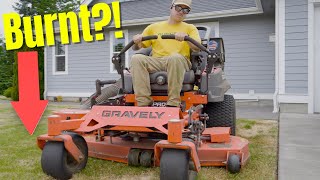
This content was created by Mike Andes. This content was uploaded by Mike Andes. This is a YouTube video titled "Fired Employee Gets REVENGE on Lawn Care Business!" created on July 11, 2021. It features Mike Andes discussing various aspects of running a lawn care business, including challenges like employee defection and maintaining service consistency during dormant lawn periods. The video also touches on the importance of trust and optimism in business management.
Chapters
Hey, everyone, It's Mike Andes. Landscapebusinesscourse.com today we're gonna be mowing this lawn with Tyler. Tyler. I'm really excited because Tyler's actually gonna become a franchisee. He's moving down to Burleson, Texas, with Austin, another member of our local shop. And they're gonna be starting their very own Augusta lawn care franchise. But today, we're gonna be making money mowing this lawn. We charge $270 for this on a weekly basis. It's a big one. And, yes, we do use zero turns. So for those of you who do not like seeing me use push mower today, you're gonna have a full dose of seeing a zero turn go back and forth, back and forth. The beautiful thing, the oddly satisfying thing about lawn care is going back and forth. So let's address the elephant in the room, and that is the fact that this, yes, this lawn is dead. It's dead as a doornail. And in the summer months here in the Pacific Northwest, we don't have a lot of rain, and our rye and fescue type grass does die, basically becomes very dormant. And typ. Lawn mowing service really falls off in terms of the amount of clients that are asking for new service, et cetera. This year has been a little different. We have not done any marketing, and the work is just pouring in this year, even though the grass is slowing and not really growing very much. So you can see it's kind of patchy. It's a little bit dead. I'm going to talk today about mowing these type of lawns and how you can make money doing so. So the first thing is you got to realize that putting irrigation the size of a property in our market is going to cost tens of thousands of dollars. And you're going to have to make sure you have a well that's actually going to be able to get that much gallons per minute out. For the size of property, it's extremely expensive. I know in some markets it's a lot cheaper, not only because of labor, but just because of the ability to have more irrigation. It's more common. Irrigation is very uncommon in our area. Maybe one out of 20 or 30 houses has irrigation. And, yes, we have to even bag the clippings this time of year. Does that seem crazy to me? Yes. Does it seem crazy to you? Yes. Can we agree that it's crazy? Yes. It'd be much better if you just did not bag the clippings, allowed the clippings to go back into the soil. But in our market, it's almost common. It's standard to bag clippings. If you didn't and it rained and it still rains here a lot, then it would look bad. So it's very common that we have to bag the clippings. And yes, that's annoying. Yes, it makes it much more unprofitable for us. And yes, this one job will fill up half of the truck with a bunch of clippings. And for some of you, you're like, well, you're ripping the client off because they're not mowing lawn. Did you see how much clippings was in the back of that bed? And he's not done. There's a lot of clippings that will still be taken off of this lawn. And the notes on this job said specifically to mow at 3 inches, which allows for the lawn to actually stay somewhat vibrant and somewhat green. Because if you mow it at two and a half or two inches a little bit shorter in our market, it would basically become completely brown and completely useless and completely dormant because it would have no length and therefore die off even faster. But today I want to talk about something that is, you know, pretty tough to talk about as an owner of any business, but definitely the lawn care and landscaping industry, because the barrier to entry is so low in our industry to get started and start mowing lawns. Because the barrier to entry, because anyone technically can do our job, go get a $400 mower and be in business, because that's the case. So many people struggle with the fact and the idea of your employees stealing your lawn mowing jobs. That's what I want to talk about a little bit today, because one of our franchisees, he's a very young man, and one of his employees took advantage of him after our franchisee fired this individual. This individual had been having a bad attitude, just was really, really not working out. And our franchisee fired him. Well, sure enough, the next week, that employee went back to every single one of the mowing customers that our franchisee had and told the customer that we were out of business. Now, usually this wouldn't be a big issue, you'd say, because the client would contact the office or contact the owners, like check in and say, hey, like, someone showed up and said, you guys are in business. But unfortunately, this is a brand new franchise. And maybe, you know, the 30 or 40 mowing customers that they do have have all been, have been picked up in the past couple months. And here now you have an employee going and telling Customers, you should go find someone else. You know, we've gone out of business, and that could be very, very stressful. Not can be. It is. It is extremely stressful. But I know as somewhat of an optimist, I truly believe we can't solely focus on the. What can go wrong when it comes to hiring people. Because, yes, that is possible. It's easy to do in this industry. Your employees could leave and go steal your workers or steal other workers and steal your. Your customers. And they know your. If they know your pricing, they can undercut you and just go get the jobs themselves. But in the day, if you've opened your books and actually shared the numbers with your team, they're going to realize there's a whole lot of other costs they're not taking into account for, like equipment and insurance and fuel and everything that goes into running a business when it comes to taxes and payroll and advertising costs. And this is something that they probably are not thinking about. What they are thinking about is despite if they just got fired. And so in my opinion, you've got to just move on. If you've had an employee that kind of defects and says bad things about you, bad things about the company, goes behind your back to your other customers, or goes to other employees and starts saying negative things about you, you basically, in my opinion, have to realize that there's going to be some bad apples. There's going to be people that say things that are negative, say things that are wrong, say things that are not true. But you've got to move on. You've got to get up the next day and realize that you can't allow that to affect you. If you watch videos for me in the past, you know that one of my very first employees that I hired that wasn't a family friend or someone that I knew personally, literally tried to sue me, and I had to settle with them outside of court over something that happened at work that I was in the wrong for, but I just was unaware of. Definitely going to watch, Got to watch that video. But I still remember walking out of the attorney's office and thinking to myself, I. I am not going to allow one bad experience, one bad employee, to tarnish my ability to trust other people, trust my employees, care about other people, and be skeptical and always pessimistic and looking over their shoulder and micromanaging my employees. I'm not going to allow one bad experience to determine how I affect. I relate with my employees, with my business, and with the future of the company. So I really would Recommend if you have had that happen to you and someone stole your customers or your employees defected after firing and they went behind and talked to all your other employees and said negative things about you, you've got to realize, you've got to brush yourself off. You've got to stay optimistic. You've got to get up the next day and keep fighting. All right, so when it comes to these, back to these summer jobs, these, these, these mows that are basically almost dormant, here's my recommendation. If you mow lawns for a living, and that is do not cancel service when the lawn starts to grow slower. I see this time and time again, and that is where lawn mowing companies will roll up to a customer's house. They'll spend 10 minutes determining whether or not they should actually mow the lawn because they, oh, it's kind of dormant. It's not really grown very much. And then they let their employees. This is the worst thing. They allow the employees to make the judgment call of whether or not the lawn needs to be mowed. This is a big problem. You are basically leaving it to the whim of an employee that potentially might be really tired, it might be hot, they potentially might just want to get home for something that they wanted to do on the weekend. And you're going to just allow them to make the judgment call on whether or not a lawn is to be mowed. Very, very bad for the customer because the customer is depending you on being there on a certain day that you've always been there. And if you just randomly stop showing up because you felt like the lawn didn't really need it, you might have actually been feeling you were doing them a service by not making, charging them for a job you didn't think need done because you're like, well, it doesn't really need mowed. It could last another week. But for the client's perspective, they might have in their mind be like, well, they come every single Friday and we're going to have an event on Saturday, and I want the stripes to be on the lawn. So in my opinion, when it comes to these dormant summer months, when it's hot, the grass is not growing very much. I really encourage you to actually keep mowing the lawn at the exact same service time that you normally would. It's weekly or bi weekly. And because the customer is depending on you to do that, for many of our customers, they're not necessarily depending on us to remove grass from their lawn. They like the tight edges, they like the straight lines, and they like the fact that you're going to show up at their property every single week, they feel taken care of. That's what we are in is the service industry. And if we're going to serve them, we're going to be dependable and we're going to do what we say when we, when we said we were going to do it and we said weekly. We can't just not show up and just skip service. I highly recommend you keep staying on service. And these are the months you can actually make money. Because guess what? We don't charge more in the spring when it takes us almost twice as long to mow this lawn. So if the client still wants us there, we're going to keep mowing the lawn and we're going to make sure that we come at the same time every single week and make sure they can depend on us for that service. We are in the service industry and we are here to serve. Yes, we will allow clients to skip a service if the lawn isn't growing. That's up to them. But we, but we're not going to make that judgment call. We're not going to allow the employees to make that judgment call on site. It leads to lower margins, a lot of wasted drive time, and at the end of the day, unhappy customers. I'm not happy about that. I'm Mike Andes, landscapebusinesscourse.com We'll see you tomorrow.
Hey, everyone, Mike, Andy's here. Thank you so much for watching the video. If you're just starting your lawn care landscaping business or you want to take it to the next level, check out the link below. Landscapebusinesscourse.com is going to give you the steps to get your business to $100,000 in monthly revenue. Check it out. We'll see you next video.









