Giving Away FREE Lawn Care Businesses! [$15,000 Value]
This is a vlog-style transcript of Mike Andes describing Augusta Lawn Care’s '3F' program that lets employees who work at an Augusta location for two or more years start a franchise with reduced or waived initial franchise fees. He explains eligibility, fees, training, examples (Nick Reed), operational expectations (sales, hiring, management), partnership cautions, and lean startup approaches for new franchisees.
Questions this video answers
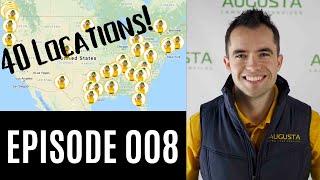
40 (around the country and Canada).
Two years (worked at an Augusta location for two or more years).
Usual initial fee: $25,000; temporary reduced fee: $15,000 until 50 locations (can be waived to $0 for qualifying employees).
$600 per month the first year; $1,200 per month for every month after the first year.
Chapters
Good morning, everyone. It's Mike Andes here, and today I'm shooting the vlog because, well, it's early morning, and Danny's still getting his beauty sleep. We're headed out today for a trip, and he wanted to catch up on some sleep before we head out. So I'm pulling in here at Bellingham Augusta Lawn Care. We have a meeting this morning about the 3F program where we give away franchisees to our employees that have worked with us here at the local shop or anywhere in Augusta Nation. So I'm going to try to shoot some of that for you. I'll show you exactly what that is and stick along for the ride. And this weekend be great. Lots of travel vlog.
But basically, so we have franchises. There are 40 of them now around the country and Canada. And so. Oh, man, I'm so sorry.
And so what our objective here though, is, is that I'd much rather be allowed to have a franchisee be someone who's worked here or worked at an Augusta location. So Nick Reed, last year, he worked here for a year and a half. He went and started one in Marysville, and he's just crushing it down there right now. His hardest thing is just finding an employee slash Excel, accepting that employees have faults in their lives and that they aren't going to be perfect. So. But he did really, really good. And so we developed this program for him last year. Who's the first one to take advantage of it? We got another guy in New York that's going to take advantage of it next spring. And the goal is just. My goal, really, one day, is to be your only franchisees. They can only join if they've worked here for a couple years. That way they get to know what it's like to work in the field. Because I hate personally when people just start businesses because they have money and they don't know what it's like to work outside. They don't know what it's like to grind and work the rain and all that sort of thing. So I feel like it's part of, like, our culture for the owners to know what that's like. And even now, we have some owners that they come with a bunch of money and they can go ahead and start, but there's just not that connection with the team because they don't know what it's like to work six, seven days a week out in the rain, in the cold. And so this is kind of what we came up with and what we've been using. Basically, I won't Go into, like, reading this word for word, but feel free to read it at the end of the day, what it really is. Just once someone works for two years at an Augusta location, they're able to start their franchise without an initial fee. So usually that's 25,000. It's 15,000 now because we're doing that until 50 locations. But that will be zero if you work for an Augusta location for two or more years. So that's what Nick did. And then some of our general managers even, like, I'm visiting this weekend, so I'm flying out today with Danny. We're going to New York, North Carolina, Georgia. Those are our general managers. We own those locations, and they're kind of there, have the same concept. Work two years as a general manager, and they're gonna go and start their own thing. And it just kind of gets you around that initial $15,000. And, you know, we cover all the legal fees and all the stuff up front, basically. So, yeah, that's the basic gist of it, how you kind of would initiate that. I know Marcus has already talked to me about wanting to take one down next to Seattle. So that's kind of the general gist of it. Obviously, you'd be trained as a franchisee. You would be an owner. It's not like you have any strings attached us at all. Like, you have your own business license, the whole nine yards. You come for training like a franchisee would, and then you would have three months after you come for training, where there's absolutely no monthly fee. And the monthly fees are just like all the other franchisees, which is $600 a month the first year, $1,200 a month for every month after that first year. And that's the flat fee. So the goal in that, in doing that, doing that, is that you can keep growing the business. And it doesn't, because usually with the franchise, you get a percentage of revenue that goes to the franchisor that kind of covers the advertising costs and us on the admin side and all the rest of it. Your website's done for you, all that good stuff. But with ours, it's just a flat monthly fee. Because we want you to grow. We want you to really scale the business up and not be like, oh, the more I grow, the more I have to give to the franchisor. So this program is basically a way for you to be able to get around the initial fee. That's basically what it is. And the reason part of it is, too. I just know that whoever comes and works here for two years and then goes and starts their own location is going to have such a massive advance because, you know, service, autopilot, you know how we work, you know the culture that we're trying to cultivate, you know, the type of people you're looking for when you go out and start hiring. And that's really the goal. And a big part of what we're trying to do is like, I don't want it to be where you come to a place and you work for the same spot for like three or more years doing the same thing. And I'm just not a fan of that. I do not want to create. I have no passion for creating dead end jobs whatsoever. I wanted to make it a place where you can feel like you can get somewhere else if you want to. I know some people like, hey, I enjoy what I'm doing. I'm just going to do this rest of my life, that's fine. But I want it to be where, if you want Marcus's position that when he moves into Lee's position, there's someone that can take that position over, right? And it's not like even with Marcus, when he moved like, so for those of you right here last year, Liz used to be where Lee is at. She got kicked out, not kicked out, promoted over to the franchise. And then Lee took her spot. Marcus moved into the estimator roll. And that all happened within a matter of a few weeks because, like there was a need. We moved Liz over there and we shuffled everyone along. And so the goal, like when that happened is we weren't like, we weren't really like trying to groom Marcus for that position. It was just the fact that when the position came available, there was someone that was ready, hungry. They were already listening to audible books, like trying to learn if someone's trying to learn. Like, a lot of people are gonna be willing to invest in you and like their time, their energy, give you promotions because they know that if you run into certain obstacles, you're gonna figure it out. You're gonna do the hard work, going late, you know, evenings, whatever. You can figure stuff out, figure out where your weaknesses are, learn new stuff. And so that's what I would encourage you from day one on. But like, this is kind of the opportunity to go right from mowing lawns to whether you do actually go through estimator office manager and then get kicked out to like a general manager and then an owner or just do it like Nick did, which he went from frontline employee right up to a franchisee and just saved his money for here while he was here for two years. So those of you who don't know Nick, he worked, he lived in his van for a couple years to save up and then he started his franchise down in Marysville. So that's kind of the goal. But does anyone have any specific questions? I know a couple of you have been kind of mulling around the idea of doing this. And so definitely if you have like specific questions for me or like territory like, hey, what about this place? Or whatever, let me know because we are like, we're selling a lot of them right now. Over the next 12 months, we will. So we're at 40 now, so we're kind of starting to cover most states and things like that. But if there's like, I want to move to this certain spot, please let me know. Can multiple employees. Thank you. Can multiple employees go in on a franchise together? And if so, what does that kind of look like? Yeah, like, honestly, most of the time with partnership, I'm against it just because it's very difficult to get along. However, if someone you've worked with for a couple years and you kind of know them really well, and I would agree that you're skills complement each other, that's when it might work. So, for example, one person might be really good managing people and the crew, and then someone else will be good at selling. That would be a good opportunity in my opinion, to like, okay, you're handling everything with projects, kind of what Lee does, all that sort of thing. Another person you're selling, you are out promoting the business, getting new work. In that scenario, I'd probably get my rubber stamp on that. But even in general, like a front end, franchisees coming, like, oh, my friend and I are gonna start, I put like red flag. It's just, it's very, very difficult to have one voice in the business if there's two people at the top. It's very difficult. And so even for me, like, as much as I like to like, say, tell me, like, hey, just do whatever you want, or like, listen, do whatever you want, like, give them free reign. There has to be someone that comes in and like says something and it has to happen because otherwise you just have too many opinions. I don't really like that. But it's a challenge. Partnerships especially people have equity. Because then it's like, well, I have a say. Well, I have a say. I'm 50%, I'm 50% saying, okay, what was the stalemate? Well, then the business doesn't get anywhere. Right. So that's my only apprehension. But I have seen some partnerships work out really good where you have one person, one founder that is very operational, like very good at technical work, good with dealing. All the guys, like very close with them. And then someone else is like office related sales, they go up to the estimates, things like that, and having command center, which I know most of you haven't even been over. Command center, unfortunately. But what's nice about that is they take all your calls, they do all your estimates and all the rest of it. So you don't have to get like, this is not required. This office space is waste. We got this before we had command center and before we started franchising. But like, at the end of the day, if you want to see a location, I feel like is ideal. Watch the video. A couple days ago I made about Mount Vernon's location. No shop, a little box for storage. And they're paying three to five hundred bucks a month rent. And they dump there and there's no office space. They don't take any calls, they don't have any office people. It's very, very lean. So like they had four employees, two trucks and a car. They had 52,000 in revenue last month. Very, very efficient because they don't have a massive 2 acre space and generators and offices and all the rest of it. So that's the advantage of starting off, you know, fresh. Now, like all our corporate locations, they do not have this. They have little gravel lots with a storage container, two trucks, and they get rolling. And really how you start off with like, for example, with Nick, he started off like $20,000 after he left here, 25. And he bought one truck and just started grinding from day one, like knocking on doors, putting door hangers out. And then if you have more money, that's a matter of, okay, now I can run some Facebook ads, I can do some Google Ads, and we give you all those resources. It just depends on how much capital you have at the beginning to scale up. Right? So Nick wasn't like in a rush to go grow and get a bunch of employees. Right now he needs about two or three. But like.
He wasn't in a rush to do it. So he said, I'll start with one truck, et cetera. And then he just kind of came with me, like presenting the business plan, kind of like what his projections were and what he thought he was going to do in sales and what he needed to spend the money on. And so for me, like when I kind of go over this with you down the road if you want to do it, is. I'm just looking for your thought process. Nick was wrong on several things when he came with me and projections and things. But it had nothing to be wrong or right. Did he think through the process of buying equipment, how much it was going to cost? How much are you going to spend on marketing, what his cash reserves were going to be as he started buying equipment, all before it started, actually started making profit. So that's kind of what I'm looking for. And a lot of that you're going to pick up through, you know, listen to my pun or other podcasts on business and things like that. And that's why we have the audible program. If you listen to all those audible program books and like, actually listen to them as much as you get, some of them are boring. I listen to the first chapter and I skip them. Don't feel bad. But if you did that, you would learn more than I learned in my business school. Like MBA, 100%. Like, hands down, no questions asked. If you listen to that stuff, you could start a business, no problem. And so I feel like if you have that and you have just the daily operational of how to run here, like, you're just gonna be super good at the end of the day, especially for someone like Nick, and you're just getting started. You need to do two things. You need to sell, like, not be afraid to knock on people doors. Go tell your barber person at the grocery store everything about your business. And then as the business grows, it becomes, can I manage people? And that's just as hard as selling and getting the business off the ground. But it merges right as your first getting started. Like Nick, he's great at sales. He's great at knocking on doors. He's not afraid, Great personality. Now he's getting to the point where it's like, okay, time to hire people. Time to manage people. Like, that's difficult sometimes, right? And so some people, they like a smaller business, like two or three employees only because they don't like the second part. And that's okay, right? Like Tim, for example, could stop where he's at right now with four employees and him still out in the field most of the time and do good. But if you want to grow beyond that, it's much more about managing people. That's why so much of the Audible program is leadership, management of people, things like that. Right on. And then I can kind of give some guidance too. It's like Marcus always wants, like, his 50 mile radius territory. Like no, no you don't like that. So I can kind of I can kind of give you a little bit of guidance too.
Audible or become a general manage or become an owner and that's my main thing. Just give me that opportunity and I only know I know someone like 1 out of 10 people like not everyone's here this morning. Some people don't want to like hey I just want to work outside. Great that's there for you forever but you want something more like I want to do as much as I can so if there's anything even if it's not to do with Augusta related just like developing yourself in general by all means reach out to me anytime. I know I'm busy and I'm here all the time but please stop me If I get 10 minutes and I'll stop. That's the most important thing to me. It.









