How a $1.2M Business Still Ends Up Broke—The Shocking Truth!
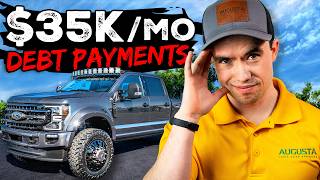
A $1.2M yard-maintenance company carries $35k in monthly debt service plus a $300-a-day high-interest loan, leaving it nearly broke despite steady revenue. The owner has only $8k in cash reserves and underutilized equipment. Coaches push him to cut fixed costs, ditch unprofitable services, and stop borrowing at predatory rates.
Questions this video answers
Over $1.2 million per year.
Over $35,000 per month in debt payments.
About 40% interest.
Approximately $300 per day.
Approximately $36,000 per month in recurring revenue.
Chapters
Today we're at Arizona yard maintenance, where.
They do over $1.2 million in annual revenue right now.
It's good, but I'm just barely scraping by basically paycheck to paycheck.
However, there's hundreds of thousands of dollars worth of debt on equipment like this that's not being used. 17, 18 interest, something like that.
No, it's more like 40. I wasn't able to pay it. I just told them, like, hey, like, I can't continue doing this. Like, I'm going to quit the business entirely.
This $100,000 piece of equipment not being used. This $90,000 piece of equipment not being used very much.
Okay.
The chipper. We don't use that very often. Let's get r all of this. I just begun of everything.
I've thought about it, but I've also, like, put a lot into everything I've had and paid interest payments. I don't want to. I'd rather struggle for a little bit longer.
Right now they're paying over $35,000 a month in just debt payments.
But that doesn't include the $8,000. It's like 300 bucks a day.
You're paying that off kind of thing.
Yeah. And that's for like, 10 more months.
Let's see if we can turn this thing around. I would love in five years, if you're like, I have paid everything off. We now have a $2 million business, and we're in a 50% profit margin. Everything is. Oh, man, I would love it.
Oh, my word. Dude, that's insane. Not just lights on the house. Lights on top of the house. What's up, brother?
How's it going, man?
Dude, this place is popping.
Thank you.
Let's go. How long you lived here?
For about four years now.
Wow, man. Good to see you, man. It's been a while.
Yeah.
I think it was in Bellingham last time at the conference, I signed.
Yeah.
At one point, you were really into the drug scene and all that sort of thing. What helped you get out of that?
Really what motivated me was having my daughter. I got into drugs because of depression, self medicating, because I had some deep issues. When I first started my business, I was making very little money. I was in a very bad spot mentally, physically. I was rough. About five years ago. This was before my daughter was born.
So you had your daughter, and that was kind of the wake up call you needed.
So I had my daughter, and I knew I didn't want to have this innocent child, a father that's like A deadbeat, you know, so I suffered for, you know, three months. I didn't go to any sort of, like, rehab. Yeah. I just, you know, suffered through it and got off of it. And then it slowly started to get better. After about a year and a half, I knew I had a daughter on the way. I knew I wasn't a dirt bag. I, you know, had to be there for this innocent child. My daughter was something powerful. More powerful than myself to give me the strength to. To quit.
The reason I asked is because, like, there's a couple friends I have that I've seen. They have came out of that. And then they really got. Instead of drugs, they started putting it on, like, other things. My one friend is, like, he bought this crazy house. It was, like, stupid. And then he ended up having to lose it. But he put his identity into the house.
Right.
And what I don't want to see you do is put identity in the trucks and the equipment. Because, like, that is not the business. The business is ultimately we could look at, okay, what's the cash flow? What's the debt? And, like, the liabilities and the assets. And currently, like, the assets are lower than the liabilities. Right. And theoretically solvent. Unless a business is going to grow out of that. Right.
And that is a scary proposition.
As long as, you know the.
The how.
How, like, important it is that we grow. And that is. It is profitable growth. Do you guys install lights for the business?
No, we don't. We know.
Just.
Yeah, these are a bunch of lights I had want people to enjoy it.
You know, it's awesome.
Kids enjoy it, all that.
So. Yeah. How many kids do you have?
Two. These are my two daughters, Athena and Lily. Here's Lily.
Your shirt. Custom shirt. Say smile, Lily. Today's Sunday. We're gonna spend some family time together. We're gonna go up to the lake. My daughter, she has cancer right now. She's gonna start treatment next week.
Hello?
Dad. Didn't really get to say bye. Or a hug.
I'm sorry, honey. I'll be back soon. I love you. She has surgery today. She's gonna start chem.
For her brain cancer. Hopefully that goes well. Pray that that goes well. Yeah.
Your daughter doing better?
Yeah, she is.
Okay, good.
She's in remission now, so.
Okay, good, good. She still has to go back for treatment and stuff, though.
Just MRIs every three months. Okay. Okay, good stuff.
Awesome, man.
Yeah. The tumor hasn't been growing at all, so. Very, very happy about that. There's a big weight lifted off my chest when I, you know, I found that out, so.
And so revenue for 2024, what do you think that's going to land at?
Probably like around one point. Not the same. Yeah, you know, it was like only in the last six months that I realized I just can't handle it. And you know, I was taking too much time away from the family, all that, you know, felt guilty, you know, because the whole reason why I started this company is to spend time with my daughter and my family and all that, you know. So like, if I notice, I'm like just working and like asking my mom to watch my daughter, you know, it's like that doesn't make sense, you know, so it's like you gotta stop, you know, like, what's the point? You know, like all this stuff is real nice, but to me it's not like it's not that important.
Success looks different for everyone. Getting really clear about why you started the business and why you continue to grow the business is many times the thing that will keep your head in the game. When you want to quit, when you want to throw in the towel. And so for Aaron to know that like the reason he's building this business, the reason he is in business is for his family and to spend that time with them is extremely important, then we should optimize everything in the business to ensure that, that why that goal of spending time with the family is accomplished.
Do you have like an office over there or is that here where you do most of your office work?
I usually do it in that truck right there.
Oh really?
Dude, that thing's a beast. Yeah.
Should they come here in the morning? Do they park here or did you go over the shop and drop stuff there?
Then they, they just park here like, okay.
None of the neighbors really care.
They used to care when the whole street was lined up full of trailers and stuff. Yeah, you moved all the trailers over. They got sick of that, which I don't blame them. I kind of, I mean I felt bad. Now I think about, I'm like, man, I had all this in front of my neighbors houses and stuff, you know, like for years, you know. So like they must have really liked me to put up there for like three years.
So kind of give me an update the last couple years, how things been.
Kind of the same old, same old man, just you know, surviving, you know.
That's so funny. On the way here we're like, he's a survivor.
Yeah. So it's, yeah, pretty much same same situation as before, you know, the acute.
Issue of $8,000 in the bank. With an $800,000 business, 1% of annual revenue in the bank is, like, scary. You're one big job that doesn't pay on time, Away from, like, a really very stressful moment. You're not going to be able to handle it all. At 150,000 plus a month in Reven, that's the size of business I feel you're gonna need to grow to. To make it worthwhile to have all this debt and this large equipment.
When I do trees, I mean, I've made around $20,000 in the last couple days, you know, two and a half days, you know, so that's why I got all this equipment. I can just easily make money when I have this equipment.
I'm not gonna lie. I'm pretty concerned about Aaron and his business after that call.
I don't think he quite sees the gravity of the cash crunch and the balance sheet.
Maybe there's, like, a.
Last couple years where I felt like, struggling mentally, you know, just, like, being able to handle it all.
When I look at a company that is struggling, it's like, okay, first and foremost, we need to stay alive. Then we can focus on thriving and.
Growing profits, et cetera.
When you only have 2,000 in cash.
But there's, you know, almost 300,000 in.
Liabilities, that's very scary.
But then I took a step back and, like, lowered my crew size. And, you know, because it's very important, your mental health.
What was the crew size at and what's it at now?
I got five guys full time now, and then I did have up to 12 people.
And your five guys is kind of your best crew. You took those Exactly. Because you took all the. Basically the best of your 12.
Yeah.
Got it.
They slowly weeded themselves out. You know, really, it wasn't just, like, one day, like, you're done. You know, I just kept having issues. Jobs were taking way too long. Like, I have GPS on the vehicles. I was, like, wondering where, like, the guys are. Like, why did you go to this wrong house? Almost seemed like it was being done on purpose or whatever. You know, the only problem I'm having is I'm not making any money with crew.
B0.
Negative, negative money. And it looks like one of the crews hasn't done that. They're. They're off. I sent them text messages. So that's kind of frustrating that that wasn't done. You know, I wish they would have followed directions.
I've always done trees, and I've always done maintenance. But I Used to have to rent that equipment versus owning it. Yeah. So it's basically saving me money. And I knew this was going to be a challenge getting all this equipment, you know, But I. I feel like I'm confident enough that if I need to, I can go door to door and, you know, make some sales to pay my bills.
I figured it would be good for marketing purposes. Like, oh, this guy has his stuff together. He has like this, you know, $100,000 truck. Like, you know, just. It gives you. It puts your foot in the door as far as, like, credibility in addition, with everything else that they already may know about me.
So no more trucks and equipment for the next 10 months though, right?
No. Yeah. Like. Cause I'm. I pretty much have everything I need. I have like an excavator 2s 70 bobcat.
By reducing the crew side. Do you think. Do you. Do you have an excess truck or equipment or is it.
I do. Okay. I do now. Yeah. And that's another thing too. I felt like I was kind of getting taken advantage of from my guys that were working or they just weren't trained up enough.
Yeah.
You know, so they weren't really bringing in that much money. It was just all the money that they were bringing in was going right back out.
What software do you use right now for your. Your project?
I mean, to keep track of my scheduling.
Yeah.
Scheduling, for example. Yeah.
I just use the reminders app on my iPhone.
I'd recommend getting started with some software, though. Like your size of business. The fact that you're running on your reminders app must mean you're a reminders app genius, because I don't have a clue how you do that.
I tried Google Tasks now. No, this is still Reminders.
Okay.
But I made it better. I made it better. So like, I went and like, it's all like, that way, if I die or whatever, like, someone can just take over.
Okay.
You know, like, and continue on.
It's not that bad really. You know, like, it's like about 30 minutes a day.
That's where I see you have to have a software because you're going to need someone else to start handling a lot of the stuff that you're doing currently, like scheduling, dispatching, invoicing. You're not going to be able to handle it all at 150,000 plus a month in revenue.
Right.
And that's why you're hitting this cash crunch, because you've invested so much for the. The upfront of what you're going to grow the business into. We've got to get there pretty quickly, though. And in my mind, you're going to have to eventually hand things off that are not sales related to somebody. El.
So that's one question I had. You know, maybe you could help out with. You know, like, it's been on my mind is I definitely have the ability to grow the business. I know the works out there. There's plenty of work and I have all the trucks. You know, there's two trucks sitting right over there. I got trailers, all that equipment. What would be a way to get a general manager to help me out to alleviate some of my workload?
Yeah, like right now, your role in the business is mostly the sales side, I'm assuming.
Right.
I also do some work too.
Okay. Good labor, kind of like project management, hopping out with the guys occasionally.
Exactly. Yeah. It's more efficient.
My struggle with that is can the business afford a general manager?
Right.
Probably not right now. Yeah, that's what I'm waiting.
Yeah. Especially at the level, like.
The size that you're at. Like the size, but also the amount of services that you do. Like, the amount of services you do would require someone that does six figures as a salary simply because they have to do like, like excavation, stump grinding, like irrigation, like all of those skills. They would otherwise just start their own thing if they have those skills. Right.
Yeah.
And so it's a difficult GM to find. And a lot of times that's why we will kind of condense what services we do offer is so that we can find a general manager easier. Because you have like, what, 15 years of doing this?
Yeah, 16. Yeah.
And so, like, to find someone that can do all of that, they just.
Have their own business.
They just have their own business or you pay them gobs of money and then it's a matter of can the business afford that. And so if we're gonna take 120 grand, that's 10% off top line revenue to a GM, well then we've got to be at least 20% profitable now to just afford that.
So right now it's good, but I'm just barely scraping by, basically paycheck to paycheck, you know, like paying all the bills.
And I knew this was gonna be a challenge getting all this equipment, you know, But I feel like I'm confident enough that if I need to, I can go door to door and, you know, make some sales to pay my bills. I've always ran my business very tight though, so it's almost like I'm forced to hustle Forced to go out and make money. And I'm just constantly reinvesting into the business now.
Advertise. I think you do. I think you build up a reputation. You have the website dialed in, and then you spend most of your time instead of on the job. Right now you still do go out on jobs, which I think you should when you have four or five employees. If you were to scale, Then you become the salesperson.
Yeah.
Which I think you crush on sales. Like, you're a very likable person, and people will want to buy from you.
Thanks, man.
If you had more time out of the field right now, do you think you get more sales, or is it more a matter of, like, the leads come in, you're able to kind of get to them Right now, it's not a big constraint.
It's whatever I want to do, I guess. You know, like, it's how I feel like I. I feel like I have the ability to go out and do sales, you know, but then I just take on more stress.
Right.
You know, so. And I'm. I'm already stressed as it is, you know, with the way things are, you.
Know, why would you not want to just sell equipment?
Because I bought all this stuff, and, like, I've, you know, spent tens of thousands of dollars on this stuff.
You know, it almost sounds like Aaron's emotionally attached to this equipment. And this part just makes me so frustrated when it comes to home service. Business owners that are negatively impacting their businesses struggling simply because they have put the weight of their business on the external validation that comes with more trucks and more equipment and more employees. And the reason that we all do it, including myself. When I first started Augusta lawn care, the reason I bought more trucks and I got more equipment just to fill my yard Was it. Cause it looked. Looked good. It was the thing that proved everyone wrong, that said I couldn't do it. It was the thing that made me look like I was building a successful big business. By having a bunch of trucks lying against the road, Having a bunch of trailers. That's not what pays the bills, Customers and contracts, not shiny equipment. The trucks and equipment that you buy is just a tool that is necessary to perform the services, to solve the problems for customers and generate revenue. It is a tool, not an extension of yourself, Not a badge of honor.
Like, that trailer's paid off. That trailer's paid off. All these trailers, like the stu grinders paid off. You know, the only thing I owe is, well, the big.
Yeah.
I mean, because then I don't have the ability to make, you know, $15,000 in a day.
This sales tactic used by manufacturers and sales reps drives me bonkers. Is the reason why so many home service business owners are broke. And it's the fact that it is easy to always make sense financially of saying, well, yes, if you get one or two jobs a month, if you get three or four jobs, it pays for itself. What we don't take into account is all the other phantom costs that come along with owning more equipment. You have to maintain the equipment. You have to train all of your employees on how to use the equipment. You have to store the equipment. It's like renting space or buying land or storage facilities. These are costs that go into beyond the actual payment for that piece of equipment right now.
Like, for example, today, what are they out on the job site with right now?
They're just doing reoccurring maintenance. So they're just like trimming bushes.
But what if all that stuff's probably mostly paid off?
Yeah.
Small stuff.
Yeah.
So we make $36,000 a month now on recurring.
Yeah.
So instead of going after a hundred thousand and having all the debt, why not just go after the $40,000 a month of recurring and then scale that side?
So, yeah, okay. So, yeah, I've asked that question to myself, too. The value of it, it's not the same. Like, you know, I probably owe $80,000 on that truck. But you're not. I'm not gonna get 80 grand for that truck.
How much do you think you get for it?
I don't know. Really? I don't think 80, though, you know, but even, even.
Even if you did that and you had, say, 60 or 70 grand between, like, the depreciation already on these pieces of equipment, let's say you paid some of it off though, too.
Yeah.
Like, I think you'd be relatively close. Like, you've bought this this year. That one's only a year too old. Like, you might have 50, 60, 70 grand, but on that, you're going to be paying 2, 3 grand a month instead of right now, like $35,000 a month.
I guess I'll get to that point, you know, if I. If I ever feel like I can't handle it, you know, then I'll just. It is what it is, you know.
Like, return on equity is a very big number I would be looking at if that was you. And that is how often am I using my assets, the equity that I've put into the business, how profitable is it for me and these Assets have to be utilized more. And if they're only being utilized one day a week or even two days a week, I wouldn't even be like, personally, I wouldn't even do that service anymore. I only want to take a current asset, and I just don't, like, just beat the thing into the ground by using it, because that's when it's most profitable.
I have around $30,000 of just reoccurring payments I have to make every month. You know, so like overhead cost, not that doesn't include a loan that I got too, though, which I restructured that loan. It was like 16 grand every month taken out on top of that 30.
Right.
And then now I got. It worked, so it's like eight grand. So basically it's eight plus, plus the 27,000, like for the trucks and everything.
You know, I'd be really encouraging. Like, let's either cut services out or just take the services that we have and just sell more of those and not get allured by, like, okay, if I get. If I have one planting job with boxwoods, I've got to go buy a 50, $60,000 piece of equipment. Like, we can't do that anymore. Yeah, the debt will eventually catch up.
Yeah. Yeah. I'm going to hold off on it until I get some money in the bank.
Especially at this stage where the debt is at. If you're not using that piece of equipment every single day, I literally don't want you to buy it on this one.
How much years do we have before this paid off?
So this thing is like, probably one of the cheaper things I have, I think three years.
How much is this new?
Like 31,000. I didn't really need it. When I ended up getting it, I had an AX17, and my guys rolled it, so I ended up getting this. And then it actually pays for itself because they have chip drop, you know.
But how often does this need.
Not enough. It's not using that. Yeah. Not enough.
Let's say we do 100,000amonth in revenue. Is that usually 10 or 20,000 month of that coming from trees?
Then I don't really know the numbers on that.
You want to know the most risky thing in business, not knowing your numbers and going into debt. You combine those two things and you have a lethal combination that many times leads in catastrophe. So for Aaron not to know his numbers, but then also be able to say, well, I can buy equipment and I can go into debt because the numbers make sense. We don't even know our numbers. How do we make sense of buying more trucks, getting more equipment. If we don't know the revenue, we don't know how much revenue it's going to produce. We don't know our hourly rate. We don't know how much profit we had last month. How do we even know if we could afford this new debt?
How much do we still owe on this? I think six.
Quite a bit. No, because I just got it with the whole accident. Probably 90.
Okay. And that's 2,000amonth, though, that payment.
Yeah.
Do you think you can sell it? Like, have you ever thought about selling some of that and liquidating it?
I don't want to. I'd rather struggle for a little bit longer. And I've been struggling for this long, you know, years, like. Yeah. What's a little bit? Yeah. I mean. Yeah, okay. Yeah, I'm gonna be doing good, like, in a little while, you know?
Look, I know people are going to absolutely flame Aaron in the comments, and it's easy to hate on him because of the missteps that he's made financially, but you have to admire his optimism in the face of all this crushing debt and the odds stacked against him. And I actually believe that that could potentially be the thing, that if he's given education and the tools and resources to grow the business, just maybe this optimism gets him through it. But. But, man, this is tough.
This boom lift. I. I owe, like, 25 on this. Yep.
And an old sun belt. Yeah.
Yeah, that one's crazy. Yeah, I just got this one. This thing's like another 1900 bucks a month. You can drive it around. It reaches up taller. If you want to go in it, man, I'll take you up if you're down for it. You want to go up and.
Sure, let's do it. Let's do it, man. I thought maybe that was my booster seat.
Are you scared of heights?
No.
No, no.
Okay. I'm down, Dude.
It's a little cold. This green one's the same, like, as the pedal.
Yeah. Oh, cool.
You know, just so you know, if I have a heart attack, die or whatever up here, you know how to work this thing.
That's really reassuring.
And then we'll switch to this. If it starts going like a siren sound, then you're off balance. Yeah, a little bit.
Yeah.
Interesting.
Yeah. It's too dangerous, man.
So it's like this is 70, probably 80ft.
It's seven 69ft.
So you basically refinanced a lot of the bad debt into a one bigger loan.
I wasn't able to pay it. So, you know, so I just told him, like, hey, like, I can't continue doing this. Like, I'm gonna just quit the business entirely, you know, like, it's a good pool sometimes. Yeah, like, but that was the thing, you know, Cuz, like, I was working hard every. Every day, you know, like, just. I burn myself out, you know, so. And I realized I can't continue to do this. And what's most important, my family, you know, like, I can start up from nothing again and be okay.
So right now we're looking at around $35,000 a month in fixed expenses. Or is that in loan?
27,000 in fixed. But that doesn't include the $8,000. It's like 300 bucks a day.
You're paying that off?
Yeah. And that's for, like, 10 more months.
All right. So basically we have to make. Make probably. I'd imagine 70, 80, probably 90,000amonth. Kind of break even.
Yeah, got it.
Okay. So that's stressful.
Yeah, I mean, it can be stressful if you really think about it, you.
Know, if you think about it.
Well, I just. It's a lot of debt.
And I understand our plan is, like, to grow out of it. I get that 100%. I'm just concerned in the meantime, like, the next 12 months, I don't do as well underneath that financial pressure as you do. It seems like you really put yourself there almost in order to force yourself to just keep kicking butt. Or like, is it for you, like, you need the financial pressure? Because I understand some people, do they need that pressure to get up and just, like, hustle, or is it, you know, could you do that without that kind of pressure?
Yeah, I don't know if it's. If it stems from childhood too, you know, I mean, like, when I was a kid, my dad, he used to always put that on us as a kid, the financial stuff, like, oh, we're not gonna, you know, have enough money to pay our bills, like. And that did teach me to become a very hard worker because I'd go out there and I'd help him, you know, and I'd bust my ass, you know, trying to make sure, like, our bills are gonna get paid. I've learned that that's irresponsible. I would never put that on my. My children. But I think maybe I still put that on myself. I feel like I purposely put myself under that. That stress or that struggle. Struggle. Just be uncomfortable and force myself to get ahead.
As long as, you know, it's Risky. As long as, you know, it's like when they go to the insurance and they're like, make sure you sign this waiver. As long as, you know it's risky. Because it's extremely risky in terms of having that kind of debt and then still growing. Is it usually kind of like each summer where it kind of gets more difficult from a mental perspective, just like.
From a burnout perspective, I would say just burned out. You know, I. I feel fine now. I just took like a. A week off. And they just accepted the fact that it is what it is. You know, I wasn't sure if I was going to be able to redo that loan. Right. You know, but once I was able to redo that, then it's better.
Yeah, because that was like they basically cut it in half to restructure it for you. Is that kind of.
Yeah, I just ended up having to pay a little bit more interest. So it would have been paid off, like right now, but then they extended it like another 10 months. Got it.
You know, is it a daily payment then?
Yeah, it's like 300 bucks a day.
So this was. Was this last purchase before the restructuring of the day, because that was that this summer.
That all happened in late August.
Okay, okay.
All right.
But all the equipment stuff is. That's all separate. The stuff that had to get kind of refinanced.
And red, that was just the one of the shark loans, man, I got. Okay, got it.
So that, that, that's the 300 per day? Yeah, I think like 17, 18 interest, something like that.
No, it's more like 40.
40%. That's insane. That is. That means if you took $10,000 of debt, that in one year you'd spend $4,000 on interest without paying any of it off. That is insanity. And the reason that they have to charge 40% in interest is because it's very high risk. The chance of him going under, the chance of him going bankrupt, the chance of them ever collecting on this loan is so low, they have to charge twice with a regular credit card. A credit card, like 20 or 25%. It's 40%. This is insanity.
It's a lot of money just blowing.
But the hope is I can make it in the 10 months.
Yeah, I feel like I can. I will. I'll figure it out.
And so the question becomes, well, is there ever a time I should get this type of high interest debt? And in my opinion, if the business has come to the point where an underwriter at a bank or a credit card company is charging you 40%. The business is in dire straits. You're gonna have to be humble enough to realize that you need help, that you need to reach out to a coach, you need to reach out to a mentor. You go to ask someone else, even if it's a competitor that's successful locally and ask for help. These are the type of situation that if you find yourself in where you're getting this crazy crippling amount of debt for this type of interest, this could really hurt your family. And I encourage you to do two things. One, go to mikeandys.comturnaround and I'll come out like Aaron and try to help you before this actually happens and you get this type of debt. And secondly, if you don't want to be on the show, I understand. I don't have to come out in person. Just go to the course@mikeandy.com it's completely free, and it'll walk you through how to turn the business around. And hopefully you do it before you getting a 40% interest loan.
Because right now, if our expense of just debt is $35,000 a month and 300 a day is like a very, very high interest loan, I'm trying to get rid of that as fast as possible, even if that means I only do 60 or 70,000amonth in revenue. But now I'm like, I can get my loans down to five grand or six grand. And I think what you said earlier is right. And it's like we had two different philosophies on the business.
Right.
I can never take out debt like you have. It would just kill me. I'm gonna be on sleep. Yeah, I wouldn't be able. I don't know how you do it. You're very, very risk tolerant. And I think given your background and what you've been through, this doesn't seem like a lot of stress to you. That's tremendous. I could never do this. I was looking at just strictly the business. I'd go, okay, we don't use this very often. Let's get rid of that. Okay? The chipper, we don't use that very often. Let's get rid of that. Like all of this, I'd just be getting rid of everything because I'd be trying to get as close to bringing my fixed expenses down.
I mean, it can be stressful if you really think about it, you know, but if you just like have faith.
You think about it.
Ye, you think about it. But if you just like, you know, live life, have faith in God, you know, like then like that's how I've been, you know, be happy and you know, you'll draw more like you're more attracted to your customers, you know, people around you. So yeah, you know, I try to have that mindset, you know, just like it'll be all right. I mean I've been paying, I was paying for like a year, $16,000 every month, you know, but I just kind of keep that up.
Mercy, man.
I don't know how you deal with all that stress, bro. That's tough.
That's tough.
It's mindset, man. It's really. That's what it is.
Yeah.
You know, hey, if we can, if.
We can just pay things off and not buy new things in five years.
Yes, I would agree. It's like things are mostly be paid off.
Yeah, that's one thing, you know, like.









