How I Run a $50M Business (Productivity Hack!)
Mike Andes shares how he runs Augusta Lawn Care using Kanban boards and six-week sprints to plan hiring and onboarding before January. He cuts low-priority ideas ruthlessly and limits each sprint to one to three key objectives, using spare time for high-impact work.
Chapters
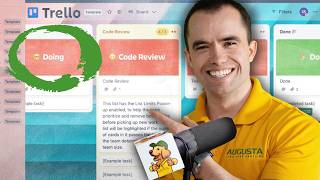
Hey, everyone, it's Mike Andes. And today is a very special video. I've never shared this type of content before. It's actually from a private mastermind that I have every single day with owners inside of Augusta Nation. So these are the franchisees inside of Augusta Lawn Care. Five days a week, we'll have a morning mastermind. We go through a whole bunch of questions. You can see above me these tabs. Now, today I'm just going to be sharing the education segment. These are usually things that I am learning, things that I am improving in my workflow or efficiency that I share with the owners. I think it'll be valuable. So let's go ahead and play the tape. This is time of recording. December 2nd. The next four weeks, actually five weeks I really enjoy. The reason I enjoy it is because you can get a one month leg up on all of your competition by simply doing the work that you would otherwise do. From January through November, everyone chills out from Thanksgiving to Christmas and then the week after New Year's, it's, it's an absolute, like, people just like, oh, we're almost there and the year is almost there. They're kind of calling it in. If you can just double your productivity right now from now till the, after the first, second week of of January, you will literally be a couple months ahead of your competition going into spring rush. That is back to the question that Bryson put up about getting interviews ready, having applications ready to go, having intro packets ready to go for onboarding new employees. If you actually have to start thinking about that now, you will be ahead of your competition. That we'll be thinking about that eventually. But they'll wake up in January and February thinking about it. Instead of, you know, you already having a plan in place to do it now, this is the time, in my opinion, to throttle it. And that is, yes, we spend time with family, we spend time with friends. There's a lot more public and social obligations. Cool. This is also the time to be able to get far ahead of your competition because most of them are coasting at the end of the year and they wake up in January like, oh, we'll kind of like roll in, warm things up into January. They're all negative cash flow throughout this time of year, but they're living off of the cash earnings reserve they made from January through November. And so I just recommend this is the time to get ahead. This is my favorite time because everyone does go back into defense mode. And this is, in my opinion, the best time to gain ground is when your competition is on defense, you go on offense, not just like neutral. Like I'll just take whatever jobs come in. Like this is the time for offense. Now. One thing I wanted to share, kind of a strategic thing that I've been doing recently and I'm going to share this one. This is a template because I'm not going to show you mine. I have actual boards on this. But Trello is a free tool. It's through Atlassian. We use this a ton for coding. There's a really good book from Jason Freed about how to set up what he calls six week sprints. We do similar stuff in software and that is where you have like six weeks of sprints where you focus on a couple initiatives and then you have two weeks in between of design time to where then you focus on what are you going to put in the next six week sprint. Because ultimately, if you can every six weeks do something big in your business, even as one or two things, you will dramatically alter the direction and the achievement and the success of that business over the course of a year. Think about it. If you have six week sprints, you're going to be able to get about eight different sprints completed throughout the year. If you do eight times two, that's 16 things. If you're 16 things in your business that you changed over the next 12 months, you have a very good business. Like it would dramatically change. But the problem is we have 100 things we knew we need done and because of that, it just ends up on this massive list or reminder or to do do. It never gets done. So this is my new thing that I am doing. I'm going to show you this as an example. This is not the exact one that I am using. I have one for Augusta, I have one for Copilot. And that is when you have ideas, you're like, oh, this is a great idea. Oh man, I need to raise my prices. Oh, I need to buy this truck. Oh, I need to have this service. Oh, I need to send out a text message blast. Oh, I need to figure out this certain marketing method, whatever. This is the kind of flow that I recommend. Trello is a free tool you can use on. It's a mobile app as well as on desktop, like I'm showing you here. And this is, this one's just a random Kanban template which is usually like basically stuff to do what you're doing and when it's done. Now this one's a little more complicated. You got backlog you got designed to do you Got doing. I would just nix code review if I was you, because you're not doing code review, you're not doing testing either. So you can just collapse those or delete them and they have done. Okay. So really there's just several here. Now design is essentially things that you know you need to get done, but you need to work on what's it actually going to look like. So you create a checklist inside of that task. So the reason I'm not showing you mine by the way, is because there's specific things I'm launching at conference at the end of this Sprint, because my Sprint, current sprint, goes from December 1st till January 15th, then we roll right into conference and I have a lot of stuff that's in my currently doing folder.
So the backlog is eventually all your great ideas, my great ideas that you just dump into the backlog and then you grade them. So it's like, okay, these are the ones I need to put in the design. These are the ones I need to actually work on and flesh out. And then I'm going to make a choice as to which ones go from design into to do and actually work on them for the six weeks. Now I have another.
Field or column here on the left hand side of backlog that I call the chopping block. The chopping block is essentially a place where good ideas go to die because they're not worth doing now. And so they're, they're good ideas. They're, they're, they're good and I have plenty of them, but they're not worth doing now and they need to go on the chopping block. Doesn't mean I'm not going to do them, doesn't mean I'm not gonna ever address them. They're good ideas, but they've gotta be sidelined to make sure I attack the key initiatives. And I genuinely believe the vast majority of us, if we fix one or two or three things in a quarter in our businesses, we would see dramatic impacts. And in order to be able to do this, the reason I did this is because I have tons of lists of ideas and things I wanna do. But, but it's a matter of like, well, which ones are most important. This is a great way to grade them and then track which ones are. Should, should be focused, you should be focused on. Even if it's like, hey, I'm only working on my main objectives, maybe only three or four hours a week, that's fine, does not mean this is the only thing you do. We have to run our Businesses, we have meetings, we have operations, we have hiring, we need to keep the crew busy, we need to sell jobs, et cetera. But then what is. What are the key objectives that if tackled, if solved, would unlock 50%, 100% growth in the business. So, for example, I've got to figure out Christmas lights. If that's your big initiative, that could be one of things that's in your backlog. Great. Well, when do you do that? Is not right now. It's too late. That's probably going to be something that in like July, June, July next year, you're going to start focusing on that. That's going to be in a sprint. And you're going to get all your marketing collateral. You're going to make sure your pricing is on your range for your. On your. On your website is dialed in in terms of the instant price form. Like, you're going to have all these checklist items underneath that, that in design you will work on. And again, I'd say more than half the great ideas I have, quote, unquote great, end up in the, in the chopping block. It's like, that's a great idea, just not going to be focused on it. And so it's a good way to grade which are what are the key initiatives of the business? What should we be focused on? If I have an extra hour, if I have a weekend that's available for me to work, where do I spend that time and energy? Oh, it's these two things and that's it. So this has been super helpful for me to get organized, not be scattered. Also realize that you can literally drown a business in good ideas. Having focus is going to be the thing that actually drives those initiatives across the finish line. Alex has a really great quote. Alex Hormozi, or he made a post a couple weeks ago and it's like, I would rather have one bridge completed across. It does far more use and utility to have one good bridge across a river than having 10 different bridges that are halfway across. No one gets across, like, but they're all great, they're all good, they're all wonderful. That's good. But if you just get one of them and you actually finished it to completion and did it well, it would actually make a bigger impact on the business. And so I know, especially in a community as big as ours, you're in WhatsApp groups, you're in the Facebook group. You see all these, like, people. This text thing's really working here. The Christmas lights are working, man, they're crushing over here they just made 50 grand on snow, so. And so is growing massively. Oh, why? Because they did this. So they had a general manager that was crushing it. And you have all these different inputs when in reality, if you can just focus on, hey, the next six weeks, what am I going to focus on? Like one, two, maybe three things that'll massively move the needle and then that's where your discretionary effort goes. Discretionary effort being anything in an excess of 9 to 5. So it might be 7 to 3 or 7 to 5 for you just to run the business operations. But when I'm working in the evening, when I'm working at night, when I'm working on the weekend, when I get to work to. To the job early, when I don't have anything to do operationally, what am I working on to actually move the business forward? And then being very clear on what that is, instead of looking at a laundry list of 50, we need to do, you look at the two things that if you actually get done in the next six weeks would move the dominoes down the line far faster. And it's a order of paring down and ranking in terms of priority of what needs to be accomplished next in the business. So that could be doing your hiring docs, your onboarding and training documentation. I see several people posting. Max did an excellent one the other day. We actually put it in the dashboard on the academy of how to hire people remotely so you don't actually have to have to meet them in person, especially if you live far outside of your territory. You had an excellent loom on how to do that. What his workflow is that this is the time to do it. Like you have the time if you've completed that. Bryson, back to your question. If you have, okay, my goal is I'm going to do two interviews every single week and I'm going to be. You will have your person by the time spring rush comes. But like the next six weeks, is that a priority? Or maybe it's next six weeks rent, like from January 15th to end of February, that could be your big thing. Like is if I accomplish that, the business will be in a better spot.









