How I Went From Broke to $14,000,000
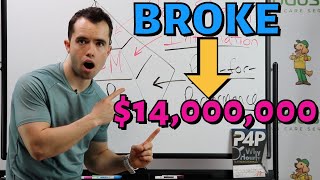
Mike Andes (founder of Augusta Lawn Care) presents a practical framework for solving the hiring and retention constraints facing small businesses in the home services sector. He introduces a three-stage “pyramid of culture”: (1) P4P — pay for performance (daily, efficiency-focused pay tied to budgeted hours); (2) open-book management — share financials so employees can ‘think like owners’; (3) profit sharing — periodic distribution of company profit. He argues the three stages must be implemented from the foundation up, describes implementation costs (e.g., losing staff during transition) and benefits (higher pay for top performers), and promotes his book P4P: Why Hourly is a Failing Formula.
Questions this video answers
Over 80 locations around North America.
"Well into the eight figures of revenue."
99 cents on Amazon (ebook).
About half of the team.
Over 50% more per hour.
Chapters
Hey everyone, my name is Mike Andes and I'm the founder of Augusta Lawn Care. We have over 80 locations around North America. We do well into the eight figures of revenue. And today I'm going to be talking about how we do that. And obviously you could talk about sales and generating more revenue and that's awesome. But for Most people in 2022, in your small business, especially the home service industry, whether you're doing landscaping, lawn care, fencing, janitorial, construction, any sort of work on the home, if you're in those businesses, your constraint in 2022 will be can you find enough employees? And today what I'm gonna be sharing with you will solve that problem. So all of this is outlined in the book that I just recently launched called P4P. Why Hourly is a failing formula. Check it out. It's literally 9, 9 cents on Amazon. I think I make about 27 cents or something. When you buy it as an ebook, if you're just can't afford it, afford a dollar. If you can't afford a dollar, send me an email and I'll send you a dollar. I'll figure out something because this will really, really help your business. I truly believe that. And it outlines what I'm gonna talk about today in much more detail. So in your small business, when you're trying to find employees, the first thing that everyone looks at first is acquisition.
And then as time goes on and you find good employees and you start being tired of the fact that you're gonna have some sort of churn, people leaving the business, you're going to eventually start focusing on retention. Okay? So you start going from, I gotta acquire an employee until now, I gotta retain this employee and hopefully not have too much churn. So whether you're trying to acquire new employees and you're trying to grow your business and get more employees as we head into the spring, or you are trying to retain the employees that you do have simply because you're worried they're gonna go find a job someplace else, like an Amazon warehouse or a new construction company moving into town. They're gonna take all your employees, regardless whether you're in acquisition or you're in retention. To reduce churn and find great talent. This is the key. And this is the three step process I talk about in the book. And that is this pyramid, this pyramid. Obviously pyramids, most people have things against pyramids because of pyramid schemes and I get that. But it works really, really well to exemplify this point that I want to make. And that is the pyramid of culture. And so in my mind, in order to have a great team and a great culture, you have to have all three components of the pyramid. And so I've been very, very bl to have incredible people on my team. But the framework by which that team was created is this pyramid. It's a three step pyramid that in my mind needs to be built sequentially. Some people will try to build the pyramid going from top to bottom or do the middle one first. But you've got to build it from the foundation up. In my opinion, the first step is what the whole book is about. And that's P for P. And then at the end of the book, I start talking about the next couple stages. So P4P is pay for performance. And at the end of the day, every single person should be paid based upon performance in some way, shape or fashion. In the home service industry, it's extremely easy to use pay for performance because you have budget hours, you're charging the customer by time. And it's very easy to say, okay, here's the budget hours. If you beat that, you're gonna make more money. If you take way longer, the job takes way longer than expected, you're gonna make less money. So at the end of the day, what you're really paying for is efficiency. Not about speed, it's efficiency. And I talk about that in the book a lot. So pay for performance is extremely important in my opinion. You can do this pyramid without pay for performance and the culture just will not be as strong. Because at the end of the day, if you want employees to think like owners, they need to have the information like an owner and they need to be compensated like an owner. And pay for performance compensates them like an owner. Because if you do the work efficiently and quickly, but you do it at a high standard of quality, then you'll make more money. And that's pay for performance. That's the first stage of the pyramid. The next stage is open book management.
Again, all of this I talk about towards the end of the P4P book. Open book management though is extremely important because remember what I said, if you want an employee to think like an owner, they need the compensation of an owner. P for P and they need the information of an owner, alright? So they need to have the information. That is, what is your prices, how much money is the business making, what do you pay on taxes, what do you pay for your insurance, what do you pay for fuel? If they don't know that, they're going to just assume that you're making a bunch of money. And because they see a bunch of new trucks showing up every single day and you're buying more equipment, they're like, oh, there must be rolling in the dough. Well, what they don't know is if they look at your profit and loss statement, they would realize that you're actually putting every single dollar back in the business and literally living on nothing and taking no money home. And so again, if you want them to think like an owner and think about the efficiency of how much fuel is being wasted, or think about the fact that them drinking coffee for 20, 30 minutes before work, or the fact that if they are literally just letting equipment be ran over by a truck, that is all things that affect the bottom line because it affects the profit and loss statement. But how should they know if you don, give them the information, tell them how much money the company's making, tell them how much things cost in the business, how much you charge a customer per hour, how much you charge them for materials. People are like, oh no, I don't want to tell them that. Then they'll go start their own business. Well, they're gonna do that anyways if you don't treat them correctly and give them information so they can actually. Why don't employees treat the business like me? Why don't they work as hard as me? Because first of all, you're not paying them based upon that. You're not paying them if they work more like an owner. You're not paying them anymore to work faster. And then secondarily, you're not giving the information that an owner needs to make the decisions in their business. The reason you work so hard when you go out in the field is because you know what the profit line is. You know what hits the bottom line, you know affects the profitability of the job. You know if you're hurting or if the job is over budget, or if you are crushing it on the job. You know all of that. That's what your employees need to know. And this is extremely important if you ever want to run your business as an absentee owner when you're not there every single day. Because you need a system to run the business. You need a pay for performance model in order so that you don't have to worry about your crews working, whether or not they're stopping at gas stations or they're on their phone all day long. If you're an absentee only, you better make sure you have pay for performance. You better be sure you have open book management where you show Them the numbers, so you don't have to worry about whether or not they're just dumping fuel or they're taking the fuel cans from your truck and filling up their car on the weekend, or they are a little lollygagging because they know, hey, I can be at this job for three hours. It says that on my sheet. Well, I finish it in an hour. I'm just going to twiddle my thumbs for the next two hours. That happens all of the time. But it's our fault as owners because we are incentivizing them and compensating them based upon how long they work, not how efficient they are. Okay, second stage, open book management. Last one, extremely important, and that is profit sharing. Whoops. Totally messed that up. Profit should be a P profit sharing. Okay? And again, some people will do profit sharing, but they haven't instituted open book management or P4P. And it really is defeating and demoralizing to your team. Because profit sharing is typically done on a quarterly basis or maybe a monthly basis. But P4P is done every single day. And for most frontline employees, they don't. They can't think in terms like, oh, in three to four months, I'll get rewarded if I do this action now. No, you want to get the compensation as close to the incentive to the performance as possible. I want compensation and incentive as close to the actual performance as possible, which for frontline staff needs to be on a daily basis. With P4P, profit sharing is not enough to move the needle when it comes to performance because most frontline staff will not think about their annual bonus or quarterly bonus. They need a daily paid based upon how efficient I am today. That will make them run across the parking lot. That will make them make sure they do a walkthrough with the customer before they finish and leave the job. That is P4P. Profit sharing is great, but it should be built on the third stage. And in profit sharing, this is when you're getting a piece of the action to your employees. This is extremely important if you're absentee owner, but because if I'm making a bunch of money as an owner and I'm not there every day, I wanna make sure that they're still defending the profit line, they're still defending the bottom line and thinking in terms of how do I maximize profit. So I give a percentage of profits away to my general managers and to my frontline staff every single quarter, and they can lose that profit sharing if they're late or they call in sick. Those Are not call in sick, but they call out like last minute. They call out right before the day starts. They'll lose their profit sharing. However, I need them to constantly be thinking about profit because I'm not going to be there every single day. I need someone always guarding the bottom line. The reason why most owner operators and solo operators are extremely efficient and profitable is because they are always there present to guard the bottom line and look for inefficiencies, look for for waste. You need your employees to think the same way and they should be compensated for it. They should be compensated by working faster on P4P. They should be compensated by making sure the business is profitable. They'll get a piece of it when they get profit sharing. So this is the pyramid. This is the pyramid of culture. This top line is profit sharing. And in my opinion, this is extremely important to acquire and attract great talent as well as retain them so that as they get more efficient, as they get more skilled, they'll make more money on P4P. They'll understand business more and become more valuable themselves to their next job or to potentially moving up in your company. And then third, they're always thinking about profit, the bottom line. And that is what is going to get your business to become more efficient, profitable. Retain employees, attract the best talent because no one wants to work for someone that has P4P implementing their business if they're a low performer. You only want P4P if you're a rock star. So if you want to attract rock stars, implement P4P. Implementing P4P will be the hardest thing you've ever done in your business. If you currently pay hourly, it's extremely painful. We lost about half of our team over the course of the first year when we implemented P4P. But guess what? Those are the most overpaid and the people who are culturally not a good fit. And we're the ones that are already dragging everyone else down and making them unefficient and slacking off throughout the day. Those are the people who left and we didn't have to go hire more people because the people that stayed, they kicked butt. They kicked butt so much to the point where they made so much money on P4P that they were much more happy and we didn't have to have more employees because they literally just sucked up all of the production required by the people who left and they got the work done. P4P will be the hardest thing you've ever done in your business. It'll also be the thing that completely changes your relationship with your employees and and your business. It'll make your business much more profitable and you'll allow your employees and your top performers to make much, much more money. Our current frontline staff today makes over 50% more per hour than they did just three to four years ago. And that's because of profit sharing and P4P. Open book management is required in order for both of these things to work. Because you need trust. And they're not going to trust you if you don't open up the books and show them how the profit sharing came about. How P for P is calculated. This is just the tip of the iceberg. Check out the book. P for P. Why hourly is a failing formula. It's literally 99 cents for the E book. You can buy the audible or the softcover. It's a little bit more. But if you can't afford a dollar, let me know. I'll send you a dollar. I'll get you a book to you somehow this will change your business, I guarantee it.









