How Jim's Mowing scaled past 2000 franchise locations!
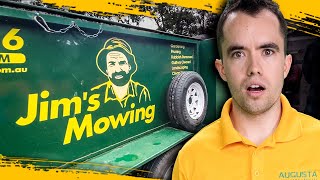
Mike Andes visits Jim's Mowing, which has over 2000 franchise locations, and compares their franchise model to his own company, Augusta Lawn Care. The video covers how Jim's Mowing scaled so large and what makes their training and operations different.
Chapters
You know it's bad when literally on this thing it tells you to drive on the left. Oh man, this is gonna be so bad.
Time for a morning run. Let's do this.
Got a couple hours of sleep, did some push ups, took, took a shower, now off to get the rental car which happens to be 30 minutes away from the airport.
As soon as I get my rental car, I gotta get some food. When I travel I don't sleep much and I find I do a lot better when I sleep if I'm not eating. So I haven't ate or slept for.
36 hours now. Good stuff.
Just along as budget for travel is not very high. So I didn't go smart car style, but pretty next close to it here. But this is going to take a while to get used to on the wrong side, well, the other side. So there's probably not going to be any video while I am driving. I'm not gonna have headphones in while I'm driving because every ounce of concentration my eyes are gonna be peeled to make sure I don't die. See how this works? It looks massive, but I think the car is just tiny. Let's go. You know it's bad when literally on this thing it tells you to drive on the left. Oh man, this is gonna be so bad. So I've driven in Europe and you know, I'm used to not even knowing the names of the streets and everything, but it's the fact that this is not my indicator that's the thing that kills me. The indicator is over here.
Alrighty, day one of training. I'm looking forward to the first couple hours after with the founder Jim Penman, so should be fun. The rest of the training is done by a lot of the staff here at Jim's group. But I want to definitely catch the first couple hours here with Jim. I met him virtually and things like that, but be fun to catch up with them. Now.
The franchisor needs to respond to you within 24 hours on the business day. Which means if you call at 12 o' clock on a Friday, they got.
Till 12 o' clock on Monday.
Most franchises are very, very good at this and they will tend to call you back fairly quickly on take your call. Pretty cool place they got here. It's kind of right next to a conference center. It's not like down technically owned by Jim's Mowing, but it's next to a conference center. So you're able to say basically on grounds. So just gonna head up to the hotel meeting with the Web team because we are in a dashboard. Back in dashboard for the franchisees where they can change stuff on their website a lot easier. Put ad service pages, banners, things like that. So gonna have that zoom call meeting right now and then hopefully get a little rest before dinner.
I'm currently running the operation is this smartwatch thing. Shows the time locally and my actual watch shows time back in Washington. Keeps me on track. Cuz being 8 hours ahead or whatever it is throws you off.
It's not augmented reality.
See, when I'm visiting a new place, I don't go see the new tourist attractions. I come to the mall to be able to see how they market and what's different about their marketing and advertising. Very interesting. You get so much data just walking through one mole. You have so many different companies.
Jet lag is real. Just cannot sleep. So I'm gonna go ahead and work out. It's just, it's a little before 4am right now and yesterday was day one of Jim's mowing. Today I'm gonna go over on this video what are some of the things I've learned already at Jim's Mowing and some of the differences, the comparisons and contrasting between Augusta Lawn Care, my company and Jim's Mowing. I've learned a lot and, and I'm really looking forward to what this whole week holds. But let's go over what I kind of learned in day one and a little bit about their system versus ours. So the first thing that makes Jim's Mowing really different than Augusta is really just the size of their franchisees. The average Jim's Mowing location does about 140,000 in annual revenue. And I would guess that they're mean. Like the 50th percentile is more around that 90 to 100,000 level. And they're really trying to shoot for making $2,500 per week. That's kind of like their benchmark. Whereas last month at Augusta, for example, our average was I think like $35,000 a month per franchisee. And then our, our median like the 50th percentile was like 33,000. So it's not wrong or right. It's just a matter of they've really gone after that solo entrepreneur, the person that wants to work for themselves. But over here, labor is extremely, extremely expensive. Like $25 to $30 an hour to get started. And so most of them don't get any employees. Another thing that makes them really different is just their structure. When you pay your franchise fees and royalties etc. That doesn't actually go to the head office, it goes to franchisors. So you have the head office, then you have divisional franchisors, then you have franchisors underneath them, and then those franchisors are the ones who support the franchisees. And so different fee structures, different costs per lead is for every single, different division as well as every single franchisor. And anyone can become a franchisor after being a franchisee for so long. And then really, you're the one that just does direct support with the franchisees, not the head office. So the head office here, I don't see like franchise business consultants and salespeople and marketing and all the rest of it. That is all done at the franchisor level, which is really just someone who's been part of the franchisee, been a franchisee, is able to become a franchisor and support, you know, 5, 10, 15, 20 or more different franchisees in their area. This makes their model much more scalable because they don't have to have all of the support and the infrastructure at their head office. And the franchisors that come up and have 5, 10, 15 people underneath them, a lot of the responsibility for things like coaching calls, compliance, legal, all the fee collections, all that sort of thing. What's really interesting is the story of Jim's mowing is very similar to my own story in that Jim was really highly educated and then decided, like, this is not for me, and started mowing lawns. I did the same thing, then started Augusta Lawn Care after deciding I wasn't going to the medical field. Also, the way that we structured our franchise agreements and legal papers is very similar in that it's very pro franchisee. There's a lot of rights given to the franchisee and they're allowed to leave the franchise without huge consequences or being put over a barrel in terms of fees. Another thing that's similar is the phone. They have a call center here, we have command center. And that is a service that they offer. And what's different about Jim's Milling is really where their model is different is they charge per lead. So per lead that comes in, you're going to get charged anywhere from $15 all the way up to $65 per lead that comes in through the head office. And that's the phone number that's on all the trucks or all of your marketing material is the head office phone. And when that phone rings, you're getting charged when that lead is sent to you. And then it's up to you to follow up with them, set up a job, do the scheduling, invoicing, billing, et cetera. Really their main thing at the head office is answering the phone call and creating a lead and sending it to a franchisee at command center. I've always said the hardest thing we've done is command center. And it's because we do invoicing, billing, scheduling, we do their payroll, we do all these other things and we'll actually schedule the jobs like schedule the estimates. They don't schedule the estimates for their estimators or their franchisees. Here we do. So that's been a huge operational drag for us at Augusta from, you know, the first year we started, actually when someone calls to schedule the estimate. And that's been huge and difficult for us. And I talked to Jim himself last night and he said hopefully within a year or two they're going to be able to have their call center be able to schedule the first appointment, like the estimate with the client. But right now they don't do that. And so I can just see how much their model has allowed them to scale so much faster by having franchisors underneath the head office to do a lot of the support, as well as not having a full fledged command center where there's services outside of just answering the phone, taking the lead and then passing it to the franchisee.
It's not really about what's right or wrong. But I do believe that Jim's mowing is probably set up better for a solo operator than Augusta Lawn Care. Because at Augusta Lawn Care, I openly tell them if their goal is only to do like 5, 10, 15,000amonth in revenue to not join Augusta, there's not really a point we're built more on scaling up and growing. Whereas here, like you really can't even run Facebook ads or Google Ads as a franchisee. Here you got to rely on your franchisor for the ad fund, the technology fund that you pay them. You gotta leave it up to them to do a lot of the advertising for you outside of door knocking and what they call mail drops.
That that Jim shared with everyone yesterday I thought was really interesting is he talked about everyone throws around this number around 50, 60% of small business fail within the first five years. And he said he actually think that's more on 90% when it comes to service based businesses. The reason is because small businesses is anyone less than 50 employees. So even like a Taco Bell or a massive retail, where they spend a million dollars, $500,000 to build out a space and it's really capital intensive. They're gonna be much less likely to fail because that massive capital investment, as well as the fact that whoever is investing that probably has deep pockets and can sustain the business for a lot longer, even if it's unprofitable. So he believes for small businesses like lawn care, cleaning, you know, fencing, construction, that because it's so easy to get into and the barrier to entry is so low that the actual rate of closure is more on 90% in the first five years. I thought that was very interesting. And he said that over the past they've now been franchising for 33 years. They started off with a 75% of their franchisees failing the first year and they've been able to get that down to about 10 to 12% just by increasing the training, adding the community, making sure that the franchisees are all together. So that was really eye opening to me. The massive advantage that Jim's Mowing has that we do not have at Augusta Lawn Care yet is the fact that they have brand awareness. With almost 2,000 locations for Jim's Mowing in Australia, almost everyone knows Jim's Mowing. And so what happens is when someone starts, they immediately start getting leads because everyone knows the brand. That brand, Brand awareness is only achieved when you get lots of people driving trucks around all the time. And especially in places like Melbourne, Perth, Sydney, where they have tons of franchisees, like I'm talking 50 to 100. You're seeing 50 to 100 trucks driving around the city all day long. Massive brand awareness. If anyone else joins the franchise he makes immediately they're getting leads. That's something that will only come with time. I think we'll achieve it probably to a really high extent at Augusta, probably in two years. We would really need at least 300 locations to really make it where it is. Something that everyone knows. Augusta. If you think of lawn care, you start thinking about Augusta prior now because they've been doing franchising for like 33 years. I really think their training is very, very good. Especially taking someone who knows nothing and really building them up slowly. So even though some of the elements might seem elementary to like myself, when I'm year training, it's a matter of like really taking someone through the basics, the elementary parts of business and then growing them up. And that's all you really need if you're going to be doing 100, 120,000 in revenue. Whereas at Augusta we really focus more on things like pay for performance. Hiring the whole culture side of things, meetings, because the whole goal is more or less building $1,000,000 plus business or at least 500,000, whereas here that's just not the goal. So the training is totally different. But it's something I'm learning about because I think we need to do a better job of institution tuning more elementary steps to get to 500,000 and beyond. So we've actually already added a fourth day to our training. We've in the past always had three days. We're adding a fourth day to actually have quizzes and exams around the stuff that is taught and have software skills where it's like, hey, look, before you leave, you have to know these certain skills and had demonstrated it in training. So those are the type of things that we need to do. So that way when people get started, they're just brand new, that they don't go through very common pitfalls, that no, they're just the basics. But we kind of glossed over in the past because we only had three days to do training. So adding that fourth day having tests and exams they have to pass before leaving training is going to be something that we're instituting literally in a few weeks. And that's honestly the main reason why I'm here, is just to see how another franchisor does their training is super valuable. That's why I got an anytime fitness franchise, is just to learn this process. So seeing it now in my industry, after being through the whole franchisor thing is super helpful because I see all I can see behind the scenes. I know what's going on behind the scenes. I know where the money's at, I know why certain things are done, certainly in terms of legalities. So this has been super helpful for me to be able to improve our processes, our training, and I'm really looking forward to making that happen. What made me feel a little bit better is yesterday Jim's mentioned how in his first, the first 30 or 40 franchisees they just did all the training at his house. That's literally what they did. And when I look back at Augusta and the first 2030 franchisees, I'm almost embarrassed at how he did training, honestly. But I felt a little bit better yesterday when Jim said that the first 30 or 40 franchisees he just trained them in his living room at his house. But if he can point to the fact that improving training took their first year success rate from 25% to like 88%, that's incredible. So if I got to fly to the other side of the world and spend thousands and thousands of dollars and spend an entire week. I'll do it. Because you don't get this anywhere else. There's not like a book to read or an online course. So I really am appreciative of Jim's group. I reckon them highly for anyone in New Zealand, Australia, Canada wants to get started. Especially if you want to work for themselves and you don't necessarily want to have tons of employees or trucks rolling around all the time. I think that's a great move. Day two of training coming up. It's like I'm back in college. Here we go. Do a job for that customer. And after the job, you apply the invoice and payment.
All right, so. So you got scratching in the ceiling. Look, it could be two things. It could be possums or it could be rodents. What time of night are you hearing the scratching?
Nearly midnight, around 2 o'. Clock.
Well, that rules out the possums because they're usually going out by the time the sun sets and then they're back within your roof light at sunrise. So I'm guessing it's either rats or mice. With the actual. With the jobs that have been coming in at the moment, we're getting a lot of calls for rats and mice and through the ceiling. And as I said before.









