How to Buy or Sell Lawn Care and Landscaping Businesses (This One is For Sale)
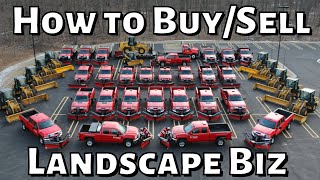
Mike Andes (YouTube) explains how to buy or sell lawn care and landscaping businesses, using a current Aberdeen, South Dakota franchise listing as an example. He highlights five valuation drivers: 1) recurring/contracts beat one-off project work; 2) an owned contact list is highly valuable; 3) lower owner involvement raises valuation (systems/management); 4) asset values (trucks/equipment vs goodwill) affect price and can be excluded from deals; and 5) best deals come from sellers under time pressure (health, retirement, moving). The Aberdeen location is priced attractively because the owner has health issues, has ~25 mowing customers plus some snow contracts, and reported roughly $10k+/month revenue; franchise fee waiver effectively reduces buyer cost to about $5k for the franchise rights and contacts.
Chapters
Andes and today we're talking about how you can buy and sell your lawn care and landscaping business. So whether you're looking to buy another company that's already existing, already running, or you're trying to sell your business, this is going to be a valuable episode for you. We're over five different things you want to keep in mind when it comes to the valuation of your lawn care and landscape business. And I'm actually going to show you a current business that is for sale to highlight some of these points. All right, so I'm going to go ahead and show you this, this company that's currently for sale and it's actually if you go to Augusta longerservices.com franchise and then scroll the very bottom. Let's go to the very bottom. You can look at all this other stuff if you like, if you interested in joining Augusta. But at the very, very bottom right here, want to purchase an existing franchise? Go ahead and click on this. And this is brand new. This is our first location that's up for sale. So you can go ahead and click on Aberdeen, South Dakota. And this location is for sale because the owner has had some health problems and is needing to get out of the business and physically just can't take it due to heart condition. And so you can see here that it just got started. They did about 10,9000amonth in revenue in November. They've been over 10,000 before throughout this year. And they're basically just maintaining the 25 mowing customers that they currently have and they have some snowplow contracts and as well. And so again, what's really cool about this one is the fact that you don't have to pay the $20,000 initial franchise fee if you bought this location. You would just pay the 25 and really you'd get your franchise, you know, license and everything. So really you're paying $5,000 for already having over 10,000amonth in revenue. So a great opportunity here. There is no equipment being sold with this one and that's something we're going to talk about today. All right, so let's jump back and talk about the five different things you want to keep in mind if you're trying to buy a business like this location, Aberdeen or any other business, whether it's a million dollar company or just getting started like this one. Usually the best opportunities are going to be when the owner has to leave because of retirement, because of health conditions, because they have to move. That's the best opportunity. So that location there a great opportunity to buy for someone to get started right away and have great revenues and just as a platform to get started on simply because the owner has to let the business go. So those are usually the best buying opportunities. But I'm gonna go over five things you want to keep in mind. So even if you aren't buying, if you're trying to ever sell your business, these are the things you want to keep your business within so that your valuation is maximized. So the first and foremost is that recurring work and contracts are going to have a much higher valuation than project based based work. So when we talk about project based work, we're talking about one time projects like paver patios and retaining walls and planting jobs. Those are great and fine, but when I sell my business, there's no guarantee that that person's going to get those jobs. There's nothing in writing that says they're going to have those. There's no recurring work that they can depend on. And they can see over the course of three years that those recurring revenues have been growing. They can't. There is no track record. So evaluation on a project, design, build type of business is going to be a lower valuation compared to one recurring. And even better if you have actual signed contracts that state you're going to come at a certain price for the next 12 months or whatever it might be. So you want to really focus on recurring work and contracts instead of just one time jobs and projects. Because at the end of the day, when you're selling a landscaping, hardscaping, construction style business, there is no promise that tomorrow the phone is going to ring with another project, therefore the valuation is going to be lower. Now the second thing is the fact that your contact list is, is gold. This is why we've always talked about you wanting to own the client's information and not be going through a secondary platform like HomeAdvisor or Angie's List or some other provider that's giving you the lead. Because at the end of the day, whoever owns the customer data, they're the ones who get the value of the customer. And so if you're trying to sell your business, if you can have a really good contact list, that is gold. We literally bought a location at our business a couple years ago and I really just bought it for the contact list because there was 3,000 emails, addresses, phone numbers, et cetera. That was worth a lot of money to me. I didn't even care about the contracts, I didn't care about the equipment, I didn't care about the name of the business. I just wanted that contact list because I knew I could sell those customers over and over and over again. So what does that mean? Even if you're not trying to look to buy a business, keep in mind that if you are trying to build your business, make sure you get the contact information. Make sure you get the email and the address and the phone number of all of your customers, regardless of whether or not they become customers. And they only become leads, and you only get them an estimate, make sure you get that contact info because the value of your business, when you're wanting to sell, dramatically increases. If you have a great contact list and over the course of time, you're going to get thousands of contacts and you know the local location, I think it's like 9,000 contacts in their database. What that means is when they send one, one email out for, let's say, fall cleanups or spring cleanups or whatever it is, they'll literally get hundreds of people asking for an estimate simply because they're tapping into that contact list. That is like gold. So your contact list is gold when it comes to your lawn care and landscaping valuation. All right, Number three is the owner's involvement is going to play a huge determining factor of what the value of that business is going to sell for. Whether you're buying or you are selling, the valuation of that company almost always hinges on does the owner need to be there on a daily basis? If so, the valuation will come down. The reason for that is because no one wants to buy a job. No one wants to pay you $100,000 and have to show up to work every single day. There's a reason why the Aberdeen location is so cheap. It's because the owner's still having to be there every single day. It's very much of a solo operator model, and it's not going to be where you can just buy it and passively let it grow and have a general manager and just run it right where if you're buying a big company, maybe a million plus in revenue, bunch of recurring work, and you're buying that location, there's a really good chance that they have management in place that the owner does not need to be there every day. If the owner has to be at the location for hiring and marketing and meetings and maintenance of the equipment and making buying decisions, all of those things will be held against you when it comes to the valuation of. Of the business. So if you're trying to buy the company, just keep in mind, if you are buying this business for 200,000, 300, $400,000, whatever it is, but yet you have to work there for 50 hours a week. You got to realize that like $100,000 is what you probably are worth as the owner of a million dollar business at least. And here you are working in the business every single day. If you can make it passive, where the owner is not required to be there because it runs on systems and you have great management in place, you that's where the valuation gets interesting. Because someone can buy it and not even be in the right in that state. They can be on the other side of the country and still be the owner and still get return on their investment. So the third thing, owner involvement. If you are working 50, 60 hours in your business, keep in mind there's the valuation of your company, if you were to sell, is going to be dramatically decreased. So what can you do? Create systems, hire great people, train them up, make sure that they're taking things off of your plate. So, so on a daily basis you're kind of like a spare tire. If you show up, great. But if not, the business will go on, your sales will continue to come in. Not every single job, every customer complaint, every buying decision, every hiring decision does not need to come through you as the owner. The fourth thing that's going to really determine valuation is the asset values. And this is going to be really determining whether or not the assets are even included in the purchase agreement. And so when I talk about assets, I'm talking about equipment, so trailers, trucks, all of those tangible assets. Now there's also intangible assets, things like websites or phone numbers or a brand, or you potentially might take control of their website or their email. Those are some intangible assets. And that's going to be something that you really want to work on in terms of what are the values of those assets. Because if you're buying a business with the assets, like with the trucks and snowplows and mowers and all the rest of it, then that really the valuation, the company will hinge a lot on what your valuation of the assets are. And if you are a buyer, you want to really negotiate on, hey, what's the current value of this piece of machinery? Because you had it for 10 years, it's not worth very much now versus what the, if you went and bought that piece of equipment, that might be a higher valuation. So how you value the assets versus replacement, the replacement value versus the, you know, actually what I would have to sell this thing for if I went on the market the market value, completely different. So again, asset values play a big role in determining the valuation of a company. And I actually have an entire webinar about this whole topic. And if you just search Acquisitions, Mike Andy's, you'll find an hour and a half webinar on this whole topic. Because asset values are extremely important. And that's why if you're trying to get a really good deal, a lot of times the best thing to do is remove the assets from the equation. So if someone's like, hey, I, I'll sell you this business for $100,000, say, okay, great, can you please break down for me how you came to that valuation? And a lot of times what they're going to do is they're going to put $80,000 on all their trucks and their equipment, and then $20,000 on top of that. And you say, oh, actually I don't need all of your assets. I don't need all your trucks, equipment. I'll just buy the contact list, the goodwill, all the contracts, all the estimates, everything that you have in your database, I'll buy that for $20,000. That's the real gold. Because assets are a commodity. I can buy and sell trucks and equipment, but if I can get the contact list, I could infinitely grow from that, that contactless by upselling them over and over and over again. So the contact list is the gold. We've talked about that. But when it comes to asset values, if you disagree on the asset values of a truck or a piece of equipment, just ask the, ask the owner, hey, can you, can you give me the valuation based upon what the assets are worth versus what everything else is worth? The contact list, the goodwill, phone number, whatever. And then you get to kind of choose, pick and choose what you want to buy. That's a great way to get a really, really good deal, especially if someone is needing to let go of the business relatively quickly. You can kind of get, for pennies on the dollar, some of the most valuable things in the business. The contact list, potentially a website or brand. Those things. Usually owners kind of devalue when they break down their valuation. The fifth final thing, and that is number five, how to get the best deals. And we've already kind of talked about it. You want to look for an owner that is in distress and needing to let go of the business quickly because of health concerns, because of retirement, because they're moving. If there is some sort of deadline for them to get rid of the business, great option for you to buy the business because he's got to get rid of it. Eventually they might ask them for $200,000 and all of a sudden, by the end, they're coming up against the time they need to leave or they need to retire, they need know they're having a surgery, like they're going to let that business go for a lot cheaper. So that number one is, is there a deadline? Does the owner need to let go of the business? And there's actually a forced timeline. Second thing is, can you remove the assets from the purchase equation and get a really good deal on what is actually the most valuable, which is the contact list and any recurring work that's set up. Like if they have 50 mowing clients, 30 mowing clients, and you say, hey, look, I'll take over, I'll keep mowing their lawns, that's where the money's at. That's where the real value is, that you can buy assets down the road. And especially if you're buying a small business like this one in Aberdeen, you don't need a bunch of assets, you just need the contact list. You just need those recurring jobs are already on the schedule. So I hope that was valuable. Make sure that if you're growing your business that you keep these things in mind so when you sell, you're able to get the best valuation. And if you're interested in buying an existing location from Augusta Lawn Care, there's already a franchisee that's ready to sell because they do have a deadline, they do have health issues that they need to address. And so it's a great opportunity. Get started. Literally includes the $20,000 for the franchise fee already. So you're literally paying $5,000 for all that contact list, all the brand awareness, the website, everything's done. So check that out. If you're interested, send me an email. I'll put you in connection with that franchisee. And I look forward to seeing you soon at Landscape Summit, where we're going to be talking more about valuations. Your company making sure you get. You build the business in a way that's going to get top dollar. If you ever sell or get another owner involved, or you get a partner involved, or you have private equity. How do you grow this business? How do you maximize your valuation? And we're going to take it a step further by talking about how you get multiple locations. Or do you keep growing your current location and get bigger and bigger and bigger? Either that or do I split it up and have different general managers at multiple locations? That's a topic we're going to be talking about at Landscape Summit, so make sure you Landscape Summit co and sign up today. We'll see you there.









