How to Dig Yourself Out of Entrepreneurial Fear & Depression
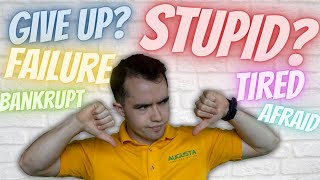
Mike Andes left pre-med to start Augusta Lawn Care and hit depression hard. He maps his triggers: Friday nights, exhaustion, money stress. His fixes: running, saunas, writing down long-term goals. He targets 500 franchisees and a public company so employees own stock.
Questions this video answers
500 franchisees.
90% of franchisees.
50% of frontline employees.
Approximately a 10-year timeline ("like a 10 year, if I'm lucky" ).
He left pre-med/medical school (was planning to pursue an MD).
Chapters
Hey, everyone, Mike Andes here. I just finished a run and wanted to send you this message of encouragement on this weekend. Maybe if you're down, maybe if you are discouraged, maybe you feel like you want to throw in the towel or if you've been there before. And I think, I think, honestly, anyone that says they've never been there as a business owner, they've never felt afraid or discouraged or like a failure. They're just. I think that's honestly really dangerous. It's dangerous to have that impression because when you tell it to other people, they start comparing themselves to, to that and it gets very, very depressing. And I want to talk a little, a little bit about some of the times that I've felt that way and I've felt discouraged and like everything wasn't going my way. By the way, that's. That's a refinery. You can see that pipeline that goes out there and then they have the tankers. It's a tugboat right there. But, you know, for me, Friday evening has always been really tough. I don't know why. I don't know if it's just exhaustion or if I'm tired or if it's still a long week or if I'm not looking forward to having a weekend where I feel less productive. I have no idea. But Friday evenings have always been rough for me. And so knowing your triggers, I think are really important. So for me, like, I know Friday evenings and Saturday evenings is something that I have to be busy, active, have a plan in place what I'm going to be doing, because if I just am idle, I get like, just depressed. And you start thinking about all the bad things and the times when you feel like, man, like, why am I working so hard and what is this all for? And you kind of lose track of the why power of owning your own business and employing other people. And you start questioning whether it's even worth it. During those times, I think it's really important to know what those triggers are and, you know, whether it be you're exhausted or you're tired. For me, like, I exercise during those times. Like, I have, like right now I'm running. This morning I was. I didn't email for like six or seven hours, but I said, look at by one o', clock, I have to get out, have to go running, because if I don't, I'm going to get to a bad place eventually. And. And I think all of us need to know what those triggers are. Like, what times of the day, what are the things that happen in your life or your schedule that trigger those moments of despondency and discouragement. And then knowing how to counteract that. And whether it be prayer or for me, I go into a sauna, helps me just think and meditate and just think about the good things. I think one of the times that I, I felt like most of a failure was like a year or a year and a half, maybe even two years after dropping out of what was going to be medical school. At the time after getting my pre med, I thought I was going to go to, I was thinking about either LSU or Oklahoma and I was going to do my.
MD and then go into a specialty like surgeon. I was thinking either spine surgery or brain surgery or heart surgery. I wanted one of those three. And that was the plan. Well, that was also the plan that everyone else had for me, including professors and family and friends and teachers and all the rest of it. And so like a year and a half after of you know, owning Augusta Lawn care and you know, being a lawn guy in their mind, you know, you start looking like, man, I just, I only made like 30 grand this past year and I'd just gotten started. I was basically part time, I was like personal trainer slash owning a salon care at the time. And so it can be really, really discouraging and depressing because you need other people opinions, other people's expectations. You've let down your own expectations. You're like, man, like I could have been X, Y and Z. I could have been in medical school. I could have been going, doing what I wanted to, I thought I wanted to do my whole life and had watched surgeries and all the rest of it and had looked forward to for so long. And.
You feel like a failure sometimes. And those expectations of others and expectations of yourself, you have to really keep a really a good handle on those because it can be very damaging. It can really damage your self esteem and just your state of mind, especially expectation of others. What other people think of you or what they expect you to be can be extremely toxic in your mind emotionally. I think sometimes too. For a lot of us as business owners, things just don't move fast enough for us. We're expecting things to move really, really quickly and we want to see progress. We want to grow the business faster than it is and it's difficult. And you know, you want to see $100 million even a million dollar business. I want a million dollar business. People say that all the time. I want a million dollar lawn care business, million dollar landscaping company and they want it in like a year or two. And if it was easy, like, everyone would be doing it. And that's a very difficult thing to do. And I always say, like, the third year in business, especially lawn care landscaping, is like the year I feel you actually start to see the benefit and the results of all the hard work that you've put in. But, you know, two years of just grinding and hard work is not easy. It's usually that 30. You start to see a glimmer of like, you know what? This is gonna become something. This is becoming profitable. I start having a team that's been around for a couple years and there's not as much juggling happening. And I can trust people in the business that third year. And, you know, even for now, like right now, I want to do so much for the franchisees. We have so many plans of what we want to build for them, whether it be the, the ability to do more of a personal finance training with our franchisees and owners, whether it be the software we're trying to build, whether it be so many different stuff we're trying to implement. And I want to do. And it takes money, it takes time. And just like I want, I want to do this now, I want to see this done faster. And another thing that can really get you down sometimes is the next shiny thing. The next thing that you're like, the next business adventure, the next idea that you have, the next opportunity. I want to do real estate, I want to do stocks, and I want to do bitcoin crypto and this and that and NFTs. And you go from one thing to the next. It's like the next shiny thing can really keep you from focusing on the thing that's working, the thing that you're grinding on. And that's why so many people get derailed in year one and two is because they're working so hard. They're just grinding so hard, they're not seeing the results. And then they. Before year three, four and five, when they start seeing the fruits of that, they get derailed, they get distracted, they go do something else, or they just completely give up because it's not easy. I actually see this, like all the time in, when it comes to landscaping and lawn care, people you know, oh, I got pressure washer. I'm gonna pressure washer. And then the next thing is like, oh, I gotta do Christmas lights. And they're always constantly chasing the next shiny service, the next big thing. You know, I'm do roll away dumpsters, that dumpster that's gonna, that's what's gonna make me all the money. I'm gonna do projects, I'm gonna do hardscaping, that's where all the money's at, projects and excavation. I gotta get bigger equipment and that becomes the next shiny thing that keeps them from ever feeling like they get anywhere. They ever feel like they're accomplishing anything, they never focus on anything long enough to actually get good at it. They don't take that 10,000 hours seriously that it takes to perfect something. And I just am amazed when someone works for six months, three months, a year and expect something just incredible, something life changing, something that's going to create generational wealth and be able to pass along to their family and be able to give them freedom with their time and give them the ability to retire or build an asset. And you think that's going to happen fast? You think that's going to happen overnight? Takes years.
More services and bigger projects isn't going to solve that issue. You got to focus. I think a lot of times too, like just the pressure of when you're in that, those first couple years though, and you're building that financial pressure kind of becomes emotional pressure, then it becomes mental pressure. And physically you're not exercising, you're not taking care of your body, you're not eating correctly. And all of those things are compounded by the fact that you're having this stress financially. And so you, you might overwork yourself, not getting enough sleep, you might not exercise. Whatever I be. And man, you can still get to those points in time where just like.
Feel like failure, you know.
I think it's really important to, you know, stay focused on your goals. Like when you're, when you're in those moments when it's just like you want to give up and you feel stupid, you feel like you made mistakes and you could have done stuff so much better. I think it's really important to stay focused on your goals. You know, write those goals down.
You know, like I said, I still have moments in time, thank goodness. Not anything too deep or depressing or anything like that, but moments where you're just like, man, you feel like you could be doing more or like you're spinning your wheels and things aren't going fast enough, you're not doing a good job, you're letting people down.
Whether it be customers or your family or relationships that you have business associates.
It can be really tough. And I think in the moment you got to write down their goal, like stay focused on the future. The goals that you have. So for me, like, you know, I want 500 franchisees at Augusta Lawn Care. That's motivating to me. I want to change the industry and the level of professionalism we have. I want to eventually take the company public. And not just Augusta Lawn Care, but everything we're doing with web design and media and marketing and all of that, one day, I want to take it public. I want to. I don't think I've ever really said this. I want to take it public mostly due to the fact I want it to be where more than 50% of the company is owned by the frontline employees. I want them to be able to have stock options. I want the franchisees. So, okay, I've never said this stuff before. So I want 90% of the franchisees to have stock options in the company, and I want 50% of the frontline employees, those working out the field, stock options in the company. And that's most easily done. If the company's public, it's easily traded. And that's what I want. And it's not gonna, that's not gonna happen overnight. That's like a 10 year, if I'm lucky type of deal to be on the, to be on the New York Stock Exchange. It's not gonna be like a quick thing overnight. There's gonna be a lot of pain and work that goes into that. But I think when you're in those moments and you start writing down your goals and you start focusing on the future and it gets your mind off of the now and the pain and the disappointment and the fear and the distress and the financial pressure and get you focused on, why are you doing this? Why did you even start?
If it was worth starting for the finish line must be worthy of that. And that's the only reason you close a business. If you start looking, asking yourself, is this what I'm going through now or worth what I'm trying to achieve? If you're trying to achieve financial freedom, if you're trying to achieve freedom of your time, if you're trying to achieve the ability to retire early or have businesses that run without you, don't think that's going to happen overnight. Don't think those goals are going to happen tomorrow. It's a long, hard journey. There's times you're going to disappoint other people. There's going to be times that you're afraid financially. You are making massive sacrifices.
And it can be lonely and it can be fearful. You know, like, what happens if we don't make payroll. What happens if we grow too fast? What happens if we grow too slow?
What happens if the economy changes? What happens if I can't hire people? What happens to my team? They're falling apart right now. I can't get. I can't find anyone to hire. I can't find enough customers right now. We're not growing. I'm not providing for my family. That is stressful. That is stressful.
The more and more people that I hire and the more franchisees we have, the more pressure you feel like, you better do a good job.
Fuck up here. No, no. Just playing. Anyways, I want to leave that message with you all. Maybe you're feeling the same way. Maybe you felt that way in the past.
But think about the finish line. Think about why you got started, and ask yourself, is that goal worth the temporary pain you're feeling now? The press, your finances, the stress you're feeling, anger sometimes at people that let you down or that you pour so much into and then they just walk away from it. Whatever that you're going through.
Just ask yourself, like, is the finish line worth the pain that I'm going through now? If I've only spent six months, a year, two years, this is not the time to start thinking about giving up on those goals and those dreams and those ambitions of having your own business, having freedom of time, being able to get to the next promotion. Whatever it is you're going for, you've got to keep your eyes set on that. So in the moment when you are down and discouraged and depressed, that goal has to be big enough to pull you out.









