How to Make Money Mowing SMALL Lawns 💰💰
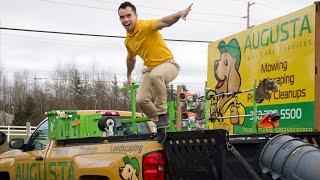
This content was created by Mike Andes. This content was uploaded by Mike Andes. This is a YouTube video titled "How to Make Money Mowing SMALL Lawns 💰💰" created on May 25, 2021, featuring Mike Andes. The video provides a detailed walkthrough of mowing a lawn, discussing pricing strategies, equipment considerations, and efficiency tips for small lawn care businesses.
Chapters
Hey, everyone, it's Mike andes here@landscapebusinesscourse.com today we're going to be mowing a lawn, showing the ins and outs of how we priced it, as well as showing you the actual mowing of it. So come along for the ride. Alright, so this property is first of all very difficult to access. So we have this back alleyway where we got to come through. We have some other properties that were pretty close by to mowing, but that doesn't really. We don't take that into consideration when it comes to pricing. When it comes to pricing, we are asking ourselves one thing. How long is it going to take to mow this lawn once we're on the property? So let's go ahead and open up our notes. We're going to open this up and see. Okay, so few different notes on this one. First of all, they can only be serviced at a certain time of day simply due to the fact they're next to a commercial building, that's a medical building. Also, it's saying, please cut shorter, down to 1 inch tall. This yard has too many rocks though, to cut at 1 inch. So basically the notes are, hey, this person wants to cut really low, but there's a bunch of rocks in the lawn. So it almost makes it impossible to mow low. So I haven't been here for a very long time, but we can go ahead and take a look around. So we have 24 minutes. Budget on this job means that the dollar price is $30 is our minimum usually. Actually, 32 is our minimum. However, we're right next door to another one of the properties from this client. They have multiple properties. All right, so we go in the actual yard here. So this is a property that is tenants. It's rental property. So it's not like spic and span incredible or you know, there's a whole bunch of weeds. This is one of those properties they just want to cut. They don't care about looking perfect, they just want to cut. So you can see here a lot of weeds, dandelions growing. But we'll get this stuff all cut. You can see. Yeah, they'd like it low, but there is a lot of rocks. Like, look at this piece of brick.
Ain't no good. This is an old house, man. But we'll get this thing mowed no time flat. Like literally the whole lawn probably is like 1500 square feet max. So this will take us all of a few minutes. But our minimum charge is usually $32. This one's 30 only because next Door. This customer also has another property, so they must have given like a $2 discount. But this will take us all of.
10 minutes to mow.
But you got to have your minimum charge. So first thing I'm looking for here, based upon the notes, is making sure there's no rocks or anything crazy. It's never a bad idea on a property you've never been to before, just to kind of look around before you get started. So I'm seeing rocks in here, for example, and on these older properties, older houses like this, they usually have older windows. So if I'm looking at this, for example, these are actually wood windows. These are very old. These are single, probably single pane windows, which means any rock that comes flying their way, probably going to break it. So you gotta be really careful. So that's again why it's very important on your CRM, on your mobile app, whatever you're using to make sure that you have notes on every property. Another thing to keep in mind, people put these stepping stones. They look fantastic. They look great. The problem is when you run a mower over them every single day, there's.
A good chance this is going to happen.
Corner breaks off or worse yet, your blade could hit them if you're trying to mow really low. So, for example, this is broken just.
From potentially a mower or someone standing on it, whatever it might be. But when I'm also going over these.
Edges, I gotta keep in mind the.
Fact that these are about an inch tall. If I'm mowing really short, my blades could hit this.
So keep that in mind when you're mowing as well. Because if, for example, here, it's all this elevation here that's about 2 and a half inches off the ground. That's a very easy point to hit a blade and completely mess up your mower. Keep that in mind when you're weed whacking in the area like this. I'm kind of keeping an eye on this sort of stuff, like random pieces of pipe, gutter, etc. I don't want to damage them, even though it's probably better yet to. These things go to the dump. I think they deserve. They should go to the dump. However, you know, one man, trash is another man's treasure. So it's always funny how when you break something of a customer's that seems like it's trash, it was like a family heirloom or some like, incredible piece of art. So just be careful when you see that stuff laying around. And if there's a lot of it laying around. You might want to put in your notes and even tell the customer, hey, we're not responsible if stuff's laying around the yard if we damage it because we don't know what's trash and what isn't. So really cluttered at lawn. Sometimes we won't even touch it without the customer cleaning up. So we'll weed whack this and knock it all down. But God, again, look at all this gravel. This stuff with a weed whacker, not good. Especially when behind us we got a window like this. This window is single pane break in a heartbeat. It's very old, Brittle grass, brittle glass. And so be careful when you're weed whacking around any sort of window, Let alone this old house, that's going to have much, much more brittle glass. My goodness, we got fuel.
See, there's no fuel shortage.
When we come to our property, to our customers property, they give us fuel, they give us pipe. We just make our whole landscaping business based upon all the scrap stuff they leave around for us. All right, here we go.
All right, so I'm going to go.
Ahead and add some color commentary and voiceover. Hopefully you can learn something about your business pricing and how we kind of do this job. So on there, I said that the price for this lawn was $30, but I was wrong. It's actually $32. It's our minimum charge. How I came to that conclusion is I have 24 minutes that are budgeted towards getting this project done, this mowing job. So if you do 24 minutes divided by 60, that's going to give you 0.4 hours. And then multiply that by our hourly rate to the customer, which is $80 per man hour, that's going to come to $32. So this service that you're seeing here today is $32. And for some people, that's really low for a minimum charge, and for other people, that seems crazy. What it really comes down to is the amount of equipment and trucks that are showing up at the property, what your minimum charge needs to be. So in my opinion, a big truck with two massive zero turns and a big trailer, yes. Your minimum charge should be probably 50, 60, $70 literally just to show up and drop the gate. Because there's so much more overhead in the form of equipment and all of your mowers and all the rest of it, you have a big trailer. Whereas this setup that I have here today is a trailer setup. The whole setup probably costs, all in all, with the truck and everything. About 16 to $17,000. That type of setup, you can have a lower minimum charge. And if I'm servicing smaller properties, my minimum charge is also going to be a little bit lower.
So even though this property is maybe only 1200, 1300 square ft of actual turf, we're still going to charge our minimum charge. Is this something you have to do? You cannot charge by square footage and go all the way down to like, okay, well, what happens if there's 200 square feet? Are you gonna charge the customer $5 to mow the lawn? No, you gotta have a minimum charge. It covers your overhead, covers the cost of your equipment, covers the cost of your fuel. And at the end of the day, there's always a minimum charge. Whether it be handyman services or you look at an electrician or, you know, someone coming out and fixing your appliances or a roofer, they're gonna always have a minimum charge, an estimate charge or something that is going to make sure that they make money regardless of how small the job is.
So in a property like this, you'll notice here there is a brand new fence. They installed this wooden fence. You'll notice I keep the revolutions low on the weed whacker. If you, you know, over time, if you keep weed whacking right up against the fence, even if it's wood, but even more importantly, vinyl, Just remember that the weed whacker line on the end of that trimmer is literally going like 100 miles an hour. It's going extremely fast and can really damage a fence over time, even if it's wood. Now, if it's vinyl, it's even worse. Like literally, you could chip it from day one. But even if it's vinyl, sometimes it'll hold up against the weed whacker line until over time, you kind of wear it down. And then all of a sudden the fibers start coming out, you start making holes. But even for the wood, I recommend keeping your revolutions a little bit lower on your trimmer just to make sure you don't create a divot or like a scrape along the grass line over time on the wood. Especially if it's painted like this white fence. Even easier to make a mark because the paint comes off so much faster than making a mark and an indentation on the wood itself.
One quick tip about when it comes to edging or using a weed whacker, it's like a maze. Did you know if you put your hand. When you go inside of a maze.
Put your hand on one wall and.
Just keep walking and never let Your hand go off that wall, you eventually hit the end of that maze. Same thing with weed whacking. What you always want to do is start on one side and go one direction the entire way and you end up in the place you started. So what you can do is especially if your head of your trimmer is going anti clockwise, you're going to go anticlockwise. So for example, when I came in the gate, I started like this because as this goes anti clockwise, it's going to spit all the grass into the lawn. And because I weed whack an edge before mowing, I want to catch all those clippings. So I'm going to make sure that as this goes anticlockwise, it's throwing grass into the middle of the lawn. I'm going to keep going around the lawn anti clockwise all the way till here. And when I mow, I'll suck up all those clippings. So I do not want to start over here, end up over here to where now I'm going this way. It's going anti clockwise and spread into the beds or onto the pathway. Always go anti clockwise if this is going anti clockwise. Pretty straightforward. We use these 30 inch mowers. They're a little bit smaller than like a traditional zero turn. You might get a 48 or a 52. But I'll show you what the nice thing about these 30 inch mowers are. Obviously you can use a 21 inch mower too. But because this is our primary and only mower on these setups, we want to make sure that we maximize maximize how much cut width we have. So the main reason though we use this instead of like a 48 or 52 inch zero turn on these small lots downtown is this gates. Almost every single property has a gate. This 30 inch mower will fit through no problem. Same thing with a 21 inch mower as well. But again, because this is the only mower we have on the truck, we want that happy medium between being like getting the inside of backyard gate. But also on a bigger property, open lawn still have 30 inch cut deck. A cut width is great. Okay, so as we said before, the customer likes it lower. I'm not going to give them one inch because I'll throw up so much gravel in this place it'd be crazy. But I will go ahead and lower the deck. What's kind of cool about the X.
Mark is this back whatever it calls.
Adjuster adjust both tires in the back. However the front tires you got to do individually. I kind of think it's annoying the new skag 30 inches.
You don't have to do this on, but this bad boy we do.
So I'm gonna put this to 2 inches in the front here. Then you gotta do the other tire. So this could definitely be improved, I think. And this is one thing I do not like about the 30 inch exmark.
By the way, this is the Kohler.
Engine, not the Kawasaki engine. The Kawasaki engine was their first model and it was not quite as strong or powerful as the Kohler engine.
So we need the Kohler engine mostly.
Due to the fact that we have a lot of rain and we still cut grass in the rain. And we need that extra power on the motor to get through that long, thick, wet grass.
All right, so back to kind of something I was talking about actually with when it comes to edging and trimming, you'll notice here. And really, you really think about this in terms of the direction of your head, so spinning versus which direction you move in the lawn. So I mentioned there about, you know, keeping the clippings when you're weed whacking off of the flower beds or the pathways. But the same thing goes, even if you're going along a fence or a foundation, you really don't want clippings being spit up against the fence. If at all possible, you're going to make a mark, especially if it's wet grass or like morning dew, you can make a whole streak of snow sticky grass along a fence, same thing along a foundation. Even if it's concrete, but especially if you have like vinyl siding of a house, you do not want to be where you are going clockwise around the perimeter of a lawn. When the head of the trimmer goes anti clockwise and is basically spitting all of the grass directly into that surface. So at all times, especially if you mow after edging and trimming, you want to make sure that the clippings are ending up on the lawn so that you actually get them sucked up or at least mulched up. So as always, we have to bag clippings in this market. Most people don't. I understand that we are very an anomaly in this market up in Washington state. And this is something that on a small lawn like this, even the 30 inch honestly is too big for this property. Like you can see it's mostly just turning this thing the entire lawn. There's very little straight, straight back and forth. And so honestly a 21 inch mower in this case would be much better. But again, we go for the happy medium since we only have one mower in this whole setup. We go for the happy medium of the 30 inch, because kind of a happy medium between a 21 inch mower and then a 48 or 52 inch zero turn is much, much too big and wouldn't even fit in the backyard gate.
I just don't understand why people put these big 30, what are they, 24 inch stepping stones in the middle of a lawn. Like whenever you put any sort of stepping stone on anything organic that's growing like grass, it's going to buckle, it's going to look bad over time. It always amazes me how people's cars in our area are so nice compared to their houses because the houses cost so much. So that house that we're mowing right now, even though it looks dilapidated and old, is probably worth $600,000. I would say maybe 550, but like that, that's just crazy. And so some people are like, well, the house is only like 50 grand and the truck is worth just as much. No, actually not. The real estate prices are extremely expensive. And that's why a property like this would still have us mow their lawn, because the value of their home is so high. And it's something to keep in mind. Even over the past year and after we went through 20, 21, with real estate prices being so high, people really want their properties to look good, even though they might not look the best, they're a little bit older. But the value of that property has gone up by 100,000, $200,000 in the past 12 months. You better believe that homeowner wants to protect that asset and make sure it's looking good. There's a huge opportunity in my mind for lawn care and landscaping, both project design builds as well as maintenance to be able to make money in the next few years as the real estate prices stay so high and so many homeowners have equity in their homes. And they might take that out in the form of home equity, line of credit or a refinance. But at the end of day, the bottom line is they start thinking of their home as an investment and as really an asset that they want to protect and guard. And that comes in the form of maintaining it with lawn care and landscaping services. So this, again, this is such a small little strip of lawn, it's actually faster for me just to weed whack it than it is for me to haul the mower. You're going to see me talk about that efficiency in just a second here.
So on these little properties, these little small lawns, the only way to really make them profitable is to make sure you're ultra, ultra efficient. You can't have wasted time walking back to the truck, forgetting things. Every single time you get in and out of the truck is wasted time. You don't make money until the lawn is being cut, till the blades are turning. So, for example, like this, I just weed back this all in about a minute. I could have got the mower and walked around the block and come around and mowed here with the mower. It would have been easier on my body. But this took a minute. It would have taken two minutes just to walk the mower around here. So every single minute when it comes to these small lawns is important because you multiply by 20 or 30 lawns in a day starts to adds up very fast.
Thanks everyone for watching. Hope you enjoyed watching this one. Hope you learned something about how you can make money mowing small lawns. There's also money in big lawns and then full service massive properties. There's money everywhere in this industry about carving out a niche, making sure you're efficient at what you do and you're profitable on the work that you do accomplish. Thanks so much. I'm Mike Andes.
We'll see you next time.









