How to PRICE a Landscape Job | ZERO TURN
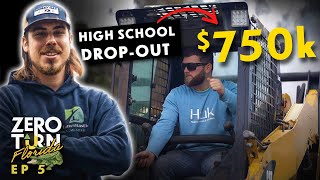
This content was created by Mike Andes. This content was uploaded by Mike Andes. This is a YouTube video titled "How to PRICE a Landscape Job | ZERO TURN" created on February 19, 2022. It features a conversation with Cole from Lawntastic, discussing his journey in the lawn care business, pricing strategies for landscaping jobs, and the growth of his company. The discussion includes insights into business management, marketing, and operational strategies in the lawn care industry.
Chapters
I was in my truck actually crying because I'm like, what the hell am I going to do? You know? I'm going to have to get rid of the company and get over it.
Hey, everybody. Welcome back to another episode of Zero Turn. Today we're down here in Florida talking with Cole from Lawntastic. Do you mind if we take a look at the estimate, kind of go over the details, hear about all the tips and tricks that he learned starting his business?
In high school, I had $50 in my bank account and I had payroll, $6,000 worth of payroll. The next day.
She was having drainage issues back here. This was all washed out from all the heavy rains we've been having.
Stick around. You're not going to want to miss this episode of Zero Train.
So we're going to have.
Maintenance is going to head out in that truck pretty easy. Just like I said, we're focusing on crepe myrtles this week. So make sure any crepe myrtles in there, you trim them, bag them.
We'Ll get that sodded if we have time and with the weather, we'll go ahead and hit the hit a mulch job over in meeting place. I'll send it over in the job description for you.
Today we're here with Cole from Lawntastic. Time with him in Winter Springs, Florida, about how he started and grew his lawn care business and growing it to where you guys at now, like 7, 750,000 last year. Wow. Well, it's great to meet you, Cole.
Nice to meet you.
Let's get going. Do you want to tell us a little bit about the story behind Lawntastic, how you guys started?
Yeah, definitely. So I actually started my company when I was 14 is when we officially started. Before that, I was cutting grass with my uncle. He went out of business like two years before, just stopped doing it. Went a different career path. And I was trying to save up for a vehicle, you know, wanted some extra change. When I was a kid, my dad helped me. I got my first account by knocking on the neighbor's door, asking them. And I started with just a push mower, weed eater, blower, and went house to house knocking on doors, slowly building it up just over the years, kept growing and growing to where we're at the point now we do about $750,000 worth of sales and we got all this stuff.
So you started like 14 years old. So obviously no car, just the neighbors. How did that affect your business, like in the beginning?
So it actually kind of helped a little bit because I was kind of like the local lawn care kid. After like a month or two of doing it, I built a little bike with a cart behind it and pulling it with signs on it. So everyone was always like seeing me, you know, saying, oh, let's go. And it also helped with route density because I had like 30 lawns within a mile radius because I could only bike a mile away. So it did kind of help build the business with that aspect. Obviously, you know, it was a little bit harder. Like we could only cut grass. I couldn't do, you know, like cleanups or anything like that because it was limited to what you could do with a bike. But it definitely help pave the way.
Coming out of high school, you already had like. Was that four years of experience growing your company? Do you think that like propelled you to launch off in the beginning?
Yeah, it definitely helped just because we had that reputation, you know, we had. I had a base, I had like 45 accounts. So when I was able to do it where I wasn't doing it on the weekends and, you know, after school and I could put my full focus in, really helped us able to grow it and get more accounts. And I also had a buddy that was same age as mine. He was starting a media company where he was doing Facebook and website and all that. So we were buddies and he was kind of like, hey, I'm starting my company. You know, I'll give you a good price to get media and all that going. So he helped with me with that. And that ended up taking off a truck really helped us grow.
You don't want to charge too much because you're trying to help people out and then you're like losing your shirt a lot.
Yep. You feel obligated to do it.
Yep.
We do a lot of like 3D designs and, you know, big, big plant designs. And when you start getting in Those, you know, 10, 15, $20,000 jobs, you can't use, you know, the same five plans.
So as you gu going into 2022, are you guys still maintenance driven or are you guys now just trying to trans, like transfer over into the landscaping side?
So we've been tossing that up a lot. Right now we're, I'd say about 60% landscaping, 40% maintenance. Obviously with landscaping, there's a way higher profit margin than maintenance, but maintenance is just that year round. Revenue in Florida, we cut all year long and they're on contracts. So every month is the same amount of money, which is nice to have that revenue just in case we have a Recession or something happens, we still have the money coming in. So we're kind of at the point where we're gonna keep it on, but we're not focused on it. We're more focused on landscaping. But we're gonna keep two, three crews. Just so that way that revenue is coming in all the time.
Nice. So is it like a solid base to keep all the bills paid and then go after the big landscaping jobs?
Yes, sir.
Sweet. So now that you guys have this shop and have expanded on what like how big is your guys service area, you still try to keep it pretty tight?
Yeah, we really only do three cities, so we keep it like a 15 mile, 10 to 15 miles. With maintenance it's down to like 8 to 10 service miles. With landscaping, we'll go, you know, 15 to 25 miles, depending on the size of the job, obviously.
Nice. So do you want to show us around your shop really quick?
The way we have it set up, this is kind of the landscaping side of it. So for example, we have the dump trailers over here. You know, we got that truck, it's broken right now, but you know, that's over there. And more of the landscaping tools and stuff over here. Over here is more of the maintenance side. This is where the maintenance trailers park. And they kind of keep their stuff over here.
Gotcha. So what do you guys do with all your tools? Like trimmers, weed whackers, like bush trimmers, stuff like that?
Definitely. So normally during the summer they're all on the trailer and we just keep a couple backups right now. Cause it's kind of, you know, we're winterized. We store it over in a separate location. And I have an area over there, an enclosed area where everything's stored so it's not out in the weather.
So when you're finding a location like this, like what was on your bucket list? What were you looking for as far as like tossing debris, storing equipment?
With this area, we were just looking for something that we could afford to park everything and just where we could, you know, have easy access. It's open in here. We're not confined to, you know, one space and where we could, you know, if we got to take the machine off or put some stuff over there, we could just toss it back there and it's not a big deal. And we also wanted something that was gated in and secured so that way we obviously don't have to worry about theft or anything like that.
Yeah. What is on your bucket list for finding that next location? What are you Trying to find.
I'm looking to go out more towards the country. We're looking for more of like 5 to 8 acres where we can build a shop that works for us. We're able to dump material and keep material on site.
Sweet. How will that affect the maintenance routes that you guys have set up? Are you guys going to change your maintenance area? Are you going to try to keep your current clients?
We've kind of been slowly transitioning because we have a general idea of where we want to go. So just it's about 5 to 10 miles away from where we currently are right now. So it's not too much, but just the customers that are, you know, kind of out of the way that, you know, are on the complete opposite side. We're kind of slowly get rid of those and build customers up in the area that we're looking to move to.
Sweet. Let's go check out this landscaping job and see what else you have in store for us. Make sure you stick around for the rest of the episode. We're gonna go over an estimate on how you actually bidded the job. Sweet. Stick around for that.
We're gonna go over an estimate, exactly how he priced it, how he puts it in his books, and exactly what you need to take into consideration when pricing these sorts of jobs. What sort of job are we doing today?
So this job, we're doing some grading. The customer had some erosion in front of one of their pool screens. So we graded out, going to be installing sod on it today. And then we also transplanted some plants from inside their pool screen where they weren't getting a lot of sun to the outside. So that way they could get sun and thrive a little bit better. Sweet.
Let's take a look at this job.
For a job like this, how, how many days are you guys on this job?
So this job is really a one full day. We did all the prep on it. Took us about half a day yesterday to do it. Then today we'll be here for another hour or so putting the saw down. This job's quoted out for one day.
So a job of this scale, you guys are grading, you're laying sod, you're relocating plants. What is the price range that could run on this job?
So this job is. It's in the 1500-2500 price range for this job.
And what's your guys ideal, like, landscaping job as you're starting to.
We like to be in the like the 7 to 12,000 price range. That's normally a job that's about three to four days, just so it's not too overwhelming for the guys. We're on there for like two, three weeks, but at the same time, we're able to get there and, you know, do some work. And we're not bouncing back and forth, moving machines and trucks and all that.
What do you guys do when you get a job that's probably outside of the services that you currently offer?
So right now we do a lot of subcontracting. I actually have a good base of guys that, you know, own different companies and do different things. And it makes it where right now in our company, we only do in house lawn maintenance, grading, sod plants and just basic cleanups. Machine work. However, we're able to offer to our customers tree trimming, irrigation, concrete work, all kinds of stuff. Just because, like I said, we got a good core of guys. So I'm able to, you know, they'll come out, give me a price, and sub the work out to them.
Do you mind if we take a look at the estimate, kind of go over the details?
So do you want to kind of show us what the process is here, Mark?
Yeah.
So.
Well, first off, we just started with new plants up front in the rock bed. We placed them out, evenly tied plants, and you got your crotons, some fresh rock. And then she was having drainage issues back here. This was all washed out from all the heavy rains we've been having. We brought in a little mini skid and dug it all out, regraded it, and brought some dirt in and flattened it all out. Got it all draining off properly now.
And we're finishing it up. But we're putting some. Some St. Augustine on top of it. And the reason we do that is because if you leave an open grade like this with the rain, it's just gonna wash back and we'll have the same issues. So we're putting this grass on top of it to help prevent that issue from happening.
What sort of information do you have to give the customer when you're laying down sod? Do you guys have a process for that? Cause I know it's not like you can just leave it and it'll just grow healthy. There's some work behind it, right?
Yeah. So we'll give. We have a little pamphlet kind of just with the basics on it. How to water it, what fertilizers we to put down, you know, kind of how to take care of it. And when we send out the final invoice, we attach that pamphlet to it. So if they have any questions, they can read through it and kind of get an idea of how to take care of it. And same with the plants, too. These plants were transplanted from inside the pool screen just so they get a little bit more sunlight on the outside. But we'll give them the information on how to take care of those plants, too.
And do you guys have. When you guys are doing planting work, you guys have a few plants that you usually choose from, or is it kind of like a bought a wide variety and the customer just kind of gets to pick what matches with their style?
It's kind of a mixture of it. We have our core, like 10, 15 plants that we use. However, we do a lot of, like 3D designs and, you know, big, big plant designs. And when you start getting in Those, you know, 10, 15, $20,000 jobs, you can't use, you know, the same five plants. It gets real based. So that's when we start to get a little bit more complex with the, with the plants. But with a basic job like this, we kind of just have our five, ten plants we use for it.
Man, everywhere we go. We can't find alligators even out here in Florida. And your customers are probably in the same boat. If you don't have a good website, check out lawn careweb design.com make sure your customers can find you. Man, where are those alligators?
So when you guys are actually pricing out jobs for the customers, what's your store breakthrough? What's your process for that?
Definitely. So when we start getting in the bigger jobs, what we do is we break each segment of the job down. So, for example, on this job, we'd give them a price for transplanting the plants based off an estimated man hour of how long that's going to take. A price to bring in the dirt and to spread it out, a price for the sod. So we break it all down into individual pieces. And then it also makes it easier if the homeowners, per se, hey, I don't want to move these plants around. You don't have to take your total number and then recalculate it all you can, you know, split it up in line items and go, okay, we'll remove that service. And then you still have your total price for it.
How like, finite do you go with it? Is it like there's going to be this many wheelbarrows, or is it kind of like there's going to be this much surface area? Yeah.
So for the most part, it goes by, like, the material and an estimated how Long it's going to take whether we know we're bringing the machine on or the guys are doing it. And it just took a lot of time overall. Like for example, with a, with this sod, it's charged by the square footage. So we have to, you know, over just doing it, you're laying hundreds of thousand square foot of sod, you kind of figure out a breakdown and get your price. It's also always changing number. You know, with fuel going up, labor going up, you always got to go through and fine tune it. So after every job, what I do is I'll take it and break down the price on it. So, you know, I'll go, okay, this is our total for the job. This is all of our expenses, man hours, you know, after insurance and all that. And we'll calculate and figure out a price on profit. And we have a set rate that we like to get per crew. So, you know, if we don't miss that quota, we'll kind of look over the quote and go, okay, well we should have charged more for sod because that price has gone up, or you know, the mulch price has gone up or it's taken a little bit longer because it's in the backyard. So we should have charged a little bit more for it.
It sounds like that review process is key to keeping up with the times and keeping your prices competitive.
Yes, it's a big thing and it took us a while to get into doing it, but once we started doing it and we're able to look down at the numbers and kind of break everything down and go, okay, we did really good on this job, you know, really bad on this job. It helped. And it also helped us get rid of some services and get into some new services. So we're able to see, for example, tree trimming. We're able to see that we're not making a lot of money on it. It's something we used to offer. So then we got rid of that services and started subbing it out. But then we started getting into more machine work and grading and all that.
What is the process for when you guys get to a job? Do you do project management videos? Are you showing up to the job and walk them through it? Or is that kind of something you go over with your foreman beforehand?
Yeah, so when we first start a job, they have a job description. So they have a big list with everything on it that needs to get done. And it's broken down to like day one, you need to do this. Day two, you know, this Is what we're focusing, focusing on. And then they always get a site map. So what that is is just a map with, you know, if we're doing plants, where the plants are placed, how much mulch is going in that area of kind of a breakdown of everything. Then once we first start a job, I'll come to the job with my foreman and we'll go over all the details. They'll ask me any little questions, and then from that they're able to get started on it. And then I'll come back and forth, you know, depending on the job, how many questions they have. We like to do it like once a morning. Occasionally, you know, I have to come out twice a day if they have a question or something, or they just give me a phone call and hey, you know, we're putting this here. Where do we want it? And go from there.
Is that all in yardbook, or is there other services that you're using?
Yeah. So right now with yardbook, we're able to do the estimates and the invoicing for it and also store the client's information, collect payment through it. The designs is a separate software. And then as far as with the guys schedule, I just write that all out on a word document and send it over to them.
Gotcha. So when you are building the guys schedule, what are you trying to take into consideration? Like, how many man hours for each job or just kind of like where you're feeling like they need to be that day?
Yeah, so I kind of, when we do it, we break it down based on how many guys and what they're able to get done for the day. So I kind of set them a goal of, hey, you know, we need to lay 20 yards of mulch today. You got three guys to do it, and kind of give them a base, like, hey, we need to get this done in eight hours. And then that kind of gives them a goal to reach by the end of the day for it.
You had mentioned larger jobs as well, 3D modeling. How often are you guys doing that? Is there a different process that goes in as it reaches those bigger and bigger markers?
So they're starting to come more frequent in our company, I'd say over the last year and two, we've really kind of worked into that with getting a machine and some bigger pieces of equipment. It's really helped to get into it as far as the process for that. We always start out by going to the homeowner's property and meeting with them, discussing and kind of talking over all the details. When I go out there, I'll take notes, you know, ask some questions, give them suggestions until we kind of get a base idea of what they want. After that, we'll go back and we'll draw them up a design. We'll take their survey of their property, implement it into our system, and start designing it. Then it really becomes a process for going back and forth with the homeowner till they get the design exactly how they like. So, you know, we've had times where that'll take. We send the homeowner a design, they're happy with it, we're good to go. Other times, it'll be weeks of, hey, move this here, move that there. Just depending on the homeowner. Then once they give us that confirmation, we'll take the design, go back to the property, recalculate for everything that's on that design, and then based off those measurements, send them a final estimate with the price for everything.
So just out of high school, you start with your buddy for the logo website. What did he help you out with?
Yeah, so he kind of really dived into Facebook and the ad side of it. He did help. We, like, redid the logo and a couple other things like the shirts and all that. But he really helped with the Facebook and then website. We started this year. Started getting to that side of it too.
Nice. Yeah, I saw you guys had that amazing header video. How is that, like, putting a lot of focus into the social media and then also into the website and redoing the logo? Have you noticed that, like, shift from the kid pulling the mower on his bike to actually professional company?
Yeah, it definitely was a big transaction because when I first got it started, or when I first started, obviously when you were younger, it was just flyers and word of mouth. Then we started transitioning to the more digital side of advertisement, which in my personal opinions, you know, far more get better results for it. So definitely kind of transitioned us into, like, okay, we're, you know, legit. This is what we do. And kind of made that transition.
Yeah. How do you guys figure out your, like, what your marketing budget is?
So it really depends on the time of year. Like this time of year, we kind of just focus solely on landscaping because the grass doesn't really grow around here. So, like, right now it's just landscaping and trying to keep us busy during the winter. As soon as springtime hits, we're transitioning to full blown lawn maintenance until we fill our routes out to where we can't take any more on which Is normally like a month or two. Then after that during the summer, it kind of gets cut off just enough so that way people see us but nothing crazy. Then right before the holiday rush, then we really start picking it back up and focusing on it. So we get busy, you know, booked out during the winter.
Nice. And are you guys doing primarily like Facebook ads? Are you guys doing Google leads? Instagram?
So before it was Facebook ads. Right now we're splitting it about 50, 50 between Facebook and the website, kind of seeing which one performs better. And then because like I said, we just got the website about six months ago, so it's still kind of new. So we're choosing which one's going to do better and spend the money on.
Kind of trial and error.
Yeah.
I'm Trenton. Trenton hood. When I first moved out here, I worked for a bigger company and you know, it's kind of like being like a number, you know what I mean, in the system. So this is definitely better, you know, close knit kind of family deal, you know what I mean? You laugh with your co workers, you have fun working. That's always good. You know, you find a company where you enjoy your work and then the day goes by quicker. When I started here, I was maintenance. I've been doing maintenance for like three years. One of the foremen actually lives in my neighborhood and he was driving by and he saw me walking to work. So yeah, it was just a random chance, but yeah, I was a maintenance guy and now I'm learning how to use the skid steer and stuff because I was like, I guess more naturally inclined with it.
Do you have some long term goals as far as like what you want to do with landscaping?
Well, for me personally, I like coming to a house and making it look nice and stuff like that. And maybe for 2020 I plan on being like a crew leader and leading my own crew and you know, maybe trying to find some new hires because it is hard to find people. Yeah, that's the biggest thing for me. I think this year it's all about progress in the company and making more money for the boss man.
What would you say to somebody that's like looking for a good lawn care job and is looking for a solid place to work? Like, what's your pitch for lawntastic? Why should they, Jo, that cares about.
You, that's the main thing. Like you need a day off, you're sick or whatever. It's more like a benefits kind of thing. Like he definitely does take care of you. It's a smaller company. So you're not just a number in the system. You know, he knows your name and he knows, like every day what you do and stuff like that. So it's. You feel more involved, you know what I mean? Rather than a bigger company where you're just placed in a crew and you're working and you never even meet the owner or whatever, you know what I mean? It's just. It's a whole different feeling of, you know, working in a smaller company. Feels like everybody cares about you, you know what I mean?
Didn't see you there. MI might be a mess, but your business doesn't have to be. Clean up your books with lawncarebookkeeper.com. what was I doing over here? Oh, yeah, that's right. That's right.
Like, thinking back, when was it the biggest struggle for you?
So the biggest struggle with me was one growing too fast as soon as I got out of high school. I know when we talked earlier about getting my first employee and all that, I didn't really know how to manage a company, per se. I could do the work, you know, I could get the customers and all that. So for a while, we were really kind of like stuck in the half a million dollar mark. I didn't know my numbers. I didn't at the time, didn't think that was an important. I was sitting out way too many guys and had too many employees and wasn't managing things properly. A lot of wasted money. And it actually caused us to go to the point where we were pretty much the company went bankrupt. I had. There was one day in 2020, or in 2020, I had $50 in my bank account and I had payroll, $6,000 worth of payroll the next day. And actually my parents helped me out with it. I was in my truck actually crying because I'm like, what the hell am I going to do? You know, I'm gonna have to get rid of the company and get over it. And my father, he runs his own nurse practitioner business. And at the time, he had kind of just let me do my own thing. But he kind of saw me and we sat down and we talked, and he's like, listen, I'll loan you the money. We made an agreement for it. It's like, I'll help get your business going, but when we do this, you need to run it my way. I'm going to teach you, you know, how to do books, how to manage employees, how you're not wasting materials, time and all that. So really after that, we kind of just over the next Six months went through the company and completely redid it. We got new equipment, got rid of some guys, really started working, fine tuning the processes and going over the numbers like we were sending out at. Sometimes we'd have five guys, six guys, you know, cutting 20 accounts, you know, we weren't making money. But at the time, when you're, you know, 17, 18, oh, all my buddies, let's jump in, let's go make money. So I really, like I said, that kind of was a huge learning curve. And after that and after figuring all those processes and, you know, the numbers and all that, we're able to just do it slowly. Steady growth and not, you know, kind of take on too much at once.
I feel like a lot of landscapers have had that point in time where they're struggling to make payroll and the builds are stacking up. And then you see there's it's a make or break sort of moment. Yeah, yeah, that, that's fantastic that your father was able to get in there and help you out. And it sounds like you're able to turn just like the entire business around.
Yeah, it took a lot of work, a lot of late nights, but over a process of like six to eight months, we're able to flip it around and kind of, you know, fine tune everything to where we can make money on it and make a company that the guys can work at and have a future.
We're going into 2022. What is the goals for Lantastic? Where do you see the company going as far as this next year and then beyond?
So the goal for this year is to get our own location. As far as achieving that goal, we're just looking for a property that fits our budget in an area that we're looking for. And then we're looking to hit the.
$1 million mark. We've been kind of sitting at the 600 to $700,000 mark. And in order to achieve that, we're going to get a full time office manager to help help on my end of being able to maintain, you know, keep customers happy and all that during the summer. Then we're also going to put a third maintenance crew on the road. So that way that'll bring in the additional revenue to get us over that mark. And then going into the future, really, the sky's the limit. I want to grow the company to where it's able to sustain itself, where if I go away for three, four months, you know, everything will be able to run smoothly. Or if I wanted to start another business or Something like that, we can go.
So if somebody wants to get in contact with Lawntastic either to work for you guys, to get work done by you guys, where can they find you?
Yeah, so you can check out our Facebook at Launtastic Landscaping, or we have a website@launtastic landscaping.com where you can get our contact information and reach out to us. Whether you're a customer looking to get some work done by us or someone looking for a job. Sweet.
Check them out. Flawntastic.
If somebody's just getting started and they're looking to maybe make that same leap you did to become more professional, to get their books in check, what is a few things you'd say to them to help them along their journey?
A couple of things. One, I would not be afraid to ask help. Everyone's, you know, no one knows everything. So, you know, find local guys in your company that are doing it and that it have successful business. Reach out to them, you know, see how they're doing it. Kind of get your feet wet and, you know, figure out what works best for you and how you can be productive and make money and then just go out there and put yourself out there. A lot of people I know that, you know, want to start business and all that, they're scared to go out there and get started, you know, take that next leap. Sometimes you just got to have a leap of faith and go for it. You know, dive in with a good plan and just work it and see what happens. Everyone fails at times, and. And it's a matter of if you're going to quit with that failure or take it as a learning curve and learn from it and, you know, take yourself to the next step with it.
Well, man, Cole, it was great having you on the show.
No problem.
I appreciate it with you. Lawntastic. The best. And if you guys want to be on a future episode of Zero Turn, fill out the link in the description or go to mikeandys.com signup and you could be next on Zero Turn.









