How to Start a Lawn Care Business w/ a $100K Budget!
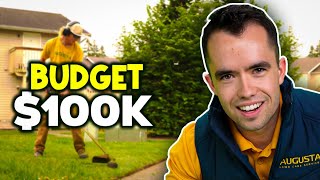
Mike Andes walks through how to spend $100K to $200K starting a landscaping business. His first move: buy existing customer accounts from other companies. He warns that capital can create inefficiencies if you're not careful about how you deploy it.
Chapters
Hey everyone, it's Mike Andes and you're listening to Landscape Business course podcast you might be watching on Facebook or on YouTube. But a big thank you to everyone that is joining the course engaged on Facebook, asking questions, things like that. It's been an absolute blast. So much fun, really engaging with all of you, whether it be on social media or via email on the podcast Course numbers. Thank you so much. And if you haven't already followed the Facebook page landscape business course, check it out. I'm going to be interacting there a lot more, especially over the winter, but even the past couple days asking more questions, answering more questions and posting video content there. Course members, I know a lot of you really responded well to the videos we did a couple weeks ago with our team meeting that I posted there, as well as the tour of the entire both our shops. So a lot of you enjoyed that. And we're going to be putting up, we're working on a couple more videos right now. Stuff that we can't really share on YouTube and Facebook necessarily, but we can share on the course. So keep your eyes open for that. We're going to be walking you through one of our big landscaping projects and then walking you through the estimate, the itemized estimate, exactly what the costs were and everything like that, and then how we translate that to the invoice and doing work, change orders and all of that. We're working on that one and then we're working on some other one. I'm forgetting what it is right now, but there's another video where working just with the course numbers on. So keep your eyes open on the recently added videos section. So today we're gonna be answering a question from a recent new member of landscape business course that wrote in a question. It's very different. I have never had this question before and so I'm interested to see the response. This might not be for everyone. This isn't probably a very and I know it's not a common question, but I wanted to answer it and I wanted to hopefully give someone value that might be thinking the same thing as far as something I've said in the past. So Derek is a new member of the podcast and new member of the course. Sorry. And he wrote in a question that's really different. And basically what happened is he's 23 years old, he's starting his landscaping company and when he was 18 he got in an accident and because of that he's got a bunch of money, money to start his business. So a lot of what I talk about Here is growing your business slowly. It's about investing the money back in the company in order for it to grow. And Derek's question was really revolving around, how do you grow and how can you scale quickly if you do have a bunch of money to kind of use? So the reason he asked this question is because I've said before.
I'll say something, and then I'll say, well, obviously, if you had $200,000 in cash, this would you do this differently? And so he was wondering, what would you. You do differently if you had the money not to burn, but to use for the growth of your business? And not just doing it kind of evergreen, slow, investing the capital back in the profit back in the business and growing slowly organically. And so he was asking, well, what would you do differently? So I want to come up with those four points of what I would do in order, as far as, if I had a bunch of money, 100 grand, 200 grand, what would I do if I had a whole bunch of money to grow the company? How do I do it differently? I'm gonna talk about that. And then, number two, I'm gonna really push you all as we go into fall. So today is the day for Labor Day, and we are going into Labor Day. And I find so many landscaping business owners hit Labor Day until, like, the end of the year. Everything, everyone's just on cruise control and just kind of coasting through the rest of the year. I really encourage you to realize that you got three, four months of prime opportunity to grow your business and to really scale it up. So we're gonna talk about that, too, in just a second. So first off, excuse me. Let's get to Derek's question. Derek is talking about, how can we grow your business with money if you have it instead of just growing organically? So four different points in order. This is what I would do. Again, this isn't perfect, but this is what I would do with knowing what I know now, what I would do if I was given a whole bunch of money and was said to go start my landscaping business, this is what I would do. So.
First of all, the number one thing most people do when they get a bunch of money with our landscaping business is they go out and buy a bunch of trucks and a bunch of equipment. So notice where that falls in. Into the equation here. So, number one, the first thing I would do, the first thing really, that having money allows you to do, is to cut time out of the equation. So it allows you to get to higher revenue point Faster. And a lot of times, sometimes when people do that, they create inefficiencies within the business that down the road it would have actually been better if they grow slowly or they grow organically. So keep that in mind. But if it's done correctly, money can really be the catalyst, which in a catalyst, in a chemical reaction is what allows that chemical reaction to go faster. And so money and extra capital can be the catalyst for your business to get to a higher growth rate and to a higher revenue amount faster. That's all it is. It doesn't mean that you're going to make a better business. It just is a catalyst that makes your business growth go faster. It allows you to do that. What would I do? Number one, this is the most controversial one, but I believe in it, and that is buy accounts. This is, this is where it gets a little dicey, is for a beginner to go buy accounts is a little bit risky because you don't know exactly what the value of those accounts are and things like that. So whether it be you hire someone else to look at the deal, like, by all means, Derek sent me. If you're gonna go buy account, send me the deal. I'll take a look at it and see if it makes sense. But like, I would go buy accounts. The reason is because there's so many people in our industry that are trying to get rid of their accounts. Cause they are retiring. Got a real job, tried the entrepreneur thing for a while, liked it at first. Now they're super busy not making any money. And now they're gonna go back to a nine to five. And they figure, well, hey, if I can make 10 grand, sell off my 40, 50 accounts, that's all they want. And so the reason that people would be debating about that is, number one, you didn't sell the accounts. So there's a transition phase, which I can make a whole other video on buying accounts. And maybe we should do that. But.
The big thing is that you're able to get instant revenue, like instant amount of recurring revenue. So I would be buying lawn care routes. I would be buying lawn care accounts. So usually we would spend $100 to $400 per lawn care account, depending on what their profitability is. So we know that number. We can get really precise as far as, okay, if they're charging $40 for this lawn, that's either a really good number or a really bad number. And if it's a bad number, we're not going to give them very much for that account simply because we Know the chance of that person leaving when we raise their price is going to be substantial. So again, beginners buying lawn care accounts doesn't make a whole lot of sense to a lot of people because you don't know the value of these clients. However, you can look at the P and L for that company. You can ask yourself, okay, if I raise the price by 25% on all these clients and get them up to where I need them to be to make them more profitable, how many of these people am I going to lose? Am I going to lose half of them? Well, maybe half of them is worth still spending the money to buy the accounts. So if you can get lawn care accounts for a hundred bucks a piece that are closed and on a recurring schedule and basically have a good transition, make sure the owner transitions the, the clients, and that's part of the sales agreement, is that they transition them into your system, into your business and introduce you. If you make that all part of the process, even if you keep 50% of them at 100 bucks a pop, if they're good paying clients or they're bad paying clients, and then you raise the prices and keep 50% of them, that's a fantastic way to do it. What we usually do when we buy accounts, we've only done it three times now. 1, 2, 3, 3 times. We had kept the clients for a long period of time, usually a year or two, and then we raised the prices. And so typically the lowest performing clients of ours are the ones that we have bought. However, after a year or two, creating rapport, creating, hey, we're running our company better. There's better systems. We accept credit cards online, they have their customer portal online, they get emailed invoices instead of printed, they get a track record of all their payments, like all the extra benefits. We have employees that show up on time, that are uniformed, and we have an office staff that they can talk to and a store they can walk into. Those are value, value, value. And after a year or two, when you raise their price, they're okay with it. And so that's the number one thing I would do. And I know that's controversial, but you have a bunch of money and if you can spend 10, 20 grand and get 50, 60, 70 accounts and fill a full time person's schedule already, that's, that's again a catalyst, something that would usually take a year or two, you can get done just like that because you have the money. So again, you want to look at the profitability, see what those accounts are Actually worth what the price you would actually need to raise everyone's prices to, to get them to be profitable. Very important. So Derek, listen to questions, listen to videos on the course, figure out pricing and then try the best you can, being a beginner, not knowing everything about it. But use that pricing grid that we share in the course and see how that translates to the accounts you'd be buying. But look on Craigslist, look around your area and almost five to six times a year I find a company around our area that is a one or two person operation and they're trying to sell out and they're selling on pennies for the dollar because they haven't created a business, they've created a job. But they do have accounts, they do have contacts. So we bought a couple years ago, we wanted to get in a new market, so we bought a company there and then another small, little, little lawn care business. A part time guy we bought in our market that was closer to our original location, but we wanted to get into our. No, break into our new demographic for our second shop. So we bought a small company down there. He just had a couple employees and was trying to get out and the business was worth nothing because without him it was, it was zero. And he wanted to get out and he needed to get a solid job because of medical, medical issues. And so we were able to buy for $18,000. We bought, I think it was about 70 clients. 70, 80 clients. And we probably have 40 or 50 of them still with us two years later. And now they're all brought up to our pricing level. And so we probably made off of that $18,000 purchase, we've probably made three, $400,000 in gross revenue. So at least that actually. And so, you know, they can be really good, it can be really bad. I get there's a risk, but when you have the money, it's a good, great way to kick start the business, start being able to really penetrate within your industry or within your market. So number one, buy accounts. Number two is hire a very competent number two. So number two is to hire a very competent number two. So that number two person is gonna be the person you're gonna groom into leadership, gonna groom into a project manager, gonna groom into a team leader. And so someone that either has experience or just someone that you trust a lot, that you can afford to pay them 20 bucks an hour instead of just starting a labor off at 12 that. So typically when someone's looking for their first hire, they're looking for someone in their Truck that just mows with them, kind of just follows them everywhere and helps them and they're gonna pay them 12, 15 bucks an hour. Well, if you can hire a really competent person right from the get go, because you have the money. Again, because you have the money, you can hire someone for 20 bucks an hour and expect them to project manage or to drive the truck themselves and do lawn care themself while you go and sell more jobs. So right from the get go, you can almost be out of the field. So again, you have the money. So number two is to hire a very confident number two. Number three is marketing. So you do have money to go out and market. Do it every door, direct mail. Focus on the very tight area around your demographic and just penetrate them like crazy. Again, you have the money, so you can do eddm. You can do Facebook marketing with that radius around your shop or your area and really penetrate everyone 50 years old and above, target them a lot. You can do newspaper in your small area. If again, if the demographic's small enough, you can use all the different ways that people are seeing. And so before you know it, you might be one or two years old in your business and people are starting to say, oh, I see you everywhere. Well, no, it's because you have enough money to go spend on Facebook and spend on print and spend on eddm, like all those areas and they start seeing you everywhere. And so that's when you start developing your brand very quickly again, because you have money. Lastly, number four is I'd buy trucks and equipment. So I'd buy trucks and equipment and develop a facility like a shop last. So a lot of people do that first because it's cool and they like the new equipment and they see it all over Instagram and Facebook and YouTube about new equipment and the newest and brightest zero turns and like that's cool and fine. It does not make you money. The first three things that I just mentioned will make you more money. Top line revenue. The fourth thing is a cost. Okay? So you have to keep this in mind. Buying new trucks and equipment will not grow the value of your business. It will not make your top line revenue grow anymore. It makes you more efficient. It might get you into new sectors of work, but without getting the work, without getting the right people in your team, without the marketing, without buying those accounts, like you're not going to get accounts to mow if you don't. You're not gonna get counsel mowed just by buying a new mower. So don't go out and buy $50,000 worth of a trailer, equipment and a $30,000 truck because you have the money. Don't spend it on that. Spend that 80 grand on a whole bunch of other stuff before you go buy out new stuff. Like if you have 80 grand, I would spend 20 of that on equipment in a truck and the other 60 on marketing, hiring someone else and buying some accounts. Like literally for 80 grand you could really jump start your business and skip 24 months of growing a business, developing accounts, hiring that first person. Like you would skip a lot of that just by having the money. So those are the four things from top to bottom. Number one, buy accounts. Number two, hire competent. Number two, hire first person. Number three, marketing. Number four, then focus on trucks and equipment. So hopefully that helps you. Derek, let me know if you're going to buy accounts. I'd love to see the deal and help you determining the value of those deals. A lot of times when people put stuff on Craigslist, by the way, when they're buying accounts, when they're trying to sell accounts, they put their price like it's a dream. And they'll put 150 grand and literally they'll take 20, 30 grand. I just know this from experience. And the reason for that is because they're just kind of crossing their fingers, hoping a sucker comes along and wants to buy their business. And a lot of times most people are competent enough to realize that they're just buying a job and they don't. They're, there's no value in the business besides equipment and accounts. And so when you strip away the equipment, say hey, I don't want the equipment, all there's left is the accounts because that's all that's valuable. And they don't have employees to give you. They don't have systems or procedures to give you. And so you can really get pennies on the dollar based upon their asking price. If they're asking 150 grand, there's a very good chance you get all their accounts for like 20 grand because they built all the value in the equipment. So ask them for a breakdown of the asking price and you'll see a bunch of it in equipment. And then you say, okay, cool, if you don't want, this is how I approach it. Like, hey, if you're not able to sell the business, we don't want the equipment, but we buy the accounts part of this company. And so then they can go figure out how to sell it on Craigslist. And you can even say, hey, look, if you Sell all your equipment on Craigslist separately. You're gonna make more money, and then just sell me the accounts. So that's kind of how I would do it. All right, last thing before we wrap this up. Sorry, this is getting a little bit long, but we're heading into fall Labor Day tomorrow. Don't go into cruise control. It's only September 1st. Like, you got September, October, November, December. You got a third of the year ahead of you. And a good solid three months of that for most markets is still really, really busy. You can still grow your business. Okay, so don't coast. Don't just kind of like this would be pedal the metal, really. Growth and expansion time. You know, we have that spring rush, but we also have a fall rush. Okay? So the next four to eight weeks, most, of course, members, I talk about this, the fall rush. Like, you got leaf cleanups and fall cleanups and a bunch of now mowing customers. Because now the grass is starting to grow after the dormant season. So you can really capitalize on this because most landscaping companies market in the spring. They don't focus on that fall rush as much. So you can really capitalize on this time and. And grow. So, like, I'm putting my money where my mouth is. We're hiring more people right now. We just hired two more people last week, Brad and Wesley. Last week we hired them. And in the back of my mind, I'm like, how am I going to keep all these people busy for all of winter? Well, guess what? The money we make in this fall rush, we're going to use the marketing to make sure we keep them busy on tree work and snow plowing and artificial turf throughout the winter when there's not any grass growing and people aren't calling to have paver patios installed. So I promise you, it pays big dividends if you can find people now when no one else is. No other landscapers are doing this in your industry, in your market. Usually they're not going out and trying to find more people this time of year. They focus on the spring. So go out and find them now. And if you're in the dormant season, still go staff up if you have the money. If you have most landscapers this time of year, September, October, November, this is when we have a bunch of money because we start people starting to pay up for the whole year. Big projects have come in. We've been really efficient with mowing over the summer. So, like, this is when most landscapers have a bunch of money, and this is when most landscapers go spend it on a mower and all the other junk. Don't focus on marketing, focusing on hiring other people that are unsatisfied with their current landscaping company they're working with. So both the people we just hired, one was a roofer, unsatisfied with his management, unsatisfied with the fact that he had to drive two hours to work. Other guy is a crew lead for a landscaping company, a competitor of ours that does commercial maintenance only. And they are basically in a race to the bottom as far as price. And so the amount people he's working with are. He doesn't like working with them and the management isn't great. So he's wanting to come work for us. And we were able to get him because we're growing in the fall when most other companies are kind of just cruising. So do not cruise for the rest of the year. Don't coast. Don't figure. Oh, well, it's basically the end of the year. It's basically the end of the growing season. You know, I've done good. I got money in the bank. Time to take a big vacation. This is the long weekend of Labor Day. And after that, it's just like, you know, we're just going to kind of coast the rest of the year. And before we know, it's going to be January. No, before you know it's going to be January. Yeah. And you're going to be wondering, why didn't I capitalize on all that? September, October, November. Why didn't I capitalize on fall cleanups? Why didn't I capitalize on finding new people for the spring? And, and so I promise you, this is a time for you to really, really focus and dig in. Most people are going to go sleep on you. Your competitors are sleeping right now. They're coasting. This is the time to go pedal in the metal. So if you have any questions, email me landscapebusinesscoursemail.com check out the course. Landscapebusinesscourse.com I can't wait for the winter for one reason. Not because I don't like the winter, simply because obviously it gets slower. In our industry, we don't do a lot of snowpl in our area. A little bit, but not much. There's one reason. Number one, the conference, we're going to be Landscape Summit. Landscape Summit 2019 is going to be absolute gold. Check it out. Landscapebusinesscourse.com conference. I'm looking forward to that, number one. And number two, I'm looking forward to adding more content for the members behind the scenes things that I can't necessarily show publicly, numbers and our estimating all that. We have a bunch of stuff we have written down that we're going to to be getting to this winter. So you want to join now? Landscapebusinesscourse.com I'll see you there. Until next time guys. I'm Mike, Andy's Landscape Business course. We will have another episode probably next few days. It's gonna be good. So take notice and keep those ears listening, those eyes watching. Thanks so much. Mike Yandes LansingCourse.com.









