I decided to freeze wages… here’s what happened 😨
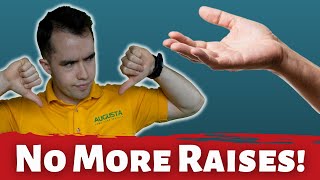
Mike Andes froze base wages for his field workers and switched to pay-for-performance instead. Average hourly wages still jumped from $18.50 to nearly $24, profit margins quadrupled, and he cut his own hours from 60-70 per week to less than one. The system included bonuses, health benefits, and profit sharing that paid over $1,000 per employee per quarter.
Questions this video answers
February 13, 2022
About $18.50 per hour
Almost $24 per hour
Eclipsed $1,000 per employee per quarter
More than quadrupled
Chapters
Hey everyone, it's Mike Handys here. And the title is not clickbait. I have not given a raise to any of the field workers at my original business over the past three to four years. Not a single one. And the base pay has not changed at all. And for some people, when they saw that title immediately, they've already clicked the dislike button. But let me also add this one quick caveat before you do that, and that is in that same period of time, the hourly wage that went to the employees, the average went up over 30% and that does not include paid time off being added, as well as health benefits, say. Well, how is that possible? Several years ago, I was in a place where we are growing our business very quickly. It was by most measures successful and we were doing well over a million dollars in revenue. And it came to a point when it was so stressful because I wasn't making a lot of profit. I was working 60 to 70 hours in the business and I was having employees asking me for raises. And honestly, they needed raises. They need more money. And they had been the people who had been with me for years and they were great employees. It's not like they did not deserve the raise. I wanted to give them the raise. They deserved the raise. They were hard workers, but in the day, the business could not afford it. And at the end of the day, if there's no money, you can't give a raise to an employee. So what happened? Well, Cain pushed a shove. I said, look, I know for a fact that there are people in this company that earn us substantially more than other individuals and yet they're only getting 2, $3 more per hour and yet they probably earn the business from a profit standpoint, twice as much as other employees. How is that fair? How is it fair that someone potentially either A has worked there a long time, kicks butt and super profitable and yet they only make a couple dollars more per hour than someone else that is lazy, entitled, just shows up to work, perhaps brand new, has no skills. Or the second option is the complete opposite, which is how is it fair that someone who's hungry wants to work hard, they're 19, 20 years old, hungry and just worker and getting tons done for the company and super efficient and thinking ahead on the job site. How is it fair that they make less than the person that's been there for three or four years, but they make the person that's been there for a few years makes more money but actually works slower, doesn't make the company as much money in profit how is that fair as well? Why isn't it that every single labor based job, when the harder you work and the more money you make for the business, the more money you make as an employee. And so this realization hit me three or four years ago when it came to crunch when I was like, my business is not making profit and I have employees that are great and they need more money and they're asking for raises and there is no money to give. That's when we implemented something called P for P or pay for performance. And basically it was a matter of like, look, the more money you make for the business, the more money you make in your paycheck. It's that simple. And then we have the quality controls to make sure that they can't just go through jobs and mess them up because they're going so fast. So there's definitely quality controls. But the fact of the matter is that several years ago the average wage, the average wage in the company was about $18.50. We did not have health benefits. We, we didn't have profit sharing and we didn't have paid time off of two weeks every single year. And this is for frontline staff, frontline staff, entry level, pushing a lawnmower, spreading mulch. Nothing super complicated. Fast forward now to today. We look back at the past year, 2021, and the average, the average wage was almost $24 per hour. And that doesn't include profit sharing, which eclipsed $1,000 per employee per quarter, as well as us now implementing health benefits as well as two weeks of paid vacation time. That is not, that's not sick time, that's vacation time that they can cash in or they can actually use when they go on vacation. So how is that all possible? Like, where did all that money come from? We didn't grow hardly at all in this period of time. We literally grew the business by maybe 10 or 15%. But our profit margins more than quadrupled in that span of time. The amount of distributions that I took home more than 5x while at the same time, instead of working 60 hours, 70 hours a week in the business, I was now coming to the business for less than one hour per week. I wasn't doing any of the hiring, I was doing none of the firing, none of the management. That was all being done by someone else. How did that happen? And that is we created, we did a hard, we, we did the hard work. It's not easy to switch from hourly to pay for performance. And I don't make that insinuation we went through a lot of hard times, and unfortunately, a lot of those people that I'd given raises to, the ones that had been around for a long time, they ended up leaving. And the reason for that was because they were not being as productive as their hourly rate had inferred. There, in fact, were young, hungry employees that were willing to work hard, be efficient, come early, figure things out, watch YouTube videos on how to be more efficient when they're at home, and they're the ones who succeeded, they're the ones who won. And yes, we lost 15, 20% of our labor force, but guess what? We didn't have to hire any more people because the existing, the remaining employees rose to the occasion, became so much more efficient, and we're able to absorb all of that work into their schedule and thereby make more money. See, when the employee is more efficient, it does two things. One, it gives the business more money to be able to pay higher wages. And two, the most important thing is it changes their mindset. And it changes their mindset from one of how can I SAP the clock, take the most time out of my day in order to make as much money as I can on an hourly wage? And it switches their mindset to how do I reduce waste? How do I be more efficient? How do I do this job in the least amount of time? How do I cut out unnecessary trips or stops in my day and cut out the waste? That mindset is extremely valuable to them, regardless of what they do in the future in their career, whether they become a manager, whether they go into production, where they go into manufacturing, whatever their next stage of their career is. P4P sets them up for that. Because the mindset of a P4P employee is far very fast, more efficient, vastly more productive, and more profitable to any business that would hire them in the future, thereby making them much more valuable than an hourly employee that cannot get past the fact that they're not going to do anything harder than they want to. They're not going to work harder, they're not going to push themselves, they're not going to come up with creative strategies to get things done sooner or faster. But why should they? They're not compensated to. They're compensated. The longer job takes, the more money they make. So why not? Why would I work any harder and come up with creative ways to make it done, get the job done quicker? So at the end of the day, we lost some of our best employees, the ones that have been around with us for a long time, the ones that had families that I'd given raises to at the time I was paying, they were the highest paid 23, $24 an hour. And now that's literally the average wage because of pay for performance. And some people would say, well, you're doing that because you want to retain the employees. Honestly, I'll be perfectly honest with you. And the amount of time that we've kept people on has actually gone down. Say, well, how is that possible? Well, typically in a labor based business, you're going to have 2/3 of your employees are going to work for a little bit of time. It's going to be a part time thing or like a seasonal, and then they're gone. The other third, they're going to stay with you for a long, long time. Four or five, six, 10 years. The thing is, in my business, when they change their mindset to P4P, our goal is that within three years they either move up in the organization into a management role or they go do something else. I don't want them pushing a lawnmower for the rest of their life. I don't want them spreading molten trimming bushes for the rest of their life. I want them to get the skills necessary using P4P, pay for performance, that mindset shift, and then using the skills we share in profit sharing as well as open book management where they learn the numbers, they learn about marketing, learn about business and go do something else. Go get to the next stage of your career. But having that mindset and actually really believing it and then putting your money where your mouth is means that some of your best employees might get a job someplace else. Some of my best employees have now actually become franchisees at Augusta Lawn Care through what we call a 3F program where after they work for two years, they don't have to pay a franchise fee and several of them actually gone and started their own location. So what does that mean? That means that we're literally taking the best people in the organization every single year and clearing them off the top because they're moving ahead either in another position in the company or starting their own business or potentially getting a job elsewhere. But at the end of the day, this changes the culture of the business because now new applicants, new employees see that this is not a dead end job. There's opportunity to move ahead within the company and the skills gained from working there are going to set them up for success in the future. I truly believe this is the way of the future when it comes to hiring. Not about the base pay, but what's the opportunity that can have with this company to make more money in the short term on P4P and then also get skills required to change my mind. Get educated on business, money, finance, efficiencies, how to be lean. Those are going to set up your employees far better than a dollar or two, raise an extra 50 cents per hour. And more importantly, it's going to allow you, the business owner, to have the flexibility to actually spend time investing in your employees, building the business. Because now your profit margins will be much, much larger. I'm Mike Andes, the founder of Augusta Lawn Care and that system we implemented several years ago. We've been working on software and now as of just recently, we've launched P4Psoftware.com and you can go there actually and watch all the training for free. P4psoftware.com training. The link is in the description. I also wrote a book about it and it's like literally $18 on Amazon. So check it out. It's on Audible, it's in print. Go to the training at p4psoftware.com/training. And I really do believe this will change your business. It did for me, and I truly believe it will do it for all sorts of labor industries. Landscapers, lawn care professionals, pool pressure washing, roofing, all sorts of contractors, plumbers, electricians, fencing, decks, whatever type of labor industry you're in. This will absolutely change your business. And you too will not have to have the awkward conversation of will you give me more money? And then you gotta explain why they actually don't deserve it. Or whether you start giving money to people because you think they need it, not because they earned it. As a very slippery slope to an unprofitable business and a culture of entitlement and unproductivity. I hope that was helpful and we'll see you tomorrow.









