I Doubled the Rents on This Duplex (& Sold it for $841K)
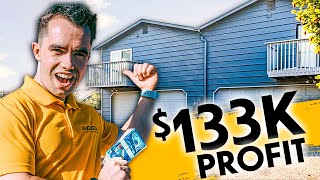
Mike Andes describes buying a dilapidated duplex in Bellingham, WA for $617,000, investing roughly $50,000 in cosmetic improvements, raising combined monthly rents from about $2,750 to $5,000, and selling the property after a multiple-offer bidding process for $841,000. He reports an approximate $133,000 profit after fees, financed originally with a roughly $450,000 loan, and plans to roll proceeds tax-efficiently into a headquarters purchase via a 1031 exchange. The video also explains listing/negotiation tactics (pricing to create competition, escalation clauses) and situates this sale in a broader strategy to shift from small duplexes to larger multi-unit properties.
Questions this video answers
$617,000
Approximately $50,000
Before: about $2,700–$2,750 combined; After: about $5,000 combined
Listing: $799,000; Final sale: $841,000
About $450,000
Chapters
Today I'm going to be sharing with you how I took this dilapidated duplex in Bellingham, Washington, and within a couple years made more than $100,000 in straight profit. And I'm taking that money tax free and using it to grow my business. As most of you know, my first love is business. However, stocks and real estate is something that I have used to invest the profits from my businesses and allow it to grow and then take that money and even allow it to expand the businesses even more. And that's exactly what I've been doing. Over the past couple years, I've acquired more than 20 rental properties across Whatcom county in Washington State. And, and I'm now actually selling a good chunk of those in order to be able to afford our headquarters. Now, there's been someone in the comments saying that I am a sham and all my businesses are failing because the bank won't give us the loan for the headquarters. But for those of you that are actually wanting to learn about business and things like loans and the sba, the Small Business Administration, here's why. And that is because they have recently changed their building requirements when it comes to new construction for projects that they fund. And 80% of the building has to be occupied by the entity that is signing on the loan. However, the problem is I'm going to have four entities that are occupying that building, and the largest piece of the building's gonna be owned by the franchise that only has a couple years of tax returns and they're all like breakeven or losses because we've been growing so fast. So the alternative is that we go out and get a commercial loan and we already have one lined up, and I potentially might use it, but I'm trying to avoid it for this one reason, and that is in six to 12 months, I feel like interest rates are gonna be significantly higher. And when you finish a building project is when your interest rates get locked in. And so I don't wanna be waiting another six or 12 months and knowing that my payment every month is going to go up several thousand dollars simply because interest rates are on the rise. Whereas if I can sell my real estate, take the equity and simply build the project, I can do it in a tax efficient way using the 1031 exchange and avoid having a massive balloon payment or interest rates being hiked and me being screwed. So that takes me to my very first property that I sold last week. I'm going to walk you today through the numbers of that deal, what I bought it for, how much I put into the property and what I sold it for and what my total profit is. And hopefully you can learn a thing or two from it. Alright, so this specific duplex I purch for $617,000. That was the purchase price. Now it was originally listed actually for 620, then they reduced it down to 600, then they reduced down to 570. And when they hit 570, all of a sudden that was the right price for it to actually get people's attention. And so now I was in a bidding war and I actually had to bid all the way up to 617 on this property simply because they finally hit where investors got attracted to it. And that is a key part of negotiation when it comes to real estate, is setting your purchase price not way above and then trying to like find the market someplace. Because if it sits on the market for three or four months in a down market, you could potentially lose a lot of value. Fortunately, the market caught up to them when I purchased this back in 2020, because this was kind of just coming out of COVID People were just starting to be able to start buying and realizing the real estate market was going to be okay. So as they lowered the price, they eventually hit equilibrium with the market and we had to bid it back up to 617. So that was the purchase price, $617,000. Now, at the time when I purchased this duplex, there were two tenants inside of it paying $1,250 per month. And then the second one was paying $1,500 per month. Now this is massively under the market value of the rent. And I knew that going in that this should easily be 16, 17, potentially even $1800 per month for these rents. So over the past almost two years, I haven't owned this for two years yet. It's a year and a half, two years that I'm in between on. Now that these rents have been raised. This one was raised all the way up to $3,000. That included, by the way, $100 in pet rent. So we could say it's $2,900. And the tenants here at this property paid all of their utilities. And then there was one part that was we couldn't split the gas. So they just paid a portion like $100 per month each. But that's in addition to this. So basically utilities were covered. This fifteen hundred dollars per month one was only raised up to two thousand dollars. And I'll explain why in just a second. So we got the property this specific unit here, this 1500 dollars per month one was a tenant. Inside was a section 8 tenant. The section 8 is basically subsidized housing from the government. And you can't raise rents a massive amount. And you also have to kind of get some of the rent from the tenant and some of the rent from the program section 8. And so this specific unit, they did not want to move and we wanted to keep them. They were pretty good tenants and I didn't want that unit and remodel the entire thing. So we let them stay and we just marginally raised it up to 200. Again, for some people, it's like that's a 33% increase. Yes, it is. But this was under market rent when I purchased it, and I knew that going in, so we were able to raise that one to 2,000. Now, we spent a good chunk of money on the remodel for this property. Now this is like in the middle of all the craziness with material cost being really high and lumber and all the rest of it. So what I actually ended up doing, the repair costs on this place or the improvements equal about $50,000. I think it was like 47. Let's just call it 50k though, for just keep it round numbers. So that $50,000 went into landscaping, painting the entire house, fixing the deck that was kind of rotting, and then also completely gutting this first unit. I shouldn't say gutting. It was like carpet paint, a lot of cosmetics, light switches, just really making it look nice. And just we didn't tear out things, we didn't blow out walls, but putting in nice shades. I'm putting in brand new flooring and just really tidying the place up, cleaning up, modernizing it. And that's why we were able to raise the rents all the way up to 3,000. So essentially I took the rents from $2,700 combined per month, 2,750, all the way up to 5,000. So almost a doubling of the rents over the course of the past couple years. So just as of last week, I put this property on the market. Now I really thought that I'd kind of missed the top of the market by 5 or 10%. My real estate agent was. Note what I'm looking back before even March, April of 2022. And I think this is like the best time to sell. We're obviously going to be heading down in a down market. Right now is a good time to sell. It's a good time to get out and take advantage of where the market's at right now. So we actually put the property in terms of the listing price. The listing price was $799,000. Now, for everyone that is freaking out in the comments about the prices, this is Bellingham, Washington. We're about an hour and a half north of Seattle. Seattle is way more expensive than us, but we are expensive. I understand if you're living in Ohio or in the down south, some other state, this is going to seem very expensive to you. But just keep in mind, look at the rents. The rents are way more as well. Cost of living is much higher here. Our hourly minimum wage is a lot higher, etc. So we put the price, the listing price at 799. And I was really hoping to get 820. Honestly, that was just my personal. Like, I really wanted 820. And you'll see why in just a moment. But that was the listing price. 799. Now, the first offer came in within 24 hours because we really priced this one to sell. So this is offer number one. And the first one came in at asking price. So it's 799. And it was like very, very short contingency, just five days for an inspection, and they were good to go. Then again, this is within 24 hours. Because when you price it competitively, what happens is you get a lot of people's attention and then you can create somewhat of a buying frenzy to get the price up to where you actually want it to be. Because I at 820, that was my honest thing. And I was like, you know what? If you think it's 799, I know I kind of missed the top of the market. So let's just put 799. Well, this is what happened. Offer two, Kim, comes in at 825. However, there is contingencies on this prop. This specific offer. And the contingency is that they have to list and sell another property, and we don't know what that property is. So it has contingencies based upon another property being sold. So the thing is, this first offer expired within 24 hours. They wanted to move on it quickly. And that's what happens usually when you do an aggressive listing price is people want to move on this quickly because they know other people are going to get involved. So second offer comes in 825. Of course I want that. However, I'm not going to sell my property in a down market based upon another property being listed and sold. I'm not waiting two or three months and Crossing my fingers, because I know in two or three months the property value will be lower. Just guarantee you in this market, that's what's going to happen. So then we had another offer come in, offer number, number three. Offer three. Now, I don't really remember honestly what offer three was because we didn't really address them. We wanted to address this offer that was on the table, hot on the press, ready to go, ready for us to pick up. So what we did is we went back to the person who offered this first one and said, hey, look, there's other offers coming in and we expect another one or two more offers coming in tonight. So within the next 30 minutes, we need your best and final offer. And we're going to compare all the offers tonight and make a decision. So give us the best you got. And the reason we did that and the reason we say, hey, there's a better offer out there than yours, the reason we didn't say that is because if you say that, then they can ask, are there contingencies? And you have to tell them if there is or there is not. And if we would have said, yeah, there's 820, there's a larger offer than yours, and there's a contingency of someone else listing and selling a home, that would be really, really bad because that's a very weak offer when there's a contingency of selling another house. So we did not want to show that card to the first buyer. So all we did is tell that first offer that, hey, there's more offers coming in and you got to give us your best. And because we're comparing notes and there's some really strong offers coming in, that's all we told them. So what did they do? They went ahead and they offered 8:30 plus 11k escalation clause. So an escalation clause is basically where it's like, hey, look, I am willing to pay. And this is what they said. They were willing to pay up to $866,000 for this property. And so they said, hey, we're going to offer $830,000 with an escalation clause up to 866,000 if there's any competing offers that you can prove to us are valid. So what that means is if anyone comes in and offers in offer three, offer four, whatever, and it's below 866, they are willing to go up to 866, and if there's an offer that's lower, then they'll beat it by $11,000. That is what an escalation clause is. Now, some people are like, well, why wouldn't you do like a $500 or $1,000 escalation clause? A lot of times it shows that you're a bit of a rookie and you're not respecting the seller. And So I done 10 or $15,000. Escalation clauses as well. It's very common. At least $5,000. Just a bit of a pro tip. So they did $11,000 escalation clause. So then what happened is offer three came around. Offer four, there's another offer that came in for 830. So what did that do? It pushed offer one automatically to end up becoming our selling price of 841k because someone else offered 830, therefore they get pushed up to 800.
So that was the final selling price of the property. So now let's break down some of the numbers and actually look at what we made on the deal. All right, so I purchased the property for 617 and I got a loan on the property for approximately 450,000. Again, the thing that kills me about selling the real estate right now is the fact that this debt was great. I think it was like 4% or 4.25% and you can't even touch that right now. It's like seven, seven and a half percent mortgage rates. It's insane. So I hate selling right now. Honestly, I would love to keep my real estate because I really believe in the long run it'd make me more money. However, I really don't want to do duplexes anymore. I'm thinking 30, 40, 50 units down the road. There's not enough juice for the squeeze when it comes to these smaller properties for me as of where I'm at right now in my business. So I got a loan for 450k, put down 25% on conventional loan and on the actual purchase price. So I got 617, then I got 50k. So in terms of what I actually have into the property with equity and everything, $667,000 in kind of like the after market repair value. After I put in my improvement cost and the purchase price. And then I've sold that now for 841k. Now there's going to be about $40,000 in cost to sell this real estate commissions and there's other costs involved. So really let's just go ahead and take away 41k as extra fees and just call it 800k just for the sake of round numbers and so really what's happened is I have made after all of the extra fees, et cetera, just from the equity side. Now, what I'm not taking into account here is the fact that we were able to cash flow on this Property by about $1,500 every single month in terms of cash flow just from the rent. I also paid down the principal of the loan by about $20,000. Aside from all of that, I'm walking away with approximately $133,000 as my final profit on this deal. I'm going to be taking a 1031 exchange, it's called on this, and rolling it into another real estate deal which is going to be the headquarters for Augusta Lawn Care. Now, this is just the first property because as I speak right now, I have three more duplexes on the market and I have more to sell. I'm going to sell up to five to six million dollars worth of real estate in order to be able to pay for that headquarters with cash. And if you go back to my videos, a couple years ago, when I started investing more heavily in real estate, I specifically said this was the reason I was doing it. And that was as a backup plan for the businesses to be able to pay for the headquarters. Because I know that headquarters will allow us to get to much larger skies and scale than this real estate ever will. Ultimately, I will get back in real estate. I love the real estate game. I understand the numbers. I actually became a licensed real estate broker just a couple weeks ago. So I love real estate. I'm not trying to get out of real estate. I just believe that over the next couple years these property values are going to become compressed. My rents are not going to go up a whole lot. And I'm really bringing $133,000 worth of profit from forward. That would take me at least five or six years of renting this property, managing this property, just to get this $133,000 in profit. So I'm just accelerating all that cash flow, bring it forward to today, and then be able to do it tax efficiently by rolling it into a 1031. So the question is, well, should you sell your real estate right now? Probably not. Most real estate, if you hold it for 10, 15, 20 years, does really, really well and this property would continue to cash flow. The rents would probably marginalize for the next couple of years, then come back once the recession kind of his past. But ultimately, I'm not going to wait around. I'm going to accelerate that cash flow that I'll get over the next five or six years, bring it forward to today, and then take that money and go build something that I think has much larger potential in Augusta Nation. Down the road, when I see these market values of real estate go down over the next 12 to 24 months, I will be a net buyer of real estate, but I won't be buying duplexes. I will be buying things that have 30, 40, 50 units where I can have an on site property manager and it's even more hands off for me. And I don't have to get involved at all now I've had a property manager. Liz did this all for me. I literally don't know the tenants. Never signed a lease, never did an inspection, never did any sort of handyman stuff at all. However, when you're only making about 15, 1600 dollars per month in cash flow, the juice is just not worth the squeeze. For where I'm at currently in my career, duplexes were a great place for me get started. I have five or six of them. Six, six, seven, seven of them. I don't know, but I have quite a few of them and I'm now trying to get offload them while I still have plenty of equity in them, tax efficiently move them into a better real estate product. And then when the time comes, when there's great opportunities, when I feel like the market's going to really have a hard, rude awakening in 2023 and in 2024 I'll be buying real estate for a discount and I'll be able to do it for real estate that actually makes sense for me that's large enough, has much more scale, and is actually going to move the needle for me in my personal finances. So stick along for the ride because over the next few weeks I'm going to be selling a lot more real estate. Millions of dollars worth of real estate. I'll try to give you guys the numbers as much as possible and I look forward to sharing that knowledge with you and hopefully you can use it in your business, your personal finances. Check out the links in the description MBA for Entrepreneurs Next month I'm going to be creating a module about investing beyond business in things like real estate in the stock market, something I'm going to be working on throughout November and December on the MBA for Entrepreneurs course. So check out the links in the description and I'll see you tomorrow.









