I Won't Show Up to Customers House for ANYTHING LESS!
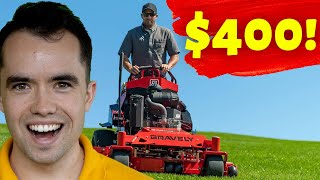
Mike Andes (YouTube, July 10, 2022) hosts a live show focused on pricing and scaling lawn care/landscaping businesses. Core advice: set minimum charges that cover admin, routing, and overhead (example: $60 minimum for show‑up; $400 minimum for one‑time jobs); use lower minimums only to create dense recurring routes; raise prices with rising costs and demand. The video includes an extended live call-in Q&A covering: how to price mowing vs. one-time projects; converting project customers into recurring work; letting go/control when hiring; pay structures for crew; marketing tactics (door‑hangers, Nextdoor, Facebook, SEO); starting small (working from a car/trunk, focus on pain points like cleanups); and selling or valuing accounts/businesses (focus on recurring revenue and net cash flow). Practical tactics: matter‑of‑fact price increase notices, book out 4+ weeks before raising project rates, lean into unique selling points (e.g., youth for a 13‑year‑old caller), focus on reviews and website speed for organic SEO.
Chapters
Hey, everyone, it's Mike Andes and we're live. It's Saturday. Trying to do a live show each Saturday as possible. Let's jump right into it. First and foremost, if this camera dies halfway through the show, then the show is over because we're running on battery instead of a regular plugin. Next thing is Facebook group. We have changed the name of the Facebook group to Lawn Care Millionaires. For some people, it was actually really funny. One person was like, well, in this day and age, you can identify as anything. So I guess I'll stay in the group. That was funny. And it's really though, for anyone that wants to become a millionaire, wants to grow their lawn care, their landscaping business, check it out on Facebook. It's an open group and I'd love to see in there. All right, today we are talking about minimum charge. What do you charge as a minimum price just to show up at someone's property? Now, if you're a lawn care landscaping, we get very locked into what would we charge per cut, what do we charge per yard of material, things like that. But every single home improvement business has. Has some form of minimum charge. And that is like, what's the minimum amount you will have to pay just for you as a contractor to show up to the property? And I feel like there needs to be a increase for most people. And also you need to know that just having you do not want to be competing on minimum price. If you're like, well, I can go lower. Well, you don't want to go lower. The only reason you should go lower on your minimum charge is so that way you can create density. And if your close ratio is really low, you'd rather have a high dense of a lower margin than spread out a whole bunch of customers with really high margins. So I've seen it work before where people will have a minimum charge of say $50 per cut. They move down to 40 and all of a sudden, and we're talking about cut per price for mowing in this case. But any sort of maintenance work, you have a minimum charge. I've seen people do that. And all of a sudden, literally their close rate goes from 30% to like 50 or 60%. So I'm not against lowering your minimum charge, but I do want you is that just for you to show up to a property costs money to drive your truck there. In order to get that customer on as a customer, there's a lot of admin work. You have to answer the phone, you have to send invoice every single month. There's admin work in time, especially if they're starting and stopping service all the time. They're calling, they're emailing. There's a lot of admin and backend cost to running the business that needs to be covered in your minimum charge. So I don't care if it is a 2,000 square foot lawn, I'm still going to charge my minimum charge per cut. Now recently we raised that by $5. I think last year we raised by $5 again and we will probably raise it again. I'm considering, I am considering making my minimum charge $60 just for us to show up at any property. I don't care if it's 1,000 square feet of turf, simply because there's admin costs, there's time for management that has to be involved in setting up the process, routing and scheduling. All of that takes time and money. I'm not so much concerned about the fact that there's 35 minutes assigned to this job. I could do it in six minutes. That's great. But what you're not seeing is the other 15 minutes of routing, scheduling, invoicing, management team meeting, safety training, training, new employees, uniforms, insurance, fuel expense, cost of materials, cost of the actual trucks and equipment. Like there's a lot of cost to go into running a small business in the home improvement in home improvement world. So that's one side maintenance, recurring work. The other side of the flip side of the coin that people usually talk about more is the landscaping or work one time jobs. So again, if you are doing janitorial, the recurring work would be you coming every single week to do cleaning. But the one time job would be the initial after a construction or on a turnover of a tenant. There's a lot more debris, there's a lot more cleaning to be done, there's a lot more deep cleaning that needs to be done. And so what are your costs? What you want to ask yourself what your minimum charge for a initial visit if you're doing some sort of like cleaning service or a one time job versus recurring work or maintenance, where you're going back on a recurring basis. So personally for us at our local Augusta Lawn Care and this changes, every single location changes this. And we've moved this up over time. But look, we are not going to go to a property for less than $400 for a one time job. Because when you have a one time job, you have the cost of sending an estimator there. You have to answer the phone, you have to get there, you send an invoice literally for just one job. I'm not going to do that for 3, 2, $300. Because it costs that in just overhead. Just getting to the estimate, sending the estimate, answering five questions about whether or not their mulch is going to be the right fit for them. There's a lot of cost to getting a customer. And what you got to realize, there's that initial cost of getting a customer. And then if you set them up on recurring service, that number should come down over time. Now a customer that is set up for recurring and literally calls you every single service, you should let go because you're not going to be able to recoup the cost of the admin time and them calling you all the time and complaining every single time and asking for like a bazillion job notes and office notes. There is not enough, you know, skin. There isn't. Not what? Meat on the bone. There's not meat on the bone on a weekly or bi weekly charge of say 50 or $60 to be able to afford admin work on every single service. That's why recurring service has a lower minimum charge per service. Whereas a one time charge for us it's 400 bucks. Like by the time, even if you don't get an estimator to come to you, even if it's a drive by, like you got to still have someone to drive there, you got to send them the estimate, they're going to ask some questions, you got to get them set up on billing, you got to invoice to them at the end of the month, they're going to have a complaint or they're going to have something that they want to go over. You've got to charge for that. You cannot just be like, oh, I charge X amount and if it's going to take me 30 minutes, well I just take half an hour. Multiplied by my $50 an hour rate, I can charge $25. No, if it's a one time job, you gotta make sure you bake that into the minimum charge. All right? And you might, what you might want to do is for your minimum charge, just have a minimum number of hours that a job will take you. So these are all things to think about when it comes to minimum charges. You need to recoup the cost of admin. It's cost of going and sending the estimate, calling them, following up with them, invoicing them, scheduling and routing of that job. And you can't do that efficiently if you're charging 50 or $100 as the minimum Charge for one time jobs. And you can't do that efficiently if you're charging 15 or $20 for maintenance or recurring services per visit because it's going to cost you far more than $15 just to drop the gate. Like get your to just get your crew there in terms of labor and cost of fuel and insurance. It's going to cost you more than that money just to get them there. Let alone for a one time job where you don't have the benefit of recurring service happening all the time. All right, we're going to open up the phone lines. The first question is coming in from, I think it's Colorado Springs. The area code is 719. Go ahead. You're on the show.
So I was wondering how much you can like make mowing more mowing or like landscaping?
Yeah. So really it comes down to your goals and objectives. You're trying to grow really quickly landscaping and, and one time projects are going to be the bigger ticket. Like when we just talk about minimum charge. Someone's minimum charge might be $40 for mowing, but it might be 200 or $300 for one time jobs. In your case landscaping jobs. And so you're gonna be able to grow your revenue much faster by doing projects. But if you're growing, trying to grow the business for long term and long term cash flow, building up that recurring work or the mowing is going to be something you can depend on more. Cause it's not as up and down with week to week. You have more dependable income time and time again. Does that make sense?
Yeah.
It's not about which one makes more or anything like that. It's about speed. Like you can easily grow a big business doing one time jobs like landscaping. But I'd rather while you're doing those one time jobs and making the money up front, also try to get the recurring work in your case mowing so that way you have more dependable income. Not just a big spike at the, at at the beginning. Does that make sense?
Yeah.
Awesome. Take care, brother. Oh, you got another question.
Go ahead.
Oh no.
Missed a call. All right, next question is coming from, I want to say it's California. 530 is the area code. You are on the show. Welcome.
Hi, this is Carter from California.
Hey Car. Good. How you doing?
Pretty good. So I've been in the industry about three years. This year I've taken it really seriously trying to grow it. Had issues with employees. Right now I'm at about 80,000 in revenue for the year. Mostly myself. My brother Started helping me a little bit now. Two questions for you, though. The first one is how can I let go with having someone else working with me and them working on projects? Because I like to be involved too.
Much sometimes.
And can't.
It's hard for me to let go and just let someone do their thing when I know they know what they're doing.
So what.
How can I. What can help me to be able to let go a little bit easier?
Are you on the job site with this employee right now?
So my brother started working with me. He's taking over kind of the maintenance side. He worked with me for a couple months to learn it, and then now he's doing those. It's just really hard for me to let him do his thing and not constantly checking on him, calling him, making sure it's all, you know, going smoothly, the customer's happy. So how can I, you know, kind of let.
What things can I do to kind.
Of help let go? Let him do his thing?
Yes. Like, has he proven that he can't, he's incapable of doing a good job? Like, does he get a lot of callbacks and things?
No, not at all.
Okay, so then really, you got to prove yourself logically that you're being illogical. Right. It's like, look, I don't have enough data to support that this the employee, my brother is not doing a good job. So therefore, the facts tell me that I should just let him do his thing until he proves otherwise. Because you right now are spending time, energy, and just mental thought process worrying about something that isn't in a problem in the business. And it'll keep you from growing beyond your brother. Especially because if you can't trust your brother, who you've literally grown up your whole life, it's going to be even more difficult to trust employees down the road that you don't know from Adam, and now you're trusting them to go on the same properties and customers, et cetera. So you really got to detach from the. As much of an emotional connection with the business and really start thinking, like, just from a logical number standpoint, as long as he can do 80, 90% as good a job as you, you should let him run with it. And until he proves otherwise with a lot of callbacks or messing things up or damage cases, then you can step in. But until that time, you almost got to like, tie your, tie your tongue a little bit and just realize that like, the long term, the business cannot survive if you're micromanaging every single thing and again, if you can't do it for your brother, like, just wait till you have an employee and you know they do something wrong one time, it'll even be more so you wanting to step in and you know your brother will make a mistake at some point and you're like, oh, this is, this is the time I got to step in. It's like, no, it's part of being human. It's part of growing a business. They're going to make mistakes, and it's just a matter of knowing that long term, you cannot be on every job. You cannot do every single service. And so that's really. You got to come from a logical standpoint if you're going to grow the business.
Okay, that makes. Because, yeah, I mean, he's done great. It's just, I know for myself, I just stress out a lot about stuff that doesn't really, really matter. And then if you got time for one more question, go for it. Like.
So right now I've been, I've been raising my rates. Right Now I'm charging 15 hours. I get about 90% of proposals accepted.
Raise your rates.
All you need to know right there is raise your rates massive.
It's. How do I get past the mental block? Because, like, growing up, for me, like, okay, so I do trash hauling sometimes. For me to charge someone 400 bucks to haul away a few things and use my dump trailer and everything is insane. But to the customer, they don't care. How can I get past that mental block of myself? Because, like, I'll bid his job and I'll know on paper I need to charge, say, 500. But when I send the quote, I'll maybe drop it to 425 or 450. So I know I get. How can I get past that kind of block?
Realize that you are not the target customer. Right. The reason you don't see the value of the $400 for that job is because you would just do the work yourself. And so you're comparing against you spending half a day and doing it on the weekend like you would typically do yourself. Realize that your target market is either making enough money to where they would rather not, or B, you are literally doing something for them that they physically cannot do. And by hiring you, they get a weekend on the golf course or a weekend with their family and their grandkids. That is literally, potentially, if they're towards later years of life, they only have a few more years left. So you're literally given the most precious resource that money possibly could Buy, which is time. And so when you step out from your framework, the pricing of which you're giving should be based upon the business, not based upon whether or not you think that price is right. Personally, when I, for example, let's just step out of lawn care, for example, let's use the gym, for example, we charge $399 per month to train people, and they come three times a week for 50 minutes. Right. And that is in a group session type setting, not personal, one on one, just in a group setting. Personally, I would lose my mind If I paid $400 for a month worth of a gym membership. However, I'm healthy. However, I'm in good shape. However, I know how to work my way around a gym. For someone who doesn't, who is overweight, has never been able to, you know, look the way they want to. $400 a month for someone to hold them accountable to a specific time every single day and every single week to come to the gym is an absolute bargain. Because in three months, they could literally get back to 20 years ago when they now they're 70. They could go back to where they were when they're at 45 and 50. Like, what price tag are you going to put on that? And so we got to realize as contractors, we're using our frame of reference as the value proposition when we are not the target market. And does that make sense?
Yeah.
No.
100%.
Cool. All right, brother, you got take care. Yep. Bye. Bye. All right, next one up is coming from, I think it's Virginia. 703 is the area code. You're on the show. Welcome.
Hello, Mike. I am a pretty big fan of you, and I just wanted to call in to get some business advice.
Go for it.
I'm currently, at the moment.
Pardon me?
Go for it. You're good.
Currently at the moment, I am about to turn 13 and I run a small lawn care service with wood engraving and some other stuff on the side. And I'm really having trouble keeping up with the prices that it takes to keep my equipment running and actually being able to purchase upgrades for my equipment as I grow because I currently don't have any customers. And it's been that way for two months now. I did have this one woman whose lung was really big, and for the first couple of cuts, I gave her 30 or I gave her the price of 30, and that just wasn't enough. So then I started to reach out to her and ask if she would be okay with me slightly gradually raising up my price to the $50 minimum that I charged to mow the lawn. But.
Before all that, she. I guess she thought that she was getting a really good deal. And then she got all mad and dropped me from mowing her lawn. But the problem with that job was is I had a lot of obstacles. Like, there was so much trimming, I had to bring down my big bike handle machine, and I use a battery powered mower. And she would only she didn't want me to come enough so that it would be consistently mowed without me having to stop for half an hour to let all my stuff charge.
And I just. I just need some advice on how to grow from zero to a little bit more.
Totally. So, you know your first 10 customers are your hardest, right? No, when you go. When you get 500 customers, going from 500 to 550, like 50 more customers, literally you could do without, you know, sneezing. Like, it's super easy. Zero to ten is the hardest. Right. And so if you're in that spot, like right now, do you have no customers whatsoever?
Well, you can do side work.
One job. Like, jobs here and there.
Yeah. Like, my last job was there was this woman who works minimum wage at a local department store, Macy's, I think it is. And her husband's got dementia and all that. And I mowed down this massive amount of brush in her super overgrown backyard. It's where one of my little sister's best friends used to live. And I charged about 110 for that. And it was about a quarter of an acre of just thick vegetation. That was pretty much the last job that I had.
Yeah. So, like, what I would recommend. How old are you right now?
Nearly 13.
Cool. So what I would recommend is, like, I'm rewriting the first 90 days of training for our franchisees, Augusta Lawn Care. When they come here, I give them. I'm gonna give them 90 days of, like, step by step. Right. Number one thing, guess what the very first thing is. It's not getting equipment. It's not getting legal set up. It is going and getting customers. So when you. When you opened up by asking about pricing for equipment, don't even worry about equipment. I literally don't even want you to think about it. I want you to go get customers, and if you need equipment to do the work, book them out a few weeks from now. So that way you have the time to go get the equipment. When. Before the job starts.
Right.
Like, right now, you should only be focused on getting customers. Go ahead.
Yeah, that's what I have. Currently I run all steel tools and I'll either walk if it's close enough or my dad will put all my equipment in his truck and drive me over there. For just the basic service, I run either an FS131 with a bike handles or a FSA57 which is currently down at the moment. And I also run an RMA 460V from steel and I run an AK10 battery and an AK30 battery. But I'm currently trying to get the money so I can purchase another AK30 battery so that I don't have to stop. And that way I can just cycle around and be a lot more efficient.
Yeah, so what I would say is first off, I don't know any of the tools you just mentioned. I have no idea. And somehow I built some, some big businesses, right? And what I would say is those things aren't going to build the business. Don't worry about the type of equipment you have. It doesn't matter. It's not going to help you get from 0 to 10. What's going to help you get from 0 to 10 is go knock on some doors, go do some door hangers, send out some flyers, have your parents or yourself post on Facebook and next door about your service. That's what's going to get you customers. And customers will bring in revenue that will pay for the equipment. So don't worry about all that stuff. Like, I know it's exciting to buy things and what type of equipment, what type of batteries, but it doesn't actually grow the business. Focus on getting those customers. I'm going to let you go because I got more callers in the queue. Is that okay?
I just, I just want to say one more thing.
Go for it.
I've tried all the flyers, door hangers, social media and none of that has worked.
Okay, what are you saying?
I'm thinking about your social post.
What are you saying? What? You just like, hey, if you want my light your line mode.
Like I would post stuff like facts about services that I offer, but the main thing that brings me in money is at the end of the year now I went from a snow shovel to my dad helping me with a snow blower to my very own little combi system sweeper attachment. And that's really the only thing that brings me in income. And I'm.
Thinking about completely pulling out of lawn care and just going full time into the wood engraving and the snow removal. So before would you say that's better than.
Well, because the thing with the problem with the snow removal is the fact that you're going to be somewhat subject to the fact that it's only during the winter. And so if you're trying to go the lawn care side, it's a good move because you're gonna have, you know, six, seven months, whatever it might be, where you can do lawn care versus potentially three or four months, depending where you're living in terms of snow, snow, snow removal. So what my recommendation would be is when it comes to your marketing, instead of thinking, okay, and this is very common, people like, oh, I've tried social media, I've tried flyer, tried door hands. What you got to realize is that your unique selling proposition as a 13 year old is not about giving facts about the services. It's not about talking about price. It's not educating the customer. It is simply that you are 13 years old. That's why customers will buy from you. So if you're really young, if you're under the age of 19, you absolutely should be using the fact that you are young as your differentiating factor. Do not try to compete with the a million dollar business and people have been in business for 20, 30 years on professionalism or fancy marketing. Like that is not your unique selling proposition. You will ease into that, you will transition into that. As the business grows organically, you will not have to force that at all. It'll naturally happen as you get more employees and you'll need more systems and you'll need better software and more trucks and better equipment. That will happen organically. But when you're young, focus on what makes you unique and that is your age. And do not run away from it. You will get a lot of customers. If in those social posts you start talking more about you and what you're doing with money and your goals for the business and put a picture of you on there, you'll get customers way more if you just lean into that. Next caller is coming in from Detroit. The area code is five eight, six. Welcome to the show. Thanks for coming on.
Michigan.
It says the first name is John. Five, eight, six. Going once, going twice. All right, next caller is coming out of seven. 19 is the area code. Welcome to the show. Thanks for coming on.
What? Did I do something wrong? Oh, I. Oh my goodness, I forgot. Oh my word. I'm so sorry. I had my fader down. Oh, man. Go ahead, my bad.
All right. I have a question on how to pay an employee when you're trying to work fast and you don't want to pay them hourly.
Okay. Are they working with you?
Yeah.
You want them to make good money?
Yeah. Like, if they're working with you, there's really not a whole lot of benefit to using pay for performance, because the reason you do pay for performance is because of unmanaged labor. Like, you can't determine where they're at at all times. You can't manage them directly. But if you're working with them, you should be able to see what they're doing the whole day and make sure they're efficient. So I wouldn't worry about trying to pay them a percentage of revenue or anything like that, because it get really hairy if you just start giving them, like, hey, whatever we make in a day, I'll give you, let's just say 40%. Okay, great. But what happens when you get a third employee? Are you still going to give that other employee 40%? No, you can't, because now you got to pay someone else. So I would say don't worry about too much right now. It's when you start getting to where you are not with them. Like, they're out working without you. That's when you want to start thinking about pay for performance. Go ahead, though. It sounds like there's more to it.
I know.
That's it. Thank you.
Cool. You got, brother. Take care. All right, the caller from Michigan, please call back in. I literally hung up on you because my fader was down, and I apologize for that. So please call back in. I believe your name was John from. From Detroit, Michigan. I'm very sorry. Let's move on. The next caller, though, this is from Massachusetts. Oh, it says this is Jeff. Is this Jeff?
It is.
Mike.
How you doing today?
Good, good. How are you doing, brother?
I'm well. I just had a question with pricing. So I know you've been talking a.
Lot about increases, and I know I.
Need to do an increase.
I am kind of struggling with it a little bit. So in 2022, we went up to 80 an hour.
So anybody. And this is for mowing. So anybody that has mowing service with.
Us in 2022 is at 80, but.
I never raised the one from 2021. They're still at 75.
So would you recommend just a flat.
Increase across the board, or should I kind of look at 21 and 22 separately? Yeah, like, I don't like raising the hourly rate middle of the year for mowing, because it means I got to go through every single job and. And change the budget hours. But if you're like, like, like, I would ideally like Inside of. On your budget hours, are you using 75 and 80 or did you standardize your hourly rate for mowing on budgeted hours?
So I guess what I'm trying to say is, any mowers since 21? I didn't do a price increase for 2022.
I just left those alone.
Yep. But for 20.
I'm sorry, for 21.
But for 2022, you know they're based.
On $80 an hour.
Right.
I really.
Yeah. So I would, I would do is. I would do across the board raise. Honestly, Jeff, like, I know your situation obviously pretty closely, so I would raise them all. And then when, when you're raising the price inside the CRM, change all of your budget hours to reflect at 80 per hour. Right. Because remember, changing the hourly rate that you're charging doesn't actually move the needle for the customer's price. That's. There are two different things, price and budgeted hours. So I would change all of your prices, do a blanket increase, say $5 per cut if they're under $50. If they're above 50, $10. As you know, that's what we did recently in the local shop. So I would do that. And then when you're going through or command center is going through and changing the rate, the budget hours, they'll move it all to be standard at $80 per hour. Does that make sense?
Yeah, it does.
So you're okay with a $10 increase?
You feel like the consumer would be accept.
Well, for the most part, accepting of.
A jump like that? Oh, yeah. Like even in the past 12 to 24 months, the. Our costs have gone up more than 20%. Right. Like if you take someone's 50 and you move them to 60, it's a 20% increase. If someone's at 90 and you move into 100, that's only a 10% increase in the price. And we've between fuel costs, trucking equipment expenses, and wages, we're far more than 10 to 20% increase in our expenses. So I think it's 100% you should do it. I also know your customer base is so loyal to you and loves you so much that you're going to get a very, very small kickback. And the ones who do kickback, like if you lost, say three or four customers, it'll be all the ones that you don't like anyway that call all the time, every service, always asking for certain things and certain days and certain people to be on the job site. You will not have any kickback from it. And you know, let's say you have 200 recurring mowing customers. Let's just say $7 is the average between 5 and 10 that you're raising and you're mowing them on a weekly basis. That's 200 times 7. That's $1,400 a week times 4. You're literally talking about $5,600 in profit to the bottom line, if you can just pull this off. And if you lose three, four, let's just say you lose 10 or 15 customers, you'll literally replace them within a matter of a few weeks with the new customers that are coming in. And you'll be able to serve the customers that do stay a lot better because now your attention is on them instead of the 10 or 15 customers that were always being a pain in the neck anyways.
Got it. And your crew, thanks very much for your time.
You got it. And your crews, those are the customers. The ones that will leave are the ones that your crew currently loathe going to and don't want to be there at anyways. So you might as well pull them out anyways. Right? So.
Yeah, yeah, we. We had, you know, a lot of new highs this year, so I was.
Just concerned a little bit with the.
Quality dip for a bit, but I feel like we got that back to.
Where it needs to be, so.
All right, Mike, thanks again.
Pull the trigger, brother. Take care. Bye. All right, and to his point about quality, I. I mentioned this late in a video last week, so let me say it here again. Quality has no. In no direct correlation between price.
All right?
And everyone's going to blow me up in the comments for this, but it's absolutely true. Demand is what should be the indicator of price. Did not demand supply, and demand dictates price. There is no quality curve on the supply and demand curve which will dictate price. What that means is if there is a reduction in supply, you should be raising your prices. If there's an increase in demand, you should be raising your prices. It has nothing to do with quality. And if you're right now, like, hesitant about raising your prices because, man, quality hasn't been really good recently, or someone. Someone canceled the other day and they said we were doing such a bad job. And they say quality has been going down. You know, Bob, you know, three years ago, you do the lawn yourself. Like, it was so much better. Like, quality's really been going down, and that wears on you mentally. And so you won't raise your price. But at the same time, at the Same exact time. You can't find employees, you're booked out to wazoo and you're working crazy hours that all three of those things are indicative of low supply and high demand, which means you must raise price. Okay. Do not allow that mind game of like three or four emails or bad phone, bad reviews to keep you from raising your prices. All right, we gotta move along. The call queue is completely full. Next up is from Greenville, South Carolina. I think it's penny864. You're on the show. Go for it.
Hey man, my name is actually Taylor, but for some reason we got to fix that Verizon. I appreciate your time, so thanks for doing this, man.
You got it, brother. Go ahead.
Yeah, so I'm actually in Easley, South Carolina, right beside Greenville.
Two questions if you have time.
I'll try to make them quick.
So I'm in my second or third year of business. We've been doing well. I've invested a lot into branding, advertising, all of the back end. Now we're kind of pushing growth. But the, the issue that I'm hitting, man is and I kind of have an idea of what you might say to this, but, but the issue is here in easily South Carolina, there's a map population of maybe 40,000 people and I think 20,000 of those people are landscapers.
Just mow each other's lawns.
Literally, man. I mean it's. I've counted on like when spring hit a four mile drive, you can count 15 to 20 guys with a truck and a mo in the back. And like I said, there is a differentiation with, you know, I have full branded vinyl wrap truck, professional equipment and everything. But. And I'll see what you have to say about that. But my point is, you know, two.
Years ago when I was doing my.
Research on pricing for, for lawn and landscape and my questions will be separated between lawn and landscape project. But starting with lawn, I saw where you charge a hundred dollars an hour, which I was like, wow, that's incredible, man. So I ran with that and here I have not been able to close.
Near as good of rate as you guys are at 100. Not saying that I can't. I think my question is, should I stick to that? Because that's really where I would like to be, man. And I would genuinely be discouraged if I have to go down 30, 40% just to get jobs. Should I move outside of Eastleigh and extend my route and be willing to drive a little further?
There's nothing new with market.
What do you think, man?
No, don't do that. Everyone always thinks a different market will solve the problem. It's. It's not the case. Alright, so this is, this is the thing. How much do you pay on average to your employees per hour?
It's just.
It's solo owner, operator right now, man.
Okay, so let me rephrase it, all right? If you, if you had to hire somebody, what would you be charging per hour? Like, it's like entry level, very basic services like mowing, you know, pushing a lawnmower.
For this market, probably 15 to 17.
Okay, let's just go with 15 or hour. Yep, let's go 15. And if we divide that by 100, you're at 15%. All right. My. In my opinion, like what. Your hourly rate to the customer is going to be dictated by the. The cost of living in your local area. So in our area, let's just say we charge 80 to $100 per hour, but I also have to pay a minimum of $18 just to get someone in the door and interested. Right. So the cost of living is different. And so I typically don't want what I have to pay an employee per hour to be more than 25% of what I charge the customer. So what that means is you could theoretically go all the way down to 80 per hour and be giving your guys 20 and still make that math work. You could also go down to 70, 70 and still pay your employees 17 an hour. So using that math. So I think you're just realizing your market. That's why hourly rates and hear what other people charge has like, no, not indicative of what you should be charging. Because cost of living here is nuts. It's like you need to be a millionaire to own a house here. Right. So it's. That would be what I would say in terms of pricing. Don't think it's an area thing because like I started in Blaine, Washington, they had like 5,000 people living there. We grew above a million dollars in revenue before ever moving outside of Blaine. And so.
Right, right. And that's of course because of volume, right? Volume cut.
Yeah. And well, at the time we were actually doing a lot of projects. We didn't have half as much recurring revenue as we do now. What was driving it was project based work. A lot of big jobs. But also, keep in mind, when it seems like you see landscapers all the time, it is absolutely like the recency bias. It's like if you go buy a Honda Civic and then all of a sudden you see every single Civic or like, like people in the H Vac community, they say the same thing. Like, man, we see H Vac guys all the time. Then you talk to like window cleaner guys. Oh, man, we see window cleaning guys all. So it is somewhat like, hey, we're biased as landscapers. We're going to notice every single landscaper. But yeah, I think you definitely have room to move your price down because then you need a focus on closing the jobs. And then as your momentum picks up, you get a place like, we just talked to Jeff, we're raising your prices. Doesn't move the needle, like, doesn't hurt you at all because you have so much momentum behind you. So right now I just care about you closing the deals. And if you think, if you know that price is the issue, bring your price down. I don't care if you charge 60 per hour. Just get so many jobs in the schedule where now you're like, I have to raise prices. Like, there's so much demand for my services. Again, you just raise your prices.
Right. To pack the schedule full and then raise prices once it's a necessity.
You got it.
Good deal. Okay, so.
My second question I guess would be as far as landscape projects, kind of, kind of the same thing, I guess, actually. But I guess it's understood that projects are different. And this is what I will say, and you can hurt my feelings if.
This is the case.
But my background is horticultural science. All I've ever done is plant science, selective pruning, plant design, things like that is on the side. I'm doing lawn maintenance, of course, for the steady tech, and I'm trying to transfer mainly to maintenance because of the reliability and scheduling, which I'm sure you understand. I know you understand because you taught me how to understand it. But as far as project can, can I demand a higher price? Because I know that the quality and asset of me knowing more is there compared, and I can say this Confidently, compared to 60, 70% of the entry level guys that have done it.
Yeah, like theoretically, you're around here anyway able to offer more value to the customer by having more knowledge. Right. And that should come across in the way that you present your estimate proposal, the way you meet with customers, you need to make sure you highlight those things. And that being said, price is not dictated by value as much as the market. The market determines whether or not they value that skill. So don't think from the get like, oh, I should charge more because of this skill I have. Allow you to go out in the marketplace, get so much work that you're like, oh, I can keep raising my prices. Oh, I still have six works. Oh, I'm six months booked out with projects. Raise my price again. Allow the market to determine what they value, because value dictates price, but what determines value is the market. And so some people just don't care whether or not you have a horticultural degree. Right. But there's gonna be other customers that do, and they're willing to pay way more if you're able to come talk to them about the, you know, the plant structure and the root structure and the fertilizers and all, how it all interacts. Hey, they're like, my goodness, that guy is the guy we want to use. And I don't care if he's 20% higher. So allow the market. Just focus on building that momentum at the initial.
Okay, so the end. And speaking to that, do you think. And I'm okay with this because I'm to the point now where I can take care of myself with the maintenance and jobs I have. Do you think if I demand that higher price, which I do have people committing to, it's a much smaller amount, It's a much smaller close ratio. But I have found those customers. Do you think I should just grow the business much slower while collecting clients that are willing to pay at a much higher value? Which honestly encourages me to. To get more jobs? Because slaving in this heat and humidity and everything, I'm more than happy to make more money on less jobs. Do you think I should just commit to that or lower it to, again, get more volume? And the second piece of that question that I'll tie in is.
I'm doing basically 85 to 100 an hour, which I mentioned that I am closing jobs on. But depending on the job, sometimes I would just base it on 500 to $600 profit on a full day's job. Is that acceptable or does that sound ridiculous?
Again, like, what's your goals? Are you trying to grow the business? Are you trying to just make it profitable? Like what? Like, do you need an income right now? Or are you trying to, like, grow and expand? Like, do you want to have 10 crews? Like, what's your goal? Long, long term.
Current?
Right now, I'm. I'm okay with being solo. It is in the plans to get volume cut and then expand the crews to grow much larger. But currently growth is important. But I would say that me making an actual profit at the moment is more important. And if I could somehow intertwine both at a healthy rate, that would make the most Sense.
Yeah. So I would. If you're trying to do both, like, you're trying to grow and be profitable, what I would recommend is a short term increase momentum, get lots of jobs on the schedule, giving you the confidence to raise prices to remake better margins. And then get. It'll get your name out there, you'll get more reviews. Like, it'll get the momentum going. People do not believe me, this momentum thing. But if you can get. Book yourself out more than a month or two with projects and you got a bunch of mowing coming in, you will have the confidence to raise your price. You will become more profitable by doing that. So I would do short term. I don't care if you go from 80, 500, you're solo. So you don't have a lot of overhead. You don't have a lot of fixed cost. Yeah. So I would go out. I'd go to 60 or 70. Book yourself out and you're like, man, I'm booked out like a month. Like, how far are you booked out right now? You kind of go job, job.
No, man, no. I have room for it, for sure.
Yeah. So I would book yourself up for four weeks. When you hit four weeks, that's the moment you start raising prices. And every single time you get more than four weeks, just keep raising prices per hour that you're charging for projects. Keep the mowing prices where you want them to be at, because it's harder to change those. You can't change them every couple weeks. But with projects, if you're booking out products because you're horticulturist and you're super good at what you've done, like, I would just be like, okay, I'm gonna start 60 until I'm four weeks out. Boom. 60. All right, now let's go ahead and do 70. Oh, my goodness. Now I'm six weeks booked out. Let's move it to 80. Then you'll move back up into a point where now you have tons of backlog. You have. Now you're charging what you're worth. And then after, say, a month or two, you'll hit the point where you're actually doing work on the jobs that you bid at 80 into 100, and that's when you'll have the profit to go hire somebody.
Okay, okay.
And then last small question, and I'll let you go, man. This should be fairly quick as far as advertising and actual growth. I've been trying to teach myself on Google Ads and Facebook. Does that sound like the right route or should I be looking at a place, I've done yard signs, we're working on flyers. Where do you think I should. I would get the most bang for my buck as far as advertising.
Honestly right now I wouldn't even worry about advertising as much as closing more. A higher percentage of the jobs, the leads that are coming in, like if you're at 40% get to 80% right now, get momentum. Because right now, especially with project based work, when you're small like you're, you are, you don't have a massive website, you don't have a bunch of trucks rolling around, you're going to depend on so and so you did a $10,000 job for saying you're the best thing since sliced bread and are worth paying an extra 20% more. They're going to tell their four neighbors that's what you want to focus on right now. And so I would really go. Right.
Well the thing, Mm. I was gonna say what the thing is, is I don't, I could use the lead to fill up.
To fill up.
So if I work if what I do. Because right now I would actually have gaps in the schedule. What, which way would you say to go to get more leads in and then I could even cut it off once I'm to the point where it's not manageable on my own.
Yeah. Like I would be looking at all the ways to do it at a lowest cost. Right. So I'd be, I'd be taking every single customer you've ever done work for. I'd be emailing them and trying to upsell them. I'd be going to all of their four to five neighbors. So like we're talking about now, hundreds of people that you can, they're your contacts, they're your leads going out to them. Then I'd be going on next door and Facebook, local groups. I'd be like, those are all the free simple, like just boots on the ground. Cause right now I'd rather you spend time instead of money because you don't have work booked out forever. When you're booked out four or five weeks, then you go on Amazon, Amazon, Google and Facebook and you start pumping leads in from a digital source. But right now you have time. So I'd be focusing on those things that are going to cost less but have better returns, which is going to be. I'd go talk to every, I'd email and call every single one of your past customers. I would then contact via knocking on door and door hanger to every customer around those people's houses.
Okay, Good deal, Mike. I appreciate your time, man. Thank you, brother.
You got it, brother. Take care. All right, we got to keep these questions shorter, folks. The call queue is completely full. But I am going to skip to John, who I literally hung up on. So I apologize for 8-6034-6. I will get to. You've been in the call code forever. But I got to bring John back on the show. I believe it's John. Five, eight, six. I apologize for hanging up on you. You're on the show now.
No problem.
I didn't know if I was muted or what.
I appreciate it. Go for it, brother.
So, yeah, I was, you know, mine just really quick. I know you said keep it shorter. I just want to respond to one of the guys who was before me the first time, who was saying, how do you get over that mental block? Thing I heard recently was like, you're kind of obligated to charge more money and make a decent profit because you want to be able to, like, pay employees. More like, for me, my full time employee, I'm paying 23 an hour right now. I like to do, you know, Lancet. I'm just mulching, trimming, and that's crazy to people, but, you know, we charge about $60aman hour. And that's because, like, I want to buy new equipment to do a good job. I want to pay my employees really good, fair wage. And if you're doing everything right, you know, that the customer doesn't understand, obviously, mostly don't have businesses and don't really understand all the costs going into it. So, like, you're doing a good job, you're showing up on time, you're already beating out a lot of people, and you're even answering the phone, which I get compliments on just literally for answering the phone and showing up, which is crazy. And I'm sure, you know, you know, but my question was a little bit more outside of, like, landscape in general, but just like, business. Like, how do you get over, like, grass greener, pun intended. On the other side, like, I see people, you know, doing pressure washing, and I'm like, that just seems way easier. I love landscaping, don't get me wrong. But sometimes, you know, I see pressure washing crews, two guys, you know, very relaxed. There's really not much you can go wrong. Those doubts, landscaping, how do you get over that?
Like, yeah, like, honestly, a good idea is to join Facebook groups of other industries, and you'll quickly see they have all the same issues. For example, pressure washing, a Mistake on pressure washing could literally mean tearing the siding off of an entire side of a house or completely putting trim around a window. Like, there's a lot of things that can go wrong with pressure washing. Pressure. Pressure washing specifically can make a lot of damages. Painting, for example, like, there are so many things. Every single industry, it has its own issues. And so how to deal with the grass is green on this side honestly is sometimes just do fact driven. Go to Facebook group and see all their horror stories, right? We always talk about, you know, people forgetting the edge, forgetting to blow off. Like just wait until you go on to one of their pages and they just, you know, blasted out someone's window with pressure. Like that's a big mistake, right? So, you know, I would do that and then secondarily go talk to some of those other business owners and there'll be good contacts anyways because you can refer work to each other. But then secondarily is you'll. You'll learn just how hard it is. If there was anything as such as easy money in any business, it would be. It just supply and demand, right? So if there's so much demand for service so easy, like people would move to it. Go ahead.
Yeah, I understand it's not easy money, but it just seems, you know, sometimes I'm. I'm moving, you know, 10 yards a month or whatever. You know, I've jobs in a row, like 10 yards a month, three days in a row or whatever. And it's just like, you know, 10 hour days, 12 hour days or whatever. And then sometimes I just see like pressure washing. I know the service is not as common as landscaping, so sometimes it's hard. You know, I definitely understand everybody has their own problems, but you know, I mean, I'm doing well and I can't explain, but it's just, it's just a weird because I'm very competitive. So it's kind of like a weird thing that I experience sometimes.
I get it. All right, brother. Thanks for coming on. I appreciate it.
Yep, thanks.
You know, like every single industry has its problems. You know, every single business owner is gonna have problems. Like it doesn't matter if you're in the gym business. It's like, man, it's so easy. Just sign up people, they come in there and they work out. Like, no, we went through Covid and had to close down for months. And now you got people inside gyms that are. Some are Covid conscious, some do not care. Like you got all this sort of stuff. Then you have people that like are Worried about cameras. And you got worried people worried about going into a bathroom that other people have used. And other people freak out because there's one piece of hair in the bathroom. Like there is. Like every single business has its problems. It's just that when you're experiencing the problem, it's easy to think that other business owners are not. It's not the case. All right, next caller has been waiting for 18 minutes in the call queue. I believe it's Edward Eight Six Zero, you're on the show.
Hello.
Yeah, what's up.
My family?
You got it, brother. How's it going?
Pleasure. Pleasure.
Okay, so.
Yes.
All right.
So I'm in a family business right now. My father built the business about 22 years ago, and so he's doing really well right now, generating about maybe 1.6 a year. And then so he's got a couple of account that he has yearly, but we subcontract that out. What we do mainly is just hardscaping. So like big projects like patio, retaining walls, taking our shrubs, stuff like that. So then I heard you say that if we're still doing that, the, the hardscaping at the same time, we should start.
Getting more recurring jobs, more like salon. Right.
Yeah. More recruitment work though, can also come in the form of even if you don't do mowing, you could do trying to set up maintenance for the projects that you install. Right. So like even if you do hardscaping with say pavers, they need to be cleaned, they need to be sealed every couple years. If you're installing soft scapes like planting or molds, like those areas need to be weeded, those bushes need to be trimmed. Right. So I'm just trying to think about how do we create recurring revenue about whatever service we are installing, but go ahead.
Correct.
Correct.
Okay.
Yeah, so that's what I was thinking. Like every year you need to refan so you, you could sell package deal for that and then. And that's about it. But like, you know, my other thing is how can I get a more professional system too? Because the system that we're kind of using, you know, it's just like, you know, within the family. No, not nothing really high tech. I don't really know the numbers myself. I just go out and sell the jobs and make the contract and then, you know, just keep on going, selling jobs, whatever leads come in.
Don't beat yourself up too much. Like obviously the business has done enough to stay in business for 23 years. So that's obviously awesome. Sometimes people will trip into running a good business just because they have good pricing from the onset and there's a high demand for their services. As the business gets more sophisticated, especially as it passes on past generations, it is important that you enable the business with technology as well as actually know how. Even if the business is doing well, you need to know why it's been doing well. Like, what's. What are the numbers behind it? Right. So just keep educating yourself. Right. It might be worth taking a class at a community college or take an online course about accounting or about the business side of the lawn care industry. These are things that are going to be necessary for you to run the business because you don't have 23 years of experience and you've been given something that's obviously working. But, yeah, now you need to figure out why it's working because you were not the originator of it. So you got to figure out why it's working. Actually create systems around it. Right. And so that's gonna come with pricing. Figure out your budget hours, are figuring out how to price the jobs correctly, Figure out how to hire market, et cetera. And that's just, you're, you know, the first inning of a very long game. Just educating yourself, learning about these things. And it's all there. It's all for the taking. You can absolutely do that.
What would you recommend? What kind of course do you have that I can start with learning the business side of it?
Yeah. Like, honestly, I know it really depends on how you like to learn. Right. Like, if I was trying to learn something brand new, I'd be looking for an audible program. Right. An audio book or watching YouTube videos. Right. And so if you're trying to learn business from a landscaping perspective, like, I have 1500 videos. Watch as many as you can, like, work from right now backwards. And some of them are more entertainment. You can skip those. But the ones that like very much, you can tell these are like, numbers. Like, the longer the video, usually, the more educational and numbers driven it is. And I'm talking about funnels, I'm talking about ratios and metrics. Those. That's what you need to take the business to the next level as the second generation business owner.
Okay, all right, all right. Thank you, thank you.
I'll do that.
Invest in myself, read the audio, look up all the YouTube and get into courses, too, like accounting and business and marketing. Okay, I get it.
You got it, brother.
Thank you, Mike.
Yep. Take care. Bye Bye. Yeah, I think it's important for everyone out there. Number one is you don't stop learning. Like literally right now I'm taking several courses to make myself better at number one, real estate, number two, accounting. And then illegal. Like I'm always trying to figure stuff out and learn and stuff. So like I usually do that at night. Obviously I'm busy with the businesses in general and I can't spend like hours doing it. But I always try and do. I just finished a run and, and the entire time I was listening to books about business and just trying to improve my skills. And secondarily, if you are in hardscaping, you're trying to figure out a recurring revenue model, just focus on how can I service this customer beyond just that one time. So if I install a $50,000 job, how can I also on the same estimate do the $50,000 job but then also a hundred dollars a month? I'm going to come back, I'm going to check on everything, seal anything, adjust the irrigation heads, whatever it is. You can always upsell someone into a recurring service. So next caller has been waiting for 20 minutes. I apologize. Erico is three four six. You're on the show. Thanks for coming on.
Hi Mike, this is Shelly.
Hey.
Okay, first off, thanks for all you do. Okay, the questions today I'm literally starting.
Lawn care, right? And I'm coming out of a 2011 Mazda 3 and you know, I have bare bone equipment. My question to you is.
What would be the first steps? As in like say for instance, gaining customers. Should I walk around and do door hangers? I don't have any business cards or any door hangers that. But I was thinking about doing, you know, just selling myself would.
Okay, really, a couple of questions. I'm a little nervous but I'm in the south southeast area of Texas and I just want to know what type of services should I give to like my clients Right now it's summer, it's hot.
I don't think that I could mow right now, but I do want to put them on a mowing schedule. Well, like where just where should I start?
Totally. And so if you, let's say you did mowing and then what else would you do that is needed this time of year? Is it property cleanups? Is it pulling weeds? What else is actually needed this time of year for you, you think?
Okay, yes. So that's exactly what I was focusing on was the property cleanup. So there's certain areas where they have I don't know the name of the trees, but it's like a widely tree, big trees and the leaves are falling so, like, some houses are covered with leaves. Some. Well, most are not, but there are.
A lot of weeds.
And I did wanted to, you know, create beds and install mulch or even gravel, whatever the, the customer will want. But yeah, it'll be, I, I believe around property cleanups this time.
Yeah. So if you're starting in the middle of summer, you got to realize that you need customers. And the only reason that you get a customer, if they have a. If they have a problem for you to solve. And if there's no problem in the way of grass right now, because it's not growing, you got to focus on what is the pain point. And so if that is property cleanups, then you should be knocking on people's doors and not talking about their grass. You should be telling them, hey, my name is Bob, whatever your name is, sorry I missed it. And I. Shelly, I can go ahead and clean up the leaves that have just fallen down. I can pull the weeds out of the flower beds. Whatever you need, I'm here for you. You give them a door hanger, you give them some sort of lynch or business card, whatever it is, and then you're out of there. And you do that a hundred times in a nice neighborhood where people actually want to obtain. You know, keep their, their lawn looking good, keep everything looking, you're going to get customers, and now you're going to be parked at one place for an entire day. And hopefully your truck is decal, they have some, some sort of, you know, painted or your contact information, your uniform. Now you're being seen by all their neighbors for that entire day. And so the goal right now should be what's the pain point? Which, if it's property cleanups, go for property cleanups. And then when you get that customer, don't try to sell them on mowing. Just realize that when their next pain point comes along, if you do a good job, you'll be able to sell it at that point. So even right now, if you've got, say, 15 or 20 property claims done in the next couple months while you're getting the business off the ground, well, when the grass starts growing again, you'll have 20 people to go back to, say, hey, yeah, I did a great job on your property cleanup. Why don't I go ahead and get you set up for mowing? Or better yet, when you're done the property cleanup, tell them, hey, why don't I go ahead and schedule you to get the mowing done once the grass starts growing again? So just focus on the current Pain point to get started, and then that. That momentum and those contacts will become your future customers for the recurring side of things.
Okay, thank you. And as of right now, I'm literally out of a 2011 car, so in and out of the trunk with the mower. But thankfully, right now, like you said, I could put it away and just focus on the cleanups. Do you recommend, like, gutter cleanings and stuff like that or.
Yeah, you could do a property cleanup based on whatever they need. Like, as you walk up to the house, you know what they're gonna need, right? So you're kind of making mental notes as you're walking up the house with that door hanger. You could post on Facebook and next door, the local groups and be trying to, again, pitch that thing, which is the property clamps. And here's what I'm going to include. I'm gonna include click, cleaning up your beds of the weeds. I'm gonna get all the leaves taken care of. And right now, you can just get a. One of those tarps. You can throw all the debris in there, wrap it up, and throw it in the back of your car, and just bring a rake and a blower, right? And then down the road, get a truck. So that's what I'd be focused on right now, just the pain points. And if you're gonna go out and talk about it on social media or make posts of any sort, in terms of marketing, just make sure you focus on that pain point, not mowing right now.
Okay, well, thank you so much. That was all the questions.
You got it. Take care. All right, next question is. Coming from Florida. Sorry for all the long wait times. It's 8. 6, 3 is the area code. You are on the show. Thanks for coming on.
Hey, it's John with Big John Long here. And we.
So I'm just.
I guess my question is, I'm trying to figure out, like, selling.
Selling accounts.
What is the value of, like, of these residential accounts?
Some people say it's three.
Three cuts.
Some people say it's a year. You know, so there's. What's the variation in that? There seems to be a lot of variation in that.
Rather.
Yeah, there's massive variation. So what do you think? Based upon, like, the density of those jobs, the pricing of those current jobs, whether or not there's a contract where they have a card on file. There's so many different things that go into that. Right. So there's a video I made. If you just type in Acquisitions Mike Andes on YouTube, it should pop up. It's like an hour long. About like five or six different ways to value a lawn care landscaping business based upon recurring work, one time job. So like taking your asset value plus other ways to measure that. So it's you know, an old video. I'm not great on camera and things but it's really, really good. It's still to this day than when I would refer you to like five or six different ways. And then how if you're selling, you're going to be able to position yourself correctly. If you're buying, you're going to use those things to be able to poke holes in someone else's evaluation. Right. So if you're buying from someone else, are you buying or trying to sell right now?
I, I'm trying, I'm trying to sell, I'm trying, I'm thinking about selling and getting, getting out. Just a, just a long term process. But yeah, that's where I'm at as.
Far as the business.
In that video I talk about how to make your business more valuable if you're trying to sell it. So if you're trying to sell your business you're going to really want to focus on more recurring because that's where you're going to have a higher valuation. You're going to really focus on margins. So I'd increase all of your prices on existing customers and that's the type of thing that you're going to get much better returns if you like. Literally if you had let's say an average of $40 per cut and you were selling your business, let's just make up a number, $200,000 and then include some trucks and equipment or whatever. If you can raise the average price per cut from 40 to 45 and probably almost double your profit, you would literally go from a valuation of 200 to probably 280 or 300,000 because you would just make way more net cash flow. And so I'd also be looking at if you're trying to sell the business is focus on distributions as a form of what you need to be focused on. I'm gonna make a video about this later this week. The only thing that a small business owner should be focused on after the first five to 10 years or if you're trying to sell either of those two things you, if you're thinking about profits is net cash flow distributions like how much money do you take out of the business and put in your pocket? And so if you're not take, you can take a salary all day long. That's great. But after the salary, what money is left over that distribution, Those are the type of things that a buyer is going to have a premium on because if they can run the business, pay themselves a salary or pay a general manager salary and still make cash flow, that's a valuable business. Otherwise you're just basically worth the assets plus maybe a little bit per recurring customer in terms of a contact, right. Like maybe 100 or $200 or some people say three times the mowing price or whatever it is. But when you really take it to the next level is when you have distributions, net cash flow after paying the salary of the owner or general manager. That's when you have a valuable business. So.
Hey, can I ask you one more question?
Go for it.
Now you got a lot of people on the line. But so during, as we go into this kind of recession period or whatever.
You want to call it, lots of.
Opinions on that too. Am I, is it, does it even make sense or can we, can we raise prices during, during this recession time? Because I need to, I'm just afraid to pull the trigger on it when everything's going up and everybody's kind of getting tight fisted here. What's your thoughts on that?
Yeah, the thing that's really different about this, this recession, not to get too much deep into economics, is the fact that even though we are having a recessionary period and we're going into it and some people say we're already in it and you know, a technical recession, we're probably pretty close to now with 2, 2/4 of GDP going down. However, all that say this, this recession is being caused by hyperinflation. Right. There's other factors obviously, but a lot of this comes down to hyperinflation. So typically hyperinflation happens when you have a really, really strong economy. So when hyperinflation happens, if you don't raise your prices, you will basically go out of business because your, the value of your dollar gets less and less and less. So you have to raise prices. And furthermore, the economy from a lot of standpoints is actually pretty strong still. And consumer demand is very high, etc. Consumer spending is still very high, they're coming down, but they're not like where they were at in 2008, 2009, where they were like bad, bad credit scores, were getting mortgages and people were up to the hill in debt. That's not where we're at. So it's a little bit of a different type of recession. Recession be caused by a lot of different things. And so just, I would say just keep in mind, from a very basic standpoint, if you don't raise prices in an inflationary time, when fuel is going up, trucks and equipment are going up, wages are going up, you will go out of business. It's not really an option right now, honestly, in my opinion. To raise prices or not.
All right, so what's this policy when it comes to like actually raising the prices? Do you send email or how do you best communicate with that.
With the customer?
Yeah, like I've talked about before, like, in terms of how to raise price, it's really a matter of, like, I usually pretty matter of fact about it. I don't tell them, hey, if you have questions, give us a call. It's like, hey, here's your price from here on forward and that's it. Like, look at like Netflix or QuickBooks. Like, for example, if you have QuickBooks in the past few months or year, you realize they've had multiple price increases. And when they email you, it's like super. Matter of fact, it's like, hey, just so you know, starting this date, your subscription will be X amount, and that's it. And so don't deliberate too much on it. Like, customers don't care as much as you think, and the one who does do care, and they're gonna scream and holler at you. You don't want them to the customer anyways. So just tell them the new price, the date effective, and move on.
Cool.
Thank you, man. Appreciate your. Appreciate the YouTube and all you do for.
Take care. Yep, bye. All right, next one. Jared from. It says it's Jared832. You're on the show. Go ahead.
That is me.
Thanks for taking my call. Hey, man, I got a question about.
I watch Keith Kaufman every once in a while and he talked about $80 an hour, $90 an hour, whatever. And then for one man, and then for two men, you know, he may go up just a little bit, you know, 60, 70%. How come it's not, you know, it's.
At 80 an hour?
How come it's not 100, 160 an hour?
Yeah, no, totally. So if you're like Keith, where you're. You're really running like one or two trucks and he is still in the business, adding another employee, let's say, say I'm running, I'm running by myself out in the field, working. I'm charging, let's say, $80 per hour. The incremental expense of adding another employee per hour is literally just $20 an hour, whatever I'm paying them as you scale the business. That's not true, because now you need a bigger shop, more trucks, management, more admin cost, HR taxes, all the rest of it. You're not going to have that because his fixed costs are so low that adding an employee is only costing him 20 to $30 an hour. So there is no, I wouldn't say reason. He makes sense of not raising it by double. Right. I would say if you're trying to scale a business, you should have your hourly rate and you stick to it. Because as you scale. And that's why if you type in stages of growth. Mike, Andy's a video about this. This is why the curve happens where people are really, really profitable and it comes down and then it comes back up over time as you get more employees with economies of scale. But that drop goes very, very quickly if you're doing what he does. And that is discounting as you scale. That's why a lot of people at 3, 4, 5 employees will retreat back to nothing because they start making just as much, if not less, than when they are just solo. So I'm a big believer, obviously, in doing it per hour. You have an hourly rate and you stick to it, but it obviously works well for him. He charges premium prices. He's not trying to grow. And so if he can charge the customer an extra $50 an hour or $40 an hour and pay an employee 25 or 30, still a net benefit. But if you're going to grow in scale, you got to realize that as you do that there's going to be more cost to the business. And so that's why, like, recently, he was not fine with only having three jobs out of 30 being sold. The reason for that is because there's cost to having someone answer the phone. There's cost to having 300 leads come in, and that cannot be covered if you're reducing your price the more employees you have.
Okay, yeah, that's kind of what I was thinking. I was just confused on why. But, yeah, I guess if your costs are that low, then you can afford to do it. But, yeah, that makes sense.
Cool. You got it, brother. You have a great day.
Awesome, thanks.
Yep, bye. All right, next call is coming from. It says Columbia, Tennessee area code is 9, 3, 1. You're on the show. Welcome.
Hey, man. Hey. How's it going? I was just wanting to talk to you guys about a caller that called earlier, and I just wanted to touch on that.
Basically working out of the trunk of the car. You know, I salute that, man. That is major respect on that. When I first got started, I worked out of a truck. I had a pressure washer at the trunk of a car.
My wife, she was nine months pregnant, man.
We were hustling, we were detailing cars at a bank, you know, the dirty and you know, just grinding, grinding, grinding. And.
But back then there wasn't a lot.
Of videos on YouTube, so I wanted to salute them. And I want to piggyback on that.
And say, when you're first getting started, don't compare yourself. Put blinders on.
Like, don't get caught up in having to have the best equipment or having to do what this person is doing. The charger that person's doing. Find your niche and just run with it. You know what I'm saying? Run with it. And that's just what I want to say, man, because I see a lot of people get caught up in, you know, this or that and just, just.
Focus on what works for you.
Because what works for you may not work for me, you know, that's all.
Exactly. I love it. I appreciate the call, brother.
All right, peace, bro.
Bye bye. Yeah, one thing to piggyback on that too is, is the fact that when you start comparing yourself to other people, you start. If you actually saw all their financial statements, you realize they were all not money. You might not follow in their same footsteps, like, oh, their pricing is different. They, they hire a certain way. Well, if you saw all of their competitors financial statements, you probably wouldn't want to do whatever opposite of whatever they're doing. Okay, well, if they're charging that, I should probably go a lot higher because they're not making money. Oh, if they're hiring that way. Oh, I, I got it. No, like, they're not making money. Do the opposite of it. But yet we all get in this herd mentality, like, oh, the other employee, other competition is doing this. Like, I should do it. They're pricing this way, like, no, they're not making money. And so, you know, they said they're closing like 80, 90% of my jobs and I'm only closing 30 or 40%. Well, yeah, they're, they're so low on price, they're gonna go broke. So stop comparing. I believe it. Amen to that. All right, next caller is From San Francisco 415, you're on the show. Go ahead.
Hello.
How you doing, Mike?
Good, good.
Good.
Hey, so my question is especially from out of California, and I just recently started my landscape company. But the problem I'm Facing now, I'm pretty small. I'm a solo operation. And.
The thing is, I got my contractor license for the city I live in, but I wanted to get into commercial, basically commercial stores. But my license is limiting me to like $500 limit or so. And so I wanted to see what was your opinion on like, kind of getting to those commercial accounts?
California, because I, I wanted California.
Yeah.
So it's a, it's a tough one over here too, because you have a lot of competition. But at the same time, I feel like it was the, the right step to announce, you know, it's a tough time though, right now.
Yeah. Like, you know, you just gotta really determine what you want from the business. Right. If you want to go commercial, you're gonna go get the license and you're gonna roll with it. Right. If you, if you don't want to get the license, you don't want to go that route, then you just gotta focus on what you got now. Right. Like, don't allow the shiny object, grass is green on the other side. To think it's gonna be way better when you go to commercial. There's the same problems, just different, different size, different issues, but there's still issues. And so just make sure you're not jumping into commercial because you're, you know, disappointed or there's issues with your business now in residential. And then just realize if you're going to commit to more commercial. Yeah. It's going to require the licensing. In California specifically, they have those requirements.
Yeah.
Now, one more question. So.
I started my company as, you know, lawn care because I follow, you know, kind of, I wanted to kind.
Of follow more of your path.
Where I see, like, when it comes time to like hiring people, it's gonna be simpler to teach them, you know, the skill, you know, you know, getting along even on riding mowers or, you know, edging stuff. So it'll be more simple to hire that and not so much skill. But I am finding myself that I have the skill to do like pavers, I can install, you know, sprinklers and all that stuff. So I find myself doing those projects more. I'm finding it harder to find people, especially people getting on a month, like on a week, like bi weekly or weekly basis on long care. So I haven't really had that much.
Well, not luck, but I just, I feel like I'm doing more projects than actually getting people into the lawn service, which that's what I, you know, my goal was.
Yeah. So just, just realize that, you know, don't you know what the long term goal is? You know, you want more recurring work. If what's available to you now is project based and that's what you're good at, that's fine. But what's going to happen, you're 100% right, is not everyone's gonna be able to do paver patios and irrigation and just like, you know, all of those things. And so as you scale, you'll probably just shift the percentage of your revenue more in the direction of recurring work. So maybe right now you only do 10, 15% of your work is recurring based. As you scale the business. Because you know it's gonna be easier to hire people that have simple skills because not everyone's gonna be able to do what you do. Maybe that moves to 30% as you really scale. If you really wanna grow a big business, maybe it scales to 50% like you could. It's just, it's not about what's right or wrong. This is a shade. This is a matter of some sort of balance. Right? So just realize it's fine to get started right now. Where the majority of revenue is gonna come from projects with the intent and the goal of as you scale, you focus more on the recurring.
Okay.
All right, well, I appreciate all your visit. Management really helped help me out to get started. And then like kind of just really, I continue to watch your videos. I mean, even from like a while back, you know, when you first started. So it's really helped me kind of just follow some path. But it's like I said, yeah, here in California we have a lot more. Some restrictions that's kind of keeping me from like doing certain things. But I think we're just gonna keep going on that.
You got it, brother. Take care. Have a good one. All right, last caller. It says from Minneapolis and it is. Oh, someone. He was on the show a couple weeks ago. Welcome to Show 612. You're on.
Hey, what's going on, Mike?
Good to talk to you again.
Yep. What's up?
Hey, so I am on my second season of lawn care. I started midway through last. Last summer, so I was kind of hoping to be a little bit further along the way as far as referring customers. What would you recommend as far as, you know, growing further and pushing through? Because I know you mentioned in one of your videos that usually your second.
Full season in lawn care is when.
You start seeing this exponential growth. So what would you, what would you recommend? Would you just kind of like just kind of grind your way through it and Try to get to that second full season in lawn care.
What would you recommend as far as.
That goes to, you know, get to the next level?
What's your website name.
If you don't mind?
Bloomingtonmoen.
Snow.com.
Oh, I've seen this.
Before.
Yeah, I've seen this one. Okay, cool. All right. And in terms of ranking, you are, you're in Bloomington.
What's the state, Sorry.
Bloomington, Minnesota.
Yeah, it's a suburb of Minneapolis.
Okay, let's check this out. Bloomington, Minnesota lawn care. All right, let's see where you're at. Okay.
All right, so this disqualifies my statement because you're not on the first page. It's if you're, if you're ranking well on your website, that's when the second spring rush will usually take off because people are starting to find you organically instead of you having to spend money on every single lead via paid marketing. Right. So when I look at Bloomington, Minnesota lawn care, you know.
Still in the second page there, you. No, that's not you. Do you know what page you're on?
I don't, because whenever I look it.
Up, it seems skewed. Like that's. Yeah.
I don't know the exact page of.
What people looking up Bloomington lawn care actually find me on.
Yeah, no, I look through the first three. I can't find you. So, like, when I say that, you know, the second spring rush is when it really takes off, is because you start getting more traffic and leads from free quote, unquote organic search versus you having to pay for every single lead. You're still in that phase right now where you're not going to see the exponential growth because you're still paying. Like, you have to pay. Then you get a lead, you pay, you get a lead. Right. So I'd be really, really focused on the website, whether it be getting Google reviews, improving the SEO, improving the keywords, adding more text and pictures and video, making the design better. What it is to improve that, that's what's going to lead to always your following spring rush. Once you've done that, it'll take off. But like, how many Google reviews do you have now? Do you know?
I have, I believe there's 11.
Yeah. So, like right now, based upon what I'm looking at, you'd probably need 30 to 40 at least just for it to start making impact. Because there's other market, other players in your market that have 40, 50, 60. There's one with a hundred that does treatments. So, like, I'd be Really, really diving into that. But I also look at your local market when I put in Bloomington Lawn Care. Bloomington, Minnesota Lawn Care. There's lawn love, your green pal, Angie's List, Yelp, and only one other actual real landscaping company that's not like a lead generating source in the top five. So that's actually a huge opportunity. When I see that, it's like, let's go. Because I know I can be within the top three, usually within three to six months if I'm really diligent. And then furthermore, you could be at the top of this because you're literally trying to beat out Lawn love and your green pal. Right. So I just be really, really focused on that. So going the next spring rush, you actually do get what I talk about, which is that exponential growth. But thank you for bringing that up because I did not make enough. When you say tricks on those things.
Yeah, yeah.
So when you say like the weed sources, are you talking about like the Google services, like the top pages or like actual web web pages that show up the webpage.
Right. The actual native organic search. Right. Stuff that you don't have to pay for. That's what you really want to be focused on as you pass the second year. Sometimes second year, because you're still trying to grow at a faster rate, you still will be paying in money and marketing. Like I paid really heavily in marketing for the first like three or four years. Right. But now two to three is all I would spend, max, even if I was trying to grow really quickly. And then after that, my goal is like, I don't spend money on marketing to get leads. I might spend money on marketing for like hiring. Like now we spend thousands of dollars on indeed and Facebook finding employees, but we don't spend a single dollar locally on trying to find new customers. The only one I'd ever pay a dollar for right now is Google local services because I can get a a customer for 20 bucks. And unless I am like a month booked out, I would cancel that or I would keep that. And so. Yeah. Does that make sense?
Yeah.
Yeah.
Just one more thing.
On the native ranking, what do you think the best way to get to that spot is?
Obviously the reviews.
What would you say the main focus.
Should be for me so that I.
Can get to that top ranking?
Like you're talking about Lawn CareWeb, design.com. no, I'm just joking.
Like it's all of those things I mentioned. Right. Google reviews, better design, faster load time, mobile, responsive, better SEO, being more clear with your keywords and Your, in your, your phone number being clickable, like all the things I talk about, that's all going to play into getting a better ranking. Google ultimately wants a customer to be happy and find what they're looking for. And so Google's job, to do their job successfully, they have to be accurate and they have to be fast in getting that search item to the customer, the person searching. And so your job as the person who wants to be on that is let's make the job as easy as possible for Google. Make our site very light, very mobile friendly, make it super fast and not have their, you know, weird JavaScripts happening. Not pop ups. Like all of that stuff. It all plays into ranking and speed is a bigger and bigger factor of it. There's also keywords and title and description and text. Obviously those all play into it too, but those are becoming less and less so I know you watched the previous one where I talked more about like website design and all the rest of it, but that's what LongCareWebDesign.com does. Just saying.
Right, right.
Do you think a blog, I see people like make blogs, does that like.
Like having like an active site where you're putting stuff on like constantly, does.
That help like engage rankings or is.
It more just like a waste of time?
I wouldn't say it's a waste of time. Like I'd say now it's like a 5 to 10% increase. Obviously that's a very arbitrary number. Five to 10 years ago that would have been a 20 to 30% increase because they were, they were waiting text a lot more five or ten years ago. Now it's much, much more about design, speed of delivery, load times, what type of scripts are being ran in the background, keywords. Like there's so much that now goes into ranking way beyond what used to be like back in the day if you just put like lawn care 100 times and landscaping a hundred times with your city name 100 times. And even you go back like four or five years ago. When I first started I talked a lot about playing like your zip codes in the footer, all that stuff and your tie and your city names. It's all okay now but it's not as heavily weighted for Google. They're much looking at like how fast does this, this, this website load on a mobile device. That will do you way more on a Google ranking right now than good keywords.
Gotcha.
No, that makes sense. All right, well yeah, I'm definitely gonna focus heavy on the website here so I can Stop paying for as many.
Leads and things like that.
So, yeah, I appreciate it.
You got, brother. Take care. Have a great weekend.
All right. And that concludes the show. I'm really surprised the camera did not die. Watch it, like do it right now because it was only halfway full when I first when I last looked at it. So thank you all for hopping on here on a Saturday. I really appreciate it. Thank you. Cameron, I think that was his name. Kicking off a wonderful promotion for lawn carewebdesign.com that's why you should do it. That's why you should do it so you can beat out lawn love and your green pal and Yelp and all these other garbage lead sites that I feel are going to be absolutely annihilated in the next 10 years. 10 years as Google just takes them out. So I want to be there when they go down. So anyways, thank you all so very much. I appreciate it. Make sure that you do two things in the description. If you're on YouTube, you can join the texting group and it's completely free. Completely free. And I will notify you when I go live like I did today. Next thing, if you're on Facebook, lawn care millionaires free Facebook group. Go on there. I do my very best to make sure there's no spam on there. I have moderators that make sure that there are not stupid comments. People trying to sell things. They get eliminated immediately. There is one strike and you're out. Bye bye. So it's a good group, good group of people that are trying to grow their businesses. Whether you are aspiring to become a millionaire in the lawn care landscaping industry or whether you are already a great place to be at. Connect with other landscapers. And I did get a lot of your comments about what you wanted to hear about in the future. And a lot of people actually talked about wanting to learn how to talk with other competition and other landscapers in the area. And like, how do I actually start that conversation and start generating something beyond this competitor negative dynamic. So maybe I'll make a video about that. First step would be joining a Facebook group. It's a lot easier than going and having coffee with your local competitor that you always bid against on every single job. So everyone, I appreciate you have a great weekend. It was a long show. So kudos to everyone who stuck out for an hour and 25 minutes. Wow, there is a lot of.
Comments. Okay, I'm not going to get to comments today. Not a chance. There's like 200 and some out here. All right. Have a great rest of your weekend, and I'll see you tomorrow. And next Saturday. Hopefully, I'll be back on the live show. Take care, everyone.









