If I Started a Home Service Business in 2026, I Would Focus on This
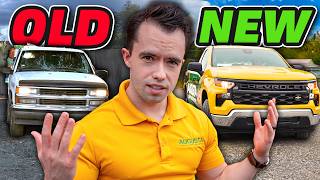
Mike Andes built Augusta Lawn Care to $50 million across 200 locations by making nine specific decisions in order: vehicle buying, payment processing, seasonal scheduling, lean overhead, and specialization. He walks through the economics of each, from cost-per-mile depreciation to when to hire, and warns against over-investing in real estate early.
Chapters
If you own a home service business, this video will save you years of bad decisions. Trucks, equipment, marketing, shop space. What actually matters if you want to build an empire? I've scaled Augusta Lawn care to over $50 million in annual revenue using these nine strategies. No theory, just the order of decisions used at over 200 locations around the world. And if you're thinking, I'll just start quick and I'll fix it later. That mindset is why most businesses stall or die. Let's get into it. Number one, if you're not mechanically inclined and you plan to be in business for over 10 years, I would buy new trucks. Now, this is different than what I've talked about for a long time, but if you look at the cost of the truck over the next 10 years, that's really what I want to focus on, is the cost per mile. So if I take two different trucks, one is used and it has, let's call it 100,000 miles. One is brand new or maybe a year old has 10,000 miles. I like to buy honestly the trucks that still have a warranty with like 10 to 15,000 miles, because I've already taken that big hit on the initial depreciation of a new truck. So personally, I like to buy 10 to 15,000 miles. So if I take that versus 100,000 miles and let's look at the cost for a brand new truck, I'm gonna be looking at $35,000, for example. That's around 10,000 miles. And then if I look at a truck that has 100,000 miles, I might be paying $20,000. Now, if I use that truck 9,000 miles per year for the next 10 years, that would mean that my first truck, the 10,000 mile one, is now at 100,000 miles. My 100,000 mile truck is now at 190,000 miles. So what would the actual resale value of those trucks be? Well, for the new truck, 35,000 was the asking price at the beginning. Now it probably is going to be, you know, 100,000 miles. It's about 10 years old. It's going to be $20,000 resale value. Whereas the used truck that I bought for 20 grand and 100,000 miles is basically scrap, like 190,000 miles. There's going to be some problems with it. I might get five grand for that truck. In both of these examples, the loss of value was around $15,000 on the new truck. I went from 35,000 to 20,000 on the used truck that had 100,000 miles when I started with it, it went from $20,000 in value to basically scrap metal at 5,000. So for both the example, the cost per mile is 17 cents. I put 90,000 miles and I lost 15 grand on both of them. The depreciation is the loss of value. I can look at the cost per mile at 17 cents, same depreciation, less maintenance and less downtime though on the new truck. And if you have a warranty, especially if it goes like 30, 50 at Augusta, longer read 100,000 mile warranty, like no repairs on the transmission, the motor, that can save you a huge amount of time, but more most importantly also save you a lot on downtime. And if you're like me and you're not really great at mechanics, you can't fix things, you're not really a wrench and you know, being able to do oil changes yourself kind of guy, then it's definitely worth it to have less maintenance and just know that your trucks are going to work. The biggest thing though when it comes to having a new truck is I have less cash up front. In this example of spending $20,000 for a used truck versus 35,000 new. The $35,000 new, I might get financed and and be able to put five or six thousand dollars down instead of having to go buy with cash the used vehicle. Now that used vehicle of $20,000, I could have spent that money on marketing and actually getting more customers. And for the vast majority of people starting out, assuming you're going to be in business for a long time and use that truck for all 90,000 miles, it actually starts to make more sense to buy a new truck. Because if you're a large company, instead of having five trucks, you might only need four. Because if you have a bunch of used vehicles, you do need backups because they start to break down. There's very good chance that one or two break down, especially if you're using them quite often. Well, if I have a bunch of used trucks, I need to have backups. If I a smaller operator and I only have one truck or maybe two, having a new truck is super beneficial because there's less risk of downtime. I can't have it where my truck's transmission goes out and all of a sudden I can't do work for two or three weeks. That's a huge risk to a small business. And so by having a new truck that's dependable, reliable, and I don't have to spend as much money up front and I can take that same money that was otherwise be spent Paying cash for a used truck and just go spend it on marketing, all of a sudden the business gets bigger. All right, strategy number two kind of builds on that, is that if you are doing this on the side or you're going to do it for the next few years, like under five years, buy cheap used trucks. The story behind this is that before 2020, I never spent more than $7,000 per truck at Augusta Lawn Care. I got everything, three, four, five grand. The most expensive truck I bought was seven grand. And we got to over $1.7 million in annual revenue at Augusta Lawn Care at my first location before 2020. But then Covid hit, and used prices for trucks and vehicles in general went crazy. Now, according to the Mannheim index, which tracks the cost of used in new vehicles, from 2020 to 2025, new vehicles went up by about 12 to 15%, whereas used vehicles went up by 25 to 30%. Now, that takes account all used vehicles. If you look at trucks only like utility trucks and utility vans, it's actually more than that. What that tells me is that the cost of getting a new vehicle is no longer as big a difference compared to what it used to be. If I was trying to save money on used vehicles because I can't go buy trucks that are half decent now for under five, six grand, that's just not happening. You're paying 20 grand now for a half decent truck that has 100,000 miles. Whereas in the past, I might be able to get that same truck for six or seven grand if I'm paying 20. All of a sudden, $35,000 for a new truck doesn't look so bad. However, if you're only going to be in business for a few years, then I would still go the used truck route. Why? Because new trucks have a huge drop off in value, right. When you roll them off the lot. The depreciation curve those first couple of years is very steep. But what's interesting to me is after Covid, the cost of new vehicles, it's obviously higher than used. But when you look at the cost per mile, like we broke down in step number one, key number one here is that if you're going to use the truck long term, the cost per mile actually evens out and allows you to reduce maintenance, downtime and repairs on the new truck. Recently, one of our owners at Augusta from out in Texas, Ryan, he showed me actually a picture of him buying a new truck 10 years ago. So back in 2016 versus now in 2026, and the cost difference was $5,000 compared to 2026 and 2016. I think he paid like $30,000 for the truck back in 2016 and it was like $35,000 in 2026. So the cost of that truck, that same Ford F150 went up by about $5,000 in 10 years. Whereas when it comes to used prices, it is very easily doubled the cost of a used vehicle compared to pre Covid. So again, I used to be a big believer in buy cheap trucks, get in the door, just get the work done. The customer has already purchased from you before they even see your truck. So, so why not just get the work done and make profit? I'm a big fan of that. However, if you're going to be in business for a long period of time and you're not mechanically inclined, it actually makes sense from a cost per mile perspective to just buy new. The reason I say to still buy used if you're going to be in business for just a, a few years or part time like on the weekends, is because that massive depreciation drop of the the value of that new vehicle. And if you're doing on the side, it's not as important that you have a reliable vehicle. So if a truck goes down, you can fix it throughout the week if you're just doing weekends where you're doing the jobs. Also you could rent a vehicle at the very worst for a couple of days to get by. But if you're needing that vehicle and it's being used every day and the asset utilization, it's going out five, six days a week, I've got to make sure it's reliable. And if I'm using it for 9,10,000 miles every single year over the course of 10 years, my cost per mile is about the same. And so if you're going to be short term, so less than five years and you are going to not be a great mechanic like me, then buying new might be the move. Now a warning. This is the reason why I've always said to buy used is because everyone thinks they're going to be in business for 10 years when statistically speaking most people will be out of business in the next three to five when it comes to home services because the barrier to entry is so low and so easy to get started. It's, it's also very easy to quit. It's very easy to throw in the towel. And so the vast majority of people that start this year will be out of business in three to five years. So the vast majority of people should just Go buy a used cheap truck. But if you've done this for a long time, you've done it for five, 10 years, you have a profitable business. It starts to make really good sense if you're planning to do this for the next couple decades to buy new trucks in 2026. We're trying to give away 100,000 copies of the copy and paste millionaire book that I recently wrote. It's the blueprint for getting from zero to $3 million in annual revenue for any home service business. Now as part of the hundred thousand book challenge that we're trying to give away, we have two ways to be able to take advantage of this. One, you can get the free audiobook, ebook, the course and a physical copy of the book sent to you for free without paying shipping. If you go to mikeandy.com cpmcourse now if you're like I don't wanna take a course, I just want the book shipped to me right away. You can go pay for the shipping at $6.50 for a $35 book. I'll cover everything else. Just go to mikeandys.com 100k Our goal is to get this book in the hands of 100,000 home service business owners. Number three credit cards on file should be on all recurring jobs ACH for all large projects or commercial. Look, I'm not going to do service for any customer without having payment information on file. And in homeworks we've built it into the actual estimate acceptance flow. Do they have to put a car on file or ach if you have that in the settings? I do not want to be a bank. That's, that's the whole objective. The reason I am not going to allow someone to accept an estimate without a credit card for recurring jobs or at least an ACH bank account for large projects is because I don't want to be a bank. I'm not in the business of giving away interest free loans. And that's what you're doing is if you've done the work and you're just sitting there without any sort of payment and I see home service business owners, this happens all the time. Like if you went to a bank like hey yeah, I want to get $5,000 and I will pay you back at some point in the future and I will pay you 5,000, that would be crazy. People will be lining up out the door to get an interest free loan. And yet every single day home service business owners are doing this in their business. They're doing the work and they're not requiring any sort of fees or penalties if people don't pay on time personally, even though in homeworks, the settings, I can make it where their fees start Getting added after 30 days, 60 days, 90 days, I can do that. But for me personally, I just want my money. I don't need your fees, I just need a payment method on file. Whether it be credit cards for recurring services or ACH for big projects. Now I'm going to give a PSA little public service announcement. Most software CRMs make their money on the processing fees and not your membership dues. So I have kind of a behind the scenes look and know a lot of different founders and the businesses that run software, they don't make as much money on their monthly subscription of four or five hundred dollars a month compared to what they're actually making on the back end. And what's costing you per month in just processing fees we can easily pay. On a million dollar business, we can easily be paying 20, $30,000 a year on processing fees. And that's a whole lot more than the $500 I'm spending per month on the subscription. So let's go and break down the cost of credit cards and what's actually going to cost you. Because I know a lot of people are like I'm never going to allow credit cards on file and the extra 3% is going to kill me. Okay. In homeworks, if you're really worried about it, check one box and that fee can be passed to the customer and they really usually don't give a big care about it. If you're going to eat the cost of the 3%, here's what it actually costs. Let's look at Homeworks as well as Jobber and these are very industry standard. 2.9% for credit cards as well as 30 cents per transaction. Now that is very standard. That's what stripe charges us and we use stripe for our processing payments. But the part that I really want to show today, this is kind of behind the scenes is the ACH fees that are charged Homeworks versus Jobber and other CRMs. So at Homeworks we charge point 0.8% up to $5 on ACH at Jobber and you can look on their pricing page and see this or a lot of other softwares they will charge 1% on ACH. Sounds better than 2.9%, right? Yes. And you do save a lot more on ACH compared to credit card processing. However, let's run the math. On a $50,000 job, if you're using Homeworks versus Jobber or another software. So $50,000 project, they put their bank account information on file. Might be a commercial job or a contractor. You're doing a big project for $50,000. Now at Homeworks we charge 0.8% and it caps at 5 bucks per transaction on ACH. So if you're doing this, you're going to pay $5 and get $50,000 for the job. Now at Jobber they charge 1% and I'm not throwing Jobber on the bus. There's a lot of other softwares and they're going to charge about 1% for any processing of ACH payment. But 1% of 50,000 is $500. In just the processing fees for ACH. Is that less than $1,500 compared to credit card? Yes. However, we are comparing homeworks at 5 bucks for the transaction compared to jobber it's 500. Literally it is 100 times more expensive for your ACH fees at jobber than compared to Homeworks. So keep that in mind whenever you're choosing software is a lot of the actual cost, the real fees, what it's really charging you every month is on the processing fees, not on the software subscription. We've seen so many members at Homeworks actually save more money on just processing fees than what they are getting charged in their monthly subscription number four one time jobs only happen in the six months of the lowest leads. So if you've done business for a couple years, you generally know the seasonality of your services and you know when it gets really busy and there's tons of leads coming in and then it kind of gets slow. What I want you to do is look at the 12 months of the year and choose the top six and the bottom six based upon how many leads are coming in. So just look inside of your software and say, okay, I got 30 leads in January, 35 leads in February, 52 leads in March, and so on and so forth for the entire 12 months of the year. I want you to take your bottom six months and and in those months are the only time I want you to be able to do one time jobs. This allows you to focus on the recurring revenue and time sensitive jobs during the rush. Now when I started Augusta Lawn Care, I did scheduling on a first come first serve basis, which means if they asked me for a quote and they accepted, I just put on the schedule whenever the next available spot was there. This will create chaos during your busy season because we would be eight weeks booked out by the time I got to the end of that backlog. I was all of a sudden like struggling to find work. This was chaotic. The swing in leads and then revenue would go way up and then like even the amount of jobs I had for my crew that my need for labor would just go up and down throughout the entire year. So instead, as you start your business, I want you to focus on what are the time sensitive jobs that I can't push off the lawn, it has to get mowed. I can't say, hey, Mr. Jones, we'll get to you in three months. I have to get it done tomorrow. But if I just let everyone accept the jobs and put them on the schedule, I'm gonna have a whole bunch of time sensitive jobs I gotta get done tomorrow. But I also have this huge project I'm working on and I'm running behind on. And this leads to a lot of overstressed employees, a bunch of overtime, and eventually so much chaos you wanna quit. And so when it comes to scheduling, I'm never using first come, first serve. I'm looking at what's the time sensitive jobs and the recurring jobs and I'm prioritizing those when, when I have a bunch of leads coming in. So you got all these leads coming in the top of the funnel. I'm not going to answer them first come, first serve. I'm going to put a filter on. And the only ones that will get through for the top six months of my year are the ones that are recurring and time sensitive. Anything else I will schedule in the other six months of the year where I'm not as busy. This evens out your cash flow and it evens out the amount of work that your crew needs to get done. Number five, spend as little as humanly possible on overhead like shop space to get started. So when I first started Augusta Lawn Care, I actually just got a 6 by 12 enclosed trailer and I paid $40 per month to get it parked at a storage facility. So $40 per month was essentially my monthly expense for shop space. And I would just take the truck that was wrapped and decal, I'd park that at my house and I go pick it up at the storage facility, the trailer, every day. And inside of the trailer was all my tools, my equipment, my mower, et cetera. And, and I had to do that because I could not park my trailer inside of my neighborhood. They didn't allow it. I was still living at my parents house at the time and I needed to get by as little cost as possible. I didn't need a shop space. I need a $40 parking spot for my 6 by 12 trailer. Now as the business began to grow, I went to a $200 per month shop space. It was 10 by 40. I could get like two trailers inside and then I would park another truck outside. So I had two trucks, two trailers. We were paying $200 per month, this 10 by 40 shop. As the business continued to grow past a million dollars in revenue, I got $1,000 per month shop. So I got an acre of land and it wasn't like rated for an office. It wasn't retail space. It wasn't like in a really commercial area. It was just like out on the outskirts of my service area. $1,000 per month for an acre of land. Now I'm highlighting this for you to realize that you don't need the thousand dollar a month right off the bat. You don't need a really fancy shop space right off the bat. I want to keep it as simple and as cheap as possible because that overhead expense is complete waste to my my early customers. As time went on, we ended up getting a really nice shop space paying $3,000 per month. Now it was off grid. We use a generator, we starlink for our Internet, but it's near the highway. We have a massive sign like 20 by 10. So 20ft wide, 10ft tall. It's huge. But we get a lot of leads from it and it's very central to our target area. All of our customers are relatively close, like 10, 15 minutes away. Awesome. But I didn't start there. So what I want you to do is build the business and get more customers and revenue before sinking a bunch of money into an office space and getting into a really long term lease. It's unlikely that you're going to stay the same in terms of what the needs of the business are, but for very long, if you're just getting started, you just literally I had one trailer. If I would have locked myself into a long term lease there, that would have been a problem because I need to slowly grow it. But what I'm trying to prevent is you jumping into a $3,000 per month lease when you only have the one truck and trailer. Let your overhead and your office expense only grow once your customer database and your revenue has grown. I want you to avoid long term leases because there is no way in a fast growing business that what you need today is going to be what you need in three or four or five years. And most office spaces require a five year lease. I also want you to avoid real estate purchases if you're cash strapped. Like, if you only have 20, $30,000, it is not the best use of your money to go get a 2 or 3% down FHA loan and try to get shop space and like house hack the thing. Because you're going to put every dollar you have into buying the real estate and the down payment. And that down payment could be very expensive if you compared it to what you would be able to build the business to if you just spent that down payment money on marketing trucks and equipment. Because that's what actually builds the business. And for everyone out there that says real estate is a great investment, I agree with you. But if you buy a shop space today for, let's call it $600,000 and you put $150,000 down, and then you also, by the way, had a mortgage, that's going to be about what you'd have to spend anyways for rent. That $150,000 is what I'm really looking at. That's because if you spent that same $150,000 on your business marketing, hiring trucks, equipment, you would probably be able to build the business two to three times faster. And if you look in five years, yes, maybe that shop space went from $600,000 to $700,000 or $800,000. Whoop dee doo, you made 100,000 or $200,000 of equity, which by the way, is locked up in that real estate that probably only you could use. But when it comes to spending that $150,000 down payment on your business, there's a good chance your business could be two or three times bigger because you spent the money on the business instead of the real estate. I'm not against real estate, but small businesses, if done correctly, can grow much faster in terms of your equity in them as well as their cash flow. Compared to going and sinking a bunch of money early on into a piece of real estate, you don't even know if you're going to need it in four or five years. And if you outgrow it, there's a good chance it's going to be hard to find a buyer simply due to the fact that you've customized the property for for your business. Number six, follow up, upsell, optimize your website and then advertise. Spend your marketing budget in that order. Most people will do this completely backwards. The first thing they're doing when they're starting a business like, I'm going to go advertise. Where should I advertise Facebook Google door hangers where should I be spending my money? That's literally the last of the four things I want you to do to get the business off the ground. The first thing I want you to do is follow up, meaning that the customer's already asked for an estimate. It's sitting inside of your software as a pending estimate. Follow up with them, send them a text, send them an email, create an automation, call them on the phone, knock on their door, but follow up with every single person. Why? It costs you nothing. It simply takes time. Second thing I want you to do is upsell. This one also doesn't cost you anything. Send a mass text through homeworks, a mass email. Talk to your customers after a big project and ask them to sell them other stuff. Upsell your existing customers the fact that you are going out and spending money on advertising, going after cold traffic. People have never done business with you and yet you haven't. One, followed up with people that are already ask for a quote and two upsold. The people have already given you money and just need you to give them a better offer to get them another service or twice as much product as they've already purchased from you is crazy. And even after doing that following up and upselling all my existing customers, I still want you to optimize your website before you advertise. Why would I spend money advertising and getting people to a landing page that doesn't convert that one out of 500 people actually submit an estimate request form because they have to zoom way in. It doesn't look good on a mobile device, it's slow to load, it doesn't rank well on Google. Why would I spend money advertising that website when if I just optimize the Website Instead of 1 out of 500 people, it went down to 1 out of 100. Guess what? You get five times as many leads if you just optimize the website. So before you go pour a bunch of fuel and a bunch of gasoline on the fire, that is ads, make sure that you actually have a spark. You have a business website that converts and turns them into leads because I don't care about traffic to your website. I don't care about people seeing your yard sign or your door hanger and then going to your website. You're not paying for clicks. I need them to convert into actual leads. And the conversion rate of my website is going to determine whether or not my advertising actually pays the bills to get those leads. And so follow up with every customer that's asked for a quote Then I'm going to upsell all my existing database. You can text, email, knock on the door, call them, do whatever. And then I'm going to optimize my website before last. And finally I'm going to advertise. But for some reason we do it backwards and most of the time we do it backwards because it's simply more comfortable to give money to. Facebook and Google put yard signs out door hangers because we don't have to have any interaction with the customer. We're afraid of the rejection that comes with follow up. We're afraid of the rejection that comes with upselling. We're afraid of getting the wrong person to create our website and, and optimizing websites. So what do we do? We just throw money at Facebook, we throw money at Google and News alert. Mark Zuckerberg doesn't need your money. Number seven, be profitable for one calendar year, under a million dollars in annual revenue before shooting for $3 million in annual revenue. I really think of business as step ups. If you look like a staircase is there's a bit of a plateau and you make a big jump in revenue and then you kind of plateau a little bit more. It's very rare that you have this consistent revenue growth every single year. And it's massive, like double and then double again, and then double again and then double again. It's very difficult in home services because we have so much infrastructure to build out in terms of trucks, equipment and training our employees and operations because of these costs and because of the amount of time it takes to train really good people. I usually see people grow their business, take a year, be profitable, put their roots down, raise prices, optimize their operations, optimize their sales process. And then by doing those things it allows them to grow again, double the business again. But then they stop. They wait for a year, they hire really good people, maybe they hire a couple managers, they maybe get a better shop space, better insurance, make sure that they're the kind of, the gaps of the business are covered, making a really good training process, create better systems and then that allows them to grow again. And so everyone's gunning for this big business right off the bat and, and they build the big business with no systems, no procedures and no roots that have actually sunk down because of a profitable business. I believe that systems are created when profits go up and revenue growth slows. So there might be, here we grow by double or triple the next year. Maybe it's grow by 10 or 20%, raise your prices, make some more profit instead of trying to always be on this treadmill of growth, step off the treadmill and stretch like, you will go a lot further in running. And if you run, but then you stretch, you take your time, you take a little bit of easy cadence, you take a day off, you take a rest day, and then you get back on the treadmill, that's fine. But this logic that I'm just gonna keep growing and scaling indefinitely forever causes a huge amount of burnout and prevents you from ever putting systems in place in the business. And the burnout that happens at people at 3, 4, 5 million dollars in annual revenue could have been avoided if they would have taken a couple years on their growth trajectory and just said, we're not going to grow this year. We're going to raise prices, create systems, hire great people, and improve the training processes for our team out in the field. Doing that makes the revenue and the growth of the business more sustainable. Number eight, be a specialist, not a generalist. Typically, being a specialist pays a lot better. And when I say specialist, people a lot of times immediately think complicated services. For example, in lawn care, landscaping. Oh, I've got to do excavation and irrigation if I'm going to be a specialist. That's not all I'm saying. What I'm saying is don't be a jack of all trade generalist where they do everything. You're doing the excavation, you're doing the irrigation. Then you're also doing the mowing, the bush, trimming, the installation of the mulch. You're also doing gutter cleaning, you're doing pressure washing. That's a generalist. They do everything outdoors. The generalist is usually the person that does everything and gets paid little. They're the race to the bottom. If you look at a specialist, when it comes to medicine, that might be someone like a dermatologist. The dermatologist literally does skin. And I don't want to dumb it down too much, but I have shadowed dermatologists. And most of their job is like creams, Very like. It's not rocket science. They just focused on one aspect of the body. A lot of what they do could be done by a family doctor. Not all of it. There's obviously 10 or 20%. They get very, very specialized and you skin grafts and a lot of other stuff. However, when it comes to a family doctor, they get paid way less than the dermatologist. And there's way more competition at the family doctor or general practitioner because they are generalist. If you have a cough or cold, you go. If you Have a fever, you go there. If you broke your arm and you're going to check up, you're going to go there. But like, when there's a problem with the skin, they just refer them to the dermatologist. You want to be the person that everyone in your industry, everyone in your market just knows as the specialist for a specific thing. You are the chemical treatment specialist. You might be the irrigation specialist, you might be the mowing guy specialist. You want to be a specialist. It doesn't mean you have to be complicated. It just means focusing on one thing. This allows you to charge a premium in the market because you have become branded as the expert for that service. Number nine, poor quality comes from poor training. Poor training comes from poor planning. So when you look at your spring rush, a lot of times there's chaos because two things are happening. You're getting a whole bunch of new customers pouring in at the same time that you're getting a whole bunch of new employees. And so if you want to really dominate your spring rush, you'll need to plan for it. This is why a lot of times it's your second, third, fourth year, your spring rush, you start to figure this out, the demand curve of spring rush, when it happens and when comes to it, when you need to start hiring to get ready for it. I don't want to be March 1st, the phone's ringing off the hook. And March 1st, I'm putting up job ads. I might put up job ads February 1st to make sure that I can get people hired by February 15th in expectation of me having a bunch of work March 1st. I'm going to plan for this. I'm going to say, okay, I get busy March 1, I'm going to hire significantly before I have training days in advance. And so I want you to have systems for training, have a checklist. These are the things that they do the first day, the second day, the third day of training. And at Augusta Lawn Care, like the first day, they're not gonna hop on a zero turn mower. They're not gonna start driving the truck in a big trailer, they're not gonna hop on an excavator, they're not gonna do irrigation. Day one, they just pick up the blower and the weed whacker. Day two, they just do the push mower. And as the days progress, they get all the checklist of the things that are required to be able to be out in the field getting work done, but getting trained systematically. And they're going to have a trainer that checks off each of those things and signs off that they actually know how to do the weed whacker and the blower and then they do the push more and day three, the zero turn. And by the end of two weeks, yes, they are driving the trailer, they're driving the truck, they're backing it up, they're able to use all the equipment and they can really be solo inside the business. But I'm going to make sure I have a training process in place for, for the trainer and the trainee. The trainee is going to get that checklist. The trainer has to sign off on each of those things and is going to get a bonus if the trainee passes training and then is above base pay on pay for performance on their first paycheck. Meaning they're efficient and they don't get yellow slips. If you create this system, you'll have much better training and if you have good training, you won't have any complaints when the spring rush is hot. But in order for that to happen, in order for there to be a solid process in place for training, you've got to have great planning. And that means understanding that when you get busy is not the time to start hiring. It is two weeks before that when you need training and it's two weeks before that you need to start hiring. And so have your 30 day plan of training and hiring employees prior to the rush. By doing this, you'll be able to capitalize on all those new leads that come pouring in. These are the nine things to focus on if you are starting your business. If you want 40 brutal truths that every home service business owner must know, check this video out right here.









