I'm LOSING $30K/month on my business! 🤯
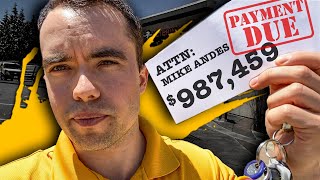
This is a first-person vlog by Mike Andes describing daily work and investments in his Pay-for-Performance (P4P) software business. He says P4P currently loses about $30,000 per month while he funds development and support (developers, designers, architects, support staff). He discusses project-management tools (Jira), design work (Figma), and long-term belief in P4P despite heavy spending (he moved funds from stocks/real estate into the project). He also advertises a $799, 50-minute consulting Zoom session and promotes Landscape Summit (Jan 5–7, 2023). A customer case example cites a $4M-location revenue breakdown (snow $1M; maintenance $1.5M; landscaping $1M; fertilization/weed control $0.5M).
Questions this video answers
About $30,000 per month.
$799 for 50 minutes.
January 5–7, 2023.
$4,000,000 total: $1,000,000 snow; $1,500,000 maintenance; $1,000,000 landscaping; $500,000 fertilization/weed control.
Chapters
It's not clickbait. I lose tens of thousands of dollars on this business. I'm gonna be sharing it with you today. I'm also gonna be sharing with you how to make over $15 per minute. It's gonna be great.
Now this is actually where I make all the videos. Right? There's where I sleep on the mattress in the closet there. Yes. I come out of the closet every single morning where I make all the videos. This is where we train for the franchisees. It's awesome. Just finished the morning. Mastermind. It's called Mike Minute Mastermind with the franchisees. We talked all about how to run a location with a manager that works in the field for three to four days out of the week. So it's to be really profitable. Even at 500, $600,000 in annual revenue, running on simple services.
It was great.
We also talked about balance sheets and income statements and profit and losses and the differences and how debt works on a statement of cash flows and things like that. It was awesome. So now we're going to get the day started. We're going to talk about P4P. That is the thing. I'm losing a bunch of money on over $30,000 every single month. I'm losing on pay for performance. Let's jump into it.
So here's the deal. We have multiple people working all around the country on this project. Developers, designers, architects. It's very expensive to find these type of people. So we use a project management software called Jira. It's very cool. We keep track of stuff in terms of to DOS in progress, code review, internal qa, that's quality assurance, uat. And then we put it into production, prod all the little features, all the little things we want done. Now there's a massive design change that we are improving. It's going to be fantastic. Let me show you a little bit of it. So for example, this is a software called Figma. So you can see here, this is kind of the updated mobile version. What employees will see. Just a really nice clean way of looking at all the data we already have in there. But just modernizing the site design so it looks super user friendly. And this is the mobile side, the dashboard for the manager side is going to look epic on desktop. So really looking forward to that. That's the type of stuff that's going to really set things apart and really just taking the data and then synthesizing it and coming up with some sort.
Of actual real world application.
What this software does for your employees that you want to say things to and you can't because they'll get mad at you. But we can tell them.
Awesome.
Thank you, Dustin. I appreciate your time, brother. We'll stay in touch. But ultimately every single month I have to pay those designers, pay the architects, pay the people that are actually doing the web development. And it's a lot of money. So. So finding developers right now is tough because everyone and their cat wants to build some sort of next software program being Silicon Valley. And every single developer has the ability to be able to make $200,000 at Amazon, so.
Or Apple or whatever.
So it's expensive, but something I really believe in.
Boom.
And so it is a project that I'm hoping that will become profitable Once we ramp back the production, the amount of work we're doing in terms of development, once we turn down development later this year, I think we can make it where it at breaks even and then I'll put money back into it. But it's something I really believe in.
Pay for performance.
Obviously I wrote the book. Check this out. Pay for performance. I wrote this. Obviously I really believe this is the way that all service based businesses and industries need to pay their employees. It's better for the employees, it's better for the business owner, it's better for the profitability, it makes the company more lean. And whenever you make company lean, the employees and the business benefit more. So if you haven't got a copy, make sure you get the book. But p4psoftware.com is something I'm very passionate about. It's something that I will by the end of this year have spent over half a million dollars on well in excess of a million dollars. And so yeah, still losing about $30,000 a month between the production and then also like the support side. Brad works full time for P4P doing all the support, onboarding, helping people. He's a CPA and so he knows his numbers. He's been on the field doing the actual mowing and been on P4P and was with us when we switched to P4P. So that is why I'm losing that money. But I believe in for the long run it's gonna be the right thing to do and it will actually have dividends and return. I spent the money that last year I was spending in the stock market. That $500,000. That's where it's coming from is when I sold out all my stocks and things like that. So I've gone back into the stocks a little bit recently, but not very Much. I really sold out a lot into real estate in October of 2021 and then put a lot of the money into P4P. So P4P is a long term play. It's a long term buy and hold.
This is the majority of my life. Zoom calls.
Very exciting.
Oh, check it out. This is Landscape Summit. It's coming up here in January. Got some new speakers, New speakers. Landscape Summit. Check it out. Go to mikeannies.com it's gonna be the best event ever. January 2023, the 5th, the 6th, and the 7. Be here or be square. So if you're on YouTube and you go down here below, there's a whole bunch of links, different stuff that I do. One of them is booking a consulting call. And so this is basically 50 minutes on a Zoom call with me now. It is $799. It is very expensive. Do not buy it unless you are a larger company. I have tons of free information that I give away to help people that are getting started. But if you have five customers, don't book a call with me, listen to my content and get more customers. That is the only thing, the only thing you need to focus on going to die. The only thing you got to focus on when you're trying to build up to 250,000 or more in annual revenue is closing ratio. Should be above 50% every single month. If you do that for long enough, you will get to quarter million very quickly. That's what you should focus on now when it comes to these coaching calls. It's a scam. $799. You're grifting your followers. What is this craziness? Okay, so let's check it out. What is this all about? Okay, so yeah, you're gonna talk to Mike for 50 minutes. You're gonna get a zoom call. That's who Mike is. Okay, Talk about it a little bit. Okay, cool. So that right now is all you get. 50 minutes of Zoom call. $799. That is more than $15 per minute to talk to me. So that's stealing. That's crazy. I agree with you. I don't think anyone should do it if you're simply comparing $799 versus buying. I was gonna pull my iPad. I gave my iPad away. If you're comparing it to a laptop. Okay, so I don't think anyone should buy it unless you're larger. And here's the thing. When someone books a $799 call with me, I have one goal, and that is that when they get off that call, the only thing they think is every single dollar spent was an absolute steal of a deal because it's gonna save them tens of thousands, hundreds of thousands of dollars or at least, at the very least, give them some guidance on something that has to do with their finances. They gotta have a massive return on the 799. Otherwise I'd.
That's my biggest fear is when a call like this comes in. Now when you sign up for one of these sessions with me, you have to fill this big form and all about your business. I want to know as much as possible. I actually do a bunch of research prior probably for 15 minutes to make sure that I know what you're talking about and I know about your business. So specifically, this location today does $4 million in revenue. They do a million dollars of snow, $1.5 million in maintenance, $1 million in landscaping, and half a million dollars in fertilization, weed control. So their profits are about.
Thing is like do I do multiple branches or do I keep growing this one location from 4 million to 50 million? What is the pros, the cons? And ultimately you start becoming multi millions in this industry and you're doing more simplified services. You start to become a little bored. So it's like, what's going to be the most fulfilling for him personally and then financially, where's the most fulfillment going to be in terms of return on his investment? So that's what we're talking about in this call. And I personally feel like $800. I feel like hopefully I can offer 10 or $20,000 worth of value to him, save him time. And based on my experience with doing lots of multiple locations, having four of my own across multiple states and having general managers, hopefully something is beneficial that.
I said to him, I would much rather see you stay at 4 million for 12 to 24 months, but go from 9% margin to 15% margin. That business just from a valuation mechanism is going to double or triple in enterprise value. When you start looking at the margins that way, the big thing that everyone's thinking hard about this recession and that's a good thing. But what you have to remember is worst case scenario, you raise your prices. Now you go into recession and you lose customers and you're going to have actually a contraction of revenue. Now that can be dangerous if you have a lot of debt. If you have debt that needs a $4 million business, a $5 million business to support it, that's when it can get scary.
Now I cannot do these all the Time. Okay. I would be go crazy. I only do these maybe once every two weeks. I allow on my schedule because it's not scalable. All right. I love helping people one on one, but it's not scalable. That same time spent making a video could help thousands of people versus just one person. So I do this very specifically because I remember back in the day when I had problems and I just need to ask someone a question and there was no one to ask because my competitors were wouldn't talk to me. And so I specifically leave it open for that reason. And that's why it costs so much. It's not costing a lot because I want to make a bunch of money. It's costing that much because I need it to be where I only get one or two of these a month. I don't have the time to spend an entire hour. By the time I research and talk to somebody, I don't have the time to do this two or three times a week. It'd be great. But ultimately it's not about the money. It's about making it to where it's still available if someone really, really, really wants it. The money for this goes directly into the media side of things. So the media group has three full time employees and it has all of that being covered by YouTube and the course landscapebusinesscourse.com and all that stuff. So the money from this goes directly back into the content. But I just don't have the time right now to do this multiple times a week. I only can do this every couple weeks. Maybe a couple times a month.
Okay, so one o'. Clock. I still haven't ate yet. I've literally stayed in that chair for the past seven hours just doing phone calls and zoom calls mostly. This is my day to really get caught up on those. First meeting there with the consulting call that went great. Has some really good takeaways. We'll see if we can't can't get the recording for you all really talking about how to take a location from $4 million to just scaling up to 10 and even 100 down the road. What that takes in terms of leadership and really building a leadership team. So that was really interesting. That was a lot of fun. Talking about more the macroeconomic things that labor and whether you should systematize and scale down and simplify or if you should really just continue to diversify and add more services in their market. So that was really interesting. Going to go drop this off because our contractor for the headquarters we are still buying all the materials. Even though the bank loan has been on freeze, I'm still buying all the materials because everything is so backed up with the supply chain that, well, you still got to buy windows and electrical. And actually the metal building is showing up in two weeks. That's gonna be fun. So that's kind of the update now. 1 o' clock in the afternoon, still more calls to go. And then I'm gonna be heading back to command center. So that's basically a day in the Life P4Pmeeting went super well. You probably saw some of the new updates, things that we're gonna be adding there. That's gonna be exciting. Yeah, another day.
Here we go.
Get the mail. Also, one of our locations out in Texas, he's thinking about starting a second location sooner than he thought. Unfortunately, he had some health issues, but that is going to force him from being out in the field, which is going to force him basically to really focus on scaling up and working on the business. So he might start a second location. That's fun, that's exciting. Obviously feel bad about the health side of things, but sometimes things like that, like a negative like that can be. Turn out to be a really good thing because it forces you to depend on others, depend on systems, forces you to scale back on things in the business that are. You are the bottleneck or projects or services that only you can do. So I never look at those things necessarily after thinking about it for a bit as a negative thing. So anyways, here we go. Afternoon. We'll see you guys tomorrow. I don't know how to close out these vlogs. Okay, we'll see you tomorrow.









