INSUFFICIENT FUNDS... Throwing in the Towel
Mike Andes reviews Freedom Lawn Care and finds a business in crisis: negative bank balance, $100k in debt, unpaid owner wages, and crew cards declined at Home Depot. He recommends consolidating software, cutting services, and making hard personnel changes to survive.
Questions this video answers
Negative $1,000 (account was negative $1,000).
Over $100,000 in debt (speaker: 'there's over $100,000 in debt').
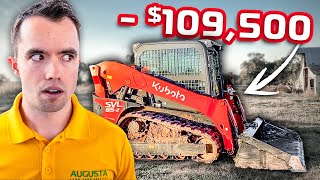
Skid steer: $73,000.
Truck: $19,000.
Dump trailer: $7,500.
Chapters
The two cars just didn't go through. They know there's not money.
As of today, my account was negative $1,000. I haven't even made the payment on this thing.
Where's this? Where's my check coming from?
It's embarrassing to be a crew member.
It's hard to take them seriously.
The customer doesn't want you there.
I'm trying to do things as fast as I can.
Hey, you're getting way overpaid for like.
What you're willing to do behind the strip club. This is an absolute nightmare. Please tell me this is a joke.
I'd say I'm in 100 some thousand dollars of debt between equipment. So that got out of hand real quick.
I want to see you go bankruptcy.
Seems like things have just been really out of hand lately.
You are asking for disaster.
Today. We're going to Freedom Lawn Care where there's over $100,000 in debt. $15,000 of dollars of that is credit card debt. And they have a negative $1,000 bank balance. Five employees haven't paid himself, the owner, for four months. Go see if we can turn this thing around.
You see that Kubota over there?
That's a lot of debt sitting over there. Morning, brother. Good. All of our camera gear didn't come through on the plane. Don't mind our lackluster setup.
You're good.
Cool, man. Good to meet you.
Don't mind my lackluster setup. We actually. We rent this house here. The owner just lets us use this lot.
Nice, man. This is the place you want your shop out in the middle of nowhere?
Yeah, so I grew up working on this ranch here. We do lawn maintenance, landscape, Christmas lights. Yeah, I don't come from money. I've built all this by myself and it's been a been a grind. I'd say I'm in 100 and some thousand dollars of debt between equipment, schizier and other stuff for revenue this year.
2023. What do you think you're doing? I know the numbers are a little bit hairy.
We're going to hit 200,000 for sure. 250 might be a long shot.
I see the Kubota. Do you guys use quite a bit of landscaping then? And some lawn care. What's kind of the split in terms of revenue?
75% landscaping. 75% lawn care.
What's the payment on this each month?
1200.
Do you guys use it quite often?
Like once a week kind of thing?
It's like when we're using it, we're using it we're not. There's been times where I'm like, holy crap, I'm so thankful we have this thing. It's like, it's just so handy. And then there's times where I'm like, geez, I haven't even made the payment on this thing. Like, it hasn't even paid itself for the month.
So it sounds like you bought this $70,000 piece of equipment. He doesn't use it very often. And it's put a whole bunch of debt to. On the business.
And then you have other businesses too, right?
Yes. Okay, what is that? I invest in real estate. I started doing that this year. And then I have a hunting outfitter a couple hours away from here, and I do that. I mean, we're about to start up doing that, so.
So do you, like, take people on tours or.
Yeah, so we take people on guided hunts. I have six employees doing that. Chef, the lodge. So the hunting lodge is for my business.
Got it.
So in Kansas, that was my real estate. So I bought two pieces of real estate. This one was a flip house and one was the hunting lodge. But that's all buy and hold for my personal business. Right, Got it. We're gonna do 250 grand in that.
Business on that one this winter. Cool, man.
So we're kind of running into, I don't know how, like, when we want to get into this. Yeah, I have a couple issues with employees. A lot of what I think is going on here is my lack of, like, leadership and just being able to like, tell people, hey, this is what you do. This is what you need to do. Go do it. This is your job. I'm like, very non confrontational. I don't.
I can tell.
I don't like telling people what to do.
The office gal, she is she full time, part time.
She's 20 hours a week.
Got it.
She's clocking hours, but, like, she's not always doing stuff for the business. I texted her the other day about it, and I was like, hey, did you reach out to these snow contracts and try to sell these?
Yeah.
And I just, like, didn't hear anything back. I'm assuming she didn't text me back because she didn't do them. And then as far as Jacob, he's a great employee. He's that guy that, like, you hire and literally like, changes your business. Yeah, like, if I lost him, I. I don't know what I would do.
I. I was needing a job real fast because I walked off of somebody's job and I Seen a lawn truck? Yeah, I can do that. Like, they're always hiring the other one.
Etion, he's my best friend.
I don't really know what these guys are really here for.
I mean, best friend since, like, high school. Yeah. I hired him as project. Like, he's a lot more responsible. I know his background. I know, like, I can trust him with my debit cards.
And he came up with the idea. He wanted to start a landscaping business, and I thought he was crazy, but here he is now. I was a welder. Just kind of got tired of it.
You hired him originally as project manager.
Yes.
And now really? I hear it is more of a now overpaid employee type situation.
Yes, very much so.
Okay.
And you almost feel, like, this weird cultural tension between, like, him and the other guy.
The other guy. They're pretty good friends. I mean, I've got gun straightened out now, but at first, you know, he just had a real bad attitude. Didn't really want to work all that hard.
This guy knows how to do everything. Basically runs this thing y. And this guy's getting paid this x amount of dollars.
Yeah.
And then this guy is getting paid X amount of dollars, and he, like, doesn't know how to do much.
This is, like, the first actual, like, landscape business that I've worked for. Somehow.
What'S the right thing to do for the business? Not for anybody else, but for the business, because that's what we're doing here.
And ultimately, like, making the right decision for the business is still better for them because the business stays in business.
Yeah.
And right now, like, financially, we're actually putting them in a bad spot due to the fact that it's not financially viable. Would you rather Jacob be the person that kind of runs things?
He has the qualities to run it. Like, if I care about this thing 100%, he cares about it 99%. He literally tells me all the times, like, hey, man, I want to make you so much money that, like, when you pay me, you don't have to worry about it.
Does he know the finance of the business right now? A little bit.
Oh, yeah, yeah. I'm definitely aware. He don't talk about it, but it's like, it's obvious. Sometimes I'm like, where's this? Where's my check coming from? Like, I'll try to do things as fast as I can, and, like, I'll stay late, finish up a job, you know, Because I know if he don't get paid, I don't get paid eventually. Probably struggling a little Bit I know we're not doing too bad.
So your hope right now is keep these three guys busy throughout winter here. You're going to be focusing on the hunting side of things probably throughout the winter, and in spring come back, and then you're hitting the ground.
Right.
Do you think, assuming that you're able to get laborers, that next year, with the current setup, in terms of equipment, you could do like 400,000. Do you think that's kind of the goal?
I think next year we can do 500 with. With if we have the labor.
When a business is doing between 0 and $200,000 in annual revenue, the owner should really be focused on being a great laborer out in the field with their team doing the work. But Luis really approaching this like a manager. He's having a general manager and an office person and all of the structure of the business when the business isn't big enough for that. I need to talk to Micah, the office admin person, and see if I can shed some light on what's going on. Whoa. We are literally parking here behind the strip club.
Please tell me this is a joke. There's currently four people in the organization. Luis, two employees out in the field, and his office admin, Micah. The problem is, is that the whole business is doing $200,000 in annual revenue, which means if you take 200,000 divided by four people, there's less than $50,000 of gross revenue being created per employee. That's really bad. You don't even have to tell me any other number in the business. And I can tell you there's no profit being made.
For every four employees, you need to have, like, one overhead employee.
Yeah.
And that will be profitable.
Right.
And then, like, we're sitting here, we have two employees, two overhead.
I can sell as much as I can, but it's just hard because I'm not out there. So, I mean, to be completely transparent, I have no clue what's what. I don't know how to explain to people like, oh, this is what they're doing. So I can only do so much.
And that goes back to, like, we do too much. Look at that list right there. Services we provide. Yeah, we do that whole list of services. If we did, like, five, six max things on that and no more.
Yeah.
She would be able to sell it because she would be able to learn. She'd be able to learn six things. Well, there's 20 things on that list. I don't even. I don't even know them front to back.
Let me Understand the debt for a second. When you say $100,000 in that, does that include the skid steer?
Skid steer, 73 grand.
Okay.
Truck. I have 19 grand on it.
Okay.
And then dump trailer's like 7500.
Got it. And then the rest is just credit card debt, basically.
I mean, yeah, credit card debt is ten grand. Okay.
Okay. This is the bottom line. Some people would be, like, super pessimistic about the situation because it's a matter of like, literally your liabilities, like, is basically equivalent to your assets. So basically it's like, if you sold everything, you could pay off your debts and move on. Essentially where the business is at now, which, if you go below that insolvent, which means you typically should sell the business and just move on with life. However, you went from 70,000 to 200,000, and you probably would probably do 400 to $500,000 next year. You will probably become profitable if you do 4 to 500,000 in annual revenue without having to buy any more trucks or equipment. And you can make your. Your labor is much more efficient by cutting all this stuff down. Yeah, because when I see $200,000 in annual revenue and I know you have a bunch of project costs, I say, okay, let's say that's $150,000 in labor revenue. Well, if you take someone that works 2,000 hours in the year and you do the math, they're not making a lot per hour. And so either A, you're charging too little or B, they're super inefficient. And so, like, what, when you go out and bid a job, what's your target hourly rate? Like, do you usually find 65? What do you pay per hour typically for a labor? 15 to 20 for entry level?
Entry level, 16. Right now, both our people are 20 plus 10.
Yeah. Like right now, I would imagine if I looked at the finances, you're probably sitting 70% of your revenue just on wages. By the time you take office and you take your employees on the field, that business will never, ever, ever, ever, ever make money. At that ratio, it needs to be at 40% or below. Yeah, especially because you have a bunch of material costs as well. So really it should be like 30% or less.
I think that a lot of times maybe this business ain't making enough money to. To grow at this point or sustain.
This is what we call a classic case of the shiny object syndrome. You think you're an entrepreneur and you start a whole bunch of businesses where if you just business, you'd actually make more money.
I'm equally passionate about both these businesses. I'm passionate about hunting just because that's what I grew up doing. Yeah, like I love just to go hunting. But as far as like which one I'm more passionate about growing. You could give me a porta Potty company and be passionate about growing.
It's the game of business.
It's like the chase when you're like a 16 year old boy and you're trying to get a girlfriend. Yeah, that chase of just getting a girlfriend. It's fun. Yeah, like that's like the like what business does for me. Yeah, it's, it's like that itch that I love.
But this, to use the analogy, that's the equivalent of going after three girls at the same time. Probably going to get burnt. Right?
Yeah.
Focus on one man, never met another.
20 year old, like, you know, thing. But sometimes I do worry that maybe he's trying to do too many things at once.
And so this is where, this is where it's hard for me making like a call like, hey, you should get out of business. You're growing quickly and growth sucks cash. And I think you have enough assets to get to 400 and 500,000 without having to buy more stuff. Like in my opinion, the challenging part is if you're going to try to run both is you need this business to still do at least 25, 30,000amonth just to break even. Because in my mind it's like, okay, we should just have you and Jacob working all day long. You should be taking calls, emails, estimates throughout the day. But you're primarily just working with him. You just cut out 90% of those services and then you guys become specialists and you can charge more. That's a profitable model. It's not scalable though. So that's the next question is like, well, if you want to build a $10 million business, you're probably on track to do that. Like you're on the right path. How much pain do you want to go through over the next 10 years is the next question.
Yeah, losing money, losing employees, just all sorts of stuff going on. You know, I just got married in March.
I was about to say last.
But you just got married.
I just got married. So I'm like trying to figure out how to be a husband. You just stack on like family business, faith, everything. You stack on all that stuff on top of each other and you try to make them all work. And then like my brain was just getting like it feels like about to explode. So that's when I was like, I need somebody to, like, relieve me of, like, at least some of the admin stress. Because that was like, killing me. That's when I heard her.
You shifted that stress. And temporarily, like, this is awesome. Temporarily.
Just patched it.
Patched it. And all it does is move the stress. The next spot. Which is fine.
Yeah.
Because you can't. The business can't afford that.
Yeah.
Yeah.
It definitely is a band aid. Now, looking back on it.
Yeah. If you were gonna keep both, let's. Let's now go down that bridge because, like, I think personally I would not. I would choose one. I'd spend two years making it extremely profitable. I would then reenter the industry if that's what I really wanted to do, and I'd do with cash. Luis is 20 years old. He recently got married, and he's trying to run two different businesses. I can see why he's stressed. The business isn't making money. And worse yet, he's not even paying himself a salary. This means that if you actually took the 70 or $80,000 that would typically go owner in the form of salary, it's losing a lot of money. Actually, in my opinion, to cover the cost of his salary and all the extra wages and the. The debt on the business, the business really needs to make about 400 to $500,000 in annual revenue just to break even.
My thought process going into all this was like, we're trying to ultra scale. Like, I'm trying to, like, not copy you, but do a similar model.
But why ultra scale? What's the motive in all that? What. Why do you feel like you want to ultra scale?
My end goal is 40 locations.
Why?
Financial freedom. And I just love, like, the game. The game, it's fun.
I believe you will achieve that goal. I think there's a better way of getting there that creates less stress, less headache, less depression, and more money. Instead of trying to become that now, I. E. Having multiple businesses in investing in real estate, etc, Start with one thing, make it really profitable, I. E. Remove some of the financial stress. Then when you go do a second thing, you have the money to do it really, really well. Like, I always think about the three little pigs. You got straw, you got the wood, and you got the bricks. Some of you like, I want the brick house. I want to build this incredible, massive business. You're gonna hurt trying to do that. You don't know how to build a house, and you have all these heavy bricks that if you build them incorrectly, it's gonna fall down.
You.
And that's people like, I'm gonna do equipment. I'm gonna do the fast way of building this really big business. And they get hurt. When in reality, it's like, just focus on building a straw house. It's really fast, it's cheap, and it falls down. Who cares? Build another one real quick. Right? That is. I'm gonna be a laborer. I'm gonna really focus on working hard. I'm not gonna try architecting this massive infrastructure of a business. It's like complicated. Multiple moving parts and investing in debt and buying people on mergers and acquisitions. That comes later. You will get there. But the most profitable way to build a business is in stages. And the first part is, I'm a laborer. I did that for five years. I'm allergic to grass. Like, it's horrible. It was painful. It took me literally getting almost killed under the dump truck to figure out like, oh, this is probably not what I should be doing the rest of my life. Those first five years were imperative so I could build a business, make profit to then go do other stuff. Make the franchise. Like, that location funded me to build a franchise that lost hundreds of thousands of dollars every single year because I built the foundation. If it's in years two or three, I was like, man, I want to do something else. Like, this isn't big enough. I don't want to be the guy that just keeps doing this forever. But I would have never got to where I'm at today because I wouldn't not build the engine to fund and fuel all the other stuff. So the goal that you want to have is Admiral, and I think you're going to get there. I think there's a better way of going about it. Instead of trying everything at the same time. If you just put all of your attention on one thing, like selling jobs, and that was all you focused on, you do very far. You'd scale very quickly. If you took all your attention and just focused it on the hunting. You do really, really good. If you focus all your attention on just being a great husband, you'd be really, really good at it. The problem is we're trying to do all of them right now. And because you're putting 10% of your attention on every single one, they all will fail.
It's a hard one. Everybody's pulling you in a different direction.
That's the thing. That's why I asked you your why. Because it only matters where you want to go. Who cares what other people think? Here's the thing I bought a house six years ago at the same point I started the franchise. Okay. That house has almost doubled in value. Woohoo. 200, $250,000. The business I've created, probably worth 10 to 10 to $20 million. Just the franchise. You spending your time on the thing that you're really good at, the thing that you love and your why, which is I love the game of business will lead to better outcomes than real estate. Despite how dire I think the situation really is, I think that Luis is going to continue pushing forward and trying to run both of the businesses. So using that framework, I got to try to see how we can make it actually work. So the first thing I want to do is drill down to see exactly what Maika is doing in the office because she's costing a lot in terms of overhead and I want to see what she's actually doing on a daily basis to move the needle for the company.
So I mean to be completely transparent with you, if it's like a small job, so like lawn care or anything like that, I have personally never done a follow up but say we hit like a thousand and higher, I always kind of try to do a follow up. And he's really good too about making sure that people have gotten their estimates, especially when it is that much. But like I said, if it was just like $50, lawn maintenance.
If you want it, you'll want it.
But I, you know, look, I love Micah, but at this size of business you don't need a full time office person. And if you're going to have one, make sure they follow up religiously on every single estimate that's been sent out. We literally a $6,000 estimate we've sent the customer four weeks ago. It's probably sitting in their spam inbox and we haven't followed up. And then why do we have the two different apps, Yardbook and then Timetree?
That'd be a question.
Because.
I started with Yardbook. I don't like the scheduling on it.
Like this app, it's called TimeTree. Sometimes he'll boat jobs and he'll know what they are, he'll know how much they are, he won't put it in there. So we don't know anything about it. Comes a day to do the job and we're like, there's nothing in the calendar.
Just get rid of the two apps. I don't care if it's yard, Book, Jobber, copilot, doesn't matter, just get rid of the two apps because it's killing you right now because you can't track your close ratio.
I want to do just copilot. Like that's why I just like up and bought it because I was like tired of dealing with all the different software and crap.
Needless ladder.
Yeah.
As we're sitting in the office talking to Micah and Luis multiple times, the crew from out in the field came back to the office because their credit cards kept getting declined. With non sufficient funds, There wasn't enough money on the card to go get the materials needed to do their job for the day.
Whether it was his bank, whether it was his card.
Is there money in the bank? We don't know either. I mean it's $800. I mean it is a big purchase, but not very big. Two cars shouldn't be bouncing.
So I don't know.
Yeah, there's a great example of I just got a text when they were at Lowe's and they said the car declined. So yeah, it's a great example. Financial issues.
It's been hours since the day started and the crew still hasn't got their materials or got to their very first job. But yeah, like it's really important to be in one software mostly so I can know one number and that's close ratio. And for now, until you're copilot, I would literally have a board that it's like every estimate you send, you make a little check. Even if it's like, like tic tac, toe, whatever it's called, like just mark them. Because my opinion is right now you're probably closing only around 20% of your jobs. They literally might have one question about one type of bush on your design. But because we never followed up with them, they just never get around to it and they just take the next guy who comes along and follows up with and says, hey, were those bushes the right ones?
Yeah.
Number of estimates accepted divided by number of estimates that were sent. Right. That that percentage is so important because I believe by tracking it, you'll see. Oh, if we do offer Monday, Wednesday, Friday, and I'm able to get estimates within a day, we can get the closed ratio from 25, 30% to 50%. Having a process for follow up to make sure they actually open up the email. Also really important, they have to spend a single dollar more in marketing. They have to buy, get more administrative. You have to buy more trucks. We just doubled our business by going from 30%. Now we have 60% close ratio.
Just double our business.
Just doubled your business.
That's crazy.
The Thing that makes me really mad here is the fact that when it comes to getting an estimate in the inbox of a customer, it doesn't take a whole lot of work to make sure they actually open it up. You can automate the process using text messages, email reminders, and making sure the customer got the quote. You answer any questions and then you close the deal. The fact that there's so many estimates have been sent and never even opened up or ever even followed up on is really, really bad. Now Copilot CRM is where we build all of our automations, both for text message and emails. And Copilot CRM is a product that I've built with my team and I wanted to actually, really quickly take this opportunity to say that if you're wanting to join Copilot, I recommend you do it before the end of this month. At the end of December 2023, we'll be raising the price. Now we're offering something to anyone that joins before the end of December and that is a price lot guarantee for life, which means that the monthly subscription of your enterprise level subscription will not change forever. We are going to be raising the prices January 1, 2024. We have added all of these features in 2023. Now in adding all those features, we've moved very quickly and we have. There's been some bumps and bruises along the way for sure. And so for the early adopters that join in 2023, I want to make sure that they have this price lock guarantee as a way of saying thank you. So if you'd like to be in that. I don't want to be a support prize when we raise prices in January. So make sure you join the enterprise level subscription before the end of 2023 to get that price lock guarantee. So your price never, ever goes up.
In terms of like, too like bringing down costs. I know a big thing that you mentioned to Zach even was like having, you know, somebody overpaid to be a manager and now they're just an employee. Like, is that something that we need to actually address?
Yeah, we've talked about this. Like, I've talked about this to everybody. Yeah, it's to a point where it's like I love him to death or do anything for him, you know, literally take a bullet for the guy, best friend. But like, I hired him thinking he would basically not be able to run this for me, but just like do a lot more than what I like seem to be able to do.
He knew he could trust me. So Jacob's more Of the handyman guy know it all.
So how much is he overpaid right now per hour?
So he's at 24 an hour, and Jacob's at 20 an hour. Jacob asked for a raise to 22, which I'm willing to give him because he's worth that. But the one at 24, just being completely frank about what he's doing, worth just as what I see him producing is, like, 18 an hour. Something like that.
Does Jacob know he's getting paid 24?
I don't.
We don't really talk about it.
Like, me to get where I'm at, like, I had to, like, work real hard, you know, he pretty much.
Make it the same, if not more, you.
Know, it was me, no experience, didn't have to work at it.
Like, we don't, like, share. Everybody's like, hey, okay. Just because I like to keep that private. Yeah.
I think he needs to hire.
Some more people to help me, maybe not have any kind of personal relationship. That way they have to earn their spot, not just be permanent, because they're permanent, you know?
Like, when I pay people, I want to be, like, excited that I'm sending them this money because they did a killer job. I'm not gonna lie, dude. Every time I send jacob his paycheck, I'm like, this dude freaking earned it. Well, like, when I pay etion, I'm like, dude, I'm sending him all this money. Like, he did not earn this. This is not, like, what he earned.
It's a lot harder than somebody thinks it is.
When you first start your business, a lot of times, you will hire friends or family at first because you trust them. As the company grows and you get outsiders as employees, you, need to make sure you hold everybody accountable to the same standards in the business.
The other day, he got a flat tire in a truck, and.
He was had on a jack was taking the wheel off. He didn't put the parking brake on, and the truck fell onto the ground because the car drove by, and it fell on the ground, like, smashed the brake caliper, and then he, like, punched the truck.
He got mad.
He got mad and, like, hit my truck. So, like, that's something like, I don't care who you are. I'm the take that seriously, address that, because, for one, it's my property. And for two, when you act like that as a leader, you're gonna make people think that they can just act like that. Like, if one person sees you disrespect me and disrespect Myself, even subconsciously. It'll let them know that, hey, I can get away with that, and I don't want that.
Some people are gonna get away with whatever they can get away with. It's kind of one of them deals.
If he wasn't your friend, would you have already fired him?
Yeah, I talked about that. I told him that face to face. I said, dude, if you weren't my friend, you would have been gone the moment you hit my truck. Because I don't put up with that. That's childish actions. Like, I don't put up with that.
It could get in the way. Sometimes having your best friend as your boss, it's hard to take him seriously, even though.
You have to when it comes to his businesses.
So firing him, you're afraid that it's gonna ruin the relationship. But it sounds to me like it's gonna ruin the relationship, him staying on.
Yeah, it's not even ruining the relationship. It's like.
I just don't want to put anybody in a hard place. So how do I.
Do you think he's gonna have a hard time finding a job?
No, there's plenty of jobs out there. Go find another job.
Pretty easy.
Never want to lose a friendship over something like this. Friendship? Like what we got going on.
I would feel terrible about not giving him a couple weeks to just, like, find something. Oh, yeah, and like, he has a kid and, like, he literally has another one due.
You never tell someone, hey, I'm giving you. Giving you your two week notice and I'm firing you. Two weeks. You are asking for disaster. You'll just have to cut it off fast. The business pays the wages. If the business does not exist, the wages do not exist. So either you're going to lose your job because we go out of business, or you're gonna lose your job because you need to go find someplace else where you get more money.
Right.
Thanks.
Thanks, dude. So, yeah, that would be a tough one, but I think you can do both.
Just come on in.
Let's knock this out right now.
That's kind of embarrassing.
I guess I do have a question for you. So God forbid this war happened. So, like, Etion comes to Louise and say, you dropped my hourly rate, but you raised his.
Why?
How would he go about explaining that to Eteon? Like, it's not. You know what I mean?
Yeah.
Cause I want to say this too. Like, if I was to be just dead blunt about everything, like, leave all feelings aside, just tell them how it is. And like, man, I thought you were, you know, Fit to be a manager. Like when I hired you, just from knowing you, I thought you were bought into what I do. I thought you, like, were passionate about, like, coming into business with me and like, working. Working in my business. And I'd be like, hey, you're getting way over paid for, like what you're willing to do. Yeah, but you can't say.
So how would you explain that to them without comparing the work that Jacob does compared to the work that Etion does?
You would do that in the event that he comes back to you. And. But the problem that you have right now, you don't have the numbers to actually show who's more efficient. Right. We don't have that. I think it sounds like everyone kind of knows it.
Yeah.
So why in the world would anyone have a problem with him making $2 more in an hour right now? If I was him, I'd be ticked off too. The path that you just talked about is gonna stroke your ego and make him feel bad if you take what you just said.
Yeah. Right.
And that's why most people do that.
Yeah.
Do not touch it with a 10 foot pole. This is. We cannot afford this. And I am doing this for the good of the whole company. I hate it. And I've been trying to avoid this conversation for an entire year or however long it's been. And I know you're gonna hate me for this and I hate myself for this, but we have to cut the pay. And if he blows up, you take very humility, like just humble. You just took someone's job away and ultimately you made the decision to hire him as a manager. It's not his fault. He didn't ask for 24. You offered him the money. So it's your fault he didn't work out. Right. So if you take that approach, you'll be more humble with it. And yes, you're disappointed. Yes, he could have done better. Blah, blah, blah, blah. Don't bring that up. Wrong moment, wrong time, wrong place, wrong time. And if it really did have to come to the matter of you have to actually bring up this whole, like, manager, and he's like, well, you said I was gonna be a manager. You just say I was wrong. I. I was hoping that you would step into that role, but I failed you to give you the time necessary and the education. And I thought there was more skills there, and that is my fault.
So take more accountability.
Yeah, like, who's your fault? It's not his fault. It's not his fault. Like, if we were making A bunch of money right now. You'd probably just keep letting them making $24 an hour. That's the honest truth. If everything was dialed in the systems and you're profitable, you would be having this conversation. So just take ownership of it. It's my fault. I'm running this business really bad and now I'm trying to clean it up.
Yeah.
And I hate that you're in the crosshairs of that.
Yeah. It's like, honestly, I wish if I look back on it and like redo it, like I just wouldn't hire anybody that's a close friend friend that I could potentially put in a bad spot or hurt by firing one day.
But you can gracefully do it. I had to do the same thing to one of my closest relatives. Had to take away his franchise. Right. Strip him away. The one only two people have ever done that from.
And because it was done correctly, two years later he came back and is now extremely profitable location at general manager and works for me instead of a franchisee. So it's how you handle it.
Just because it's not working out now.
Doesn'T mean it's all how you handle it. Take the path of like hum humility. I was wrong. I made the mistake. I'm really sorry. Unfortunately, I also have to take your job away or reduce pay because I'm trying to protect everyone here. And that's all. That's all you can do if someone gets mad that it just happened.
We made the decision to get a closer look at the operations of Freedom Lawn Care. We decided to go to one of their job sites and it is not what we expected.
We didn't know what we were dealing with. I thought it was just a little deck here and it's a lot bigger than what I thought it was gonna be.
So we show up at this job at 11:30am Literally it's been three hours since the day started and we're just showing up to the first job because of all the back and for forth at Home Depot and non sufficient funds on the credit cards. It's been a joke. Furthermore, the lumber that we purchase at Home Depot is the wrong size for the job.
Thought we were just replacing like little two by fours and stuff.
But wait, there's more. We show up at the job and the customer comes out and is literally like why are you guys here? I was never notified. And sure enough, I look up on the deck and there's a whole bunch of stuff sitting on the deck. We can't even do the job today.
I'll either have to go ask the homeowner or have to call him to come him to bring him in. And that just takes time away from us being able to work for a.
Brief minute in the office during this turnaround. I thought potentially we could turn this business around and we could try to juggle all these businesses that Luis is running. But honestly, after seeing the chaos that ensued on this project and seeing how disorganized the office was and the follow up process, I really do believe, and I've never said it before in the turnaround show, I really do believe he should close down the lawn care and landscaping business, focus on his hunting business, and come back into the industry later on down the road.









