Jocko Willink YELLED at us! - Episode 080
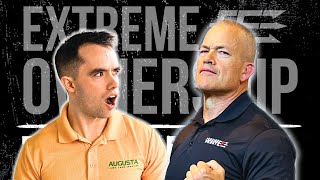
Episode 080 (YouTube): Lee Park and Mike Andes recap attending Jocko Willink's 'Extreme Ownership' muster (Muster 20) in Dallas, Texas. They describe the polished, cohesive production from Echelon Front, note takeaways—ownership, ego, and the four laws of combat—discuss breakout session structure and networking value for mid-level managers, and compare event economics (noting high ticket prices ~$2,800). The conversation shifts to politics/media: Mike listened to Trump's Joe Rogan interview, critiques long-form vs debate formats, cautions CEOs about public political statements (mentioning Elon Musk), predicts a Trump presidency, and outlines a lay summary of debt/austerity concerns for future elections. The episode closes with light practical tips (don’t mix powdered greens with club soda on planes; upgrade lighting for frequent Zoom meetings).
Questions this video answers
Muster 20 (Jocko Willink's Extreme Ownership event) in Dallas, Texas.
About $2,800 per ticket (mentioned as a reference price).
He predicted a Trump presidency.
Don't put powdered greens into club soda on an airplane; spend about $50–200 on good lighting for frequent Zoom meetings.
Chapters
Welcome back. Let's go. Another episode. See you soon. Unfiltered podcast with Mike Andes. I have to start by apologizing to.
The audience and Lee park in.
Lee Park, Hand up. I put out a poll two weeks ago saying we were gonna miss an episode.
Oh, really? Oh, you're supposed to do a vlog.
I said, should I vlog it? And the overwhelming answer was yes. I'm just gonna say hand up. Sorry, folks. I did not vlog it.
It's harder than it appears.
It's harder than it appears. And I didn't realize how on the move we were gonna be, so I thought there might be more, like, downtime, if you will. And as soon as I realized there wasn't gonn, I was like, okay, well, I'll just. I'll just not do it. And vlogging is hard.
Making videos in general is harder than people think.
I've done a couple vlogs for your main channel, though. I did the gie that one year. I did gie vlogs, and then I did that one I mode on a Saturday.
Oh, right, right, right, right.
It is hard. It's very hard because you don't. There are times where you just don't want the camera on, but you're like, this is perfect for the vlog, so I have to turn it on. So I apologize to everyone. But what we were doing, if you follow Mike's main channel, is we were at Jocko Willinks.
Yes. This was two weeks ago. Now we're at muster 20 in Dallas, Texas. So you took me, Liz, and Nick, your Augusta leadership team out there. Maybe just tell people why we went to that conference or what your reasoning behind it was.
Well, we've never done anything like that.
So I think it was, like, January this past year.
I think Liz saw the ads, and then Nick, like, mentioned it or. Or something. No, no, no, no, no. It was before next time. We got the tickets before next time or we were going to. We said we would go to it, and then once Nick joined, obviously that was like, a surprise. Like, hey, we're gonna take you to the monster.
Yeah.
So we've all followed Jocko for a long time, and I think, you know, the overwhelming feedback from us, like, there was nothing necessarily super new presented. It was just in a different format, and that's healthy.
Yeah. What, Were there any major takeaways from you? So to kind of set the scene for the folks. So it's Jocko and his team Echelon front. So Jocko Leif Babin who are co authors of Extreme Dichotomy of Leadership, bunch of other books Jocko's written. And then their whole team echelon front and their team is there to facilitate conversations, talk about leadership, ownership inside a business setting. So were there any kind of key takeaways from you or anything that was a standout moment for you in that conference?
I think like, down the road, as we grow, it'd be cool to be able to do what they do where like all the speakers are from them.
Yes.
So that way it's all rehearsed. It's much more cohesive. Instead of having random speakers that like, it is nice to have the flavor, but definitely you lose the continuity that they have because everything fits really well together. The slides all fit together well. Everything's rehearsed together. And so down the road I'd like to do that. I'd still say we're a few years away from that, but maybe just made it much more cohesive. So right now we will probably have like 10, 12 speakers at conference that are all over the place. So you have different styles, different pacing, different slides, different presentation styles, like all that. And so being able to have it all uniform, they obviously all have produced this together. It's very cohesive. It's very, very tight.
Yeah, it's almost in a way like a live performance. I mean, it is. Public speaking is a live performative art, if you want to call it that. But it felt. Not theatrical is the wrong word. Cause I feel like that adds a cartoonish element. But it was very sharp. It was very well put together. Everything transitioned very well. They're all from the same, like the same polo on the whole nine. The slide decks were all the same. Every slide had their company logos on it. Like that was one thing I noted that I liked. It's like we're always gonna put the brand in front of you. I thought it was really good. Was there anything that you, you know, weren't, I guess, taken back by or was just kind of like, eh. Like, wish they would have done that differently or wish things could have played out differently.
Not really. Like, hey, if we can pay. If we can get people to pay $2,800 per ticket, I'll do whatever it takes. Fair enough. So we ran the math on how much they make, right? Like they're making good money. They make their events profitable. We don't. Right. So they sell all their other products. They have all their booths for training. They don't allow their sponsors in. It's just their stuff. So it's definitely in the back of my brain of what we want to do.
Yeah, they had sponsors in their workbook, but no large advertisements, no tables, no vendor booths. It was like, hey, this event is brought to you by. And it was like, well, if you.
Get a thousand people and everyone's paying $2,800 and then you're upselling all of them into other stuff when they're there, like you're making a lot of money.
Yeah.
And they have like, you know, shirts and a whole nine yards. Right. So we don't make money on our events, we lose significant amount of money. And you really have to get above that thousand dollar price point in my opinion, to make a good quality event and make some profit. But there is just no, like the event itself makes no sense for us, but we are able to sell our higher ticket items. They get the higher ticket items, plus make a bunch of money because $2,800 a ticket, dude.
Yeah, let's go for a two day event. And really the speakers are only on stage for six to seven hours a day.
Yeah.
Because you have the lunch break in the middle and you have breaks throughout.
What is the event? Yeah, I don't have anything negative to say.
You have one. Negative. I didn't say one piece of feedback. There were some breakout sessions or fire team sessions, as they like to call them. Jocko likes to use military terms. Fire team sessions where there would be exercises and you wanted to just be our team.
Oh, yeah, yeah, yeah.
But they kind of made it maybe doing small groups in these, in the.
Setting I think for like certain, like. Because we're going to do this at conference.
Yes.
So I was thinking like, what is the good and the bad? So I think when you're talking about leadership, you kind of want to talk about with your leadership team.
Right.
When you're doing like sales, marketing, scripting, you know, pitching follow up calls. Those are the type of things I think would be done good with a stranger because that's actually who you're going to talk to. But there was a couple times where I was like, man, this is a leadership topic. I'd rather just talk with the four of us instead of bringing a random stranger and then hitting it off. I would say that if they would have, when we did the fire sessions, we had a minute to even introduce each other. It would have been better instead of just like, all right, turn around your tables and go. I had no idea who this person was. What's their role? What size of business do they work For. And so it was difficult to create their rapport before then jumping to very sensitive topics.
Right. Some of it was about like ways that. Not insecurity but like ways you're sacrificing the long term for short term gains or. Yeah, there were so many different layers to it. I thought the exercises themselves were high quality. I thought the questions in the.
Positioning of the questions in the workbook were well put together. But then talking about it with strangers was awkward. You don't want to get as like in depth. And I made fun of Liz at one point, if she listens to this because one of her solutions in her work work was grow up. And this is self feedback. So hopefully you don't mind me sharing a list. But then someone in our group was like, well, yeah, how's that actionable?
That was the COO of restaurant.
Yes. Yeah, that was the COO echelon front. Jamie, she called Liz out. She was like, well, how is that actionable? And so now I make fun of Liz for that, but I get it. You don't want to share like super intimate, especially if it's like self analysis too, with strangers. Like I had some stuff in my workbook that was, you know, pretty. Not harsh. But it's self evaluation. You want to be hard on yourself to make sure you improve. They're like, yeah, I'm not going to share that with some random strangers. They have no context for who I am, my role, the company, any of that. So that would be our one piece of feedback for them. One thing that I did try to keep track of throughout and I thought I would just throw out there if people were interested, if you had any thoughts on it. These were, in particular order, my biggest takeaways. Number one, all of the knowledge was extremely stackable. So what they did the first half of the first day was basically a brief overview of extreme ownership and dichotomy of leadership. The books. So for us, having listened to those books probably multiple times, it was underwhelming. But then that first afternoon and the whole second day, everything stacked on top of that. And that's not what you get in the books, which was great. Second thing was ego was the most used word next to ownership. Right. Because ownership is kind of Jocko's brain. It's called the extreme ownership muster. But ego was the most used word. And then third, the four laws of combat that Jocko preaches and teaches were the main theme throughout. So any thoughts on those kind of takeaways?
Yeah, unfortunately I missed the second half. The second Half of the second day. Yeah.
And that was probably the best part.
I know, I know. I hear that stinks. But I got a lot of good takeaways. I felt like we went away with all the actionable stuff that we need to work on. And so, you know, that evening of the second day, we had some heated conversations.
That's a direct indirect.
The second takeaway that I had was ego being the most common word said. Every speaker said it, if not once, but multiple times. I think it really speaks to the brand and what Joppo's trying to get after. And whether you like him or not, I think he's just kind of a dumb meathead or I think he's over the top with his, you know, his, like, his, like, spoken word readings. He does, if you will. It's good that they are all trying to fight that they're saying, like, hey, it's about my ego. It's about the way I need to fix how I feel about situations. One thing that I wrote down, and I think the best part about going to live events, something like, you know, your event as well, is, okay, you can read the books, you can watch the content, but the live way in which they perceive or describe a topic is also very refreshing. And one thing Leif said is that he learned in controversy. He now takes a step back, he detaches, and he takes the approach of, you're right, I'm wrong. When he knows controversy is headed his way, when he knows a disagreement is headed his way, his mental state is, you're right, I'm wrong. That is, I'm gonna totally remove my ego from the situation. And whatever comes out of your mouth, I'm gonna agree with until I need to explain my side. And I thought that was really cool. So, yeah, I appreciate you taking us. I thought it was awesome. I would definitely recommend it if you're really into jogging. But it was a cool event to see them live. They're very polished.
Yeah, I'd say it would be beneficial if someone had middle management. Like, if you just. If you have a team of less than 8, I would probably say it's not going to be as beneficial. It's going to be helpful.
Yeah.
Leadership in general, you lead one person, like you have family, it's going to be beneficial. But I think the most benefit comes when you have middle managers because then that's what ego can come in. And then that's when, like, there's more hierarchy, there's more stuff that happens because you don't have as much Time with it, everybody. And so yeah, that's what I would say. If someone has more than eight employees, they have middle management like GMs or regional managers or like that's when it's probably like the most highest benefit.
Yeah, we did some, you know, networking, talking people during the breaks. Like I talked to a foundation repair company that they came to one of the first musters. They have had Jocko's team actually come to their corporate headquarters and train their team. Hands on, they've scaled. I think when they first kind of came to muster and reach out to Jocko and his team are like 10 to 20 million in annual revenue. Now they're getting close to a billion in annual revenue. So I was like, yeah, definitely want to network with those guys, see how they were able to scale. Not really home services, but it is kind of construction adjacent. And it's cool to see that, like they have so many mid level managers in that company at this event. And I think that's really the value as you're scaling your business with those mid level managers. Someone speaking as a mid level manager, it's valuable for you and I to be in the same room hearing the same topics and then we can approach it from, hey, this isn't about my ego. Hey, this isn't about my issues. Or this isn't about, you know, my department, this, that or the other. We're on the same team and you're gonna lead me and I'm gonna push back when I need to lead my team in a different direction. So I thought it was good. I enjoyed it. I enjoyed it. Alrighty, switch it up here. I have to talk about it. People are gonna be mad.
What?
Presidential elections next week. We want to know what Mike Andy's prediction is also. Before we get to that. Hold on, before we get to that. I mean, maybe I'll edit this. Probably not. You travel a lot. You do your turnarounds. We did Texas barbecue two nights in a row.
Yeah, dude. The second night was amazing.
So. Second night, Roy Hutchins. Hutchins, Hutchinson's, Hutchinson's. Roy. Roy Hutchinson's. I think Hutchinson's in Dallas, Texas.
Sounds good.
Yeah. Where do you rank that?
The beef rib?
Beef rib? Yeah.
Where do you rank that? Was that some of the best meat you ever had?
Some of the best meat, yeah.
Agreed.
Yeah.
That was insane.
Yeah. And then you gave me that. What was it?
So they had a Texas Twinkie.
That was pretty good.
It was a giant jalapeno that was stuffed with cream cheese and pulled pork. Wrapped in bacon.
That was pretty good.
Yeah. The Texas Twinkie.
I was like, I'm also not used to sweet. So anything sweet.
That was good. Yeah. That was probably some of the best.
Meat I've ever had.
So I just, I figured I'd ask you.
$50.
That one room is. 50 bucks is insane. Okay, elections coming up. Did you listen or get any excerpts from Trump on Roebi?
Oh, yeah.
That's the whole thing. Multiple people wanted me to ask you about that.
Really?
Like, here'd you have to ask Mike about Trump on Rogui.
Yes, I listened to the whole thing at 2xb on YouTube.
There was nothing to say whatsoever. So if you haven't watched it, you really don't need.
But I felt like it was a good benchmark for, like, mainstream media being completely demolished, which I'm always a fan of. So, like independent media. So that's why I watched it and I wanted to just, like, I knew that would be a pivotal thing in the election and like, seeing how that's, you know, how it was taken. So, yeah, that's why I listen to it. So I went. So it was a three hour pause. Right. So I'm like, yes, an hour and a half ago. It's at 2x speed. I can skip some parts because I know, like, what they're about to say. Yeah.
They're talking points.
So I'm like, an hour. I can knock this out. So I just went to the gym, got on Jacob's ladder on a Saturday because it came out Friday night.
Yep.
So Saturday morning I did Jacob's ladder for an hour.
Nice. The only time I was in politically for at least a couple months, like, ever since the Butler, Pennsylvania thing, I've checked out. I was really engaged there for a few days to see how all that was handled, especially from Biden's camp and. But even like the whole, like, switcheroo between Biden and Kamala. Kamala. I didn't really even follow. Yeah, I knew it was happening.
Yeah.
Obviously I'm a little interested. I'm watching a little bit too how Elon handles stuff. And he's like, obviously he's playing his hand here. But, like, he needs, like, he mentions the sucker, he's like, I need them to win. Because I've said so many horrible things that if I don't, I'm in massive trouble.
Oh, yeah.
I don't think. I don't think a CEO needs to get involved. Like, he has. And I understand, like, hey, it's your civic duty. And like, once you have Money and power. You leverage it to make change and impact because you only have one vote. I get that. But it's also, like, to the shareholders and the team members inside of Tesla and SpaceX, etc. It can be very demeaning if you say certain things and attack the other side when a lot of your people like that are trying to help you indirectly achieve this mission. If you throw them all under the bus. Yeah. So I think I would be careful with that as an executive and sharing. I know everyone says I'm dodging, but look, I know there are people inside of a destination or people that follow me that are on both sides.
Totally.
I don't want to offend anybody. And my objective is not to become the president. It's not to change someone's opinion on voting. It is to make them more money 100%. And so if I was Elon, again, Elon's like, he can do whatever he wants. But, like, if I was Elon, I'd probably just be like, okay, is my mission to do these things? And if so, do I need to have a strong opinion politically? And maybe I just even secretly, like, give the money, et cetera? Or do I need to get out in front and actually say bad things about the other side? Like, you're alienating 50% of your customer base. Yeah. Like, if I said horrible things about one side or the other, I would be alienated. 50% of people that otherwise have protection could help. And I'm not interested in. On the other thing than, like, them putting more food on their table and, you know, provide for their family and make more money.
Right.
And so if me saying something divisive is going to keep them from being able to take the pill of all the stuff I talk about with business, I don't want. I don't want that to happen. And so. But I see where he's coming from. I don't disagree with everything, with most of what he says, but that's the only thing I've been watching.
Yeah, that's fair. The unfortunate part about it, and I'm just gonna pick, like, one nugget out of what you just said, is that Elon having the feeling of they must win because I've said too many negative things. And that's unfortunate because I think that's where we've kind of lost our way as a country, is that to use one of David Sacks favorite terms, that's political strong arming if Kamala wins, and then they impose some crazy taxes or restrictions or whatever on X censorship, whatever it is, on Tesla, on SpaceX, you know, they could drop a huge, you know, economic. Was it environmental impact statement about SpaceX and the fuel and the burn and this, that and the other, and just totally shut down launches in the next year.
Right.
That's political strong arming. That's not. Okay. That's completely inappropriate. And it's from either side. If, you know, I don't know, I'm trying to think of like a well known CEO. I think Mark Zuckerberg is pretty anti Trump. Like not as aggressive as Elon. Not as much. Yeah, that's true. Censorship stuff.
He's a bit of a fan.
But if, okay, there are CEOs out there who hate Trump.
Yeah.
It would be horrible if Trump got voted in and then politically strong arm those CEOs.
Right.
It's stupid. We should be allowed to say what we feel and not worry about the repercussions. However, the level of saying what we feel should stop probably before name calling. And both sides have crossed that line very aggressively. Like, why are we name calling at this point?
It's just so dumb, but it just gets clicks. So like it's one of those things. It's just like, okay, so if you were trying to get in, do you need to say all those things to get in and then can you tame it back? Right. Like, I get that now with our headline society, we need to say these weird things to get attention and we need the attention to get the primary vote. And then once we're in, we need to say horrible things to like get the middle to come to our side. So like, I get that. But once you're in, can you be less divisive and can you bring people together? And I think now in the election cycle, we get so divisive it's almost impossible.
Yeah.
Even, even if that strategy was used to get in and then once you're in, you become very, very, you know, fully decided together. You couldn't because you just called them names. Like you're calling them all sorts of horrible things and you know, like, was it Tampon Tim or whatever?
Oh man, bro. Like you're never gonna be able to work with that person again.
Yeah.
So anyways, I don't know where you're going with that, but yeah, I think, I think it's bad that like an old, as we say, our opinions that we do have repercussions. But I take ways, take that, take a step away from like the political side and say like, okay, from a consumer, from a leader's Perspective. Should I alienate half of my team and alienate half of my customers or half alienate half the people I want to help simply because of that? Like, if you want to sell more Tesla vehicles at Elon, stop talking about politics.
Yeah.
Because the vast majority of people buying your cars are actually on the other side politically.
Yeah.
And like, that is just. You can look at the map.
Oh, there's that bumper sticker. That's like, I bought it before I knew who he was.
Oh, I didn't see that.
Oh, yeah, A lot of people have those on their Teslas.
Really?
Yeah. I bought it before I knew he was crazy.
Like, don't make your customer determine whether or not they want to have a. No. Okay. If you believe in the mission an electric vehicle and save the planet versus support this political agenda like you merge the brands. And so that's where I think to be careful of as a leader. And that's why you don't see me take strong opinions or save devices things, because, like, I don't want to alienate 50% of the people that could help with their business because I don't think I'm going to sway a ton of votes. And so I think I'd rather just focus on doubling my audience by just accepting the other side.
Yeah, fair enough. What are your thoughts on. And this is strictly from a strategical perspective is the question here. What are your thoughts on the Kamala camp saying she's not gonna go on Joe Rogan? Joe Rogan can come to her for.
One hour, I think, man.
Yeah.
It just comes down to whether or not you think she has the chops to do a three hour interview. Right. If you don't believe that, then she needs to stick to her guns and not say, basically, hey, we tried. We have a busy schedule and it was last minute, but we wanted to be able to do it, but he couldn't come out to wherever we were. Right. That's the thing you play if you actually are a strong candidate, if you actually can answer hard questions and you don't, you know, run away from those questions. Or as Trump says, you weave it.
If you can do that, you should be dropping everything possible right now and getting on that show.
What's the number one podcast in the.
U.S. well, it's more a matter of, like, not doing it in a statement of weakness. And, you know, everyone knows that you took the thing with Beyonce at the same time that he takes it with Trump and yours in a layup interview. And you're out here telling interviewers next question. When it's like, no, no, no, like you're a candidate for the President of the United States, answer this thinking question. And as much as Trump does leave, he will answer every question and he'll go into.
He'll get there eventually. Sometimes.
That's why you can listen to podcasts at 2xp bro and know exactly what they're about to say.
But yeah, I don't know if I was her. Like, from what I can tell, she should not bullet the podcast. She does not know how to do well long form, well crafted interviews where she does not have a script, she can't hear bullet points and they ask follow up questions. She falls apart when you ask a tertiary question. So you give your question and you have a follow up question and then if you do a follow up question to that one, she falls apart from what I have seen. And you can go really, really political with it and say she's like a DEI hire and all this other stuff or just say like, maybe she's not just have a skill set yet to be this magnitude of a leader. And it's a matter of like whether or not I like someone or not. I need them to be sitting in the room with Kim Jong Un, so whatever his name is so he doesn't nuke the planet. That's all I care about. And I need him to go talk to someone in Russia and make friends so we don't have World War Three. That's all I really care about. And if you can't answer tertiary questions, you're gonna be obliterated by someone like.
I'm sorry, you just are.
And that's my concern.
I agree with you. I think, I think the president, whatever side of the aisle they're on, needs to be able to kind of handle the heat. That's, that's one of the biggest things. If we are, you know, the most powerful country in the world, if you want to describe us as that, you know, whatever you subscribe to there. But you have to be able to take the heat. You have to be able to handle the tough questions. Like there are so many people that are under qualified to even be on a debate stage, let alone be president. And whether you think Trump is a bumbling idiot, at least he has confidence to go into those conversations.
I don't think debate like, so Joe Rogan, I thought Trump missed a layup question.
Oh, really? Okay, which one?
So Joe Rogan was basically saying how debates are not the best form for figuring out candidates. Like we should have long form Conversations, Right. Okay, dude, Trump, it's a softball sitting right there. And that's when you say, that's why I'm having this three hour conversation with you in common. It's sitting right there. Agree with your interview and everyone else that's watching this agrees with his premise, which is long form, like content is the way. Don't be like, well, the debate, you know, I think it's important.
Blah, blah, blah.
Like don't. It's sitting right here. Just hit it. Yeah, just hit it. That's good point. But where was I going with that?
What would you say? Right, for that? I was saying that whether you think Trump's a bumbling idiot or not, like, at least he has confidence to go into this conversation.
Oh, that's all I say. I don't think that the debates are great. It is a matter of clickbait. It is a matter of headlines, one minute clips here and there. Like, I want to see how do they negotiate? I want to see can they keep the country safe. And so when we make about all the other policies, like, okay, this is what I was thinking. Did you want to follow up on that though?
No.
Here's my question for you. Okay, 2016, what was the main topic of that, like the entire election cycle? What was the thing we were talking about? Do you remember? There was one thing, honestly at the top of my head, I don't know is ISIS.
Oh, yeah, right.
Yeah. Okay, so 2020, what was the main topic of like that, that election cycle?
Russia gave.
2020, like not after but like the election cycle. Was it. Was it. I was going to say Covid, because that's what we were all thinking about.
Like, that's very. Yeah, because it broke in 2019 and all the restrictions came and like it.
Changed the way we. Everything happened at debates and like all that. That's just my thought. It's probably two or three other things, but in my brain I'm 2016. 2020. Okay, 2024. What do you think is this year?
I don't really have an answer to this internal divide. Probably. Okay, this is my opinion or my. What's it called.
Like my forecasting or whatever prediction next election cycle, the 2,028, I hope and I think it will be austerity measures around the debt. We will have to deal with it. It is on such a tear and the way interest rates will have to run in order to deal with inflation. Like we are in a bad. Like in four more years it's gonna be even worse. And it's on such a crazy tear right now, and no one's talking about it because they just were trying to get elected. And so the way to get elected is you buy votes with government programs. We're gonna spend more money, we're get more people more money. More money, less taxes, giving everyone else, you know, everything great. Eventually we're going to deal with the fact that we have $35 trillion of debt, and the only way to pay that off is either a massive austerity, we cut everything, like, cut Social Security, we gotta, like, go hardcore. Or B, because you can't just, like, get down to, like, a, no deficit, you've gotta start paying this thing back, or you gotta outgrow the thing. And if you listen to the Trump Rogan episode, Trump thinks we can outgrow. And that's scary. Yeah, it's scary. You would have to run inflation so hot.
It would be. You have to bring interest rates down. So you're running this very, very risky thing. So I think in four years, we're gonna be like $45 trillion of debt or more. I don't think any either administration will spend more money in this administration than the last one. I think that's gonna continue. And I think in four years, the main thing that we will start to be concerned with is the debt. And the reason will because we're gonna have this weird inflation that we've never dealt with. And like this past year. Oh, it's because of COVID We shut down. Okay, explain it away. Now. What happens? Oh, well. Oh, it's the debt. The reason we have to keep interest rates low and the reason the inflation has to run high. So we have this massive debt moving overhead. And the only way to make sure we can actually pay our bills is driving straights lower, which causes everyone to go buy a bunch of stuff and causes inflation. So the rich will continue to get richer and the poor will continue to get poor.
So how do you outgrow debt? Explain that to me. Like, in simple terms, is it just increasing GDP and, like, what we're putting out there in terms of our products?
Yeah. So if you could control your interest rate on your house, you would probably buy a bigger house. If you're like, okay, instead of. I know, you got a great rate, instead of 5%, it's gonna be 2%. Okay, I know, I know.
Yeah, I know.
You bought it the perfect time. Yeah. Good job.
So 5% down to 2% now you can afford almost 30, 40% larger of a house, and you can control the interest Rate. So you would inevitably. Oh, yeah, 2%, and I can go buy a bigger house. Okay? That's what the government can do. They can decrease the interest rate to be able to afford all these programs. And in doing so, everything gets more expensive because everyone wants a bigger house. And so every company, every single household can get more money from the government. And they can also get money cheaper when they go out and get a loan, then we all spend more. And if you spend more, you cause inflation, and so you have low interest rates. We have to do that in order to afford the debt. Because now we're spending trillions of dollars on just interest expense. The interest that we pay on our debt for the country is more than we pay on defense, education, health care, et cetera. So, like, you have to pay that. Like, if you don't pay it, then no one will buy the debt, right? Like, we will default. And that's when people say that if we do that, then we lose the, you know, go back to the gold standard, etcetera, Is because eventually you have to do that if you don't keep growing it in a fast enough rate and increasing your revenue. So it's like, do we increase revenue or do we cut expenses? That's ultimately what it is. There's a deficit. It's the only way, two ways to do it. And so the bottom line is they have to keep interest rates low. That's why they're lowering interest rates right now. When, like, why? Like, there's no reason to be reducing interest rates right now other than the fact that, like, we cannot afford these massive debt payments. And so if you think the debt is going up, look at the interest that we are paying on the debt. It is even more exponential because in addition to the fact that the debt, as the principal is going up, the interest rate we were paying on it over the past few years has doubled and tripled. So anyways, that was a long tire.
If that's the direction we're going, we need someone who's an economist to run a 2028.
Yeah. So this is what I would say if I was doing this. And again, I'm like, the worst at politics or at economics. So this is my very, very layman's opinion on this. If I was running my thought process, it'd be hard to show what you're gonna do. You actually couldn't telegraph this. But what I would do is I would drive interest rates extremely low, let the country run extremely hot. And that would be my pitch. The economy is doing great. Let's go. And then I would refinance all the debt on 100 year treasury bonds so we lock in a very low interest rates. And then I would change course and everyone hate me. But I would be doing this for the country, baby. It'd be like, we're changing course, the debt is too high now. I'd do like in the third year. Debt's too high. We're going full austerity. What is it? Venezuela? This is this. Argentina.
Argentina.
Argentina. I'd pull full Argentina. Alright, President Mila. Yeah, let's go. I'm like, alright, jacking interest rates up. We're cutting things off. We're gonna degrade our. Everything's gonna go bad. It's gonna be really horrible. But we need this to like reset the debt and like reset our deficit. But I would first, I would first let the country run super hot, get interest rates where I can get like sell 10 or 100 year treasuries at like 1.5 or 2%. And then I would go into full hyper mode. So anyways, that was my very uneducated opinion.
It's fair. It's a good take. I mean, that's really all I have. Unless we want to jump back to anything. Trump, Rogan, Kamala, what happens at time of recording in a week? What are we waking up to in a week?
It's only the week. It's electionary. Yeah.
I hope that regardless of which way it goes, it's a big margin. That's all I care about. I want it to be overwhelming either direction. And so my prediction is that that's gonna be a Trump presidency.
But in terms of what I hope is I hope that regardless of who wins, it is a large amount of people. I think we need a strong leader. So even if Kamala gets in, I just need her to be a little more present. Like, where's Biden been for the past few months? He's been around like, bro, we need a strong leader. Like if, dude, you're the enemies of the United States. The last few months have been, we've been sitting ducks. We got people warring against each other politically. We got a president that can't come out of his bedroom.
Nope.
Like, we got, we've been so weak, man. I predict, okay, this is my next prediction. The President elect, whoever, whichever it is, is going to play a bigger part in politics and the world stage between now and when they get inaugurated in. Was it January, February, January, like those two months, everything's gonna change. If Trump gets in, he's gonna Start going, like, to Russia. He's gonna go to North Korea. If Kamala gets in, she's. She will be a bigger deal than Joe Biden. Joe Biden is gone. He's been gone for. Since the day he said that we're in the swap. And so I think there's a lot will change. I just hope that the margin of victory is large enough so we don't have to all go into these debates about, you know, 10 votes here and four votes here. And I saw this ballot in a trash box like, dude, let's just get this nailed. And then that's what I hope for. We're waking up to in a week. Either way. Either way, we're gonna win. I will change several things in the visit is based upon who wins. Yeah, fair enough. Because you can kind of guess where we're gonna go with interest rates, and that's a big deal. Yeah.
All right. That's Mike Andy's prediction. Now, do we have any non financial advice?
Oh, non financial advice. Do you have any?
Yeah, I have a great one, actually.
Oh, dude, we talked about this, and I didn't write it down.
Yeah, I have one. Oh, and my chrome just froze. There we go. Here's mine.
Okay.
If you get those powdered greens. Okay. You know, like the packs of powdered greens for foods.
Are you throwing this at me on the airplane?
Don't dump into close soda. I will also add, especially if you're on a plane. Oh, that. So we were on our flight back from Dallas, and my.
I was trying to be ingenuity.
He was going to drink some powdered greens. He got a club soda from the stewardess, right? He's all excited, dumps it in there. And it was like a chemistry lab.
Stop.
No, it didn't.
Like, it was fine. I'm like, okay, you're fine. And then I feel more.
It just kept boiling out the top. That was chaotic. So do not put your powdered greens into club soda, especially on an airplane.
Yeah, there you go.
Okay. Okay. If you're doing zoom meetings, which the vast majority of our listeners don't, but if you do zoom meetings, get a light for your table. It definitely helps. Like, I recently upgraded the Mike Minutes Mastermind Daily videos. Better camera, better light. It costs, like, 200 bucks. I think it dramatically increases the value, the production value. So get a light. Just have a little light there. You can have it clamped to your desk and have, like, a little, you know, adjuster on it. Don't get the cheap, like, 20 bucks. Spend 50. That's the difference between, like, a metal and, like, a piece of plastic garbage that will break. So spend $50, get a nice light. Only do this if you're doing Zoom meetings every day.
Yeah, Good advice.
Yeah, let's go.
There we go. Like, and subscribe.










