Joey Chestnut and DQ Franchise Fees - Episode 066
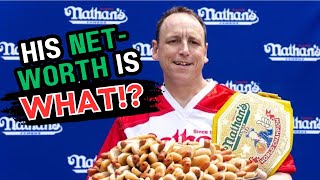
YouTube episode (Mike Andes) covering: (1) Joey Chestnut's exclusion from the 2024 Nathan's Hot Dog Eating Contest after signing with Impossible Foods — background, money mentioned (paid ~$200K prior year; Nathan's proposed ~$1.2M four-year deal), his record (16 wins since 2016; 76 hot dogs/10 minutes), and suggested business responses (start alternate event/brand partnerships); (2) a social-media breakdown from a claimed Dairy Queen franchisee showing $1.4M revenue, $1.335M expenses, ~$65K profit — conversation about franchising as a real-estate/amortization strategy, capital requirements ($1.5–$2.5M buildout), and contrast with service franchises.
Questions this video answers
16 wins (every year since 2016).
76 hot dogs in 10 minutes.
$200,000 (reported).
About $1.2 million (total).
Reported sales $1.4 million; reported profit $65,000.
Chapters
I can't say good morning.
Why?
It's a dark, dark day. Dark week in America.
What happened?
We got to. We got to start with some very sad news. Probably the most, most groundbreaking news this week. What? Read the headline.
Are we going politics?
It's a dark day in America. Joey Chestnut is out at the 2024 Nathan's Hot Dog eating concert.
I saw this headline because he got sponsored by a different brand.
I love this headline in beef over vegan hot dogs. Great headline. Yeah. So kind of wild. I know this is a stupid topic, but I thought, hey, it's business related, right? There were deals involved and there's reasons he can't participate. So we'll talk about it. I am personally a huge fan of Nathan's hot dog eating contest. It feels, it's American. It's the Fourth of July. It's the first thing you do. You wake up on the 4th of July. Especially when you're on the West Coast. Yeah, you wake up 4th of July, it's like 9am on the west coast. I think it's like noon over on the east coast. You get up and you watch a bunch of dudes eat hot dogs.
Okay. Celebrate your independence, baby.
So it's red, white and blue. These colors don't run, you know, they eat hot dogs. All right, so Joey Chestnut, the perennial winner of the annual July 4th Nathan's Hot Dog eating competition, is out over this year's beef with a deal he made to represent a different brand. The brand is Impossible Foods. Have you heard of this brand? They do meatless alternatives to meat.
Plant based meat.
Yeah, plant based meat. Which it's like, it's not me call plant based meat. That's personal opinion. It's like just call it a plant based item. It's not, it's not meat Imitation Invitation Meat. The. They're the leading maker of meatless meats and is known for their impossible burger, which contains laboratory synthesized substance called heme. So that sounds really, really healthy. Anyway, so he has won the Nathan's Hot dog eating contest 16 times in every year since 2016. His world record is 76 hot dogs in 10 minutes. Which is crazy. But basically this is, this is the issue. Okay. A source said that Joey chestnut was paid $200,000 last year to appear in the contest. So he's making good money to appear in this contest. And then he was offered a 1.2 million dollar contract. This is from Nathan's.
Okay. Oh, Nathan.
This is from Nathan. So he was paid 200,000 last year to compete and then they said, hey, four year exclusive deal, 1.2 million. Like, we want you to keep representing the brand, whatever it is. And essentially what happened is they found out that this year he has a deal with Impossible Meats. That money has not been disclosed, but they basically said, hey, you have partnered with a competing brand. You can no longer compete at the Nathan's Hot dog eating contest.
Is the brand deal on the table? Like, is it still getting paid?
That. That's where nobody knows the specifics of his deal with Impossible Meets. So everyone says, well, it's obviously got to be substantially more than what they're offering. They're basically offering, you know, 300,000 a year, you know, four year, $1.2 million deal. So no one knows what his deal is with Impossible Meets. But now everybody's kind of, you know, people that care about this, myself included, you know, they're up in arms because they're like, well, he's like, he is the winner. He is the goat, if you will, of the hot dog eating contest. So is this just a play for him to try to secure the bag from Nathan's, or is he just drawing a line in the sand?
Okay, so several thoughts. So first off is the brand controls the event. So, like, correct. That's a very big power play. That's the first thing is, like, you literally can control who competes. Again, back to branding. Like, that's why it's so important. Secondly, this is a good thing for them, and it's a good thing for Joey Chestnut, and it's a good thing for Impossible Foods because any drama around hot dog eating is drawing the market bigger. And so he will get more money out of this. That event will be the most watched event ever, even if it's 90% haters. Because people like me who don't wake up on July 4th, don't watch hot dog eating contests, will suddenly be interested because there's millions of dollars at stake and it's in the headlines. And so this is a big win for everyone because of exposure.
Yeah. So Chestnut or Impossible Foods have not responded to any of this for comment.
Yeah, dude, they're raking right now. Let's go. The value of that deal. The Impossible feud just got 10 times bigger for him.
Yeah, 100%.
And the viewership for Nathan's hot dog eating Contest is also 10x.
Yeah, well, but if he's not in it, I feel like everyone.
Oh, people are going to watch. People are going to eat this up.
Yeah.
How do you make. How do you make a hot Dog eating contest, national news. Just throw a little drama in like this.
I guess that's fair. The people that would tune in that maybe previously wouldn't have will tune in for the drama. And also maybe to see someone else win. Yeah. You know, maybe people are.
Person that wins, opens up their suit at the end and says, like, free Nathan's or something like that. Like, that's all we need to, like, keep the drama alive, baby.
It's good. I like it.
I never knew what Nathan's hot dogs was. Yeah.
This is how much I care about this event because I'm a true American. When I was in Europe, I got up in the middle of the night to watch it with some buddies because it was the Fourth of July. You're in Europe, it's the Fourth of July.
You just watch the YouTube highlights later, bro.
It was good. It was good. My thought on it, though. So if you were Joey Chestnut. All right, let me ask you, if you're Joey Chestnut, What's. What's your play like? Obviously, you are the biggest name for Nathan's.
Yeah.
So you know they want you, right? Obviously. Otherwise there wouldn't be this drama. And they're.
What would I do in this case?
Yeah.
If you're Joey, start another brand of hot dogs.
Yeah. You wouldn't want to, like, try to just counter offer and get them to give you a bigger bag.
Two or three million dollars versus starting my own brand. Starting my own competition, bro.
Yeah.
I would get a brand behind me, like Impossible Foods, but we're going to be starting our own hot dog eating contest. We're going to do it on exact same day. They'd throw a bunch of money behind it. And then I'd ask for. For. As Joey Chestnut asked for, like 50% of the deal.
Yeah.
And you make way more money. Get national rights for tv. Everyone would want to watch that, dude. I'm just saying. And then you make this competition between like two leagues, right? You'd have the Nathan's hot dogs and you have an Impossible Foods, or you make his own, like, Chestnut Foods or whatever. Like, let's go. Like, that's the play. Brand wise. I don't know if he has the business chops to pull it off, but, like, if he has a business brain behind him or another person, that's what I'd be pushing for. He. He owns the bank because he has. He has the exposure. Like, this is like Jordan choosing Nike.
That's the exact example a lot of people were using.
Really?
It's like, well, Jordan was With Nike, it'd be different if he just said, well, I'm going to start wearing Adidas, but also Nike, because I have a Nike deal. The issue with that comparison is that it's the hot dog eating contest, like Major League Eating, quite literally. And like an entity league is saying. A league is saying he cannot participate in this because we are co branding with Nathan's. So it's not a perfect analogy. Yeah, but it makes sense.
Oh, I see. So Nathan's does not run the event.
Nathan's is partnered with Major League Eating.
Major League Eating, yes.
Major League Eating has said because they are our sponsor for this event, we have an exclusive deal that they're the only brand that anyone can basically represent during this event. Because he has a deal with Impossible Foods, he's technically not representing.
And Major League Eating is happy because they're going to more viewership. Nathan's is happy because no one knew what they were existed before. And if I was Joey Chestnut, I'd go to Impossible Foods and say, I want $10 million spent on event. I want 50% of all the rights, TV and exposure, et cetera. We're gonna start a whole different competition, a whole different league and we're gonna go for it.
Yeah, yeah. You and I were on the same track. My initial thought was if I was Joey Chestnut, I'd do some sort of live stream that was my own paired with Impossible Foods, like get them to brand it because I don't know, within one month would you be able to get TV rights and make it a whole thing. But.
Thinking he could do like a live stream, bringing other eaters co brand it with Impossible Foods. And then if he. And then if he wins, like by count, right, if he eats more hot dogs than anyone at Nathan's, he can call himself like, you know, the, the bad boy champion or like the unofficial winner. You know, there's just so many ways.
To cook this, kick this. Like it just comes down to. Is someone who's an a 16 time national hot dog eating awardee and winner going to have the business chops in a month to put this together? I don't know, he'd have to co brand or he partner up with something like Impossible Foods that has the business chops and the marketing chops to do it. But like that is a 10. That is a 10 to 50 million dollar opportunity instead of a million dollar opportunity.
I agree with that. So I was, I was listening to a barstool podcast on the way in. They have already reached out to him to basically do this co branded event.
They're like, oh, really?
They're like, I haven't seen any of this.
I just saw the one headline.
So it sounds like they've already kind of reached out to Joey or his people because they're like, hey, if you can't be in Nathan's, like, let's do something with Barstool. Like, we have a huge online platform. We have all the technology and capabilities to do high quality live streams. So it'll be interesting to see what happens.
You know how many food brands would hop on that? Especially like the rebel type food brands. There's so many different type of rebel food brands would be all over this because, like any drama, they know there's a big viewership and they want to be there. Like, you get so many sponsors for that event.
Yeah. Because I feel like with Nathan's too, it's like up on the stage, all you see is Nathan's and like Coca.
Cola dude, Barstool would be a great brand for him to partner up with. Yeah, like Barstool, Impossible Foods and him. And they made the event together. That's a. That's a 10 to $50 million opportunity. And then, then he actually, if I was him, I'd say, hey, just give me like a small cut. So if he can make a million dollars or something.
Yeah.
And then if I was him, I would start a brand of hot dogs out from the event.
Yeah.
Right.
So like under the Impossible Foods.
Yeah. I would script the whole thing.
Yeah.
He would win at the end. He opens up and be like, you know, chestnut Foods, go buy here, scan this code, whatever. And like, that would be his play.
So anyway, that's fair. I appreciate your take is like the WWE of eating. Look, it's, you know, it's a dark day for America. Fourth of July is Joey Chestnut eating hot dogs at Nathan's. But he might not if he doesn't.
Do something around this. Like, it's such a lost opportunity.
Yeah.
You got to take. You got to seize it when the iron is hot. And like, he only has a week window to make something. Yeah. Well, here.
Yeah. I mean, he's got less than three months or three weeks till the Fourth of July.
Yeah.
So he's got to figure something out.
Do you call up Dave Fortnite? Let's make it happen.
Yeah. It sounds like they're trying to reach out to him from what I heard. So that. That's where we're at. Well, I wanted to start with that. The biggest news of the week, obviously. Huge Huge news. I knew you'd be enthralled to talk.
About nothing like politics happening and people getting like in jail and like going to. And we're going to talk about hot dogging content.
Yeah, President's son's going to jail.
This down.
The other people don't want me to talk politics.
Previous presidents being indicted. Let's go.
Top news. We have our priorities straight, dude.
We do 100%. We got to bring a little bit of lightness and all the dark that's out there. Even though this, this is a dark moment for me. Joey Chestnut. All right.
Hence all the black today.
Yeah, yeah, exactly. I'm mourning. I'm mourning this loss. Alrighty, we are going to jump now to a comment from someone from the last pod. All right, this is from US Groundskeeping 8553.
I know who this is.
And he said, I've heard that the majority of Amazon's profits come from aws, which seems unrelated to their core competencies, at least on a surface level. Why do you think they break. They broke out into. Or why. Why don't you think they break up into two different companies?
So AWS was a result of needing infrastructure at the retail level and they basically built a tool they needed and then now it's become their profit driver. Same thing happened with Slack and there's like been multiple instances of large companies that actually born out of simply a smaller company building a tool for internal purposes that are then like, oh, like this is the actual. And so do they. Will they break it out? They could it have a great valuation because it is so much more profitable and more scalable. At least it is right now. The thing about Amazon that makes it so attractive to investors is the fact that is diversified in so many different industries. So like when you invest in Amazon, you're investing in like 20 companies. And like whether it be the retail side of us and like the. The data side, there's so many different companies inside of Amazon. That being said, AWS runs the retail side. So it'd be difficult in my opinion to split these two apart and then be like, yeah, we're kind of related, but we're completely different. And then it would make it harder to actually integrate. I think a lot of elements that they use that are synergies for the retail side that drive their cost down. So like AWS is the moat for their retail and retail continue to expand with very, very low margins if not losing money. And then AWS is there like yes, it's the pinnacle and the Pillar financially. But a lot of times the thing that is a pillar financially today will not be in 20 years because it'll be knocked off. What can't be replicated is something you build a moat around and you build infrastructure around. And so if like there's other massive competitors to aws, like yes, are they, are they not as good? That is to be debated. And like we only use AWS for our servers, they are better. However, there's Azure, there is like from Microsoft, there is Google Cloud, like these other big players. And as Nvidia, like all these companies are coming around data centers, etc. With billions of dollars, guess what, they can't replicate spending hundreds of billions of dollars on their retail side because they've built 20 years of infrastructure around it. And yes, it's the low margin thing right now, but it's also the most defensible. So like I would argue that the AWS is less defensible than their retail side even though it's higher profit margins. Anything with high, high profit margins, like AWS, like Nvidia, etc. Usually those profit margins get eroded due to competition because we're in a free market.
Some would say show me your margins, I'll show you my opportunity.
Exactly. And so I don't necessarily think they shouldn't split up because it would be definitely a higher valuation on aws. But I also realized that like what they've built always has been like this back end infrastructure for retail that we know isn't going away. Like we know people will always want to buy things and if it's easier to do so online, they will do more of it. And if they can get it faster and cheaper from Amazon compared to everywhere else, they will do that. We are not confident in the fact that in the next 20 to 30 years that their data centers and AWB will be the premium in the market. And so even when you see stuff like AI come along and they have to spend gazillions like literally hundreds of billions of dollars on Nvidia chips to keep their data centers up to spec. So those that's going to erode the margins like watch their next quarterly, like it's going to start eroding because they have to spend so much money to stay up with that technology because Microsoft and Google and other companies are willing to dump money into it. So it's like who can outspend each other for that market share? Is it valuable? Yes. But there will always, always be competition. None of those companies, Google's not going to go out and you'll start delivering packages. Nor is Microsoft. These massive companies have tranches of money can't create what they've been working on for 30 years. And so I believe that yes, margins are better, but defensibility is far greater in terms of valuation long, long, long term, like short term. Yes, it makes a lot of sense. I don't think they'll do it, but I wouldn't be surprised also if they would would do it because it makes like stock market sense to split it out because the.
Your multiple would go way up. Like they could get like a probably they double their multiple for aws.
Yeah so I pulled up this article just so I could get some specific data on the conversation and this is from TheNASDAQ.com in partnership with Motley fool and this is how Amazon makes their money. To be sure, Amazon's e commerce business generates the most revenue for the company in the first nine months of 2023. So it's a pretty recent article. Amazon's net revenue totaled a little over 66.5 billion. The company's North American and international segments, which focus primarily on e Commerce, together totaled 83.6% of that revenue. The cloud platform Amazon Web Service contributed the rest, which would be about 16.4%. So it's a much smaller portion of their revenue, but it's the most profitable. The article continues on. Do you want me just keep reading this or do you have any thoughts on kind of the the revenue breakdown?
No, that's fine. Yeah.
So then the article continues. Why is AWS so profitable? Operating income is sometimes referred to as an operating profit and measures the amount of money left over after subtracting operating expenses, including the cost of goods sold cogs from revenue. It's not the same as net profit, which also subtracts subtracts tax and interest expense, but they're closely related. So why is AWS so profitable? For Amazon, the cloud unit's operating expenses as a percentage of net sales are much lower than the percentage of the North American and international segments. That shouldn't be surprising. The massive logistics network and infrastructure required to support Amazon e commerce operations are expensive. Of course, AWS operating costs aren't insignificant. Amazon spends a lot of money on the cloud service unit technology infrastructure and the staff who run it. These costs could rise as Amazon invests more heavily in artificial intelligence apps and tools for AWS. CFO Brian Oslavsky noted in the company's Q3 conference call that Amazon plans to increase its investment in generative AI and language large language models, LLMs in particular, to support the growth of the AWS business. However, it's a virtually virtual certainty that AWS will continue to be Amazon's biggest profit machine.
Let's go. Yeah, like, I think it's just a company that has a bunch of brands underneath it. If you look at Microsoft and Google, the same thing is true. We all know them for usually one thing, like Windows, Microsoft, Google Search, Google, Amazon. We still think of them as retail, but all of them make their money usually in different ways. Right. And the ways that we don't actually know them for, and that's just very common. They have like multiple dozens of brands underneath them. Like, the amount of companies are owned by, like, have been like conglomerate. Like, there's gaming inside of Microsoft. There's data centers, there's operating systems, there's technology. Like, there's devices. Like, there's so many different categories inside these massive companies. That's why they're worth $3 trillion.
So, yeah, so this is from. Hold on, let me. There's a quote here. Yes. This is from Amazon CEO Andy Jassy. And he said, yes, AWS faces some strong rivals with our own immersive cloud platforms. But we've argued in our quarter three call that customers want to bring the AI models to their data and not the other way around. So what is the significance of that? That these customers want to bring their models to Amazon, not that Amazon wants to go to them. Is that basically saying Amazon holds the power because they have the data?
They're not building an LLM? Yeah, so they're basically like the workhorse instead of providing the goods. So they're not creating like their version of chatbots. Right, right. So it's like we're going to, we're going to give the infrastructure and like the railroads and the picks and the shovels, you guys go, go find the gold. And so they'll make a lot of money over it, but they're also having to buy massive amounts of chips from Nvidia to stay up with this because they need way more GPUs instead of CPUs. Like, it's a whole revolution of data centers because the amount of power that's required for these for AI models like LLMs.
Yeah.
And so, yeah, like, Andy Jassy is great. I like them a lot and they're gonna do great things. I like them a lot. They're my number one stockholder. They have been for a very, very nice.
Yeah.
Take taking a slight turn here. I can't remember.
They're still overvalued. Like if you look at the grand scheme of things.
What have you thought about bringing up our good friends over at the all in podcast? Did you do any research or deep diving into the company that David Sachs co founded?
Glue. Yeah, Glue AI Assistant competing to Slack.
Yes.
Yeah, yeah.
Did you look into that at all?
I did not actually look it up. I listened to it but ye.
Yeah, I, I haven't looked into it either. I just wondered if you had any thoughts on it. But maybe I'll try to find a solid article and we could maybe dive into that. But I did watch the demo that they did on the all in podcast. It was very cool because it basically you could say like hey, I know in a meeting or somebody sent me an email regarding this topic and it can go back and filter through like all your messages and find exactly what you're looking for.
Yeah, I still just think search does a decent job. Yeah, like I'm really good at like categorizing my stuff like files and emails and it's like I never have problem finding emails. Like you'll ask me for something from like years ago. I'm like yeah, here it is. Yeah, like it's not that difficult and I feel it's harder to actually interface with the chat of a AI where I'm like please find me an email from three years ago about this general topic instead of just being going to my search bar in my email and be like what's the subject? Oh duh duh duh. Oh I think I sent it to so and so, blah blah blah and there it is. So like there are so many use cases that AI has been touted for that it is in its rudimentary phase but it's still ultimately just better technology. And.
AI has been so over. The demos are great but what are we actually using on a day to day basis all of the time? And I think that will become more and more. But it's still overhyped and so.
Based upon their model, just me hearing because I don't watch based on me hearing what they were talking about, I don't see any reason to strip my entire company off of Slack where we're all very used to our channels and it works just fine. And yes it's going to be costly but we're all in it and I'm fine with it versus switching to something like glue that I have no track record of them making improvements, no track record of like how this AI works out. What's their prices increase is going to go like they will eventually. Like it's a competitive market and so like eventually their costs of running all this AI inside their software, it's expensive. Yeah, I know what the cost is to run these models. Like, like vastly more costly than just regular running a regular search insight. So if you're running real AI and you're actually really using LLMs or you're back and they're piggybacking off of OpenAI, you have to pay for tokens and you have to pay for these calls and that requires money. So you can't just like make a cheaper product and it's gonna be better because AI like slap, slap AI on it, make it cheaper and sell it. That's not going to work long term. Like engineers are expensive. Hiring the best talent is expensive. Making new versions is expensive.
Right.
And so you know, just, just because you slap AI on something and says oh well it can like kind of like find files isn't going to be enough differentiator. So whether or not they can actually build a company around this is different. The same with that Mr. Joey Chestnut. Whether he can build a company around the hype is determine of what his business shops are. You have a great product but if you can't build a business around it, you know, whoop de do.
Yeah. And one of the other features that a lot of people talk about with AI tools is like, like summaries and like oh, I want a quick summary of this or a quick conglomeration of all the data. And one thing that you said when we first talked about kind of a chat GPT OpenAI in one of our first podcasts was you said, but is AI going to be better or is it just going to be the conglomerate, like average of data or average of information? Because it's pulling from the best, the worst, the middle and then it's giving you kind of a compilation of all of that. And I've noticed that in like Facebook articles, I know you don't necessarily scroll Facebook, but I do primarily because I like to see, you know, what's going on in just like some of my friends lives. But also I like to see the features that Facebook is rolling out. Have you seen how their new meta AI does those little descriptions of comment sections?
Oh really? That's kind of cool.
Let me see if I can find one for you.
Like I've seen like on Looms and Zooms. Like I do find it helpful the summaries they have there of like a meeting like so I usually what I'll do is I'll start watching the video in 2x and I'll just scan the summary and I'll look through the chapters that it makes all automatically. I really like that. So those sort of summaries are cool. But like if I'm just trying to find something like, I don't know, I just think AI just will put us all towards the median. And it's like if I'm looking for outliers, I want outliers. I want to be able to know what the extremes of different opinions are in order to be able to find the balance myself.
Yeah, let me see. Yeah, I'm trying to find one that.
I kind of summarize I've seen where like it kind of tries to come up with things that topics I might be interested in based upon the video and like underneath it. Like so for example, if it was about Joey Chestnut, there'd be like things linked to underneath based upon that topic automatically.
Yeah, I don't know what the like threshold is. Like if it has to have a certain amount of comments.
Probably testing out the feature.
Yeah, they're testing it out because I've clicked on a couple new.
It just like summarizes what people think about.
It summarizes what people think. That's kind of cool. It is, but it doesn't, here's the thing, it doesn't bring any value.
Yeah.
Like anything that's like a political news article. Here's, here's the AI summary. Many of the comments say that they don't like this. Yeah, many of the comments show support for this.
Yeah.
And it's like, okay, so you got it.
The reason you go to the comment section is because you want to see the extreme comments like, come on now. No, who wants to go to comments and be like, this was good, this was bad? No, we go down there for the hairy stuff.
Dude, this was a well versed opinion.
This was a fantastic video. There's just never a comment like that. And if there was, we wouldn't go to the comment section.
Yeah, that makes sense. So do you think that meta AI summarizing comment sections is a total waste or 100? Yeah, to me it is like anytime I see it, I look at it and it's exactly that you need to.
Add to the human experience. If you take away from it, we will, we will push away AI and the reason we go to comments, we want humanity. We're like, this is a great article from abc. Okay, I want to see what the comments are. Let's get, let's Just scroll to the bottom, baby. There's videos you click on. The only thing you want to see is like, what are people saying about this?
So, yeah, if when I scroll through your main channel's comments, I look for names I know, and then I go to the bottom.
I want to.
I want to see who the detractors are. I want to see who. Who's calling you out just for fun.
Yeah, let's go.
Okay, we're going to switch it up. We've. We've jumped around from vegan hot dogs and American heroes to us to I to the comment section. Now to Dairy Queen. All right, so this is a video that I recently saw and one of the owners in Augusta brought to your attention. And I thought, perfect topic up on the pod. This is from someone who, you know, it's the Internet. So I'm going to take it at face value. If I'm wrong, I'm wrong. This is someone who says they are the owner of a Dairy Queen franchise.
That says they are the owner.
I'm just going to cover my bases. I don't know if this person is or not. And they actually give a full breakdown of their numbers, operating costs versus take home. Now, full breakdown, as in surface level. Obviously, we're not doing P. Ls, no discussion of amortization, anything of that nature, but it at least gives a good intro into what this owner makes at Dairy Queen. So I'll show this to you. I'll put it up on the screen, and we'll get your take.
All right, this is how much my Dairy Queen franchise made last year. But before we do that, let's go over all the expenses. First is our franchise fee, which is a percentage of our sales. Last year it came out to $115,000. Then we have our food costs. Before you buy the food, I have to buy the food first. Last year it came out to $510,000. Then we have to pay the employees. Last year it came out to $530,000. Next, we got to pay the mortgage. That comes out to $60,000 a year. Then we have utilities and other expenses. That comes out to about $80,000. Then we set aside $40,000 for potential repairs. Anything can happen. For example, a customer drove through this fence. So all my expenses last year came out to about $1,335,000. Luckily, my Dairy Queen brought in $1.4 million in sales, leaving me with with $65,000 in profit. Now imagine if you own 50 Dairy Queens. Be sure to follow me for more.
Imagine if you had 50 Dairy Queens.
Oh, yeah, that'd be easy, right? Imagine if you just had 50 of them.
Mercy. Goodness.
So rough math here just to, you know, a lot of numbers coming at you. I did the quick calculation. About 8.2% is what his franchise fee is. Oh, that's his franchise fee.
So there's, I think, if I remember correctly, is 4.4% royalty, 4% marketing, something like that.
Okay. Yeah. So 8.2, roughly, based on the numbers he shared, is what his royalties and franchise fees are coming out to. Of total.
And you don't own dq, right?
No, I don't.
Berkshire Hathaway.
Oh, okay.
Yeah.
All right.
That's why you. There's lots of, like, pictures of Warren Buffett eating Dilly Bars.
Oh, that makes sense. And it makes sense why? They're just kind of bland and vanilla and boring.
Just.
It works. I'm not saying it's bad boring.
Business.
Businesses make good money. But, like, when was the last time you ever heard anyone talk about how cool DQ was? But, like, people talk about McDonald's rolled out this thing, Popeyes made this thing, and DQ is just like, hey, we're just staying our lane. Mediocre hamburgers, really good blizzards in the real estate game. So basically he said his take home is $65,000. We divide that by 1.4 million.
5% margin.
Yeah. 4.4.6.
Yeah. Yeah.
So what are your thoughts on these numbers?
Yeah, it's. DQ is a real estate play. As with most large chain fast food restaurants. Like, literally the name of this person is Realtor Scotty.
Yes.
So, like, I genuinely believe, like, these plays are 100 real estate. They are meant for amortization because, like, to build out a DQ is going to cost you 1.5 to $2.5 million. And so what is the. The most hairy number about that? Oh, okay. Any of those numbers that would cause a big question mark in your head. Which one would it be?
I don't know. I guess the. Well, he said it's rent, didn't he? Is he rent or mortgage? Did he own the building? He said mortgage and it was 5,000amonth.
Yeah. Which is very, very low.
That's what I thought.
So 5.
Labor seemed fine. I'm just quickly running through the numbers. Labor seemed normal. Is about 30 to 40%.
The food cost was around 30 to 40%.
Yeah. So if he owns the building and his mortgage is five grand, it means that he bought this at like 2% interest and it was like a million dollars. And Then he probably did lease improvements on it. So the reason that these companies make money is because he doesn't really care about net profit. He cares about the fact that he's able to over the course of 10 years, amateurize probably 1, 150 to $200,000. So that 50 grand is tax free, 65 grand is tax free. Because he's going to take 150, he's gonna take $100,000 loss on his taxes on that. So that's what these companies do is they're okay, great, we have this massive company, makes a bunch of money, whether it be professionals or they do oil or they do shipping and they trucking and have a massive business, make tons of cash. And problem with cash business is you have no way to be able to actually have assets to be able to amortize and get tax deductions. So you go to is real estate. Because what you're gonna do with this real estate is you're gonna put $2 million in this building. You're going to have a huge amount of asset improvements that you can advertise over the course of say 10 years or 27 and a half or 37, depending on how it's classified as a commercial building or as these leasehold improvements over the course of a 10 year term as a franchisee. And so if he's able to get 10 years, which might be a little bit challenging if he owns the building. If you're leasing leasehold improvements, like ti tenant improvement is easier to do it over the course of your lease. But let's just say that he, let's say he probably, if you said the word mortgage, that's what threw me through a loop, is owning the building. Because if he owns the building and he's paying himself $5,000 mortgage, that means he probably put about a million dollars in leasehold improvements and then bought the property for like and the building, like a million bucks, I'm just gonna guess.
Yeah.
And so he's gonna be able to amortize 100 to $200,000 a year and then that 65 grand is going to wipe down in terms of net profit. He's going to have a loss of 100, $150,000 on his tax return and that is going to literally be a deduction off of whatever else he's doing in life. Yeah. And so that's a lot of times where these fast food restaurants are built, it's like just get me to break even or like make a couple dollars. But then I can Amortize this over time, own the asset of the real estate at the end of 10, 20, 30 years and then I have some sort of value. But these are not cash printing machines. Yeah, especially like. And if you look at your MOIC and your. Okay, sorry. If you look at your multiple on invested, on invested capital or your return on invested capital, roic, like they're just not good numbers. And so it's a matter of these are real estate plays that you are. You're happy with a 1 to 5% profit margin and then you want amortization.
Yeah. He did say mortgage. So I went back to review the video. He did say mortgage and it's 5,000amonth.
Yeah.
So yeah, that makes sense. But when, when did the shift of like say a fast food joint, if you will, when did the shift from we are selling burgers to make a percentage shift to now? It's a real estate play.
Once they fill, they sell most of their good territories.
Yeah.
So once you, once your most your locations are. Your good locations are sold. That's usually when it's like, okay, we have to optimize. We have to keep growing the business. And like Dairy Queen consistently is actually growing revenue. I don't know about profits, but the reason they do is because they're optimizing their model not for locations anymore because they've saturated the market. I think there's 4,000 locations.
I'm not sure.
I didn't look if I remember. It's like 4,000. And so once the great territories are taken up, then it's about how do you optimize? And usually it is increased royalties, increase the initial fee. Their initial fee I think is 45,000. And then, you know, reduce food costs, sell it to the franchisees for the same amount and then it's a real estate play.
Yeah. 4,166 locations. They're in 2,860 plus cities.
Yeah.
So.
So like once the best territories in any franchise or any brand is taken up, then you have to optimize the model just how it is. And Berkshire Hathaway is going to simply look at the numbers. They don't care about the next blizzard or the next whatever. Like you said, they just want incremental little changes. Like that's how they've always operated. And so yes, could someone else come in, buy this and like make new things and do a great better job branding and marketing. Yes. But like they've always just stuck to like we do blizzards really well and the Dilly Bar is cool. And we're gonna like go to the grill and chill and try to get like more of this a restaurant. So it's not just an ice cream parlor.
Yep.
And so like they do very incremental little changes, which is a testament to the fact that now they've been in business for almost a hundred years. There are very few businesses that have been in business for 100 years. Like I think they started in 1940. And so the longevity is what I look at, not necessarily the flashiness of it. Like, yes, McDonald's has also been around for a long time too. But like I always look for longevity. And any business at that site is going to have all sorts of scuffs, bruises. I'm sure there's franchisees that have sued them. I'm sure they've closed down like hundreds, if not thousands of locations. Yeah. But like they have stood the test of time. And that's the, that's the testament of a strong brand. And that's what Berkshire Hathaway buys is brands. And so, yeah, lots to learn.
Yeah. So what do you, what do you think? Let's compare now with, you know, Augusta. Obviously you, you have Augusta.
Sorry, can I go back? I said something that was, that was like made me sound stupid. Roykin Moik, like, can I just like really? It's a return on invested capital. You're much more looking at like if I give you $10 and I get a dollar back, I have a 10 return on investment capital. If I like MOIC, which is much more used by private equity. It's your multiple on invested capital, which means you're going to, you're going to take into consideration unrealized gains. And so valuation means something.
Got it.
I just want to clarify. I just made me sound like an idiot. Okay. No, no, you're good.
Yeah. I personally had never heard MOIC before. I heard, I've heard Roy before. But yeah. MOIC is as defined, is a metric used to evaluate the performance of an investment by comparing the total value realized from the investment to the initial capital investment. MOIC represents how many times the initial investment amount was multiplied by the returns generated.
Right. And the unrealized gains are brought into that versus I had to give you the dollar back versus you give me $10 make. Okay. Your investment is now worth $30. Okay, great. You have a three times multiple. But I never gave you any money back. That'd be return on invested capital. Right. So it's important. Like that's a very important distinction actually because you're looking at valuation, which is an unrealized gain, which is untaxable, versus return on investment, which is a taxable event.
Right. Okay, that makes sense. No, appreciate the clarification because I definitely had never heard that term before. So in terms of kind of comparing apples to oranges, Right, you have Augusta lawn care franchise, Dairy Queen, there's all sorts of others. This is obviously, as you kind of explained with Dairy Queen, it's a real estate play. It's not a cash in your pocket at the end of the day play. So why do you feel that Augusta can survive long term if it isn't a real estate play? Because it seems like so many franchises that I've looked into, it is becoming more and more of a real estate play. Is that just because they become established and they need brick and mortar, whereas Augusta, you technically don't need brick and mortar to get started.
Yeah, like, service business in general have a lower cost of. Of. Of getting started. Right. Like, you don't need tens of thousands of millions or tens of millions of dollars to get started. Like, if you put $2 million into, say, Augusta longer, you'd have 10 locations, and ideally, they'd be doing a whole lot more than $1.5 million. Yeah, but the problem is.
And better than 4% profit margins.
Yeah, hopefully. So, like, the bottom line is, though, the type of buyer that comes to Dairy Queen is interested in amortization and real estate, no one comes to you. Right now, I want to join Augusta for amortization purposes and the ability to be able to reduce my tax burden. They're coming to you like, I want to produce cash flow. And so any good business starts that way. Because if you look at the first people who became franchisees at Dairy Queen, they probably had a lot more cash flow and higher profit margins. So the type of investor and the type of person coming along, the vast majority of franchisees are institutional. At Dairy Queen, they own 10, 15, 100, 200, 500 locations. And so those people are much more interested in their ebitda. And like, so, for example, if you take out EBITDA versus what they're actually claiming on their taxes, very different earnings before interest, taxes, et cetera, and amortization. So that. That's just like a very. The sophisticated type of investor and buyer is very different in that type of brand versus ours is like, we're scrappy, we're coming in, and like, our return on investment is, like, extremely important. We need to actually provide. Like, we need to pull money out. And so, you know, if you're doing 800,000 in revenue or 700,000 in revenue, you need to pull out 100 grand to be able to live well. Like, that's like immediately a 12, 14% profit margin. And you need to be able to do that in a matter of a couple years. And yes, you're gonna put 150 grand in. And yes, you're literally gonna have a five times like your revenue compared to your invested capital. He's not even making 1x his initial in terms of revenue compared to what he put into this location.
Right.
And so, you know, is it better? No, because it's better for the sophisticated investor to buy Dairy Queen and have the amortization from day one. When they open up, they have a line out the door and their revenue is almost within price two to three months, where it's going to be in a year and a half or two years.
Right.
Because the brand.
Yes.
Whereas with Augusta, it's like you start with day one. It's like, okay, so you're going to do marketing and like there's time to grind and you're going to be doing door hangers and, and signs and that's what's required because you're not putting $2 million into a location. And so it's just like the type of buyer we attract is hungry entrepreneurs. The type of buyer they attract is going to be sophisticated buyers that are looking at their taxes and saying, how do we figure out a real estate play? And so we will never become the real estate play, but we will become is people that own 10, 15, 20 locations and they'll simply look at this as like, okay, I want I have the real estate, but I'm not making enough cash flow. And I'm going to buy this cash flow arm by doing something like long care where I can have a higher margin. So it just, it's just like there's no right or wrong. It's like, what type of buy are we attracting? And as a brand grows, it will naturally. And we are naturally doing this too. Like, I bet I just have to guess if we looked at the amount of people that came the first hundred locations versus the second hundred locations versus what that will be. At 500 to 600 locations, the average amount of cash coming to the table is going to double and triple over time. So I would say, like, if I had to look at my first hundred locations at Augusta, like, I would say the average person came with money to spend 7 less than 50, like 50 to $70,000 as an average. Do you think Less.
I'd go less.
Yeah, it's like 40 to 60.
Yeah.
40. 60,000. Yep. I think now we've. We've literally put on the website, like, as a price range of 40,000 to 140,000, as expected. Because we know that someone with that much money is going to be. The likelihood of them succeeding far greater.
Yes.
I believe in five years, when we have hundreds more locations, we'll probably bump that up. We'll probably be like, hey, it needs to be. You need to be like 60 to 200,000. Because we know that person is going to get multiple locations. They're going to be much more solidified. They're going to give back more to the community. They're going to be able to contribute ideas and help other people. And so it just, it's the natural evolution of a brand. And it's not right or wrong. It's simply a matter of what type of buy are you trying to attract.
Yeah, I had a conversation with an owner in Augusta, and I won't say who it is, but they were like, man, you know, with these new financial requirements, you guys would have never let me in. And he was like, he was like, I was taking out credit card debt, I had loans, all this stuff. But he's very successful in Augusta. But it is important to realize that there are certain levels of investment you should be expecting for success in any brand.
The reason, the reason this happens is because as you sell it, the territories become more and more valuable. So, like, the cost of starting just becomes more and more prohibitive. Also, when you look at a brand and like, okay, we only can sell about 5, 500 locations territories before it's going to start becoming, you know, you're going to have to probably move, like, if you want to start, you're going have to move or buy someone out. So that inherently also increases the cost of each location and so, like, the value of them. But then also what this does is we become more choosy of who's going to take the territory. Because, like, look, you're not. We're not going to give you this territory unless you have the capital to actually grow it.
Right?
Because we don't want a bunch of leads pouring on you and you don't have the capacity to be able to actually service the leads. Right. And once you have four or five hundred locations and we do start a new one, there will be immediate leads because the brand awareness. And so if we don't think that they can sustain that and they're going to turn off Their leads. We're just going to get more choosy because we know we have two other people that want that same location. And so then you become more choosy. And who are you going to give that to? The person who's going to develop the territory. They're going to actually build it. Like, hey, from day one, I'm going to get four or five trucks. I have a general manager. I'm actually going to get two or three locations around that territory and really build it out. So we just become more choosy. And, you know, there's pros and cons. I really love having people that, you know, more scrappy and the smaller guys. But it's also a matter of, like, what's best for the brand. What's best for the Augusta Nation, what's best for the customer who can. Who is going to get the best experience. It's usually the person that has the capital to be able to back up all the leads that do come in, the ability to have higher degree of management and financial backing. And so just the way the kind of things, the cookie crumbles.
Yeah. And I think, you know, in all honesty, I mean, it's not like you would ever hide anything or we ever hide anything. It's just, hey, we. We are and still consider ourselves a startup. But like all startups, you're a little more flexible at the beginning, you're a little bendier. You're going to allow certain things that maybe an established company wouldn't. And there are some owners that, you know, had more of that scrappy mentality and they're very successful in Augusta. But as we increase, I guess what we expect from an investment perspective, we are protecting the existing owners and the brand from letting potential, I guess, detractors join, if that makes sense.
Yeah, like someone with less money is going to need more from the community. And then we've always just poured more and more into them, but it takes resources for other owners and their time and their energy, and that's fine. But, like, if we want the collective of Gust Nation to get stronger, you get stronger participants.
Yeah.
Like, if you want your average to increase at like a track meet, you get faster runners. Like, yes, we can improve the. The quality of the surface and get better shoes and like, all these other things and get better equipment and better trainers. Yeah, but if you just get better runners, you're gonna have a better average.
Yeah, that's fair.
And like, so ultimately, when locations close, it's bad for the brand because customers, they're like Whoa, wait, we have to service them. So like, they're calling command center, like, oh, sorry, we don't have anyone there. And so the likelihood of someone closing is so much greater when they have less capital. And so if I'm looking out for the best interest of the community and the brand, I have to simply realize that if I have the option between someone who's scrappy and like just getting started and never been in the industry versus someone that has a lot of capital, they're moving multiple locations and they have the management experience to back it up. I'm going to go with the second person. And so as the brand gets stronger, we just more and more attracting those people. And you've seen it in your calls, like there are people interested in multiple locations from day one. And like, this is not their primary source of money. This is an investment for them. And they want. They're spending hundreds of thousands of dollars, not a couple, you know, $10,000. So it's just a different type of buyer. But ultimately I look at what's best for their augustination because to us and to corporate, like, the dollar amount isn't the same. It's the same amount per the territory. But like the second buyer that's more sophisticated will give more to the community and they're, they will spend more on branding, they'll spend more on their marketing, and that will collectively raise everyone. And that's what we're interested in.
Yeah, 100%. That makes sense. And you know, fun fact, on the low end of Dairy Queen's investment range, 1.5. Yeah. Compared to the high end of our investment range, we're still less than 10%. So, you know, yeah, they, their, their investment range is 1.5 to 2.5. And you know, ours is 40,000 to 140,000.
Yeah. The bottom line is, like, when you open up a Dairy Queen, you can expect a certain amount of sales within like three months.
Totally.
Like guaranteed.
Totally.
Just by opening up the doors. Because, like the thing on the. Everyone knows what Deque is.
Yeah.
Not everyone knows what Augusta is. And so that's the discrepancy in price. The same way that when they first got started, the same thing happened. There was certainly locations that failed because when they put up Dairy Queen, no one knew who it was. You'd have to market, you have to spend money. And they had a great product. So people came. And so that's why, like, the only thing we even focused on is improve the product. Like everything from command center to Max AI to like copilot to the coaching to like every little thing we do because we improve the product enough, then eventually the locations will sell and then the brand increases and then like things are taken care of. And so But I guarantee you, like there are hundreds of locations of Dairy Queen that fail even with the brand. But like even when they are younger, like, yeah, you got. I'm sure there's less royalties, less costs, less infrastructure, etc. Less support, all these things, but their margins are probably higher. And they got in when territories were not $45,000. They probably were given territories. It's like if you want to start a location, we'll give it to you because we get royalties.
Yeah.
So it just the power of building a brand. That's why you join a franchise. And so like the reason that they start up and they have 1.5, $1.6 million from like day one essentially in revenue is because of the brand. So as we build that out, that's the objective of the Gus is like the day you open up the call, the phone's already ringing.
Yeah, I love it.
Yeah, yeah.
Any not financial advice for the people? That's all I got for you.
Go ahead.
Dude, I'm gonna be honest. I don't have any. I don't just want to throw something out there and hope it sticks. Okay, so nothing for me today.
I'm gonna give non financial advice, please. Do we travel a lot and rent a lot of cars? Okay, I've come to the conclusion.
Oh, here we go.
That the cheaper the car. No, sorry. The more mainstream the car is, the better the car is. So, you know, we've been times that we have been upgraded, you know, for free and things like that. We never get fancy cars. Yeah, but like they usually will upgrade you because they see you buying all.
The time, you're renting all the time.
And so driven BMWs, Camaros, all these other fancy things. I've come to the conclusion that like the Toyota Camry, best car.
Yeah.
Honda Accord, best car. These cars that are produced millions of times and replicated, they're the ones that are fine tuned, they have the most legroom, they have the most capacity. You get a Camaro, no space.
Yeah.
Bad trunk space, uncomfortable suspension. Lots of recalls.
Yeah.
Honda Accord. So I got a Honda Accord. I've been holding off of my, my sponsorship here, my endorsement. There you go. Best car ever, dude. Yeah, it's just like stick with the tried and true. Same thing with trucks. Like, don't go out of the edges. Just like use the tried and true. And you know, don't get fancy. I'm never gonna buy a fancy car because like it does not make any sense. It's. It so many elements have not been ironed out because they haven't made millions of them. Yeah, yeah, so.
And in all honesty. No, it's good. I think it's good. And what I'll say too is you've been doing a lot of your, your.
Shorts in the car.
In the car.
Yeah, dude, that.
It looks nice.
It's a nice car, dude.
I bet people speculate, they're like, what kind of car is that? Yeah, dude, it looks nice.
Me and my BMW.
Honda Accord, dude.
Honda Accord, dude. I love them.
Yeah, that's fair. I like that.
Lots of leg. Like same thing as Toyotas. Like you can, you can say they're average or whatever. All day long they will be out eighty and a hundred thousand dollar cars every day of the week. I wanted a BMW the other day. I'm like, man, these look, feel like 5 year old technology around me. Like all the buttons and stuff like that versus like in a Honda, it's like, man, like this is so much more technologically advanced.
Well and like at that point when you're buying a high end car, you're typically buying it for like performance or the luxury items. But nowadays a base model car comes with a touchscreen, comes with surround sound, comes with Bluetooth. Like what more do you need? Heated seats and like a bigger engine. Like beyond that.
Yeah, bigger engine and brand.
Yeah.
Like if you're driving a BMW, immediately assumptions are made about you. Yeah, you're driving a Honda Accord. All right, we're on underperformer. We're coming down from underneath the clouds here. So.
I like, you know, the fly under the radar and that's, that's kind of the objective there.
I like it. Well, that's all I got for today.
Let's go.
Cool. Like and subscribe.










