Lawn Care Business: 90 HOUR Weeks… WITHOUT Pay!
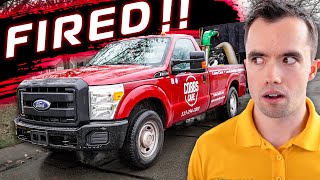
A YouTube video (Dec 22, 2023) documenting a turnaround consultation for Cobb's Lawn Care (owners Kyle and Jesse Cobbs) after a failed rapid expansion that left the business unprofitable, understaffed, and under financial strain. The consultants (Speaker C and Mike Andes) diagnose problems including poor onboarding/training, leadership and communication issues between the owner brothers, seasonal lead gaps causing employee turnover, and unsafe practices. Recommended fixes include creating trainer/checklist systems, marketing to existing customers in slow seasons (one-click emails), and implementing pay-for-performance (P4P) to improve retention.
Chapters
I had a line of credit that was, like, almost completely tapped out already. The profits just plummeted, and I was.
Just here to work and get a paycheck. It's rare that everything just goes right.
And they spun out going 60 miles an hour on the highway, Smashed into here, went into the ditch. So there was just frustrations, and, you know, we would end up yelling at each other.
We hired less people. We let a few of them go.
I really didn't know what to do. You know, with $2,000 in the bank account, not being able to pay myself a paycheck.
It'S like, why is this even worth it?
So this lawn care business tried to grow to seven employees last spring. It miserably failed. Super unprofitable, lots of stress, and now they only have one employee besides the owners. So what are we doing? We're coming into a turnaround to figure out why the business failed and what we can do to make sure it can grow in the future.
Is it.
Is the man, the myth.
And the legend all together.
Knock, knock.
Hey, how's it going, dude?
Good. How are you?
Good to see you. Kyle. Kyle, what was your name?
Jesse.
Jesse, good to meet you, man.
You too.
Casey. Good to meet you. Nice to meet you. Is this the two of you guys working on right now, like, today?
Yes.
Sweet. Good stuff, man. The nice shop you got.
Yeah.
We just kind of said, I'll do it for a year, and we'll reevaluate within a year and see what happens. And, yeah, you know, it kind of slowly grew, I think, two or three years. I did it by myself. Then Jesse came on for two.
My name is Jesse Cobbs. I am Kyle's brother. I train the MOW crew and just head over the lawn care side of the business.
So Jesse's been with you for a while?
Yeah.
Wow.
He's been with me for. For about four.
Wow.
Four years.
Okay. All right.
Following year was when we tried to take the big step, and I came out of the field and managed, and we got another mowing truck and had at 1.7 guys.
Really?
Yeah.
How'd that go?
Not. Not super. I mean, it was. Yeah, it didn't go super well. The profits just plummeted.
Right.
We weren't fully ready to be, like, revenue wise, we weren't ready to be where we were.
Kyle's business has grown very quickly. One of the risks of doing that is that the business grows faster than the leader's ability to change their skills and their experience. And sometimes hiring a whole bunch of people can put a lot of stress on the business simply because the owner hasn't developed the skills necessary to effectively manage all those people.
It was like, literally like $1,000 in the bank account to go into spring where it's like, I'm hiring guys, training guys, fixing equipment, Starting all this work without getting paid. There was no money in the account. I had a line of credit that was, like, almost completely tapped out already. I was like, I don't know how I'm going to make payroll. I don't know how I'm going to pay for gas, for materials. Like, we went almost like three months without a paycheck. And, you know, with two kids at home, we had a little bit of money saved up, but we had just bought in a house, and so, you know, we were on our own. We had lots of bills to pay, and it was really hard, you know, and it was like, you know, is this even worth it? Like, you know, I can't even pay the bills for my own stuff. It's like, why am I doing this business when I can just go get a stable job that I know the paycheck's going to come in? And so then this year, we, like, really did not focus on growth. We really just kind of like, tried to tighten things up.
Which you did successfully.
Like, it's profitable, our profits back on track, and so we're ready to grow next year.
Kyle was able to make the business profitable this year, reset, and get it back on track After a very unprofitable year last year when he tried to scale up the business. However, working 70, 80 hours per week out in the field is not sustainable, and it's not going to lead to the type of life he wants in terms of at home or in the business.
I'm feeling like we're finally growing this company to a place where I can be the man at home that I want to be as well as the man in the business.
Kyle's biggest problem right now is that during the slow periods of the year, when the seasonality of this industry catches up with him, he can't keep his crew busy. They end up leaving, and all of that hard work trying to train them up goes out the window. We have to figure out a way to keep the leads more consistent Even when the slower season comes.
What level of projects do you do?
Right now we've so we've done, like, fences and decks and, like, retaining walls, but, like, part of the problem is I have to be so hands on with that.
Yeah.
Which is you know, in the summertime isn't as bad because there's not as much leads and customer service to manage. But we just didn't end up getting any this year.
So most of your projects now, mostly softscaping, planting. Okay, okay, okay, cool.
Because like a lot of that usually.
Can be pushed off a little bit of ways. And like the guys who do hardscaping only are typically months booked out. And so what you can typically do is like during April, May, June is sort of like spring rush for mowing.
Yeah.
Then it's like, okay, we're just going to book every single project starting in July.
Yeah.
And then. Yes, that means that at the beginning of spring we could potentially booked out two and a half, three months. But then, because a month, month and a half, not so bad, people are willing to wait.
Yeah.
And then what you do is like, then you can focus on mowing when like the leads are coming in heavy, you're able to grow and expand, but then fill the schedule for summer using all those project leads. It's also a great way to close the deal.
Yeah.
Because okay, man, we're booked out like two months. You better get on the schedule because we're booked all the way out to summer. Like. Oh, yeah, okay, great. Yeah. Things that we have to wait, but let's just do it. You know.
The biggest way we solve the summer issue is through the one click custom emails. Because then what you can do is you can just be like, I'm going to pitch one service every month of summer and I just know I can fill the schedule. You probably have what, like at least a couple thousand people in your database, I'd imagine.
Yeah, yeah.
Like you send out one click estimate you're gonna get 10, 15, 20 leads. Yeah. And they're all free, Right. And they're all warm. Cause you've worked for them before. I think that'd be huge for the summer part. And then what you can do is use that same the email links for winter services when you're going, like when you send out the email saying, hey, winter services coming up. Now that button is actually gonna opt them out of winter services so they don't have to email you, they're not calling you. It's like, hey, if you don't want this and you just want us to come back next spring, click on this button. They click on the button and say, okay, great, let's take them off of winter services and we'll just let them carry on mowing next spring again. Yeah, I'd really, really Recommend that. Yeah, yeah, because, like, summer is brutal. Because, like, you hire up during spring and then you like, all of a sudden get this lull of work and you either let guys go or become extremely inefficient. Yeah, you got to fill in the seasonality of, like, winter and summer with these two other, like, demand curves of spring and fall. And so the only way to do that is to use one click estimate emails to, like, get more leads during those times. And then winter services for winter to try to keep the recurring revenue. And then you. Then you just train your new, new customers like, hey, this is a part of what we do is this. We mow and then we switch to biweekly during the winter.
It seems like employee retention is a big problem for Kyle and the business. And unless you offer seasonal services like leaf cleanup or holiday lighting or even snow plowing during the winter, a lot of people in the green industry, lawn care and landscaping, do have to lay off employees throughout those slower seasons.
And then what happens is when you're on the property, you get other jobs. Yeah, because, like, you do the winter service, it only covers the amount of time that you would typically mow. So if you're there for 30 minutes, like half a budget hour, you're still going to be there for half a budget hour. You're going to go through the checklist of, you know, 10 different things. And number one could be like, mow if needed. So if the guys show up, it's like, oh, this one still needs mowing the first week of December. They just go ahead and mow it. That's part of the winter service. And then you just train your new customers like, hey, this is a part of what we do. It's just like, we mow and then we switch to bi weekly during the winter. Right. And then they. Then sometimes the part that has to be a little educated. Well, is like, why don't you get all the stuff done on the checklist? It's like, hey, we just get done what we can in budgeted hours. We're gonna start at number one. And the crew's just trained. Like, hey, when you get out of the job and you click start, it's like, keep an eye on that time, because that is what we're going off of. And when it hits zero, like, you're out. And just make a note of where you got on the checklist. You can have a whole list and be like, I'm getting all this for 50 bucks. Yeah, that's a great deal.
However, Kyle's Problem is the fact that when he lays them off, they never come back. And it's very difficult to really grow during the spring rush if every single winter your entire crew doesn't come back to work.
And you say like, no one really ever comes back in spring. Spring after hiring them in fall.
Yeah, we had, we had one guy come back last year other than Jesse, obviously.
Right, right.
Jesse's come back every year.
The reason I say is because, like, if you have PvP and they're able to make 4, 5, 6 dollars more per hour than they would if they work at Amazon or someplace other, you know, during the winter, they do come back. Yeah, right. And so like as soon as once we did P4P and then we said, hey guys, you know, winter's coming up, starting December 1st, you're gonna be laid off. You have a guaranteed spot to come back here February 15th. But then they have like a guaranteed start time.
Yeah.
And then they know they can make more money. And when we did that, we almost had everyone come back. The big thing that you don't want to do is like, hey guys, we're laying you off. Well, like then they're gonna go make plans, they're gonna go to get long term jobs, they're gonna potentially move versus being like, hey, you're making 25, 26 bucks an hour on P4P. You're gonna go make 8, 18 or 19 at Amazon during the winter. You can come back though this day and they have it more scheduled.
I definitely think that implementing P4P pay for performance, Kyle's going to be able to have a much better chance of bringing back employees when the spring picks back up. However, I think that's not the only fix because I'm starting to feel like there might be some issues with leadership that's causing these retention problems.
During this past spring, did you just feel like, sort of like scattered throughout the day because you had to be in the field and doing all the admin stuff and train all the guys? Or was it like everything went pretty smoothly? Just like during the summer, everyone just left.
I was by myself, so I didn't train anybody. And Jesse is. I have full confidence that he can bring a guy on and train him.
Jesse is the leading revenue producer on the team. However, he's also responsible for training all of the new hires. And I consistently see this coming up. And that is the fact that because of all these new team members being added, suddenly it's slowed down the revenue of the business because Jesse, who was producing all the revenue all of a sudden was busy trying to handle all these new team members. They've got to have a better onboarding process and training process if they're expecting to hire five, six, or seven more employees next spring.
One of the big things is just getting stuff in my brain onto paper so that we can make it a system. Because really every, like, I'm still learning the things that I do that I don't even notice.
It was just a guy that he really would never go do a job by himself if somebody was sick, you know. So I was bringing in random guys to go with him and kind of just catering to everything that he needed so that the projects would get done.
We actually just recently let this guy go.
But I was training him and, like, I was genuinely voicing to him. I was like, there is a lot of stuff that's in my head that I need to get to your head, but I don't. I don't know how to word it.
We were sending out three guys to do a job that would take one person a full day, and they're still taking a full day, that kind of stuff.
What Kyle and Jesse need is a checklist of exactly what they expect a new hire to accomplish over the first two weeks of employment. And then on the back, we got a trainer checklist that can actually assess the productivity and efficiency of each one of those skills. And if you don't hit the checklist, if you don't make it in the first two weeks, you.
You're out of here.
I know what you did. You pushed pause to see what was on this postcard. Don't worry about it. Go to lawn caremedia.com cobbs and when you check out, use the coupon code cobbs to get this completely free.
You can download this and edit it for yourself.
I feel like the leadership and communication issues between Kyle and Jesse are really damaging the business. Lack of training can cause mistakes, inefficiencies, and. And if it's left long enough, it can actually create accidents in the business and put people's lives and their health at risk.
It was Casey. He was on the highway. They had just done a cleanup at a property where there was like a ton of random field rocks in the property and they just wanted them all hauled out. And so I did not tell him.
Wait a second.
Is Kyle or Jesse doing the training.
How to properly balance the weight of the dump trailer?
We're to going.
You need 60% on this side of the axle and 40% on the back. He had all the weight on the back, and it blew the rear tire on the trailer. And they spun out going 60 miles an hour on the highway, Smashed into the. The toolbox there, smashed into here, and they went into the ditch. And luckily, by the grace of God, you know, no one was hurt. They did not touch any other vehicles. They themselves just kind of slid into the ditch and were okay. So it was. It was a horrifying wake up call.
I was pretty scatterbrained as far as. I just always felt like, am I missing things? Are there emails and calls that I missed and texts and just, you know, all the things going on inside my brain.
He was just doing everything. Like he was doing admin, sales, ops, everything. And I was just here to work and get a paycheck.
You know, For a while it felt like he was just another employee.
There were times where I would get message from customer, I would relate to him, and he would be getting so many texts, so many emails. My text just flew by the wayside. And then the next week would come and I would get to that same customer, and they would be like, hey, you didn't do this. And they would be shooting the messenger because, like, I didn't have the capability to change it. And it just simply flew under the radar. There were a lot of times where I would just be on the front lines and be getting the complaints from the customer just because our communication wasn't connecting through.
We were working together in the business, and then we kind of separated and it's like, he's in the business, I'm on the business. And then there was like a little bit of butting of heads because. Because he's working super long hours and so am I, and we're tired and, you know, things are coming up and I'm making mistakes that are costing him extra time throughout the day or vice versa. And then it's like, but now soon he'll come up and we'll be working on the business together. And I really look forward to that. When we were both working really hard, there were some real challenges, you know, like the business was. Was demanding a lot of me. Plus my kids were demanding a lot of me. And, you know, so there was just frustrations. And, you know, we would end up yelling at each other just because, you know, we were just getting our frustrations out.
What are my expectations for Kyle? If My expectations are like, I need him to always answer me, but not. I'm not knowing all of the other things that he's doing. My expectations for him are so unfair. If I'm just leaving the bar for him up here to not reach. Like, if he's unable to reach that, then that's just unfair for him. And, like, expectations are so much. Because when they're not reached, that's when you get frustrated.
Look, going into business with family can be tough. You know them well, you trust them, so a lot of times, they're an easy business partner to get started with. However, if you can't communicate effectively, it's gonna cause some serious issues. And Kyle and J. Jesse's lack of communication and sort of tripping over each other in the different roles of the business is going to absolutely hurt the business, and it's also possibly going to hurt the people that are working for them.
I hate to bring guys on just to let them go in the summer, and it's hard to bring people on in the spring and train them in the spring when there's so many other things to do. Like, we actually tried a couple weeks ago. We had a guy, I brought him in for about a month, hoping, you know, like, I told him, I was like, I don't have a lot of hours for you, but my hope is to train you now while we have plenty of time to get you ready to go in the spring. And it didn't end up working out. We had to let him go.
The guy that we just recently let go, like, it. It was a really hard decision to let him go because he, like, he moved to Cincinnati from Indianapolis because, like, four years ago, his mom died.
Eight months ago, his brother died, and his dad's a truck driver, so his dad's, like, all over the country, never really home. And so. And He's. He's, like, 43 and had kids that moved away and doesn't have his significant other anymore, and so just genuinely didn't have anyone. And so he moved to Cincinnati and found us, and we hired him. And, like, I was working with him every day, and he. After every single day, it was like, I love you like a brother, man. Like, you genuinely mean a lot to me.
It was.
It was growing on me because he was. He was an awesome guy, would always work hard, loved his job, cared about it, and, like, genuinely loved me because he was just like, I love you. You and Kyle are my brothers now, and this job is all that I have. And he went away, came back and texted me, sent a picture of, like, his eye was swollen, his knee was swollen, and I think he got, like, into a fight or something. It just seemed like so much of his personal life was weighing on him. And like, he. We would be in the truck and there would be days where he's crying and like, today's just a hard day, man. And I'm just thinking about my brother. It just affected him so much that he wasn't able to learn things that I was trying to teach him. And like, after the fourth, fifth, sixth time that I would try and nail it into him, it still wouldn't be there. And honestly, probably just from thinking about so much, probably just hasn't healed and hasn't had time to heal to time to be by himself and process it rather than just moving on, moving away from it.
Cobb's Lawn Care soon to be Flourish Lawn Care can absolutely turn the business around. In order to avoid the mistakes they made last year when they tried to grow and everything came falling down and they were completely unprofitable with no money in the bank. To avoid that, they need to do just a few things.
One, they need to make sure that.
They train their new team members and get them efficient quickly. Number two, they've gotta do a better job of marketing to their existing clients during the winter months and during the summer when things slow down, to ensure that they keep enough leads coming in to keep their crew busy so they don't all leave. And number three, they've gotta institute pay for performance so that when the crew does leave during the winter months, they wanna come back because they're getting paid four, five, six dollars more per hour. That's the key to the success. And I look forward to seeing what Flourish Lawn Care will do in the future. I can tell you one thing, it's gonna flourish.









