Lawn Care Business Owner and Veteran w/ 12 Employees, $900K Revenue (Ep.4 of RoundUP)
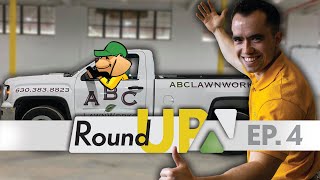
Interview with John Garrettson (ABC Lawn Works) about scaling a residential lawn & landscape maintenance company. John describes services offered (mowing, fertilization/weed control, mulch, shrub trimming; no hardscape), current size (12 employees), last-year revenue (~$594k) and a 2021 target of over $900k; he discusses marketing (AdWords, EDDM, route density), an August acquisition (equipment plus name/website/goodwill ~ $6k) and purchase of a pressure/soft-wash business (Clear as Day). The conversation covers operational choices (two locations, call center/use of CallBoss, office manager), hiring and retention, implementing P4P (pay-for-performance), estimate workflows (≈425 estimates/30 days), and John’s plans to move toward a coaching/owner role and potentially expand or change focus (fertilization/auger-like services, aviation interests).
Questions this video answers
12 employees.
Approximately $594,000.
Looking for over $900,000 in 2021.
About $6,000.
About 425 estimates every 30 days.
Chapters
Sorry everyone. I really apologize. WI Fi issues, but welcome to another episode of Roundup. We're going to go ahead and get started here right away. I really appreciate those that have been on the show and the day is no exception. A man that mows lawns by day and flies airplanes by night. A man that named his lawn care business after the Alphabet ABC and implemented P4P in his business in 2020. John Garrettson from ABC Lawn Works. John, welcome to the show.
Hey Mike, thanks. Thanks for having me on. It was a big surprise, actually.
Sorry about the WI Fi issue there, but I really wanted to have you on for several reasons. One is just I admire kind of from afar, honestly how you take so much information from different sources, kind of bring it together and really synthesize that. And part of the communities in so many different areas, whether it be mine, so service, autopilot and places like that, in my mind that's really what we have to do as business owners and in the lawn care community just kind of come together and in your ability, your humility to learn, but then also to share, I think is such a great balance. And so I wanted to have you on and my first, your first comment when I asked if you could come on was like, I don't have a YouTube presence.
I have a YouTube channel, but I've not done anything with it.
So no worries. So today I really wanted to kind of go a little more into the weeds on the business side of things. I know we have had some more influencers and solo operators on, on Roundup, but really wanted to dig into a few things. And I know there's none greater than yourself in terms of getting into the weeds, the numbers and kind of the nuts and bolts. So just for some context, maybe share just a little bit about your business in terms of revenue, how many employees you have, kind of some goals for 20, 21. What your what ABC Lawn Works is just to give some context for everyone that is listening.
Okay, sure. So we are a lawn and landscape maintenance company. So we do everything from obviously lawn mowing to fertilization, weed control. We do mulch installation, shrub trimming, plant bed maintenance, all your basics. We don't do anything with hardscape at all. I won't put a plant in the ground. We don't do any installations beyond mulch.
I currently have 12 employees looking to be at least 50% up from last year. We did 594 last year, looking for over 900 this year.
Certainly not pushing as hard as I could be, which always Seems to be my case for one reason or another, but this year really is. I lost a crew early on in the season, so. Mulch. I've never pushed mulch. As a matter of fact, mulches kind of gets in my way, so to speak, because it pulls a team away from doing maintenance. So I have my ops manager mowing every day, you know, doing at least a half a route. I had teams today doing 25 up to 29 lawns. That's quite a bit for us. Our density is super great, so that's kind of our saving grace right now.
But I guess that's, you know, summarizes kind of what we do. Like a lot of people, I've gone through a lot of phases in my business, which we can get into later, but certainly no.
Cool. So just back to kind of this year versus last year. You said 594 revenue last year. You're kind of shooting for 900 almost, you know, what, 70, 80% growth. What do you attribute that to? Is it the marketing and what you've been working on that side of the business, or is it more of a systems? What kind of allowed that growth to happen? Because I know for some people, they this is a year to kind of, you know, step back because of the labor shortage. What's been the key for you?
So really, I mean, people ask, I see a lot of times on Facebook, they're like, what's the one thing that I should be doing? You know, what, what could I do if I just did this? What could I expect for growth? Well, really it's. You need to take a synergistic approach. For us, our web presence is very good. We do have AdWords. We were guaranteed. Unfortunately, it took us down at the worst time of the season because my fertilization.
License lapsed and I didn't. Didn't get any warning or anything. They're just like, oh, well, it's taken down now. So I've been waiting weeks to get that back up, really. So then last August, we purchased a local competitor. They and us were both page one of Google back and forth. So now we own their website. So we're five, six times on page one of Google. I do EDDM campaigns for route density. We also do door hanging the first couple weeks of mowing, just like seven arounds. We do the yard signs where the EDDM campaign is taking place and all of our trucks are lettered. So we have eight trucks and a car that are lettered with ABC brand. And then we have one truck that is Labeled with our clear as day Pressure Wash brand.
So really, I hope you didn't mind me putting a max in the. In the thumbnail of the video inside of your truck.
Yeah, I'm like, I don't let dogs in my truck. But I thought it was pretty cool. So. Yeah.
So I know. I don't know how much you can share. In terms of the acquisition from last August. Was that your first acquisition? How did that go? What would you say to someone potentially buying out a competitor if they were interested in that?
So, as you've discussed, many people, I'm sure, have heard you say a company is basically worth its assets, and then maybe you're buying a company list. Well, I had high hopes of the company list, but unfortunately.
All the data they had wasn't complete. We'll put it this way. Most of the data wasn't complete, and their customers and leads were all listed as clients. Well, you know as well as I do trying to filter that in service autopilot is not the easiest thing in the world when everybody's listed as a client.
So the purchase was basically equipment. And I think it was about $6,000 for the name and the website and goodwill. But for the most part, we didn't overpay for customers. We did come up with, I think it was like $100 per mo client and $50 per fertilization client or something of that nature. But that was kind of part of the goodwill number.
It wasn't, you know, how many people stay or anything like that. We did do the transition video, as you gave an example, of where the previous owner and I sent a video out to everybody. Half the people didn't even watch it, quite honestly. They. It was really bad. And a lot of his clients he didn't have email addresses for, so that didn't work out great. And I had to shift some customers around because most of his customers would have all dumped into our Thursday last year, and that was our heaviest day already. So this year I've. I reconfigured our entire routes. Some people weren't happy. Didn't really, really lose anybody because of that, though. So don't be afraid to move your day if you need to. But that made our density crazy this year because instead of being in the same subdivision twice a week, we were there once a week. Overall, it was pretty smooth. I've known the gentleman that sold me the business for many years now, and we were on very good terms with each other. So it was always a joke that one day he'll Work for me. And he doesn't know it yet, but it ended up kind of being that way. But he's doing something completely different. So he stepped out of the business, sold it to me, and he's working in a different full time job.
And so from a revenue standpoint, like this year, how much do you think that acquisition added in terms of revenue? Just the acquisition for a full year.
With what who we kept on probably about 150.
Very cool.
So nearly nearly half our growth.
When you ran the numbers, what were was kind of the metric you're using? I know there's so many different ways to look at, you know, costs. And like you said, cost per existing customer, cost of the assets. What was kind of that sort of metric or analysis that you used for that?
Well, one thing that was a factor is that. So they had an office manager, even though they were doing maybe 200 a year. I didn't have an office manager. We were using call boss, which I highly recommend. Call boss if you need a call center. The other thing is I was spending about $1,400 a month at a storage facility. So when you factored in how much less I would spend at the storage facility to split the rent with another company and walk into that agreement that they had at the shop, plus take out call boss and add a, you know, and I add an office manager. Really, I had.
Economies of scale when we did that. I saw that when you take both rents as separate companies, it actually was a lot more money than if I combined as much as possible. Now we still do have to operate out of two locations, which kind of sucks. But all of our mowing and maintenance operates out of our shop. And the pressure soft wash division and fertilization, weed control operates out of the storage facility. So that's how been in terms of.
Operating like the two locations like that, has that been tough from a cultural standpoint?
Not really, no. Because they all worked together before and whatnot. It just kind of stinks because not everything's in one place.
Right. Very cool. And then you mentioned call boss. Do you now have the office manager because you kind of reached that point where it makes sense financially?
Yeah, no, I retained everybody when we purchased their business. So we could have absorbed all their clients without adding any. Any employees. But I retained everybody anyways. At the beginning of this year, that office manager did have to leave, which sucked. I went through a couple people at the beginning of the year and it was, it was rough because we've been averaging since we started doing estimates March 8, if you take a rolling 30 days, we're doing 425 estimates every 30 days. So it's a fair amount of work and I'm the salesperson.
So. But now I, I have someone who managed a retail establishment for me in my past life and she's a rock star. So we're, we're plugging along now.
Very cool. You kind of mentioned earlier about stages of growth in the business I know you've been in business for. Is it like since 2009, right?
Yeah, since 2009.
So it's been about 12 years. Obviously, massive growth in the past 12 months. What did that look like? The first, you know, 10 years, though not necessarily numbers every, every year. But what was that stage of the business, if you'd like to call it that. What did that look like?
So two years ago I had three trucks. So, you know, now we have 10 company vehicles two years later. It was really. So it was a side hustle for a long time. And quite honestly, it was started as a side hustle and really not intended to be too much more. I needed to find a way to pay for childcare $1,000 a month. After we had our kids, our first, our firstborn.
After some time I started getting serious about it. I do have a master's degree in business and a bachelor's in management. So I've got the school behind me, but really they don't teach you in school how to grow business at all, which really stinks.
So I figured out how to do it basically after I joined Joined Service Autopilot Academy. And in that. So my Colby is a fact finder, follow through. If you know Colby, you probably do because you're an academy as well. But so fact finder follow through. I'd have these ideas, but I could never perfect anything. I didn't have time. It was always a side hustle. So, you know, just doing the work alone was a second full time job, so to speak. And once I joined academy, I said, you know What? This is $500 a month. I know Jonathan has proven to me through his videos and his businesses that he's grown three businesses from scratch to over 10 million in revenue a year. So a plug for, you know, Jonathan Pitoshnik. He's, he's awesome. I love the guy. So I said, you know what? These guys have done things and what they've done works. So I'm just gonna throw my hands in the air and accept the fact that whatever they say, I'm gonna follow. So that's what I did. I joined the academy and I said, oh, well, this person went from 500,000 to 1.2 million. This person went from 200,000 to 700,000 year over year. The growth that these guys were experiencing was just astronomical. So I said, okay, well, I'm just going to start doing what they're doing. I'm going to shadow them. So I just started learning my numbers better and following what they were doing. And what do you know, it works. And quite honestly, this business is no different than anything else. As you're aware in several businesses it's, you know, you're an advertising company that happens to do X and once you learn that and you've kind of got your numbers in line, then the sky's the limit. You just. But the problem with our business is you've got that spring capture time basically that you're going to make your stepping stone for the next year. It's not like you can really grow through the whole year if you're just doing maintenance because the demand's not there later on in the year. I experienced this with the retail store that had fall time, basically Christmas time. If you could capture your clients then, then you grew the business the next year. And it was a services type business too. So once you understand how the ebb and flow of the business works, then you understand you need to put kind of all your, all your eggs in the pot or however you want to put it at the beginning of the year. If you want to grow that year, you can't come along and say, you know what, I think I'm going to grow this year. And it's like August. Okay, well great, maybe you did some more fall work, but you lost a huge opportunity. You really got to take it in the spring.
Very cool. You know what's funny about service? Autopilot Academy. So I joined about four, three or four years ago, I don't know, that's around the time you were in there. And I joined for a whopping two days and then I got a call from Jonathan. So my. Because at the time I just started the landscape business course podcast and, and so I get it, they didn't want the information being shared. But the positive thing was I got a two hour conversation with Jonathan for free. It was great. So that was kind of where him and I connected for the very first time. And then now, now we stay in touch a little bit more. But that's very cool. What, what do you think it is about like someone like yourself, for example, I look up to in Terms of, you have the age, the experience, you've been to school, like your mba, and yet you're still so willing to learn from, whether it be Jonathan, myself, other people that are in the community. Why is that so important? Because I feel like a lot of times, whether it be pride, whether it be age difference, whether it be whatever it might be, people lock themselves from that potential because they don't learn from other people's mistakes or successes. What can you say to that?
So, I mean, it's definitely humbling. I even tell my guys, look.
We'Re growing a business easily next year without doing any effort. We're going to be over a million dollars in revenue. Adding 100, $200,000 a year is just being on page one of Google and Answer the phone will get you that. It quite honestly will. And I tell my team all the time, look, if you have an idea of how something should be done as we move forward, then please give me your opinion, because I've not been where we're going yet. And you really need to be able to have that echo chamber of people who have been there to tell you, hey, when you get to this point, this is what you need to do. Because run a one or two lawn care company, 100, $200,000 a year, you cannot have the same structure and run a business like what I'm running or like what you're running. You know, get to Jonathan size where they've got 80 crews. I mean, I would like to think I could be successful stepping in there, but I'd probably drown before I started swimming. You know, it's a completely different beast. And you just have to, you know, take what you can learn from others, improve on it, and learn that it's not about cost of a lot of things. It's about your roi. Like you mentioned you bought Jim Houston's book. Well, I had him here in January and the guy, I mean, he's an industry genius and I'm going to have him here again in the fall. And you need to hire and pay for those as you can afford them to get you to that next level. Like, you know, I have a meeting in June with the cpa. I need to do pet tax planning. You know, there's a lot of things, like, I feel like I'm intelligent, but I don't know everything. And you can't know everything. And that's why everybody has their profession. So you need to tap into those resources so you can grow.
Awesome. You mentioned a couple things. I want to go over the Soft wash. I actually only saw that when I went on your website, clicked on the client portal and saw in your logo that there's now Soft Wash and Pressure Washing I believe. What, when did you do that? Why did you do that and is that a profitable segment of the business for you?
So 2 decembers ago I purchased the Clear as Day Pressure and Soft Wash. The gentleman I've known for many years and he's, he was the owner operator I and every year I'd say hey, how'd your year go? And he's like oh it went great. I'm like so you know, what do you have to show for it basically at the end of the year? And he never had anything to show for it. Oh, I made great money. What'd you profit? What's in the bank? I have nothing left. I don't know what I'm going to do for the winter. Do you have work for me in the winter? And it was a repeat year after year. But the guys that work completely amazing. You take an old cedar fence that was gray as can be and he'd make it look brand new again. And I was just always impressed by his, by the quality of work and whatnot. And I said you know what, it's obviously not working out. I told you year after year you need a website, you need to have a CRM, you need to do this, you need to do that. Just the basics, right? And he, it's hoarding leading the horse to water and I could never make him drink. So I said how about this? How about basically I buy your business and, and you do the work and I pay him a huge P for P on it, I literally give him 50%. So once all is said and done, I don't really make much on that service after chemical and overhead and you know, you name it. But it was more to help him as much as anything with a long term goal that hey, maybe I could add crews and I wouldn't be paying the 50%, I'd be you know, 25, 30% for labor and that's when I'd make my money. I don't know if I'm going to keep that segment if I'm going to sell it back to him. There was another pressure softwash company locally that I heard might be selling. So if that's the case and I'd keep it otherwise I'm not sure the long term because the profit margins are.
Small and are they small just because of his pricing structure or is it just a matter of overhead or what's kind of that driving force? Because I know a lot of people say as big margins in soft washing or pressure washing.
Well, there. There can be good margins. And especially the bigger jobs, the problem comes into play where he's getting 50% of the wage, or 50. His wage is 50% of the service. And that's not loaded labor. That's his net, not his. Or no, I'm sorry, that's his gross, not his net. So, you know, when you calculate it all, it's almost 60% of revenue is going to him.
Got it, got it. And speaking of P4P, when did you implement that and what was that like? I know obviously you were doing it in the middle of massive growth, and it's not necessarily. I don't look as P4P is necessarily a growth engine. It's more of almost like defense to your offense. But what was that like in terms. Because, like, I really want to hear from someone. I want other people to hear it from someone other than Augusta, where I'm always talking about it. But, like, your experience, obviously you have nothing to do with Augusta, and yet you implemented it. And I know you use it quite religiously. So tell me, kind of that process of switching over and. And what your. What your process was there.
So I've been wanting to do P4P for a few years now, honestly. And, you know, when I came to the conference last year, I already had a P4P basically set up, and I just wanted confirmation that what I was doing made sense. So I actually tried to implement it a couple years ago. And I know numbers, and I know the numbers work out and the guys are making better than the base. But the guys got to the point where they start double cutting in the fall, and they're like, well, I went hourly again. So there's one guy that everybody looked up to because he had been doing it for five or six years mowing lawns for somebody else. So he came on with me, and they were making P4P, making good money. It was very difficult to try to manage the P4P because we were operating out of a storage lot. You know, here was. Get everybody out the door now. I run the fertilization, weed control route, and then I do estimates, and I do all that. So it's really hard to manage the P4P aspect. But so he said, well, we want hourly now. I said, you want hourly? You sure? He's like, yes, we want hourly. I said, fine, you get hourly again. I already know the numbers. You're not going to make as much. But, but fine, you're gonna be happy with hourly. So then a couple weeks went by and I tracked the numbers hourly versus his P4P and I took him to lunch and like I mentioned, and I said, how do you think you did the last couple weeks? And he's like, oh, I think we did great. This is awesome. And I said, okay, well here's the numbers the week that you didn't want P for B. Because he told me, he's like, we're going hourly and it's fine you get hourly. He said, but we're going to take our time. And I said, good, I don't want you to do shortcuts. I want you to do good work. And when, when he said we're going to take our time and I said, good. He was like, whoa. I'm like, I want quality. Quality comes first over everything else. So when he sat down, I said, you know what? The. That week you didn't want P4P, you lost $1.50 an hour. I'm giving you approximations. I remember them exact. I said, the next week you would have lost 17 cents an hour. But overall you make more on P4P. He's like, Damn, I just screwed myself. I said, yeah, you did. I know the numbers. I was, I'm basing the base on mowing two and a quarter houses per hour. With a team of two, I can do two by myself in an hour, you know, so I know with a helper you can do an extra quarter of a house an hour. I mean it's a no brainer. And our equipment has continued to improve, you know, now the guys all have grandstands and I started, I was using a walk behind so for them not to be able to bang out that many houses. And then I had shrunk our area a couple years ago, so density is better, prices are up. It's like, how can't you win as an employee? Up until this year, pretty much everybody made more than me per hour. Now I think one guy doesn't make more than me now finally. But you know, P4P works and the guys are very appreciative. Right now is the last week they're getting 40%. I've got guys working last week 43 hours and they grossed over a thousand bucks. And that's. And they're running teams of two. So yeah, my labor sucks, but they're happy, so I'm happy.
Has it helped with retention at all or. I know you've been growing a lot and that a lot of times leads to a little bit more of a churn. But has that helped at all with, with the retention of the employees?
I think it has, because even one of the leads was like, man, you're making more than I was as a lead last year. You know, tell them to help her. And I think it's helped with retention, but I also think having a bigger company actually helps with retention, to be honest with you, because they see that there's a place for them to go. You know, it's not just a dead end job where I'm just gonna be a mowing guy. Because, you know, two years ago, my fertilization tech, he was kind of my helper. And then last year he was a lead and then he's like, hey, I want to be the fert tech. I said, you want to do it? You're a great worker. I'll give you the opportunity. And he's making even more money now. So now he's a fert tech. So they see opportunities, they see I'm trying to work myself out of the business. I want somebody else sitting in my seat. You know, I don't want to be here day to day operation. I still own a job because if I didn't come here, things wouldn't get routed, sales wouldn't happen. And I'm trying to grow a business bigger than myself.
So right now, really, your main role is sales in terms of like, I imagine, hours out of the day, the primary position. And you did over 400 estimates last month. What did you do to do do that? Because that is no small feat for one person. Is it a system? Is it a matter of doing some of them over the phone? Is it a matter of having an office person? What's the unlock for that?
So the office person's a huge help. Most of our estimate requests come through our website and that of course loads into service autopilot. So we don't have to do all that data entry. But I only visit houses that I need to visit. Meaning if it has a mulch job request or shrub trim or something of that nature. If it's fertilization, weed control, it's lawn mowing. We don't visit the properties. I know in some areas you have to because you might have mountainous territory or whatever you're dealing with. But we're in Illinois, it's flat. I mean, if somebody's got a hill in their backyard, it's, you know, it's not much.
It's a local attraction.
Yeah, it's A local attraction. So really, yes, I could visit each house and. Well, I can't. I can't visit 400 houses a month. But I mean when I go to these, I could say the house could use this, this, this, this and this. But I don't. The only thing that extra I push and really starting last year hard was I push aeration spring and fall to all leads and all clients in the database and I push grub control in June. Other than that, I'm really not forcing any services down anybody's throat, so to speak. You know, we've got enough lead flow as it is.
You talk about kind of like where you basically know projects. Like even if someone wants to install a plant, you say no, what was that? Did you transition away from doing more project based work a few years ago or was it always that the case?
There was pretty much always the case. We. I played around with trees one year some years back. I mean money grows on trees when you cut them down. But.
But I almost had a guy get killed, quite honestly. And I said that's enough. You know, he, he literally was hanging upside down unconscious of blood coming from his head, rushed off to the hospital.
It's not something I want to be involved in. It's high insurance, it's high risk.
I think just like your video you did recently about can you name one or two Michelin restaurants? I don't know the name of Michelin restaurant. I know they're in Chicago. I can tell you that there's one or two there because Jonathan and vacations here for the Michelin restaurant.
But I want to be more like Chick Fil a. Not even McDonald's. McDonald's. I want the margin.
Starbucks.
Starbucks. So that's something else too is with, with pricing. I mean, May 1st I increased our base price up $3 and I saw that last month our conversion rate was 63%. To me that's too high. Some people are like, well why wouldn't you want it to be high? Well, because that means there's room for price. There's not. Objection. I need to have some objection to our price. You know, we have, last I checked I know it was 700 plus active clients. So I would like to, you know, raise that price next year. If I can't find more guys, what am I going to do? You know, I might be raising our price here soon on a lot of, a lot of people on the base. But I'm not a greedy business owner either. If I could mow everybody's lawn for 25 bucks and pay our guys 50 bucks an hour. I, quite honestly, I would. You know, it's not. Bringing an extra dollar home isn't going to do that much for me. I'm content.
And when it comes to like doing those estimates and someone asks, say for example, hey, I want you to install mulch, but I also want you to plant these bushes and cut these trees off of my house and do all these other things. How do you go about that? Do you say no to the whole project or like, obviously when you're really busy, it's easy to say no, but what about when there's kind of like, hey, I kind of need this work? What has your, your kind of ideology been around that?
So I, in the past, I'd say, okay, if you buy the shrub and you put it where you want me to dig the hole, we'll put it in. Beyond that, we'll, we'll trim, you know, something off a house, that's not a problem. But you want me to do a landscape design or you want me to do sod install or sod cutting or any of that, we just don't do it. You know, I can refer you to somebody. But we specialize in maintenance. We're plenty busy doing what we have.
I quite honestly, I don't need more work. We want to grow still. Don't get me wrong, but we're plenty busy. It's not like there's a gap in our schedule and the guys aren't getting enough hours.
So I mean, it's easy turn away work. I know when you're starting out, you can use some of those time fillers for your schedule. Like I used to use Task Easy and some of those other third party companies. But that was only until I could fill the schedule more. And as I got a helper or got more efficient equipment and then started doing things that, you know, made us more efficient overall. Then I started cutting out those other third party. Like we used to drive 200 miles in one day, you know, and we do 25, 30 houses for task easy all over the place. And it's just ridiculous. You know, you spend all that time driving and you really need to focus on density. Two years ago, little story I think will help some people. So two years ago we cut back.
Basically half our customers and we still grew by two crews. So at the end of one season, I had two crews. Before the next season started, I cut one of those crews out and hired enough guys and got another truck for three crews and we filled them by the second Week of mowing. So really a lot of that came down to confidence and it was that academy that gave me that confidence too. So I guess the moral of the story is have a mentor or some type of mentorship that will allow you to have the confidence. Because that's the number one thing I think that holds a big business back is the owner's, not necessarily their ability, but their, their confidence to be able to move the company forward like they want.
That's awesome. In terms of the future, like obviously you kind of mentioned your, you know, you're not trying to make, you know, a greedy, you know, business owner trying to make a bunch of money. You are content. What does that business look like? Is it more around creating the team in place so you're not having to be there every day and you're not in that role anymore. With what size of business does do you think it needs to be to get to that, that point?
Quite honestly, next year, over a million. I don't think I need to be here. I'd like to go start something else.
At some point. I'd like to move out of state and start another location. Well, we will not be cutting grass, I can tell you that right now. If I had everything to do over again, we would not cut grass. Fertilization, fertilization, we control aeration and overseeding. That's it. Literally, that's it. You want me to dethatch your lawn? No, sorry. We do aeration. I mean those three services are probably the most profitable we have. They're easy to replicate. You don't require much training and you can absolutely kill it. One, one a one man crew. So you don't need nearly as many guys to do the volume and to make the money. Mowing. Mowing is, I mean, yes, it's profitable, but it's, it's a loss leader.
And, and as a function of revenue, do you say, what do you think, like 20, 30 of your, your current revenue is from mowing or, or even less?
It's more than that. It's more than that. And I was actually shocked to hear your numbers last month because we did 127 in revenue last month. It's the first month we actually broke 100, to be honest with you.
Congrats, man. It's awesome.
Thank you.
So before, I know, there's a couple questions coming in, but before we get into that, before the past couple years when you've been growing a bunch, what was your thought process for what, eight, nine years when you were growing at a much Slower rate. What was holding you back? Not just only mentorship and information, but what was your thought process? Obviously you still had the same education. You could have got another job. Was it the end in mind, you were striving towards where you're at now, or was it the fact that you enjoyed lawn? Like what kept you in the game? Because I feel like I was even talking to one of our employees today and he's a young guy and is wondering about like, you know, what should I do for my future? And like, I want to have all these goals and ambition. I'm like, put your head down and work for five years and doing one thing. What? Wake up and realize that you might have a great opportunity on your hands. What was your thought process though? Having experience, education, you could got a great paying job. What were you thinking during those years?
So for the first several years, it quite literally was a side hustle, it was a second job to pay for different things and whatnot. I was retail management, manage big box stores.
Quite honestly, what pushed me to pursue this harder was a job loss. So it was a wrongful termination.
And right after a very, very good review and I was tapping out on their bonus and everything else and they changed leadership and they quite honestly, they got rid of all their highest paying store managers. They're like, you know what, we're gonna kick them to the curb because we want to make more money and we don't need to pay these managers what we're paying them so well. There's no security working for somebody else. So then I said, I need to figure this out. I'm going to work, I'm going to build the business. But I still didn't know how to build the business. That's the problem is I know how. I had good customer service at all the places I worked, number one in my district and I could grow business through customer service. But you can't when you don't have a national marketing team behind you. When you're in your own business, you can't just grow off customer service. It doesn't work. Some people say, oh, I grew off a word of mouth. Word of mouth is gonna, you're gonna add one crew every 10 years. You know, in a lot of cases, unless you're actively saying, hey, refer me.
So really it was, I need to get serious and I need to learn how to grow this business. I want to make anything out of it and my long term goal is not to be cutting grass. So that's when I said, you know what? I'm going to join academy. Quite honestly, when I joined I couldn't afford it. I spoke with Jonathan for a while. I said I can't really afford this, it's not budgeted. But I want to be set for success going into next year. And so I bit the bullet and joined it. And that mentorship really is the number one thing I can attribute to success because like I said two years ago I had three trucks, you know. And so it was from 2009 to 2019 we pretty much didn't grow or through 2018. Then I made a big change, shrunk our market and that's when I started pushing and from there it's each year kind of doubling.
Very cool. Good question from Brandon Make. He's an area in Georgia where they do a lot of 12 month contracts, full service, like the whole property. First question is kind of like do you do full service and can you do a full service type of estimate without having to go the property or is it just for mowing and fertilization that you currently do that?
So I do have a couple commercial clients. I don't actively seek out commercial clients but I do have one complex that has like an orthodontist office and convenient care center and whatnot. And we're basically full service there, biweekly plant bed maintenance, biweekly, we trim one third of their shrubs and then we do the weekly mowing there. So that's kind of as full service as we get. And yes, you do need to visit them because I mean you can't say oh I'm going to trim your shrubs and this is the price if you don't even know how many they have or how long it might take you to a job. So you absolutely have to visit the locations. But what was the other part of.
The question in terms of like I think for his, for him, for example, he doesn't do commercial, it's mostly residential.
Right.
And they only do full service, 12 month contract. I know this too because he's next to Brian Connor in one of our franchisees and so it's very common. It's everyone expects 12 month contracts, full service like weeding, bush trimming, etc. Yeah, obviously you have to meet, you'll go to the property. What would your advice be in terms of for estimating that versus more of a per cut pricing?
I would do it just like I'm doing now when. So every day my office manager gives me a little list and says these are properties you're visiting tomorrow. And I literally go there and it may not be the most efficient way, but I send myself an email so when I get back to the office I send out the quote. But you, you just have to visit each one and unfortunately in that market.
You know, you do have to spend that time on the road. But at the same time if you're doing that full service, you should be able to charge a more of a premium price, you know, which will pay for your time doing the estimates.
Very cool. One question Zachary keeps asking here, Zachary Trigger, he's. How long were you thinking? I think waiting is what he meant here. Yeah, waiting list for Academy.
So there was really no waiting list when I got on.
Yeah. And now I think if, even if you're on the way. Nice. I think every year they, as long as you come in, they let everyone in basically. Now once a year. Yeah, yeah, my short, my stay was short. It was good for two days and then I got a little text message and a phone call.
Well, I, I thought you were still in there, quite honestly.
But, and I knew your, your motive behind it. Of course it's kind of like with your, your gym, but it's not like it's malicious, you know, and I understand his decision and you have to respect that.
100. Cool. All right, well if there's any other questions in here, by all means feel free anyone to ask John any sort of questions. Brian kind of, I think is following up on the 12 month sort of year round. We've been sending per visit estimates for mowing and bed and shrub maintenance for services and we have been wearing much more successful with approval ratios. Very cool.
I believe it.
So do things fall into place as the business grows? What important steps should. Did you take in the early stage? Do you want to answer that, John?
Yeah, sure. So early on it's something I didn't do and you need to be available to answer the phone. I got serious about that a couple years ago when I was still on properties and if the phone rang, I just had to step away from the equipment or whatever I was doing. And you have to answer the phone.
As long as you're attentive to that phone call and you say, hey, I'll send you that estimate this evening or something then oftentimes they'll probably wait for it. But if you don't answer the phone, they're just going to call the next place. And in our industry somebody that answers the phone is a rare breed and second to that is somebody who actually calls them back. So if they leave you a voicemail and they call, you know, 10 landscapers, nine of them probably won't answer the phone. One of them might get a voicemail and half the time they're not even going to return the call. So if you're attentive, you have good.
You have good presence on Google, then you're, you're going to grow your business. I mean I was even told that by a customer early on. They're like, you know, you're going to grow your business big one day. Because you actually called me back and it's like, that's, that's sad though. I mean that doesn't meet your mission of creating a more professional landscape industry, does it?
So when it comes to, to someone that is growing, like for example, I don't want to put words in your mouth, but even a year ago when you're on this massive scale growth didn't acquisition the whole nine yards. I'm experiencing with several of our locations, our franchisees right now growing extremely fast from a. Not psychological, but just like that meant your mentality. I know you're pretty level headed in terms of, you know, you don't go up and down too much, but what was that in terms of just managing the stress and the financial pressure along with all the things that you're trying to learn and grow and implement and all that sort of thing? What was something that you did that would help someone in that same period of massive growth in their business?
So I think hiring ahead of the need to some extent, I mean it doesn't mean that, you know, I'm going to have a big business next year, so I'm going to go out and spend a ton of money on equipment. No, it's really setting yourself up with people because the people are the hardest asset to get. I mean I can literally go down the street and buy a zero turn mower to get me through through. Right. For the next couple weeks if I add to at Home Depot or whatever. Right. You can still.
I always, I always think it's so funny how people do that. Like you know what we're growing. I'm gonna go buy a mower because we're gonna get more customer. Like look the moment. Well, you know what with the shortage right now, I can't guess, I can't say that exactly. But traditionally it's been, look, any time of the day you can go down and get the mower but like you gotta go get the employees and the customers first.
Right, right, exactly. So really quite honestly I'm, I have less stress and I work I feel like I work less. I don't work fewer hours really, but I physically less. Yeah, I've not been on a property this year. I've not done any physical work on a property yet this year other than when I'm visiting properties. I'll do some spot spraying for weeds to help out. But otherwise, the job roles become more defined as you get a bigger company.
You know, you've the phones off my back. I hate telephones. I honestly hate telephones. And a big reason why I haven't grown any type of YouTube channel, it's because I hate FaceTime type stuff. Quite honestly, I don't like it. It's just. It is what it is. It's out of my comfort zone.
But as you're growing, get your people in place. Last year I hired. It was actually a rehire, but I hired my ops manager. He was a lawn tech, you know, fertilizer tech all year. Right now he's filling in gaps, but he knows that we're budgeted for him to be in the office 50% of this year, you know, and I'm setting things up so that the next year he can take more off of my plate. I don't want to have to be here at any specific time next year. Next year I want to be more like the coach to him and a coach to my business. So you kind of need to be a little bit ahead of yourself and ahead of where your business is. I think is the smartest move to be able to grow and not be pulling your hair out. I mean, how did you do it with that? I know you hired, you know, Liz and you had estimators, but maybe you can expand on even what you. What you did with that.
Yeah, like. Like, you know, at the end of the day, know when you have the goal of creating a place of work where people can start from the bottom and work their way up, it kind of changes your mentality because it's not like, well, I'm going to hold on this forever. It's a matter of like, I'm trying to set the person up behind me for success. It's kind of like we always are talking about setting up other people for success in the business. So I'm trying to perfect my role for the person that's coming behind me. And that mentality and the stress of growing, like. Like, it's. I'm still in the middle of it, so. But, like, it's still. It is overwhelming. Like, it's a positive thing when you're growing so much. But when there's financial pressure because you are having to invest in the business, you're hiring a lot of people, some of them don't work out. That can be, you know, very difficult. One thing is, I think too, a lot of times is kind of even for you, you like eight, nine years, it was kind of like probably slower growth, et cetera. And then within a matter of years, things just kind of really took off.
And.
And I think a lot of times what people get caught up in is year four or five and six when there's not a lot of growth, there's not a lot happening and they, they give up before that hockey stick kind of growth that everyone wants and wants to get to. And you know, you've kind of got to where I think a lot of people listening, that's their kind of pinnacle, that's where they want to get to, especially next year. And that is the opportunity to step away from the business and actually have it, start running it with, without you starting a location, et cetera. And, you know, I'm really thrilled because like some of our franchisees will be their second year next year and they're starting their second, etc. That's kind of the envy of a lot of people. Now that you're there, what's kind of your. What are you looking at, whether it be second location. You mentioned starting another business altogether, moving out of state. What's that look like for you personally and what you're going to do in the business in the next five years?
Well, if you ask me, pre Covid, I was actually working towards becoming a flight instructor. I wanted to be a flight instructor full time. I love flying my airplane. I enjoy aviation. It's something I've always loved. So that was really the goal. But with COVID.
A lot of the especially regional airline pilots had to take a step back. And the step back for them was back to becoming a certified flight instructor. That's just a natural progression of a pilot, you know, as private pilot, then flight instructor, then the airline. So they have plenty of instructors. So it's like, okay, now I'm not even feeling like I need to become an instructor because they're using all the hours. So. But I think with things returning to more normalcy as we, as we move forward, that might be something I want to explore again. It's becoming a flight instructor and sharing the level of flight with people that are learning how to fly. Otherwise, I've started dabbling in like loan signings, things like that.
I really don't know 100% definitively. But I'd rather be the coach to the business than have to be here every day for the business to continue operating.
Awesome. Just to close things up, John, I wanted to ask if you compare kind of where your business and even mindset around the business is now versus, let's say three to five years ago, what's the difference between now how you look at the business versus how you did even three or three to five years ago?
So three to five years ago, before I joined the academy and learned how to do things was.
It almost felt like a grind and a hustle every day, right until really, I think the thing that kind of uncapped it for me, so to speak, was hiring a professional AdWords manager. That's what made the phones start to ring off the hook and that's really what started growing. My business was hiring people to do the jobs that I'm not good at doing. You know.
And really, and I alluded to that earlier, that's what it boils down to. Hire those who are advanced of you and in those subject areas that you're not good at. I mean, that's really what it all boils down to. And I'm going to continue to do that as much as possible. Continue to go to conferences. If you've not attended conferences, they're starting to open back up this year. Attend those. I know it's tough to get away sometimes and sometimes people will go to Gie before they'll go to your. Your conference or the service autopilot conference. Really, if you're serious about your business, don't go to the playground to where they're talking business. I mean, that's the only way you're going to grow. You know, you need to be with those who are ahead of you and Gie. Although there might be some decent classes and stuff, in my opinion, it's a playground for the industry. I didn't get much out of it other than I can play on mowers. Mowers don't excite me. They make money. Other than that, I could care what color it is. I could really care less how much it costs as long as there's good ROI on it and people get too caught up in that type of stuff that does not produce the financial numbers you're looking for.
It's awesome. Well, thank you, John. I really appreciate your time tonight and I want to say thank you for, on the behalf of all the guys who are either younger, just getting started, you're always so willing to share whether it be landscape business course on the facebook group service allput Facebook groups always so willing to share and share expertise So a big thank you tonight for hopping on the show. I really appreciate it more than welcome.
Anybody want to reach out? I I love helping people that might actually be one of the things I do in the future is some type of consulting. I do enjoy that.
Very cool. Awesome. Thank you. Thank you so much John. Have a great evening.
Thanks you too.
All right everyone. So that concludes this episode of roundup. Next week we are going to be having on top notch lawn care Brian Shane really looking forward to that and yeah we'll keep going along here. Make sure you subscribe to the channel make sure you chat with John ABC lawn works he's on the facebook group landscape business course Facebook group and if there's anything we can do for you always reach out. Thanks so much. Have a good evening.









