LAWSUIT! client DEMANDS to see employees ID
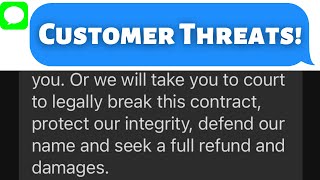
Mike Andes (YouTube video, Aug 6, 2022) reviews a Facebook post and a threatening text from a customer demanding employee IDs, proof of payment to workers, and licenses. Andes explains that the demand is a likely bluff, outlines contractor best practices (get written acceptance for change orders, require prepayment or card-on-file, provide proof of business licensing/insurance but not employee IDs), and recommends measured responses: send a brief professional demand for payment, warn that further contact will go to counsel, and—if needed—use contractor liens before expensive litigation.
Chapters
Today we're going to show the messages that a client sent to a contractor threatening them via text message that they were going to take them to court because they wanted to see the documentation of their employees and they wanted to see the driver's license of all the employees and the owner. So let's go ahead and jump into it. This is a post from our Facebook group, Lawn Care Millionaires. Here we go. Hello everyone. After finishing one project in City Name, the customer asked me to email him proof that we paid our customers for the project. If I do not he he will assume that we have hired undocumented workers and paid them without reporting their income for taxes, which means we have caused them to break the law unwittingly. He gave me two choices. I can leave them alone and take whatever they have paid us already or they will take us to court to legally break this contract, protect their integrity, defend their name and seek a full refund and damages. We have never hired undocumented workers and our transaction is between company and company. Also, I don't think they have the right to ask us for proof to pay anyone. My question is, how can we defend our rights and get the remaining payment back? We have signed the agreement, but when they extend the construction area, I only gave them a quote without updating the contract. All right, so let's go ahead and jump into the text message that the client actually sent to the owner. A couple things before we do that though. One thing that is important is when you do send a revision to any sort of quote or a work change order that you do get that some sort of signature on it, or at least in writing, via email or text message that they addressed and acknowledged and accepted that proposal. So you don't necessarily need to have a signature, but if you sent the quote and you can prove they saw it and accepted it, even if they just said yes, go for it, then that's all you need. Verbal is very difficult to protect in court. Another couple things you could do here is have a prepayment where they have to pay before the job even gets started. Or two, you have a credit card on file. But still, people can do chargebacks on credit cards and they can still go to their bank and try to get things reclaimed.
All right, so now to the text message from this unhappy customer. Dear so and so, Please email me the names, contact information, licenses, photos and proof that you paid these workers for their project, including your own license. I will give you until Wednesday night to send this information to me. If you do not, I will Assume that you have hired undocumented workers and paid them without reporting their income for taxes. This means that you have caused us to work unwittingly. Break the law, too, and we will hold you liable and defend ourselves like it's like they're defending the Alamo or something. Okay, let's continue on with this heresy. This means that you have caused us to unwillingly break the law. Okay? So you have two choices. Either you can leave us alone and take whatever we have already paid you, or we will take you to court to legally break this contract, protect our integrity, defend our name, and seek a full refund and damages. Note that our lawyer will be reviewing all this information along with the back garden videos we have of the workers. Okay, so first and foremost, this is a threat. Okay? The way this is written is not actually going to happen. I can guarantee this person is not going to take legal action. Now, a big deciding factor of this whole case is how big this project is. Are we talking about $1,000? Are we talking about $20,000? That is a big difference because no one's going to go take this information to their lawyer. Over $1,000. They might do it over 20 or 30,000, but they're not going to do over a thousand. That last text message is very indicative of someone who's just threatening when they mention lawyers and we have video evidence immediately, you know that this is a threat. Keep in mind also that I'd say more than 95% of the population do not have a lawyer. The only people that have a lawyer on retainer that they consistently communicate with is business owners and very wealthy people. So when someone, random customer says, I'm going to take this to my lawyer, they are absolutely blowing up smoke, and there is absolutely nothing that they are going to do about it. Depending on the state that you're in, there's certain laws that protect the the rights of the actual workers because you are not going to share their licenses, their information. That's personal information to your workers, and they have protections against that being shared with outside third parties. However, a customer can verify the validity of the contractor or the vendor that they're using. And so they can go check and see if you're licensed, see if you're insured. They might be able to ask for proof of insurance, but they cannot ask for the identifications of your employees and how you paid them and all the rest of it. All of that correspondence is between you and the state. And then the state gives you a stamp of approval. That is a business license if you meet their requirements. In my opinion, this customer is probably trying to get the second half of the bill basically refunded back to them and just trying to scare away the contractor after they've done a whole lot of hard work. And that's what makes me mad. It is public record for the customer to be able to go and look which customers are licensed and bonded with the state is the role and the responsibility of the government to ensure that certain standards of hiring and licensing are upheld in order to have that stamp of approval and a business license. So what would I do in this situation? Well, in this situation, before I take this to an attorney or I try to get mad at them, because obviously when you know that they're threatening you, you want to immediately threaten back. You want to immediately come back with proof and evidence and all the rest of it. Try to stay professional, at least through the first communication, and then make sure that once someone has threatened legal action, that you basically give one response and then say anything further will go be going through your lawyer. So my response back to this customer will look something like this. Hello, Mr. Jones. Your outstanding balance is whatever amount of money it is and it is due by give the date. If it is not received by that date, you will be going into the collections process. Any further correspondence about this overdue payment will be forwarded to our lawyer and we will have no further correspondence with you. And then I would give them the mailing address and maybe a link to give payment and that's it. At this point, I wouldn't even go and talk to my lawyer because I don't even want to rack up fees because I think 90% of people, they're just going to end up paying the invoice. The other 10% that would respond back say, well, what's your information for your lawyer? Well, then I'll go find a lawyer and I'll be happy to pay someone to fight this case. Before I would even contact an attorney and start racking up the bill, I would honestly go and put a lien on this customer's property. You can put a lien on a customer's property and basically keep that title, that deed from ever being transferred. And they can go run into a lot of problems by having that on their title. This is the way that the government protects contractors from doing work on a property and losing a whole bunch of money because someone doesn't want to pay. So that would again be another level of recourse that if this person responds negatively, I would use that before even going to an attorney, because as soon as you involve attorneys, the cost of this is going to go dramatically through the roof. And if you have to go to court, like, you're talking about thousands and thousands of dollars, and it's just not even worth fighting at that point. So before even getting to that point, I would be trying to use, again, a professional response that's basically trying to smoke them out from their empty threats. And then, number two, using the legal system of contractor liens to be able to try to force them to pay their bill. Ultimately, if you as a business owner are paying your taxes, paying your employees, and doing everything above board, there are laws in place to protect you. And that's why we have a legal system to take people that throw around empty threats like this and expose them. And so I hope this video does that, because, honestly, I think so. So many of the times, contractors and vendors, we get reviewed, we get ranked, people can say all sorts of negative things about us, but yet there's no way for us to be able to communicate as contractors, to be able to tell about these type of customers that will say empty threats, just to be able to get out of their invoice. They don't pay their invoices, they mistreat employees. These are the type of things that I don't like, and this is why I make this video.










