Mark Cuban, Dead Cows, and Family Owned Businesses - Episode 059
Episode 059 of C Suite Unfiltered (YouTube) — a discussion between Mike Andes and Lee covering: announcement and plans for the Blue Collar Summit (Jan 16–18, 2024) including Mike’s all‑day 'Expansion' workshop and event format; a product announcement for ShowcaseReviews (reviews automation/aggregation tool; free to Augusta members, $99/mo public, site: showcasereviews.com, public availability in ~3–6 months); marketing strategy topics (polarizing ads, Blue Ocean targeting), Augusta’s strategy around AI/automation, and brief commentary on broader economic topics (inflation, grocery prices, regulation).
Chapters
Alrighty.
Welcome back.
Another day in the life, another episode.
C Suite Unfiltered. Let's just jump right into it. Blue Collar Summit.
Yeah.
So you announced this. We had a roundtable at the time of recording last night for the owners inside of Augusta. So if you want, you know, up to date, sneak peek, access to Mike and all the updates, join Augusta. But we had a roundtable where you rolled out, obviously some internal stuff for Augusta that we will not be talking about publicly and some cool ideas and where we're headed. But you also officially announced the dates for Blue Collar Summit, launched the website. So, yeah, pumped about that.
Yeah. So it'll be the first time we go outside lawn care landscaping. And the notion behind that is mostly around the fact that I think sometimes other industries bring other ideas that are like adjacent to what we're doing. But like, oh, like we, like, oh, we didn't think about that. And I think like, if I would have done that years ago, we would have come up. Like, if I would have been going to, you know, roofing conferences 10 years ago, I would have probably figure out things like estimate videos years before I did and other little systems we've added because other industries did them or did something slightly different. And then you get ideas because ultimately we all sell labor. We all take a 20, $30 per hour labor and we try to sell it for 100 to 200 per hour to the customer. And like that, that difference of like whether I'm installing shingles on a roof or I'm installing mulch into someone's flower beds, it's kind of the same stuff. And so I think it'd be like a good creative way of getting other ideas flowing for different industries. And so like the speakers that we currently have lined up or like we're working on are like roofing, cleaning. There's like a bunch of different industries still. A lot of lawn care, landscape. It's still going to be the bulk of people being there just because I've always been, you know, it's always been Landscape Summit. But yeah, I think it's going to be really cool.
Yeah. So it is January 16th to the 18th. Correct. 2024. There'll be the first night of just some keynotes and then the second day you're doing a workshop. So is that just you all day?
All day I'll be doing the workshop.
Cool.
It's kind of something I've been working on, like contributing to for like really the past five years. And so it'll be kind of a culmination of some of the work. I haven't like put everything together yet, but like, it's like a workshop in my brain still. I'm also trying to. Eight months. Well, I'm also trying to finish the book. I'm also trying to create this winter track stuff for Augusta. And then I. Then I'll be focused on the workshop. That's kind of like the sequence of this next year in terms of creating content. And so, yeah, we're not going to any phones, no pictures of slides, no recordings whatsoever. And I want people to lock in and really focus and take notes. And will it be like a workbook.
To work spreadsheets and things? QR codes?
Yeah.
Cool.
Yeah.
Yeah. So that's sweet. Do you like, give us a little teaser? What is it going to focus on? Or is it because it's a whole day workshop? Is it going to go all over the place?
I'll save it for then.
Yeah. Okay. I didn't know if you were gonna like drill down on.
It's called an expansion workshop.
Okay.
And if you look at the definition of expansion and if you look at like what expansion means in terms of mechanics, like certain types of bridges, things like that, from an engineering perspective, there's different ways to expand things. And so I believe that every business needs to be engineered slightly differently and optimized for whatever the end result is. And so whether you are trying to license a model, franchise, a model, multiple locations, one massive location, like it needs to be engineered, like engineering your business in a specific way and having like the blueprint for that is like going to be kind of the goal.
Yeah. From. From an engineering perspective, the increase in volume of a material as its temperature is increased.
Right. And so. And that's from a temperature, then you have a material expansion. Right. And so anyways, we're going to be trying to create the blueprint for someone's business for the next five years based upon what expansionary channel they're going to use. And that's going to be the goal.
Nice. I love it. So first night keynote, second night, all day workshop. Mike Andy's third day guest speakers.
Yeah. So first night and the second day is a bunch of guest speakers. We're doing things in the morning. They're going to be optional on Friday morning and Saturday morning so I can talk a little more about those. And that's like, there's gonna be some breakout sessions for. Whether it be people like super athletic and they wanna go running together. There's gonna be ones for like, like kind of Bible Study type situations for the mornings and then there's going to be ones that are based on revenue. So if you have a bigger business, like if you're a million plus, you, you will literally have to show us your P and L in order to get into the room.
Yeah.
So that's gonna be cool. And we might even do like one based on age. So like if you're under 20, like you can go in this other things. So it'll be cool. Breakout sessions from like early morning to like right before we start. So if someone really wants to get everything out of the event, they could liter of straight content and then if they, they're not really able to do that or they don't want to do that, they can just come to the main sessions and take it a little easier.
Yeah, that's cool. We're going to pack it in for sure. I'm, I'm very excited. It's going to be good. And you've said publicly you're going to put 10 times more effort into this one than any other conference.
I probably already put as much effort into this one as I did last year. And we're still what, nine, eight. Nine months.
Yeah.
So last year I got Dr. Kashi kind of like on my, on my team only about two months before conference. And so that's when I like, I woke up to the fact of like how much more effort should be put into things. And so this time now I'll be going into it with like basically from two months now, about eight months of getting ready for it. And it won't be keynotes. Keynotes are different. Cause like I, you can put me on a stage and give me a topic and I can basically talk for at least 10 or 15 minutes about it. No problem. Throw a couple questions in there. Like we got ourselves a keynote, baby. When you're talking about workshops, like you need to have structure and plan and like paste it all out and rehearsed it. And so being around people like Dr. Kashi and Alex where like there is no level of preparation that is too great and even what they're doing like as we speak, I kind of know a little bit behind the scenes, like the stuff that they're doing, like they're locked down in monk mode. Yeah. Working on the book launch and ever, it's going to become a shock to everyone. It's going to be going to break records and all sorts of stuff. It's because they've literally locked themselves in rooms and like work seven days a week on this and the amount of, like, rehearsing and doing it over and over and just rep. You don't have to be the smartest person in the world. If you just do the same thing a thousand times and then you get on stage and it's like, wow, they crushed it. Well, actually, they basically dream about it because it's, like, all they do. And so, yeah, that level of preparation, just the intense. It's.
It's.
It's a lot of work, dude. Like, there's a lot of things I got to get done, and so, like, I really wish I just could focus on the workshop, but, like, the book needs to get done, and, like, I've been working a ton on that. And then. Bless you. And then the. You know, the winter tracks, like, for Augusta, like, that's a big deal. I got to nail that down. At least get the testing frameworks for this coming winter and then refine it next year. But I also want to make this workshop, like, the best. I want people to. I want people, like, at the end of Friday just to be like. Like, I've seen my business from a whole different perspective. I have clarity on the next five years. I know exactly what I need to do to make it happen. And these are the steps I will be taking at every single junction of the expansionary effort.
Yeah.
And that's gonna be the goal. That's awesome.
I love it. Well, there is one thing that we shared last night, or you shared on the roundtable with Augusta owners that you were. You were okay releasing to the C Suite audience.
Yeah. This is C Suite exclusive, dude. If you're not in Augusta, this is the only place you're gonna hear about this for at least several weeks.
Yeah. Maybe I'll edit the pod. Maybe I'll put this at the beginning. But this is. Yes. This is exclusive to the C Suite audience, so thank you. Mike, you have.
Oh, by the way, Liz the other day, she's like, you got a thousand subscribers. She's like, you know what? The only reason he did that, right? You got to. A thousand. I'm like, because she's at, like, 300 or something. I'm like, why? She's like, because you're on it every single week. Yeah, of course. So I'm like, okay, well, you can interview me. Go for it.
Yeah, 100%.
I am.
I am 1,000% aware of it.
I look forward to the moment when.
When, you know, we'll pro. You know, my main channel, probably, like, 2 or 3 million subs. But then both of you have like, 10, 20, 30. And, like, there's a real following of, like, executives and, like, number twos.
Yeah.
And salespeople that are actually following you all. And kind of, like, a lot of people follow Layla because, like, she's the nuts and bolts, like, the brains behind the operation of, like, someone who's really good at promotion, like Alex. And they follow her. Like, I look forward to that.
Yeah. So that'll be cool. So this is C suite exclusive. You're working on something?
Yes.
Showcase reviews. Yeah.
Yeah.
So tell us what this is.
So this stemmed from. At Lawn Care Web Design, it costs 500 bucks a month, basically, for us to build your site. We don't think that anyone should really take that much money and put it towards your website unless you're doing over 200,000 in annual revenue. And we probably get 50 to 70% of our leads that come into Lawn Care Web Design that are not doing that much revenue. And so we actually tell them not to buy from us. And all we tell them to do is watch these five videos Mike has made and get a bunch of Google reviews. And still we don't see people do that. So we want to create. It's like, look, we know getting Google reviews and getting, like, Yelp reviews and HomeAdvisor reviews and all these other platforms is the number one way to get leads when you don't have a ton of money to spend on marketing, because, like, it costs you nothing to get the reviews. And you can go out and do work, and instead of getting payment in the form of cash, you can get it in the form of reviews, referrals, upsells. And so I just always see, like, when someone goes and does what we say they're doing, 100,000, 150,000. We say, hey, take another year. We'll build their site in a year. But, like, go get, like, 100 reviews. They go get 100 views. They come back to us next year, 300,000. And, like, this is awesome. And then we build them the site and takes them to the next stratosphere. And so really, it comes out of, like, we wanted to actually give them a tool to get the reviews. So Showcase reviews. As the name implies, you're trying to showcase your reviews on social media.
You can.
You're trying to keep track of all of your views from all different platforms in one spot. You're also trying to be able to send review links, QR codes, text messages, WhatsApp messages, emails to people asking for reviews, but then screening out anyone that's not gonna post A five star and then getting all the negative feedback channeled to you. Everything that is positive gets put onto your main socials and so there's a whole bunch of automations we're trying to build around it so you can already tie it in with your Stripe account, for example. What's cool about it too is what's different right now. I'd say the unique differentiator right now is we can actually track who left a review and so if someone doesn't leave a review, we can keep following up with them. The problem we've always had in the past with other CRMs and even copilot is you can keep sending someone a review thing but you don't know if they actually left the review. You don't know that. And so we're tracking that part. So that way if someone doesn't leave her, you follow up with them and you can send them multiple text messages or emails or WhatsApp messages and you can tie it into like with your Stripe account to where based upon when they check out or they get added as a new customer, then they start getting the sequence. So anyways, all that to say it's really a matter of getting more online reviews. It's a way to be able to keep it all in one spot, be able to have a QR code and share that with people, knowing that if someone scans it and they're mad, that's fine. So you could put it on your truck and not get people to scan it and put a one star review on it actually filters all those out, gets all the information to you personally and then lets all the good stuff go public. So Showcase Interviews allows you to really easily show it on all your social medias, like positive reviews, stuff like that. And that's like where it's at right now. And then we're working on several other things that make it really cool. Like we're going to eventually connect with Copilot and make it like really cool.
Okay, awesome. So how does it work? It's not necessarily like a customer facing link that they're going to see your Showcase review profile. They're just going to see a Google review link or a Facebook review link. Explain how that part works.
So you'll be able to customize like which platforms you're trying to drive reviews towards and then you can have your main link that you can just send to someone like hey, could you leave us a review? They're like, they're awesome. Five stars, like fantastic. Please put these on these channels and then they'd be, put them in there. And then if it's not five stars, it'd just be like, hey, thank you for your feedback. And the feedback would just come into you internally. So trying to weed those people out. And then the QR code, you can just be more public with it, knowing that if it is a one star, a two star because someone's just mad at you, it won't actually get to the public side of things.
Gotcha. So I type in a positive review, I click 5 stars. Then I also have to click post to Google.
No, it's initially going to be the five star thing. So it's like, you know, what was your experience? Like five stars. Boom. All right, Google put, put it into Google here, put into Yelp here, put in the face.
Got it.
Look here, whatever you've connected on the back end and then if it's less than five stars, like, thank you for your feedback, Please give us all the really horrible things that we did to you. And then that would come internally.
So the only thing that's customer facing is the link and then everything else is internal for the business owner to be able to manage their reviews and know where they're coming from.
Yeah, depending. You can also connect a lot of different integrations. So you can connect it with WhatsApp business account, you can connect with your texting and your email stuff and like do a bunch of automations. But in terms like the link. Yes, that is like the differentiator right now. And then the fact that we actually know if they left a review and then you can follow up based upon whether or not they actually click the link and follow through. So for example, if you're trying to get 50 reviews from friends and family, you send out the link, you hope they do it and if they don't, it's like, okay, well you know, I'm not going to keep harassing them. You could just set up automations. Got it to. Until they leave a review, you do just keep reminding them. Yeah, so that's the type of thing that we're working on.
And then will those reviews automatically update on anyone's Augusta website where the reviews show up?
Yeah, so we create, we have like five different ways of presenting the widget of your reviews, whether it be like a scroll banner, you can do videos, you can do like a widget, like where it's like more of a button. So however you want to present them on your social media or on your website, you can do that. So yeah, for Augusta, it's free. And then for the public it's 99 bucks a month.
Okay.
So our goal is like to be able to use the $99 price point. It's enough for us to be like maintain the site, keep adding to features, etc. And adding the automations and then the goal is eventually to have a well built website. So this is like ideal for someone doing under 200,000 annual revenue. I think it's necessary and worth the dollar amount if you have a bigger business, especially if you've like this is like probably Augustus Achilles is like a lot of us have a ton of Google reviews but we don't push them anywhere else. There is fringe benefits in all those other areas to have a bunch of Google Yelp reviews, HomeAdvisor, you know, there's a gazillion of them. So we like 40 different channels that you can connect to and then what you can do is like only send the reviews for those other platforms once someone's already sent a Google review. So once someone's got a Google review for us, it's kind of like game over. Yeah, we don't have a whole bunch of automation and all the other platforms and connecting them all, etc. So now you could still send them reviews and they could end up giving you four or five reviews across different platforms. So that's kind of the goal.
Yeah. No, that's awesome. So what would you say is kind of the, the main purpose for this, the reasoning behind it? Obviously you've put time and resources into building this. Does $99 a month does not seem like a money grab by any means. It's free to Augusta. So you're not charging the owners inside of Augusta any extra. What is the reasoning behind this product?
I see a lot of people building really, really good websites and then not put like having a great car and no fuel. And to me it's like the car is great, the website is great, but you're not, you have no fuel. And that is like reviews and like great credibility from your Google listing. And so we kind of are just really trying to push the fact that like that is so important to actually making your website perform well. And so if we can get people to get a bunch of Google reviews and then we build them their website, we just see like log like massive exponential return if they have a whole bunch of reviews behind the great website.
Okay, got it.
Cool.
That's awesome. And when will that be made public? Slash, how can people get on the waitlist?
Oh yeah. So. So for, for people watching C Suite Unfiltered they can go to this site now and get on the wait list. But you're probably three to six months if you're watching just C suite from getting on. Because what I learned from Copilot is not to launch things and sell them and let droves of people join because it breaks everything in code. So that was my bad. So what we're doing right now is over the next couple months, probably two to three months, we're slowly going to be trickling in Augusta and like one or two a day. And then we will then get to the waiting list that's public. So if you're watching this and you're not in Augusta and. And we have a different way for them to. So if you're watching this in Augusta, don't go to the regular page and sign up. We have a different page. You just need to watch the roundtable. If you. If you're public though, go to there, fill out the waiting list form and then you're probably three to six months from actually being able to be inside of it. And it's by three to six months, like the features that we currently have our homepage there'll be way more cool. Like we, we. We're. We're simultaneously still building the automation side of things. We. My goal was like, get it to a certain point where I think it's worth 99 bucks a month. I think it's valuable. Let's get that out. But then we still have the development team working on stuff in terms of automations.
And what's the website?
Oh, showcasereviews.com.
Okay, perfect. Just want to make sure we're clear. Just want to make sure we're clear. All right, very cool. Well, we're going to drastically switch from reviews to advertising.
Advertising, yes.
So I took this screenshot here the other day. I'll put it up on the screen for everyone to see. Thought it was very interesting and we were kind of talking about leaning into the humor side of things. Was that around the planet fitness bathroom situation?
Oh, yeah.
Make it funny. Kind of like just lean into it. Over. Over aggressively.
Yeah, yeah.
Like, hey, there's one bathroom. I don't care who's in it, as long as it's one person. Do whatever you want, right? Basically. Well, I saw this ad the other day on Facebook. I'll put it up, but I'll let you see it.
Cows died for this. Oh, dude, that's sick. I love that. Unlike you, leather only gets better with age. That's funny, dude. That's Pretty sick. How much does this cost?
I don't know. Oh, so you want one?
Well, the thing about. With. With. With. Are you gonna put this on the screen?
Yeah, I'll show it on the screen for everybody.
The thing about.
My, like, cases for laptops. Yeah. Is I want it as thin as possible. Yeah. And I don't like bulky at all. Yeah. And, like, I think it's hilarious that people, like, get really, really thin phones. Really, really thin laptops, and then for these massive, clunky, chunky cases. And so I've always been a proponent of, like, either, like, clear or, like, translucent thin everything. And it's served well like this. This sort of thing is, like, it's thinner. Yours is thin, too. Yeah. I don't want a big, bulky. Like those big squares. Otter. Otter boxes. Like, dude, you're holding up a cardboard box here. Like, Anyways, so what's the theme here?
Well, I just thought this was an interesting article. Or not an article. Excuse me. I just thought it was an interesting advertisement because they lean fully into that. Yes. This is real leather, and we killed cows to make you a laptop cover. So you're instantly going to polarize the audience.
Yeah.
I just thought from an advertising perspective, just a unique take hook.
Yeah.
Like that we are literally saying, cows died for this. Made from 100% real dead cows.
Yeah. Yeah.
Versus saying, like. And then in the, like, adwords, it does say 100% authentic leather, but it doesn't lead with that. It leads with cows died for this. So I don't know what your thoughts were on that in terms of, you know, like, leaning fully into that. Do you think that's a good idea for brands? Like, at this point, you're going to find with. With technology, there will always be someone that sees your product that hates it, that hates the way you talk about it, the way you present it, the way you say it. Even on. We did some selfie videos to test some ads at your local Bellingham shop, and it's me and the general manager, like, smiling, saying, like, hey, we were at Augusta, and, like, someone literally put, like, garbage as a comment. And I'm like, we're just saying hi. Like, we didn't. Yeah. Anyways, so you'll always find people that hate whatever you're putting out online. What are your thoughts on that specifically? Like, them going 110% in one direction.
Yeah. So, like, 80% of people will see that and not, like, the fact that they are killing cows. And they will say some horrible thing about how they're being crass or whatever, this is actually something that we talked about a little bit with Augusta last night, and that was like going after the Blue Ocean. No one else that makes there's a gazillion leather cases for your laptop, but there's only one brand that's willing to say we kill cows. And you are literally of the hide of a dead cow, probably a newborn calf on your laptop. And so going after the Blue Ocean is the segment of the audience that is a minority, but no one's going after, and I'd rather go after 20% of the audience that no one's going after than 80% of the audience that we have 100 or 200 competitors. Cause just from a statistical standpoint, if I get 20% of a market, it's barely going after 80% that's divided up by 100. And so this is something like the reason for Augusta is like, we are trying to lean into the fact that we are a national brand, we are big. You get AI to answer the phone, you get instant quotes, you have cards on file, you have automations. Like, we are not the small little guy that comes and mows your grass. Will that, will that push away the majority audience? Yes, but the other minority has nowhere else to go. And there is a minority of customers that prefer not to talk to a human that want a car and file and never want to see your face again. They just want to click one button and have you an estimate and put on the schedule. And so like, we want to go after the Blue Ocean, which no one else can have because they're not Augusta. And so that's very difficult because you're going to get a lot of no's and people saying garbage because that's 60, 70, 80% of the audience. And that's why everyone tries to blend to go after the 80%. Like, well, that makes the most sense. I should go after the majority of the audience. Yeah, but everyone else is fishing over there. Go after the blue Ocean where no one's fishing and you get a bigger chunk of this small little thing. So anyways, that was my rant and I kind of diverged it from cows over to lawn care. Bring us back.
Well, I don't, I don't know. Bring us back after that. I thought that was fantastic. But I do think that, you know, you can't serve everybody, right?
It's.
It's a barbecue restaurant. Shouldn't try to serve vegans. It's just, it would just be stupid. Right? It just doesn't make Sense. So you just. I think what people need to do is not only be authentic to themselves, but to what they're trying to do.
Yeah.
And hand up. Most of us in the home service would prefer a customer that never contacts you. We'd all prefer it. Put your card on file and never contact me.
If you're recurring services.
Yeah, if you're recurring services, never contact me unless there's a problem. And if there's a problem, I will deal with it. I want to hear about that. I want to make sure I'm serving you well. But other than that, those are your best customers. I'd have a hard time someone convincing me that they are not the best customer. Yeah.
And I believe going after the minority audience that is not heard and doesn't see things like you kill the cow to get this drives your customer acquisition cost down. Because the other, other 99% of advertisements around cases don't look like that.
Right.
And they're going after the 80% of people that don't want the cows to die. Yeah. And they think that's. That's crass. Go after the 20%. No one's advertising to them. They're gonna stop scrolling. Your customer action costs will be lower. You will have a much better hook. And I think that's obviously why they're saying.
Yeah, And I like that, too. And part of the reason that ad is grabby. Every time you see a case ad, it's going to talk about shatterproof, shock resistant, drop resistant. This says nothing about it.
Yeah, we kill cows, baby.
And this is the product description on their website. So I did find it. $70 for this case, if you'd want to get one. It says full grain tan leather. Cows died for this. 100% authentic, uncorrected, full grain, vegetable tanned leather. No texture stamping or chemical treatment. Over time, scuffs, natural oils, daily wear and tear combine to form a timeless patina. Unlike you, this leather will only get better with age. Thanks, Bessie.
So, like, they don't.
They don't.
They. Again, they don't say anything about that. It's shock proof that it's going to prevent scratches on your computer, that it's going to keep your screen safe. It's just like this is real leather and it's cool and you want it.
Yeah, it'd be like. It'd be like.
The way to do this for Augusta. I'm just trying to bring this to Augusta because this is what we talk about is.
I think it'd be a good move to advertise like, AI is taking over and it's taking over lawn care. And you will call us now and you're not going to talk to a human baby. You're going to go to our website, we'll do a whole checkout process. You'll never talk to a human. AI is taking over. And then have, I think down the road it'll come, like, unicom the website. It'll be like, Max, like, pops up as, like, an assistant and being like, all right, I'm going to come mow your grass. We have no humans involved here. We're this massive company. We're going to be able to do this cheaper than anyone else. And, like, leaning into it.
Yeah.
And yes, 80% of people, that's horrible. AI is taking over jobs and blah, blah, blah, blah, blah, blah. Okay. The other 20% is like, finally, I don't have to talk to Billy Bob Jr. In his sweaty overalls. I can just get the click of buttons and the lawn gets cut. Yeah, we got all sorts of action happening. Welcome to my world, dude.
Yeah, no, that's fair. I completely agree with that. I just think. I think it's interesting when brands lean into that. Now, from a franchise perspective, though, you obviously have the owners. What does that look like? If you're willing to answer this question, when you see the blue ocean and you think it's clear, but then you do have an owner that is maybe just getting started. Maybe it is just one them and one employee, and maybe they know every single customer by heart. They know their name, their address, their email and, like, they treat them very well and the customers love them, what would you say to those people? Because they're going to be diametrically opposed to that position.
Yeah. Because the challenging part is if you go after the red Ocean, where the 80% of people are and everyone is fishing and all 100 of your competitors are there, the customer will never complain about your service and the way that you're trying to go out, trying to market them. Why? Because that's all there is. And so you never even hear from the 20% because they don't even know the option exists. There is no other large massive provider. There is no national brand that's using AI to get their grass cut. Like, no one's doing that. So they're not going to complain. They're just going to keep cycling through vendors trying to find someone. They'll just come and do things at a click of a button that will have automation. I have a card on fire. Like, they're Just looking for that all the time. And so the challenging part is when you're going after Blue Ocean you are going to have people complain because they expect, based upon previous experiences, a different type of service. They expect the homegrown mom and pop shop and they are going to complain when they call in, they have to talk to Max. So the challenging part when you go after Blue Ocean is you're going to have the red ocean people complaining when you go after the red Ocean. The blue ocean doesn't even know that what they are looking for exists. And and so it's a very long term mindset to say I am going to withstand the majority of people not liking my service because I'm going after a minority part of the audience that no one else can serve and is higher value. And so the challenging part is like I know that like strategically what we're doing, I also know that it's very difficult as an owner to have five leads come in when you're brand new and two of them complain because they are part of the Red Ocean, the person that wants the home town mom and pop shop. And that's really, really difficult when you're first getting started. So this is like the balance. That's why we haven't gone full out. Like AI is taking over and this is how we're going to do things. But like I have pretty good data and we're going to keep testing it this year. Of like what happens when I market the fact that you're going to talk to an AI assistant for 247 onto your phone. Instant pricing versus like locally owned and operated type operation. Everyone can say that, right? Every single one of your competitors can say locally owned and operated. So why are we advertising that way? It's like well, I need to blend in. Okay, Blended into the red Ocean, like that is the 80% of people that you can serve that a hundred people are serving go after the 20% that no one else can compete on. And so that's like a weird frame because you will get more people complaining. And so I know I'm just like, it's just difficult because like I know where like long term this goes. But then the short term people gotta pay their bills and owners, I need to make sure they're successful in the short term. And so there's like the balance. And that's why we try to make it as optional as possible. There are people that understand and believe in what we're doing long term with AI and there's like I think 20 or 30 owners or whatever that have opted out of max during office hours. Cause like, they're like, hey, we're not ready for it yet. That's fine.
Yeah, totally fine.
My goal is to try to make it as optional as possible. But I just know there's no shadow of doubt in my mind that long term, like we will be fishing in a blue ocean. We will have people complaining. And you look at the biggest businesses, look how many people are complaining online. It's simply a matter of scope and size. When you're serving 100 times the audience, you're gonna have a hundred times as many online or negative things. People say horrible things about TruGreen, all this. Yeah, it's true. Whatever. Great. They're serving $2 billion worth of revenue.
Yeah.
Like they're going to have complaints. And so if you serve a blue ocean, you're going to have a majority of people complaining because they don't actually fit in with your service. However, you have created a moat around an audience that no one else can serve. And there's a segment of the audience in the population, in my opinion, especially as people have more money that do not want to talk to people they do not want to have to talk to. Like, meet you every time you come to the property and go over things. They want everything automated, they want everything digital. They want to be able to take videos and just submit it and you take care of it. They don't care about the price. They want a car on file. I believe there's a segment of the audience that's there that no one else can serve because they don't have a thousand locations behind them. And the goal in getting Augusta to a thousand locations is to be able to say to a prospective customer, we have a thousand people, like a thousand businesses. And if you have a problem with me, you can go to the corporate and get me in trouble. And I know there's value to that because I, when I go to service providers, as I have become, you know, more net worth, whatever. Like I look for that because I see security in that and I'm a high value customer because I will pay twice as much. Just don't talk to me, don't take my time. And I want just like you, just if you think see something needs to get done, just do it and charge me, I don't care. Just send me an automated text reminder.
Yeah.
And so I believe there's an audience. I think that it's very difficult to switch people's mindset from going away from like 80% of the people, 80% of the people that want you to mow their grass, you will not be the perfect fit for them. But there's a 20% of the market that is starving for something that no one else is providing. And that's the Blue Oceans. Like, I recommend everyone watch a video or watching a video reading a book called Blue Ocean Strategy, little book you can read in like an hour. I read it in my MBA course. It was written like 10, 15 years ago and explains what Blue Ocean Strategy is. And it's fantastic.
No, it's interesting that you bring it up though, because some of those points, like the locally owned and operated, that's actually something I recently was frustrated by, is when people say it's a family owned business. Well, why can't you say August is a family run franchise?
Well, it is.
You are your family.
Even like right now on the website we say locally owned and operated, right? Every business in the world is locally owned and operated.
Every business, unless it's owned by VC is family owned for the most part.
Even if it's owned by VC, because the VCs have partners that are throughout the whole world and there's probably someone locally. So like every business can say locally owned and operated. It makes us feel warm and fuzzy. But there's a segment of the audience that like, I don't care. I want my lawn mowed and I want it done tomorrow. And I don't want any sort of friction between my problem and the solution. And.
That that audience doesn't know what exists. So they're not going to complain and they're not going to call in to any provider and be like, why are you not answering your phone 24 7? Why is there not an AI assistant to help me walk through this? I don't have to, I don't have to get your voicemail all the time. They're not going to say that. Right. But they have the need. And so you got to. For us, we have to balance the fact that like, we know where that's going, we know the trend, we know we're on the right side of history. But like, people need to pay their bills. And I also know that owners will not be happy if 30, 40% of their customers decline because of like, they're the traditional customer. But I just believe that our customer acquisition cost goes way down when we target an audience like this company does, that is a smaller audience, but is going to react much better to the hooks of like, AI is going to mow your grass if you did that. Like I'd be really interested to see if someone like made an ad like, AI is going to mow your grass. We will, you will never talk to a human being. AI is taking over the world, including lawn care. Like, I believe there's an audience and you're getting so much negative comments and people saying it's stealing jobs and this is a horrible thing. And then there's going to be people like me being like, finally, this is what I've been looking for. And, and so anyways, yeah, no, I love it.
I think it's good. Yeah, it does create an interesting dynamic when then, you know, real people actually show up to the property and then you're incentivizing your team to, you know, make a connection with the customer or get a Google review. But I think there, there is that subset. There are people that just want to be hands off, like put my card on file. I don't even care what it is. I want to look at the bill. Here's the card for bills, like just.
Okay, have showcase review, send them a text message and they click on the link, they leave a review. Yeah, they don't need to talk to the customer.
Yeah, no, it's good, I like it. Cool. Well, let's take a, a dynamic shift.
And I know that that's controversial and I know that like we, I, I, I have to like walk the fine line of short term profitability and unit metrics for the owners, which is like my biggest focus on winter right now. And I, I said it last night, like someone asked, like, why is that such a big deal? I said, look, we can all talk about increasing the efficiency of nine months a year by 10%. Great, let's look at this. So nine, if you take 10% increase because like we increase marketing and advertising, all this stuff, we make operational systems and blah, blah, 10% better. Fantastic. For nine months a year. Let's just call it 10 times 9, 90% increase. Let's just call it that just for the sake of numbers. But if I can take three months of the year where right now you're doing like, like $10,000 in revenue and it's 10% of what you currently usually do, like 100,000amonth. And all of a sudden you're down to 10 grand during the winter and if I need to get from 10 grand and put up to 70 grand, that's a 60% increase. Right? Sorry, no, that'd be like a 600% increase. Right. But if I can do that, times it by three, you get way better Return. And I generally believe that, like in home services, everyone, if they could take out one quarter of financials and improve them, it'd be that one quarter in the winter. And if they can improve that, the unit economics of the whole year, like the business would look impregnable because. Impregnable. Yeah, yeah. I thought I was going to mix up with a different word. Like it'd be impregnable because the unit economics for three quarters of the year for most home services is really good. Like, we're most the time, we're like 20 to 25% profitable for three quarters of the year. The one quarter, most of us are negative 10 to 20% or even more. And it drags the unit economic down to where our average across, like home services is around 10% profitability, which stinks. So that's why, like, I'm so focused on that. That is like short term going to like, boost, like satisfaction and like owner unit economics and money the fastest. But long term fish in a different ocean. Fish after the people that do not want the other hundred competitors in your market because you offer something no one else can. And no one else can say they have a thousand locations behind them. And it's like, all I'm focused on right now.
Yeah.
Is like, that needs to be our USP unique selling proposition because no one else can compete with it. Everyone else can compete on locality, quality, a lot of other things. They can't say they have a thousand locations. They can't say they answer their phone 24 7. Like, do what others can't and realize that by doing that, you're going to alienate some of the audience that likes cows.
Yep. Yeah.
Anyways, that was. I rant.
No, I like it.
Just.
We'll just sit with that first.
Ruminate.
Yeah, we're going to. We're going to ruminate. All right, Fair enough. I get it. You've sold me. I have. I have nothing to say back to that. So we'll take a drastic shift. Like I was saying, we're going to the Washington Post here. Don't worry. Lee's not getting political.
All right?
This is on economics, not politics. All right.
For all the people that downvoted the politics section of the sea. Speed unfiltered.
Yeah, did. I don't know if you saw on your. Your video. You did on your main channel that I'm taking a step back. Nice clickbait.
I didn't.
I commented from the C suite.
Oh, yeah, I did.
I said, man would love to see this guy On a full length podcast or something and someone said maybe they could talk a little politics. And then someone responded or not. So thank you guys. That gave me a good laugh. All right, so this is the headline article here is inflation has fallen. Why are grocery stores still so expensive?
Inflation hasn't fallen. What are they smoking? Well, you know, double the app.
Well, no, the percentage at which it is inflating has fallen.
Yeah, but it's still inflating as we speak. Yeah, but the last three months CPI has gone up.
Yes.
Like financial system. Yeah, we're in a bad spot.
Yeah. So this is, this is an article that basically the tagline of it, I won't read the whole thing, but pretty much all groceries are at anywhere between a 50 to 450% increase since 2022. So this is like a two year span. This is even like midway through Covid, we're 50 to 450% up on groceries on average.
That's quite the scale.
Yeah.
450 to 450.
Yeah.
Can we just get an average?
Well, let's see here.
Because I would say CPI, they'd probably say something groceries have gone up like 20 or 30%.
Do let's see here.
I would imagine this is like categorical.
Yeah. Okay, so here on average, grocery store prices have jumped 25% over the past four years.
Nailed it.
Outpacing overall inflation of 19 during the same period. This includes prices like appliances, smartphones and other goods. But groceries are slightly more expensive than previous years with particularly sharp jumps for beef, sugar, juice and other items. Quality. Yeah, let's see. And then this article also talks about gas prices. It says that it's more than a 50% increase. So I don't know if you have any thoughts on this because they're saying inflation is falling. The percentage at which we are inflating is coming down. We are still under inflation or it's increasing.
Yeah.
So what are your thoughts on this? The fact that like most consumer prices are not reacting to this.
Groceries are still have inflated less than food service. Because food service, you have a lot more labor. So people are eating out less. People are complaining about fast food getting expensive. But then you have California putting in $20 minimum wages. Like it's just hilarious. The political.
Like it's so stupid. Like they're gonna get the base of like low wage earners by saying we're gonna increase minimum wage and then because of that it's going to increase the prices of that those people eat. Like it's so stupid. Like yes, we're going to increase your minimum wage by 10%. Fantastic. But all of your food prices have gone up 20%. Like, it just, it's so infuriating. Just get the government out of all of this stuff. Let the free market do its thing, and you will fight inflation so fast because technology is deflationary. And when you start bringing in minimum wage stuff, when you start doing sort of all sorts of requirements around immigration stuff, it's just like, oh, man, it's. Yeah, yeah.
So this is something that's interesting from the article, and I'm summarizing a few paragraphs. I did read this beforehand, but basically, and the note that it's making is that production of groceries, so actually just the distributors, the producers and the distributors of grocery items has actually stagnated, if not declined, since the beginning of COVID However, on average, looking at the large grocery market brands, their profit margins are increasing. So how do you feel about that? Should the government step in when, like, production and delivery make it easier for new entrants? Yeah, because production and delivery of the items, like, hey, we've, we've got to figure it out. Like, we're stagnating. We're actually reducing costs. Like, we're getting it figured out post Covid. But grocery stores are just, it sounds like, like, here's production, okay, we stabilized. And grocery stores are just like, let's just ride the inflationary wave. How do you feel about that?
We have so many regulations for new entrants that no one competes with the big brands. So everyone cries about all these massive companies, but then at the same time wants their politician to put all sorts of regulation in place that prevents any sort of competition. So if you really want prices to come down, allow competition to come in. If you really want home prices to come down, allow people to build. Like, if you want us to be able to wait five years to build a headquarters, why in the world would I do that? I'd go buy a building and guess what's gonna happen? There's gonna be low supply and high demand, which means prices go through the roof. So how do you fix this? Increase supply, allow people to do work, allow people to do their job, allow people to build things, allow people to start businesses, and by doing that, you will increase the supply and the cost will come down. But if you're going to create all sorts of regulation that make it impossible to start a business, you're never gonna challenge the incumbent. And the incumbent is therefore the ability to be able to. That's why they spend so much money on lobbying is because if we can create regulations and a big book that prevents anyone from competing with us, and we're going to do it under the guise of safety and we're going to do it under the guise of climate stuff and all this other garbage, prevent new entrants from coming into our sphere. We will then have a monopoly and everyone then attacks them and they say, thank you for that. That means we're the best. We're going to take all this extra profit, we're going to funnel it into lobbying to prevent new entrants from coming into the market. And then what they do, anyone that gets past that bar, they just buy them out because they have all the money. So then that's why you have these massive conglomerates like Kroger and then like Nestle Nestle and you have Quaker Oats, like all these other companies or whatever it is, the, these massive brands, they just, anyone that gets through the initial inertia of like getting through marketplace actually getting some sort of brand awareness, they just buy them out. And so then you get massive conglomerates and they just literally spend a bunch of money preventing people from competing with them. And that should be, that should be regulated. Right. Just stop creating it, making it so hard for entrepreneurs and people that are small to get started and then let the best, the best person win.
Do you feel that that is one of the.
How would I say this? I would say it's, you know, at a cost of capitalism, if you will, because these big brands have been successful, they've created great products. Obviously they wouldn't have this money if they did not have a good and good branding, but now they've just basically demonized that by just sucking up every smaller brand.
Yeah, like if you increase minimum wage, you are essentially going to increase the size and scope of the big players. They have the margin, they have the automation, they have the technology to eliminate a massive amount of labor. If you really want small mom and pop shops to exist, you would not increase minimum wage because the vast majority of their costs come from labor. Whereas the law, the bigger companies can automate a lot of it. They can put on like you are wiping out small town restaurants when you increase minimum wage because a higher percentage of their revenue goes to labor. Whereas McDonald's has an automated payment system that took billions of dollars to create. Right. And so this is like when I look at lawn care, we're doing the same thing. It's like no one can, can build the AI thing that we've built hundreds of thousands of dollars building. Right, Right. So, like, and then we will get the scope and the size and. And we're doing exactly what I'm talking about. Unfortunately, no one will be able to break through the inertia because it's a matter of, like.
For example, grocery stores, they're going to go into the guys like the FDA and safety and, like, you need to have so many trucks that are, like, you know, breathing oxygen instead of fuel and all these other guys and the EPA to be able to keep people from being able to create a network like Walmart has of truckers and satellites. They have their own satellite system running all of their information stuff. So you can't, like, you can't replicate it. It becomes a moat that you cannot take down. And so, like, we're literally trying to do that lawn care. It's like, let's all just, like, admit that. Yeah. But on the flip side, it's like.
That should be allowed, in my opinion, and they should not be regulated. However, regulation around the small guy should be completely removed. And, like, keeping people suppressed by using legal. Legal things like minimum wage hikes blows my mind. So everyone talks out of both sides of their mouth. Like, we want higher minimum wage, but we don't want inflation. All right, well, good luck with that. Yeah, right. We don't want big companies to win, but we're gonna. We're gonna penalize every small business by raising minimum wage. And these guys have the money to automate. These people don't like. Anyways. Anytime you get the government involved with anything, it just ruins everything.
Yeah, fair enough. One thing that was interesting, I was.
The government is built to keep us safe. Have. Have a military, have law enforcement and build bridges and roads.
Yeah.
They are not there, in my opinion, to govern how business should be operated. If someone's gonna do something unsafe, the. The free market will not go to them. If people don't like cows dying, that company will not get leads and they will end up having to change to plastic. It's the free market. Like, let us decide as consumers whether or not we want, you know, our groceries to be transported in an electric vehicle. Let us determine whether or not we want to have organic or not. And don't put, like, minimum thresholds of how much needs to be organic and how much doesn't. Let us decide. Give us the full information. Anyways. Sorry.
No, it's a good point. Yeah.
I was gonna go on a tangent here because of what you were saying. You know, hey, when the government gets involved, you know, it's Not. It's not. It's not good.
Yeah.
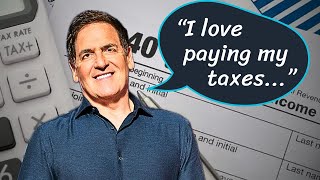
Well, this was something that I saw the other day that I thought was funny. Someone tweeted at Mark Cuban.
Oh, yeah, I saw this $288 million tax.
Cuban. Hey, Mark, just wondering if you or your corporations pay more than the required taxes in order to pay your fair share. Thanks so much. And Mark Cuban replied, I pay what I owe. Tomorrow I will wire transfer to the IRS. 288 million. This country was done so much for me. I'm proud to pay my taxes every single year. Tag a former president that, you know, doesn't. Yeah, yeah.
I just thought two things. I thought. Think about one, he did just sell a big stake of the Mavericks this year, so I think he has a huge capital gains bill. I don't think 288 is, like, his standard threshold, by the way. Yeah, I think it's way less usually. Secondly is. This is why I think it's kind of funny when people, like, rad on billionaires. It's like they've played the system. They're advanced. Like, they've been privileged because of the system. Yes, that. You're correct. And they have also paid 1,000 times as many taxes in this year as you will pay in your entire lifetime, let alone all of the payroll taxes they pay. Like, the payroll taxes that he pays is probably just as much, if not more than that, by taking all of someone's employees and then, like, yes, they pay taxes, but then as an employer, you pay taxes on top of that. And the sales taxes they collected on all the products they've sold. And so, like, the amount of taxes that a business owner pays when you actually add up, like property taxes, sales tax, payroll tax, and all this other stuff is exorbitant. And so, yes, these billionaires, they have played the game and they have won, and they have way too much money. Okay, we can all agree on that. Do you want to pay $280 million next year? Because, like, if you actually break that down, they're paying thousands of dollars per hour to live in the country, and they could just very well go down to a place like down in the Maldives or in Spain, or they could go to someplace in Europe and pay no taxes or a flat tax at, like, $100,000 a year, and they decide to stay here and put $208 million back into the system. So, like, if you're going to complain about them making so much money, come up with the taxes. And yes, they have one. And it is capitalistic and the vast majority of wealth goes to the big boys. Great. Become a big boy and pay a bunch of taxes. The system's there.
Yeah.
If you want to go build it, you can.
Yeah.
And if you don't believe, you can and you don't. If you believe the system is rigged against you, then yes, for you, you are correct. It is rigged against you. Everything is horrible. You're never going to make it. You're right. But there's also people like Mark that will come along and they'll get super lucky and sell their company for $6 billion when it was worth nothing, basically, in a matter of five years, was like, basically expensive. Extinct. But they. If they played the rule. Sorry, they played the rules of the game.
Yeah, totally.
And like, you can win. And will it be easy? No. Like, there's all sorts of inertia and there's all sorts of entropy and gravity that you will have to fight through. But, like, if there is no regulation, things like this happen. $208 million back into the economy, baby, to fuel the war in Ukraine, the.
War in Israel and Iran.
Yeah, yeah. Just about every other place in the world.
All of them. So this is from. The reason I bring this tweet up is, well, partly related to this kind of controversial episode. Yeah, it's all good. This is newsletter I subscribe to. Sean Puri, the host of my first million podcast. This is his newsletter. So he does something called Twitter Tuesdays. He takes his favorite tweets, he puts them in a newsletter, and he adds his thoughts. This was his thought on the whole Mark Cuban tweet exchange. I never trust someone who brags about their civic duty. They're usually overcompensating for something. Also, just to calculate, he sold the maps to 3.5 billion and is paying $288 million in taxes. This is around a 12% tax rate. Shout out to Mark's accountant, the real hero here.
Yeah, yeah, yeah. 100. And then. And then like in my. My. I agree. That's why I said, like, I guess the maps seem is true. So like, if he sold it, you got capital gains, but again, like the 12% thing, it's capital gains. So yes, it's a lower income bracket or tax bracket than like earning income, which would be at 30 to 40%. If you sell something, you don't pay nominal tax rates. So Sean should probably actually take a book like a page out of the book. And that is like, these are capital gains, these are not income tax. Right. Very different. So Sean, you know, you gotta Learn the tax code. So, but. But in general, it's like that sort of tweet, whatever he said there too, like, is going to get a lot of feedback because, like, again, 80% of people agree with what he just said. Like, only 12%. I had to pay 20% last year. And then they fail to realize that, like, the rules of the game are pretty straightforward. Capital gain tax and long term capital gain tax, very different than income tax is, like, that's not fair. Well, we don't really want people buying things and selling them every 10 seconds. We need people to hold on to things and build businesses and employ people. So the government's like, we will. We will make sure that we balance out the economy where people don't flip things all the time. How will we do that? We have long term capital gains and we have short term capital gains, and the short term capital gains will be significantly higher because we don't. People buying and flipping things, making our economy much more volatile. We don't want people to sell 90% of their stocks during a spike in fear because that will cause a more taxable event. So what we will do, we will incentivize them to keep money in the market. And that's. That's horrible. No, it's preventing people from massive layoffs and a huge amount of economic uncertainty. Anyways. I just think. I just think people look at things at the surface level and they're just like, they're not thinking about the downstream effects of this stuff. Yeah. And it looks good on Twitter to, like, rant about a billionaire only paying 12% when it's like, yes, that is very close to the long term capital gains rate, minus all the depreciation and stuff that you can do and work into that. 12% sounds very reasonable. And $280 million is more taxes than Sean will ever pay in his life. Yeah.
So, no, that's fair.
But I'm not on Mark's side either because, like, I do think it's weird to brag about paying taxes.
It is weird.
I don't. I don't like that at all. Like, I pay taxes. I'm not gonna, like, show my IRS check that I'm sending in every single.
Yeah, it just. It feels weird.
It does feel weird. But also, Mark was responding to someone's comment. He did not, like, voluntarily, like, put this on his thing.
Agreed.
So, you know, but I mean, replying.
To a no name on Twitter, when you're.
Yeah.
A household name, effectively.
Yeah.
You're trying to do something.
Yeah. I don't have to.
He probably gets mentioned, what, a couple hundred times a day on Twitter, like.
Yeah. I think if you're going to say that, it's also like, well, then tell us what your income is. Yeah. Like, if you sold mavs and on paper, you made $5 billion last year. We would like to know that. Yeah. Because, yes, you paid $208 million. You also took from the system 4 billion.
Mm.
So, yeah, I don't think it's really, like, a good move. Like, I would never share how much taxes I'm paying. I don't think I'll ever do that.
It just doesn't make sense. Yeah. I don't know.
It's a weird ego strike.
Yeah, I know. I'm, like, trying to see, like, what was his point? Clearly, I think his point is to make a political shot at Trump take a form.
Yeah, that was weird, too.
That's like. I feel like that's. He was like, I can get it there. I can get it there. And then he was like, I got it. Landed the plane, baby.
Yeah. Like, I. If I was trying to make a point or this would be. Again, I was a billionaire, I wouldn't. I would be okay with being like, I paid just, like, one liner. I paid $280 million last year to the IRS. That would make a little more sense. But when you, like, throw in, like, the jabs at presidents that don't pay and you throw in, like, other stuff and, like, I pay what I owe and I'm giving back to my country. Like, he did not willingly give that $280 million. He did everything in his power to bring that number down.
Yeah.
100. You're not, like, willingly walking the IRS. Please take my money.
Yeah. It wasn't a donation.
It just feels very altruistic. Yeah.
It's your civic duty, but you also literally go to jail if you don't do it.
And you have an army of accountants preventing that number from being 350 million. Right.
Like, you're not going to go to jail if you don't vote. That's your civic duty. Pay your taxes is like, it's your civic duty.
Hand up. I do everything possible to reduce that number.
Yeah, of course. Yeah, of course. All right, well, that's. That's all I got. Unless you want to go into some not financial advice.
Yeah, dude, go for it.
All right, well, I actually. I'm going to change mine. Okay. Since you brought up my phone case.
Okay.
So I've been. I've been on this brand for A long time. It's called Tech21. They're like the thinnest iPhone cases, and I have never cracked a screen with these.
Okay.
I've been using this brand since high school. 21.
Okay.
I've been using it for 10 years.
Very cool.
Super thin.
Yeah, it's cool. It's very similar.
Very thin.
That's really Think it's on back end.
Yeah, very thin. Never crack the screen.
Yeah, but you don't have a yellow case, bro.
I know. Like the yellow. I know.
I know. It's like when I get my luggage, I'm like, sick. There's not really great yellow, like suitcases and like, mine always break because, like, they're not the best quality, but I also can't spend like $800 on a tum tummy suitcase. But they got to be yellow, bro.
Yeah, got to be yellow. Yeah.
Okay. My non financial advice.
Okay, this is not really non financial advice. I was just going to give out a rose for all the work that you've done in the past three. Three months. I was gonna do this last time, and then you had this, like, really good comment for non financial. I was like, oh, I can't do it now. So I was just gonna say thank you to. For all the work you've done the past few months. Worn a bunch of hats. Really nothing like personally you've gotten out of it. Besides, just like, you know, love the brand, love for myself, love for the owners. And I hope that down the road you get a lot of personal benefit from it and financially and things like that, but just the. The willingness to just jump in and do things without question. I appreciate it a lot.
Of course. Yeah. Happy to do it.
The unsung heroes.
Thank you.
Thank you.
Appreciate it. Yeah. Let's pod.
Cool. Let's go.









