MASS LAYOFFS = Window of Opportunity for Small Businesses
YouTube video (Mike Andes) arguing that recent mass layoffs—especially in large tech and white‑collar firms—have increased medium‑term unemployment and created a hiring window for small, seasonal businesses. Andes cites Wall Street Journal figures on rising unemployment durations, unemployment insurance claims, and small‑business survey results, contrasts white‑collar layoffs with continued blue‑collar labor needs, and urges small business owners to hire during the short opportunity.
Chapters
Unemployed Americans find job searches take longer as labor market cools. The number of workers out of a job for about three and a half to six months has risen sharply since last spring. All right, so I believe this is going to be a window of opportunity for small business owners to be able to hire and it's perfect for the spring rush in terms of us needing more team members during a seasonal time in our business. I'm going to show you the data and talk about what I said last year about the same exact thing happening and why it worked out well. So check this out. This is a news article from the Wall Street Journal. Obviously, as most of you know as business owners, it's been very difficult to find employees, especially since the beginning of the pandemic. Let's go ahead and read a little bit of this. Come mid January, Mr. Duante, this gentleman that he was working at a financial tech company in August, he hoped he could land a new job in November. He was a product manager and he's looking, still searching for a new job. Unemployed Americans across the US Are spending more time out of work as employers slow down hiring more red hot pace. Earlier in the pandemic in December, 826,000 unemployed workers had been out of a job for about three and a half to six months, up from 526,000 in April of 2022. So from from 526,000 people in April to now in December, the end of the year, what is it, six months later, seven months later, we got 826,000 people. That's more than 50% more people unemployed that have been unemployed for three to six months. So it's just harder for them to find a job now. This is my opinion, the unemployment that's currently happening is due to white collar workers. And we're going to see this later in the article. It's the likes of Amazon and Microsoft and Google laying off right now. But the blue collar workers, landscapers, roofers, construction, the vast majority of small business owners are still really struggling to find employees, or should I say they still need more employees. It's not as bad as it was even six to 12 months ago in terms of finding team members, which I feel is a great opportunity for small businesses. And for those of you, you know, back throughout the pandemic and everything, I was, you know, calling foul when all the politicians were talking about how many new jobs were being added and I was like, wait a second, these, all these jobs are going to these massive Fortune 500 companies. Small businesses are literally like Losing employees because they're closing down. And we can't compete with these massive conglomerates that can spend all this money. Well, now guess what? Things have changed. And now those massive conglomerates and massive tech companies are laying people off because they no longer can afford those inflated wages they paid them and all the free benefits they gave them in stock, compensation, all the other garbage they gave them that this allowed us as small business owners to compete in the labor market and they sucked up all the talent. Well, guess what? Now small businesses have the opportunity to be able to take that talent and hire them. And I think there's gonna be some changes though, to the way that we need to think about labor going forward if we're going to take advantage of it. So Mr. Duarte, I'm sorry if I'm saying his name wrong, has brought in his search from tech companies to include firms across several industries. The 28 year old who resides in the Washington D.C. area, said he interviewed with five companies that told him they were putting the positions on hold amid budget cuts and hiring freezes. He was encouraged companies could see his value. But the news hurt. So I truly believe that this is going to continue happening in white collar work. It says companies hired 8% fewer workers from December 2007 to May of 2008 as the recession began, while layoffs ticked up at a slower pace of 2%. So what we saw going into the previous recession is kind of what we're seeing now. We're starting to see an uptick in unemployment now. The reason I don't actually believe this a whole lot in terms of comparing 2007, 2008 is because we are historically like 50 year lows of unemployment. But this is the glimmer of hope that I have. It says, but demand for labor is weakening fastest in white collar industries. Large companies like Microsoft, Goldman Sachs and Google parent Alphabet Incorporated have announced layoffs. Layoffs in finance, real estate and tech are beginning to rise from historically low levels as companies that bulked up their staffs early in their pandemic. In the pandemic shed employees. So here's the thing. I was listening to a Gary Vee.
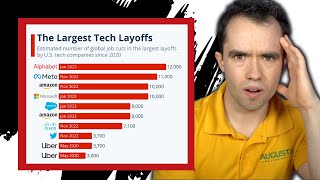
Video a couple months back and I shared this at Landscape Summit. And he was talking to a company that did moving lots of labor hard to find employees. And they were saying like one of the biggest struggles they have is finding employees. I believe they're doing like 20 million in revenue. And they said the hardest thing is just finding team members. And Gary cuts them off as he typically does. And like that's not gonna be a problem. Six months. That's not gonna be a problem in six months. Or sorry, six weeks. He said six weeks. Six weeks. Well, I don't believe that is true. Because these white collar workers that are getting laid off, like the people who got laid off from Twitter, are not going to come mow grass for me because I'm hiring and I need employees and I'm happy to hire. We just hired 20 people at command center. But I don't feel like someone from Twitter is going to come and work in my office where we take a scooter down the way to go to the bathroom because we only have one, one bathroom in the office. They're not going to like the fact that they don't get free kombucha and free buffets. And guess what? Those things aren't sustainable. And that's why they're getting laid off from these companies that can no longer afford to be able to offer all these perks and benefits, because that's not what drives results for the customer or for the business. Those things don't. And so everyone will talk about culture and how we can add all these things and perks and massage parlors and free gyms for our employees and all the rest of it until, until a recession hits. And for 14 years we haven't had a recession. And therefore adding all those perks and benefits is fine because Wall street loves growth. So if we can just grow, grow, grow and hire all the best talent by giving all these useless perks, this is, trust me, these are the conversations happening in the boardrooms of these Fortune 500 companies. And that is okay. All we got to focus on is growth and expansion and top line revenue growth. That's why Google grew like 40% last year, year over year. Well now all of a sudden, when that's become 10%, guess what they do? They cut off all of those perks. They lay off 12,000 people for no reason whatsoever. Not based upon performance, not based upon who was doing good. They simply just cut everybody. All right, so the realities of, is when a recession happens, it shows what we've been doing. Like the tide goes out, shows who wasn't wearing any pants. All right, so that's what's happening now. Check this, this, this, this chart out here. I think it's really interesting. So is it for ongoing benefits, continuing claims for unemployment benefits? You can see here, throughout 2022, we had as low as 1.3 million. Well now is like 1.6, 1.7. And you can see in the past few months, this chart going up, this is as, as the interest rates from the Fed have gone up, we are now seeing unemployment go up as well. This is what happens when you raise rates, and this is what the Fed should have done months ago in order to tame down inflation. All right, so let me go ahead and show you this. Now. This is a claims for unemployment. These are new claims for unemployment. This is what's happening right now. And it doesn't look like a lot on this graph because this massive thing in Covid really skew the results. But if you look here, you're going from 1.3 million just a few months ago, I can get my there 1.3. In October, 1.3 million new unemployment insurance claims. Whereas now we are almost at 2 million. So almost a 50% increase in the amount of unemployment insurance claims. And again, if you actually were to zoom in this, on this, this graph here, it would be a 50% increase almost over the past several months. I truly believe that this is going to lead to a window of opportunity over the next. I'm going to give it one to two months to be able to hire people. Now, last year, check this out. Last year at Landscape Summit, I said the exact same thing. I said, look, Omicron came. Omnicron virus, the second wave, whatever we want to call it. Last year we almost had to shut down our conference. And technically, in our state, we still weren't supposed to have gatherings over like 100 people. And we did it anyways. Anyways, all of that to say is, check this out. If you look back at last year, last January and February, look at this little spike right here. That was the four to six weeks I said we had a window of opportunity because all of a sudden Omicron showed up and people started laying people off again. And of course, I'm not showing the graph. Shame on me. But check this out, all right, January 2021, look at this little spike here. January and February, I said, we got about six weeks and then I don't expect there to be window of opportunity. And for sure, that was exactly what happened. There was this window of opportunity after Omnicron, people getting laid off. We were able to hire into that because unemployment did that little bump there. And we were able to get a lot of team members for the spring rush. And the reason I'm talking about this right now is I truly believe that this is going to be an opportunity for small business owners to actually now have the ability to actually find employees, because no longer are these Big tech companies sucking up talent. In fact, they're laying people off. And these white collar jobs that are have been bloated for the past 10 to 12, 14 years because Wall street has just been pumping money into them like crazy. They are no longer going to have that opportunity. This is an opportunity for you as a small business owner to be able to get some employees. Now check this out. This is what I'm super excited about. And this is the thing everyone gets all fired about Wall street when in my opinion, to this day I still believe that small business owners are the backbone of our economy. And now this is becoming in focus because we're literally going into recession. Guess what? These big tech firms laying off hundreds of thousands of people at the exact same time. Small business in America are hiring faster than ever before, basically taking that talent. Because in a recession, in my opinion, a small business can be more effective and efficient than a big bloated company that has massive offices and hierarchy and headquarters and overhead. So that's just my opinion. All right, let's jump into this chart here. This is from Wall Street Journal as well. We got the share of small business owners who said it got easier versus more difficult to find workers. This makes me very, very happy. Okay, we're down here at 15, 16, 17% of people that said it was easier to find employees back earlier in 2022. Guess what, it's now above. Almost 24% of small business owners are saying it's easier to find employees and workers now than it was previously in 2022. Check this out. 32% of people were saying it was more difficult to find employees back in October. And literally just a few months later that number has dropped down to 20%. So a 30% reduction. And then I have people saying it's more difficult to find employees. This is based on a survey of 650 small business owners. So I feel like this is amazing. I'm very happy about this. For the sake of the small business owner. I also feel like this is what the economy needs is a shift away from these massive conglomerates that been sucking cash out of investors pockets and putting it lining the pockets of their corporate executives and their fancy offices. And now we're going to see really who has the innovation, who really has the work ethic, who really has the ability to be able to build teams that will actually build the products and services and products that customers really need. And that's what's going to happen. So I'm really happy about this. I think it's a good step in the right direction. And I truly believe next couple months is a great opportunity if you're a seasonal business, if you're a small business and start hiring. That's what we're built for. That's what built America. And this is the time when small businesses can shine.









