MASSIVE GROWTH but dealing with bad employees!
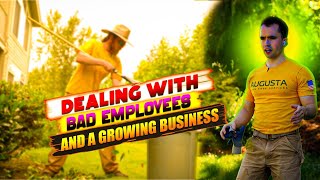
Mike Andes (Business Boot Camp podcast) reflects on the cultural tipping point that occurs when a founder steps out of day-to-day operations and a business scales. He explains that small teams rely on trust and personal relationships, but scaling requires systems, procedures, and some hierarchy so the organization can run without the founder. Andes describes moving toward franchising and coaching managers rather than micromanaging. He also discusses the challenge of disciplining employees: his personal tendency to fire quickly versus investing time to coach, and the importance of considering employees' personal contexts (health, family, medication, stress) when deciding whether to discipline or terminate.
Chapters
Hey everyone, this is Mike Andes and you're listening to the Business Boot Camp podcast. Today I'm going to be talking about the cultural tipping point from going from a small business into a business that's medium sized or even larger and starting to scale. Also, I'm going to be talking about some of the things I'm going through right now, one of which is how to discipline your employees. Something I'm still figuring out, but something I hope you can learn from as well. Today I want to say a big thank you to the sponsor, which is Gusto. If you haven't already, go to gusto.combootcamp and get their software completely free for 90 days. Some of the things that Gusto does for your business that I haven't mentioned already is it allows you to set up a 401k plan for all your employees that doesn't cost any extra. It comes with their software. Also you can set up a 529 savings plan, which is for college tuition savings for your employees as well. Again, tax benefits there for them. Also you can set up an HSA which is a health savings account or an FSA Flexible savings account, which basically allows your employees to have pre tax benefit for saving towards a health related injury, illness or something like that. So all things that are great for retaining your employees, in addition to that, they have commuter benefits, so you can actually give benefits for people who are commuting to work. So all of those things you can find on Gusto and you can try out their software for 90 days for free if you go to gusto.combootcamp now today I want to talk about some things that, that I've been going through in my business. And then there were kind of these topics were sort of also spurred by a couple questions that I got in recently via email and the one that kind of spurred the first part of today's episode, it was talking, the person was kind of in a debacle because they said, hey, I hired all my friends and people that I really liked early on in the business. Now we're starting to grow though. We're expanding and now they're starting to be like some changes and they have to make some hierarchy in different positions. And there's starting to be some kind of tension in the business because things are not as they always have been and things are changing. The culture of the business is changing and becoming a little more not bureaucratic, but there's gotta be more systems and structure in place instead of just people. It's great that you Trust each other when you're small, and that's a great thing to find in your first several employees is just trusting them and knowing they're not gonna try to rip you off and they are gonna have your best interest at heart and they want the business to succeed. So trust is. But there comes a point when the business begins to scale and grow and there's more and more people involved. There has to be systems, there has to be procedures, there has to have management. You have to have some sort of hierarchy, even if it's very flat, in order for the business to grow, thrive and be productive. And so it's something that we're going through because just recently I've stepped out of day to day operations. So literally this week is the first week I am completely out of of day to day operations. Like, I show up in the morning every day at Augusta, but my job, what I'm doing is completely changing. And I don't think I've actually, it's really settled in yet how much of a change this is for me of me spending most of my day now focusing on the franchisees and trying to help their businesses instead of just trying to help our local, you know, corporate store here. And so, you know, I'm completely out of the day to day. And so that's a big change, That's a big step. And you know, it's definitely something wanted to do. It's definitely, you know, the franchising thing is always what I've wanted to do. Be able to help other business owners actually build their business using the brand they're, you know, creating a website for them, having the marketing for them. Like, that's what I've always wanted to do. So it's a huge, great, awesome step. However, when you have to go from where the founder's there every day and you know, step back before that, the founder is on every single job. Step back to that. The founder is with every employee every single day. Like, as you begin to grow up, quote, unquote, grow up, the business begins to grow up and mature. You know, like, there's got to be changes. There got to be, you know, there definitely. There's no way that I can be with every employee every single day. Just not going to happen. You know, then it evolved to the place like, I'm not going to go in every single job every single day. Just not going to happen. Then it comes to a point where it's like, you know what? I'm not going to be able to see every customer. I don't know the customer's names, I don't know who they are because I didn't sell them the job and other estimators are involved or they. So they got sold over the phone from the office. So it becomes more and more about the systems and procedures you build and less and less about you. The personality, the founder of the business, running the machine of the business, knowing the customers, knowing everyone's name and what they're going through in the organization. So now as I step back, one of my managers actually said it to me, said, you're taking on the role more of a coach. And that really helped me because it's not hard letting this go. It doesn't seem like I'm selling the business or definitely not like that. I'm still involved. I know all the employees locally, but it's very much like this cultural tipping point of like, okay, now no longer am I, the founder gonna be there every day. No longer am I gonna be there to watch over everything. Like the systems and procedures that we set up. And the business model runs the model, it runs the system. It's going to become sort of like anytime fitness where I don't have to be there every day. You know, if I'm gone, it's gonna run just fine without me. There's estimators, sales, everything will get taken care of operationally, everything will be fine. But if I'm there, I can drop in every day, try to help, try to encourage, try to coach, try to really coach, you know, the people that are the managers, the people that are new, Try to coach people, put them in the right position on the team and make sure they succeed. And that becomes my role. It's like, I want you to succeed. Talk to me if there's any way that I can make sure that happens. And so it's very different. It's very different for me and more important, it's different for the culture of the business. And so on the last episode, I talked a lot about culture and even on Landscape Business course podcast, I've been talking about culture a lot. And I'm going to a big conference down in Kentucky in October for landscapers Gie. And I'm speaking down there and I'm speaking about creating a world class culture. So culture in a business is something I think is like the heartbeat of the organization. Whether it's for profit, nonprofit, in an educational environment, in a business environment, doesn't matter. Like the culture of the people involved. And what that culture atmosphere is, is the heartbeat of the business. But There's a definite change as the business begins to grow. So again, when I started, all the people I hired, they were my friends. I knew them for a long, I had known them for a long time. I went to church with. They are related to me. And that's a good thing. Like I said, starting out, sometimes your first employees is all about just having trust in them, knowing that they're not going to stab you in the back, knowing they're not going to rob from you, knowing that they want you to succeed, knowing that you can trust them to leave for the day and do their job correctly and that they're going to. They want to put a good face on for the public image of the business. That's really all you care about at the beginning. But as you begin to grow and you scale and you get more people, things have to change. Systems have to start regulating the people. And what happens within the organization. No longer you, the founder, can you be there micromanaging or watching every single aspect of what's going on in the daily operations. And so now as that's happened, we've hired more people and now we have systems and more procedures. You know, what can, what can sometimes happen is the people who are originally with you, the people who just started the business with you, they can get a little bit disoriented or even kind of. It can be disconcerting for them to see that all of a sudden what to them was the culture and the fabric of the business of trusting each other and just like everyone, doing what was right and just not having systems and procedures and not having a hierarchy, not having managers that might have worked when you were small, but as you begin to grow, that has to change. There has to be a hierarchy. There has to be some sort of systems in place. Otherwise you as the founder will always have to be there to micromanage things. And so as the business scales, you have to realize that there are going to be change. The culture is going to have the tipping point. And in my mind, when a business goes from small, like very, very small business to a business that's scaling, growing, thriving, and going to live without the founder and is going to have create generational wealth and is going to live beyond the lifespan of the founder, I feel like that happens when the founder can step back on the systems and procedures run the business. But in order for that to happen, a lot of times the culture changes within the business. And that can be hard for the people who started out because they'll be like, well, didn't we just trust each other and can't we just like, you know, why does it have to be all these rules? Why do I have to report to a manager now? Why can't the founder be there to answer my questions and give support when I need them all the time? And so I feel like there's that cultural tipping point where it goes from the founder running the business to the systems and procedures running the business. There's a big tipping point and you can lose people there. But it's very vital to make that transition if you're gonna scale the business profitably. Right, because you can run things all hunky dory cloud, everything's rainbows and sunshine for a while. Five, 10 employees, you know them all, you trust them all. It's very like you can manage them though. You're always touching them. You can always see them. You always get to see them in the mornings, see them when they leave. You're very high contact. There comes a point where that's just not possible. As you hire more people, as you hire strangers, I mean, you have to hire the strangers because you run out of friends to hire. And so there is that cultural tipping point. And so we're experienced. We really experienced it last year when I started the process of switching out to being out of the day to day operations because I had to simplify the business model. And so we had to cut out services that people liked, people wanted to be doing them, they were exciting, they were fun, and we had to focus on some core competencies. We had to cut out some things, we had to not slow down our rate of growth. But what we did, we actually cut out pieces of the business that were not scalable, that were not profitable, that were hard to duplicate in terms of finding laborers to do the work. And so that was hard for our culture like we were always had been in the past. But like, grow, get more services, find interesting work, make more work for the employees so they can work year round. Like, it was hard to now switch. Like, okay, now we're actually focused on profitability. Now we're focusing on making sure that we generate a profitable profit to support the franchisees and make sure they have what they need. And so like we're changing the business model. Like that's really a cultural shift to think like, okay, we used to be so concentrated on just making people happy, our employees, and making sure that they were like satisfied and well paid. And now it's like, look, now we have an organization, now we have a system we have to run now we have other franchisees and people depending on us. And so there's a definite cultural shift from being very individualistic and looking out for individuals within the company to like, look as an organism, as a team, as a whole body. This organization, in order for it to go forward, there has to be systems, there has to be procedures. And the founder cannot be the one dictating every little thing that happens in the business. And so I truly believe that the founder is still the driving force of the culture. But the culture cannot be run by the founder for a sustained period of time if it is scaling to high extent. Like if it's growing really, really fast. The founder cannot be in every single aspect of culture and dictating it all. Eventually they have to create systems and procedures that align with the way they want the culture to be and then allow the systems and procedures to run the business. And so we're in that transition now. Like now it's no longer me being able to tell them what to do. It's no longer, you know, I'm not there to tell them what equipment should be, how it should be done. And it's definitely not perfect. Still. We're trying to figure things out. We're trying to figure out where things are breaking, where things, what, what's wrong with what we're doing now and improving it. But it's definitely the model that we're trying to create for franchisees, where a franchisee does not have to be there all the time once they've created the systems and it's in place and the model's running correctly. And so I think there is a cultural tipping point though, definitely where it switches from trust to more of a cultural.
System oriented business. And that has to happen because trust can go so far when you have so many employees, but when you get. So when you get hundreds of employees, it's very difficult to create a trust, trusting relationship with all of them and maintain that trusting relationship on an ongoing basis, daily basis, when you don't see them for weeks on end. And so eventually the systems of your culture have to run the business and they have to run, they dictate the culture. And that's something that I'm really interested in right now because I've always thought the founder dictates the culture, but now I'm beginning to think that the founder, founder create systems that align with the way they want the culture to be and then the systems should be dictating the culture. When should someone get fired? Well, the founder will dictate that system and Thereby the system would fire an individual that's not in compliance with the culture that the founder wants. So something I've been thinking about, something that we're going through and in that process segueing into my next kind of topic is disciplining employees. I hate disciplining employees. I'd almost rather fire somebody instead of discipline them. And it's a really a weakness because when I fire some people, I've had it said where it's like why? Well why didn't you just tell me that what I was doing wrong? Why didn't you? In my mind I was like, well, why didn't you see the writing on the wall? Why didn't you just, you know, use common sense? Like if you didn't. In my mind, the reason I do it honestly is like, look, if you're not doing this automatically, you're ultra obviously not a fit for what we're trying to do here, the culture here. And so that's usually when I will just fire someone. That being said, it's partly my fault in the fact that for me it's easier to fire someone and just be like done with them, then have to discipline them, coach them, tell them they're doing something wrong and they do it again and they do it again and you're trying to help them. For me, I'd rather just fire somebody, but disciplining them takes a lot of work. It's something that I'm not the best at. I had an hour and a half long conversation disciplining an employee last week trying to help them improve because they've been, you know, their performance has been really poor. And so.
That'S not easy. I didn't like, it was not enjoyable, it was not fun in any way, shape or form. But it has to be done. And you know, I'll be doing less of that, more of my managers on a day to day level, but I will still be involved in it on the higher level type stuff and things that are important. Like I would have had that hour and a half conversation because it was really important and it could have gone where he would have gotten fired. But disciplining an employee, in my mind it really, it's very hard to create hard set rules around firing people. The reason for that is because if you're gonna make it where your employee handbook dictates everything, like you're either gonna have a 400 page handbook or you're going to have very, very gray areas of when you fire somebody. And so the gray areas, the reason their Gray areas are created is because.
You really have to understand the context for which they are going to get fired. Right? So in my mind, an individual that comes to me, I want to know why. Like a lot of times when it comes to employees issues, this is something that I've thought about for customers for a long time. Like when a customer says no to me, it's usually not because of me. Like, or when a customer is, for example, at the gym, if they come in, they're mad about like canceling their gym membership, for example, and they're in a contract. Like in my mind they're not mad at me because we can't cancel their contract and they sign a 12 month agreement. They might be mad because something else happened, that their family or someone else just got sick or they're going through a divorce. Or in my mind, whenever a customer says no or is mad and it's completely unrealistic in my mind right away, it's just like, this is not about me, this is not about the situation. They are going through something else. And I try to think about that. I don't always think about that when it comes to individuals in my life at all, like family or customers or people, I don't always think that like that. But I try to, I try to give them the benefit of the doubt and think like, you know what, they're probably going through something I don't know about that is really, really horrible. And this is just, they're just taking it out on me. And so if I'm just patient and I allow them to kind of just vent, that would be fine and good for them and they can move on. And so that's how I try to think about it. That being said, it's a little harder to think about that when it comes to employees because you're giving them something, you're giving them money in order for a return. That is their labor, mental power, mental work stress, whatever comes entails with their job, you're paying them for it. So there should be an equal exchange. And so it's a little harder to just put up with it when you're actually giving something in return for quality labor or quality mental work. And so.
I think it's difficult, but it's definitely something that I'm working on. And that is taking into context when it comes to disciplining someone or even when it comes to firing them. We had an individual, I would have fired this person if I would have just looked at what they did and the data and the employee handbook they would have been fired. There would have been no question about it. But taking into account, like, things that have happened in their life, you know, personal deaths in the family, very close to them, like other sicknesses that are happening in their family, like taking those things into account is really important. Then you gotta think, okay, maybe there are medications, you know, maybe they're not getting enough sleep, maybe there's financial pressure and it's causing them to do these other things that are not really who they are. And the easy way out of that is to fire them. The easy way out of that is to fire them and find somebody else. And I'm finding, though, that disciplining them is not easy. It's not the thing that's gonna give me the best roi. It's not gonna help me, it's not gonna give me more time. It takes time, takes energy. I spend an hour and a half talking to this individual. When a 30 second voice message or text message or just a 5 second at the end of the day, I could have fired that individual. Do I know if that was the best decision? I don't know that. I do not know. Only time will tell whether or not disciplining this individual is the better thing to do instead of just firing them. But I think it's important, and again, I think it's important. Only time will tell in this one case. But I think it's important when it comes to firing, disciplining employee to take into account the context of the situations they're going through outside of the workplace. What are they going through at home, what are they going through in their health, what are they going through in their past? What are they going through in their head? Like mental health is a real issue, and medical issues that are aggravated by other pharmaceutical drugs is a real issue.
Personal deaths in the family, things that people go through, those are real stuff. And it messes with people's heads and it can mess with their performance and it can mess with the way they interact and the way that they go against the grain of the culture that you've set up in the business. And so I don't know if this individual, in this case, this specific one's gonna work out. Disciplining versus firing them. Usually I like to fire f, I like to allow, and you've all heard me say it, firing dictates the culture of your business. That being said, part of our culture is about giving second chances. Part of our culture is about caring.
Part of our culture is caring for that person, not just when they're at work, but for their health outside of work and in their family. And so that's a hard line to draw. It's a hard thing to distinguish between. I think each case deserves and needs specific attention from us as founders when we're making those decisions.
And understanding what they're going through. Like, these are people, these are employees. They have a life, they have families.
They have stress, they're financially strapped, they're going through something in their relationship. They're just, you know, come in a new part of life if they're having kids or if someone went to college or a family member moved away or they recently moved or just moving a house, like, it can be, it can change people like these, like humans are fragile in our minds and our bodies many times. And that's not like, I'm not dissing humanity or like the workplace or employees, by no means, but we as humans are very fragile. Like things within the planetary universe, like the moon can affect you. And, you know, drugs can affect you, and the type of air you breathe can affect you. And the sleep that you're having. Maybe they're just not sleeping. Maybe they didn't drink enough, they're dehydrated. Now you're getting a sick person talking to you. And it's gonna affect the way they speak and the way they act and the way they conduct themselves and the way their mood is.
And that's not easy to think about when they're just done something that's against everything that your culture stands for. Something I'm still thinking about, still learning about. And something I'm not great at is disciplining my employees. And something that's gonna be interesting to actually look at now as I step out of day to day operations. And I'm more of that coach kind of role. And I'm not there. I'm not doing estimates anymore. I'm not in sales anymore at Augusta. Like, I'm strictly focused on franchising and supporting the franchisees. And so it's gonna be interesting to see how disciplining now works without me there. So stay tuned because I'm still learning, and I hope you can learn along the way. You've been listening to the Business Bootcamp podcast. I'm Mike Andes. Until next time, be great, because nothing else pays. And if you have a question on how to start, grow, or save your business, email me businessbootcamppodcastmail.com or just go to businessbootcamppodcast.com and fill out the form. Thanks so much.









