My Business Got SHUT DOWN by the State!
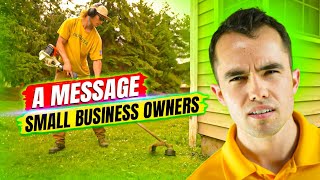
A short YouTube monologue by Mike Andes (July 2020) filmed in downtown Blaine, Washington. Andes describes the economic harm COVID-19 restrictions and border closures have caused local small businesses and public revenues, expresses frustration and concern for owners and employees, and urges adaptation—digital marketing, cost-cutting, and culture-building—to survive future disruptions.
Chapters
Hey, everyone, it's Mike Andes here. Today we're actually downtown in Blaine, Washington, not far from where I live, and just want to kind of give a reaction to everything that's kind of going on right now in the U.S. small business owners and this whole double dip thing we're having with the situation, health situation. You can see behind me here, we got. This place is probably closed up. I'm gonna walk you around a little bit around our little, small city here. Blaine only has about 8,000 people living here. Not even I think. But this is kind of our main drag downtown Blaine. This is it. But usually this would be full of people with some sort of a restaurant. You can see it's all papered up. We'll cross the street here, see what's up with this restaurant. But today I really want to talk about what this whole situation in.
W recovery or whatever you want to talk about is what it's doing for small business owners and what you need to think about to make sure that you come on the other side of this stronger than before. So this is one of our nicer restaurants in the city here. July 7th. This is just face masks, but I think they've been closed down. I don't know if they've been open or not. It's a great steakhouse, one of the nicer ones here in Blaine. But it's just really sad for me. This is like yesterday in our local state, we were kind of put down under more restrictions. So we went through three or four months of being shut down, stay at home orders, and then everyone kind of thought we were out of it, as most of this country did, and then we got hit with it again. And so yesterday, even the gym that I owned, more restrictions. And my heart goes out to the small business owners that this is affecting and the frustration of being forced to shut down and forced to lay off people as. As I'm talking about this right now, the unemployment boost is running up for the government, too. Running out. Congress probably won't be passing a $600 a week plus up that they've had for the past four months. And so for small business owners, now we're faced with the decision, okay, do we close down, lay off our employees and they don't get any more extra money? They're not going to be able to put food on their tables. And at the same time, we're going to dramatically risk the fact that we can't come back. Like, do I think they're coming back? No. Is this going to dramatically affect these Folks, Yes. This here, this gas station we're looking at now, and down the street all the way to the Starbucks, this is usually full of Canadians, because right on the other side of that street there is the Canadian border. And right now, the border's been closed for the past three months. And I'm even worried about this whole town. Honestly, the. The revenues that we come, that come in through the taxes, dramatically reduced them. When you close down businesses, when the border shut down, all the revenue that we get from mailing companies just down there, like, there's like 20 of them down in this little city. Really keeps us afloat. Is the Canadians bringing their money down. Well, you can see gas station is completely empty. Usually this place is packed with people. We'll walk down to Starbucks. But, like, it just. It's just really sad. It's hard. For me, this has been kind of reminiscent of a few months ago in March. March 18th is when our state kind of went into lockdown, but it kind of got serious for the rest of the country as well. And from the 18th through to about the 25th, my phone was blowing up with emails and text messages of just business owners just freaking out of, like, what are we gonna do? How are we gonna adapt to this? And now we got through that. Everyone sort of thought we got through all of that, those issues, and yet here we are again, going back into it. And so can I lament? Can I get mad? Yes. Like, yesterday, was I mad? Yes. Like, that.
Basically, if someone has a small business like over there, like just a solo operator, and they're running their company, who are working across the street, if someone just running their business as a solo operator, they're literally being forced to stop working. They're literally being forced to no longer be able to provide for their family. And that's difficult. Like, you're basically asking someone to either decide between obeying the law or not being able to provide for their family. That's a tough decision at this point. And I know so many people that are in that spot. Like, if we look across, even at the wine bar and bistro vault, I know that they're struggling now, too. They can't have people inside. How do you have it where you can't? Who's going to go to a wine bowl or a bistro like that with only their family? You go to places to interact and socialize, and here we are. No one's here. And so I'm worried about this little city. I'm worried about a lot of small, small towns in America. That are going to be dramatically affected by reduction of sales tax. We don't have a lot of income in the. How do we, how do we fund our schools that we just built? How do we fund the police department and you know, getting this place looking good, like they've improved it so much. So I'm worried, I'm concerned, angry a little bit yesterday for a lot of the small business owners that are being caught in the position of do you obey the law or do you think about your employees and the long term health of your finances? That's a tough spot to be in. You can get as political as you want, but at the end of the day, that's a very hard spot to be in. There is no unemployment for a business owner. There is no security blanket to fall back on if those doors close. For a lot of small business owners, they don't make any money and they can't provide. And that's the money that they were going to put for retirement, the money they had for their kids college tuition. That's what's being used right now. That's what's being burned through. So that part kind of makes me unhappy, makes me mad. On the flip side, what I want to focus on is more about what can we do and what should our mindset be in terms of change and adapting to this new reality that we're faced with. And that new reality, maybe from a health standpoint, if you're running a restaurant, you're running a gym, like I do, there's definitely health implications that this is all bringing about. Like how do we change cleaning protocol, how do we change the hiring process, how do we change the way we onboard customers in terms of contact, all of that. But more importantly, from a business standpoint, the macro learning that you can get from this is tremendous. And the fact that like in 10 years, if you're in business, if you're young, there's gonna be some other thing happen. It might not be a virus, it might not be what's happening now in terms of being forced to close, but there's gonna be a recession, there's going to be something changing your industry. There's going to be something that's gonna be unexpected. Like who would have thought in February that we would have been closed down for four months, that we would have restrictions on even opening up our businesses. That would be, you know, 2020 was supposed to be one of the best years in terms of the economy and in terms of jobs and for small business owners. Everyone wanted to be an entrepreneur. Well, that's all changed. And I think there's definitely, for small business owners, we have to realize that this is the new reality and that is that technology is taking over, that we have to have the ability to change and react to the economy. And right now what's happening is you got a change in the labor market, you got a change in the way that people are consuming media. These are massive trends that are not just started, these are just accelerating the change to digital media. Like there's literally a newspaper just down here in the harbor, but across the harbor there, that's where the northern light newspaper for our local Blaine city is just on the other side of the harbor there. And I know for a fact they're struggling. Like when you close down businesses that are no longer advertising in that newspaper, guess what? The newspaper struggles. And so you're seeing this massive shift from newspaper ads and radio. We're switching now to being more a digital marketing platform where you got Facebook and Instagram and Google. These are the platforms that we have to start marketing to our customers and interacting with them and communicating with them. And so I think right now, with the labor market the way it is too, this is going to be a massive change. And you're seeing a downward pressure on the labor market of wages, seeing people taking pay cuts and middle managers taking pay cuts. And what's this going to do for the long term health of our economy, but more importantly for us, the long term success of our businesses. And something to think about, like last year, six months ago, eight months ago, the number one thing for a lot of small business owners was trying to find good people. How in this market, when there's so many people unemployed, so many people struggling to go back to work, what can you do to become a place where people want to work for you? They find a place of security that you didn't lay people off, that you didn't try to. You don't try to cheat people. They needed security. Right now people are freaked out if they got laid off their job that they've been working for the past five years and now they're laid off. How can you create an environment, a culture and a business that's going to thrive through these times and survive and be able to provide solid job for really good employees that can become team members. So just wanted to kind of connect with everyone. I know that this is a freaky time for some people. If you're in the restaurant industry, the entertainment space, you know, any sort of travel, like look at the entire time we've been here, There has not been a single car going to that gas station that is usually a hub of activity. And Canadians coming through here, and there's just nothing. Right. Like, that's freaky. And so I think. I think the takeaway from all of this is like, we're going to have to adapt. We're going to have to grow from this. It's going to make us stronger. Like, was I scared? Was I afraid? Even yesterday when we get, like, this whole new wave of restrictions and people, I know that for a lot of small business owners, they're literally deciding between do I obey the law or do I keep doing what I'm doing so I can put food on the table. That's a tough place to be in. But I think that we got to learn from this. We got to, you know, figure out the silver lining somehow that down the road, this will make us stronger. This will button down our expenses, make us tighter, more frugal. Making sure that every dollar we're spending on marketing is actually useful. It's not a waste. Making sure that every dollar we spend towards wages and labor is actually efficient. This is the time to go to your suppliers, ask for a discount, figure out a better efficient model of creating your product or service, Try to cut down those costs, Try to bring down those inflated and bloated expense categories that have been really sinking your business for the past years or weighting it down now, you need to get rid of those expenses. So I just a little bit of word of encouragement wanted to bring you down here to blaine thriving metropolis here in the pacific northwest. But I wanted to wish you, the guys, all the best. Comment below where you're at. If this is really affecting you, this whole second wave of having to shut down or more restrictions, and I'd love to help if I can, but take care and make sure you stay safe out there.
You.
Slowly seem to flow to.









