My Journey from Broke to 150 Franchise Locations
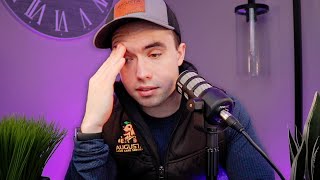
Mike Andes started mowing lawns at 11, went to college at 13 planning to be a doctor, then chose landscaping instead. A near-fatal accident at 22 forced him to build systems that let him scale to 150 locations and take home $280,000 in one year.
Chapters
Hey everyone, it's Mike here. And today we're gonna be doing a very different type of video. If you're looking for a turnaround episode with flashy cuts and music and B roll and graphics, this is not gonna be that type of video. It's gonna look just like this for the next 20, 30 minutes, whatever it is. And the reason for that is because I wanted to take a step back and just reflect on what we've been doing with this channel and, and what I've done in the past and then what we're doing now. And the reason I do this is because I've noticed in the comments a lot of people making comments, that a lot of times it's just they don't know about me, they don't know about my businesses, they don't know about my past. And I want to bring everyone up to speed because over the past year, the channel has doubled in size. And so for a lot of people, they just do not have the context of what I've been through. And honestly, I don't really blame them for being a little skeptical of a four foot little guy that looks like he's 12 years old giving out business advice to people. Totally understandable. I'd be the same way. And that's a good thing. I think it's good to be skeptical on the Internet. So I wanted to share my backstory, the businesses that I've built, and kind of just show you all of that and then step back and see what you could expect from the channel going forward, what we're working on, and just a little bit behind the scenes. So in terms of my story, I really started making mowing grass when I was 11 years old and we started Andy's Lawn Care. And by me, it was my brother and myself, it came full circle because now my brother is actually a general manager at one of my locations for Augusta. However, back then we were both working together, basically just trying to save up money for college. Now I knew I was gonna go to college really young. Cause I want to become a medical doctor. And so we pushed our little lawnmower around. Sea Links, Washington. Sea Links is a neighborhood inside Birch Bay. Very small community, but we, hey, we were rolling high. We got 30 customers, 33 customers, I think, in the first year. And you know, for us, we were making a lot of money. Fortunately, that allowed us to pay our way through college. And my brother and I kind of saw that mowing grass and making money was generally like gonna allow us to go to college. And college was Gonna be our way out of not having money in our family. And most of our families never had money. And that's fine. They have a lot of intangibles that they gave to us in terms of parenting and, and culture, et cetera. But in terms of money, not really there. And so that's really why we started making money at 11, when I was 11, because I knew I was going to have to pay my way through college. And fortunately mowing grass and Andy's lawn care paid our way through college. We were able to get through without any debt. And he went on to get a teaching degree. I got a pre med degree. So at 13 is when I actually started college. Paid my way through using lawn care and really in a, in a way like that's why I'm so passionate about lawn care to this day. And home services in general. It's got such an easy industry to get involved in. There's not a huge barrier to entry and it really just comes down to who wants to work really hard. And I like, I love those type of industries. I don't like industries where you need to have $5 million to get started. The type of people are typically a little different in terms of demographic. Nothing against them, I just identify myself mostly with kind of the underdog, the person that doesn't have a lot of money and is like, like on their way up and they're like they're hungry and. Cause that's what I was at 11. When I was at 13, I was going to school full time as a 13 year old, going through puberty, going to college doing pre med and biochemistry and anatomy and physiology and biomechanics and it was fun. I loved it. And honestly, because I was in my opinion, parented so well, it never felt weird going to college when I was 13 or 14 years old. Like they never talked about it. It wasn't strange. They never pressured me to go. And because I paid my way through, I was kind of independent of I was able to do what I wanted. So that was cool. When I was 18, I had graduated from my pre med degree and I was on my way to go to medical school. There's a couple schools I was planning on going to to go get my md, my medical doctor and actually move into the medical field as a doctor. And then I'd likely become a surgeon. That was really my goal. I either wanted to become brain surgeon maybe back. I like spine a lot or brain like I wanted to be there, maybe the heart. But really what I identified, looking back Is like, I didn't want to lock myself in either one of those three, the brain, the heart or the spine, because I knew I'd be doing like the same three or four procedures for the next 30, 40 years of my career. And I didn't want to do that, especially the way technology was going with a lot of it being with, you know, you'd not actually cut people open. You're using microscopes and it's microscopic and you're going with cameras. I was like, man, this, this industry is going to be really shaken up. And furthermore, I went to Africa when I was 18 and on that trip, it really changed my life. I volunteered for a bunch for orphanages and hospitals in and around Nairobi, Kenya. So Kalangrari Tagoni, there are several places that we were working. And it was a life changing experience for myself. Went there for six weeks, really helped me put a value on what happiness is, what brings joy and fulfillment. Could have saw these orphans that had nothing in life and basically from a materialistic standpoint, way behind and no parents that love them in terms of orphans. And a lot of them had been like, one of them was thrown into a fire, one of them was thrown off a train. Like, this is the craziest stories. And yet they somehow were happy. And I created a lot of bonds with them and went on to help them a little bit. But like, in terms of the medical stuff over there, I was able to do like surgeries and, and I helped a lot in the burn unit, but we did all sorts of medication stuff, helped deliver some babies. It was crazy. Like, the amount of stuff I did was insane. Never would be able to do that in the US And I loved it so much because going through pre med, you have anatomy and physiology banners up on your wall and skeletons. That's your life. And so to be able to go over there and do stuff like that was the best. But then coming back to the US and starting, I was already starting to go through a whole bunch of procedures and really just shadowing a lot of doctors into different specialties and realizing that I didn't want to do this for the rest of my life in the US because mostly a lot of your day was spent with paperwork, filling out a lot of stuff around, like prescriptions, insurance stuff. And I was like, I don't want to do that. I want to help people. And like, we would see between four and five times as many patients in Africa compared to the US Simply because we didn't have to deal with any of the paperwork stuff. Because it was a nonprofit that we were working for over in Africa. It's like people just came in and it was like, all right, diagnose, prescribe, go. And we didn't even prescribe. It was like, they need this. Do it. Like, it was phenomenal. Now, is that the most safe way of doing medicine? No. But like, I, we, I know we helped a lot of people and it was super gratifying to see all of that. And so coming back to the U.S. i was like, hey, I don't think I want to be in this industry. I definitely don't want to be doing the same thing for the next 30, 40 years. And I don't think I want to be in school for another 8 years once I do my MD and my have to do a residency and everything to become a surgeon. So that's when I was like, okay, well, I don't have a lot of skills besides lawn care. So that's when I went full time into doing lawn care. And I also did part time. I was a trainer at Anytime Fitness in Blaine, Washington. And then I also started my evening mba, master's in Business Administration at Western Washington University. A lot of people are like, well, how did you get all this business, like, knowledge, like, some of it comes from my MBA I was doing that night working on my lawn care business during the morning, and then during the evening, I would do my training at Anytime Fitness as a trainer, and then I would go to school and I really did my evening MBA honestly, as sort of a backup plan because, like, look, I'm super young, I'm only 18. I. I should probably get a master's degree in business just as like a backup plan in case this lawn care thing doesn't work out. And I did lawn care because that's all I knew. So I went ahead and started Augusta Lawn Care. That's this right here. And got started when I was 18 years old while doing my MBA at night and then doing my personal training at Anytime Fitness. And that was what I did for several years and then I went full time. So I stopped doing my personal training, finished the MBA program and started working exclusively on Augusta. And I was around 22 years old is when I got stuck underneath a dump truck. The story behind that is essentially I was going to a job site getting the crew started for the day. I was wearing a hoodie and there was no zipper, just a hoodie. And fortunately it was kind of cheap material. And the dump truck that we had at the time, the PTO power takeoff was broken. The lever inside of the cab. And the PTO is essentially the thing that allows the dump truck to dump. Now, this was a 1992 L7000 Ford massive dump truck. Was like a. I think it was like 18 foot bed, big size. Like that thing could carry well over 15 yards of mulch. It was crazy. And I'm sure we overloaded it many times. In terms of weight, however, we. I was, I was dumping, if I Remember correct, about 3 to 4 yards of cobble rock at a property. And my, my thought was, I'm going to go with the dump truck, deliver this material, get the crew started for the day. Because at the time I didn't have systems like estimate videos and things like that. So I had to go show them the job. Showed up at the job. My plan was to deliver the material, dump it onto a tarp, and head back to the shop where I was going to do estimates for the rest of the day. There was three people on the job, Nathan, Josh, and Max, that were installing the job. The PTO lever was broken inside this old truck because it was manual. Like a cable that went down underneath the engine and then would engage this lever to start the pto. So what we had been doing for the past few days is going underneath the truck and engaging the pto, like manually pulling the lever instead of having the core little cable that goes from inside the cab. Dumb. Very stupid. Don't ever do that. I was just, you know, young, didn't know what I was doing. I hardly knew what, like weight limits were all about and axles and all that, like fancy stuff. Didn't know any of that. And so I'm underneath, and as I'm. I engage the PTO that turns on. And as I'm coming back out, because you could have to duck underneath the cable, there was a gearbox. And then sort of like the shaft that ran back to the dump. And as I'm coming back from out underneath where I was pulling the lever manually, you kind of had to shrug down like this as I did that. Engaged. As I'm coming out, my hood got caught in the pto. The thing that actually spins and then don't look it up. It's kind of gruesome. But if you look on YouTube, you can see accidents that happen on a PTO power takeoff. People lose their arms, people die. It's pretty gruesome because you ain't stopping that PTO when that thing can easily dump 20, 30,000 pounds. Me at 145 is not gonna do much. And so, yeah, so my, My. My hoodie got caught in it and immediately got all bunched up. And then it took my T shirt underneath also and bunched it up around my neck. This will happen like a split second. And I just remember being pinched up up against the PTO line, like right here. My shoulder got caught in the gearbox. Like, the. The corner of the gearbox penetrated into my bicep. And fortunately, because that would have. It could have very easily just been, like, spun out and within a matter of five seconds, I would have been dead.
And so thankfully, I got caught there. And thankfully I was young and healthy and strong to prevent from going into this death spiral. But fortunately, by the grace of God, in my opinion.
It just split. Like, everything around my neck just split open. All this, all the hoodie, the shirt, everything around my neck just split open. There was no seam, there was no zipper. It just blew open and I fell out. And yeah, I think after an event like that, regardless of your religious like, you, you kind of feel like, okay, like, I'm living on borrowed time. And like, even though the days get hard.
It'S.
It's just I'm happy to be alive. And, you know, there's times when things are difficult, the businesses are difficult, things go bad. But I always look back to that moment, August 4th, and just.
Remember how grateful I should be for the life and the time I have left on this earth, however limited time that is, and live it to my fullest. Live it like, you know, a pastor of mine in the past said, you'd rather wear out than rust out. And that's kind of been my philosophy. It's like, I don't want to be. I don't want to wear out because of rust. Like, I don't do enough. I want to actually get stuff done. So anyways, that was when I was 22. And I realized at that moment, because I went to the hospital and spent a couple weeks where I couldn't be in the business, I realized my business had no systems. We. We weren't making any money and being out of the business, just really exposed. Like, I didn't have estimate videos. I had no system for, like, creating estimate descriptions or invoicing. Like, in the office, there was not a lot of description. Like, there was not systems in place. So what I did is I figured, okay, I'm going to revamp this whole business. I'm going to really focus on systems. I learned all about this in my MBA program. I'm going to make systems. Like, that's what I need to do. And so I spent the time that I was kind of out of the business in the hospital and then coming back and repairing from all this stuff, being boundage bandaged up and stuff. And like I had this weird goopy stuff that I kept oozing out of my neck. And I. I don't know if it's because the skin got so compressed. It was weird. But while I was kind of in the mend from all of that.
I put together this plan of like the system that need to be created. I said, I'm going to create a video course for other people that to avoid this, like if I wouldn't have had some really great people like Liz working for me, the business would have shut down during those couple of weeks. And all of my team at the time, like they just kick butt and like I was in the, in the hospital like videoing them to walk them to a job. And in that moment realized that I should be making videos of every single project now what we call estimate videos. So that doesn't happen. I'm not the bottleneck for walking them through the project. Anyways, So I created landscapebusinesscourse.com and the reason I called it that is because I still remember when I was 18 and knowing I was going to build Augusta. I remember actually I remember exactly where I was sitting at which desk in my room upstairs at on Castle Rock Drive in Blaine, Washington, typing in landscape business course. And there was nothing. There was no course that was actually on the business side of lawn care landscaping. There are some now which I'm really thankful for. But there was nothing at the time. There was, there was courses around like business and there was courses about like your lawn, you know, which mower to get, which truck to get. But there was nothing on like the business side of lawn care landscaping. That's why I created landscapebusinesscourse.com and documented my entire journey of building the business on systems and to this day on landscape businesscourse.com I actually kept the original videos. And I did that cause I wanted people to see that my progression of my understanding of systems. Because even last year we created, we redid all the videos in landscape business course and I kept the old videos so you could see my evolution of my thoughts about systems and procedures and growing a bigger business. Now that we have 150 locations. I kind of spoiled the story. Anyways, so if you look at those old videos in landscape business course, you'll actually see the lacerations and because literally I came out of the hospital and I Like literally the next week went to a videographer in Bellingham. I was like, I want to put this course together and I need someone to come video me. And so you'll see the lacerations on my neck inside those old videos if you look closely. So anyways, that was at 22. That was like a rude awakening. Now I'm 23 years old and I have systems in place. And. And then we created something called P4P, that's pay for performance, where we pay our employees a percentage of the labor revenue instead of an hourly rate. And this completely changed my business. And I'm not gonna go into a lot of depth here. If you just go to p4psoftware.com, you can watch a full video where I describe exactly what happened in that one year by creating the systems and then instituting something called pay for performance. And it completely changed my business. I went from basically making no money in first four years of business to when the next year when we implemented pay for performance, I made $280,000 in distributions to myself in one year. And so people talk about pay for performance negatively or people in the comments sometimes say rude things about my thoughts on that sort of pay structure. I saw it did for my business and because of that we were able to afford so much more for the team. Health benefits, paid time off. Like the list goes on and on because of.
Pay for performance. And the team makes way more money. So anyways, that was huge. That was a big thing for me. But also what happened when I was 23 was I purchased Anytime Fitness. So the club that I actually used to work for as a personal trainer part time while I was going to school, I hadn't been there for several years. I wasn't even a member. But I saw it go up on Biz Buy Sell. I had alerts for anything in my area and it came to my email and immediately I was. I still remember where I was at. It was been I was at Van Windegren's Nursery in Blaine on Peace Portal Drive. And I was at the checkout and waiting for to get checked out. And I saw the alert come up and it was for Anytime Fitness and Blaine. And I was like, no way. So I immediately clicked on it, looked very quickly and just called the owner. His name's Anthony. He's my first real boss. And I still see certain antics and things that I do today because he was my first boss. Like, you kind of mirror a lot of the things that you see when you become a boss. And so I Had always looked up to him. He was ex military, and I liked the way he managed and things like that. Anyways, give him a call. And he's like, I thought you'd call me, but not that fast. It was literally within minutes of him posting it for sale. And so I said, I want to buy it. I don't have enough money. He's like, we will make it work. If you want to buy it, we will make it work. And he really helped me through the process, the SBA loan process. And basically, for an SBA loan, you got 10% down, which for the. I bought the thing for 550,000. Basically, I need 50 grand. And I said, look, I don't have the 50 grand. Like, if I. I have the 50 grand, but if I do that, it's gonna put my business in a bad spot because I had. I think at the time I had like 70 or $80,000 liquid in the. In my personal bank account. I was like, look, if I. If I deplete that, it's going to put a little bit tight. So he said, okay, great. Well, what we'll do is we'll make sure that the first billing cycle, you get all the money. So it helped me make 30 grand. Anyways, bought the gym in that year. And the reason I did that is because I knew eventually I wanted to franchise Augusta Lawn Care. And the reason I wanted to franchise is because I saw what landscape business course did and I was like, give information, help people advice and like, systems and my opinions. But. But because I had no skin in the game, very few people actually took action. Very few people instituted paid for performance. Very few people made changes to their website. Very few people actually did estimate videos. And a lot of things that we talked about in terms of systems, they said, okay, look, I'm going to franchise this. So that way people have to listen. Like, I can regulate it. It's part of the brand. And I have skin in the game. Like, they represent me and I represent them, and we're on the same team. So I said, okay, eventually I'm going to franchise Augusta. The year before, Anytime Fitness was ranked number one of all franchises by Entrepreneur magazine. Number one. They were ranked number one. I think now they're like in the 30th or 40th, but at the time, they were number one. So, look, I can learn from the best. I will buy the gym, I'll become the owner. I'll learn all about how they do franchising and training, and I can pick and choose what I like. About it and what I don't like about it. Great. So that's when I bought Anytime Fitness and learned all about franchising as a franchisee. And, and like, what do I like and what do I not like? So the next year we franchised Augusta Lawn Care and now the gym. The gym Anytime Fitness in Blaine. You can look it up. We are consistently in the top. I guess there's four, there's like 4,500 gyms now at Anytime Fitness and we're in the top 400 every single year. We could get in the top 100, but we have to really pump the training side and we'd rather just make it really profitable on the membership side. So that's what we've been focused on anyways. I digress. Franchise Augusta Lawn Care with the goal of changing the level of professionalism in the landscaping industry. And I promised that in five years it would become obvious that it is the best choice to join Augusta. Now at the time of this recording, that's in about seven to eight months from now that it needs to be painfully obvious that joining Augusta Lawn Care is the right thing for anyone wanting to start a lawn care business. And so there's a lot of things diverging and coming together but over the next six months to make sure that I can deliver on that promise. But when we franchised, I really made like the anti franchise because I looked at everything that I saw in franchising and I didn't like. And I'm like, we are not going to do that. And I made it like this. When I sat down with my lawyers, I said I want to make this franchise agreement and these franchise disclosure documents good enough to where I would sign them. And so I actually wrote down what I would want if I was a franchisee. What we ended up doing is number one, flat franchise fee, meaning you don't get a percentage of your revenue taken out in royalties. And the reason I like that is because I don't want to be penalized for growing my business as a franchisee. It didn't make sense to me that once a franchise was established and they are growing, they usually need the franchise or less they get, you know, less one on one support, etc. And so I didn't want it to be that as you grow a million dollar business, you're paying 10, 8, 10% of revenue as a royalty to the franchisor. I wouldn't want that. And therefore that's why we didn't include it for Augusta Lawn Care and the franchise program. And it's just a flat fee. It's the first year is 600 bucks, and then it goes up $1,200 per month. And I thought that was a great value. And more importantly, even recently, we've instituted the give back program, where you actually give back the initial fee. As long as someone stays inside the systems, they. They'll get their initial feedback. And if someone left, they can keep all of their customers if they really want to. And to date, we've never had an owner actually leave Augusta Lawn Care, take all their customers and continue in the lawn care industry. We've had one that we had to kick out, and they're still operating, but, like, there's never been someone leave and actually do that. But it really came down to building the franchise in a way that I would want to be a franchisee. And I looked at what happened with Anytime Fitness, even during COVID in 2020, and try to learn from their mistakes of how they handled things, and then try to make it better for Augusta Nation. And so that was really the whole goal behind the franchise was like, make sure the systems are integrated and then scale it to where we now compete with everybody. Because once we compete with people, they actually start to pay attention. How does our website look? We have instant pricing. We answer the phone 24 7. These are the type of things that I think will become commonplace in the industry over time as people try to copy Augusta and as we grow. So then time went on, and I realized that robotics were not as a big of a threat as everyone thought. A year ago, When I was 27 years old, I started CopilotCRM.com. i had already been a few years building P4P software, so I had a little bit of software type experience with Copilot. CRM was a whole nother beast because it's a CRM that has like 50 different functionalities. You're basically building an email service, a a texting service, a dispatching service, an invoicing service, a billing service, all wrapped up into a CRM, which allows home service business owners to operate much more efficiently. And honestly, especially the past few months, it's been the hardest thing I've ever done in my career. Right now we're going through like a whole bunch of bugs. And that's not fun, it's not exciting. It's literally been the hardest few months of my career. And I'm a little bit raspy right now. Cause, like, we got back from a turnaround, not a lot of sleep, and. And then like having issues with Copilot. Like, there's not a lot of sleep happening. And that's what Copilot's really been this past year. But the reason I'm invested so much into Copilot and the reason I changed my mind on building a CRM. Cause two years ago I literally stated at a conference at Landscape Summit saying, I don't want to ever build a CRM. Well, the reason I changed my mind is I saw where robotics were going and I realized that's probably 10 to 20 years down the road in terms of actually affecting the bottom line of home service business owners. And I really that software and AI were going to be the precursor to actually help small business owners over the next five to 10 years. And if we wanted to be ahead of the curve at Augusta, we'd have to own that technology. And so that was like the hard decision and, you know, investing into a ton to be able to actually own that, build it and scale it up. And that's been really, really difficult. And I really believe that It'll be another six to 12 months before we are like, like by the summer, I think we'll be back on track, the bugs will be behind us and we'll be executing like we were last year, where like, we can pump out features and actually build the software product that home service business owners really need and give them the advice that I give people on these turnarounds. Because if you, if you watch the turnaround videos, like, I'm asking like 10 or 15 questions at the beginning, like probing about their business, and then I'm like, these are the two or three things you need to change. All of that can be done with software. How much money do you have in your bank account? What's your close ratio? How fast do you get back to people on estimates? What's your pricing? All of this can very easily be done with software. And that's what Copilot CRM exists for. Like, we want to be the copilot in your business, which is like assisting you in making decisions when to hire, when to fire, who you should be retraining, when, when you should be raising prices. All the different aspects of what I do in turnarounds can absolutely be done with an algorithm using AI and technology. And that's why Copilot exists. And so it's been a really rough road. It's been like the last little bit's been really tough. But I really believe in it long term and know that it'll be what helps and really scales my brain of us. What we typically do is like fly around. It's super expensive and it's time consuming and I get sick of, um. And so that could. I can only help so many people do that. And I make the videos to try to then scale that. But using the software, I can individualize and tailor my recommendations to owners. Cause I have all this data inside the software. And so that kind of brings us up to present day. And so I'm now 28 years old, by the way. We have 150 locations at Augusta inside of Augusta Nation instead of Augusta Lawn Care. And we have now started locations in Australia, Canada and the US and we were just recently ranked in the top 500 franchises with Entrepreneur magazine. I think we're like 380 something. So that's kind of cool. And we really are pushing towards a thousand locations because I believe if we do that, having that level of brand awareness will help the owners inside of Augusta Nation reduce their customer acquisition costs by approximately 40 to 60%. And I've seen that based upon what we've already accomplished in terms of driving traffic to them, in terms of applicants, because of my brand growing and Augusta's brand growing, they're getting way more applicants to work for them than ever before. Just coming to the website and applying. And a lot of them this year haven't even had to run ads because people are just showing up on their website and applying to work for them. Because the brand has grown. And I believe if we continue to scale the number of locations, I can then get brand awareness at the customer level. Not just the industry level, the customer level. And so that's really the goal in getting to a thousand locations for the owner's specific reasoning. What's kind of cool is that if you did the math there, it's been exactly 10 years, literally last month since I started Augusta Lawn Care just by myself, with a $6,000 purchase that I made for P1, our first pickup truck. And it was a Dodge 1500 single cab. And it's long bed. It was. It was great. And we literally just sold that last winter. So it worked great for 10 years. $6,000 truck, let's go. And it really shows to me just how important it is to really dedicate yourself to something and think of life and your business and your career in terms of 10 years. Because honestly, after the first four or five years, I would have wanted to quit. I wasn't seeing any results. And I really think success is very much more exponential than it is linear. The first few years in business are really, really Tough. And it's rare that you're really profitable or that you see any evidence towards your goals or any evidence towards making progress. And yet in the past few years, everyone here watching has actually even known who Mike Andes is or what Augusta lawn care is because we only started franchising four years ago. And so I hope that my story encourages at the very least to stay committed to what you're doing and continually putting the reps. The reps are required to make it work. And I recently said on a mastermind with owners of Augusta Nation that it is not the best plan that wins. It is the best execution that wins. And for a lot of home service business owners, we get shiny object syndrome of all these other industries that are quote unquote easier and we quit way too soon and we simply are lacking the reps to become successful in, in terms of this channel. Like what are we doing? Well, the kind of the content strategy for the past six months has been to produce a turnaround. And that's where we fly out to a location, we spend usually a couple hours with them and we then make that an episode. And more recently, we've hired enough people on the team to be able to have weekly episodes. We've also been able to hire enough people on the team to have two cameramen go with me on these trips to make it a much better experience. And I really hope it's been helpful, helpful in terms of like adding more flavor to the episodes and making them seem more professional. And our goal is to create very high level, skilled, like very polished episodes that really are almost TV quality. And the whole reason the turnarounds, the idea came from this show on CNBC called the Prophet, where Marcus Lemonis, who's the CEO of Camping World, would go out and try to help these businesses and he'd turn them around. And so I figured, look, I can't invest in these companies because a whole bunch of legal issues, I don't have millions of dollars to be able to spend on doing a six month year long episode with a whole bunch of check ins and all this other garbage. It's just like I can go there, I can give advice, we can record it and hopefully it'll help someone. And really focusing on home service industries. Everything that we've done from pressure washing, we've done window cleaning, Christmas lights, lawn care, landscaping, a lot of different kinds of different businesses and the ability to be able to see patterns over the course of time is what is really valuable in my opinion to watching the videos. And so our Plan going forward is to be able to keep being able to produce turnarounds every single week. And it takes a lot of time and effort. It takes weeks of multiple rounds of editing to get them to the level where they're at. And we just constantly are trying to make each video better. That's our whole goal is like we know this thing works. Our goal is to just make it better each and every time. And if you could help us, like one of the biggest thing is we need more applicants because it really helps us be able to diversify the channel, get better characters, better businesses and a better variety. And so if you share, share the episode, you share the show, it really allows us to get more people to apply to be on the show. And so I really appreciate everyone that shares this, whether it be in a WhatsApp group or a Facebook group, the actual turnaround episodes and hopefully help somebody. We really try to make sure that we don't like pitch a lot of stuff inside of the episodes and then we use like paid ads or like my, my other channels like email marketing to be able to pay you the bills. And trust me, there's a lot of bills. We have over a hundred thousand dollars in expenses, well over a hundred thousand per month that it takes to run the media team. We travel and like we pay for all the airfare and the lodging and car rentals and all this sort of thing. It's really, really expensive. And so I appreciate everyone supporting and in the description of all the videos, I put all the links to the different stuff that we do, whether it be lawn care media or lawn care web design or home service web design, where we build websites for business owners. That's really what makes all of this possible with the media team because it's really pretty expensive. And we're actually moving into a new building hopefully the next month or two for the media team because it's expanding and we currently have six people. It's going to be growing continually. We're investing a lot more into the second channel, which is Home Home Service Millionaire, which you have if you haven't subscribed. Come on now. It's really good. It's more a matter of me, like if you like this type of video, you'll like Home Service Millionaire channel. It's me sitting here usually just describing like in the weeds, details of running a small business and estimates, close ratio pricing, a lot of numbers. And that doesn't do great on YouTube, doesn't get a ton of views. But if you like, like that sort of thing that's where you should be probably looking. We only have like 10,000 subscribers and we're just really starting to focus on that over the next couple months. So we're getting a full time one person, potentially two in the future to really make that channel like educational, but also entertaining in terms of graphics and making sure it's palatable so we can reach more people. And in terms of the other building for the media team, that's basically just gonna be hopefully for the next year and a half to two years. Cause we're waiting on our headquarter building to be built. And the long and short of that is we're in like a tree hugging county where everything goes really slow for permitting. And so because of that we've been basically in hold for a few years. And see here coming soon, Augusta Lawn Care Services. That's what the building's gonna look like hopefully eventually. So what we've done with our permits is actually applied for a second building on the property to be built so that when we finish the first one we'll actually be able to start on the second one right away. Because the biggest problem we're gonna have is the day we move into the new headquarter building will already be too many people. And so we'll need to actually already be starting right away on the second building. So that's probably still another year and a half to two years out before actually moved in and settled. So that kind of stinks. But at least now we're working on the second building for that property to kind of create a campus, whether it be Augusta copilot, the media team. And like everyone being able to be in one spot is really important now. Like I have like over 50 people that we, we employ that are remote, but there's just really nothing that can replicate being in person, having management meetings, having what I call collisions between people and getting ideas to be able to be formed there. And that's really why we have the headquarter building. So that's kind of an update that's kind of like the future of the channel where we're going kind of my story. I think for some people it's probably they've never heard it before. So I wanted to share that. And if it's old news to you, that's awesome. We'll be back to a regularly scheduled programming next week. Sorry for the raspy voice. Just got back from the turnaround. And you combine that with traveling all over the place and not sleeping super great makes for not feeling super well. So we'll see you next week. Thank you for subscribing. Thank you for supporting all the links in the description, and we'll see you on the next turnaround.









