My stock picks for 2020... LOOMING CRASH!
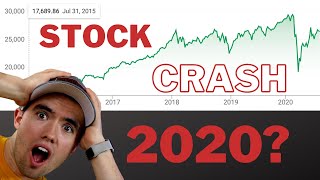
Mike Andes (Business Bootcamp) describes his 2020 personal investing journey across three phases: initial recovery bets in March–April (cruise lines, airlines, Simon Property Group), a shift into tech/speculative plays (Amazon, Microsoft, Peloton, Lemonade) as stay-at-home trends emerged, and a later move toward conservative/value stocks and real estate for wealth preservation. He explains decision rules used (insolvency/liquidity, likelihood of government bailouts, long-term survivability), gives a rough portfolio breakdown, and outlines his plan to pay down business debt and use real estate and dividend/value stocks to reduce risk.
Questions this video answers
Gusto 90-day free trial via gusto.com/bootcamp; $9 per month per employee after trial (as stated).
About 35–40% (speaker says ~38% of portfolio).
Approximately 22% of the portfolio (as stated).
Approximately 15% of the portfolio (as stated).
Original SBA loan $500,000; reduced to about $400,000 (speaker states).
Chapters
Hey everyone, it's Mike and you're listening to the Business Bootcamp podcast. Today I'm sharing where I've put my money in 2020 in terms of stocks, real estate and in the businesses. Before we get into today's show though, a big thank you. Today's sponsor, which is Gusto, if you haven't Already, go to gusto.combootcamp for a free 90 day trialer software where you can pay your employees, give them benefits and do it all in a very transparent manner through their app, very simply for a very, very cheap price, like nine bucks a month per employee after your free trial. So try out today though, go to gusto.combootcamp now. Several weeks ago I made a episode about personal finances and investment strategies for business owners and I got a lot of people asking me about more specifics when it came to stocks and real estate. So yesterday I posted a video about the real estate deal that I am currently in escrow on. And now I'm going to talk about kind of the timeline over the past several months that I've been doing for my stocks. Now, let me preface all of this by saying business is my passion. This stuff does not really get me super excited. It's a numbers thing. It's a matter of preserving wealth and making sure I have keeping the powder dry so that when I have a business opportunity, I go all in on that. And so right now this is like, I am not super passionate about stocks. I don't get excited about stocks in terms of just a numbers game. It's making money. Money is great, but. But I don't feel it's as fulfilling for me personally. Same thing with real estate. I love the numbers aspect. I love all aspects. I don't get like passionate about it. I'm passionate about business. I'm passionate about helping entrepreneurs. But I want to share this today because I know there's business owners out there that have money or they've begin to build a good business and now they're starting to think about diversification of the asset classes. Thinking about investing in real estate, thinking about investing in the stock market. And so I want to kind of use these occasional episodes and videos to show that I'm starting to kind of branch off into those areas as well. And a lot of it has to do with just learning. And so when I do some of these things, I do some of them knowing that, hey, these might not be like the real estate deal, for example, that's like the most slam dunk cash flow positive deal in the world. But it's a deal that I'm going to learn a lot on. I'm gonna learn about property management, I'm gonna learn a lot about the taxation, about real estate in general, dealing with tenants, all of that good stuff. And I think that for me, as a young entrepreneur is really, really valuable. So there's gonna be plenty of stuff for you to critique in these type of videos, the stock ones today as well. If you go back and watch the one from yesterday about real estate, there's plenty of stuff for you to critique. Literally in the real estate video yesterday, I made an absolute mistake. I basically did gross rent multiplier. The theory backwards. Like, just, I was probably tired, messed it up. Like, I'm going to make a lot of mistakes. So in today's episode, you're going to have plenty of. If you're looking for faults in my, my stock choices or anything like that, you're going to find plenty of issues with it. But the bottom line is that I want to kind of really just show that, hey, I'm educating myself and I'm trying to chronologically follow this journey of my entrepreneurial pursuits. And I hope you learn something from it, whether it be you're young, whether it be your. Your business is growing and now you're trying to invest. I hope this helps you. So let me kind of give this. I want to do this today as kind of what's been the past several months where I put money in stock market when I took money out, and now as I move into real estate, where the money's at, what kind of stocks, what the portfolio kind of looks like. So I'm going to kind of break that down as much as I possibly can. And I really hope that if you enjoy this, you drop a. Like, I really need to get better about asking people to like and subscribe my videos because now we're trying to actually build the channel. So please do that if you haven't already. And also, quick announcement before we jump into the stocks is I'm actually going to be producing another online course and it's going to be called the MBA for Entrepreneurs. I'm starting to work on it now. It's going to take me quite a long time. I'm really, really looking forward to it. It's going to be over on the whiteboard and I'm going to be making a lot of videos and really taking everything I learned in my MBA and taking the things that I learned that were useful as a small business owner and making that into an Online course. So really looking forward to that. It's still a couple months away. It's not for sale. But I'm really looking forward to doing that and then using that money for something that we're gonna be doing to produce more, some more content and also for the franchise again, a lot of what I do for media, that money again, I'm passionate about the business side, so I use that money for the franchise and we grow that. So anyways, back to the stock. So what happened? I'm not a seasoned investor in the stock market. First one to admit that I have dabbled in the stock market and usually I've been the type of person where I I'm tracking businesses. I've always tracked the stock market. Literally since I was about 8 or 9. I wanted to be a financial advisor when I was a younger kid. And so I would track the stock market. I would track bonds and Treasuries and all that sort of thing. Really was into it quite extensively. But I didn't really invest in the stock market because I was investing in my business, my business, my business. And then occasionally I would see a big dip. Like if something dropped 10% in a day and I knew that it was a solid business and it was some sort of a fear or like the whole market would drop in a day. Like back in late 2018, I would dump some money in and it'd be short term to get some profits and use that for the business. And so I have not been a long term, I've not done this for 10 or 20 years. Do not listen to me and be like, oh, I should buy all of the stocks that he bought. I am not suggesting that in any way, shape or form. This is not financial advice for you. This is just to show and be an example of someone that that has ran a business, takes that money and begins to now invest and divest into different stocks and asset classes like real estate. So back in March when this whole health situation began to blow over or come onto the United States, a lot of people got scared. Like the stock market started crashing and literally some of the fastest falls we've ever seen in the stock market. So I still remember the day when we were technically now in a bear market where we had come into the point where the stock market was, I think it's 20% if it drops, you can come into a bear market. It goes from correction into bear market, whatever it is. But the market was just tanking. I think it dropped that day like 2000 and 2200 points. Or something like that. The Dow. And so I still remember, like, at our team meeting, like, that morning, I think it was a Monday morning. Be like, we're in a bull market. This is so exciting, because for a long time, I felt like the stock market was really, really overvalued. We had the dow up against 30,000, and now it was dropping down to the low 20s at the time and then going under 20,000. And so.
I really think in business investing, the old adage Warren Buffet used, and that is that the greedy get. The greedy get killed, basically. And that is when everyone's just scared, you should get greedy, and when everyone else is getting greedy, you should be scared. And so I was a little bit scared at the beginning of 2020. I didn't have any money in the stock market. If you look at January and February, the stock market was just going parabolic, like, very, very steep. And so I was a little bit afraid of that. Just kind of thinking it was a bit of a bubblish nature. So when it crashed, it was like, all right, this is my opportunity, and everyone always has to 2020 hindsight. Like, oh, man, if I could just have invested back in 2008, like, I would have made a bunch of money if I would've just bought real estate 10 years ago. If, like, it's always hindsight. But in the moment, there's a lot of fear, and it's very hard to make that decision to invest the money and risk that money when you're in the moment. So when everything started crashing, I did not jump all in at once. I kind of started nibbling as the stock market went down. And then at the beginning of April, that's really when I started investing more. I felt like we had hit the bottom. And for those of you who are on a live Zoom call, I actually mentioned that day that the stock market actually went up a little bit in response to some dismal unemployment numbers, which a lot of times will indicate, okay, because the market is always looking forward. The stock market always is always looking forward. So if it goes up after these really bad numbers, it means, like, hey, we've baked in the pricing that this is really bad. It's gonna be really bad. But, like, we've got kind of to the bottom. So I felt like that was the bottom. I think I was, like, probably a day or two off maybe, but, like, that was kind of like the bottom. So I started putting more money in then. And at the time when I went in, I was putting about half of my money in Recovery stocks and half of my money into companies that actually believed in long term. And so I'm gonna go through some of them again. This is not financial advice. Do not go put money in these stocks. Because I, I did. Let me give some clarification because do not turn the video off the next few minutes either, because some of these stocks I sell a month later. So when I first went in, especially as we go into April, May, the recovery stocks that I initially went into were Simon Property Group and then also into the airlines as well as Norwegian Cruise Lines. And the reason I went to Norwegian Cruise Lines versus.
The more popular Carnival, there's a couple different reasons. One, with Norwegian, I felt like their balance sheet was a lot more stable. And in terms of the recovery stocks, and when I was looking at whether or not they would go under at first, at the very first, again, there's the transition here. At the very beginning, when everything dropped, I was looking at their liquidity. How long could they stay in business if they made no money and if they had no operations? So when I looked at the cruise lines, Norwegian was really, really good compared to some of the others, which have now taken on more debt, Norwegian looked really healthy from a liquidity standpoint. They weren't going to go bankrupt or insolvent for at least a year or two. And so I really like that. So I would invest in those. At that point, I was simply investing in the companies that I knew had a low probability of bankruptcy. Because if a stock goes to bankruptcy, you're basically losing all your money. And unless it's Hertz, which is crazy, all the FOMO fear of missing out, people investing in a bankrupt company like Hertz. But anyways, usually it goes to zero. And so when I first started investing, right off the bat, I was looking at the recovery stocks and investing in the ones that I knew could not go bankrupt in the short term. That began to change as the pandemic started. We started realizing that, hey, this was not going to be a short term thing. This is going to be like months, not 30 days to stop the spread. Like it was going to be a long term thing. I ended up switching a little bit. I ended up taking, I ended up selling Norwegian, I ended up selling Delta Airlines. The main reason I sold Norwegian was because they are not a US Company, which means, especially as we were talking about like in May, as the stimulus packages getting rolled out and all of that, it became very clear to me that companies that were not based in the United States, there's a really good chance they were not going to get any sort of bailout money. So for companies like Delta that are so big and are based in the United States, I look at those and again, this is back in May and these are not like investing principles. I'm just simply looking at them like, look, will the government step in and bail these people out? If they're United States based companies and they're really, really big and we depend on them for infrastructure and transportation like Delta, I felt comfortable with that. I'm like, they're not going to go bankrupt because the government will step in. And you can have all the opinions in the world whether or not the government should or should not have stepped in. But that's how I was looking at it. Like for these recovery stocks, at first it was like, what's their insolvency factor? And then also how liquidity, like what's their liquidity look like? Then it became, I was like, okay, this is gonna become a longer term thing. Now I was asking the question is which of these companies will the government actually step in and help if worse comes to worse? And Norwegian Cruise Lines I sold, lucked out on that one like crazy. Because like literally the week after I sold them out, it tanked the recovery stock. So I held them for about three or four weeks, was able to ride them really hard up Norwegian. Same thing with Delta. I missed out a little bit of the top end of Delta, but I'm happy I sold cause now it's way back below. So those ones really lucked out. Those are kind of my two major recovery plays. I did a little bit in ge, I did a little bit in some other companies, but those were the two major ones. And now I'm out of all those companies. Completely out. Because. Because I feel like this event that we're going through right now is gonna try these industries long term. And so I rode the wave up, sold 100% out. And the day after I was a little bit disappointed cause Delta flew high. But then it just crashed. So I was happy and it crashed. It just went a lot further down. So I was able to get out with some good gains there. And I moved the money towards tech because as the stay at home trend was happening, I didn't catch it. I wasn't like, oh, day one, this whole event in March, I wasn't like, oh, this is gonna cause everyone to stay home and work from home. And I wasn't. I'm not like that. I'm not really good at telling for the future. I look at the trends Right. And so I just try to learn from those. And so I was like, okay, this is gonna. Cause I started seeing people that never use online shopping starting to use Amazon. And so I was like, okay, noted. And I started. So I started putting more and more money towards tech stocks because as people started working from home, cloud based servers were going to become more and more popular. And I also wanted to invest in companies that would have more of a global reach, like Microsoft. So I started investing in Microsoft because tech companies was what I was really focused on. There were some speculative plays that I also played and was able to be fortunate to ride up on like Peloton, knowing that for example, I'm at the gym, my gym is closed, all of my people are working out at home. Peloton is going to do great. They wrote the past few months they've doubled their valuation, so I was able to ride them up. I've slowly chipped away at selling off on them a little bit just because I felt like they kind of rode their wave and their valuation is kind of at a point where it's like, okay, I can think going up a little bit more, but we're not like going up another double again. So I have sold a little bit out on that. But again, kind of if you look at three phases, my first phase was recovery stocks based on liquidity and then moving in towards more of will the government bail them out. Phase two, I moved a lot of my money more into the tech stocks and that include Microsoft, Amazon and Peloton. Those were kind of some of the tech plays that I was, I kind of jumped into. All right, now I really feel that there's a lot of uncertainty in the market right now. Tech stocks and the ones that I've been able to ride up are at all time valuations that are ridiculous. Honestly, like if you look at Amazon and their price to earnings ratios is well over 100. You look at Tesla's price to earnings ratio and you can always look and speculate in the future. But I'm looking at them now and being like, okay, is this money safe? Because now remember, I'm not trying to be like the stock market genius or start my own fund or anything like that. I'm trying to make money so I can use it for my businesses. And so I need to preserve that money and make sure it's not going to just disappear. So phase three that I'm in now is investing into real estate as well as investing in stocks that are going to be more of a value play. Some Dividend stocks are in there, some not as high growth, but much, much more conservative plays. So for example Walmart, Walmart just started Walmart plus they're rolling that out and it's going to be an online grocery service, $99 subscription per year, which is going to basically try to compete with prime, but not really because prime doesn't really do grocery delivery the same way that Walmart does. I feel like Walmart has a really great advantage. They have over 4,000 stores, physical locations and I think it's something crazy, like 80% of the population in the United States lives within 15 miles of a Walmart whereas Amazon has like 400 some odd fulfillment centers. So there's a little bit more struggle to do that last mile delivery versus Walmart has a lot of fulfillment centers. So really, really interesting there. And when I look at Walmart vs Amazon, Walmart's cap rate or sorry, their cap rate, their market cap is I'm looking at right now $375 billion versus Amazon's which is like $1.5 trillion. And a lot of that has to do with the fact that the valuation is based upon Amazon being a tech company and being, you know, they have everything from selling things online to aws, Amazon Web Services, they have payments, they have advertising, they have self driving cars, you name it, they have a ton of stuff. Whereas I feel like Walmart, because they aren't a tech company, if you look at their, I'm looking right now at my portfolio now. If you look at their price to earnings ratio, it's at 25 right now. So the reason their valuation is so much lower is because they're not considered a tech company. And these tech companies, their valuations have gone through the moon and because the scalability and it's kind of the hot thing right now. And I really feel that Walmart is being undervalued simply due to the fact that they are a dividend stock. They don't grow like 100% a year. And I also feel like they're getting more into technology and they're realizing that and they have the cash available to invest very heavily and they already have the infrastructure in place to actually reach the customer. So I'm really, really interested in Walmart. I don't think it's going to grow a massive amount. I feel it's a very safe play though. So again, phase three, I'm not making like you know, 20% a day and like these massive jumps that I was seeing earlier in the spring, it's now more Steady, I'm giving, getting more dividend stocks and I'm getting plays that are, have consistently shown growth. They didn't drop a ton during the recession or like the, you know, pandemic thing that we've been having. They're just more consistent, more steady. They might grow 1% every month. And it's going to be more of a safe play. And I know that money's going to be there. Here's why. So after phase two of my stocks where I moved a little way more from technology, I'm still very heavy on tech. Like Amazon I think is like 35 or 40% of my portfolio, 38% of my portfolio is Amazon, then a Walmart. I got 22%, then I got Microsoft is at 15%. And some people are like, oh, you're not very diversified. I'm not, you're right, because I follow these companies and if I had 20 or 40 companies, I wouldn't be able to follow them all. And then I have smaller amounts of money right now in Simon Property Group and I got McDonald's most recently added McDonald's in there. Again, not gonna grow a massive amount. I feel like it's a five year play though because so many quick service restaurants are gonna get wiped out with this whole thing. Whereas McDonald's has a lot of technology, great delivery drive through and today their earnings came out, their revenues did drop by 30%. But all things considered, that's not a bad thing when in five years they've a lot of other quick service companies have been wiped out. So really interested in McDonald's and their technology and their delivery, all that sort of stuff. So I've just recently invested a little bit into them. Still have some money in Peloton and also recent IPO in Lemonade. All those are very small. Like the majority of my portfolio is in Amazon, Walmart, Microsoft, et cetera. And so those are companies that I know will be around forever. There's not risk for bankruptcy. Simon Property Group is probably the most speculative and has the most room for growth. They could probably grow 50% with a vaccine coming out. And so that's probably the one speculative, heavily speculative move besides Peloton, which is also a tech play and could, you know, if it's a fad for people to buy $2,000 bikes and treadmills, yeah, that could go away. But everything else, you know, the 90% of my portfolio is in companies I know will be around and aren't. And a lot of them are a little more conservative now in terms of growth. I'm not investing in Tesla right now. I'm not investing in the airlines or the restaurants, like, nothing like that. So that's kind of phase three. And after phase two, when I moved to phase three, that's when I also am doing this real estate deal right now. And so all of this comes around to the fact that the reason I'm keeping money right now in the stock market is because my goal is to become super lean in 2021. And that is to take all the money that I have left in the stock market and pay off, like the loan from the gym, for example, that has, I think, like 6% interest, 6 or 6.5% interest on the SBA loan, which is not horrible. But that being said, if I feel like there's a lot of volatility coming to the end of 2020, I'd rather just put my money, pay off that debt at 6.5% and then try to go get like a mortgage on a real estate deal for like three and a half percent interest. Right? So just trying to become more lean is kind of what my goal is. If I still have cash on hand at end of 2020. And I don't like the prospects of the stock market because if we get another round of stimulus here, which we will be in the next few weeks, and we get more money pumped in the system, the stock market will continue to go up. If that happens, I don't feel like that's sustainable going into 2021 when a lot of this, the money starts becoming irrelevant. Like a lot of 2008 money, the recession that we had and the money that was pumped in, that's the rot, the wave for several years that the economy kind of rode on was all that money being pumped into the system. I do feel like we are in a bubble, but that bubble could last three to five years because of all the money that's being pumped in, the interest rates being super low and not going to be going up in the near future. These are things that are macro economic trends that are going to affect the stock market. And so I'm a big believer in learning. And so what would my advice be to someone that's looking to get into stocks or has some money? Learn, educate yourself. And a lot of what I am doing this is because I know that in five years, a lot of the franchisees at Augusta Lawn Care are going to be in the same spot that I'm in now, which you have a solid business, it's pumping out cash and you need a place to Put it, divest yourself and go into real estate stocks. And I want to still be able to be helpful to them. I don't want to be like, oh, well, it's not business, so like, good luck. I I want to be able to have places when they come to conference that we can talk about real estate, we can talk about investing in the stock market, we can look at trends in the economy and then really be educated in business and in economics. And so this is a big reason why I'm doing the real estate stuff, I'm doing the stock stuff is because I really look at when a franchisee joins Augusta Lawn Care. This is not like, oh, let's get them up and running and two or three years they have a good little business. That's not what I'm looking for. I'm looking for someone that I can help them as they begin to grow their wealth and begin to grow their investing strategies. And so that's what I've been doing the past few months. Again, do not look at the businesses, companies that I've been investing, like, oh, I should definitely do that. Everyone's at different stages and how much money you invest to is relevant. Like if you're gonna invest a million dollars, that's relevant. If you're gonna invest $1,000, literally, you'd probably be better off spending that money on a course that's gonna educate you about stocks. You're probably gonna get more learning and you know, it's gonna be down the road a lot more valuable to you. So that's just my two cents. And that kind of the stages that I've been going through. Right now, right now we are in stage three, which is real estate, which is going to be a cash producing asset, not a lot of cash flow. It's going to be more of a strategy for taxes as well as wealth preservation. And a lot of people are like, well, where'd you get the initial money from? Well, when you put money into real estate, you can then take home equity line of credit. You pull that money. So that's what I did in the spring when I know there was opportunity in the market and everything was crashing. I use the home equity line of credit as almost like a piggy bank. So pull the money out real quick and you're paying 5% interest or whatever it is, but then you ride the stock market up. And then when you want to pay off those home equity lines of credit, you can do that same thing with business lines of credit. And I've always said this, I said this at conference and everything. And that is when, when times are good, that's when you should go open up lines of credit for your business. You should go open up lines of credit for your business. When everything is good, you have lots of cash, you don't need the money because you'll get really good terms. Right now if you're hurting, it's almost impossible to go out and get a line of credit for your business. So I had opened up all of those venues. So that way when everything crashed, I, I pulled the money from those and then was able to invest it, grow it significantly, pay off, Everything's paid off now. It's like, I don't use margin. I don't use. So margin is basically you borrow money against your stocks and you pay a percentage, like 5% or whatever, depending on which brokerage account you're using. I don't do that. I don't do high risk stuff like that. I've paid off all the home equity lines of credit, the business lines of credit. Everything's done there. The one big no loan I want to pay off still is the gym. Because I got an SBA loan on that for $500,000 when I first bought it. It's down to 400,000 right now and I want to pay that off. If the markets, I don't see any opportunity. Like as soon as the markets get so volatile or risky, in my opinion, and I don't feel comfortable, I will pull my money, I will pay off that debt because it's gonna save me six, six and a half percent. And that's not great. That's, you know, most people like, well, you should invest in the stock market and like 8 to 10, 10%, like, but if I feel there's risk, I'm pretty conservative and I would probably move, just pay off the debts and just build the cash flow as from the savings of those interest payments and then get ready for another play in 20, 21. So hopefully it helps someone out there and I just wanted to share and hopefully you can learn from it. Make sure to like this video and subscribe because we need to grow the channel. Thank you so much, everyone. You'll be listening to Mike Ennis on the Business Boot Camp podcast. Until next time, be great. If nothing else pays.










