My Story: Child Prodigy Turned Lawn Care Business Owner
Mike Andes recounts his journey from an accelerated childhood learner and early college entrant (started college at 13) who once planned to be a surgeon, to founding a lawn-care business (Andy’s/Augusta Lawn Care) with his brother. After clinical experience in Nairobi he decided not to pursue medicine in the U.S.; he built and scaled a landscape company, experienced a near-fatal accident that exposed lack of systems, and pivoted to build standardized systems, a franchise model (Augusta Lawn Care) and software (Copilot CRM) to duplicate those systems. He frames entrepreneurship candidly—highlighting long hours, stress, growth challenges, and the need for discipline—while outlining a 5–15 year play: software now (Copilot CRM, he owns 60%) and robotics later.
Questions this video answers
13 years old.
Mike was 11 and his brother was 13 when they started.
Andy’s Lawn Care (later Augusta Lawn Care).
About $700,000–$800,000 annual revenue.
He owns 60% of CopilotCRM.com.
Chapters
Today I made a post on Facebook and Instagram and YouTube talking a little about my story. And I realized that not a lot of people actually know, or I should say, there's a lot of people have joined in the past couple years that don't really know my story. And I want to walk today through why I do what I do and. And what led me on my entrepreneurial journey to get to where I am today.
I didn't have a lot of money. My family didn't. Growing up, my dad was a minister. He still is. And we moved, like, 26, 27 times by the time I was moving out and we were moving all over the country. I was actually born in Kentucky, Louisville. And then we moved to Tennessee. Then we moved to.
Arizona. And then when I was like, three or four years old, we moved up to Washington State, where to this day, I still live. And I was really young. I was ahead in school, and so I actually started with my brother at home. He started kindergarten when he was five. I started. I was. I was three. So I just, like, sat there and learned because there's nothing else to do. I just played with my brother all day long. So when we moved, I was four years old, we moved to come up to Washington State. He started school in grade one. And I was like, forget this. I'm not gonna live without my brother at home all day long by myself, so I'm gonna go to school, too. So I started kindergarten officially when I was four years old, but it was always pretty easy for me because I always had that year up. Like when I was three, I was learning how to write and all the rest of it. I get into kindergarten, I was already ahead of the game. Well, I was still a year ahead, even at that time in terms of being four years old in kindergarten. So I was really small still. I'm really small to this day. Surprise, surprise. And so my mom held me back a year, and so I did kindergarten again. So although it was the second time, technically, I'd kind of done it three times by now. And so it really gave me a good foothold and kind of set the precedent that, like, hey, you're going to be the one that is ahead in class. You're going to be the one that teaches your other classmates on how to do work. Once you're finished your project, you help other people. Very helpful for me, I learn really well when I teach people. I learn myself. Concepts come together really well when I'm teaching others. And I didn't know, obviously, back then, but, like, Something that throughout all my primary years of school, that was happening. So I was in grade seven. I skipped grade seven. After like a week or two into the school year, they finally let me skip. I was just bored on my brain. And I told my mom and dad. I was like, I want to skip. Great. It has nothing to do with anything other than just like, I'm bored of my brain. I feel like most of my day is awake. So they let me skip grade seven. That was a really good move. Definitely put me in a different challenging environment. Did grade eight, and then that's when I realized that I could go do homeschool, do grade 9 and 10 in one year, and then start grade 11 and 12. But while doing grade 11 and 12, also go to college and get my undergraduate degree. Start working on that. So that's what I did. I basically started going to college when I was 13 years old, going to Whatcom Community College. Got my first two years, my associate's degree, and then transferred over to Western Washington University. Now in that time, I believed that I was gonna go to medical school. I wanted to either become a heart surgeon or a brain surgeon, and either of those I wanted to go extremely specialized and I wanted to focus on emergency. I really, like, definitely wanted. I just knew from the beginning I loved high stress situations and I wanted it to be where when someone came in, their life was literally in my hands and that's the adrenaline I wanted to have. And so I prepared and I worked hard. And literally nothing besides an A in college was the standard. Like, my standard was, if it's not an A, I failed. It was either literally fail or an A. And I still remember getting my first A minus in my second year of college and literally going to the professor and be like, I will do whatever it takes to get that change to an A. And it was crazy. She had me do an extra paper and a little bit of research is in a nutrition class and I got my A. And so anyways, fast forward a little bit more. And by the way, like, I started college when I was really young, but my parents had no pressure on me whatsoever. They never cared about my grades. They didn't ever push me to go to college early. In fact, they actually said, like, hey, like, we're not pushing you. You don't need to start early. You can take some time off, like, things like that. But ultimately, when I knew that I was going to go to college, I want to get over kind of sorry. When I. When I knew that I was going to go to Medical school, I kind of want to get over as soon as possible because, like, I knew I was going to be in School for 10 or 12 years. Seeing that I wanted to become a surgeon and really go deep into the medical field. And when, when we knew we were going to go to college early, my brother and I both started mowing lawns. At the time we called it Andy's Lawn Care. It's my last name, Andy's Lawn care. I was 11, he was 13. Started getting a bunch of lawns in our local neighborhood. And then basically once he got his driver's permit at 15, we were able to start getting lawns outside of our neighborhood and really kind of expand. So when I turned 18 years old, I was fully anticipating to go to medical school. I probably was gonna go to lsu, but it wasn't confirmed yet. I ended up my last quarter of school going to Nairobi, Kenya, and around Nairobi, so Tagoni Kalangwari, to different hospitals and orphanages, doing a lot of medical kind of stuff. So I did everything from the birthing to the burn unit. We did some minor surgeries, did lots of injections, and there's a lot of viruses over there and things like that. So that was my life. It was literally the coolest thing in my whole. Like everything I had dreamed of and worked for.
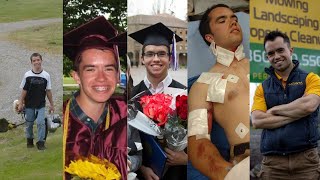
Years in college had now become like, I was able to do it. I was literally in a doctor's jacket. I was being called doctor. Like, that was like the dream. It was literally like playing house as a kid. This was now playing doctor. And I was able to do all this stuff because obviously over there there's not as much rules and regulations. And it was like we were just helping people. It was a non profit. And so if someone came in, it was like, whatever you can do to help this person is gonna be better than them having nothing. And so it was a phenomenal, a phenomenal experience. And I came back to the US and decided that I didn't want to do medicine in the US Mostly due to the fact that I didn't want to go really deep into a profession and a specialty and then be stuck in doing the same four or five, six procedures. That's what happens when you get really, really specialized. I didn't want to do that for the next 40 years of my life. That was not interesting. And furthermore, I didn't want to deal with paperwork and insurance and the bureaucracy that comes along with the medical system. And so that was a really weird time for me. I came back, I was 18 years old. I Graduated and kind of walked the aisle. And this is where the picture came from. If you check out my Instagram or Facebook from the day. Very happy time for most people. I was the youngest graduate from Western Washington University ever. And it was weird though, because for the first time in my life, I didn't really know what was next. And it was a little scary. I was supposed to be the Doogie Howser young kid going to college and becoming a doctor really young. And here I was, 18 with a graduate degree and had no idea what I was gonna do. So I started lawn care. I was like, you know what? I'm gonna take this thing, make it bigger. So that's when I started Augusta Lawn Care. Fast forward. A couple years later, I got in an accident underneath the dump truck. And in the pto, the power takeoff of the dump truck, it sucked up my hoodie, grabbed every my shirt, my hoodie up around my neck and almost killed me. And by the grace of God, I was able to fall out of the PTO and it miraculously kind of just like split down the middle with it being bunched around my neck. Split. There was no seam, there was no zipper. And I still very distinctly looking up as it was trying to suck me underneath, looking out from underneath the dump truck and thinking, this is how it's going to end. And it wasn't like I was afraid, it was like, oh, like this is how it's going to end. And I'm a religious person and I was ready to go. And I try to live my life that way. And so I wasn't like fearful. It was just like, oh, like this is just happens immediately. Because like I was underneath there trying to fix the PTO and engage it. Engaged, caught my hoodie and within a second I was like, oh, this, this is how it's going to end. I dropped out, ended up going to the and there's some pictures that I shared today from IT online. But yeah, it just took a couple weeks of me being out. They didn't want me doing much work. And I still have scars on my inside of my arm. Most of my chest doesn't grow hair because of all the impacts and the amount of compression that happened, all the hair follicles and stuff. So it messed me up a little bit. But I was fine after a couple weeks. But during that time I realized that my business wasn't built on systems and it couldn't run without me. Even though it was a good business. By that time we were doing probably 7, 800,000 annual revenue.
It couldn't run without me. It depended on me being there every day, selling the jobs, getting the crews to do the work, showing them the projects, and just did not run on systems. And so during those couple weeks, it was again, kind of a punch in the gut because here I was, the person that everyone expected to become a doctor. And my parents put no pressure on me, didn't have a lot of expectations, like, on me at all. But, like, definitely everyone else did. All my peers, the.
Professors that I was going through, I did a lot of research. I spent a lot of time in the lab. Physiology, kinesiology, biomechanics, all those classes. You're getting to meet these professors that are very invested in seeing someone so young coming through their program and succeeding. And I still remember when I made the decision to not go after the medical field and getting emails from professors, and I wish I would have kept them. I think I deleted them because I was not happy at the time. But I remember very specifically getting those emails from them saying, like, you're making a massive mistake. You're wasting talent. That was the one that stuck in my head. And so now flash forward now to a couple years later. I now realize that the business that I've built and I've poured myself into for the past couple years is basically worthless because it can't run without me. And I basically have a job, and that is working 80, 90 hours a week trying to get this, to keep this thing afloat. And now without me, it doesn't. It can't keep growing and expanding, and it doesn't have a team and systems in place that run without me. And yeah, sitting in your bed and just like, oh, yeah, great. So I've really wasted all this expectation and skill. And even a few years away from medicine, you get rusty, like, in terms of knowing the anatomy and physiology and all the different biomechanics and things that I had studied. And I did so much work on Ms. And multiple sclerosis and did a lot of research on that specifically. And yeah, it was just like, oh, like, maybe I. Maybe I was supposed to go do something else. Maybe I was supposed to go keep working on Ms. Stuff, and I would have been able to find some sort of drug or some sort of therapy that can help with that. And you just question everything that you've been doing. Like, here I'm mowing grass and I was supposed to be the, you know, child prodigy. So you question yourself. And the reason I share this story is because I think a lot of us come to These places in life, whether it be college and not knowing what you should do next, or whether it be working for years in your business and realizing that you really don't have a business and it's basically just a job and you don't have systems and you can get really low during that point. And I know what it's like. And so when I talk to business owners or I talk on stage and people are like, man, you're like, really passionate. You're like, I know exactly what people are feeling like. And. And every time I talk to people on stage or in a video, I try to convey the passion I have for that person that's in that low, low moment. And I know it's like, it's not fun. And especially when expectation of other people are so high and you feel like a failure, I know what it's like to be there. And so those are two very pivotal moments. And we always talk about change and transition as such a positive thing. And typically in the long run, they are, however, going through it. It's not fun. It's not something that I would wish on my worst enemy to feel that way. And honestly, as time goes on in your entrepreneurial journey, things are always going to be a challenge. There's never gonna be a moment when you break through and everything just gets easier. The only way that happens is if you start to plateau and you stop growing. But a true entrepreneur to actually really succeed typically doesn't have the mindset of I'm gonna achieve a certain level and then just I'm gonna stop. Like, I would rather die than have an organization or be the leader of an organization that reaches some sort of level of success and then plateaus and never really changes or grows or continues to give back or improve. And I just have no interest whatsoever in doing that. But by having that sort of mentality and by pushing yourself and always growing the business and growing and expanding and making your company bigger and having more team members, you're always going to be putting yourself in positions where you feel uncomfortable and nervous. And that doesn't change. By the way, don't ever think that a certain size business or if you look to someone up to someone, that somehow they get to a certain level, like they're just immune to stress and anxiety and depression. That doesn't happen. So don't think it does. You're putting a false mirage in front of yourself. That's not how it is. Even as I speak to talking to you right now, it's in the middle of the Night. And I'm just kind of recording this raw because right now I feel the same way. That is, we're launching Copilot in just a matter of a couple weeks, and we're gonna roll it out to hundreds of business owners. And.
There'S a big part of it that I can't control, and that's the technical aspect. I control a lot of elements, but I don't know how know the back end code. I know some little bits of code. I did some apps and things like that when I was in college, couple iOS and Android apps, but there's elements I can't control. I'm definitely nervous about the rollout, having that many new people into a new software so close to the spring rush. It's. We've only really been working on the project for about four months and getting the code base ready. And I'm confident, but I'm still very, very afraid and scared. And it keeps me up. And I know that it'll be the most public humiliation in the world if it flops. And the last thing I want to do is put anyone's business in jeopardy by having them switch to my CRM that I've promoted, and then it not do well. And.
So you put a lot of pressure on yourself. I think anyone that builds great products and services and builds great teams is gonna have that level of pressure on themselves, and you're going to feel that way. And there's gonna be times in your entrepreneurial journey when you question yourself. You don't know what the next step is. Like in my college days, there's gonna be times when you question yourself. You're like, did I make a mistake? Like I was feeling sitting in a hospital, realizing that my business potentially was worth nothing, and I had nothing to show for the years that I'd spent on it. And so, you know, I got out of the hospital and kind of repaired myself physically. And then determined like, hey, you know what? We're going to build systems, we're going to build procedures. And so basically, I started a landscape business course not too far after to basically just chronologically look at how I rebuilt the business and the systems and procedures and the things that I believe really worked. And it was great and it was fine. And I made lots of videos, hundreds of videos to help landscapers and business owners in the lawn care industry hopefully improve their business. And I realized that literally 1% of people were actually taking what I was I was talking about and implementing it. And it was very hurtful and hard because I saw Them going through the same painful realizations. The pain, painful realizations. Their business could not run without them. It didn't run on systems. It ran on their personality and their ability to sell, their ability to lead. It did not run on. There was no systems for sales. There was no systems for hiring. There's no systems for onboarding. There was nothing. And they made sure. They had to make sure they had someone to answer the phone. They had to make sure that there was someone to do payroll. There was no system and process for scaling in the organization or doing multiple locations or let alone bringing people that were starting out at the bottom of the organization and bringing them up and having upward mobility and allowing people to become managers or start their own location. There was none of that. And I kept seeing that. And while I was teaching a landscape business course I truly believe will help them, but it was not getting through. And. And so that's when I started Augusta Lanka, the franchise. And the main objective in doing that was that I could have skin in the game with these other owners, that when I said something, they would know that what I'm saying is exactly what I believe. And I have skin in the game. And their brand is my brand. So why would I tell them something that is not good for them? And I wanted to prove that the systems work. And I knew that if I could do that and scale it up and we could be in hundreds and potentially thousands of locations down the road, that all the competition in the lawn care landscape industry that were competing with us at a local level inside of each of those markets would eventually have to adopt the systems. Not because they thought I was good or because they heard about me, but because they had to in order to stay competitive with Augusta Lawn Care. And that's why we started the franchise three years ago. And back then I said, give me five years and I'll make Augusta Lawn Care have a unique and competitive advantage that it cannot be duplicated. So we still have two more years to do that. And I've been very clear to the franchisees for the past few years that our play over the next five to 15 years will be software. And then after 15 years to 20 years, it'll be robotics. And my energy, my time will be spent over the next few years focusing on software. And last year we went ahead and cemented the partnership where I own 60% of copilot CRM.com and that's just the beginning of what I believe is so important, because with software, I can duplicate the systems. I can duplicate what I'M teaching and put it into a software that people are using every single day. It's so connected and integral to their business and integrated to their business that I can not just someone have to watch a video to understand their numbers. They don't have to watch a video to understand close ratio and the importance of it in their business. They can, the software can tell them what to do. It can use AI to actually predictively tell them when to hire people instead of just having to watch a video. Know who I am. You don't need to know who I am to improve your business. And so these are things I'm passionate about. This is what we're trying to build. And regardless of whether or not you're in that first stage where you just don't know what's next. Stage two, that was when I realized that the business I had built and put my put my blood, sweat and tears into was worth absolutely nothing and had no systems, had no procedures and it all ran on me. Or whether or not, whether you're in growth phase and you have gone through a lot of the different phase and there's millions of dollars in revenue that I make every year and probably 100 plus employees that work directly for me. And now I have eight locations that are Augusta longer that I own, North Carolina, Connecticut, Washington State. Those are all fine and good.
But the entrepreneurial journey is not easy. It's not fun. It's not one that I would wish on someone that should not be in that position. I wouldn't. It's hard. It's difficult. There's a lot of sleepless nights, times where you will feel anxious, especially in the first three to five years. It's extremely difficult because growth sucks cash. So you have the financial pressure of trying to grow and expand into something that you've never done before. And so it's testing your physical, mental, emotional leadership abilities. And it's very, very difficult. It's lonely. And discipline is extremely hard to mold and craft your character. And I was talking to the franchisees today. It is really deprivation. Like you're depriving yourself of what feels good and what feels comfortable and what feels average and what would make you feel nice. That's what discipline is and that's what's required as an entrepreneur. And that's why I'm so against and why people ask me like, why are you so against? What entrepreneurship has become online and social media is because it's encouraging people and it is tantalizing people to become entrepreneurs and business owners that should not be. And I truly believe that it'll push people to mental places they should not go and depression if they try to become an entrepreneur and a business owner when they should not be one. Most people should not be. And I don't say that because they're. By saying that, it makes me better. It's not that most people should not be an entrepreneur. And it's okay to realize that you've potentially gone into becoming a business owner or entrepreneur and you're not one. It's not for everybody. You can really hurt yourself, the mental strain that comes along with it when you're really pushing yourself, when you're really going for, when you really want to cause change, when you're really trying to grow fast and create more jobs for your community and create wealth for you and your family. There's a lot of struggles, there's a lot of pain, and there's a lot of anxiety that comes along with that. And so I know I'm sometimes somewhat painting a dark picture of what entrepreneurship is, but I feel like I have to balance out the other side that says so often the times that it's fast cars and making money quickly and easily and working a few hours a week and traveling the world and posting pictures on Instagram, it has absolutely nothing to do with that. One percent of my day is social media. One percent of my day is fun and exciting and strategy and in the clouds. Most of it's in the dirt. Most of it is very hard. Most the of most of it is worry. Most of it is financially trying to make sure the business stays afloat, make sure strategy, making sure the team is taken care of, making sure the people that depend on me are taken care of. That's very stressful. So that's kind of my story in a very small nutshell. I hope the videos I make.
Hope this story clarifies why I make the videos and why I do them the way that I do them. And I truly believe that one day the things I talk about, whether it be software, what I want to do with the landscape industry and raising this level of professionalism will become true. I have no doubt about that whatsoever. So maybe this video will be inspiring to someone in five or ten years when. When they watch it then. But anyways, thank you so much. I appreciate all of your support. Mikeandys.com has more information about all the other stuff I do, but very passionate about these things and hope you have a great day. Take.









