NO MONEY in the Bank... PAYROLL IS DUE!
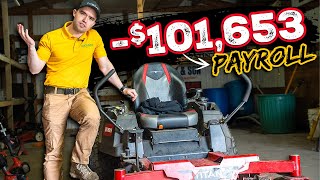
This on-site YouTube consultation follows Mike Andes mentoring Justin (owner of Kingdom Landscaping) and Jonathan Reed (supervisor) to diagnose a cash-flow emergency where payroll is at risk. Key issues: low pricing and high wage percentage (reported ~60–70% of revenue), equipment failures, understaffing/overtime, poor systems and KPI tracking. Recommended remedies include across-the-board price increases (Justin raised mowing price by $8; Mike suggests $10), firing or shedding low-margin/complaining customers, implementing SOPs/handbooks, tracking efficiency score and close ratio, and aligning incentives and maintenance to reduce waste and restore profitability.
Chapters
I don't even know how the f that happened.
I'm Mike Andes, founder of Augusta Lawn Care. We have over 150 locations around the world, and right now we're in New Jersey. Going to help Justin from Kingdom Lawn Care. Why? Because he's not making payroll.
Literally made $0. Not a single dollar. I'll have, like, nights where I just won't sleep because of all the cash flow issues.
Things are crumbling, and he's spending almost 70% of his revenue on wages.
I don't even. I don't know what to do next. I don't know what my next step is.
We actually need to get rid of customers.
It just felt like everything was over.
The alternative is that we keep losing money and the business goes out of business.
It's a dying industry because nobody wants.
More complaints this month than we got.
All of last year.
Oh, my gosh. Everything's falling apart. I don't know what I'm going to do tomorrow.
Let's see if we can turn this thing around.
Cool spot you got back here, dude.
Yeah.
Yeah.
I'm Justin.
Good to see you, man.
Nice to meet you.
Thanks for having us out.
Thanks for coming out. This is awesome. My name is Justin. I'm the owner of Kingdom Landscaping out of how and Freehold, New Jersey.
We're having a lot of cash flow problems.
We'll have making some good progress. We'll make some good profit. And all of a sudden, it's all gone. Like, last week, I had, like, six, 7,000, and then now we have nothing again.
And it's like, I don't even know how that happened.
Everything goes wrong.
One of our guys broke his arm.
On the job recently. My goal was to run the landscaping crew, but that's not going well either.
I'm falling behind on payroll.
So you got, like, this whole space is all yours then.
So I rent this out.
Okay.
I rent it out. The homeowner, she's there. She's not here right now.
Okay.
But I get a really good price. I get, like, 500amonth.
Dude, let's go. And you get, like, basically everything from here back?
Yeah, so I get from here back. She lets us dump clippings back there.
So you got this shop space, too?
Yeah, shop space, too. That's where all our equipment is.
Do you kind of run the landscaping crew? Typically?
That's how we do it. I have my mowing guy. He comes in.
He runs that.
Jonathan Reed. I work for Kingdom Landscaping, and I'm a landscaping supervisor. So I worked at a Previous company before, I managed 16 trucks, 16 trailers. So I came from a much bigger general thing. So I have the knowledge of a supervisor already, and I have the ability to be able to set guys up and do maintenance on machines and stuff like that to save him money so he doesn't have to spend it at the mechanic shop or whatever the case may be. I understand a lot from business standpoint and employee standpoint at the same time.
He'S in charge of all lawn mowing side of things. I'm supposed to be running landscaping, but realistically, I'm trying to get out of landscaping and just do admin sales and marketing. But what happened for him was he broke his arm. Literally, like, our first week of mowing, he fell off the trailer, and he broke his arm.
Two weeks ago, I was walking up the trailer gate that's behind me, and the wire mesh is kind of, like, flattened from the mower's going over top of it. I grabbed a hold of that shoelace right there that's sticking out of my shoe and broke it. While I went to break my fall and stuck my arm out. And instead of breaking my wrist or my finger, I broke the bone that's between your wrist and your elbow.
After that happened, he wasn't able to work for a while, but he was like, no, I want to come into work. I want to come into work. He hustles. He's a hard worker.
Obviously, he was half power.
He had one arm. He could only use the mower. But, I mean, he got a lot of work done.
Somebody got to pay bills, right? It's one of those things that nothing really slows me down. I've broken almost every bone in my body, so there's not really much that slows me down anymore.
It was tough because I literally thought I was down to one employee, and that would have.
That would have killed us.
And then I go out with the landscaping to crew. I got these two Spanish guys. They work with me.
So does he come in and pick up the mowing trailer?
Yeah, he comes in, picks up the trailer. He has the. He has the other truck. So that's one of the other things that's going on right now. I don't have my second truck because I had to sell it because it was falling apart. So right now we're using his personal truck, and I'm, like, paying it off as, like, renting it.
Look, it's super commendable that the employee is willing to give their personal truck to be used by the business. But honestly, it doesn't look super professional. When a truck rolls up, that's not decal, isn't painted, not branded, and has all these political stickers stuff being said, hey, look, I'm all for whatever you want to say in terms of freedom of speech, but I don't want to alienate customers. I want anybody to be able to buy from me. Red, blue, left, right, I don't care. I just want your money. Because all money is green.
Looking professional is super important. And how many mowing customers do you have right now?
165. So actually might be 170 after yesterday, but yeah, it's around 170. I think I hit capacity.
Like right now. You do the landscaping. That's where like you think most the profits coming from, Right?
Most the profit. So this month we had the most product we've ever made, which was pretty much the entirety of the problem from last year we made this month. And that was because I filled the entire schedule every day with these not.
Like bigger jobs, but like, one day.
Yeah, one day projects. Like, the biggest job we have was a two day project. But we've been getting these one day projects and I've been using them to pay off the bills.
And then at the end of the month, anything that's mowing, I just collect this profit.
So how much in revenue is mowing? Like when you build at the end of the month, what's 30,000? Yeah, got it. And so last year we did like 160, 170. Like, in terms of revenue, what do you think this year is gonna look like?
I don't think it's gonna be lower than 300. This month we did 55,000. I included the landscaping jobs. But then we're slowing down right now. So I'm only booked out about a.
Week and a half.
I'm trying to stay two weeks out every single week. Book another week of work.
Yeah, they're saying, like, you're slowing down already with spring rush, but like, spring rush is kind of just starting.
I know.
It's just like things are dying.
So I. I slowed down on my marketing because I had to keep money in the bank because like I said.
We'Re having cash flow problems.
So typically I was putting out ads. I would put out door hangers. My door hangers have crazy good returns. But then I just stopped because I, like, I couldn't afford it because I'm like, I need to pay payroll. Like, payroll's coming up and then I have to do this.
I have to pay for this. We have the mower break.
And I was like, everything's a mess for me. I think the main issue is I just don't know where to go from here. I've been spending a lot of time, like, working on getting my sales up, and then, like, I haven't been making really much money off of it. I've been having low margins, and I figured, I mean, I should ask someone who has a better idea than I.
Do at what to do in this.
Situation, because I. I really want to keep growing, but I just feel like I don't even. I don't know what to do next. I don't know what my next step is. And then, obviously, all the cash flow issues and not knowing if I'm gonna have enough money in the bank the next day to make a payment on something or make payroll or whatever.
You know, what happened with the one guy that owed you seven grand, and he needed to get it before the next day for payroll?
He got it.
He got it.
Yeah. I think I put that in the video. That was. When I sent you that video, that was like, the bottom of the bottom. I was like, oh, my gosh, everything's falling apart. I don't know what I'm gonna do tomorrow. And then things started working out. I called the guy who's like, oh.
Yeah, I got the cash. Come pick it up.
I was like, all right, thank you. And then we were all good there, but that was, like. It was really bad.
So since then, the truck. You've had to sell the truck, too, correct?
Yeah.
So we had the truck broke down at the beginning of March. I was like, crap. So I sold it for, like, two grand. And then John, he came in with his truck, and he's like, yo, if you want, we can use my truck. You could just pay me, like, whatever by the mile or whatever, and then I'll drive around with my. Like, that would make my life so much easier.
All right, cool.
And so, like, for now, John and is it one other person doing all the mowing?
Like, yeah, so it's John and Stan. Stay. Actually just pulled up now. I'm looking to hire. I'm trying to hire another guy because they can't finish all the lawns with just two guys.
You're going to get red lines. You're going to get burnt out. You're going to sometimes hate your life because of the fact that you got to come in us another day of 30 lawns with two guys, or it's another day. But Justin's leniency also kind of is helping us a lot too because he's not holding his foot on my neck saying, you got to do 30. If you get 20 done, I can, you know, push it back. And we have an open day and a schedule for that. For right now.
We get three guys on the crew. I think we can easily do our 30, 40 lawns a day, whatever it is. But right now it's just them too. And they're just, they're hustling. I mean they're doing great, but it's like, then I'm paying overtime because they're working extra. But you know, like if they're at.
Capacity, why would you not just raise prices?
So that was, I was going to.
Actually ask you about this because I.
Knew you were going to say that.
Because I watch all your videos or whatever right now. We've been getting a lot of customer complaints. There's been issues. I've been screwing up on the admin side of things because I'm constantly in the field. I feel like if I raise prices, I already have customers that are like iffy about me. They might just get super mad like, oh, he screwed up my lawn and he's raising my price and then write a bad review. And then just like that, I kill.
My Google profile like that. I knew that my issue the whole time has been pricing. But I wanted to see if I can get more information that besides pricing that would help me. And I think I got that with really. I think it comes down to like the employees, the systems that he's gonna, that he's gave me are gonna be, it's gonna be really helpful. But my main problem was literally, I know it's been pricing. I just haven't raised it yet because I want to get through this first month. But now I'm, I'll probably raise prices tonight.
I'll send out an email.
It's hard to even run a three man crew with the capacity that you have and be profitable. So if you raise your prices and lose 30% instead of 200, if we had 150, you could do that with two guys. And that gives you a chance to feed your employees that work hard and take care of your business. On top of that, if you need another guy, you can also afford that and also be profitable as well. I'd rather cut 100 lawns that are paying you good money than cut 220 lawns to make the same you're doing with 100 lawns.
But if you get another employee and get 200 mowing customers, the Same thing is going to happen at a larger scale. Yeah, like if we're going to have complaints, we might as well make money doing it. If you go from 165 in terms of mowing customers or 170 and then you hire another person, you're like, okay, great, I can get a 200. And at 200 you're going to have more complaints.
Right now what I've done so far is I've raised my base price for, for new customers. So anytime a new person calls up. Originally our base price was 45. I just raised it to 50. And I was like, I don't care if your property is the size of this shop. 50 bucks. Like, because I'm just trying to slow down the leads because most leads we're getting our lawn care and I'm looking.
To get more of these bigger ticket jobs.
But if you raise prices on 170.
People, I did the math. It's a lot more. It's like no extra work.
How much, how many people do you think would leave? 10, 15?
I'm thinking about 20 or 20 or 30.
And then how many if we're getting what, five, 10 new customers a week.
Yeah, it's true.
So within three weeks we're gonna replace them all with higher paying customers and the other 150 that stay.
Yeah.
Are all gonna be a higher price.
Yeah, see that's, I'm fine with raising my prices. My only concern is that I would get bad reviews. Like the people would be saying like, oh, he screwed up my lawn and then he just tried to raise my price.
Great, we'll go get another hundred reviews. They're all five stars, I guess.
Yeah.
Like, you hear, you see all the bad, the dirty laundry and all the behind the scenes, that's bad. So like it's, it's easy to get in the echo chamber. Like there's all these people there. It's like, look, there's probably five or 10. They're the ones blowing up your phone, sending emails. Let's raise prices and get rid of them so that you can just focus on the 95% of people that are happy with you. And because you have a higher profit margin, you don't have the money to actually serve them better.
Yeah, it's true. We'll be spending, we'll be able to spend more time on the property because.
Get higher quality guys, better equipment. You won't have trucks breaking down.
I'll have like nights where like I want. I just won't sleep like at all. Because I'm like up, like trying to figure out how I'm gonna dig myself out of a hole. The time that when I sent out the video, that was one of those nights where I literally just didn't sleep. I was just at my office and I was just writing down numbers. I had a notebook, I had my calculator, my computer. I was like, what can I do to fix this? The top thing was raise my prices. I'm scared to do that because I really don't want to tarnish my whole image by raising my prices. And then I get like 20 people that are like, yo, this jerk, he raised my prices and he screwed up my lawn. And then just like that, they write bad reviews. Like, if I lose customers, you gotta expect that. But if I get a bad review, I can't really. There's nothing I can really do about that. And then I just drop my Google rating and then that kind of sucks.
Let's say 20 people left. You could let your lowest performing team member go.
And then just like that, we're paying less in payroll.
It's simple. But like, price increases will help so much. And I understand, like, oh, raise prices and new customers, great. But that does not solve the problem. We have 170 that are currently underpriced. And right now you're looking at the mowing as like the stepchild. Like, it doesn't make us any money. It's never going to make us money. If we're making 45 or 50 bucks an hour, raise it. If we lose customers, who cares? Right now we're not making any money on that. If the business was in operation to like, look good in front of the community, yes, we want to avoid Google reviews at all costs. But if the business's goal is to make money, stay in business, be able to pay the bills and be able to grow, we got to be at least somewhat profitable. Like the fact that you have a crew member bringing their truck. That means every day there's an extra few minutes being added. Right. Then it's a matter of like, equipment, organization. Can that be improved? Right.
In part.
Right now you're not spending time doing the organization because you got to go out and produce revenue yourself. That's why price increases should fix this. You're not. Okay, I have some margin. I will spend the extra time organizing things. Like this morning there was three flat tires. Yeah, right. And like that is waiting for a blowout.
Yeah.
And that blowout is going to be two days down. And now the trailer is not useful. So like all of the preventative maintenance around equipment gets thrown out the window when you're just trying to get revenue to, to pay the next payroll.
Yeah, because all I'm focusing on is I need money to pay this.
How much do you think I have.
To raise prices by 10%, 5%, a dollar, a couple dollars?
So if Your average is 45 bucks, 50 bucks, just do 10 bucks across the board. Because I have more faith that you'll do that tonight than you going through and picking the bottom performers. And the top. Which ones are most priced? Like I would ideally want that. And that's like, okay, I want to raise them between 5 and $15 per based upon which ones are taking longer. And we can see over the course of budget hours versus clocked hours and a whole nine yards. Most people, because you're already working crazy hours, don't do that. And you'll just make, ah, we'll do it May 1st. Oh, it's past spring rush. I'll do it next spring.
Yeah.
And so I just want to focus on the fact that we are hitting capacity right now. We have way too much work. The guys are overworked. We actually need to get rid of customers.
Yeah.
So we were shooting to lose.
We need to lose 10 to 15 customers.
I think I, if I raise him by 10 bucks for every customer, I think I'm losing 30% of my customer base because I fear that a lot.
Of the customers are with me because.
Of my good pricing.
But it's not good pricing, it's low pricing.
Yeah.
If you're not making any money on and they leave, fantastic free up time to go do other things that are profitable.
So do you think that losing 30%.
Of my customers wouldn't be such a bad thing?
No, because I think 50% of your customers you're losing money on and the other 50% you're making money on and that's why you're breaking even. So if we can cut out the bottom 30%, fantastic. Also probably the ones that are complaining, being annoying, saying all sorts of things. And yes, they will leave one or two bad reviews and yes, you'll get five negative emails.
I think once he does what you said to do, once he hit his capacity, raise prices and lose that 30%, it'll be a lot easier on the staff and you'll be able to spend that extra five, 10 minutes on a yard.
Most home service business owners are terrified to raise prices. The reality is the vast majority of small businesses when they raise their prices.
Do not regret that decision.
Now, now, if you're really concerned that you're gonna lose all of your customers, here's what you can do. Just take 10% of them and raise prices on them. And I think what you'll find out is less than one or two of them will actually end up leaving. In fact, most people say to optimize for profit, you want to keep raising prices by 10% until you lose 20% of your customers. So if you're gonna raise prices, yes, some of them will leave. They'll likely be the ones that are causing the most problems and are giving you the least amount of profit on every single job.
I need to upgrade my tools because another problem we've been having is that every single week, a mower goes down. Every single week. I think I need to increase the quality of our work because I feel like it's not where I want it to be.
Part of the issue that we have is downtime. We have no downtime. And that's why I said to him, I said, even if we had one day that we did nothing but maintenance, oil changes, blade changes a couple of times. And that's another thing I said to him. I said, blades have to be changed for the amount of lawns you're cutting. You're cutting 200 lawns. You're talking about five sets of blades a week to just change them out and sharpen them.
Just on Saturday, we had one of our other mowers. So this one we got up running, and then they were driving around using that one. And then the other mower had, like, something. Something wrong with the oil, and I had to drive it up to this repair guy and then drive it right back to the mowing crew so they could keep moving because they didn't have a second mower.
We have a couple hiccups in place. Like our 54 inch at the shop, the hydro belt came off, and I had never done one. Well, the mechanic came to the shop and kind of showed me how to do it, and I put it on there. I rode the mower for two longs and it broke. I called him back and said, this isn't right. I don't know what the problem is. So we kind of trial and errored it, kind of buttoned it back together.
So I had to, as fast as I could, pick up the mower that was already damaged, bring it to the mowing crew, wherever their job site was, and have them do that. That took an hour and a half out of my day when I was supposed to be doing estimates and phone calls and all that stuff.
Okay. And so you feel like you're like, still having to manage a lot on the mowing side.
Yeah.
When you're running a small business, you're going to have problems come up throughout the entire day. It's easy sometimes to get confused between what is an important problem versus an urgent problem. In this case, the urgent problem is fixing the equipment. Something is broken down in the field. The important problem is sales and hiring to grow the business and create systems so that those urgent problems don't happen. Like, if you can focus on creating a system around equipment maintenance and sharpening the blades and changing the oil, those urgent problems will come up less often in your mind.
When you think about the business, what's kind of like your biggest stresses and like, the areas that you think, like, I know I need to change that, just haven't done it.
I think the biggest problem comes from me. I think that I need to be putting more into being organized.
I think our organization is not great. I just got a bookkeeper to manage all my books because before, like at the beginning of last year, everything was just guesswork.
I was like, I think I have.
This much money to spend. And then things like sales tax come up, and I'm like, crap, I don't have this much money to spend.
I've been working on getting handbooks for.
The employees because this month they've kind of just been, like, guessing what to do. There's no, like, standard. Like, this is what you have to be doing. So I just printed out handbooks for them and I gave them to them. I'm like, read this over with me here. Let's. Let's both read this. And then this is what you're going to be judged off of.
So we started with the. I'll run with it and see what we. What we can accomplish. So I ran with it for a little while, and we got a couple complaints about, you know, grass being on the back patio, stuff like that. So Justin said to me, he goes, I'm going to give you an sop. You read it over and tell me what you think. An SOP that for cutting grass is kind of senseless in a time with guys that have experience, because obviously cut wee, whack, blow off is a simple concept to understand. It's just getting into motions of things.
I think if I can get take a hold of that, I can make sure we're more profit, because I can see like, okay, this is where we're losing money. This is where we're making money, blah, blah, blah. But right now it's kind of just like I think we're making money here.
What is the measure of success of the handbook?
What do you mean?
What are you going to measure to see whether or not making the handbook was a success?
See, that's a good question.
Like as of right now, I would kind of just be guessing. Honestly, I'd just be like, oh, it looks like they're doing well.
One of the things that was going.
On this month was we got more complaints this month than we got all of last year with these new guys. We got a total of I think 30 complaints just this month. I'm taking the blame for that because they didn't really know what they were basing off of. So what I would do is if I'm able to see that this month I haven't been getting called out to.
Like, yo, Justin, can you come pick up this? Can you come do this or can you come back to this lawn? Then that's a good metric. Like we're making progress.
We're making, we're being more organized because the amount of times that, that I've been having to come out to a property at 7:38pm after we finish working.
To like weed whack something because the.
Customer was like, oh, this is terrible.
Blah, blah blah, and I have to.
Go back out there and fix it when the mowing guys are supposed to be doing that. Like John's job is to make sure that I don't have to look at lawn care. All I'm supposed to be doing is selling big ticket jobs and making sure the jobs are done right.
So why if someone makes a mistake, do you go out and do you fix it?
We don't have the time to send them back out. They've been doing a lot of 10 hour days, 12 hour days. And it's like, I can't be spending all this overtime money doing that when I could just be going out and.
Doing it myself right now. They're not super efficient.
No.
So it's a matter of we need to incentivize efficiency and we need to incentivize quality. The quality aspect. Like in the perfect world, do you have pay for performance? Right. We're a ways away from that because honestly, your pricing is so messed up they'd never make any money.
P4P stands for pay for performance. All it really means is you give a percentage of the labor revenue to the employee. So the harder they work, the more money they make. Now they're incentivized to do a good job and do it efficiently throughout the day. But the problem is, if your pricing is really low and it's too low and you're giving a percentage of that to your employee, you're. They're not gonna make much money. There's gonna be no incentive for them to work faster.
Then you gotta have some sort of quantity metric, like speed and efficiency. So you could be like, okay, guys, it is a matter of how many budget hours you get done in a week or your efficiency score. It'd be an easy thing to track. So you could just be like, hey, at the end of every single week, if your efficiency score is over 80%, you're gonna get an extra 200 bucks.
I genuinely think the problem that we.
Were having with employees this month was my fault. I think it was because I wasn't doing a great job at explaining what I need done. I think the efficiency score, that's actually the first time I've ever. I don't know if he's had it in other videos, but I pretty much seen every other video.
So if you're like, Justin, and you've watched all my videos, but you don't know what efficiency score is, thank you for watching. But let's go over it again. Efficiency score is a great way to know which of your team members are the most efficient and which of your customers you need to raise prices on. Efficiency score, the numbers are budgeted hours. In other words, how long do you think the job is going to take divided by clocked hours? In other words, how long does the job take actually take? If you divide that out, you're going to get a percentage of the day that's actually spent doing work versus just drive time, unload time, and being unproductive. That is wasteful.
I have never heard efficiency score. And I was like, I feel like that's a great way to track it.
Especially if I have, like, I'm going to get like.
I might even choose this whiteboard. Put a whiteboard up there and be like, this is your guys. Efficiency score. You guys do good, you get a bonus or whatever it is.
The incentives he provides, like if you're in uniform for a full month, he gives a $50 gift card to the guy who never missed a day with his uniform. Incentives of, you know, no complaints. You know, I give you 25 bucks at the end of the month so that you guys don't have any complaints. That's really hard to do when you're cutting 225 yards a week kind of hard to do, but we do it. Besides a little miscellaneous complaints like, oh, you forgot 10 clippings on the back porch, or something like that.
Because if you say, oh, well, if we get a, you know, more jobs done in a week, well, yeah, they can do that. And they're working into overtime and working longer hours, and then you're just giving them a bonus on top of that. I want them to be efficient, right? The real money is gained in cutting out waste stops at the gas station, coming back to the job sites, coming back to the shop, things breaking down because they didn't check the oil, things like that. That's what kills you is the waste. And I usually believe there's 20 to 30% of waste in someone's day that they can cut out if they're just. Just incentivized to do that.
This month, like I've said, we've been having a lot of problems, and I hired John to, like, stop those problems.
When Justin said to me, he goes, I have 200 Mellon clients. I'm trying to build a landscaping company. I did $200,000 in sales last year. I came from a company, did $5.66 million in sales. So when he said that, I said, justin, I've done everything. We talked during the interview process, and it was, I want to do Christmas lights. I want to do fertilizer. I want to do this, I want to do that. And I said to him, I said, justin, everything you're saying, I've done already.
I'm not blaming him for any of the issues that have happened because I feel like I haven't been doing a good job at explaining what, like, this is what I want done. So I feel like an incentive. Doing some type of incentivizing would probably help a lot more. I didn't really put any incentivizing for no complaints. I just kind of said, like, don't let it happen.
Pretty much, if I can't play around all day, I might as well not even live anymore. If you can't laugh, there's no point.
Look, if your pricing is too low, you're gonna get a lot of work.
And they got all these lawns that.
Are still pouring in because their pricing is so low and their close ratio is very, very high. However, if you're not making any money on the lawns, you're not going to be able to afford to go get the employees or the equipment necessary to do a good job on the property. And because of that, you're going to get A bunch of callbacks. That's what everyone's looking at. And we're all concerned about the callbacks, but in reality, it's because you don't have the right equipment or the right employees. And the reason you can't get those.
Things is because you have the wrong pricing. Well, like, there has to be a measure of success. A team member wants to know, what does good look like? We have no definition of done. What does good and what does done look like? This shop space. What does good look like? What does it should it look like in terms of organization? Okay, what does a good team member on mowing look like? How many jobs they complete a day? What's their efficiency score? How much do they make? Like, that definition is required as a measuring rod of performance. Right now, you have no way to measure John. You don't know if he's being efficient. You don't know if he's being profitable. He doesn't know if he's doing good from one day to the next. He just knows. He shows up, he picks up the mower, and he mows as many lawns as he can in the day. And he comes back, like, 20, 30. Somewhere in there, we're gonna mow. But if we instead said, okay, at the end of each day, you're gonna budget hours. You guys completed 14 budget hours of the crew. There was 16 budget hours clocked. 14 divided by 16. Great. You guys did, like, an 87% efficiency score. Great job. And you track that. They know a definition of done, definition of good, what it looks like.
As a leader, it's important for them to be able to measure their success against what the definition of success looks like and an actual target for them to be able to run towards. What does it mean to be a good employee? How do you actually get to the next stage of your career and make more money? What does a lawn supposed to look like after every single job?
When I look at the numbers, the biggest problem I actually see is that, like, almost 70% of our revenue is going to wages.
That was as of last year. Yeah, that was when I had this one guy who I was really, really overpaying. And we didn't have the work to put up to keep up with it. I was paying him. I think I was, like, $300 a day or something. And he would work, like, seven to eight hours, depending on where lawns are.
But.
And then he started asking for more, and then I was paying them cash, so I had to eat the taxes at the beginning of this year. And that really was not fun.
Let's measure what percentage of our revenue is literally being spent on just straight wages.
Okay.
Because I know it's 60, 70%, you're not going to make any money. And the only way to fix that is either A, raise prices or B, make the team members more efficient. And so you can measure efficiency by simply like what percentage of my revenue has to be paid to wages. My concern is like, if there's no accountability, they have no downside. Really, like if they're still getting paid to go back, like who cares?
You know, you think I should just.
Say like if you go back, it's, it's not on me. We're not paying.
Just, just take away upside. So I'd say something along the lines of, okay, I don't want to go back and do jobs. That's something I shouldn't be doing. If I have to do that 30 times in a month of complaints. Yeah. Okay guys, what we're going to be doing is at the end of the month, they're going at 500 bucks. For every complaint you get, 50 bucks comes off.
Okay, so I see you're saying give.
An incentive and the complaints take away from the incentive. I like that. That's a good system.
You know, if they don't make any mistakes, make an extra 500 bucks. Even at 60% of revenue going to wages just will never make money. Okay. You can't. And I'm assuming you're probably not taking a paycheck out of that.
I started to in the beginning of.
The year and then I haven't been.
The past the last pay period. I didn't get paid before that.
I was giving myself a paycheck. I don't give myself much. I give myself maybe like 2,3000amonth.
So when, when 60 or 70% of revenue is going into wages and you're still a labor revenue producing team member that like it probably tell it's, it's really bad. Okay. So I'm pretty confident saying pricing is actually a problem.
Okay.
Because at 60 you will break even. By the time you take out materials, you take out overhead, you take it take out wages. Like just wages. Let's say you're paying someone 20 bucks an hour. By how you pay taxes, you're looking at 25 to 30. Well now that's 50% of your revenue. And that's again $60 per hour is time on the job, let alone the 20% of waste of them driving, loading up training, meetings, etc. So now your effective Hourly rate, like how much they earn divided by their clocked hours is probably like 45 to 50 bucks an hour.
Okay.
Because you're charging $6 on the job site and they have 20% waste, you're really under 50 per hour. And so then you take away their $25 per hour and we're already at over or 50%. And it's assuming they hit budget hours like every single clockwork.
Whenever I go to a struggling small business, I can usually look at the percentage of their revenue they're spending on wages for their employees out in the field and have a good understanding of whether or not they can be profitable. Ideally, under 50% of your revenue should.
Be going to wages out in the field.
That's a good benchmark. But all of these metrics and all these things we've talked about, Justin really all come back to one thing.
Thing.
The pricing and his prices are way too low. And for the vast majority of us, when we're struggling with something in our business and we think there's a thousand different problems, it actually goes back to just one thing. I would personally say at 75% of the time when it comes to small businesses, it is pricing. And it's like, it's so simple. You mean just raising my price didn't solve all these problems? And the answer is yes. It affects every single thing in the business and trickles down across all areas of the company.
Like, what's your close ratio? Like if you get like, four estimates? Like, what's.
That's what I'm saying.
I haven't been tracking that either. My. I have not been good at tracking any of my KPIs. So if I had to just. Just guess, I would say if I send out four estimates, I'm booking two.
So, okay, so 50%.
Yeah.
Okay.
So I remember you saying if. If you're closing all your jobs, that.
Shows that your prices are way too low, Right?
So I've been trying to actually lower my close ratio by raising all my prices, but I haven't been doing that with the current customer, just with the people that are calling and coming in.
When I started, I think his close ratio was like 70% of what he's selling. We go off of profit. So everything is a profit margin. So if it's profitable, it's a good thing. If it's not profitable, obviously it's a bad thing. So he's big on the whole budget side. But like I said to him, I said, budgeted time is great to have, but it also has to be done in an efficient manner. So if you have budgeted hours on a job. I just did one yesterday. He budgeted for two guys for two days. So we'll say two 10 hour days. So 20 hours apiece. So that's 40 hours he budgeted for. I did it in nine with two guys.
Because then what you want to be able to do, at least do is just run a report at the end of the week, at the end of the month. Okay, how many was sent, how many were accepted then I know my close ratio, because then you can track that with confidence.
About pricing, the efficiency, rates of measuring things is another kind of issue that we have. Like I explained to Justin, when you go to a job, you have to be able to measure square footage. You can't guesstimate. It's not going to work. Especially when you bid something and then you end up being wrong. Thank God that the couple of times it has happened, the customer has said, all right, I'll cover whatever the difference is. You can't be off by mass quantities. You know, it's different to be off by $25 worth of material, $50 worth of material, but not 600, $800,000 worth of material.
One of my other goals is I want to keep the landscaping. I want to keep the. The second crew constantly doing landscaping jobs. Is there a certain effective way of marketing that I can do that'll keep these leads coming in? Because even mid spring rush, I'm having problems with lead flow. The only leads I'm getting are like, hey, can you cut my lawn this week? And it's like, well, we can't book you right away. I need like these bigger ticket jobs.
Marketing for bigger ticket jobs is a lot harder than marketing for mowing customers because, like, getting my own customer. I think my average customer acquisition cost right now is like $40 or something. And it's just like, you spend that money and you get a customer, you're done. But for these, you have to, like, spend the money to get the lead. The lead costs more money if it's a warm lead. And then you have to actually sell the leads. You have to be good at sales. I'm like, mediocre at most. Then you have to be good at selling them. And then if you sell them, you get a pretty good freaking return. But it takes a lot more. It just comes down to if I can sell properly. So I have to work on my sales. And then if I'm good at selling.
Stuff, I'll be right and do most of your Leads right now come through your website? Do you do ads? Like, what's your marketing?
Most of them come through my website. I've been starting to get a few.
With calls when I started running Google Ads. I think another reason I'm getting more mowing leads is obviously. Cause the first thing you see when you go on the website is book your mowing right now.
Book your mowing. Yeah.
Yeah.
Then it's a matter of how do you make it easier for projects? Like, right now, you make it really easy to get a mowing estimate. Hence, you are getting four, five in one day. Yeah. Fantastic. If the focus was landscaping, it's a matter of, okay, let's not make it about mowing. Let's make it more of, like, where they can choose between mowing and landscaping in the form. Okay. Right. So it's like, they still like. I like the fact that, like, right when you get. It's above the fold, it's right there. But can we make it more where it's more landscaping friendly?
Yeah. The reason I had that was last year. Last year, 100% of the revenue was lawn mowing.
We literally did maybe.
Maybe $10,000 in sales worth of landscaping jobs. And that was literally just in spring. And then we had our fall cleanups at the end, but we literally did nothing.
But in part, the reason you're moving away from that, because it's working. By the way, you got five new jobs yesterday.
Yeah.
The reason you're moving away from that, because you think it's not profitable.
Okay.
So I believe when you raise prices, you're like, oh, this mowing thing is not so bad.
Yeah.
I don't have to be on the job site running materials. I don't have to show the crew the job. There will be way more systems required going to project. Right. Like, for example, there should be a video made on every single episode.
I've been doing that.
Yeah, you've been doing it.
I've been doing it.
That was the first thing I implemented this year.
The reason I haven't been able to.
Use the video as much is because the guys I'm working with don't know any English. So I have to be there and I show them. I point to. I actually like.
What I'll do is I'll touch each thing we're doing.
Because when I was just pointing, oh, do this, do this. They didn't understand. So I'm like, this, do this. I'll grab the bush. This bush has to be trimmed.
One idea is that Justin might be able to move John from mowing over to the landscaping department. That way, John has all this experience. He's done this before. He can talk with the customer and make sure that Justin doesn't have to be on every single job in order to be able to communicate with the customer. And then Justin will be able to go fix the mowing side of the business that is really lacked with quality and consistency because of the churn of employees and the lack of attention from the team members he currently has.
Because if we know that the projects are profitable and we're going to raise prices from 60 to 80 on the. On the landscaping side, then we actually know they can get done. But then again, as you scale, you're going to hit all these issues that you being the bottleneck for everything right now for mowing, you're still micromanaging all the callbacks. That's impossible if you have 500 customers.
Yeah, right.
If you just take everything to the extreme, you'll figure out where all the bottlenecks are. Like, if what you're doing at 170. If I had 500 customers, can I do all the callbacks? No. If I had three project crews, would I be able to go and show them the projects in the morning?
No.
So figure out those bottlenecks now. Otherwise, you'll just hit that extreme eventually. As you grow the business, always ask, like, if this was taken to the extreme, what would break? Otherwise, you're just going to constantly, as you grow your business, be banging your head against the wall because you're like.
Why can't I make money on mowing?
Well, because you used to be out in the field mowing, and you made sense of it. And in 2021, you're like, man, this is good money.
That's exactly what it was.
Then you hired people, your margin gets massively compressed, and all of a sudden, the pricing at 40, 50, and 60 bucks an hour doesn't work. And she's like, mowing doesn't work. I'm gonna go to landscaping. And the exact same thing's gonna happen when you stop managing those jobs. You're gonna get an operations manager or a project manager here. You're gonna get a guy to be able to manage those guys. The Hispanic dudes that can't speak English. He's gonna come along and take all the profits that are currently in landscaping. You're like, there's no money in landscaping.
Every single business has a system in place in order to operate. The thing is, if you don't have systems outside of yourself, it means you are the system. And you being in the business and having eyes on every single aspect of the company and every single employee and micromanaging them, you are the system. And so if you want to build a business that can run without you, you're going to have to build systems in place that do not include you. Procedures, handbooks, checklists. These are the type of things to be able to make a system that, that runs without you as the owner.
I know it's basic. The things that is like, just raise prices, it'll solve 90% of the problems. The other 10% is like knowing your numbers in terms of efficiency, score, close ratio, and then holding people accountable to them. Right. And then thinking about, okay, if I'm going to grow this business to 500,000 this year, what's going to break? Because that's a tripling from last year.
Yeah.
What's going to break is going to be you will not be on every, on every job site. You will not be able to talk to the customer. Like when I pulled up, she was talking to you. That's created because you are the bottleneck. So it's like, how do I remove that? Okay, well they have a video and I don't show up to the job site. Well, why can't that happen now? No one speaks English. Okay, we know our next step. So just always work it backwards to like, why is this not happening? Oh, because of this. Okay, why can't I hire a person right now? Oh, we don't make enough money. So raise prices. Right, so you raise prices. You can now afford to hire the person that can speak English on the job site. By having them there, you don't have to show up. That gives you the time to do admin, that gives you time to organize the shop. That gives you time to do the efficiency score for your team. And that's why it's a trickle down. That's like prices just affects everything really.
Just the only bottleneck right now is pricing.
Well, it's just going to move you to the next bottleneck. Right. Because what's probably going to happen once you move pricing up is you're going to have a hard time filling the schedule.
How do I account for that?
And it's leads. Right. So like when we look at the 4L framework, how to talk to you about this. So first off, we have a problem and it's like liquidity. We don't have enough money. That's where we're right now. Once you solve that problem, usually by raising prices, you Have. Okay, we got money. Now the next part of the 4L framework is leads. That's. You're just going to hit that bottleneck immediately because now as soon as you raise prices, you increase liquidity. Great. We figured out that bottleneck. Well, now we can't book as many jobs because our close ratio went down. So now it's like, okay, well what are we doing for leads? What can we do for SEO? What are we doing for Google and Facebook? Are we spending anything on right now in terms of marketing or not?
No, nothing. Actually, I just started running Google Ads at like $30 a day.
Now we start optimizing for that because I'm willing to spend 500 or $600 a month if I can make $5,000 extra in terms of profit because I raise my prices appropriately. Okay. So then the leads will become the problem and then this will happen. You're figure out leads. You're like, okay, now we're still getting five a day even with my higher prices. And now we're at 180 or 190. We got to get another crew. Now the next part of the 400 framework is labor. That's your next bottleneck. Because you've had John for a long time, you've had these other guys. You've done some people kind of under the table. It's like, we got to figure out labor. Right? And then you're gonna fill out labor. You're gonna have this great manager. You're probably growing the business 800,000 to a million. Things are going really good. And guess what? Then the next last one, leadership. Now you're going to hire someone that can actually lead. A team meeting, can do one on one meetings, can read an efficiency score. Look at close ratio, understand the numbers. Different skill set, different bottleneck. So it'll never be like where the bottom business, like works perfectly. You'll just keep going in that cycle.
Yeah.
Because now you hire that leader and guess what? They cost a lot of money. Straight overhead, you know, that causes a liquidity problem.
Yeah.
And then you start the whole cycle again.
Okay.
As you grow the business, it just, it's just going from one bottleneck to the next to the next to the next.
Mike has been in this for, I don't even know how long.
Years.
Years. When he was 13, he's.
He started, he said he started.
He'll come out for free and do it.
That's why I decided I'm just gonna take it. When I was a mess and I, I couldn't, I didn't know what to do. I didn't sleep for like two days straight. My dad told me. He was like, you can't do this on your own.
There's better people that can do it.
And then I saw the Mike Andes video and I was like, why not? Like, he knows what he's talking about.
He's clearly done a good job.
Why not talk to someone who knows what they're doing rather than just me trying to just piece everything together myself? He's been through all the mistakes. He's learned what works and what doesn't. Why don't I just copy what he's done? And then I cut out those six years of failures and I just, I shortened it down. So now I get to the next failure and then I'll deal with that after.
So I have completely stopped all marketing. We had a lot of PR issues where people were like commenting on our ads and stuff and saying like, don't hire this company because of issues that were going on during that time. So I hired a new guy and these issues haven't been happening anymore. But I stopped all ads until we can fix the problems in the business business. John was the guy who was causing the issues, which sucks because he was. He's such a cool guy. Like, he's friendly, he was funny, but it's just like, like I genuinely, I enjoy like, like working with him, but I just, I had to do what was best for the business before he even got injured. We were having these issues like if.
If I had some. If I could show you some of.
The pictures that we were getting from customers. It was like if you spent more than a month cutting grass, you would know that it should never look like that. Most of his experience was in fertilizer, so I don't think he had much in actual mowing. He was working with his dad mostly.
I didn't do exactly. I raised him by $8. He said 10, but I was like.
Let me do $8.
Cuz I felt like iffy with 10. I raised everyone's prices by $8 per cut per person. It was about 115 people I had to raise prices for. Of those 115, four people left. And everyone else is still staying on. And I probably gotten like 10 new customers since then.
I'm still doing the whole landscaping side of things. Most of those messed up, like quotes and stuff that was on me. I didn't calculate things right.
I didn't calculate the mulch right or.
Whatever it was like.
But it's like because I. I keep a higher margin on the supplies. Even when I would screw up an estimate, I would still make profit. Just not as much as I could have, but I still managed that. However, this new guy, since he does pavers and all that, now I'm looking to branch into those different fields because he has experience, and I have someone.
Who could do it.
So.
So my goal for this year is I really want to grow the landscaping side because now we have the two trucks. We bought the second truck. Finally, we can get double the work done. But we just.
And I have.
I have the employee capacity, too.
I have guys that want to do.
It, but I haven't had the time to market. So now I'm gonna slowly, maybe like, four or five days a week, landscaping jobs.
That's typically my goal. That's. That's my goal this year.










