NO RESPECT... The Dark Side of being a Teenage Business Owner
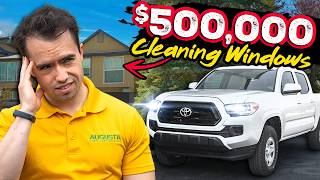
Mike Andes helps 19-year-old Kai fix Homey Window Cleaning, which has no P&L tracking, high employee turnover, and cash reserves near zero. The plan: move to QuickBooks, convert contractors to W-2 employees with better pay, focus only on recurring window contracts, and build toward $20k in cash and a second truck within six weeks.
Questions this video answers
19 years old.
Approximately $250,000.
$500,000.
Scale the business to $1–2 million and sell in about five years.
About $3,000–$4,000 (quoted by Mike as '4k').
Chapters
Today we're in Utah visiting Kai from Homey Window Cleaning.
If Leslie's given us a problem, though, call her, text her, blow up her phone and get a yes or no. I don't want to worry about her anymore.
Kai is 19 years old. He is shooting for $500,000 in revenue this year.
My goal is in five years to.
Sell it, but cash is low and he doesn't know his numbers. Why don't we have any revenue reports?
I didn't pull it from my last software. Super big mistake.
Kai had six employees last year, but only one lasted five months, and he's gonna leave in three days. Churn was a big problem with your team last year.
I was hiring a lot of older guys. It's harder for them, like, listen and work. For a 19 year old, our training wasn't very good.
I've been here for about one and a half, two weeks. We offer at least like, eight to 10 different services. I'm just in the middle of learning them all.
That stinks if it takes me two months to train them on all these services. Also, very few of his customers come back after their first service.
Our service, when we were working together wasn't the best. We weren't getting many repeat clients. We just didn't seem very legit.
This is the business turnaround show. My name is Mike Andes. I'm the founder of Augusta Lawn Care, where we have over 175 locations around the world. And I travel the country fixing struggling businesses. Our goal is to give Kai a strategy to turn around the company in the next six weeks and take control of his business.
I don't have any sort of P and L, I don't have a balance sheet, and so we're kind of flying blind. We're also just taking at his word. The fact that he did $250,000 last year, so it just makes it more difficult to actually diagnose the problems because I can't see how much is he spending on labor, how much is he spending on market.
There's so many holes in his story. I just don't know yet.
What's up, dudes?
How's it going?
What's up, man?
Nice to meet you, Kai. Yeah, I'm Kai. I'm the owner of Homey Window Cleaning. My passion is cleaning windows. I do love the managerial side of it, the sales side of it, and, like, just kind of the problem solving mainly is what I love.
What's up? I'm Marlon. Good to meet you. And I'm Mike.
My name is Marlon Jones. I've been here for about one and a half, two weeks.
This is our van.
Nice.
And this is all the stuff that we keep in, like, day to day, I guess.
The pressure washing. Do you rent that right now?
That's at the church. We're not pressure washing today. We're just window cleaning.
Got it. Do you own the pressure washing?
Yeah, we own it.
Okay. Okay, cool.
We got a trailer.
Sweet, dude. Let's go. And then you just put this out whenever you're out and about.
My goal is in five years to sell it. We'll build it up to, like, 1 to 2 million. I've always been, like, super fascinated in real estate and building, and so I want to kind of get into construction and building with that money. I think everything today is pretty straightforward.
It's all just.
Yeah.
If Leslie's giving us a problem, though, call her, text her, blow up her phone and get a yes or no. If she says no, like, yeah, I don't want to worry about her anymore. All right, thanks, guys.
So what got you into window cleaning?
Social media. I saw on social media some guy just kind of boasting his numbers, and he didn't seem too legit. He was just kind of doing it on his own. And I was like, I think there's a lot of growth in this. And so I started it just to kind of prove the concept with my buddy, just, you know, us knocking doors.
So was that Max that you started doing it with?
No, no, no. It was my other friend. And honestly, like, our service when we were working together wasn't the best. We weren't getting many repeat clients. I ch to just kind of move a separate way and then hired a guy off. Indeed. And, like, in the beginning, it was like my job was to knock doors and fill his schedule. Went pretty well. Some of my buddies wanted to come and, like, work for me, and so we just kind of grew our door to door team. I started with my buddy. I saw, like, a TikTok on it, Saw some guys making a lot of money, so I thought I'd give it a shot. That really motivated me to be like, I can do this myself.
I assume that most of your equipment you can keep in the van.
We try not to, just because at the spot we park, like, we've gotten gas, like, taken and stuff, so we don't want the van to get broken into.
So you keep the van separate then?
Yes. Yeah. It's parked at a church that we clean quarterly, and then in here, we keep all the stuff. I Meet the guys here every morning and we just kind of like go over the day. We've got our tanks. I'm actually working on a couple at my house right now.
Let's go. You actually don't need a ton of stuff then.
We're kind of trying to add more services. And so with that, like, we added pressure washing, driveway sealing. We need more equipment for that, but we don't need a lot of stuff. Like, our shop is definitely not too big right now. Once we get more advanced, that's probably when I'm looking to get into like more of a shop space.
Two years ago, you were doing like basically part time, right?
Two years ago it was pretty much me and my buddy just like, I would knock doors, he would clean windows. And then last year is when we really kind of move into, I guess, a business where I wasn't the one out on the doors in the very beginning. It was just me and my buddy knocking in the summer. So school wasn't really hard then, but the second year I kind of saw the potential with it. I luckily actually had all my credits done my junior year, so I just didn't go to school my senior year. I finished up all my credits and graduated early. And then my senior year was when I really started to kind of hire guys on. And yeah, school wasn't an issue. And then this year I wanted to move to like zero door knocking. Just all marketing, all like branding and recurring clients. And so that's kind of, kind of our goal for this year is just to just start getting established in the market. It's been super awesome being able to bring my friends on to, like, help work with me. We'd all meet at my house, just kind of go over the day and then just go out and just make a bunch of money together. Having that opportunity for like, all of us to work together has been super, super awesome. And my parents always have clean windows too, which is pretty cool.
When does it start picking up? Is like this the time. It's starting to ramp right now.
The winter went pretty long this year. I think, like two weeks ago is when it.
It's still freezing.
Yeah, Max. Like two weeks ago we were still wearing jackets, right? Yeah, yeah, it was. There was still snow on the ground. It just started to pick up phones. Been going crazy, and I'm starting to realize that I can't be the only and all that stuff.
That's good. So then right now it's just the one truck. So if you have like two jobs, is all three of you Going in one truck or how's that working?
Yeah, so I'm actually not on the job sites anymore. It's just these guys, and we've got one van. I'm starting to realize that it's probably going to be more efficient if they start working solo just because our routes aren't condensed enough. And it's just we're wasting a lot of time with drive time. And so I'm going to get another truck pretty soon.
How far up do these go? 30ft.
That one goes 40, actually. The shorter one goes 40.
Let's go. We're doing this new thing where we actually give you a roadmap here.
There we go.
The homey thing is cool.
Yeah.
At first I was like, homie. Like, oh, like we're homies. And I was like, oh, no, I get it. It's a homey feel. I like it a lot. What we'll do is we'll kind of identify in the 400 framework some, like, here's the problems or opportunities and like, what's. What do we want to try to do in the next six weeks? To summarize the framework, we take liquidity or cash, and we go spend on advertising. And what do we do? We get more leads. When you get a bunch of leads and you turn them into customers, what do we need? We need more laborers to actually go do the work and a bunch of employees. But once you get 10, 15 employees, what do you need? You need more leaders. You need management to be able to run the business and continue to grow. But when you get leaders and you get people in overhead and doing office admin and all the rest of it, what does that cause? A liquidity crunch. Less profit margins. And this is the cycle that every business goes through to be able to grow from a liquidity perspective. My big focus is we just need to know our numbers more. We only have this bank statements, so it really doesn't tell me a whole lot. I don't have any sort of P and L. I don't have a balance sheet. Like, for all I know, I'm gonna walk in there today and be like, we don't have a leads problem. Because he said that he doesn't have a problem getting leads. Why don't we have any revenue reports? I just got a bank statement.
Yeah.
Very hard to come in. So, like, is it just a matter of you haven't had to spend enough time in that software yet?
I think I haven't spent enough time in it. And I didn't pull it from my Last software. Super big mistake. I forgot to bring that over.
Right now, do you have cookbooks set up? I would really recommend setting it up. Like right now as you begin to scale past 250. The reason at 250 you've been able to make it work is you still are like so involved. You're producing revenue, you're making sure the jobs are being done right. As you get to 500,000 and you're not in the field, like, you got to know where the money's going. And like right now we don't. Like, if I ask like how much you spent on marketing last month, we don't really know. Right. It was $1,000. Right. So like knowing what that was and then. Okay, what was the return on that? Like, only comes from having a good set of books. Yeah. I think whether you just categorize once a week on the weekend in QuickBooks, like all as the transactions come in. I would do QuickBooks ASAP. You got to know where the money's at. And then if you're in QuickBooks, you might as well just run payroll through there. So from a liquidity perspective, like cash in the bank right now, the problem that I see is like, we are low, but you have low expenses. And I know what it's like to be there. You probably live at home, so.
Yeah, let's go.
You don't need a lot of cash, but technically we want one month worth of revenue in the bank. Okay. So if we could get 20 grand in the bank, that'd be like most ideal. Just so you can breathe a little bit easier. You have the capital. If something goes wrong, you have the money for the second truck. Like right now we have what, like three or four grand in the bank? Ish.
Yeah.
So let's just call it like 4k in the bank.
That's an opportunity. So like in the six week plan, if we could be able to like get that even to 10, I don't.
See that being a problem at all.
We're going into spring.
Yeah. We're doing like 15 to $1800 in revenue a day right now.
Sweet. And leads are coming in, so let's just try to get it to where it should be. It's 20 grand a month.
Yeah.
So if we can get to 20 grand, 20k in the bank in the next six weeks. When it comes to liquidity in the 4L framework, we're trying to get at least $20,000 of cash in the business checking account. Now, typically I like to have at least one Month of revenue in the bank account and you're like, what about expenses? Or what about one percentage of payroll? Most business owners, including Kai, don't know their expenses. They don't know a lot about the numbers, but they do know their revenue. And so I try to get at least one month of revenue in the bank account for reserves. Right now, if you get at least 20,000 and make me feel a lot better right now, when it only has three to $4,000 in the bank, that would probably then give us the freedom, like a little more flexibility to go out and get the second truck. Are you financing that you think, or what are you thinking there? Are you doing? Truck, van.
I'm gonna get a truck and I'm thinking of buying it.
Cash.
I've got some money saved up that I know I can get back if I buy the truck. So probably just taking a loan from the personal.
Got it. So a personal loan getting the truck and it would be a pickup truck then.
Yeah.
And so is that so you can throw more stuff in there or do you want to stick with the van?
Yeah, it's nicer to pull the trailer because pulling it with the van is a bit sketchy. I think trucks just kind of look cooler. It's just kind of better for pulling the trailer. I guess when there's a lot of water in there, it gets heavy. All right, so then one truck and one van is probably good.
Okay, so second truck, we're going to be able to get that. It's very rare that I recommend someone actually go finance a vehicle or get a brand new vehicle and get it leased. Usually I say, hey, go get a cheap used vehicle. But Kai has already proven that he knows how to get customers. He's proven that he knows what this cost per lead is, and I would rather have him spend money on that instead of just going spending all of his cash on a brand new truck. Anyone can buy the truck, so why dump a bunch of cash into that then be cash poor going out and getting more customers? Yeah. So second truck in the next six weeks. That would then allow us to expand more. Okay, cool. That's liquidity leads on your site. Are we going to just actually focus on just windows?
I'm gonna run a pressure washing app because a lot of companies in Utah do kind of mix pressure washing with window cleaning. And I think that if we can make that blow up, that'd be huge. But I will take off all of our, like, extra, like, little services off of the website because I think that is a bit Distracting.
If you're getting a lead like From Facebook For 10 bucks, that's treasure. Ye like there's nothing else we should be doing but that initial thoughts are like, he like almost every other entry level home service that requires like has a low barrier to entry. I should say adds way too many service at the beginning. So he's doing pressure washing, house cleaning, gutter cleaning, window cleaning, landscaping, lawn care, Christmas lights. Like he's just adding a bazillion different services. And so I'm a big fan of having services during his off season, which is still he's having Q4 collapse. But I want him to focus ideally on two or three services because I can guarantee you in Salt Lake City, there is a million dollar window cleaning company, There is a million dollar pressure washing company. There's a million dollar gutter cleaning company. So like pick one of them and focus on that. If I had to look at like the whole business and we said like pressure washing window cleaning, what's the breakdown of revenue? Like last year it was like 250.
We just added pressure washing this year, okay, we've probably done five to ten jobs by far. Window cleaning, we did gutter cleaning in the fall, we did Christmas lights in the winter. That just absolute crashing burden. But by far, window cleaning, probably 90% of our revenue.
I manual is a lot more difficult because you have inventory, you have pro snow around that time of year. Right.
We actually got pretty lucky and it didn't start snowing like heavy till December. And so we installed October, November. But we just found that it's so price competitive here. Most of my quotes, they like, they're like, I got a quote for $2.50 per foot and we're trying to charge 10. I wasn't able to build enough value to like charge four times as much.
Basically, unless it is freezing outside, you can do the windows, right?
Yes. Yeah.
But then all your leads come in in the spring rush.
Right. Nobody really wants them done in the winter. But what we do is for our quarterly plan, when their winter service comes around, we switch to interior only.
Okay, cool.
And that's kind of like my pitch with quarterly. It's like we'll do three services on the outside. When they get dirty, winter will come in and do inside. That way both sides of the windows are clean.
So why are we adding pressure washing and house washing and the other stuff? Because it sounds like you can do interior still with the window cleaning. My thought is like, if we just focus on that, because even when I get to your site, it looks like you all those services and I'm okay with adding more services to your existing customers and upselling them them when it comes to like the dilution of your marketing, that's what I am seeing. Like even your Facebook ads and stuff. Like, if you're saying, hey, we do pressure washing, we'll do window cleaning versus just like we do window cleaning, we crush window cleaning. It's in the name of our business and that's all we do. And then you get way more. Like, your cost per lead will go way down because people like, they're a window cleaning business versus they're a handyman service. Like when I go to your site, I think like, okay, homie, they do everything in my home. They'll clean my house, they'll mow the grass, they'll do landscaping like that. Other services tab there will throw people off. Off. Most customers are only spending a few seconds on your website. So if we don't deliver a very concise and clear message very quickly, we're going to lose out on customers. Right now, when you get to homey's website, it's a little bit confusing because I got gutter cleaning, landscaping, lawn care, window washing, pressure washing, staining. Like, there's so many services he's trying to pitch instead, I just want to be the best window cleaner in this county. This is evidenced by the fact that more than 80% of his revenue is coming from window cleaning. So why are we spending all of our time and energy trying to market these other services? It's diluting our market marketing and it's confusing our customers. It makes you feel like you are just, I'll do anything.
Yeah.
And then it's hard to market. Like, we are the window cleaning experts. I just think that, like, if it made up 80, 90 of revenue, I would just like, let's just focus on that.
Yeah.
Like, yes, we can do driveway ceiling. Yes, we can do pressure washing. Like those are going to add more inventory, more equipment, training more crew members, which is the big problem.
Yeah.
Versus like we do one simple service. We wash windows. And we figured out a way to get customers doing that whether we knocking on doors or doing ads. And then we just like scale that. Because I don't think you have a seasonality problem because you can do the windows interior. That's like the kicker for us. As soon as it goes cold outside, we don't do anything inside. So we have to do Christmas lights. We have to figure out something else. But like if you get a thousand customers on window cleaning, that's an interesting business. It's recurring. It's simple services. As soon as you get into, like, pressure washing, there's a way more liability. Like, if you increase your liability insurance for pressure washing. Yeah. No, as soon as you say the word pressure washing to an insurance agent, everything goes through the roof.
Yeah, that makes a lot of sense. Like, if I'm marketing at all, I won't seem like a pro in any of them.
Once you add another service, let's say you're doing a million and you're like, okay, I want to add pressure washing. Well, now that next year it becomes 150, $200,000 business, and you have one truck set aside just for pressure washing. And then when it comes to training an employee, I train them on pressure washing.
Yeah.
I don't have to train them on five different services.
We do pressure washing, the deck washing, concrete ceilings. We'll do screen cleaning, and, like, calcium removal. We'll all that. I know we offer at least like, 8 to 10 different services right now, so I haven't been here too long, so I'm just in the middle of learning them all.
I know the churn was a big problem with your team last year. So, like, let's assume they say two, three months on average. That stinks. If it takes me two months to train them on all these services, I could care less. If it takes them two days to figure out how to wash windows and then I can be profitable on them for two or three months, the training on it's way more intense.
It is, yeah.
You already started getting it.
Yeah. I've noticed it's much, much harder. Our systems for window cleaning is like, plug the hose in, water starts coming out, and then you scrub the window down. For this, it's different types of chemicals, different amounts of that chemical for different pressure.
If it's wood, if it's stucco, if it's brick, like, the list just goes on. And then, like, what happens if you mess up the grout?
Exactly.
What happens if you mess up the seal? Like, there's a lot of more reliability.
Yeah, for sure.
Down the road, not a bad idea to add the surfaces because you can.
Right now scale one.
I just scale one. You can always add more surfaces and make sense of it because it will add more revenue. Like, you will get some pressure washing jobs. You will get some, you know, driveway sailing jobs, like driveway ceiling, we can't do. But for six months of the year, that's just gonna cause more seasonality problems. But the window cleaning, we have this Unique way of getting inside the house. I think if you've already figured out how to sell 140 contracts recurring, let's just get a thousand. How many people in your database now?
I think a thousand.
Dude, let's go. If I was you, from a leads perspective, windows is my thing. I don't even think you need Christmas lights. I really don't.
Okay.
You can do interior. It'll slow down a little bit, but it's not like a huge drop off.
Yeah.
And you can schedule like the third and fourth one to kind of like, like go into the winter. Touch.
The problem with that is our two times a year clients and even a lot of our three times a year clients, when it comes around to their winter service, they'll be like, can I just push it to the spring? Or they'll be like, can I just get it in the fall? So there's this like, December, January, February time where November. We're doing exterior, but December, January, February. Our only interiors were quarterly. But the interior window cleaning, like, we were maybe doing like one job a day. It did really slow down because it was just the quarterly people that were like, okay, I'll get that interior one.
Yeah. Well, I'm trying to prevent is I having to buy like, Christmas lights, train our guys on Christmas lights, insurance, like a whole nother thing. My thought is, why not? When we're selling the like, hey, this is quarterly. We just. It is part of the package. It's like three exterior, one interior. It's not like some of our clients like this. And it's not even optional. If I was a customer, I would. It makes total sense that you clean my outside three times. And then you also need to make sure the inside looks good.
Yeah, yeah.
So like, I would just be like, hey, this is our standard package. And even if you created three different types of packages, the best being homey. It's like you have house, home, and homey. I don't know. That's cool. Like, just doing something where it's like, hey, your house, like, or your windows. Because one time cleaning. Right. It's annual cleaning. And you can even use pictures. Like, hey, we only do three different options. We clean your windows once a year. We clean your windows twice a year, or we clean them four times a year, one of which is interior.
Yeah.
And then your homey one is a, like, massive discount. Like, you just get everyone into that package. It's sold as everyone gets an interior cleaning once a year.
Okay.
So you're at three exterior, one interior. That makes Total sense for me as a customer and I don't then think that I can move it around on you. If you have a thousand people and by the time you hit the summer where it lulls, you have 1500, you send a text out to every single person, to every single customer on pressure washing, you'll get 30, 40 jobs and you'll fill up the lull. During the spring rush, all the different services that you offer are going to come pouring in. And I don't want to serve people on a first computer first serve basis. I want to focus on the recurring revenue. So I would encourage Kai to focus on window cleaning only during the spring rush when all the leads are coming in, and then focus on the one time jobs when he slows down during the summer or maybe during the off season. I also happen to believe that if you have 1500 people in your database and you hit the slow season, if you started pitching around Thanksgiving and Christmas and interior cleaning, it would actually do decent.
That's what we would do is we would do free dryer vent cleaning with every interior window cleaning.
That's perfect. When you say, hey look, coming up for Thanksgiving, you're having your own family around. You want your dryer vents clean and interior windows cleaned out and then you fill up your off season with window cleaning. In my opinion, kai can focus 100% of his marketing dollars and his time and energy on getting more customers for window cleaning. But when it comes to the two months during the summer when things kind of slow down and during the off season, I'm okay with him pitching his existing customers those additional other services. These are cross sells, things like pressure washing, things like gutter clean out. We can do those, but we're not going to spend money on marketing to those because they don't give us recurrence recurring revenue. We're going to send an email or text message to our entire database only when we're slow and upsell them because they already know like and trust us. What's like the long term vision of the business. What do you want to do with it? Do you want to scale it and sell it? Do you want to. Okay, so you want to scale this and sell it off? Yep. Okay.
Yeah, I want to scale it to probably one to two.
Okay. And then you want to sell it.
Yeah.
Okay, cool. So then that's where it's like window and recurring revenue is the game.
Yeah.
Because you're multiple on pressure washing, like one time job or like even lights, like maybe you get a 1-2x multiple on profit. If you get recurring revenue, the same revenue will be at 3-4x multiple when it comes to selling.
Okay.
Because if you go to a buyer and say, hey, I have a thousand window cleaning contracts and if you buy my business, you have a guaranteed the next year $850,000 in contract value that is valuable. It's like, it's an annuity. So it's like guaranteed money coming back to. If you say, hey, I did $2 million last year and it was an all in one time projects, there's no guarantee that tomorrow they will get any revenue. You can build a 1 to 2 million dollars window cleaning business and if you can do all the recurring revenue, you will sell that business. If you do a $1.52 million business that has eight services and half of its one time projects, no one wants.
To buy the business.
I just say lean into. If the goal is to sell this thing in five years, you're not like passionate about cleaning windows, you know, into this for next 20 years, build a recurring business model that someone wants to buy buy. Because a $1.5 million business that has eight services requires the owner. The owner has to be here. They have to be managing training crews. A business is $1.52 million of recurring window revenue. Someone in New York can buy it, put a GM in place and be like, go.
It's just that my thought process was like in Utah there's a lot of good window cleaning companies that kind of all do the same thing. And the way of like standing out, I guess would be like being that one stop shop. Do you think if there's like a lot of good companies that I can grow in that to like a 1 to 2 million dollar company by doing the basically the same thing that they're all doing.
Offering another service doesn't make you any different than anyone else. Okay. What makes you different is the delivery. The fact that you have a site that is well performed. You have 100 Google reviews, like when you answer the phone, you give them a price on the phone. Half of them don't do that. Yeah, like that's the differentiation. So when you're selling a commodity like mowing grass and cleaning windows shows the doing of the service is not your differentiator.
Okay.
The delivery of the service, of the commodity is what differentiates you. Not like I just add more services, therefore I'm different. No one, no one cares when you come to buy the business. When they come to buy the business. And if you're trying to optimize this to to sell it. The only thing I think about is recurring revenue, simple services and make this like we're a $80,000 per year. GM can run the whole thing. If you can't do that, if it requires an entrepreneur to step in, no one wants to buy the business. And if you can sell it to someone who's not an entrepreneur and just has money like oh, I just want a 20% return on my money. Yes, I will pay $800,000 for this if I can get $100,000 back in cash flow every year that buyer exists. Yeah, but it's not going to be the person that will come here every single day and work six days a week.
Right. Ditching pressure washing is going to be so hard. Just because like I just spent eight.
Grand on a trailer, it's going to boggles my mind. That someone would buy a whole bunch of equipment for services that made up less than 10% of their revenue is like the classic do more and better before you do new.
I'm not going to throw completely but like I'll keep on marketing to my recurring client based pressure washing. But as far as like the website goes and my marketing goes, going hard into window clean like makes a lot of sense. In the like five, six jobs that we've had, I've almost made the money back on the trailer already.
So eight grand for a pressure washing. Great. Fantastic. Let's just assume we spent $8,000 in marketing. Assuming that he's correct when he says $10 per lead and 30% close ratio, that would mean 8,000 divided by 30 is 240 customers. What would be better for his business? A $8,000 trailer or B 240 recurring paying customers in his window service? I happen to believe we'd be able to afford another trailer if we just had the 240 customers. So we literally got the cart before the horse. In this case we got the trailer before the window customer. Okay. So from a leads perspective, we are going window focus.
Yeah, window focus contracts.
I would honestly from a lead's perspective even put like wrap wrap van and then even the truck that's coming in. The truck that's coming in. Are you thinking like $25,000? What's the budget on that?
I was thinking of buying just like a used one for like 15.
Yeah. Once you wrap the truck, which I would prioritize that the only numbers I really can see of Kai's business is bank statements. And when I look at those, I can actually see spending thousands of dollars on Facebook Google and next door ads, and those are fantastic. They're bringing in leads. However, I don't get any more leads if I stop spending money on those platforms. Whereas if I wrap my trucks every time I'm driving around town, more leads coming in. My goal is to get Kai off this constant drip of more Facebook ads, more Google Ads, more next door ads. Instead, have his trucks wrapped in a great looking website that brings in leads organically. If you wrap that van, it's sitting in the driveway and every single customer that you're currently having to do door hangers on, they're seeing the truck like they're seeing it. They are absolutely knowing what's going on. You have the ladders like it's. It should stick all the sore thumb. So like the wrap on that, what's that cost? Like three grand, Four grand? You think three grand? I think that getting his truck and van wrapped is going to be a huge win for the business. Many times it comes to wrapping your trucks, it can be hard to justify the expense and the extra budget. However, we find that many times the activator for when someone has seen you on Facebook, I saw a door hanger or you knocked on their door, I saw a Facebook ad. They actually call you and when they call you, they say, we've been seeing your trucks. It's the thing that activates them to actually take action. Focusing on the windows. We're wrapping the van. The truck. Truck. Okay. Labor. And the next step of the 4L framework is labor. And right now he can't keep his employees. He gets plenty of people applying. However, they're not sticking around from a compensation perspective. What are they getting right now? Like, is it flat? Do they get percentage? What's the.
So it's partial hourly and then also partial commission on like the revenue that they clean that day comes out to about 25 to 35 an hour. With like other bonuses that we give. We give bonuses for Google reviews where we give like commission for upsells at the door.
We try to upsell. We try to do our things for sure. So like if they already ordered a service, but we see like, oh, maybe their driveway looks kind of messed up, has oil stains or rust stains. We'll try and offer up the services that we already have. So trying to make it better, you know, we can't promise perfection, but we can't promise better, you know. So that's what we try to do for sure.
So someone brand new coming in. What's the base pay? Like, what's the hourly up to them, it's not hourly.
So it's $10 an hour plus 15% commission.
They're not W2 employees. Are there right now? No 1098 baseball. I know they are supposed to be W2s. I feel like doing the 1099 is also a reason why it's hard to keep people because, like, they have no security whatsoever. Now, you might be wondering, well, should I have a 1099 or should I have a W2? Here's the really easy answer. You're a W2 employee. If you have a uniform and you're required to show up at a certain time. If you're requiring people to be at a certain place at a certain time and they're wearing your uniform, they're probably a W2 employee. On the other hand, if someone's allowed to clock in and out whenever they want, if they're able to wear their own uniform and they're much more autonomous with their own truck and own equipment, they're probably a 1099 or a subcontractor. We know we got to switch eventually to W2. Yeah, I know that's a hard pill to swallow. I know it's a pain in the butt. I just don't want you in four years when you want to sell the business for this to be the thing that they come back to, like, oh, yeah, you need to convert over and pay all the payroll taxes. Otherwise we won't buy the business because too much of a liability for us. It's just too risky. I also think by having W2, it's not going to increase your pay too much because you already are above base pay. The thing is, what they're going to compare is the base pay. They're not going to understand the 15% commissions. Someone right now, I work at McDonald's is making, what, 18 bucks an hour here? 17.
Yeah.
I would be trying to get my base pay to almost that level. You will, like, have way better at time of attracting talent.
Yeah.
Because the only people right now that would apply is people who have done windows and know the whole commission structure.
Yeah.
And they can compare you apples to apples with someone else that's offering 8% commission and you're offering, you know, 12%. But if you're able to say, hey, hey, look, I'm going to offer 17 bucks an hour. You're a W2 employee, and now you're going to get 7% commission or whatever that number shakes out to be. That looks really interesting to employee and an applicant. I think your applicant flow will increase okay. Has the trouble been the applicant side, though, or just keeping them.
Just keeping them on my. Indeed. I'm saying, like, you're making between 25 and $35 an hour. So, like, people love that. And then on the interview, I explain the commission process. Some of them don't get it. Most of them do. And the people that do get it, they're super interested in that because they. They're like, yeah, I've been working an hourly job all my life. They want to get paid what they're worth. Honestly. Like, the guys who do understand it and do like that, those are the guys that I want to bring on because they're going to be the hard workers. I was in the food industry, and they would pay me just straight, like, hourly. And I hated that because I would work harder than a lot of people, but I'd be getting paid the exact same, if not less. I kind of wanted to motivate people to work hard, and I think that the best way for that is, like, bonuses and then also commission. Once I see that, like, you know, they're knocking out, they're working super hard, they're cleaning a bunch of homes that I'll give them another home, and then they get the commission on that. So they're making, you know, up to $35 an hour, which is kind of unheard of in window cleaning.
I'm mostly thinking about the WT thing, because, like, the reason you had that churn is ultimately, people start to think about, like, I'm making 10 bucks an hour.
Okay.
And if they ever see that, even one paycheck, where that dives down.
Yeah.
Immediately they started like, I'm looking for a job.
I gotta look for something. Yeah.
I gotta look for something more dependable.
True.
Right. So I would consider. Okay. I'm not even gonna put, like, raise the wage. I'm gonna say, like, talk to the guys. It's like, talk to the current team. Like, Max. He's been here for the longest, right?
Yeah.
Like five, six months?
Four or five. Yeah.
Basically throughout the off season.
Yes.
Got it. I would probably talk to him, and I would just have an honest conversation, like, hey, people are leaving. Why would you leave here? And I want to fix that. And is that because of the low base pay? I have a feeling they're gonna say, hey, we love when we 35.
Right.
But when I make 15, it's not worth it. I'm not budgeting for it, honestly.
Yeah.
And I gotta go look for something. I'm making 18 or 20 just to make sure I pay my bills. I'm gonna guess that's what they're gonna say. But I would probably talk to Max about base verse commission. And I would love the commission. Don't get me wrong, I'm a big fan. But I think by increasing your base, you're not gonna lose anything. But it'll give a little bit more security to them. If I'm starting to progress in my life, like getting a relationship, kids, et cetera, I need the dependability. I need a W2. I need something to go get a bank loan. I need a W2 income. Just go get rent.
Yeah.
Like your guys cannot go and get rent. Like get a good landlord because they don't have the pay stub. If they're 1099, like they're working a few. How they get around it is they're living with other people and so someone else has a lease and then they're like, hey, I'll give you 500 bucks a month.
Right.
But as soon as they need to move out as a landlord, I will never take 1099. Someone can't work for you if you're paying them under the table. And also get into a lease, get a car payment, do a lot of things that they need to do as their land, life, like, continues. And so if you want short term employees, treat them with short term behavior, like trying to cut out payroll taxes. In the short term, you will make more money. If you pay 1099, they will too. But in the long term, they won't be able to work for you and you will eventually have someone knocking on your door asking for their payroll taxes for the past five years. It's like, think more long term, hard to do when you're 18, 19, though, I get it. That's the kind of thing that, like, it's hard to sometimes pin down because, like, I'm going to get another job. And like, why you're making like, same if not less.
Right.
And it's because of stuff like that.
Yeah. Because they can't move out.
It just becomes a. Why are people leaving? And we need to know why. Have you been firing people or they just been leaving?
Both. Some people leave. I have had to fire some guys just because we're not a good fit.
And then for the people that left that were good workers.
Yeah.
Do you know why they left? Do they give any inclination?
I talked to some of them. A lot of them were just like, I got another job. I don't know what it was. It's been really hard for Me to keep people as we grow, we're going to need to grow our team. And if they're leaving and coming at the same rate, like that's we're not going to grow.
Right.
And so that's definitely been a struggle that we're working with. Is just kind of keeping guys on for a while.
You can do base and just lower the commission. Increase the base to say 17 or.
18, and then lower the commission. So it's. They're making around the same.
Exactly. And then just go over with, hey, guys, I want to increase your base. There's no fear of you ever making less than 17 to 18 bucks an hour.
Yeah.
Great. By doing that, we're going to bring the commission down. What do you think is fair when it comes to P for P or pay for performance, where the harder someone works, works, the more money they make. I'm a big fan and I'm super happy that he's already doing commissions. However, P4P needs to have a balance of two things for the employee. Then you have the security of base pay, and then you have the upside of being able to work, hustle and make more money. Right now, it seems like according to what Kai is saying, that people are making good money, 30 bucks an hour. However, the downside risk to them not getting work this week or potentially having a job that goes bad is too high. So by increasing that base pay, hey, we're increasing the security of the employee and thereby allowing them to stay with the business longer. And then by switching to W2 just solidifies the validity of the business too. And when I'm getting a pay stub, I have to see my how much is going out for my wages, how much is going out for payroll tax, how much for the year is all there versus just like, hey, here's Venmo. Here's a cashier check. Yeah, different feeling as an employee. Although it might save money for the employee in the short run. Although it might save the business money in the short run by saving on payroll taxes, in the long run, the business will eventually get fined, they will be caught, and it will not be worth it. Also, in the long run, the employee will need W2 income to be able to get a loan, to be able to go out and get a lease at an apartment, to be a car payment. These are things that are required to be able to prove income. And if they don't have that, eventually they've got to move on. So talk with crew max about W2.
Base. Now, the last step of the 4L framework is, is leadership. And right now Kai is thinking that because he is younger, he's having a hard time holding on to people and this is affecting the way he shows up as a leader. When reality. If we can change certain aspects of the business, like giving people W2 income, legitimatizing the business by having QuickBooks and a profit and loss statement and a balance sheet, he'll get a lot more confidence as a leader to be able to attract great talent and keep them in the long term. From a leadership perspective, what is something that you're kind of working on right now just to be able to manage the crew better, the team, team, et cetera. I know you're working like the SOPs and the stand.
That's really good being with them more. Because in the past, like there would be some days where I had to take calls in the morning, like I wouldn't meet him in the morning, like I would put that over it. But like every day I'm meeting him here in the morning, like we're having a quick little team meeting, like we chop it up, we get all the stuff and then a couple times throughout the week I'll meet them at the jobs. Just that way they're seeing my face, I guess a bit more. And I think that's helped out a lot. It's also helped me like see some things that we're doing that we're doing wrong. Since I'm so young, like I feel like I need to do do more to kind of prove, I guess that I can be a leader. And so that's a really big thing like showing up in the mornings, meeting the guys out at the job and I guess just doing what I have to do after I've got these crews set up and efficient, whether it's splitting up and doing one man crews or whatever. The next thing that I'm gonna need to move into is like getting office staff, getting someone to like take the calls and do the scheduling. The phones have just been ringing so much. Like I don't have time to do anything else.
Right. Of your estimates, how many of our in person versus just over the the phone?
I'd like to do in person if I can, but I just don't have the time.
Got it.
So I do them all over the phone.
So what if the goal was we get the second truck? Assuming we're having these leads still coming in and we're pumping these out, could you essentially get to 5, 600,000, be full time doing sales and admin like throughout the day, doing the phone throughout the day, going and visiting customers. Could that be the goal this year you think?
Without office?
I'm trying to avoid that as long as possible.
500. I think the biggest thing right now is I need to see what it looks like when the guys are working in one man crews and how efficient we can get that. Because if they can do that, then I think I could. But if it gets to the point where they're not really that efficient, I need to bring someone else on, then scheduling gets harder and I might need to bring someone on.
See this is like, this is what I'd be looking at. For example, like last year, what percentage of revenue went to wages? That'd be like a number. If you have a P and L you can look at really easily because that, that would, that would really help with like knowing what can we actually paying commissions. Because if someone's not working fast in a commission based job, there's not money motivated in a commission based job like this one. And like for us P4P I just want them to make, want to make a lot of money. The benchmark of a good team member is like they want to make lots of money. Because if they want to make lots of money, they will figure out how to work faster, they'll figure out be more efficient, they'll figure out how to train themselves, etc. Yeah, the thing is like by cutting.









