Partner ABANDONED the Business… then SUES HIM!
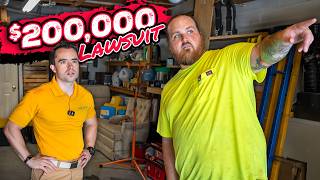
Transcript of a Business Turnaround episode (host Mike Andes) featuring Roy Inman and Mitchell Mason of Wall Washers Power Washing. The episode documents a partner abandonment and ensuing legal fight, the company's fragile finances (reported $200k revenue last year, ~$2k cash), and a six-week turnaround plan focusing on resolving the legal/debt exposure, creating a new LLC and brand (Cure Company), operational fixes (pricing packages, niching to gas stations/MMP work), and payroll/entity best practices.
Questions this video answers
$200,000
$2,000
$12,100
"$9,000 for Chase" and "$9,000 for the trailer" (total $18,000)
$5,000
Chapters
Today we're in Tennessee visiting Roy from Wall Washers Power Washing.
Halfway through we're like, let's just go home. This sucks so bad, dude. What company out there can't support three people? It completely ruins how much money we're making per hour and all. It just shoots us in the foot.
Last year the business did $200,000 in revenue. But then his partner abruptly left town.
The previous business owner that I took the place of, he quit and moved to Hawaii.
He is literally days away from being InSolvent. He has $2,000 in the bank. He will not make rent next month.
With this books that were all over the place. There was no structure.
Yeah, the books were rough.
I wouldn't even call it a business.
A few weeks later, that same partner sent legal documents to Roy demanding that he sell off all of the equipment.
Wait, so when did this happen?
Now Roy is stuck in a legal battle. Seven days before they bailed on you, they changed stuff on the llc. They're still gonna come to you personally.
Yeah, that's like a curve ball. I didn't even expect you to say that.
This is the business Turnaround show. My name is Mike Andes. I'm the founder of Augusta Lawn Care. We have over 190 locations around the world and I travel the country fixing strugg businesses. I just generally believe you can build a million dollar business on just this curing thing for gas stations.
Yeah, yeah, yeah.
And then it's a function of. Can this grow to 10x? Absolutely. Our goal is to give Roy a strategy to turn around the company in the next six weeks.
Hey, what's up dude?
You just kind of snuck in there, dude. Roy, good to see you. Yeah, nice to meet you. My name is Roy Inman. I've been with wall washers since December 2023.
And Mitch Mitchell Mason. Been working for Wall Washers for about eight months now.
Awesome, man. Good. This is the crib, dude.
This is the crib. Yeah, we literally just rent this house, so I mean we didn't do anything. Yeah, it's just a garage for the house. We live upstairs.
So I think the last guy was like a DIY guy. So we kind of used all the shelves.
Oh, we already had all the shelves.
All this stuff was.
Whoever lived here before used the garage. I think they actually had it enclosed and it was like their shop. It worked out great for us.
That's awesome, man.
Yeah.
Did you have like a storage facility separate or just this then?
You're looking at it. You're looking at it at All.
Yeah, Good stuff.
Everything we own is literally that trailer right there. The other enclosed trailer right here with all the equipment. And then on this side. I don't know if you want to just for.
Yeah, let's do a shop for sake.
Of looking at it.
Yeah.
This is the other side of the garage. And this is just like paint scaffolding from when you go paint and stuff like that. Oh, cool. We do, you know, some high up stuff if that's for that. This is leftover paint from just jobs. I mean, you can tell back there we have tons of just leftover paint steamers for when we do vinyl work. We do work for gas stations. So sometimes gas stations have like a vinyl strip around the whole fascia.
Got it.
So that becomes part of our job, which. That's one of the things that like sucks 192. We want to do as little of that as possible. We just did one the other night and I swear we almost like halfway through, we're like, let's just go home. Like, it sucks so bad.
It's one of those. You had to push through on it.
Completely ruins like how much money we're making per hour and all. It just shoots us in the foot.
So the paint's mostly during the winter then, Is that right? Or kind of throughout as needed.
It's all at the same time, unfortunately. It's throughout.
But it definitely helps when the winter comes around. It definitely kind of helps to get us through the winter winter because we're definitely not pressure washing or anything. It kind of opens up our services to give us that one extra service that, you know, limps us through the winter and whatnot. So.
And is it mostly commercial then that you're selling? Commercial, really? Okay.
I mean, we like. We did a residential today, right. That's super rare. It's really cool to be able to just do commercial stuff too. Doing residential. Like, these people are great and you know, we always do work for them and they're fun to work with. But you kind of run the risk of with residential. Like every single customer, you have to like, please. When you have one really good commercial or not one good commercial commercial. But commercial clients, a lot of times, you know, it's less customers that send more jobs. It's easy to please them. You get in good with them and they like you. They're not like micromanaging your work. I mean, even if you did a good job, they'd be mad at you for something.
So most like gas stations.
Oh, gas stations. O'Reilly Auto Parts.
Yeah. Do you have a couple big contracts in essential with those?
So O'Reilly's are probably our biggest. I mean, as far as, like, size of company. Our other clients, another oil company in Nashville, does all the stores. They own just twice daily. It's a convenience store. They've got, like, 200 stores.
We went there this morning.
You were twice daily. Yeah, There you go.
Yeah.
Yeah, exactly. So twice daily is, like, our number one client. That's our biggest customer. So we get to get them on there. We have a hundred work orders with them right now.
Whoa. Yeah.
They send us, like, so much work, it's kind of insane.
And when you go there, is it mostly the building or is it, like the structure above the. Like the gas station?
Yeah. So a lot of times the reason we're there to pressure wash is because the oil company, Shell Marathon, whoever, usually, like, mystery shop and basically counted off points. And so we are actually. We're supposed, like, they have to get pressure wash. Really helpful for us. The store will lose points if it's not pressure washed. I mean, it's a ton of things. It's not just the outside. It's cleanliness of the bathrooms, you know, stock things like that of the inventory.
The services we offer to them are pressure washing, parking lot line striping, and general painting and stuff like that. Actually, we just got an offer from one of them to start doing refrigerator units. They have, like, coil cleaner where you go in and you clean the coils on the refrigerators. They just sent us a hundred different stores they want it done at. We're not looking to get any into it. It sounds like we're diving deep into.
And so we're doing usually the structure for the gas. A lot of times we'll do, like, sidewalk and parking and stuff. But the actual building, not so much, really. Usually around the gas pumps, because that's where it gets the dirtiest.
Got it. And, like, do you actually do the pumps or, like, the structure of the pumps?
So the actual pumps, we don't. I mean, we'll rinse them down. I mean, they're so expensive. We try to stay away from them as much as possible. But really, like, if you look up the decking, that's like the white decking above all the gas pumps, Those get super dirty. We'll clean those. The poles for the canopy and then the concrete beneath it.
Got it. And then that's why you have to do it at night, because you probably have to rope that all over. Yeah.
Because it's disruptive.
Yeah.
So that's Our ideal customer is like an oil company that has convenience stores. It's like a sweet spot that we found. A lot of people don't think about that. It's not like a glamorous, like, advertised way of making money, but it's like, like they got a lot of work.
And then in terms of the operations now, is it mostly both of you?
Just. Both of us.
Got it. And is it your girlfriend? That or your girlfriend?
Your girlfriend. His girlfriend.
All right, now there was some relationship. So your girlfriend, your sister. Got it. She does ad. Does she do admin?
Yep. She's honestly been. I mean, she's been paying gas stations.
Yeah.
So she comes out late and we kind of.
We kind of throw in. Right now we're just throwing in where we can. We all do our own part, but we also do everybody else's. Each other's parts and everything.
Yeah. No one has like, it's all hands.
On deck right now. We have a couple of guys that aren't full time employees. We kind of work with them. Contract labor. We actually just started getting into that because me and Roy, we're at the point where we're just, you know, we're. We need to be doing other things than just doing the labor all the time. The way I look at it is we're in our trial and error phase for actually having employees and everything. And we're going through testing all our systems and making sure we have everything good and locked down and systemized before we actually take that next step and next jump into having employees.
Yeah, we're scared to hire.
I don't want to overstep and hire employees and not have everything perfectly set in stone ready to go for them to, you know, come in and be successful with their job and whatnot. So I don't ever want to handcuff my. Into not being able to pay an employee or anything like that. That's the last thing I would ever want. I think that's our next big move is actually getting employees and, you know, having. Having the actual financials in line and everything to where we're safe and everything. To have employees and have people rely on us. Right now we're kind of dialing in our systems and dialing in our softwares and everything so that whenever we do have employees, like I said, it's just set in stone ready. So we're. We're kind of going through our trial and error. Whereas if me and Roy were the employees and kind of, you know, making sure we're good to go I think we ran out of gas back there. When it's this full, we'll probably empty it. It can, it can travel about three quarters of the way full.
I'm just hitting everything twice down. Then I'll hit that down there a second time once we finish up. Feel like this sucker's moving slow today. This one was a little unique because they had like a metal canopy that they wanted us to get rid of. We just kind of did that as a favor because we do a lot of work for these people. This pad is like disgusting. As you can tell, it's close to the trees and stuff, so it just gets extra dark. So it's going to clean up really nice. You can already kind of tell how clean it's getting just right there. What he's doing now is he's like cutting in all of the pad and then that just makes it easier for when I take the surface cleaner. It just kind of creates a path for me and then I'm going to surface clean it and then he and I will rinse it off together and it'll be done. It's super quick.
So first off, I want to talk about the future of the business because that's all I really care about. But I do think there's kind of like the monkey in our back that we need to like figure out. And I was like this previous partner, so I have like a brief understanding. But give me like the 30,000 foot view of this previous partner, you coming back and what that all looks like from your perspective. Give me an overview of how it went down previously. And then more recently, two of my.
Friends started this business. One of the friends quit about a year in and moved to Hawaii. He's out of the picture. Right?
That's a first partner, right?
First partner's gone. I'm living in LA at the time, just doing graphic design, all that sort of stuff. And he convinces me to move here to run the business with him. So we moved back here. Now me and Dwayne are running the business. Okay, so six months or so in, we bring Mitchell on just as like, you know, not in a partner, but like to come work with us and all that sort of thing. Me and Dwayne are running the business probably about a year, six months after he gets here. So April 8th is the exact date Dwayne just text me out of the blue that he's done. He said, I feel like the floor has to be so high with all of us trying to thrive off the company, all of us being me him and Mitchell. What company out there can't support three people? You know what I mean? That's not really a big commitment for any company out there. Think about how many people Augusta takes care of, right? And the initial text that he sent was kind of like, I'm doing this to help y' all out. You know, there's too many. Too many of us to support right now. Right?
I.
From the beginning, I've been like, that's such a stupid notion, because, like, every business in the world can support more than three people. What are we talking about here? He said, if I remove myself and take the $1,000 car payment with me, if I remove that, you guys will have a much higher chance of being successful. And he said all of the money that the company would have right now without this truck payment and all of my maxed out credit car payments is the difference. So that was how he quit. The whole basis for him leaving was like, oh, I want to make this easier for you guys. Like, I want to, like, step out and kind of give you guys less bills and kind of act like he's being a team player. He leaves. And the initial offer he made was, I essentially want you all to sell everything, pay off all the debts associated with the business. There's, you know, business loan, a credit card, things like that. And then that leaves you with no equipment, but you get to keep all the clients. If I were financially able to just buy new equipment, I would have been like, cool, let's get this guy out of here. I'll get new equipment, kind of fresh start, whatever. But I wasn't in that position at the time, so. Or even now to just buy. I mean, line stripers, for example, are almost 10 grand, really, you know, so it's kind of an expensive piece of equipment. And the pressure washing trailer over there is over ten grand. So it's just a big investment. I mean, not big, but bigger than I'm able to do for a 30 grand replacement cost. Exactly. My argument was just let me pay the loans off. They don't, I guess, trust me to pay them off. I guess that's the gist of it or whatever. And then actually, when they pulled up today, I got an offer from him today from his lawyer, and now he's all of a sudden wanting to put the truck that he took with him back on me. So now there's a truck, an asset that he took with him to Atlanta. He's like, I want you to have this back along with the 900amonth truck note he convinced me to move from LA to Nashville for the sole purpose of working for this company. So I get here, and within a year, he quits. The same way that the previous business owner quit. The previous business owner that I took the place of, he quit and moved to Hawaii. My business partner, he talked poorly of how he quit and moved away and, you know, didn't do anything. And then a year later does the exact. I mean, literally the same thing. And so he essentially wants me to take over his truck, note, take over all the debt for the business, and then that's kind of where he wants to go.
Got it. So right now, as it currently stands, though, are you on the business entity structure?
I'm on the business entity structure, but I'm not on any of the debt.
So is that debt in his name?
The debt is in Jordan and Breeding's name or join.
Okay, so you have no associate the debt. Are you actually. Because I don't see this part. Are you actually on the business license and, like, have equity in the business?
Yes, I am.
Okay, so let's assume we take his offer. So right now his offer is, hey, just take the truck back to the business, take on the debt. Basically, he's in a tough spot. Sounds like.
Yeah.
And just take the business.
Yeah.
How much debt would that be? Assuming if we did that, if the.
Minimum payment were made for the length of the loan, it's like 77 grand or some crazy number.
Is it a nice trap?
No, no, It's a stock 150. Has a bunch of negative equity.
It's just a bunch of negative equity. Yeah. From his personal, previous vehicle.
It's kind of like he's trying to leave us with his problem that he doesn't.
77 grand F150 on, like a stock F150.
I mean, it was like insane roll.
Negative equity from previously from like a.
Nissan Maxima or something. Yeah.
Okay, so besides that, how much loan?
9,000 for Chase Bank. 9,000 for the bank that holds the loan for the trailer. That's it. 18. 18 grand.
And are those loans in the business name?
Yes, they are.
They're Chase ones.
Correct. With guarantee with the guarantor being Dwayne and Jordan. But it is issued to the loan or to the business. Excuse me. And again, the agreement that we. Verbal agreement we came to in court was that I would take loans over, which I'm happy to do. I'm the one with all the clients, all the assets. I have no problem paying those two debts off. But now that I've come to that agreement, he all of a sudden's like, okay, let's throw the truck in there too.
Okay. So you already went to court and the agreement made verbally.
They. But we had to draft the agreement or whatever.
Got it.
And so where this came up is the pathway lending of the guy. I'm pointing that way because that's what the trailer is. Even though I'm not on the loan, they reached out to me and said, hey, we're going to default on this soon and we're going to take the trailer and as well as another truck. That Geor, which is collateral for the loan has nothing to do with us. It's just a personal truck that he has. He put it up as collateral. So they let me know about that. So I went to Dwayne and Jordan and I said, hey, listen, they're going to default on this stuff. So send them an authorization that I'm allowed to like start talking to them about this loan. I can start making changes. I'll put my name on it, we'll get your name taken off, we'll do all that. Well, now they're saying that we don't want to do that. We want to come to an agreement on paper first, which I, I'm fine with. But they're also like threatening to kind of repossess everything. So I'm like, we're in this weird situation now where like, we haven't come to the full agreement on paper yet, but they're also like, have to make a decision soon or they're going to start repossessing.
Why not just let the stuff get repossessed? Have we tried to look at financing options to go get the equipment ourselves?
I've been horrible with my credit and so I don't have great credit to do that. We haven't been able to confidently say we're just going to pay cash for new equipment.
Yeah. But energy and money we're putting towards all this legal stuff.
So expensive. 5,000 bucks so far.
Yeah. If we just put towards equipment and it's not going to stop at five grand, like it's going to be 15 very quickly. So like my question is, instead of sinking all of our cash into that, really trying to protect 30 grand worth of equipment, why not just cut ties with them completely, let the equipment get repossessed, not take this truck debt, that's bad. And then just go start a new entity. I think anyone listening to the turnaround, hearing what I told him would say, oh, like you're trying to be Malicious. When in reality, I'm trying to save Roy from the fact that he has $2,000 in the bank, and the only way to provide for his livelihood is at risk of being taken away from him. So that's when I. Okay, let's step back and take my legal hat off of, like, everything that's written down must be honored. And let me step back and say, okay, this person doesn't. E just doesn't get, like, their house over their head if we don't fix this problem.
I like that idea. So one thing I want to point out is the way my lawyer kind of sold it to me in court was if we let everything go, like debts, we just let everything go. All of the assets that are paid off that aren't tied to any debt that we would use to keep going would need to be sold to go.
Towards that debt, if it's in that business's name, which.
Like that striper over there. That's in the business name for sure.
Trailer, Striper.
Trailer.
Is there a registration on that then, on the striper, or does it have debt on it?
Neither.
The only thing that they're gonna come back and try to put their hands on is the things that they can, which is gonna be, like, things with titles. So trucks, trailers. But like, that piece of equipment, if it's sitting inside, they're not gonna, like, come into your house for sure. For sure. Right, so. Cause you're business.
I'm just thinking, if defaults on the. The loans are all in their names.
My name is not on any liabilities at all.
From a legal perspective, there's no debt on the business. There's debt on his personal name.
I've been led to believe, lawyers, even, that, like, the debt is associated with the business. If you keep the business, you got to keep the debt with it.
The other thing is, it's Chancery Court. And the way they explain Chancery Court to us is the judge bases it more off of fairness rather than legality.
And for them, what's most fair is split everything, essentially. But again, we split everything. Let's say we split everything by selling the assets, paying the debt off, and split what's left. Well, what's left is negative equity from that truck. So if we did that, we're both left with a few thousand dollars of debt and no equipment at all.
I just feel fighting this, and then even if it goes well and you win, we're still stuck with a whole bunch of debt that we. There's gonna be more or at least equal to if we just completely cut ties with everything with the old business, send an email to all the customers saying this business name is now this name. And then they're all converted over.
There's no. They all know me.
We had the lawyer tell us that if you do that, you end up with excess debt. But I mean, you're not wrong.
It's all on him. Like the business. As I have heard it, the business has no debt. It is on him and his previous partner.
That's the way we took.
And so if you just separated yourself from this and said, like, I don't want to be in this partnership anymore. They've got to deal with all the debt. They would come repossess the equipment, they'd repossess the trailer, they'd repossess his truck. But you're out, and you take the customers and go do your thing.
The only hurdle there would be like, buying equipment. Buying equipment, which is, you know, we have a hundred open work orders right now.
So how much do you have in like, in receivables right now?
12 grand. 12,100.
That's where I'd be looking at like, okay, if I can collect 12 grand now have. Let's just get five grand on top of that. Which I know I'm gonna be spending on legal fees in the next few weeks anyways.
Yeah.
And I've already spent 5,000, so I don't know what that is gonna turn into moving forward. But I've already. The lawyers already have 5,000 from me.
Yeah, I'd have to like, talk to your lawyer. But like, the thing is, they're incentivized to make this as long as possible. Cause they bill by the hour. Every single lawsuit that I've ever addressed that I had to go through lawyers to talk to their lawyers immediately. 50,000 dol plus anytime I've able to just reach out to the person and talk to them as a human. Almost every time we've avoided any sort of arbitration whatsoever. If I was him, I would probably reach out to the partner. I feel like that would be better. And lawyers are all tell you don't talk to them directly. Come through me, rack up the bill. And so I. I would have to be digging into like, the actual loan docs and like, see if they put that LLC anywhere. Because if they didn't, I would just be trying to wash your hands of the LLC and. And then back up and let people do their thing.
Yeah.
And you use this equipment to get pulled out. Even let's say it all Goes through and he goes. Declares bankruptcy or something. You could be using this piece of equipment for three. Three months before that. Yeah, before they actually show up and you just give it to them. Okay, great. You're an agent on the business license.
Business license is me and Dwayne's name.
Because you could just redo the business license and put him 100% owner. Like if you, if you have that control, like if you had logins to like secretary of state and all the rest of it.
Yeah, I've got all that stuff.
So like, you basically say, hey, I'm no longer an agent. I'm no longer associated with this business. Business. And wash your hands of it. The thing is, even if you don't do that, all the debt is in his personal name.
The truck is registered to the business.
Oh, it is.
It is registered to the business.
Okay, that's different.
It's got a, like a business tag on it and everything, and it says wall washers on the title because there.
Is some association with the business.
And I think on the. On the pathway loan, Wall washers name is on that loan somewhere. My name's not on it anywhere. Not on any of the debt at.
All, but it's on the business and they've attached that asset to the business. So my concern is if you go get other equipment and that business goes down with your name on it, they could still potentially come after you. And so, like, okay, he doesn't have assets and, or underwater assets like the truck, we'll go after the other guy. They're still going to come to you personally. Okay. Because like, the business right now does not have separate bank accounts, separate credit cards. There's personal expenses going through the business. So we pierce the corporate veil, which means even if you start a new lc, start, got the assets inside of it, et cetera, they could still come after you. They're piercing the corporate veil. What this means is, is I'm using the business's checking and credit cards for personal expenses. That money then pierces the corporate veil of the difference between the LLC and my personal assets. And if I pierce that corporate veil, that means if someone was to sue the business, that will come directly after my personal assets due to the fact that I'm not honoring the fact that this entity, this llc, is different than my personal assets. So he wants to basically give you probably $50,000 on a truck of debt plus $18,000 of equipment.
Yeah, exactly.
And what's the loan terms on that? Do you know? So $900 a month for the tr. What's the 18 grand costing us in terms of monthly.
The chase? I don't know what that monthly note is. I've seen payments for like 298, 300 bucks. I think it's that neighborhood. The pathway loan's 400 bucks.
Okay, so we're looking at like 7, $800 a month in debt payments right now. And then we are looking at 900 for the truck. So then the next question just becomes, well, what about just paying, like just taking the deal? $1,800 a month.
I hate that truck so much, dude.
I think if he had more money, he would be doing this already. And that is he'd just take the L. Take 60 to 70,000 dol as an L for you getting 50% of the equity back in this business. That's not bad trade for business. That 200,000 in revenue last year, not horrible. It's not great. But he was such in a bad spot. Like he literally has $18,000 in debt that he's accepting, let alone the other debt they probably responsible for somewhat. And he has $2,000 in the bank. So I don't have a lot of latitude and he doesn't have. He's not credit worthy. So you don't have a lot of room to move. And when a partner does that to you, you have no other option to defend and like provide. You got to find a way way out.
That's crossed my mind, obviously. And we've just gotten this offer today, so I haven't had a ton of time to really absorb, like, do I want that truck? Because this whole time the truck's not even been in the picture. It's been like, that's my truck. I'm moving to Atlanta with my truck. You know, it's got nothing to do with this deal. It's almost like he tried to separate the truck from the deal as a whole. It's like, no, this is my truck now. We're going to settle on the rest of these assets. Right.
What else could we get from him? So let's assume we. Because like they've put an offer towards us. He's tired of going to court, he doesn't have money and he lives four hours away. Right. So. And he's out of state now.
Yeah, four hours away from court. So.
So the other thing is, what could we negotiate with? Because like I, from my perspective, eighteen hundred dollars a month, it stinks. But if he's willing to give that right now, is that better and cleaner so we can focus on the business best case scenario is they take his truck, they take all of your equipment, and you start a new business. You're still going to be out, let's call it 30 grand to replace. Replace the equipment. So 30 grand is the cost of best case scenario. Right now the worst case scenario is we take his deal and we probably are taking 70,000. So my question is like, okay, 30 grand versus 70 grand of debt. Do we just take the 70 grand so we can move forward? Because I also am concerned if we go the first route. First off, does it take us 6 to 12 months to figure this out?
Yeah.
And then secondly, is what happens if we take that route and then they come after you. You anyways?
Yeah, that would suck.
He is literally days away from being InSolvent. He has $2,000 in the bank. Really? Worst worst case scenario is he goes out and defaults everything. They hate your equipment. And then we're stuck. If that other partner does declare bankruptcy and they come pick up his equipment right away, which usually doesn't happen, but if that happens, he has no money. He will not make rent next month. What else would you want from him besides money in terms of taking his deal?
Honestly, I don't want anything from him. If he would take his truck and leave us alone and we could pay the loan, I'm happy.
So he's probably trying to avoid bankruptcy and his idea to do that is hand you back the truck. And the debt for the 18 grand, is that in the business's name?
So the Chase card does have Wall Washer's name on it, but it's again, when they signed up, they used their Social Security numbers because there was no business credit. Right. So they signed up with their Social Security numbers.
The LLC is there and you have a piece of it.
Correct.
I don't see your name on that llc. Are you sure? Yeah. I don't see your name anywhere publicly on it.
I mean, we can. Let's dig as much as we need to. But I mean, we see.
I don't. You're just on the business license.
That's my point is like, if we let the business license lapse and like the entity structure is held. From what I can see, I only see them on it now. Seven days before they bailed on you, they changed stuff on. On the llc. You can look, this whole public record, they change the agent, they change the address back to this address.
Wait, so when did this happen?
So March 30th.
I wish we were looking at this stuff because I'm speaking to It.
I don't.
I don't know. It's.
Yeah. Ye. The March 31st is when they made a bunch of changes to the entity. Changed the address, they changed agents, they changed the NAICs.
So that was just breeding, knowing he was fixing to leave and then trying to.
Then the next week, he bailed. From what I can see, it's like, tell me where I'm wrong here. This is what I see.
Yeah, that's like a curveball. I didn't even expect you to, like, say that.
Oh, you're good. You're not on here.
Yeah.
Is that his old address?
That's our old. That's where we used to live. Yes.
Now, this is. Is this one correct? And that's what he added. The mailing address and principal office address is what he changed on the 31st of March. March.
Right. I mean, he left the 8th of.
April, but see, he's still the registered agent. I just don't know. It's member managed series llc. No member. Member six or less, but we don't know. Okay. It's not listing the members.
Right. They're not listing the numbers.
I was trying to see. Okay, are we not even associated with this business? Because he, like, did the business, the thing, did his own deal, and then, like, is now trying to put it back on us when we have nothing to do with this business.
Yeah, because that would be an angle for sure. Like, if that's the case, then, yeah, we sneak out. We don't have any liability in that case. So like, that would be. That would be big info because he's.
He's the principal agent. But I don't know who's the members on that llc. The truck is registered in the name of the llc, and all this debt is tied to that llc. And you're not on the llc. You. You literally are just borrowing their equipment right now and running. Running a business. Yeah, a dba. And, like, we just need to switch that over to a different one.
It's really good insight. Yeah, I don't. I wish I had. I could.
I know. I know. Every single original document that you're supposed to produce and create whenever you start a business did not happen. Whenever we got here with this business, you had books that were all over the place. There was no structure. There was no. It was just go get the job done. I wouldn't even call it a business.
Yeah, the books were rough.
They had the LLC set up before you show up, though. Yeah, yeah, that's what I'm saying. I don't Think you were ever at it. The risky approach is you try to start a different business and you use this equipment until it gets picked up. Yeah. And then your backup plan if it gets picked up is trying to get equity against the truck.
Yeah.
That's probably your risky option. And letting him do whatever he's gonna do. Now, the reason that's risky is because if you are associated with that LLC and he does go back bankrupt and he just. He does the same thing to the bank, the bank would potentially come after you. That's why I'd be really looking at those docs.
Yeah.
Like, are you actually on this llc? The safest approach is we make a deal with this guy. I would still change your llc. I think this toxic stuff all throughout this asset.
Yeah, for sure.
In terms of what you partner, all that sort of thing. I would just change even at least entity. But I would probably change the name too. Just. Just for the sake of completely different. Like we're not associated with them.
Once I think.
Fresh books. Fresh.
Fresh. Yeah. You get a new number, essentially. Which one do you think are you inclined to do?
Oh, new business all day.
Okay.
Yeah. And that's been my position really from the beginning is like I'm just trying to regain control of the assets and we'll just start a new business.
I feel like even if we did obtain half the debt and everything, we would get to a point of the debts being paid off completely and start a new business anyways. I'm excited to be able to actually start at zero, start with something fresh and actually keep everything organized and build a business how it's supposed to be built. Rather than tornado rolling down the street or whatever. Whatever we have going on right now. We wouldn't continue as wall washers beyond the.
I think the name is confusing.
Yeah, well.
Yeah, well, there's just pressure washing. When they started, that was the whole. Yeah, the whole idea was when they started was the residential pressure washing.
Because you've gone other. Doing other stuff now. It's very commercial too. So even that name is very much correct.
Yeah. So the commercial thing happened just by way of like that the customers we got. It just naturally happened happen that way. And that was why we wanted to change the name is we felt like it wasn't super representative of the services we were offering.
But even if you went really niche into like these ones that are coming, if you're. The gas station thing is a big part of the business now.
It's like all of it.
Yeah. You should just do like that is the business. If I'm a property manager or even an owner operator of a gas station, am I going to pay $1,000 for a pressure washing company do it. Or this very specialized service that does this specific thing. If I go get heart surgery, I am expecting to pay a whole lot more than the general physician that's going to check my temperature and make sure I'm feel. And the reason for that is because one of them, the heart surgeon, took extra decades to get really, really good at one specialized thing versus being a generalist. If you want to be a generalist, that's going to get closer and closer to a commodity of just how much of what your hourly rate is, versus being a specialist where no one, you can't even really compare your price to anyone else because there is no one else competing at that niche. And the depth that you're able to get to, if you got half a percent of the market, there's a lot more to go. And if that's making up, let's call it 70, 80% of revenue, then why not go super deep on it? Yeah, I think you'd crush it.
That's a good idea.
There are only four reasons why any business will stop growing. Either a lack of liquidity, a lack of leads, a lack of labor, or a lack of leadership. Call this the 4L framework. We're going to use this to fix the problems inside of the business. So I think to your point, like you seem like you're really leaning the direction of starting a business, right?
Yeah.
So I'm going to go that direction. Assuming legally that certain things are going to get done. If I was you, and it's not legal advice, is me personally, what I'm making decision on is the fact that they're giving you a offer right now. You actually have in the driver's seat. I would probably say something along the lines of we have started another business, we are operating under that business, and the one way for us to walk away right now is for us to assume the $18,000 in debt and you should keep the truck. Otherwise you can figure out all the other stuff because they don't want to have to do that. Yeah, he doesn't want to have to go through the whole process of going through bankruptcy, then picking up this equipment, etc. And if he does, you probably have three months to keep operating as you gotcha.
We have enough jobs on the schedule right now to buy the equipment. It would just be a matter of getting those done in a reasonable enough time.
What we could do also, which is just if we were okay with taking on more debt, is assume his truck, assume all of this and take on a bunch of debt. The only thing we're doing here is trying to get around that by saying, basically, cars back in your court, buddy, because we got another business. We're doing the business over here now. And if you want to come take. Take away our equipment, go for it.
Yeah.
You're running the risk of somehow the court coming after you because you're attached to that business.
Right.
And then somehow also then being liable for his truck.
Right.
So I am concerned about that, but I think that's the way you're kind of leaning.
Yeah.
If I was you, I would make sure this new LLC is set up correctly. Get a new ein number, new bank account. We gotta figure out, like, this is a good thing, is like, right now we are piercing the corporate veil. Piercing corporate.
Is that just based on you looking at our expense sheets and stuff that, you know, like personal spending and stuff like that, or I'm assuming there's credit.
Cards all of you have, and you'll run other stuff through it.
Sometimes none of us take pay, like, at all. Like. So you're speaking to it correctly. Absolutely. Because, like, we're horrible about paying ourselves.
When he.
When his truck payment's due, we send him money to pay his truck. Like, you know, when we need groceries, send him money to go get groceries. Like, stuff like that. But none of us have gotten on a schedule to get paid or anything, even 100%.
Even if it's a function of, like, when you need money, you make sure it's like, hey, we transfer money from the business checking to their personal checking. We don't go pay the payment. We don't go buy their lunch. Like, we go. We go to the person and then they make the payment.
And they make the payment.
Correct. It's always tempting to pay money, cash, basically, to family members, et cetera. But as soon as you start doing that, you're either A, going against the law by not paying payroll taxes, or B, you are piercing the corporate veil by paying for their personal expenses out of the business checking account or credit card. You're like, oh, no, I'm paying myself by paying for the ice cream cones for my kids. Okay, great. I just need that money to go into your account. And then from your account to the ice cream vendor, not from the business to the ice cream vendor. Then I can say that the transfer from the business to the person is wages or owner distributions. If you're an owner.
Right, right.
But as soon as I go from the business checking and then I use the company card to pay for my personal expense, I have pierce the corporate veil.
Gotcha.
This will be part of the new llc. We need a new llc. We have a new bank account, new ein number, and then we make sure that money flows from the business to us personally and personal personally to whatever vendors or expenses that we have. If you're going to go to court, the first thing they're looking for is like, is this llc, limited liability company actually existing by honoring the corporate veil and it's separate from you personally? Because that has not happened. It's actually why this whole problem exists because otherwise he could walk away from this other LLC and it'd be completely fine. But he's commingled everything to where now suing the LLC is essentially suing Roy. I feel like there were decisions made in the past from that other partnership that we are paying attention consequences for. If you wanted to completely rinse your hands of it, he would start the new llc and that way they would have nothing to come come get.
Right.
That being said, there's also something to be said by the fact you'd be using that entity's assets. So they're still going to create some sort of connection. Especially in Tennessee, where they're going to go based on fairness instead of the law. Sometimes they could still come after you.
The only crazy thing that comes to my mind there would be I started a new LLC and he being 49%, I don't know.
Well, he would have nothing.
Yeah, that's dumb because even if he sold it to me, sold me everything to $10 and he would still. Personally.
Yeah, it would still. There's a connection there. And I think that's where the.
Yeah, yeah, like. But this is what could happen. Okay, so let's run out that scenario for a second. I don't think it's what we're going to do, but it's good nonetheless. And that is like you start the LLC completely by yourself, 100% new business name, new ein, new bank account, everything. You have no equity in it. Now that gets messy because down the road you're going to have to figure something out.
Yeah, because I just exist in the shadows all of a sudden.
What you could do, as long as there's an agreement between the two, I would make sure this is all buttoned down. You could own the LLC until LLC is done and that he's gone through bankruptcy and everything is cleaned up and then you transfer Equity or something, for sure. Or buy the business for 10 bucks or whatever, for sure. If you actually care about the partnership or the person that you're in partnership with, you will actually plan before that bad thing happens so that it's all like above board and we know it's happening and we can trust each other and just focus on the business of all this other drama that takes away from this growing. It's hard enough to grow a business, let alone also fight a partner. Argue over who has equity, argue over who's responsible for debt. Like, it's hard just to grow business and manage team members and customers.
We're at the same page now that we're like, with this partnership moving forward, everything will go on paper. We're going to do it the right.
Way in the future. What's the equity going to look like? Are you thinking you own the whole thing?
We haven't talked about it.
Okay.
Haven't even talked. Honestly, we've been so consumed with like this other one, I assumed it would just be a split partnership, but we haven't.
Between the two of you?
Yeah, we literally haven't talked about equity and stuff. We've been so busy working the jobs we have in front of us right now and then also just juggling the court stuff. We haven't talked about it.
Okay, so then this is a valid point. If you start an LLC completely devoid of his name whatsoever, he's not listed anywhere on the LLC, new bank account, new EIN number, etc. Now, the reason I would take this deal if I was you is it creates a corporate veil that they can't pierce.
Yeah.
That LLC can sink, go to zero. They can come get the assets and everything, but they can't come after. Like, there's nothing for them to take on gut.
Sure, sure.
Because this business is operating, letting all that go. Rinsed him, gone bankrupt, whatever. And then the entity giving equity, for example, 50% or whatever it might be, that looks like it could potentially work. There's risk because you now have zero equity in a business for a minute. Also right now, the current business has negative equity. So, like, it's not really a huge risk. What you're trying to get away from is $50,000 on a truck that isn't worth anything.
Right.
I'm hesitant to basically use the loophole of Mitch, that is like a legal gray area to say, hey, I'm getting out of the business. I'm basically being a little facetious with the other partner by saying, hey, I'm getting out of the Business, which. Yes, you are. He has no ent. Like no equity whatsoever in this other llc. Mitch has never been in the business before, so it's not like a trade, like so, like. But I'm being a little facetious there, and I understand that. But I think that was what will be required to push the negotiation in the way that I think is actually best for both parties, which is the partner. Take the truck, he knows that's the case, that's his truck, and then let the 18 grand just fall on Roy. I think it's actually better for both parties.
I would give up or not give up, but I would split the equity 50, 50 at the time that, you know.
Yeah, that. That sounds. Definitely sounds reasonable. I mean, because it makes sense why that would work. Right? My lawyer told us, don't buy any equipment right now. If you buy new equipment, that becomes part of the assets that are being divvied up. But with this new plan, it's his business. And so if he buys new equipment, I mean, they can't take his equipment. Right. Because it's a separate, completely separate entity. He has no ties to this business. They have no ties to that business. So, yeah, I think we can't and probably get in front of it.
So let's go this route for a second. Let's do new llc, ein and bank account, which you'll need the LLC and the ein to get the bank account, and that's going to be in Mitch's name in the next six weeks. Roy and Mitch can absolutely turn this business around. First thing they've got to do is create a new LLC that has a new name for the business and has a different bank account, and that's going to be owned 100% by Mitch. And so if you do the new LLC, new bank account, Mitch, and you already contact the customers, say, hey, Wall Washers is now xyz. And then you're going to count to them and basically be like, hey, it is essentially give us the 18 grand of debt and we will assume that and you walk. Or we're going to go do this business and you can figure out all whatever problems, go for it. And I think they might take the deal because you'd be happy with that deal, right? Am I wrong?
Absolutely.
You could cool with $18,000 in debt and him just getting.
We've accepted that amount. We've accepted that. And then we haven't been able to come to that agreement. He just hasn't been talking to us. Yeah, yeah, absolutely.
Okay, so let's do that. So we're going to counter offer. The next thing we've got to do to turn around this business is do a counteroffer to get this legal issue off of their back. And our goal is to be able to just take the $18,000 of debt that's on the equipment that's on the trailer, and hopefully this old partner can just walk away. Taking a step back for a second, because what we're trying to do is actually weasel out of you out of a partnership. Like, that's actually what we're trying to do. Why would he, when he originally left, not just be, like, sign the business over to.
I don't know. I have no idea. He didn't talk to us when he left. When he. He moved. He blocked me on everything.
Oh, he did?
Yeah. He blocked me on everything except for text.
Was there bad blood before that? He just disappeared?
No, the blocking me on social media thing. And when at that point we hadn't had a falling out, like, we butted heads like I said, but there was no falling out. So that was kind of weird. That's when I knew things were gonna get messy. And then he quits and takes it to court.
I feel like they did have a good friendship, but now, like, that friendship has been severed by the fact that they don't even talk to each other. They're talking through lawyers. And as soon as you cross that line of talking through lawyers, it gets expensive and the relationship gets flushed down the toilet.
And then now he's trying to give me that same truck that he initially said was, you know, oh, this is why I'm leaving, to take my truck, to make it easier for you guys. Now he's. He's trying to, like, throw the truck back on me. I mean, obviously, you guys, like, you're just having to hear my side. And it's probably hard to, like, decide if it's right or wrong or whatever. But, yeah, it sucks.
Did he ever tell you before leaving?
No.
Okay, so that's when I have a problem with it. I don't think it's fair for any partner to abandon their other partner in any relationship in life, let alone in a business partnership where, like, your livelihood is at stake. So I need to defend the person that is staying in the game. The person who stays in the game gets all my attention. And the person who just skips town and abandons their post of duty, I have no respect for. That's when I step in, like, we'll get out of this partnership.
Yeah.
No.
And Mitch can speak to that too. Is like, there was probably some built up resentment that I didn't know about or something. Maybe. But Mitch was here helping us for basically free. Like, let's. We can look at it like that. I don't. Why would he not just see that as a huge opportunity that, like, hey, there's somebody here to help us. The fact that there would be resentment is weird. I have no idea what the real thing is.
Okay, so let's do this. We're gonna counter offer. You're not gonna tell him. Mitch is tired of business. You're gonna say, I'm either going to give the customers away and get out of this business because that's what you're going to do, or you give me the 18 grand. Basically you're saying that I can't, I cannot afford to take on your truck debt. That's the truth. And so you're going to say, I will take the 18k and we will walk away when we call it good. Otherwise I'm giving all these. These customers away and we're getting out of the business.
Yeah.
I think he might relent.
I'm so glad that offer came like today because this morning when they pull up for the job, I got the offer and I was like, you were.
Cried that you thought you had what we just talked about. Right. Which is the 18,000. Everything's going to be good.
And I was just wondering why he hasn't responded.
So they're just getting greedy. They're just greedy.
Yeah.
He's on his way out the door and like, hey, what if I could just, instead of bankruptcy, just hand all the debt back to them.
Yeah. And it's not happening.
All legal things aside, let's assume you have a partner you're responsible for. Dependent. Like, if someone told me that, like, hey, you can't have access to this money or because, like a legal document, I would do whatever it took if, like, I'm responsible for Brianna and like, making sure that we can pay our rent. So I am willing to work with someone that is, like, willing to work really hard. He's not trying to get around that, doesn't say anything bad about his partner. And the person has kind of done them wrong. And just basically all he wants to know is like, why did you do this? Like, I just want to know. Like, that serves a lot of character and I honor that a lot. So whether or not the legal system does it or not, I don't know. That's why I kind of went on his side on this Great. So then that's what you pull. You pull that card. You see what he says. Because he'd rather get the 18 grand off his books versus nothing.
Yeah, yeah, yeah, yeah.
Versus him having to come get it. Collected him four hours away, court, all that stuff. Just like, hey, no, we agree on this. And I would be in the nicest way possible, like, honestly, I can't afford it. I think he'll just default right back to he said in court. And then we can actually wash our hands with this pretty cleanly.
And we are right, because that would make things. Because if we could just take on that 18 grand we talked about, we could still go start the new business, sell the assets to the new business or whatever. I don't know, pay off that debt over time or whatever. And that would make our lives easier because then we wouldn't have to immediately go get new equipment.
Well, he'd probably do like assumption of the loan. So he'd go to those. Those creditors.
Yeah. And I've gotten permission already, by the way.
Oh, to take over the pathway.
Yeah, they pathway. The people who.
I don't know why they said we will take over.
Yeah. They're calling me at this point asking what's going on. So at first they were super communicative with me about the whole loan process about how they're going to start default soon. Even though I'm not on the loan, something happened. I don't know if one of them reached out to one day. He was like, hey, I can't talk to you anymore. He's like, what I need you to do is get authorization from one of the previous owners to basically say we can talk about this loan to start changing things over to your name. And now it's like, he won't talk to me until that authorization comes. But the other partners will not give the authorization right now until we agree on. And the offer I got today was until I agreed to the whole thing, the truck.
This is what makes me feel like you might not even be on the llc. The fact that they would not tell someone that owns 51% of the business I about their loan tells me that he might not have ever put you on for sure. Problem right now is the truck is also registered in the business name. So we need him to cut that out like we need it in his name.
But the crazy thing is is him being half 49% owner of the LLC, you own 49.
That's 49.
He's 49% owner of the LLC. But we still can't get Pathway to talk to us.
Okay.
Maybe it's majority they have to require. That's so weird. So, okay, so I still say we stick to our guns. We say we're saying, okay, we will assume these loans, and you can sign those over to us from Pathway and Chase, but we can't take the T.R. otherwise, we're out of the business, and I'm just gonna walk away. As much as you don't want to, I know there's bad blood. Just do it in the most professional.
Well, the lawyer will do it for me, honestly, because the offer came from his lawyer to my lawyer.
Depending on the wording of how his attorney sends the letter will determine whether or not he takes him up on the offer. This is why it's so bad to be talking to lawyers, because they'll use lawyer jargon instead of just being like, hey, I look at you as a human, and I just want this to end good for both of us. And I'm either gonna leave the business or I'll take some of the debt on and I'll figure it out. And I think that would work like some legal jargon. So I don't know how that lawyer is going to address the other partner. I just hope it's done as a human instead of as, like, a lawyer, because I think the human way is like, hey, I'm not trying to take you out for everything you got right now, but, like, I got to have. I can't afford this. What you're asking. Ultimately, showing all of your cards sometimes is helpful. Like, hey, I cannot afford this. And so it's either you get nothing and I go out of business, or B, like, what's the middle ground here?
So we're at this point, we're not even talking to each other.
Yeah. Which stinks because then it gets expensive. Oh, it's 100 bucks.
Every email.
Yeah.
Every email is 100 bucks. Yeah. Whether. If he just reads the email and reviews it, it's 100 bucks.
Every time I would make a final. Like, this is my final offer. Either we take this, or I'm just going to give the customers away and walk away from the business. I think they'll take the first deal. If they don't, we proceed as normal because we know it'll take several months for them to come and get this equipment. An attorney is not incentivized to get this over and done with. They're incentivized to keep this dragging out as long as possible. And so if he wants to keep paying 5,000, 10, another 5,000, another 5,000. They'll just keep dragging this thing out and then they'll make it as this big, like, oh, this is 150 dol dollar problem. Because the truck and all the assets and the equity, the business and all this stuff, it's like, no, no, we have a good conversation and just find a peaceful middle ground. And I think that middle ground is you keep the truck, we'll keep the assets of the, of the, of the trailer and the equipment, and we will figure out the business and then the new LLC is protected as long as you keep personal expenses and business aside.
So don't pierce the corporate veil.
Correct. From a liquidity perspective, right now, cash in the bank that the business has, I'm seeing negative bank balances. How much cash does a business have?
Right now, just two grand.
We're just treading water. We're putting money into our pocket when we need it kind of thing. Yeah. Okay, perfect. From a leads perspective, we've identified the fact that right now we kind of have a lot of different services and we are, I would say, a commodity when it comes to pressure washing. And I think the real move here is rebranding. Yeah. And that rebrand is going to be focusing on what is currently bringing in how much percentage, 70% of revenue. Gas stations.
Yeah, it's probably 80%.
I would say grand majority is from these convenience stores.
Do most of them have a gas station?
Pretty much always, Yeah. I say that because like O'Reilly is a good example of like they don't have a gas station and they're kind of the same layout for the most part, other than the fuel part. But it's like the same scope of work that we're doing.
So something commercial services. The second L in the 4L framework is leads. And right now their leads are coming in really sporadically for these commercial sites like O'Reilly Auto Parts and other fueling and convenience stores. I want them to go really, really narrow or where 70, 80% of their revenue coming from, which is these convenience stores that have secret shoppers come in and look at the facilities. The more I can speak to my ideal customer profile, like that gas station owner or property manager, the better. And so my goal is that Roy, instead of being a commodity of a power washing company that just kind of does everything and they're going to get five bids from other pressure washing companies, I'd rather him just really focus on these fueling stations that are willing to pay top dollar and he could easily command a premium on his price by niching down and becoming the go to for these convenience stores. So what would you call that? Like I'm trying to think the rebrand.
What we have considered is literally etc as in etc, which kind of makes it sound like we do a lot. But at the end of etc. We do et cetera, commercial property services or et cetera, property maintenance or something along the lines of that. But I also feel like we could become more niche in the whole.
Yeah, we've talked about etc. I know that goes the other direction. From what you're saying though that's actually more vague than we just honestly we made a cool logo and we just thought it's sounded cool but we haven't actually.
I actually like it. I just want to be. I just want to be everything to everyone. But like I just generally believe you can build a million dollar business on just this curing thing.
Yeah, yeah, yeah.
And so yes, we could name it something bigger and better. But like do we just go straight after. Yeah, in the next six weeks to turn around the business, we've got to rebrand the name of the company. Right now it's wall washers and it doesn't really speak to what they're doing. And if we're going to really niche down and focus on these gas stations and these convenience stores, we make it very clear with the name of our business that we are the vendor for all of these companies. Instead of just being one of many power western companies will be very focused on these cures for these gas stations. So in the next six weeks, in addition to like the new LLC is up, the rebrand is. What's that logo? Look, I could care less. Especially commercial. Like this is a function of. Do you serve the need? Do you have the pricing? The website though is totally different. It's going to talk to your ideal customer profile which is the person managing that property. And hey, these are the things that you striping. We do the under the canopy. We do around your gas and your picture is a gas station.
Right?
You guys cleaning? Yeah, yeah, yeah, that's it.
Yeah.
No, that's.
That'll crush. See if this was 30% of revenue, I bet. Okay, this is a bit of a risk but it's probably making 70, 80% of revenue.
Yeah, for sure.
So like this is a slam dunk for your current customers and then it's a function of. Can this grow to 10x?
Absolutely, yeah.
You're not doing all the gas station right here and what you do when you want to do sales down the road when it comes to leads is you're just going to go do the exact mmp. You're going to go and take pictures and. And say, hey, we can fix this for you. And here's the pricing.
Yeah.
No one else is doing that.
Yeah, not at all.
They're contacting pressure washing company and getting bits.
Yeah. As far as I know, no one's tapping into the market that specifically. When you talk about pressure washing, it feels like there's so much competition, it's so saturated. But when you're talking about. No, no, we do cures for convenience stores, for fuel stations, all that stuff. Like, that's super specific. And I've never heard anyone tell me that they do that for a living. So, like that. I mean, solving a problem. Yeah, you're solving a specific problem. And that's, I think, the most successful business. Identify good problems to solve and, you know, solve those problems.
Yeah, I'm gonna put for leads. I'm gonna do. Do their job, which is do the mmp. Doing the mystery shop.
Haven't I thought about that yet? Dang. I'm such an idiot, dude. I think what Mike said, though, about the doing their job for them completely just changed everything that I thought about the business. I was like, that just makes so much sense. I think being able to identify those specific problems and present it to the customer in a way that they can actually understand that we're going to lose points for this. They're getting in front of it.
Boom.
We're going to save money by hiring these people.
I think that's huge from a labor perspective. I don't think this is constraint now because it's just the two of you and your girlfriend. Once that's passed us, we need to have a plan for the business having the new llc, keeping it very clean. Money only goes from the business to employees. And keeping in mind, too, if they're not on an owner, they need to have a W2. You can't just give money to somebody. The third L in the 4L framework is labor. And right now there's really just three people. And they've been taking distributions that is money out of the business and paying themselves personally out of the business very messily. And so really, we want to actually get them all in W2s. Again, you can't pierce that corporate veil. Otherwise your LLC means nothing.
You wouldn't pay yourself as a W2 employee. As an owner, you would do draws.
Instead, you're an LLC. Now, as the business gets more Profitable long term, you'll switch to an S Corp. And that's just one form. Form 1120s. You'll fill it out on your tax return and start taxing against S Corp. Right now you're going to pay 15% self employment tax on any distributions you take as an LLC owner when you switch to S Corp that those go away. But an S corp costs a lot more to maintain. It costs to do a tax return separate from your personal tax return. So no longer just, you know, a schedule on your tax return. So you really want to be making more than $50,000 in profit each year before you switch from an LLC to an S Corp. But once you switch to an escort, you have to take a W2 as an owner. As an owner. Okay, cool. Now it can be small because I don't want to pay as many taxes and then take the rest of distributions. That's fine. But for now you'd start the llc. You can take distributions. That's fine as an owner, but anyone else needs to get a W2.
Would it be just more beneficial to just go ahead and set yourself up as a W2 and just. Yes, standardize your payments and start up, just, you know.
Yeah, I would. If you could, if you could get to where you were paying all three of you W2s, the owner, whoever is entity, I'd bring their salary down because there is a benefit in terms of taxes taking distributions versus versus a salary. And then once you're both on there and you become an S corp, same thing. You don't want 150, $200,000 salary as a W2 and then taking 50,000 distributions. You want it flipped, take the $50,000 salary as a W2and take $150,000 in distributions so you're not paying FICA and all the rest of it. But that's down the road. For now. It's like set up W2s for all three of you. Yes, we're paying extra 10, 15, 20% in taxes. Who cares? We got this new entity we're rolling. The business is growing very quickly now. We're focused on hiring and it's a very normal process because we all have W2s. We'll give them a W2. It's not a big deal. We've got to make sure that we protect the entity of the LLC and they're all paid as employees. Especially if only Mitch is going to be the owner on that new llc. We got to make sure that Roy is paid a W2, not just random cash moving. Out of the business checking account that works for smaller businesses and when you're first getting started. But as soon as you have more than one partner, one sole proprietor, we've got to make sure that we, we actually pay ourselves correctly to ensure that the entity remains legal that way in the future. When they want to hire someone, they will also just pay them as a W2 employee and already have payroll and everything set up with the state. And so I think you'll probably grow to what, 300, 350 before you would need an employee full time. Yeah, I mean we're pretty dialed in.
If we're working every day, we could easily make 300 grand.
Yeah, I would say where we're at, we could very easily make that, but that would be our limit. We have enough, enough work to where me and him could work consecutively every single day probably for the next three months.
Right now you have that on the schedule.
We have 100 jobs on the schedule.
Yeah. So that's great. Like, I think from a labor perspective, I'm hesitant to start hiring right now. We're doing this.
Yeah.
Other thing gets cleaned up for sure. Once that cleanup. If I, if you told me you have three months worth of work, I'm like, bro, let's go someone hired train them up and then go do more of the MMPs for people for sure. Start cleaning the like getting sales. Like you just become the sales people. You drive around, you look at places, you figure out that there's probably 20 or 30 property management or operators that govern most of the gas stations around here. You just need to know who they are. And you figure that by talking to people going inside looking and you have the certificates up on the wall, you look at the entity name, you go search it up like I just did today and you find out who's. Who you got. Yeah. Okay. So then as part of the six week plan too is pretty pricing packages around that. Okay. Right now it's like, hey, you have, you need us to do it, we'll come out, we give you a bid or we price it however I want like pricing packages for on not a recurring but reoccurring like at least quarterly or six months or annually. You just have different packages.
Yeah.
Hey, do you want to come back annually? Do you want to come back quarterly? Do you want us to come back every six months?
Gotcha.
And then different pricing associated with that. And the whole goal is like just speak to this MMP thing to turn around the business in the next six weeks. We're also going to have pricing packages I want to include go up market and be very premium now that we're speaking very directly to our ideal customer profile. So the pricing package is good, better, best, essentially for good, better, best, best being guaranteed. And we come quarterly and we inspect, we take pictures and we send it to you so you don't have to straight preventative.
Like we do the job, we do their job. The best package, we're doing the every.
Quarter we're coming and we're taking care of all these things and take pictures before and after for you, the whole nine yards. The six week is our six month package is probably the better package. It's like, hey, we're going to show up every six months and make sure it gets done. The good is like we clean it and then if you need help, you come. Right. So this good, better and best model for packaging your services is a great way to be able to increase the annual customer value for your customers and make more money from the people that are already buying from you. This is actually a page out of the playbook that we're going to be talking about at our Black Friday event. It's a completely free training event. It's gonna be held live on Black Friday. You can go to mikeandys.com Black Friday Save your spot because it is a limited space available. It's gonna be a fantastic two to three hours worth of training and I look forward to seeing you there.
That's a good kind of where we're operating right now.
Correct?
Gotcha.
We're just gonna go up to the point where we're gonna get twice to three times as much money from someone, but it's worth 10x to them by not losing those MMP points.
Okay, gotcha.
Because right now they're just not thinking about it until they get some random mystery shopper and they, they hate their life. Yeah, we just need to solve the problem. Like, don't worry about that again. And if it ever does happen, we will do the whole checklist for free.
Wow. Yeah. Yeah, that's a good angle.
We're going to use good, better and best options for the customer to choose from and making sure we charge at least 50% more than we did in the past.
The only thing that I feel like is really going to take a lot of work for us is getting those packages worked out and everything and figuring out what we actually want our packages to be and what our actual pricing is going to be and ensuring that within our pricing, we are still profitable no matter what the, the Packages that the customer decides they want to go with.
And then the last thing we want to do in the next six weeks is create a new partnership, new partnership agreement. And this is going to be between the two of you in terms of how things are going to shake out. And in there I would put some sort of verbiage around, like when does this go into effect? And I would make it in effect something along the lines when that other LLC has been dissolved for like more than six months. Okay, something along along those lines. Because eventually he's going to have to dissolve the llc. If he bankrupts, if he transfers the two loans over to you, he'll probably then dissolve the llc. I think even if you come to an agreement, the attorneys will help that button up process. Okay, so if he's like, yes, just take the 18 grand and we'll call it good. Okay, Then use your attorney to button things up and make sure like things are separated. They'll do a good job of that. Okay. I just don't want this drag on of legal stuff and back and forth about the truck and all this stuff. It's like, look, if we take the 18 and we're good or I'm just going to give the business the context away and so I'm out of the business. Yeah, we got to get that LLC off anything we've ever touched. When you get into the new entity, I would let a curing process go of 6 to 12 months before you then hop onto that LLC like that. I'd let all that still happen the same way. Okay, cool. If you think about risk, right? Let's just say something really bad happens. They come up tomorrow and take all your equipment and you got to take 15 grand out on your truck, for example. The split of risk, in my opinion is worth it. You own 100% of the business, legally speaking, until all of this is cleaned up. And you're not going to want any of the pieces of that business until it is cleaned up. So like, I think there's an equal amount of risk because you're now working for a business you don't own any part of legally for sure. But all of this is so much cleaner if we just talk about what happens when this goes down. Not if like in 10, 15, you guys will move on. Do you want to do something else? And that's fine, but we need to talk about it now.
Right?
The reason it's so common that partnerships like this and poorly is because everyone starts them, but very few plan for the end. So I think Partnerships work really well if you just from the get go, have very clear expectations as to how this partnership will end. We all know how it will end. It's like we will evaluations. We will exactly know how much the business is worth. We will know how much we need to pay each other out. We will know discount. So, for example, if I can sell the business for 300,000, I usually bake in like a 30% discount to my partner.
Gotcha.
So that way it's like, I'm going to give them a deal and everyone will feel good. But I suck on that. When I left, if you would have bounced, there's a discount too.
That's a good idea. A huge regret I have is not doing all that the right way. When I moved here, I think the one thing I would have done differently for sure is an operating agreement. Like, an operating agreement saves you from all of this. And I would have made sure it favored both people and made sure there was definitely a clause for if someone quits. This is the process. I think I just fell into just for whatever reason, trusting this guy I knew for so long, and I just, I guess, assumed it wouldn't happen.
Yeah, there's money flowing, there's jobs to be done. We're getting paid. Like, let's just focus on the business. And it's like, uncomfortable to talk about him for sure. What happens if you get married and then. Then you get divorced? Well, that's uncomfortable to talk about, but we need to know because they own 50%, which is now 25% of this business.
It's definitely less uncomfortable to talk about now, though.
100%.
I've been through the other side. It's like, no, no, no. That's way more uncomfortable to deal with on the back end.
And if we just assume that eventually the partnership will end, everyone's like, oh, that's weird. It will end. Let's make sure it ends in a positive way where we both, like, that was a great experience and we'll do business again.
Yeah. That could end by both of us selling out.
Yeah.
You know what I'm saying?
Yeah. And you could have been like, hey, if we both put that we want to sell the business, then here's how it's going to happen. All that stuff can be ironed out. It just takes a lot more thought. And no one wants to do it because it's easy. Like, let's get the jobs done.
It sounds like me. Let's just get the jobs done. I think if I would have seen this video before joining this company, I would have done it very differently. So hopefully somebody can see this and maybe put a stop to whatever they're about to get themselves into and think about how partnership works and all of the potential outcomes.
Get all their ducks in a row before they start swimming down the river.
Man, it's been. I mean, I don't think we're like necessarily more busy than other people. It's just trying to like balance. Like working late at night has been crazy. Our sleep schedule is like totally irregular. Not normal. Like, I think last time last night we went to bed at 4am Pretty normal for us. Like if we're pressure washing, we can't start until 7pm and then we've got another one. That's another gas station. They don't want us to start till midnight. Yeah, Mitch was just saying I got two hours of sleep last night. I feel amazing.
Silly cat now, buddy.
That's literally a cat.
All right, so let's recap. There's just five things we need to do in the next six weeks. First off, new llc, EIN number and bank account. I think this can be done in a week. Ein number, you do need the LLC docs done though. So sometimes that can take like 10 days. But I think this is pretty quick.
So the new Link, LLC and ein, all that is set up. It's done. We decided to go with the Cure Company.
The Cure Company. That's what it's called now.
So that's the new company name. So that's all set up. The Cure Company isn't actually making revenue right now. We're probably going to wait till the beginning of the year to keep all the taxes and everything a little more settled and not all over the place between the two different companies. So we'll probably. We'll probably start with the Cure company making the revenue January 1st or the beginning of the year. That way the fiscal school years lineup and all that stuff.
I think at the same time you counter offer like today or tomorrow, whenever, for sure you could counter offer. Hey, no, this is what we said. And like we said, it's either you go pounds hand or I'm out of the business.
Yeah, the second one was. He told me at the time of the filming there was a. I got an offer from the business partner. Honestly, it says 18K. I don't really remember the offer. It's been six weeks though.
It was something like.
Because we've gone back and forth, forth so many times since then. You know, they had a. A truck. A truck note that was Severely upside down. He wanted me to take the credit card debt associated with the company that was really more or less their personal debt that happened to get tied into the company. So Mike's recommendation was to counter offer with something like. It was like, you know, 18,000 worth of debt is what I would have taken on in that offer. Well, we've moved, like, way past that. That's. We're in a completely different negotiation now. But he essentially stopped paying his lawyer, and so there's been zero progress. The last. The last offer we made was way under this $18,000 number. So essentially we're going to end up settling for.
I think the last offer we made was to take the trailer debt and pay $5,000 to give him $5,000 business partner, just him, $5,000. And then we take the debt for the trailer, he takes the other nine to $10,000 in debt, and we just take the $9,000 trailer debt.
What we were talking about with Mike and you'll, you'll. If you watch the episode, you'll basically saying every outcome sucks. Like there's not a really good outcome here. Well, we've gotten to a point now where the outcome's not so bad for us. So this outcome that we were talking about did kind of suck. And any other potential outcome, it just didn't seem like. It just didn't seem like it was going to be much. Much for us to gain in the situation. But with where we're at now, I feel like we have a lot to gain. So we're. We're in a much better position as far as that goes.
Third thing is rebranding something on the MMP or Cures. Yeah, get creative with that. Talk to your girlfriend. Look it up on ChatGPT. Throw some words at it. I think you can come up with a much better name. Make that part of your llc. Cool.
For the rebrand, we kind of covered that on the first line. Mike recommended something like MMP Cures. We kind of just lean into the Cure name because MMP is more Shell oil specific. You know, it's specific to one company. So we wanted to keep it open to all of the different oil companies. So cure is kind of a word that is used more universally. And so we're calling it the Cure Company to, like, lean into that. We want to appeal to all gas stations, essentially.
So specifically that niche of maintaining gas stat stations and.
Correct. Yes, oil companies, exactly. Like what Mike said about becoming the secret shoppers. Like, we're taking the job of the secret shoppers.
Essentially, then we're also adding a guarantee for our best package, the one where we. Where they allow us to take care of multiple stores every single year. And we have that guarantee on there to where if they do get a ding on their secret shopper, we'll come back and we'll fix it all for free.
For free pricing packages. Then it's a matter of what's good, better, and best gonna look like in terms of, like, I'm thinking you guys know better than me, like 3 months, 6 months, and 12 months.
Yeah.
And then also what level of detail. We're going on those. So someone could go really, really deep once a year or they get a little more narrow, like. Like a little surface.
Yeah.
Go more often. Very good. For example.
Yeah, so that's all. That's all Mike's idea. So we ran with that.
We love that, like, that idea.
So the pricing package is way better now. And he also mentioned we should raise our price 50. 50%. And in our. Our good. The good package, it is raised 50 because it's. It's reactive. And then it gets lower to incentivize people to do the. The recurring work, essentially.
All right, last thing is a new partnership agreement between two of you. And I would just really talk through. I don't think you need an attorney for this. I think talk to. Talk to ChatGPT. Like, we want you to pretend like you're an attorney or creating a partnership. Don't give us an answer until you've asked us to all the questions you can possibly think of and just talk to it and it'll know your voices and put their names, you know. Okay, now make the document and you both sign it. You get it both notarized and that we know how that's going to roll. And so putting it in the entity partnership agreement, and then whenever that time comes, you then take that and put it into the formation docs.
Okay.
The next one is our partnership agreement, and we've got that too.
So.
Yeah, we did that. We actually did this all pretty, like, immediately. So, like, this has been done for a while, so I had to remember what we did, but we did all of it. We appreciate y'. All. This is huge help for us. It's been nice to have like a. A framework to follow. Cuz like when you watch like, Mike's videos, for example, like, obviously, like, you can take things he tells other people and like, apply it to your life or whatever, but when you get like, direct advice, like, specific to your issue, that's very nuanced. Like, all the. All the stuff that, like, we're dealing with, it's way better, so it's been awesome.









