Paying my Employees to Manage Themselves
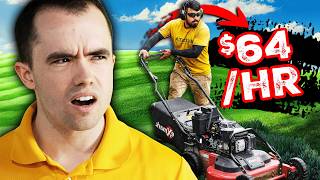
Mike Andes explains replacing hourly pay with a pay-for-performance (P4P) model where field employees receive a percentage of the labor revenue they generate, aligning incentives so faster, more-efficient work is rewarded. He pairs P4P with a "yellow slip" callback system that records customer complaints, assigns responsibility to the last team member on site, requires resolution within 24 hours, and surfaces recurring problems at team meetings to reduce churn. Andes also describes profit-sharing rules: 10% of profits distributed quarterly to eligible field team members (must be present the whole quarter; lateness/call-outs cut payout by half per infraction), and a general manager profit-share of 5–35% depending on seniority/risk. He warns against perverse incentives (e.g., rewarding top-line revenue instead of profit) and emphasizes social/team pressure and transparency as enforcement mechanisms.
Questions this video answers
10% of profits (distributed quarterly to eligible field team members).
They must be employed for the entire quarter to be eligible (e.g., be present for all of Q1 to get Q1 profit share).
They lose half of their quarterly profit-sharing for one late arrival or one last-minute call-out; a second infraction forfeits the remaining half.
Between 5% and 35% of profits, with higher percentages for earlier joiners who accept more risk.
Within 24 hours of the team member seeing the yellow slip when hanging up their keys.
Chapters
One of the biggest changes to our culture and our ability to be able to hire better team members came when we started to use pay for performance instead of paying people just by the hour. To break down P4P. Very simply, pay for performance. The harder you work, the more money you make. And essentially you get a percentage of all the labor revenue that you earn for the business. So if you make a lot more money for the company, you get paid more. The traditional hourly model, you pay someone by their time, makes no real sense for the employee or for the employer. Think about it. If someone's getting paid by the hour, the longer the job takes, the more money they make. Yet if the job takes longer and you're getting a fixed dollar amount per job, say for example, it's $50 per cut for a lawn mowing service, the longer that takes the employee to do the job, they'll make more money if they're getting paid by the hour. And yet at the same time, if they go faster, the employer, the boss, they'll make more money if they go faster. And that's why there's this constant tension of the employer trying to. Everybody needs to go faster. And you start implementing rules and regulations and tracking people's trucks, and you gotta have video cams on everyone's dashes like it's crazy because the employee is incentivized to complete opposite of what makes the business money. Instead, just like get everyone going in the same direction, which is like, we want the jobs to be done as efficiently as possible and as quickly as possible. And in order to make sure that people don't do bad quality. That's why we have the yellow slip system that's going to make sure that if they're going so fast and they're making damage cases and breaking things, it's going to come off of their paycheck. And the rest of their team, the rest of their crew, won't even want to work with them if they're not pulling their weight, if they're slow, if they're lazy, and if they're breaking things, pay for performance is a way to be able to get all the team members thinking like owners, which is I. I want to get the jobs done as quickly as possible, as efficiently as possible, without a bunch of waste throughout the day. Most of your labor is being wasted on drive time. People stopping at gas stations, loading up in the morning, unloading in the evening, all of the garbage that happens besides actually producing revenue for the business. And so create an incentive that the harder they work, the More money they make. This serves as a great quality assurance inside the business because now team members are looking at other people's work and if it's not up to standard, they're gonna let you know because it takes them longer to fix the problem. So like quality assurance, I don't have someone driving doing quality assurance. The team internally is the quality assurance. But also from a quality assurance perspective, in the past, and you're probably used to it now, if you pay by the hour, you fire someone and all of a sudden all the stories come about about how they did bad jobs here and they slacked off here and they took 58 smoke breaks and would take a three hour snooze every day, all of a sudden those come out. Whereas when you pay by performance and now that crew that's working together, they actually all are sharing the labor revenue for the day. They're going to smoke that sort of behavior out as fast as possible. They're not going to want to work with that person because it affects their paycheck. And if they're making a bunch cases and it's affecting the profitability of the business, everyone will be against that person and those people will get removed from the organization very quickly. If you're tired of losing employees that are great and they're leaving for a dollar or $2 more per hour to your competition institute, pay for performance. Give them the chance to be able to remove the ceiling from their pay and make more money. P4P is going to repel your lowest performers. They're not going to want to work for you, and it's going to attract and keep around your top performers that can make 5, 10, $15 more per hour simply doing the work because they are so good at it and they won't leave to someone else. It's not fair. It's honestly not fair that someone making $15 an hour is slacking off, doesn't care about the job, doesn't go the extra mile, does not put in any effort whatsoever, and they're getting paid 15 bucks an hour. And then someone right next to them in the same truck doing the same work gets paid 18 bucks an hour, but does 90% of the work, is hustling all day long, is constantly trying to look for ways to reduce their drive time and how many stops they have in the day, and they literally getting paid 3 dol more per hour. Pay for performance would allow that person that is kicking butt and working hard to make substantially more money. And furthermore, they probably make up for all the lost Work of getting rid of that $15 per hour person. Another aspect of creating a strong culture in your business is having what we call the yellow slip system. And yes, it is a yellow. And if you fold this up three times, it becomes a slip. We just cut them up and on. This is where we record our callbacks. Now, if you're first getting started, almost every single negative review or customer complaint or callback to a job site, you're to react and you're going to go and you're going to freak out and you're probably not going to sleep well and you're going to get a pit in the bottom of your stomach as time goes on, as you scale the business, if you constantly are the one taking the brunt of all of that negativity and customer callbacks and complaints, you will not be able to grow the business and actually focus on the thing that will help grow the business, hiring and marketing. And so if we're not able to do that, we will not grow the business. I need my team to be accountable for their wins, where we pay them based upon performance, but also their losses. When they make mistakes, when they forget to do something on a customer's property, when they don't do a walkthrough, when they damage something on a customer's property, that is all institution of a yellow slip system. So what we do is one of these would be cut out. See if I can't do this really fast. Nope, pretty close to this. And what would happen is at the end of the day, on the whiteboard, these would be the yellow slips that would be put on the board. When they're coming back to put their keys. At the end of the day, they're going to see yellow slips. And the first thing you're going to do is like, is my name on it? Because on here it says team member responsible. And so if their name is attached to that, it is now their responsibility to go back to the customer's house and fix this mistake. Now, on pay for performance, they don't like having to go back to a customer's house where there's no more revenue being generated because they're not making any more money. But furthermore, the manager or the office isn't going to be the one going back to the job site and fixing all their mistakes. And if you feel like you're a glorified babysitter where all day long you just have all these mistakes and callbacks pouring in and you're jumping from one job site and apologizing to this customer and running over here and trying to fix this mistake. If that's what you're currently doing, you're not going to be able to grow the business. Furthermore, the crew will never be accountable for their mistakes because they know you're just going to come behind them and clean things up. And so if you want someone to actually take accountability for their job, make sure that when there's losses, when they don't do a good job, they're the ones that go back. So how this works is there'd be a yellow slip. They get back at the end of the day when they're hanging up their keys, they see it and they know within 24 hours this needs to be addressed. So the next day they're going to be going back to this customer's house and it says the complaint. What the resolution is, is what they've got to determine what when they go back for the customer's property. Whether it be, I left a skid mark on the lawn or I forgot the backyard if I'm mowing. Whatever the mistake was is going to be written down by the office or the manager, but they're not going to fix it. It's up to the frontline team member that was responsible and at the job site last. So even if it was something that was a mistake over the course of several visits, whoever was there last is responsible and they're going to see that. And then they have to resolve it within 24 hours. Then what's going to happen is it's going to be given back to the general manager. The general manager is going to do a couple things. Number one, they're going to put it inside of the user's profile. We keep track of these yellow slips over the course of time. In the event that we do have to fire someone due to lack of performance, we have a clear record of all the callbacks that were associated with their account. Secondly is that yellow slip stays over here because then it's going to be taken up at the next team meeting and we're going to go over all of these yellow slips. So at those morning stand up meetings, we're going to have each team member collect the ones that they're responsible for and then they went back to the customer's house and resolved and now they're going to share with the rest of their team exactly what they did wrong and what they did to fix it. The hope is that this prevents you as the general manager owner from always having to bring down the negativity and the criticisms and you guys should have done this better. And this was bad. And so, and so like now they're gonna have to take ownership of it. And for some team members, the social pressure of having to talk about their mistake in front of the rest of the team is actually worse than on pay for performance where they go back for this job and they're not making a lot of money. It is actually the pressure of internally people like, I don't want to be the guy who's always making mistakes and everyone knows does a lousy job is always getting call that social pressures we want to create inside the company. So you're not the only one being the one that fixes mistakes is bearing the brunt of negativity and complaints from customers. Have accountability within the company by having frontline teamers that make mistakes have to take care of it and then tell the rest of the team exactly what went wrong. Also, if you have a recurring base of revenue, for example, like mowing or maintenance of any sort, where you're going back to a customer's property, the yellow slips are your ticket. They are your recipe to fixing churn. Churn is simply the number of customers on a recurring service that are leaving every week, every month, every year. And for a lot of home services, 50, 60, 70% of your customers that are on recurring service churn out every year, they leave over yellow slips. And so if you want to fix Churn, if you want to make it where customers don't ever want to leave and they love your service, fix your yellow slips. And so if you're constantly seeing five, six yellow slips around the same exact thing, weeding or people forgetting the backyard or whatever, that specific problem constantly is happening. Fix those and fix the churn problem, and you'll be able to increase the lifetime value of all your recurring customers.
One last thing, when it comes to yellow slips, and that is if you're going to have them being presented at a team meeting, try not to make it a big negative. Because especially like when it's wet and everyone's tired and the days have been long and everyone's working crazy hard, if they come back and there's 10 yellow slips here every single day, it can get super demoralizing. So try to pitch it to your team as, hey, the reason we do the yellow slips, the reason we have you talk about it with the rest of the team is so it prevents the rest of the team from from making the exact same mistake. Try to keep it positive, otherwise it can feel like more of like a beating you're giving everyone a spanking every single time you give them a yellow slip. But I do is I give 10% of profits on a quarterly basis to my team members out in the field. They have to earn this. They have to be there for the entire quarter. So like, let's just say it's January, February, March is Q1. They have to be there for the whole quarter in order to be eligible for the program. They can't just join the last week of the quarter and then get a couple thousand dollars in profit sharing. That's not how it works. 10% is going to go to them. They have to be there the whole quarter. And then how I do it is they lose half of their profit sharing if they're late one time or if they call out one time like so last minute is like, oh, I'm sick today. And it's like 10 minutes before they're supposed to show up, that's a call out. So they lose half of their profit sharing for the quarter. If they do it again, they lose the other half. So it basically gives you two times before you lose all your profit sharing. And yes, there have been times where someone's in late like a minute or two and unfortunately they lose half their profit sharing again. What that does is create the standard that you show up on time. And if you do, you just need to show up on time and not call out and you'll literally get a big check at the end of each quarter for profit sharing. So that's the team out in the field. Now the thing with a manager is the fact that they aren't going to have pay for performance. A manager isn't producing revenue out in the field as often. They also have to be doing non revenue producing tasks like sales and admin, equipment maintenance. And so this manager, I'm going to give a bigger piece of the pie when it comes to profitability sharing. Anywhere from 5 to 35% of all my profits are going to go to my general manager. The reason I do this is because I know that if I'm not there and I'm not making any decisions in the business in terms of buying decisions, hiring decisions, firing decisions. If I'm not making those decisions, I need someone else that is guarding the profit, the bottom line. And a large chunk of their profit of their paycheck comes from the bottom line, the profits. And so you're like, well how does it determine by 5 to 35? This actually comes from the fact of when did they first start joining the business? They joined the business when it first got started and there's not a lot of revenue, not a lot of profits. I'm going to give them a much higher percentage of profits because it's going to take a while, like a year or two years before they really actually start to see the fruit of their labor. So if they're willing to hold their breath, if they're willing to actually stay on with me and take a little more risk with the business, I'm willing to give them up to 35% of all the profits. That's more than a third of all the profits on top of the regular salary and the other commissions I might give around sales. If I've already started growing the business, it's already super profitable. I might only give them 5 or 10% of profit sharing because the business is already profitable. It's already gone through a lot of the pains of growth and it's profitable from day one. It's already producing steady profits Right out the gate. Their first quarter of being a general manager, there's already profits being shared. If they join earlier, I'm going to give them a bigger piece of in terms of percentage. But it might take them a while to actually realize those massive gains because the first year or two of starting a new location isn't super profitable. Now, the thing you want to be careful of when it comes to managers incentives and bonus structures is making sure you don't give them what I call perverse incentives, which essentially don't give them an incentive that if they actually hit the incentive, it'll ruin the culture of the business and ruin the profitability of the company. For example, if I just said, hey, you're not getting a percentage of the profits, instead I'm just going to give you a percentage of the revenue. I want to be like 2 or 3% of the top line revenue. Well, guess what's going to grow. I incentivize growth. I incentivize more revenue, but it's perverse. In other words, if they just increase revenue, I as the owner am not going to make any more profit. Also to get that extra revenue and grow top line, what they might do is underbid jobs just to get more jobs closed. And that comes at the cost of the team making more money on pay for performance and having accurately bid jobs. So I don't want to give perverse incentive. I want to incentivize the thing that I actually care about, which as a owner, that's not there. As an absentee owner, I only care about the bottom line. And I want to give a big chunk of it to my general manager. But if you want a step by step guide of starting a lawn care business specifically from zero to past $100,000 in revenue, watch this video right here.









