Personal Finances AFFECT Your Business' Finances!
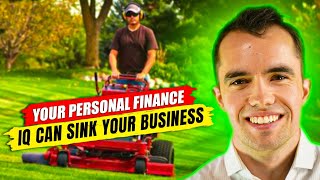
Mike Andes explains how your personal financial habits directly shape your business finances. Your approach to debt, budgeting, and spending sets the tone for how your company handles money and how employees manage theirs.
Chapters
Hey everyone, it's Mike Andes and you're listening to the Business Bootcamp podcast. Today we're talking about your money, your personal finances and how that affects your business and the finances there. Before we get into today's show, a big thank you to today's sponsor, which is Gusto. If you haven't already, go to gusto.combootcamp and try out their software. It's very easy to use, very cost effective and allows you to pay your employees via bank transfer. And a great portal where they can see all of their income, their benefits and not be surprised by the tax man come this time of year, come December. So check it out. Today, go to gusto.combootcamp Try out for 90 days completely free and I promise you, you will not regret it. Alright, today we're talking about how your personal finances affect your business finances.
I'm kind of a little bit fired up because I had talked to someone this morning about this that was a business owner, and I saw it through and through. There was a reflection of how they treated money in their personal finances, correlating and being reflected in the.
Finances, how they ran their business. And so they wondered why their personal finances. No, they wondered why their business finances were wrong. And after a few questions and things, I started asking more about how their personal finances were because they completely mirrored each other. Alright, so I'm gonna go through some of the things that I was thinking about and talked about with them and wrote down on my piece of paper here. And that I think. Cause I truly believe that the way you save and spend money in your personal finances will be reflected in your business. Number one, that's what we're gonna mostly talk about. But number two, in your employees, the people you employ. I feel that a lot of times it's crazy. I don't know the behavioral science behind this. I don't know any studies. I haven't talked to anyone about this. But I just consistently see this constantly being a theme. And that is how a business owner spends the money personally affects the business, and how the business spends the money affects how the employees spend their money. I've seen this time and time again. You see someone who's reckless in their business operations and in spending money and their finances at their company just falling apart. Small business and they have 5, 10, 15 employees. You look at the employees and a lot of times they follow a lot of the same habits as the owner. It's amazing. I don't know, I don't understand all that stuff, but it's really interesting to me. So we're gonna talk a little bit about that as well. But number one, when it comes to debt, I find time and time again the way that a business owner looks at debt in their personal life, a lot of times will correspond directly to their business. The way they think about debt. If you look at personal life and they have a big mortgage, they're owing a bunch of money in a car, they have a bunch of credit card debt, they have student loans and there's tons of debt, then when I look at the business, even though from a profit and loss statement it might look fine, the amount of debt it's carrying and the willingness to go into debt for whatever is incredible to me, whether it be equipment debt or real estate debt, or whatever kind of debt, credit lines, whatever it is, they just seem like debt is something that they can just easily in, out, use it whenever. It's just like super, like willy nilly, just use it. However, for myself, debt is something that I'm not going into unless I have, number one, absolutely no other way around it. Or number two, and I'm talking about business debt, I'm not talking about things that produce cash flow. I'm talking about things like equipment, going into debt for an advertising campaign to buy a company, things like that. All right, but the way that personally I see people running their finances is a lot of times how they run their business. Number two thing is budgeting. Like if someone can't figure out a budget for their personal life and their personal expenses, I don't see them being able to make a budget in their business. And the reason I'm talking about this today is because I want some of you to step back and think about. Cause a lot of times we can get clouded in the way that we look at the finances for our business because we have opportunity for growth. We have, you know, we're just starting out, we're gonna grow. Like we know that next year's gonna be better. Like, we have so many delusional thoughts. Sometimes they can get a little bit clouded in like the finances. And it's okay in the business world to lose money for a while. And I'm not saying that's wrong, I'm just saying it is okay to lose money for a while when you're starting a business or growing a business. But that can also cloud the kind of financial picture that we should be making decisions with in our business. But when you look at your personal finances that, you know, there's nothing glamorous about losing money and there's nothing, you know, cool about going deeper and deeper in debt. When you look at the financial picture of someone's personal life, it has some telling signs of what the underlying causes of the financial issues in the business might be. So one of those things is budgeting. If you cannot budget for your personal expenses, I.e. know what your expenses are and be able to forecast them into the future, I highly doubt you're going to be able to do that very well for your business. And that's very important when it comes to forecasting and growth. And a lot of business owners, most business owners, when I ask them how much revenue do you plan to do next year? Most have a pretty good number. When I ask them how much their expenses are going to be next year, most time you get blank looks because people think about the revenue and the growth and where we're going, but they forget to realize that if they don't have a budget in place to forecast the expenses of that growth, then they might walk away and not have any money in profit at the end of the year. Alright, the same thing goes for your personal expenses. You know what you spend on rent, you know what you spend on your car, you know what you pay Internet and utilities. Like there are some basic expenses in your business that you need to know like the back of your hand and be able to forecast in the future. Like, okay, if we have 20% growth and let's assume that our percentage of our expenses stays the same, that's going to result in X amount more profit. But now let's assume that maybe our expenses go up to facilitate that growth because we need more employees or more, more space or whatever. Being able to forecast those things is very important. When you go to a bank and they ask you, they're gonna ask you, what do you forecast for next year for your revenue? Most people would have no problem. But when they ask for expenses and then based upon that, what is your profit going to be? Most people look at a blank state like they do not know what those forecasted numbers are going to be for budgeting. Budget another thing, asset utilization. When you look at your personal life, how much do you actually use? So when we talk about asset utilization in a business, we're talking about, okay, if I buy a piece of equipment, am I using it 5% of the time, 10% of the time, 50% of the time, is that full max capacity running all the time? If I buy a factory, am I running one shift a day and then I have to build a second factory when I Need more work to be produced or do I start a second shift or a night shift on that factory? Do I start a third shift? Do I now run that factory at 100% capacity, run three shifts a day and make sure that's absolutely at its best. Utilization. The asset of that factory and the equipment and all the people inside, are they being utilized the maximum amount or are you buying real estate way before you need it? Buying equipment and it's sitting there for half the week, sitting there for half the year, not being used very much. More maintenance than it is. Just the.
Kind of utilization you're getting out of it. Alright, I see this all the time in landscaping. People buy a bunch of big equipment too soon against their growth trajectory and because of it, their asset utilization is very low. They're using trucks one day a week, they're using a big $15,000 mowers on 10% of their properties. It's like, what are you thinking? Get a mower that you're only going to use 80, 90% of your properties, you can use it on asset utilization. That's in a business world. I can look at that all day long. But when you talk about personal expenses, okay, what about your house? You have five bedrooms and it's you and your wife, do you really need five? Like what's the asset utilization of the other, you know, four bedrooms in your house? Okay, well, we got an office, we got a den, we got a guest room, we got a library. Okay, like your library. How many hours are in a day? What's the average amount of time you're spending in that library? The asset utilization, because that is an asset. That room you have to pay for. How much are you using it? Same thing with your vehicle. If you live in a dense urban area, you probably don't need a vehicle as much as you might think you do. You take an Uber, a bunch of places, you can ride your bike wherever and your car sits there four days out of the week. Asset utilization is low. And so I think a lot of times when we look at personal and business expenses, I just see this time and time again the issues that people face in their personal life. So translate over into their business life. And if you're just starting your business or you're a new entrepreneur, new small business. One thing to really be able to be objective about, one thing that shows a lot of maturity as an entrepreneur, is be able to look at yourself, be aware enough of, okay, I struggle with this in my personal finances, when I start my business or as I grow My business, there's a very good chance I'm going to have a weak spot in that area. And then being able to protect those areas using accountants, lawyers, people that you hire that are going to be strong in those areas that you're weak, that shows a lot of maturity. So I for one know that I could like accounting and numbers. I hate, I hate numbers. I care less. I'm more about like the bigger picture strategy, things like that. I care a lot about taxes though, right? Like you saw in the last episode how passionate I'm about saving on taxes. So I've had to make sure that my accountant is educated enough and knows enough things about the number side of things and the tax code because, like, I'm really passionate about my business being successful and really passionate about my tax burden being reduced. But I really could care less about numbers and spreadsheets and, you know, plus and negatives and all those sort of things, like the number side of things, not really worried about, but I need my accountant in place to make sure those things are always getting relevant data towards me as well as making sure that translate over to a good tax return. And so, you know, same thing with legal stuff. Like, I do not get into like, I hate legal things. It's expensive, long documents, way too wordy. I just hate it. Like when we franchised Augusta Lawn Care, it took me a lot of patience to be able to deal with these lawyers and create hundred page documents that I feel like mostly could have been said in 10 pages. And this is something I struggle with. So what do you do? You hire a lawyer. You hire someone that's willing to work with you and be able to cover for your weak spots. And that's what I have to do. So being able to realize that the weak points in your personal finances, a lot of times as you grow, the business are going to be magnified. In your business finances. The problems that you face with your car payment and your credit card bills and a whole bunch of loans that might, if you're mature enough to realize that, you might realize that down the road in your business, you might be more susceptible to taking loans out that you really don't need. Okay, frugality, this is a big one. If someone is frugal in their personal life, it almost always transfers over into the business world and into their company. You can see it all around them the way that they. Do you really need that $5,000 couch? Do you really need whatever it is in your personal life a lot of times gets transferred over mvp, minimum viable Product. We talk about it all the time in the business world when you're wanting to start a business or launch a new. What's the minimum viable product? Can you get a product to the minimum state where you can start selling it, getting it out to the market, or do you spend time and money and effort trying to perfect the product and then doing all these things and then you launch it out to the consumer, you launch it out to the public and it flops. And so this idea, especially in technology, but in all business, is really like, what's the minimum viable product? To be able to produce it and get it out into the consumer's hands and get feedback and get started instead of just trying to perfect it. And so important. So for example, we just launched ketosiscups.com Do I feel like the product could have been better? Do I feel like the packaging could have been better? Yes, yes, yes. But I wasn't about to spend another year or two years perfecting it and getting it just right when at the end of the day, making a minimum viable product is cheaper to get something out and get it started. And so minimum viable product kind of ties into frugality when it comes to your personal life. Like, do you, okay, if you need to go two miles to work, do you really need the $50,000 Lexus or could the $20,000 Honda work? Okay, right. And so these are things like minimum viable product. What is going to be the cheapest method of getting the same delivery mechanism, the same result, the same goal achieved as a more expensive option? Okay. Frugality is so important. I see it time and time again. It's what allows.
Being frugal really leads the ability to scrape by. Alright, so in your personal life, if you're frugal, you're able to scrape by when the economy turns, you're able to scrape by when a tragedy happens in your family and you know, you have unforeseen medical expenses or you have, you know, a loan that comes due or something happens and you have to take money out of your retirement, you have to take money out of your emergency fund. Those things are horrible. But if you're frugal, you're able to scrape through those moments. And I think the ability to scrape by is very, very underappreciated in the business community because of all the influx of capital that comes from VCs and angel investors. Because companies, especially the ones that we always hear about in the news and things from Silicon Valley, New York, all these places, they have a bunch of funding they never have to think about scraping by. They've never even been put in a place where they don't have millions of dollars in the bank. And they have to figure out how to scrape by and figure out how to pay payroll next week and how to get by with a whole lot less and how to produce their products for less because they don't have enough money for the big order that they need to fulfill a po. Like those are things that are not being talked about enough. And that's why we're seeing things like Uber and WeWork and all, you know, Peloton and these companies have been venture backed, have all this money behind them. Their founders and their employees begin to not know the ability and not have the ability not exercise the muscle of frugality. I truly believe that frugality is like a muscle. The more you work it, the stronger it gets. I truly believe that even as you have more money, the ability to stay frugal, that is, keep working that muscle is what's going to be able to keep it active. I feel like a lot of people, if there was an economic crash and their funding source dried up right now, they would not have the frugality muscle to get through the next four or five years or get through the time when they don't have funding to be able to cut staff and cut out all the fringe benefits and just really scrape down to their product and focus on sales and just getting by. They wouldn't be able to do it because they've never exercised that muscle of working with less. And so. So the ability to scrape by in your personal expenses and your personal life is going to translate to your business. And a lot of times you scrape by in your personal expenses in order for the business to grow and succeed and continue to thrive. I still remember not super long ago, several years ago, having to take out, borrow money from my brother, having to really play my credit cards right because when do I pay them off and things like that? I never carried a balance on them, but when do I pay them off in terms of when payroll hits and always being very, very low on accounts because we're growing the business super fast. Everyone would have said we were being starting to get really successful and starting to really grow. People were starting to notice us around town and things like that at Augusta Lawn Care.
But little did they know I was scraping by personally. Super scraping by. Because, you know, you're growing a business and a lot of times if you're able to scrape by in your personal expenses, you'll Be able to funnel more money towards your business side, and that will lead to the growth and success of that company. But even though now the companies are more established, you know, I'm not worried about making payroll next week, things like that. Even though that's the case, I still exercise the muscle frugality. I truly believe it's like a muscle. And so now I watch every single dollar that goes out every month. What is my personal expenses, how much of that can I write off? And just absolutely eliminating everything that's not necessary, Every dollar, every subscription. And if I actually, if I doubled or triple my personal expenses, it'd literally be a rounding error in the grand scheme of things. But I've reduced it down so much because I gotta keep the muscle of frugality alive. Because when the next economic crisis hits, when the next bad times come, my competitors that have gotten fat or have become lazy around their finances, they're gonna be the ones that get wiped out. And so it's the person who has the most frugal, the most strong frugal muscle that is going to supersede it and excel when times get hard. Because when times get lean and there's not a lot going on and the economy's going down, everyone that has overspent and over leveraged and has too much debt and has not been working out their ability to be a nimble company that's frugal and not exercising that muscle of frugality, guess what? They're too weak to withstand when things get lean in a time of economic contraction. All right, so couple other things. Just a respect for money when it comes to your personal finances, and then it comes to your business finances. I find a lot of times for someone who asks me, a lot of times younger people ask me, like, do you think I should get into business? Do you think I should go start my own thing? The first thing I asked is, like, first thing I'm asking myself, I should say is, do they have respect for money or is it just something that's like, they don't really care about it. It's just like it comes and it goes, and they don't have respect for the money. Because if you don't have respect for the money in your personal finances, I really don't think you're going to have respect for the money in the business. You have to realize that when you have a business and you have employees, your respect for money is now going to be determining of whether or not someone is able to put food on their table, is whether or not they're able to provide for their family. Like, those are things that you can't play with. So not respecting money puts in jeopardy the livelihoods of your employees. And this leads us to our last point, and that is I truly have seen this. I don't know if there's studies, I don't know if there's even any evidence behind this, but I see so many times that when a business owner has a certain way about finances in their business, whether it be they have way too much debt, they spend frivolously.
They are always not utilizing their equipment enough or doing something like that. I see so many times if the owner comes in with a really flashy car, that becomes like the standard for the employees. And so I'm always amazed. I've seen it time and time again with owners.
The financial literacy and the financial discipline of the employees tends to at least track towards the owners. I find it really interesting.
People who are frugal in their business, in and around their employees, their employees start to pick up on, okay, that was successful. That was good. That worked for them. And they were being frugal, they were cutting the expenses, they were trying to think about the cost, they weren't being extravagant there, and they start doing the same thing. I just find it very, very fascinating and something I'll think about more. But this is one of these topics when we're talking about Landscape Summit in January, I'm going to be talking about, you know, cutting the fat, getting lean in your business. And I think a lot of times it ties right directly back to your personal finances. If you can create a budget in your personal finances, you can probably do it for your business, Right? And just time and time again, I've seen this, and I just want to make this little bit of a rant today, and hopefully you got something from it. I'm Mike Andes. You've been listening to Business Boot Camp podcast. Until next time, be great, because nothing else pays.









