Ramp Rack Review - BEST No-Trailer Mowing Setup!
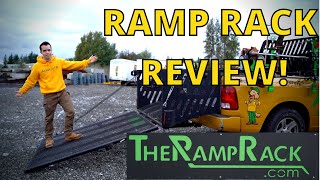
Mike Andes reviews the Ramp Rack, a no-trailer mowing setup for landscaping businesses. He walks through its features and benefits, plus what might not work for everyone.
Good morning, everyone. It's Mike Handes here with landscape Business course. And today I'm going to be doing a walkthrough of our first Ramp Rack. And so full disclosure is that Ramp Rack sent this to us for free so we could test it out, see if we liked it. And going forward, we're going to be having a partnership with them, with the franchise, so that the franchisees can get these cheaper. So let's kind of do a walkthrough. I'll give my brutally honest opinion on the whole different, whole kind of setup. So let's start over here on the side.
First of all, this is the headache rack. That is an option on the Ramp Rack website and it's a few hundred dollars extra for us here. We would not use it simply because we need to maximize how much space we have in the back of the bed for clippings. And that's the thing that's a little bit different about us. As you all know, that's the reason we've done cargo carriers for a long time on our trailer lift setups is because we need the back of the bed for clippings. And even as I mentioned today, you're gonna see like some of the downsides still for us is getting a mower and clippings in the same area. But you can see here, this is the front kind of headache rack. Really, really well manufactured. This nice thick steel. It's very, very heavy. It's like, you're not gonna dent this stuff. It's very, very well made. I have to say I was very impressed with the level of quality of the manufacturing. And so this is the front headache rack. Usually you can see here on the headache rack. And usually there is a place like a shelf there where you can put gas cans, things like that. However, again, we need to maximize the amount of space in the bed for clippings. I know that 90% of you don't have to bag clippings, 95% of you don't. We're in a very strange market, as I've begin to find out more and more as I travel the country, that we have to bag clippings. And it's very much expected. And if you don't, it would be a miserable mess. So we had to take out the rack part just so we can get more and more of the bins of debris in the back. And then we kind of, you know, put the tools and a gas can on the inside. We kind of jerry rigged that ourself. It's not necessarily Supposed to be that way, but we drilled through, made the bolts, and attached those attachments there. All the racks are from trailerracks.com and if you're a franchisee, make sure you use the coupon code that they gave us. But what's different about the trailer racks here is because of this little connector here on the side, which I think is actually really cool. And at first, we were a little bit skeptical of all the different points of kind of tension that could be on this trailer rack in terms of being here and here. And we thought it'd move around a lot more. But I like this, especially for someone that's vertically challenged as myself, it's a lot easier to get to this than from up top when they're just on the regular rack. So I really like that. It can be a little bit strange. If you actually see here, if you're looking in the rear view mirror, this can get in the way just a little bit. If you're looking in the rear view mirror and then this is lined up, you are gonna hit these. And so that might be a little bit offsetting for you as well. However, I found that just having this lower is pretty nice. They don't fall off. They're secure. It's not like they rattle too much or are gonna come off. So obviously, we can kind of the same setup on all our trailer setups with the wire, the trimmer line being underneath here. But this is kind of where the magic happens in the back where the actual ramp is. And so, as most of you know, we've always used cargo carriers. I don't know, Josh. You can flip around, see an aluminum cargo carrier that we use most of the time and we've used in the past for trailer setups. And again, we've always done that to maximize the amount of space in the back of the bed for clippings. And those are usually running more on $500. Instead of the ramp rack, which was running 25, $3,000 by the time you include shipping and all the rest of it, it's very, very heavy. I think it came on like a pallet, too. It's pretty heavy duty. You got to have it delivered correctly and everything. So this comes down, it's spring loaded, so not super heavy. All right, so a couple things about this. First of all, obviously, we're negating the trailer. That's the biggest part of it. However, from this point, the back of the hitch is a good eight feet or so. Like, it's pretty long, and so in really compressed areas, Downtown, things like that, where we are used of a cargo carrier that is more around 3ft or 4ft coming off, this does add a substantial amount of space. It's still a whole lot better than a trailer in terms of how long your truck and all of your equipment is. But still, still this does add about four or five more feet than a regular cargo carrier and a good 7 to 8ft in comparison to just driving your truck. So something definitely to consider, but it's definitely necessary to have this much space that you can get a zero turn in the back of the trailer or in the back of the bed of the truck without scraping the bottom. And this is something that trailer ramp or, sorry, the ramp rack has made changes on the past year. And that is right now or in the past. This used to be a beveled edge and the joint of the ramp used to be up here. But now what they've done is made this one piece and made it already beveled edge. And that's because you're expected to be able to get a zero turn in the back here without hitting the bottom of your deck on that corner. And that was something that they were running into, especially if you were on a hill and then this was lower and it made that angle more and more acute. And so you could run the bottom of your blades against them. That's not good. So this eliminates that. The cool thing about the ramp rack, and this is what so much why I'm really keen on using this for the franchisees, is a lot of them are in areas where just using a push mower is almost impossible because the average size of their properties are quarter or half acre. And using a push mower is just not going to be feasible. Whereas our market, we use a 30 inch mower and that can kind of go right here. And we still have the bed of the truck for debris. But if you use a zero turn and you still want to use trailerless setup, this is still an awesome option because you have all this space and you can get your zero turn into the back here. What I really like is that there's actually people who have gotten 52 inch mowers in the back of these things. I think what's Safe is probably a 48. Definitely a 36 inch mower can get in here. But the reason you're able to get these larger mowers is because a lot of people say, oh, your deck width has to be less than here, the inside of the wheel wells. But in reality, a lot of times if you look at a zero turn, where your pins are at for your tires are forward and then your deck is a couple feet, like a foot back behind that. Which means as long as your front tires can get inside of here, your deck can still be here because you have this extra two and a half, three feet beyond the ball of the truck. And so you technically could get a larger zero turn in and then the back tires be back here as long as the deck can fit inside of this area. So definitely, if you're going to get a ramp rack, definitely recommend taking it to your dealer, seeing if it's something that you can fit the type of mower that you want into the bed of the truck. And I do know that some people have slightly smash in the wheel wells in order to get a 52 inch mower in. I don't know if I recommend that doing that, but definitely again an option to be able to get a larger zero turn in here and not need a trailer. In our market though, we really cannot get a zero turn in the back because we need that space for clippings. This is probably still the biggest downfall. Even when we have a mower that's set inside of here and we have all our clippings here, a lot of those clippings can still fall back on. The wind brings it all back on top of the mower. That's still kind of a downside we're trying to figure out. And even right now with the mower on the side right here, it's still a little bit of wiggle room. So we're thinking about putting maybe a two by four or some sort of a hooking mechanism to keep that the push mower locked and centered. There's only several times a year during the spring when we really would need to worry about having the clippings being mounted up so much that we can't have them in bins. And, and when that happens now you start getting clippings starting kind of falling onto the mower. You're constantly pushing the clippings back to get the mower on here. And so it's kind of a unique situation. I know for most of you, you're not going to have a push mower on the back and a bunch of clippings. You're going to be able to use this whole space for bins, debris, other equipment and then putting your zero turn in here. One thing we haven't got yet for this setup is the, is the blower rack that would usually go here. That's why it's just sitting there for now. Those are in back order. I'll walk around the side here and show you kind of how this actually is put together. What's cool about the ramp rack, though, it is spring loaded for the lifting up the ramp. So it doesn't take like a whole bunch of, you know, you can literally do this with one hand. It's nothing super heavy. And then to lock it in place, these just come out. So to unlock it, you just pull these and then you can unlock the ramp and it comes down. In terms of the kind of build on the back here, you can see underneath, it comes actually off of the 2 inch hitch receiver is kind of reinforcement for the back of the ramp. So it comes right off the back. There's pins in there. And to take this thing off, we don't really have any use to take it off. But you could, you could definitely, by all means, take the pins out there. Take the pins out here on both sides. And then this should technically just come right off. We don't really plan on taking off. Most people that do take these on and off say it usually takes them only like two or three minutes. I can definitely see that how that would be possible by being able to have a jack or something underneath and just taking the back of this thing off.
Another thing I like about the ramp rack is you could still use the bed of the truck for things like materials. So for example, if we wanted to load up gravel or mulch or soil, you can still get in the side here with a. A dump or the loader and put in, you know, a yard or two or whatever of material, Throw the ramp down and go and install it, which is really cool. You don't have to have a trailer. You don't have to worry about all of that. You can still use this for landscaping and cleanups as well. Again, on this side. This we will in the future when we order these, we are going to order them without the headache rack. Because we need this extra space for clippings. And then what's on connected to these right now would be just on the side side on the rails like all of our other trailerless setups. So overall, we're really, really happy with it. I have to say, like, I was really impressed with just the overall engineering and manufacturing of the product in terms of just it's, you know, just really thought through some things that people wouldn't usually in terms of encasing this with metal, Just the ruggedness of the construction. Very, very happy with that. I think Honestly, if we didn't have to bag clippings, I think for everyone, having no trailers is something that's super, super feasible, especially if you have somewhere to store your equipment. And so for us, we store our mowers inside of a storage, just one of the shipping containers. That's a simple and kind of cost effective way of doing things. But honestly, if you're not bagging clippings, you get a zero turn in the back. So there's really no excuse about size of property because you can still get a zero turn in the back of this thing. And trust me, it's a whole lot cheaper this even that. Even at 25, $3,000, it's still a lot cheaper than buying a $6,000 trailer or $5,000 trailer. But more than that, it's the maintenance on that trailer. It's the four tires, the brakes, it's the thin sheet metal. It's having it licensed like the trailer and like registering the trailer. All of those things cost money and make this much more effective in terms of, of cost. Last thing I would say about it is just the installation process. You're definitely gonna wanna know what you're doing. It's not like super, super, super easy. But I think once you've done one or two of them, you get figure this out pretty quickly. And so when you order from Rambrac, they do ask what type of truck you have. It does depend somewhat, but they just fit right into the. I don't even know what these are called, the holders here on the side. Like any other kind of attachments that back of your truck. But it is pretty heavy. So having two people I think is pretty important. And I think our guys did it in about an hour. I'd say their future ones they could probably do in like half that amount of time just because they figure out how to do it. But for us, we did have to kind of modify some things manually in terms of drilling holes to make it work for us with the fact that we do pick up clippings. So hopefully that helps. This is the ramp rack again. They did give us this one for free and let us use it, see if we like it and we did like it. We're going to be putting these on all of our trucks over the winter and we're gonna be encouraging all our franchisees to be using these if they have zero turns or if they do not and they're using push mowers like us, to be able to have all of your trucks in one spot without a trailer, without having to train all your guys on backing up trailers, jackknifing trailers, braking trailers, putting in the brake controller on all your trucks. This is definitely the way that you want to go just to minimize cost and minimize the amount of training you have to have for new hires. So hopefully that helps. Make sure you check out landscapebusinesscourse.com we'll see you next time.









