REAL Financial Statement: Small Lawn Care Business, BIG Profit Margins!
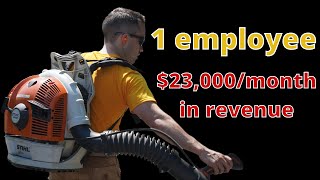
Mike Andes walks through Augusta Lawn Care's Mount Vernon location, a two-person operation that made $23,800 in August 2020 with roughly $11,000 to $12,000 net income. A 50% monthly margin is possible with lean systems, pay-for-performance pay, and tight expense control.
Questions this video answers
August 2020
$23,800
Just under $12,000 (about a 50% net margin for the month)
Two people: one general manager (Tim) and one field employee
$1,000 per week
Chapters
Hey, everyone, it's Mike Andes, and you're listening to landscape business course. Today we're going to be going over the Mount Vernon Augusta Lawn Care location. And last week, I made a video about the Bellingham location that does, you know, last month at 199,000 in revenue. And a couple people commented that, hey, that's really great, but, like, it seems a little bit like, you know, out of touch or out of, you know, not obtainable. And so what I thought I'd do today is do the same thing, but for the Mount Vernon location, that only has a manager and one employee, one field worker. So basically, two people working. And this might be for you, like, exactly what a lot of you might do. And that is you are the owner, and then you have an employee. And so I'm going to run over the numbers and if you would like to see a bigger landscaping company. The Mount Vernon location that we're talking about today is our second corporately owned location for Augusta Lawn Care. And we. We run a smaller operation, and we do that so that we can test the model, test the marketing, all the rest of it. But if you want to see a bigger landscaping company. Bigger, the Bellingham location is a lot bigger. And you can check out the video I made last week, and it shows all the numbers that we're doing today, but for that location. So check that out. So Mount Vernon's location started about now, six months ago, Almost six months ago. And I made a video a couple months ago showing the first three months where we actually lost money every single month. Today I'm going to show August 2020, and I think it's the fifth month in operation. And this quarter, it will be the first quarter where every single month was profitable. And we don't really intend on growing the Mount Vernon location past 100,000 in revenue. It'll probably stay pretty small. Sorry. In monthly revenue, 100,000 in monthly revenue. We don't plan on growing it much any bigger than that. And we're gonna keep it smaller. We're going to make it really profitable and use the systems from day one. So the reason I'm really happy I really wanted to start the Mount Vernon location was we've made a lot of changes to Augusta Lawn Care in the growing to make it what it was at the Bellingham location and make it really profitable and things like that. We've made a lot of changes, but I wanted to see what's it like, how fast can I get something to profitability. If I was. As if I was Like a franchisee. Like, I wanted to do it myself. Like, I talk about it and we teach it, but I wanted to actually go do it myself. And so that's what the Mount Vernon location really is, is us starting a location using all the systems like a franchisee. The Mount Vernon location pays franchise fees. They pay command center. They pay all the regular fees that a franchisee would. And I wanted to make sure that model works flawlessly, both for a small business, like we're going to talk about today, and for the large one that is proven itself in the Bellingham location. So let's go ahead and jump into my computer. I'm gonna show you this here. This is the profit and loss statement for the Mount Vernon location. So this is August 2020. Our sales were $23,800. And this could definitely be more. And the reason for that is because I know that there were two weekends in August where we didn't really work the full. Like there wasn't. We didn't work the Friday or the Monday. There's a couple times. So I really think if they were working every single day, full schedule all the time, they could probably hit around 26, 27,000 in revenue. But still, that's really good number. Again, we use service autopilot, and that's what breaks down where all these sales are coming from. But in terms of QuickBooks, you're looking at right now, it basically is just showing when the money comes into the account, we allocate it to sales. But if, you know, obviously in service all pot, you see the breakdown a lot more. But you can see our expense side of things here on the bottom. We keep it really simple. We don't have a lot of different line items. And the reason for that is just simplicity sake. And as you grow, you do usually add more line items, different expense categories and things like that. But I really think it's important to keep it simple. All right, so not a whole lot of marketing that we spent on Mount Vernon location. We've been pretty busy. We've been able to do some Facebook ads next door ads. We'll be probably adding a little bit more to that in the marketing department just to keep busy and keep the two employees busy down there. And so just in case you haven't watched previous videos about Mount Vernon location, Tim is my brother. He's also the general manager. So he does all the estimates. He basically runs the place. And he works in the field too, as if like he was an owner and then he has one employee. And so that's basically how it works. Two people. One's an owner, kind of acts like an owner. Like I haven't been there in two months, maybe three months at all. I don't even drive down there. Tim really does everything in terms of billing and estimates and the whole nine yards. He has command center to back him up. So you're going to see here under legal and professional Feees and Services, $2,300. That includes his franchise fee. And it also includes his, his command center fee. And so a lot of people are like, oh, $2,300, that's a lot of money. And it does, it seems like a lot of money. Like that is 10%. 10% of his revenue goes to command center. And the bottom line is this, is that he doesn't have to answer his phone, he doesn't have to answer his emails. He simply gets notified when he gets an estimate on his dispatch board. And he works with the command center on his scheduling. They do everything for him. So they're full service, which means they do everything. They're in his inbox. They run P4P pay for performance for him. They do everything and he gets charged accordingly. And literally his thing is he has to do the estimates and he works out in the field. And so it's a really good setup for a potential owner. And I know that this is the biggest hang up for why people don't join the franchise or why they wouldn't hire someone in, you know, in their office. Or to be someone like command center that takes your phone calls and everything, you become much, much more efficient. Tim, even though he's the general manager doing estimates, he's still a profitable employee. By able to be able to work out in the field and then does two or three estimates a day in the afternoon. And so that's very, very important. If you're small, you're not gonna have the financial wherewithal to be full time out of the field. You're gonna have to work, you're gonna have to still be a revenue generating part of the business. So we got advertising, credit card processing, we use it through service autopilot. Again, I've explained this before, it is a big expense, but we'd rather have that instead of having to have a accounts receivable like 40 and $50,000. We'd rather just get the money right the day we want to bill and we're willing to take that hit. Fuel expense. We got insurance. Again, for insurance, they only have two trucks. They got one mowing truck and one landscaping and Cleanup truck. And so the insurance there is auto and then professional liability or commercial liability, I should say. And when you're small, your liability insurance should not be very much. And especially if you're just doing lawn care cleanups, really basic stuff, like if you're doing pools or you're doing excavation or you're climbing trees, yeah, it's gonna be a lot more. But you shouldn't be looking at more than 50 to $100 a month if you're just doing really basic services. Just another reason why we really try to focus on simple services. And that's what they' down Mount Vernon. I don't think they've ever done a job over 40 hours. Like, no big, big projects, no hardscaping, even putting in, like edging along the lawn. They just don't do it. Like, if Tim doesn't know how to do it and we just don't do it. We focus on cleanups. Simple, simple landscaping, like mulch installations and maybe some gravel install, but trimming bushes, all of that's in the wheelhouse. And that's the model we want to follow. Just really simple services. You can get an employee in there, train them up pretty quickly, and they're good to go. But it does affect the insurance as well, and that's why it's so low. Again, legal and professional fees, that's 100% all command center and the franchise fee. And so Mount Vernon's in their first year of being a franchise. And so they're paying $600 per month to be a part of the franchise. And then they are paying after the first year, it's 1,200 per month, but the rest of that. So if you take 2,300 minus 600, they're technically paying about 17 to $1,800 for the services of command center, where they answer all their phone calls, the emails, do his P4P do invoices. They do basically everything. The only thing Tim does is each night he does dispatch the jobs and send out the schedule and obviously the estimates. But they put the estimates together at command center. They sell the jobs, they put them on the schedule. They make sure his calendar is all filled for jobs, things like that. They do the sales aspect too. Office supplies and software 366. That includes service, autopilot and other stuff that they use in terms of software, rent and lease. We pay $300 per month for that. Go back several months and you'll see when we first started there, beginning of June, Looking at the videos, you'll see I did a tour of that facility down there. Not very big, but it concludes all of our dumping fees. So you'll see there's no dumping fees on this because we were able to dump at this place where we rent land. And we did have to spend a few thousand dollars on putting gravel in getting a storage facility. I think maybe $6,000 or so. But for 300 bucks a month, we were able to park the trucks. We were able to dump all of our debris. We have a storage container, one of those like modular storage containers that come over on the ships. 20 by 20ft long, 8ft wide, 8ft tall. And we use that for storage. That's parked there as well. So really, really awesome. And we're trying to expand a little bit more even now. But you know, this is the thing. We got two trucks. We basically got two employees. And it's very, very profitable. Very few minutes of the day are not revenue generating in terms of just the estimate side of things. And then you got command center, right. And then franchise fees. So then we got. Let's see, we got repairs and maintenance. So obviously things break. They have to take the mowers in. Things like that. Taxes and licenses. So you'll see this is a little bit different here than the Bellingham location. Because the Mount Vernon location is so small. They don't have to pay their sales tax on a monthly basis. They have to pay it on a quarterly basis. So they did not have to pay taxes. Sales tax this month. Licenses was probably for like the trailer licensing or something like that. Tools and supplies. This is going to be materials, things like mulch and gravel, things that they use, those supplies. Any tools that they purchase throughout the month. Wages and employee related. This is all their wages. Tim is on a salary and then he gets a percentage of the profits at the end of each quarter. And then the other Employee is on P4P pay for performance. And he does really well. I don't believe. I'm 99% sure. He hasn't hit base pay, which is $18 per hour at all. He's always consistently above that. He's just a really good worker, speed and efficient wise. And so it was a new business. And so we had to kind of do certain controls at the beginning too, just in terms of quality, like yellow slips. We implemented the yellow slip system right away. But those are things that are different in a smaller business where like the buck kind of stops with you. There's not a big office staff to like kind of help you or like other employees to come Help you. And so that was something we had to learn. But the, you know, the employee and Tim dinner is great down there. They do a great job. And then Tim will get a quarterly basis. He gets a percentage of profit down at that location, since he is the general manager. So $23,000 in revenue. We got just under $12,000 in net income or net profit in the month. And so basically it's 50% profit margin. If you run the numbers on that, it's almost exactly. It's just over 50% net profit. And that's after all the expenses. There's nothing that's like really hidden there. Obviously twice a year, because we do pay bi weekly, there is going to be times when there's three paychecks in a whole quarter or in one month, I should say. So that's not taking into account here. Also the taxes part, not taking into account because this is a monthly basis, the taxes will come out like next month. So keep those things in mind. It's not going to be 50% profit all the time, but I do believe 30 to 35% profit with this business. And that's after the salary that, that the general manager takes. General manager takes $1,000 a week salary. And these profits are on top of that. So the reason I'm running this model is cause I would love for someone that's like self aware, like, look, I don't want a bunch of employees. I just want one or two employees, one or two trucks, and I want to run a franchise and they can take a healthy salary per week and the business still be profitable. And so that's really the goal with the Mount Vernon location, is proving that. And you need. What I would recommend you do if you're in this situation of, you know, 20, 30,000 in revenue, look at your numbers, like, are you spending a lot more on certain things that you might not need to. Like you do not need a full time office person paying them $4,000 over the course.
Of the month. You don't need that at that size of a business, you know, but then you also don't want to be spending $1,000 or $2,000 a month on rent. You don't want to be spending, you know, 15,000 out of $25,000 on wages. Like that's an incredibly large number. You don't want to be spending that much on labor. And so I just really, really encourage those of you that are smaller. You don't have to become big. You don't literally within three months of being unprofitable we got to profitability with the Mount Vernon location, and I do not see us growing it very big, but it will be very profitable. Month after month after month after month, it becomes a little money machine. And it's not as much stress because you don't have massive amounts of variables of employees and lots of trucks and a bigger shop and more and more liability. And your expenses go up and your overhead goes up. This is a really, really, really simple business. And it's following the systems we have at Augusta in terms of keeping the services simple, the estimating process simple, and following the systems. And I think a lot of times, even when franchisees join Augusta, it takes them like a year sometimes to just to like, oh, like these systems are here for a reason. Like, there's a reason why we shouldn't offer like spraying and treatments and core aeration and thatching and then landscaping this and tree trimming. Like, we should focus on the basics. We should focus on the simple things. That's what all they're doing here in Mount Vernon. If you're trying to go really big, yeah, you're going to add services to grow. And I get that you're going to expand in terms of where your demographic reach will go, but like, if you're not, if you're going to stay small, 1, 2, 3 employees, focus on the simple services and just scale it out. It'll reduce your stress. You can charge more. And this is just something that I really, really would encourage you look at, be inspired by and realize. You don't have to grow really big to grow a successful business. You do have to become ultra efficient and lean. If you're gonna take a business that has 20, 30,000amonth in revenue and make it super profitable. And maybe you're at that point now and you're like, okay, well, I wanna grow. But it just like the mental pressure and strain of employees and more trucks and liability and a big having to have office person for my phone and all that is expensive. Just boil your brain. You don't have to do that. You don't have to grow. Realize though, if you're gonna run a 20, $30,000 per month revenue business and be profitable, you gotta be ultra efficient, ultra efficient. You gotta know what services you do. You need to have your estimating buttoned down. You need to have exactly how your estimates are sent out. You need to have really, really efficient closing. So, for example, Tim last month was at 55% close ratio. Just where we want it to be at. If we're trying to scale the business and make it ultra profitable. Like the Bellingham location, they're like 35, 40% close ratio, but their prices are significantly higher. They charge bigger estimate fees and all the rest of it, but they are bigger business. There's more value to having 10 guys show up on a project like have the manpower. And so definitely, if you're in this size of business and you're really weighing whether or not you should grow or you don't have to grow, like Tim is paying, the Mount Vernon location is paying for franchise fees and they're paying for someone in the office to be entering their phone and all the rest of it. They are. They didn't spend a lot of marketing and advertising, but that's because they really invested. Go back a few months ago and look how we spent like $15,000 on marketing those first few months and we didn't get a lot in return. We were making like 5, 6, 7,000 those first few months in revenue. But that investment is what paying off now where you're not spending a lot of marketing and yet you're making $11,000 in profit on top of the payroll, the wages, the salary that the general manager is making. So if he was the owner, like if he was the franchisee owner, he'd be able make that salary plus the profit. So I'm making this video to inspire those of you who feel like you have to grow, you have to grow the business. You don't. If you're not gonna grow the business and you want to make it profitable, you've got to get efficient, cut out every single bit of waste. Look at every single one of these line items on your P and L and ask yourself, how can I squeeze every dollar out of this and just got to cut waste? You've got to have that one or two employees on pay for performance. Whether it be profit sharing or you actually give them a percentage of revenue like we do, you've got to stay with those systems and you can make it work alright. So that's why I want to make this video today. I hope it inspires you. If you're smaller, if you want to grow, look at the other P and L that I shared of the Bellingham location shows it when it's really big. Realize that going from this Mount Vernon's location size to the Bellingham location size, that's a lot of money you're going to spend on trucks and equipment, employees and uniforms and office and all the rest of it. Some people aren't cut out for that. And it doesn't make them any less of an entrepreneur or less of a person or anything like that. It just means that they're self aware to realize they can only handle so much and you can make it profitable. You can make it work. What I see though too often is someone doing 20 30,000 revenue having six and seven employees, a bunch of trucks, loans. That's not what will make the business successful. You will not be able to run a profitable business at 20 to 30,000 revenue if you have multiple trucks, five and six employees and you have big turnover on them and loans and fancy equipment. Just not going to be able to do it. Just will not be able to do it. And this is the range 20 30,000 revenue where a lot of people either go big or they go backwards because this is the middle zone. But you can make it profitable if you follow certain systems and are ultra ultra ultra efficient. So I hope that helps. Check out landscapebusinesscourse.com for more education. Check out the links below. Lawn care web design coaching calls all the rest of it in the links in the description. Thanks so much. You've been watching Mike Andes on the Landscape Business course.









