REAL Team Meeting: Hiring, Firing, and Culture!
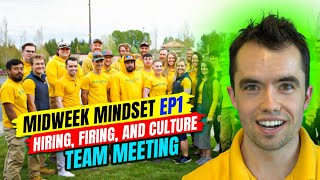
A team meeting led by Mike Andes about hiring, firing, and company culture at a landscaping business. Mike describes a hiring philosophy of "you have to swing if you’re gonna hit" (hiring often to find fit), while Marcus and Liz recount a recent case where a new hire ("Stone") was dismissed after two days for poor field performance and lack of teamwork. The discussion covers practical red flags (not asking questions, not supporting teammates, safety concerns), conditional rehire advice (get experience elsewhere, improve attitude), and a brief legal note about Washington being an at‑will state and how termination reasons must be framed carefully.
Chapters
Good morning, everybody. We are headed to Augusta Lawn, Caribbean County. On Wednesday mornings, we started to do a different kind of a meeting with our crew. It's optional meeting. They meet about 15, 20 minutes early before most everyone shows up. And we go over something to do with leadership or personal finances, like stocks or real estate, or just talk about some sort of business sort of topic. So today we're going to be talking about hiring, firing. We're actually gonna have one of the members of the team talk about, actually last week, Liz let one of the trainers fire the person after two days. So he's gonna talk a little bit. We're gonna talk about hiring, firing, the process of interviewing somebody, and all that good stuff. So this just started. Usually we just have Monday and Thursday team meetings, but Wednesdays are now an optional one just for people who want to learn extra things about business leadership. ET Interesting come along for the morning. A lot of morning meetings, basically. I don't know what the theme of this exactly is, but we're just gonna try to knock out some meetings.
So today we're just gonna talk a little bit about hiring, firing, employee stuff, that sort of thing. So general.
Our sort of philosophy on hiring is you have to swing if you're gonna hit. That's kind of how we look at it, which means you're going to have. You're going to have more turnover on the initial. What I mean by that, what I mean by you got to swing in order to hit. You have to hire someone a lot of times just to see if they're even any good. And especially in this industry, like if you were just waiting around looking for the perfect employee, they're not gonna come around. It's gonna be very hard to find enough people that if you always were looking for the perfect IDE, 100% had all the experience, checked all the boxes. And traditionally, that person isn't gonna stay around for a very long time. A year or two goes by, they're gonna find something else, usually internally or in another company just because they're that high caliber. Right? So especially on the interview process. Our kind of thing is, okay, if you interview good and they're decent enough and the references are really good, that's usually when you at least give them a shot. We're trying to implement too. And also having experience in a couple years, that part is also like, okay, for example, if you work at a golf course, is that lawn care experience. And you work at a farm and you're like field brushing. Working with skid steers is that experience. So our big thing is kind of is that you do have to swing, give them a shot. And especially right now when it's hard to want to work hard, just applying for this kind of a job and being physically able to do this job is kind of a big thing. So that means that you're gonna have people within two days working. We were just like, they're not gonna work out. Their references might have been great, but they might have been doing something else that was more aligned with their strengths. And even though their employer's like, oh, yeah, they're the best and like super loyal and all the rest of it, but they come here and they cannot, like, they don't know what two cycle is or they don't know how to walk straight lines. Like, those are problems. So I wanted to hand it over to Marcus because on Tuesday, last week.
Wednesday, something like that.
Yeah, Somewhere mid week, we had hired Stone and his references came really good in, like, over the top, amazing. And usually if the references are over the top amazing, that's when we're giving them a shot no matter what. But again, if they're in some sort of industry field or they're doing something in their day to day at that place of work that is better aligned with their skill set and personality, they might be amazing in that role. Just not here. So I'll hand it over to Marcus because at the end of the day, he was actually the one who fired Stone nicely. But tell us the story about that. Come on in. Come on in.
Yeah. So on, let's see. I think Tuesday last week was his first day with me, and then Wednesday was the second day, which is the final day. It's only two days, but I feel like after the second day I was like, you know, this guy's really just not going to fit with the team, so why waste any more time? I mean, like, even after the second day, like our very last mow, something like he forgot to like turn on the blades and like he just mowed, like.
So we had to do the whole thing again. It's just kind of stuff that's like I showed him how to do like everything I could, but still everything, like I told him it seemed like just kind of almost went over his head. He kind of took it as okay, sort of a. Maybe he's kind of more like an independent guy, I think, rather than a team player. So I think it's for the best.
So give some of the examples though, that you, you know, like throughout the day, you text me, I Don't think he's going to work out. He's not a. Air. So about, like, after you were done with the one mow, and you said, we're gonna go back here and we're gonna weed and things, and then what you did.
Yeah.
Oh, yeah.
There was. It was like a mow and then a little kind of property, like, leaf cleanup after, like, 5, 10, 15 minutes. So after the MOW, he kind of gets in the truck. He had just asked, like, to stop for the gas station, and he got subway, too, so he was just sitting over the subway.
And so he was, like, sitting in the truck E. And then, like, we had finished the MoW, so I took a bucket and a rake, and I went out and, like, was starting to get the leaves and stuff. And I had mentioned to him, okay, after mowing, we're gonna do the landscape maintenance. He saw me and just kind of was like, that's not my. My part. So that's not really. We kind of want people.
Do you stay in the truck eating?
Yeah.
Nice. Wow. So tell. Tell. Tell everyone what happened when you got back, because you were the one that actually fired him.
Well, Liz and I. I just came into the office.
You did the dirty work.
I was just like, hey, Stone, like, we need people. Two years experience. Like, I've seen so many things that you're just kind of really not catching on to, and. Yeah, he's just really not getting it.
But you said it in a really nice way.
Yeah.
About where you could find somewhere else that, like, his skills would be better or get the skills and then he can come back.
Yeah, you could come back. Like, there's a bunch of other landscape companies that wouldn't really care if you got Subway all the time or stuff. So I feel like if he gets the experience and then, like, he kind of changes his attitude a little bit, like, that's what we're looking for, so.
Well, you know, when I interview and, like, you two will remember because right at the beginning, I talked about that we're here all about each other and that, you know, if we're not feeling good or had a bad night or whatever, when it comes, we're still just about helping each other get our jobs done. So he had. Had Calvin. Did either of you meet Calvin? I don't think so. Okay. So Calvin was here for five weeks. But the very first day, Marcus knew no, like, he. It's not gonna work here. And he's a pretty good judge of character, so Marcus didn't want to make that mistake. Again, this time, Right? And so I told Marcus, I said, the difference was the first day you worked with Francisco, it was completely different. Like, you just judged his character and you knew he was a team player. You're jumping out of the truck, you're helping your person. You're not done till you're done. Right. And so with Stone, I even explained to him, when I talked to you in the interview and then you were with Marcus, did you not think it was weird that Marcus said, we're gonna go back here and do this now? And you just sat in the truck? And he goes, well, communicated that. I said, but do you remember the week before we had the interview? And I said, like, we're not done till we're done. Like, we're helping each other till we're done. He's like, yeah, he needed to communicate that. And Marcus was really good. He said, that's fair. He said, that's fair. But I feel like if you went somewhere else and got the experience you need and then wanted to come back and work on being with us as a team, maybe we could try again. So it's not so much like Lee didn't have a ton of experience, but he had a great attitude. And if you're teachable and you have a great attitude, if I was a guy in the field, I'd go home and YouTube stuff like crazy and try to learn. So I would kind of. Oh, that's what he meant by that. That's why he did that. If I wasn't sure, Right. So I'd be doing my own education on the side to try to be better.
So just back to our topic real quick before we all just leave. So hiring, firing. The hard part, too, is from a legal standpoint, right? When you fire someone, you got to do it in the correct way.
In Washington state, it's what they call an at will state, which means basically, you can fire someone for no reason, and that's it. Like, there's no legal course they can take. If you stay fired, what you get into trouble for? And I've gotten in trouble for when I fired my first employee back in the day was.
Is when you give them reasons. So, for example, you can't fire someone because they're sick. You can't fire someone because they did something that was, like, verbally not allowed, but not in the handbook. Right. There's certain things like that, Right. And so I got sued and had to settle outside of court when I fired my first person because I was trying to be nice, saying, hey, like, because you are injured, I'm going to have to just let you go. When really they've been smoking in the job and I could have fired. I should have said that's against the policy handbook and you're fired. So there's certain elements. Like even the way that Marcus framed it was perfect. It's like, look, from an experience standpoint, you know, we required two years. You came here, you don't have that and you can go get it somewhere else and you're welcome to come back.
It's okay that he didn't have two years of experience, but he said he had experience and he didn't.
And overall, like, he's not really a team player.
That's the main thing.
Like the two. Yeah, two teams.
Like if someone comes here, even if they don't have experience, but they're like trying their hardest and they're like here early and they're trying to support their trainer who is taking a hit on P4P. Like there's a reason why Brad Marcus, not so much Nick, because he did the other job, but like that it hurts for P4P. And they don't really understand that because they're just new usually. But.
The trainer is taking a hit on that and for them not to be supporting that person and like trying to help them and learning from them and asking questions. Like you said, he didn't ask a single question in two days. That person's never gonna improve themselves, period. They're not gonna listen to audio books, they're not going to come to meetings like this.
Right.
If they're not even asking questions when they don't know what they're doing. Right. So that kind of a person is not gonna succeed here. And they're probably not gonna succeed at most places or move up anywhere besides just a low level position until they figure out they've gotta willing to learn. Right. Like the position of being able to know, like I need to learn something should never leave a person the moment you're like, oh, I figured it out, or like, I'm good, you're toast. Like, you'll never. You'll cap out where you're going in life in general, whether it be relationships, you know, finances, business, career, whatever. Right?
So I think we should come in. Frank, he doesn't have a lot of experience, but I've heard that you ask a lot of questions, which is really good. Or what did I do wrong? Or you're trying to read the body language of Nick or Austin. Okay, you seem a little upset. What Did I do? Maybe they're just tired. Maybe they're just annoyed, but at least you're going, okay. Was it something I did wrong or, you know, ask?
The worst thing is indifference, right? When someone makes a mistake and they don't care, Holy, that freaks me out. Like, like, for their livelihood in general, but just for as a team. Like, if someone does makes a mistake, they should care enough to be apologetic, figure out how to fix it, try to improve themselves. If they're just like, ah, whatever. Like, no, like, here. I just.
The last day Calvin was here, he almost killed him and Ben with the truck and the trailer. And when Ben screamed and he got back on the road, he. No, no expression. Like, oh, my God, what just happened? Nothing. Like, and he almost killed him. So that was not good.
So anyways, anyone want to add anything on that topic of hiring and firing? You know? Okay, cool. So, yeah, we're hiring someone tomorrow. Friday I have an orientation with someone. And so we're really trying to get more people because right now, like, today, everyone's solo on projects, which makes it tough. So any. You'll see it. You'll see people come in. And a lot of times, I know all of us judge people immediately. Like, it won't be around long or they're gonna be here for a while. But I think the big thing is we definitely do try to give people chances. We probably lean on the part of giving people too long of trying to prove themselves.
But we try. Like, we always think of someone like Austin, who, like, we wanted to fire three times and that has turned himself around and figured things out. So we lean towards that side. But at the end of the day, if it's gonna put people through hell of people who have been here for a long time, then that's when it's like, come out. So that's why we listen to the trainers so much. Because, you know, regardless of how they act here, like, when they're around us, like, oh, yeah, this is great. And, like, if they're making your life miserable, then we don't want them around. So that's why. That's where really, like, it was great that you actually did the talking with the firing process because, like, that's the reason why, you know, his attitude here was great. He was super nice. Great orientation.
I'm doing really good.
And so that people can put on a show all day long. Right. That's why, really, our hiring firing is based upon what people say in the field. Cool. Have a great day, everyone. Thanks so much.









