Sam Gustin: Troops Mowing, The Board Room - 003
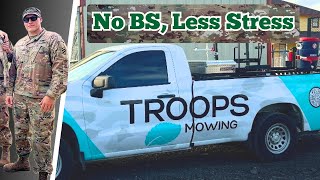
This content was created by Mike Andes. This content was uploaded by Mike Andes. This is a YouTube video titled "Sam Gustin: Troops Mowing, The Board Room - 003" featuring a conversation between Leon and Sam Gustin, the owner of Troops Mowing. The discussion covers various topics including business challenges, leadership styles, company culture, and personal ethos. Sam shares insights from his military background and how it influences his leadership in the lawn care business, while Leon discusses his experiences working with Mike Andes and the importance of proactive business strategies.
Chapters
All right, everybody, welcome back. Another episode of the C Suite Unfiltered. Another edition of the Boardroom. So I am excited to bring on Sam Gustin, who is the owner of Troops Mowing. He spoke at Mike's Conference Lionscape Summit in Louisville, and he reached out and said, hey, I'd love to be on the pod. And I said, I'd love to have you. So, Sam, if you want to give the folks maybe just a brief introduction if they don't know who you are, and we'll roll from there.
Yeah. Thank you, Leon. I just want to thank you for having me on here. It means a lot. So I am living here in a suburb of Austin, Texas. It's Hutto, Texas. And we. We own a lawn care company. We're working on our second location right now. So we're two weeks into the start of our second location and dealing with all those hurdles and trying to figure out how to copy and paste a successful location all the way back. Take me back a few years to back when I was a solo operator trying to figure all that out again. And that's kind of where we're at with our business.
We're in the thick of the spring rush here right now. We're having some employee issues with offering people and having them not show up on first day and people smoking weed in our trucks and all the fun stuff. So we have enough work for 10 people, and we got about five people to do it. And so we're in the process of jacking up prices, trying to lose customers, and we jacked up prices tremendously and haven't really lost a single customer. So that's also another good problem. Yeah, but a problem nonetheless. And so that's kind of what we're dealing with on our side of things. And super excited to, you know, speak with you, Lee, and continue further in this friendship. It means a lot.
Yeah, definitely. No, I really appreciate you taking the time to carve out, especially with so much on your plate. So, yeah, maybe. Maybe we dive right into that because, you know, people love the juicy details. So went from you have work for 10 guys, that you only have five guys on the team or crew members. What happened? Was it firings? Was it people leaving? Was it something you made a mistake on? Like, tell us kind of what. What happened there?
Yeah, I mean, in the true nature of taking ownership in all things, I. I feel like I need to do some self diagnosis here and see what I possibly have done wrong. I'm sure there's something I could have done differently. We had, we had a good group of guys last year and one of those good guys is now the general manager of that second location. So inherently we lost him for this location. We had another two guys, they were both brothers. One of them, no call, no showed for two days in a row. And we don't have flexibility for that. And the other guy had to relocate his, move in with his wife's family. So we lost at the core of our good employees, November, December, January, which is fine, that's a good time to lose them. But then we had to, you know, transfer over and get a bunch of new hires and training, basically starting over from scratch, training a bunch of new people. When you're low on cash flow throughout the winter season and jumping right into, you know, 70 lawns a day, it's. It burns people out. And throughout that process, we, we've also, I think we hired six people. I think we got six approved job offers. And three of them, no call, no showed. And one of them that did show up, we, we caught smoking, you know, weed in our truck. And he didn't believe in P4P and he was, you know, coming from a large scale commercial landscaping company where they're, you know, paid by the hour, no like quality checks. And so he was telling the rest of our guys here like, hey, I know how to cut corners. Just like follow my lead. We'll make base pay. You know, it will make more on base pay for X amount of hours than we would on P4P. And like I just broke it down. We had a guy yesterday make 326 bucks in nine hours. And I'm like, dude, P4P works, man. But the weed in the truck was, was that final straw where we had to cut them. And then another guy.
Just this week, he just like verbally assaulted, you know, an employee here and we just not gonna have, I'm not gonna like deal with that.
And then another guy, his wife, you know, had self harm issues going on where he feels like he should just be at home and so just deal just dealing with, with all that stuff. So.
Yeah, yeah, definitely. It sounds like too like not excluding the last employee that you mentioned. Sounds like it's a personal thing going on. And hey, sometimes you just have to part ways. I mean we had that recently at one of Mike's locations with outside of Myself, one of his most longest tenured employees. And just hey, stuff happens outside of work. We get it. And sometimes you got to step away and that's fine. Those other three folks, sounds like there was a very clear grounds for firing. And as Mike always likes to say, firing dictates culture. So how has that been responded to by the team that has stayed around? Have the stories come out about all the other negative things that they were doing? Are they happy with your decision? Are they frustrated? What has been the response been like, no, they're.
They're happy. We, overall, we got the, you know, the sour apples out. We have a really strong culture here. It's. It's almost like a family. Like, we're. We tell each other, like, mowing lawns in 110 degrees in the summer is not the. The most fun thing to do with your summer, but it almost feels like you're coming to work with your buddies and getting a paycheck. And so that's. That means the world to us. And, you know, I'll call our cultural values. We, you know, hire and fire based off of those or hanging up on our wall. But they. They took. They took the firings. Well, they. They agreed that they were bad apples and they're bad for the culture. And we told them after we fired those employees, we're like, let's take. Let's review our cultural values. And you tell us if we fired off of those cultural values. And they all were like, 100. Yes. And so it was. It was a good way to re. Reins. Reinforce our. Our culture and what we stand for. And it also kind of set the ground rules where it's like, hey, if. If you're not going to, like, prioritize positivity and efficiency, we're not going to prioritize keeping you on payroll.
Yeah.
So that's kind of where we look at it from that standpoint.
What are the core values that you hold to or standards within the business that you're going to hire fire over?
Yeah. So we love acronyms. I don't know if that stems from the army, but we use troops as our acronym. So T would be thoroughness, R is reliability, always observant. O is ownership, P is positivity, and then the S is selflessness.
Cool. Yeah, I like that. What would you say? You know, obviously you don't want to pick a favorite, but what do you say? Maybe you naturally embody and really try to embrace.
As the leader of the team.
I've embraced the ownership standpoint. We had a leadership meeting with our office manager and general manager and ops guy, Dylan, that I think he met. And our GM is the one that was doing bear crawls around the cafeteria.
Okay, nice.
If you don't Understand that reference. Come to the next landscape.
I sat down with them and I was like, hey, guys, this is what you do great. This is what you do great. This is what I see in you. This is what I see in you. And then I open the floor to be like, I need you to tell me what I'm not doing good at. And so I. I'm opening the floor for criticism.
Pointed at me because I want to be better for them and taking that leadership standpoint to where it's like, hey, I'm not perfect, and I want to be better for you specifically, I think will translate down to know their subordinates as well.
Yeah, that's awesome. And kudos to you for embracing that, because I think personally, one of my favorite things, speaking as the employee. Right. You're the. You're an owner. I'm an employ employee. I'm not oblivious to those role differences. But that is one of my favorite things about working for someone like Mike is that he embraces constant feedback and constant improvement. And that. That is why I want to work hard for someone like that, because he doesn't stick his nose up at you when you have an idea for improvement or when you want to push back. As long as it is constructive in nature, you can throw anything in Mike's face. And I respect the heck out of him for that because I know he will listen to me and other people on the team if we are being constructive with our feedback. I mean, a week or so ago, myself, Mike and Liz had probably one of our most heated conversations we've had in a long time. And at the end, it was like, all mutual respect, all positivity and action was taken. And, like, Mike could have pulled the CEO card or like, you guys don't understand, or it's my business. And he just, like, sat and was receptive and. And he pushed back on me and Liz, and it was awesome. So I think the more you can embrace that, the better bond you will build with your leaders and your team. And I think the frontline employees will also see that. So kudos to you for embracing that, man.
Yeah. Let me ask you this question, Lean. You don't have to touch on it if you don't want to. Cool. I was listening to that last C Suite. Do you mind opening up on what that conversation was about? You guys kind of left it vague. Probably wasn't intentional, so you don't have to. I was just very curious, kind of what you pushed back on him for, and I guess maybe what you expected out of that conversation and how he handled it.
Yeah, it's a great question. I won't get into the specifics, obviously, because it is related to the franchise. So I want to not only protect kind of the intellectual property of the franchise and the decisions we are making for Mike's business, but ultimately it was actually a pretty organic conversation. I think the positive is that Mike fosters an environment where he's willing to take feedback and criticism. So the conversation came out organically and it's something that I did bring. It was. I was the one who started the pushback and it came out organically because I don't know if the timing felt right or we were on the topic and we just started talking about it. But what the feedback I did offer and what I can share is I have a different perspective than Mike. I have a different perspective than Liz. And I think that's something you need to make sure your employees are aware of and embrace that the guys who are in the front line have a different perspective than you. Yes, you have done the frontline work. You were a solo operator. But you need to respect that they are currently the frontline employees. They are currently in the field and they have a different view than you. And I think sometimes that gets lost in the wash as businesses scale up. Is that, yes, I've done it before. Mike could be like, well, Lee, I've done coaching calls before. I've done franchise sales before. Like, your opinion doesn't matter. I know. I know what you're saying versus you. Like, okay, you've been doing this for two years now. Maybe I should be quiet and listen. Cause clearly you have certain frustrations or things that you think could be done better. And I know, I wish I could get into the specifics. It's probably one of those things in like a year we'll share. And it wasn't anything negative, but it was ultimately, I have a different perspective and I know what your decision is as the CEO and I know what Liz's understanding of the position is as the coo. But let's talk to the sales guy slash coach, because I do very different things than them on a day to day basis.
And.
And that's what started that conversation.
Great answer. I have another question for you as well. I know you have some geared up for me, but I love the label back and forth. So last or no, this week, at some point, I believe Monday. I don't know if you're familiar with the company. Bear performance nutrition at all.
I've heard of it, but I'm not like, overly familiar.
Okay. So they're like a $60 million a year company. And the dude started it out of his barracks room in the army. And they. They are right by about 10 minutes away from here. I go to church with like, the VP of marketing, and I asked to have a meeting with him more. So I was there. I was really interested how they scaled from, you know, 0 to 60 million a year and how, like, day one employees can buy into a vision and culture and mission, although they might not ever even talk to the cto. Like, how does that vision get translated down to day one employees and that the standard and, you know, quality is met. I say all that to ask you this question, Lee, with you starting at. Off with Mike at just that location. He's probably sometimes out in the field with you, I'd imagine.
Yeah.
How, how. How have you navigated that relationship to where now he's this like, big wig in the industry. Is it weird being like. But we. We did up. We pulled weeds together in the flower bed. Yeah. So how have you navigated that relationship?
And.
And do you have any pointers? I guess for somebody who might be trying to scale their company up, they might be. Nervous is not the right word, but I would hate to lose that. I would hate to have people think like, I'm better than them because I'm scaling a business, if that makes sense.
Yeah, that's understandable. And it's a great question. I would like to clarify and take a shot at Mike, because he's not here. He only came out in the field when he bit a job wrong. Let's just be 100% clear about that. No, he started all himself. He works harder than anybody I've seen. But yes, I could tell you many stories of, you know, you got the trucks parked just right, so the lights are shining on the house so that you can keep working. Yeah, we, Mike and I have had those moments. I think to answer the question directly is. And this is what I've said to folks before. And one thing that, you know, I have personally kind of taken pride in, and it's not something that employees have to do, but we do regular off site meetings with our team and that. And I'm talking day one. When I started Augusta, our first off site meeting was five guys. Mike in Liz's apartment. And Liz and one of her friends, like, made us dinner. And that was my first ever off site meeting. And it was like, ribs and chicken and like, all the fixings. Right. And in that offsite meeting, Mike Basically said, hey, here's, here's what we did this year, okay? Did we achieve our goals, yes or no? He said, here's what we're going to do next year. And I took notes. So I have all the notes from every off site meeting I've ever been out with Mike. So that's seven years. I have like 15, 15 meetings. And what I did to essentially verify if this guy was legit or not was every off site. I would go back and look at the notes. What did he promise and did he deliver? And it took me about two years to realize, okay, this guy isn't blowing smoke. We're going to build something real here. And he also cares about me. And going back to my previous response, fostered an environment where I can provide feedback for improvement. Those two things together made me want to stick with him no matter what. And that's like the logistical side. On the personal side, he's one of the most caring people I've ever met. He truly cares about his employees, he truly cares about his customers, and he truly cares about business owners in this industry and abroad. And like you, you put all that together, like, how can you not want to work hard for someone like that? It's kind of a no brainer for me. And that was, you know, a conversation I had with my wife. And at the time, she was just my girlfriend. When I first started at Augusta, she was just my girlfriend. And that was a deciding factor for us, was okay, like, where are we going to live? And I was like, I think this Augusta thing's real. I think this Mike guy's legit and he's the best boss I've ever had and I want to be a part of that. And if you're okay, like this is. I want to live in Washington so we can keep doing this. And I know I'm on an aside at this point, but I think he just sold me so hard on the vision. And to answer the question specifically, he, he wrote down his goals, he publicly stated his goals, and he hit every single one. So I think for business owners, for someone like yourself, that is a visionary, that is long term growth minded, make the goals attainable in the short term, knowing that you can sell people on the long term. And that's what initially got me to buy into Mike, is every short term goal he put was hit. And if we didn't hit them, which was very rare, he was very clear as to why we didn't hit them and where it was his fault as the owner, not the team. And that was important as well. If you can do that consistently, it's just like building a pattern, then, you know, like, okay, the long term stuff is going to happen eventually.
Yeah, great. Great answer. Appreciate it.
That was long. That was long winded. I don't even know if I really answered it, but that was good.
Perfect.
Yeah.
Sponsored by Celsius, dude.
Yeah, I got mine too, actually. I think we got the exact same flavor, so.
Look at that. That's crazy.
Yeah. Yes, sir. No, good, good question. Yeah, feel free to interrupt me whenever. I know on the pod. Some people are like, dude, you should talk more. I'm like, I'm not dumb. People want to hear, Mike, I don't know, man.
You got some hot takes. You're very, you're very educated is I guess, a word that I would use for somebody because you and I are similar in age where I hear you talk and I'm like, I need to be smarter because Lee is.
Yeah, well, thank you. Thank you. I appreciate it. I hear myself talk and I hate it. So.
Cool. All right, so I did have a specific question I want to get into, especially because you mentioned, hey, like we had some, some bad fits and bad apples. I needed to get rid of them. That's great. I think you made the right choice. Sounds like the team responded positively. What do you feel like having the military background and I am not, you know, I don't have a military background. I do come from a long line of military men. One of my brother in laws is a, as a former Marine, so I respect that culture heavily and understand a little bit about how it works. It's very black and white. It's very chain of command. If you don't like something, you shut up. Like it doesn't matter. Right? If your CEO said something, you don't give your opinion, it doesn't matter. So how do some of those leadership skills or practices translate to now the civilian world where, you know, people can yell back at you, people can be upset with you, people can say, I don't like that. Was that hard for you when you first started getting employees? What does, what do your soft skills look like now with employees? So, yeah, just kind of expand on that.
Yeah, Lee, that's, that's a fantastic question. When I, when I was in the, in the military, I, I got out as a staff sergeant, so I was in a position to be a platoon sergeant for 3rd Infantry Division in, in Georgia. And I'm not infant. I'm, I'm not infantry, so I come from air Defense Branch and how they lead is drastically different than how the infantry. And so when I went to this infantry unit, I stood out in a positive way. And it's because air defense, you know, we, we lead. I would say we lead with compassion.
At least that's what my leaders have taught me. And, and what I've, what I've, what I've taken away is you look at the leaders that you didn't like to follow and then you look at the leaders that you would die for and it's like, what can I tweak to make sure that I'm like the perfect leader for other people? And I was just very intentional about, you know, being that for, for my people. One thing that I did is I remember a specific story where I was very intentional about leading from the front. And like, like, I'm not going to tell you to do something that I wouldn't do myself. And for example, now that I'm out of the army, I can probably tell the story. My, my first sergeant would, would be pretty upset with me if he found out I did this. But we had it. We had a, a soldier who didn't show up to a formation because he was drunk. And this was at, you know, eight in the morning. I don't remember, but I told him like, hey, we're all accounted for. I had no clue the soldier was. But I'm like, I'm going to go find them and figure out what's up. Hey, we're all accounted for. Nothing to worry about here. Don't look over here. Everyone's here, I promise. And then I went over to the soldiers barracks and dude is hammered. Yeah. And I'm in my like army uniform, not even like my pts, just army uniform, got my boots on, told him to get dressed and I just took him out on like a six mile run and I just ran him until he threw up all over himself. And it was just like, hey, I'm not even gonna throw on my pts. I'm gonna run in boots alongside of you and I'm going to talk with you and I'm going to let you know. It's like I could put this on paper and like demote you and take your pay, but we're just going to get out after it. You're going to learn a lesson that you'll never forget. Yeah. And that kind of came from when I was lower enlisted. I had a.
I forget what the soldier did, but I had a battle buddy who did something wrong. And then our sergeant made him put on a gas mask and do burpees until he was like, throwing up in a gas mask.
Yeah.
And I was like, yeah. So I don't know. There's a, there's a fine line. But, but typically how I translate that here is I don't tell my employees to do anything I'm not willing to do myself. I'm going to be out there with them. I personally feel bad if I'm behind the computer. Like, that's my weakness and I just got to get over it. But they, they've seen me be out there working later than them. I try to be here first thing. Well, I'm always here first thing, but I try to be your last thing as well. It's tough having a kid now and dealing with babysitters and all that.
Yeah, yeah.
Um, yeah. So just, you know, leading by example. And I, I'm not like the do push ups because I said so type of leader. I'm like, I've never even raised my voice at any employee or soldier for that matter. Um, I just feel like there's more effective ways to lead.
That's good. Yeah, no, I respect that heavily. I think it's a tough dynamic when you maybe come from more of a black and white world, like the military too. You know, there, there are gray elements. Like people have personal things going on in their lives.
They're.
They're babysitter cancels, like, whatever it is. So you do have to be flexible. But then where are the. Where are the break, don't bend rules in the company? I think that revolves around, you know, what are the core values? What's our start time? What are we going to hold to as a team? It's hard to navigate that, I think. Do you feel that the way in which you've navigated has really been hard for you to shift to? Or do you feel like you've naturally been more inclined to be compassionate?
Yeah, naturally.
Whatever that C word you just said, I can't think of compassionate. Yeah, yeah, compassionate. I'm naturally inclined to be compassionate. I just think that comes from, like, having a faith background and just trying to show Jesus to people. It'd be weird if I'm like, hey, come to church with me this Sunday. And then I'm dropping f bombs, being like, I hate you, you're an idiot. It just wouldn't add up. So I think I'm more inclined to be compassionate.
That's cool. That's awesome. Yeah. And you mentioned that you do go to church. You obviously have faith and you want people to Love Jesus and I respect that. I. That's awesome. Do you. Is that kind of like a personal ethos, a business ethos? You know, what do you feel like is kind of your goal in life with the business and for yourself?
Yeah, that's a great question, man. And I. If I told the long story, the long version, we'd be here for a while.
Yeah.
So I'll condense it. And I think I might have shared it with you before, but I strongly believe that it was God's will for me to start this company. I did not want to do lawn care. I was. Wanted to do sales. And through a long story, making it short, he pushed me to go towards lawn care. And so I kind of just think, like, he's the CEO and I'm just the operator. And, like, I'll pray and ask him, like, what, you know, I'm not going to move without him type of deal. And that makes business pretty easy when.
You go about it that way.
I just sit here and follow. Follow what I'm told to do. And so it's, yeah, personal business ethos, it kind of blends into each other. I want this company to be a blessing to other, you know, employees and customers. And we've had employees. Like the guy that had to relocate. He came to my office and cried and didn't want to leave. And now I prayed with him and.
Yeah, just. It's an opportunity to show Jesus to people. And I'm just using lawn care as that, you know, as that meant there's that method to do it or that medium to do it. Yeah, I just try to be good to people and hopefully people are good. Back to me.
Yeah, that's awesome. That's really cool. Yeah, that's something that, you know, in the last pod, I talked about with Mike where I'm like, I'm trying to work on kind of my personal ethos or like, what I believe or my tagline, which sounds so dumb, like my brand. But I do think there is positivity to having core values or core statements or things that you really focus on. And even just sitting here at my desk, I got two sticky notes over here and of two quotes that other people have said that, you know, I look at every morning. One of them is, stay humble, stay hungry. And that's just like, hey, like, you got to, like, put your head down. Don't. Don't worry about yourself. Don't. Don't like, look to glorify yourself or make yourself look good. Like, stay humble and. But also stay Hungry. Because you can do both those at the same time. You know, a lot of times people talk about, you know, even in sports, right? Like, he's an athlete, he's so hungry to win, and this. But then he's like the flashiest guy on the team, you know, like pointing at the name of his jersey, things of that nature. It's like you can be, you can be hungry and humble, and then the other one is like, there is no replay. And that's just like, hey, you get one shot. And it's like what comes out of your mouth doesn't come back in. Right? And the way you present yourself or your company, like, that's it. Sometimes you get one shot, there's no replay. And my recent one is, you know, that I'm really focusing on is like, work hard, be good to people. And like you said, it's, you know, hey, how can we just be good to people? I think there's so much hate in the world and there's so many, so much negativity. It's like, just be good to people. And it sounds so simple. It's like, do we have to reteach people? The golden rule?
It's, it's. I was, I was walking, I was walking my son in the stroller, listening to that C Suite podcast. And when you initially said that, I was like, that's so simple. But then if you actually, like break it down, like, the best things in life are simple, right? Yeah, but I was like, yeah, just like, work hard, be good to people. Like what? Like, what else is there really to do? Right? Yeah, it's beautiful. It's very, it seems oversimplified, but it's also very key at the same time. Yeah. Yeah.
And that's one thing that I hold myself to is, is just, I never want to be the person that says something negative about someone else, either, you know, to their face and in a non constructive way or behind their back.
You.
You have to say negative things to people sometimes. Right. But you can do it in a constructive way. Hey, I didn't appreciate the way you said this. Hey, the way you handled that customer interaction was inappropriate and unprofessional. Like, there are negative situations in life, but you do not have to handle them in a negative way. And I think that's where that stems from. It's just avoiding the negative altogether.
Yeah, 100%. And dealing with people, like you said, you have to say negative things sometimes.
I had a. It's not a hard conversation, but I've had a hard conversation with our GM and he's amazing at like 9 out of 10 things. Like, he's spot on. And the only thing he lacks is being analytical and, like, good with math. And I just told him, I'm like, hey, you are, like, one of the most positive people. Almost like, too positive. Like, we should probably get that checked out. Yeah, like, you're one of the most positive people I've ever met. And, like, you're enjoyable to be around. People want to be around you. You're a natural leader. He's. Dude's 22 years old, and I'm like, the one thing that you need to, like, work on to be an absolute weapon, whether it's for us or just in life, is math. And if you can get math down, you are unstoppable. And so I could have went and been like, dude, you suck at math. Right. And then, like, that conversation would have went a different way. Right. So there's certainly ways to, like, navigate those hard conversations. Like you're saying, yeah, that's awesome.
Cool. I want to. I want to change gears a little bit, kind of talk about the industry specifically. So how many years have you been doing this again?
Full time? Three years.
Okay, full time, three years. Scaled up pretty quickly. Obviously got location number two. So clearly successful in those metrics. Right.
What do you feel is like, one of the biggest threats right now to the industry? Obviously, you know, Mike and I recently talked about, you know, privately. You know, there's a lot of fear mongering. I mean, just look up, you know, any. And I'm not pointing fingers or naming names here. Go to some of the big YouTubers in our industry. You'll see some very fear mongery thumbnails. Right? The leads aren't coming in. Spring is slow, economy downturn. Not naming any names. Do you think, like, that's the biggest threat? Do you think there's something else that's happening in the industry? Like, what is your spring been? Like, do you feel like your numbers are way off, way above, way below? Just kind of general thoughts on that?
Yeah, I mean, I. Dude, I thought I knew numbers until the spring when I was like, freezing prices. And I'm just like, I don't get it. Like, I'll. I'll send you. I'll send you a text. I'll send you a text of what we started the year off with, our hourly rate and then where we're at now and we haven't lost customers. And I'm curious to see if this is crazy to you or Not. But while I send this, I'll do my best to multitask. Yeah.
I don't know if I'm just optimistic in this, in this sense, but I don't see like any short term threats really, other than, other than getting reliable labor. But I feel like that's, that's more of like an intrinsic issue that we can solve. But in terms of like external threats.
I don't really see anything in the short term. It may be like, I mean, it's a, it's a, an election year. Right. So maybe just people being like super fearful about whatever. But there was, there was a saying where it's like the, the president only impacts like the super poor and the super rich. And like, I'm neither.
Yeah.
And so it's like, I don't know. I'm gonna send this to you, but I think maybe long term would be something along the lines of.
Robotics or trying to like be the first player. If as long as, you know, economies of scale and price matches up, that could be a longer term for it. But where, where do you, where do you, your conversations you've had? Where do you believe is like more of a short term threat?
Yeah, I think anytime there's an election year, you always see a little bit of instability. Typically if you look at like historic data, and I'm no, you know, historian by any means, but if you do look at the data, economy usually bounces back after a U.S. presidential change, whether it's red or blue, you know, and someone's going to make the comment that Liam talked about politics. Again, I'm not trying to, trying to. But it historically has positive impact in Q1, Q2 of the following year. Who knows if that's gonna be the case this year? I mean, shoot, we had Covid. We had a market crash that wasn't a crash and we had a recession that wasn't a recession. And now we have massive inflation. Like who? And we're just relabeling things. So who knows? I think honestly, like short term threat I think is labor, but I think that we can be proactive with it. And one thing that, you know, Mike has, you know, two corporate locations that I, you know, check in on, oversee. They have great general managers. I'm as hands off as possible. Like, hey, let the general managers run. It's their success or their failure. I'm just here to support. But both those general managers started hiring in early February, if not late January, to start mowing in the first couple weeks of March. So we were a whole Month and a half ahead of when we were going to start mowing. I think that's just where people need to be is. And this is just general business advice, like, be proactive. I think a lot of times we're very reactive, and this industry can feel reactive, but we literally operate in seasons. Like, at some point, as an owner, as a manager, you just have to stop being reactive and start looking at the data. And it's one thing that I'm excited about that, you know, coming to this winter. Mike's kind of project that he's working on right now is like, how do we solve the winter work issue in this industry? So there's a teaser come to conference, and he's going to have a plan for that, like, what are we going to do to solve the winter work issue? And he's got like four or five different plans, and he's going to tweak them and roll them out. So I think it's like getting. Being proactive to, like, the labor that you need before and then also being proactive, like, what is winter going to look like? And how do I not go in the red? Massively. But I think that's not even necessarily, like an external threat. It's just we just have to be better as owners and managers, right?
Yeah, 100%. Yeah.
We've implemented winter services last year, two years ago, maybe. And yeah, it's a game changer. Just, like dropping your frequencies, but raising prices. And I think, like, our revenue dropped by like, 30%.
But we still were, you know, making very small amounts of profit throughout the winter. So at least you're staying afloat and you're able to pay yourself. You're not losing money. It's. Yeah, it's huge. Yeah.
Cool. That's awesome, man. Well, any other thoughts, comments, questions? I went through my list. I don't know if there's anything you wanted me to talk about or ask you or you want. Want to ask me. Nothing is off limits on this podcast.
Yeah, I mean, I was thinking you. You had that bad heart, work hard, be good to people, and I was just like, what's like a. I was thinking of a slogan that I could use for my business, and I think you'll find entertainment in this. I. It's more bh, less BS is kind of what we want to be in. And so we might just. We might throw that up in the office down there for the guys to see. But I'll. I'm curious how you approach coaching calls for your franchisees. And I know you're not going to talk about the scorecard and like the, you know, the stuff that's, you know, secret sauce to Augusta. Yeah, but I guess if somebody were to come up to you and be like, lee, I'm here, I have a $500,000 a year company. I want to be, you know, X amount profitable. What are going to be the biggest KPIs that you're looking at in terms of making sure a business or a franchise, for example, is successful?
Yeah, no, it's a great question. And yeah, like the KPIs we put on the scorecard aren't necessarily secret sauce. Now there are certain equations, certain data points that we are looking at internally at Augusta that like, hey, join Augusta if you want to know what we're doing. But in terms of the KPIs, like realistically, and this is stuff that, you know, Mike has said in public videos. But what I need to know and you know, I have, we now have a coaching program inside of Augusta. So I had two to actually figure out how to coach coaches. And that was a whole different beast. So it was answering questions like this to myself. So I was like, well, okay, I can listen to my recordings of coaching calls and know exactly why I said it. But why did I say it? Like, what was the, what were the measurements and the calculations I was doing before words came out? So, so mainly what we need to know realistically is like, what's the revenue at currently?
Right?
What's our close ratio currently? How many existing customers do we have? Those are going to be like main. We also need to know what like the bank account looks like, you know, and that's something that, you know, you have to be willing to share. What does the bank account look like? And then just the contextual things, right? What season is it? You know, how many guys do you have? How many trucks do you have? Are you currently at capacity? Like, are you booked out? And this is where I'm just going to start rambling. But there's so many things, things that come into a coaching call. Are you booked out? Are you not booked out? Okay, well, if you're booked out, you know, four weeks and your guys are overworked and you're on overtime and your close ratio is 60%, raise prices like crazy, slash your close ratio down to 25, 30% for a couple of weeks, catch up on the backlog, be ultra profitable, don't burn your guys out and then recover, right? And there's so many different variables that go into it, but those are like the main things I need to know is. Yeah, like I said, revenue close ratio. What did I say? Recurring customers, I think.
Yeah, existing customers.
Yeah, existing customers, Yep. And then it's all the contextual things of the business. So bank account team members, trucks, like how far are you booked out? Like, are your guys overworked? Are they underworked? What type of, what time of year is it? Those are going to be the most important things. And then from there, you know, if, assuming they're in Augusta, I know their hourly rate, I know what they're charging. If they're not in Augusta, then yeah, I need an their hourly rate. What's their average MO price? What's their average customer lifetime value? Like our annual value, like how much are they supposed to be making on their customers? Things of that nature. So it's a long winded answer and I didn't give ultra specifics, but you really have to get really good at looking at like all this information and then bringing it down to one or two points. And that's where Mike is really working on, you know, with the turnaround series. His next book is going to basically be a book on how he does turnarounds. So that's something that, you know, he and I through coaching calls have figured out. Okay, like what data do I need? What are my inputs to give me an output of action?
Yeah, that's great. And are you, I know you're probably not super hyper focused on P4P and like calculating that and the ins and outs of that, but I'm curious, like I just sent you our prices and kind of what we're going through, as you can see, we're almost raising it to find like that equilibrium of like, where can we start losing a good percentage of customers? Because we're already, you know, increasing our prices like crazy. When you're increasing prices by different increments, trying to find that equilibrium, you're going to have some customers that are priced at X and then some customers that are priced at Y and some customers that are priced at Z. Just because you're trying to gradually increase and find that. How would you run P4P? What would be your, like would you just average out those hourly rates and pay that out or what would you do there?
So you're saying that you have customer A and B, that customer A is being charged at 100 an hour, customer B is being charged at 70 an hour. Just going to use some round numbers and you're saying, so if you have bid that both of these properties, let's say you bid both of them to.










