Should You Hire a Foreman Hiring at the End of the Mowing Season??
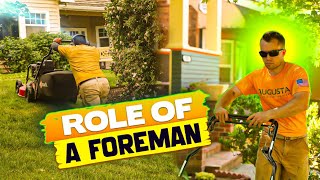
Mike Andes (Landscape Business Course) answers two listener questions: (1) what responsibilities a foreman/project manager should hold in a small-to-mid-sized landscaping company—he advocates a flat management structure where any crew member can be the project manager for a job and is primarily responsible for communication and profitability; (2) whether to hire near the end of mowing season—he recommends hiring only if the extra worker will be profitable in the remaining months and to use clear employee agreements about guaranteed hours during winter, avoiding promises of year-round work unless volume supports it. The episode includes sponsor and webinar plugs.
Chapters
Hey everyone, this is Mike Andes and you're listening to the Landscape Business course podcast. Today we are going to be talking about the roles and responsibilities that you give to your project managers as well as if you should be hiring someone this time of year in August and late into September, starting to get towards the end of the season. Should you be hiring people? Before we get into today's show though, a big thank you. Today's sponsor, which is Jobber, if you haven't already, go check out getjobber.com im andes it's my last name. A N D E s to get a discount on their software for the entire first six months. And one of the best things about Jobber is that you're able to accept credit card payments directly from the invoice. So when you send the invoice out, no longer is it gonna take the person two or three days to look at it and then another few days to get checkbook out and then send it in the mail. And that takes a few days. And all of a sudden, even if they are pretty good paying it on time, it still takes a couple weeks. That couple weeks is cash flow and making sure that you are on top of your cash flow and get money paid to you as soon as possible is imperative. You do not want to be doing work on the 1st of April and then billing on May 1st and then not getting any payment until June 1st. You literally have been done work two months ago that you're getting paid for, just not acceptable. In order to cut that down, you can get payment right using credit cards and you can do that using Jobber. So go to getjobber.com im.
Andy'S now today I'm going to talk about two different things. These questions both came in via Facebook on the landscape business course Facebook Group. And so one comes from James Werenberg and one comes from Jaeger Cottles. Sorry if I mispronounce your names, but I'm going to read these questions. I thought they were good for us to talk about and we're going to jump right into it. Before we start though, I also want to make sure everyone knows that this Saturday, this coming Saturday, if you're listening to this as we speak right now, there's a webinar. It's completely free. You can sign up for it. For landscapers, just go to landscapebusinesscourse.com go on. There's a tab called webinar. Click that tab and you can sign up for the webinar. It's going to be probably an Hour or so long. I'll answer all your questions. So check that out. And I look forward to seeing you there. So let's go ahead and jump into this. James asks, what kind of responsibilities do you give your foreman? So I'm a big proponent of flatline management. Flatline hierarchies in a business, not having a whole bunch of levels and positions and titles until you get a scale and large enough where you need to have those things. And so I don't believe in having like five different managers and your company is like seven people. Like until you're getting like 40, 50 people, you do not need silos and managers and department heads and like a whole bunch of different hierarchy of like labor and then like crew lead and then crew manager and then operations manager and then field. Like that is just too much hierarchy in my opinion. So I like to much more keep it pretty flat. So our entire team, all the workers can do basically any job or a task within the company. Nothing's like below anybody. However, there are people that are more skilled or have been around for a long time and they usually become the project managers. That being said, someone who works at our company for a month or two, they can become a project manager on a job, but it's not like they are a project manager. Every single job has a project manager. And usually the same few people become the project manager for the jobs. But anybody can be a project manager. If you're on a two day cleanup, you literally might be two or three months into working for us and you'd become the project manager of that job. But your title is not necessarily any different. On all their business cards it says landscape specialist. And so that way the office can dictate and put a project manager anyone they want on any job. So it's easier for scheduling and it really allows them to prove themselves as project manager. On the smaller cleanups, small landscaping jobs, material install like bark or gravel, they are still a project manager that is going to be responsible for talking to the customer, talking to the office, having that communication liaison, that person that's going to load up the trucks, get the crew going in the morning. Communication is their big part. But that person can change that. The very next day that person could be on a mowing route. The next day after that they could be a laborer underneath another project manager. And so it makes it easier for scheduling and it makes it where there's no I'm the project manager and you're my laborer. That never happens because the next day it could be Switched. The other person could be the manager, the other person could be the laborer. It's really about when we call our foreman or our project managers their main responsibility, it just means that they are responsible for the job. They're responsible for the communication of the job, they're responsible for the profitability of that job. And therefore they are required and are expected to be a little bit earlier in the mornings, talk with the office if there's issues with the client, be able to be the one that actually talks to the client and then communicates to the office and makes the job notes, makes work, change orders. That's really the role of the foreman in our company. There's no, you know, there's not really a whole lot of difference between a foreman, a project manager, and just one of our regular team members. Because the next week it could be switched the roles. So that's sort of how it works. We have an estimator and operations manager over all of that. But in general, the guys out in the field, it's really. Everyone can do anything. But on specific jobs, we, we, we choose a project manager for every single job. So that way the customer has one person to communicate with and then that one person is the person that the office would communicate as well. So really they are the liaison between the office and the crew, the crew and the customer, and the customer to the office. So that's really the main role of the foreman. And like I said, they are responsible for the overall profitability of the job. Like if a job goes south, the project manager is the one we're going to go talk to and try to figure out what's happening or what we could have changed, what we could have done better and try to, you know, learn from the job or they're going to be responsible. So that's really who the foreman in our, in our department, in our company at Augusta is. That's really what they do. On the mowing side, we don't have any managers. Everyone is responsible for their own work. If they make mistakes, then they have to go back and fix it. We have the yellow slip system, which you probably know about if you listen for a while. We use the yellow slip system to create accountability, create ownership of their job so they go back and fix it. We don't have crew managers or crew leads even in our mowing department. We just have all mowing crew and they just go for it. There's no quality control either, because again, if there's a complaint or there's a mistake that's made that individual has to go back. We are able to do that because everyone on our crew, we require them to have a driver's license and, you know, be able to drive and things and speak English and be able to communicate with customers and all of that. Now if you don't have employees that can drive or can't communicate with customers, or just not good at communicating with the customer, then it becomes a little more difficult to not have management over them who will go and talk to the customer and kind of be the.
Mediate between the customer and the crew. But for us, we do have our frontline employees, be the person that is in charge of the job, talks with the customer for the mowing crews. So next question. This is a good one for this time of year. Jagger asks. I got one guy right now, had about three people in spring, two for grass cutting and one for landscaping. But now I only have the one employee doing grass cutting with me. So my question is, should I hire another one for this year and next year or just keep doing the work with one guy and save as much money as I can to hire three more full time employees next year and to give us a jump start on the marketing budget for next year. So first of all, this implies a couple things. This implies that hiring another person now is not going to make you more money. And so I think that's the first issue is like, if you're gonna hire people, they need to be like, there's no reason to hire someone if they're not going to make you more money. That being said, it's not easy, and this is what this question is referring to. It's not easy necessarily to find somebody right now that's willing to work if you're going to lay them off during the winter. So if you're hiring some right now, it's the middle of August, they might have two, three months, depending on where you live, where your grass cutting season ends, they might have two or three months working with you and then they need to be off for two or three months, laid off, or go get another job and then they come back to you in spring. So this is my general thesis on this. Number one, I would not hire someone now and promise them winter work if you're not already, like, you stay really busy during the winter already. Like if it slows down during the winter and it costs you money to keep your employees, I would not hire someone that is this time of year that is gonna stay for the winter. The reason for that is this. If they start, say September 1st, and they work September and October for you, and those are profitable months. You then keep them.
November, December, January, February, and then they start on mowing season again. And so you've now paid for four months of unprofitability, and you paid them just to keep them on. And they could literally leave in March or April. And all of a sudden you've paid a bunch of money out to keep them, and now they're gone. And so what I'd recommend is if you're gonna hire people this time of year, make sure that in their employee contract it states exactly when the hours are guaranteed, when you're busy. And then during the winter, just say, hey, look, we don't guarantee hours. Usually you're gonna get between 20 and 30 or whatever you know you're gonna get, and you're free and welcome to go get another job or be laid off. It's up to you. So that's what you could do is I would, if I was you right now, I would go hire. If you have the work to make another employee busy for the next few months, I would hire them. That should be able to profit you at least five, six, ten. Five to ten grand by having that employee for the next few months, profit in your pocket. So that should then be able to help you save up for next spring and have more marketing and have, you know, be able to get more employees by just you doing it right now. That's fine. But you could also have another crew, a second guy, if. If hiring someone right now is going to make you more money in the next few months, I would hire them, but I would make sure that in their employee contract there is a clause that says, hey, these are the months we guarantee hours, these are the months we don't. And then give it. You know, you might lose someone that's really good by doing that. They're like, I want full time, year round. Well, you can't provide that now. Maybe in the spring you provide that in March, you hire them, and then you're willing to do that because you know you're gonna get eight, nine months of really profitable work before two or three, four months of the winter, and you're willing to kind of take that dip with them. So maybe in March, April, you hire someone full time, year round, and you guarantee them hours. But this time of year, towards the end of the year, I wouldn't do that. I would tell them, look, we guarantee hours during the busy season. During the winter, we either take off, lay you off, or you can't guarantee 40, it's like maybe 20, 30 hours a week and then that's up to them. They can go figure out another job or they come back to you in spring when you can guarantee them year round full time work. So it's one of those things, a balancing act. But this time of year, if you can make money for the next few months, I would hire somebody. I just make sure that on that contract, on the employee agreement, they know that they're not gonna get guaranteed hours during the winter and you set them up for the expectation of getting another job or that they're gonna have to go on unemployment, or that they're just gonna get less hours, like 20, 30 hours a week instead of 40. So that's my two cents. Basically. If you can hire someone, you find someone that's good and they're willing to do that. I would take them now and then say, hey look, I'd be even willing to pay a couple dollars more per hour if I knew the person was not going to have to work with us during the winter when we have to go fight for work.
Our prices or like we're spending more money on marketing, really not we don't really reduce the prices, but we spend more money on marketing to get more work during the winter just to keep the guys busy so it's less profitable work. I would much rather just pay them a couple dollars more per hour if I was hiring them right now to sit, to make sure that they know they're not going to get hours during the winter and that, you know, come March they'll be, you know, right back at it full time. And so I would just make it very clear you're going to lose some really great workers that want full time, that want year round. They have a family, they have to have that. But I think if you're clear on what the months of the year they do have that guaranteed time are, a lot of them are okay with a few months off either for vacation, family, for students. This is a great time for them to catch up on school stuff. The winter months, do online courses, finish their degree, things like that. And then some of them, it's right around holidays, like they can easily go get another retail job or wait tables and make decent money. And they're usually okay with having a couple months off. It's a nice break. It's kind of a different rhythm and theme than landscaping, outdoor work. So if you're upfront with them, I think you can make the hire now, make the extra profit over the next few months from having that employee have them laid off during the winter, have them go do something else if you don't have busy work during the winter to do for them and then start them right back up next year. I would only guarantee full time work year round in March because then I know that I'm going to have them for at least seven or eight months before that winter spell comes in when we're not making as much on them. And so that's really how I would look at it. And that's just a purely numbers, facts and business side of things. You know, the whole other side is like cultural and you can and then it becomes a debate like are you willing to give up some of the business money profitable side in order to keep the culture side and keep your people together and have them longer term? That's really a discussion you have to make. But from a numbers and profitability and business side, that's my take on it. So hopefully that helps and I really appreciate everyone coming in and tuning in. Make sure you join up for the webinar landscapebusinesscourse.com click the webinar link and I'll see you on Saturday.









