Sprinting and Ideal Customers - Episode 097
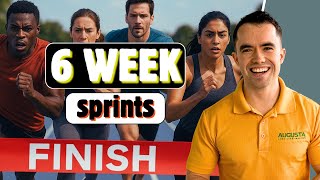
Episode conversation between Lee Park and Mike Andes covering Mike’s Turnaround video series, recent Copilot product updates and roadmap, product prioritization and ideal customer profile (ICP), and Mike’s use of six-week sprints for productivity. Key product notes: a new “pay in full” payment option expected to increase immediate cash collection (estimated 15–25%), fast-follow estimate UI changes, and an upcoming Field Force mobile app with offline mode. Mike positions Copilot’s ICP as businesses currently ~$200k–$1M aiming to grow toward $3M per location; Copilot keeps a free tier (up to 50 customers) while building features focused on the $1M+ operator. The hosts also discuss how to run six-week sprints (derived from Basecamp’s Shape Up), prioritization, and practical sprint examples for personal and marketing goals.
Questions this video answers
$1.7 million.
About 15% to 25% of payments collected in full before job acceptance.
June 1st (current sprint ends on June 1; book launch that day).
Businesses between $200,000 and $1,000,000 currently, targeting growth toward $3,000,000 per location.
Free tier up to 50 customers.
Chapters
Cool. Welcome back. Another episode, C Suite Unfiltered with Mike Andes. We are back. It was a Friday at time of recording. I'll try to get this up today, so apologies if it's a bad thumbnail. How we doing, sir?
Good, man. A little lower energy given it's a Friday. We just got turnaround show, but we're good.
Yeah, you've been. You've been doing lots of turnarounds. So how many turnarounds have you traveled to? Obviously, not necessarily produced this year, but how many have you already recorded, like, this year? Ballpark number, like 20, 30. It's kind of crazy.
It's one per week, so we've had to go a little bit more than that because we got so far behind. Because I didn't do any hard. I only one trip in November, December, January, CU of conference, and then so we had to catch up. So I've probably done, like, we're nine ahead. So I've done probably 1, 2, 3, 4. Probably like 15 this year. Maybe 16, 17.
That's crazy.
Something like that.
I was going to say, I feel like you're probably at 20 already.
Yeah. Yeah, probably.
Yeah. In terms of recorded, not necessarily released, but recorded. And you also have. So we have the. The Turnaround series, but we also have. What is it? Business Breakthrough series. So those are cool. You've only really released, like, one or two of those. So how are those going?
Yeah, like, they don't do as well on YouTube because people want to see a problem and a solution, whereas with Breakthrough, it's like, that's how let's just grow their business. I do think that down the road, like, we want to keep it around because it'll allow us to open up to other industries down the road.
So, yeah, we'll keep it in our back pocket, but the turnarounds are still our kind of our bread and butter. Like, the last episode was probably my favorite we've ever done. It was for a $1.7 million business. Yeah, we're just getting better each time, so it's always frustrating because when you're nine behind, it means that's like three trips and. Yeah, like three trips, four trips ago is when we started getting good, in my opinion. And so we're each one we're starting to get better on. And so, yeah, I just look forward to get them out and making them make them better each time.
Cool. No, they're sweet. The quality is insane. The graphics are insane. I can tell the team is, like, putting a ton of effort, done a ton of work into them. So I just figured I'd. I'd ask on that. One thing that we have not talked about recently is Copilot developments, so figured we'd touch on that as well real quick. Kind of just get like a general update from Mike. I know you recently posted about a new what is it? Payment feature. New payment feature. So tell us about that.
Yeah, just basically the pay in full option. So in the perfect world everyone would pay up front but you usually don't want to require prepayment required because some people wouldn't accept the job. And so all we're doing is essentially allowing for the pay in full option to be right next to the deposit. So if you require 50% down it's like hey there's your 50% down, it's required. But then also you have the option of paying in full. So it's relatively small in terms of feature but we I do believe it's going to collect about 15 to 25% of payments in full before the job is accepted and mostly from customers have already done work for you in the past and they already trust you. So like they're like why would I wait until after the job to pay the rest of this? I'll just do it once. So it saves them time. But yeah just increasing cash flow so that's helpful. But then we also had a whole bunch of fast follows on the last estimates release. So just like the way we were positioning names and the size of dollar signs and like the recommended tab on the estimate. So a bunch of fast follows in that two weeks from now we have another release coming out and then and next month is the Field Force mobile app which is allows offline mode. So just a lot of developments. I feel like we just are hitting our stride and it'll just get faster because we still have a few more engineers we need to get.
Yeah so I noticed that like the timeline is kind of accelerating. It seems like I know that there was you know, I guess a, a slowdown which has been addressed. Right. Bug hill and all the things that the co pilot team had to overcome. But now it seems like just kind of rapid fire. Like I feel like I get an update, a new post, a new notification all the time about Copilot updates. So do you feel like as you said, you guys are starting to hit your stride and will timelines start to get accelerated? Obviously not asking you to over promise but I just feel like I've seen a pretty drastic change at leave just in Q1 of this year in terms of the speed to release some of these promises, if you will.
Yeah, yeah, it'll only get faster. So we're just hitting our stride now, people really, like in June when we released the mobile app. And then it'll just get faster. Like, we're just gonna get faster and faster. Like, I'd say this time next year will be three times faster than what we're currently at. And I'd say right now we're like five times faster than we were this time last year. So, yeah, it's gonna get fast. The goal of our current engineering lead is this fast as Mike can think of stuff, we can create it. So with that being the benchmark, it's exciting.
Yeah, well, that's kind of insane benchmark. It's almost an impossible benchmark. Like, when does it become. And I guess I wasn't planning on going down the rabbit hole of Copilot, but we're going to a little bit. When does it become. You get an idea or the top team, you know, Josh and others at the top of the Org, if you will get an idea and like, we should implement this. When does it become that Copilot is so big, if you will, that like the ideas from the founder, the ideas from the top can't be as instantaneous. Right. And obviously this is just a drast. Not. Not necessarily an A to B comparison, but like Mark Zuckerberg gets an idea for meta, it can't happen overnight because Facebook is like too big. You guys still are in that early phases where you're still small enough, you're quick, you're adaptable. Like, how quickly can, let's say you have this amazing idea or all the users of Copilot unanimously agree to like one thing that they want created. That would never happen. Let's hypothetically, how quickly could that be rolled out?
Well, that. That's the distinction. It would never happen because there's never a time when everyone agrees on anything. So it's. It's much more of a. I. I felt some reassurance the other day and I heard Mark Zuckerberg getting. You brought him up. So I'm getting interviewed and Mr. Beast was talking about a certain feature that he really wanted that YouTube has and. And Facebook doesn't. And what I found consolation is, was Mark is like, we've been working really hard at that. The team is fully, you know, looking at this maybe next year. I was like, yes. It's like, if you're going to do it right, if you're going to do it right, it Takes time. And so as time has gone on, I've realized that actually the speed in which we do things in terms of like new features is what usually people will measure our speed on. But in my opinion, like I'd rather half the amount of things that we release. But when they're released, they're done well and then they're followed up with really good fast follows in terms of feedback from the community. And so the vast majority of things that are happening on the roadmap are simply us listening to the customers and figuring out what their pain points are. The other 20%, which that's 80% of the time, I'd say the other 20% is okay, how do we differentiate ourselves? How do we think outside the box using AI, my insights.
And create the sizzle and the stake. But really 80% of it is like what's the current pain points of the customer for existing features and what's their pain points that they have in their business that we can solve with software. And so most of these listening and then it's figuring out, okay, prioritization of these 5,000 pings that people are going to ask us to do, which ones are the most important in terms of impact to the member base, impact to their businesses. Because everyone wants to have one more thing to make them, save them a few minutes and that's good. But ultimately I need them to make more money and that's why we have like the guarantee around growth and profitability. And so like, if I'm optimizing for those things, what, what, what might seem important to someone, like, oh man, if I could just do this group selection or if I could just change this on this dashboard, yes, it would make your life a little. But if I could alternatively, and maybe 5% or 10% of the customer base would use that feature, great. And it would be a game changer for them, they'd be really happy. But if I can make another feature that in fact 95% or 100% of users especially, that's why we went to estimates first and improved their close ratio by 20%. That's the highest levered thing for me to be focused on. And so, you know, ruthless prioritization and execution is been my mantra the past few months because I know there's 5,000 things that need to be done and there's always new features and new things that can be improved or things that each user to them it's the most important. But I have to think collectively and then think about not just like how many people am I impacted. But what's the depth? Like how deep are we impacting them? So for example, with the pay in full feature, I know I'm going to get a lot of flack around, like why are you guys focused on this instead of something on the dispatch board or wait list, et cetera. And those things are important, please don't get me wrong. But it's ultimately I know that if I increase the cash flow position of every Single user by 15 to 25% we have a win. Like that's a huge impact. The businesses I recently, two out of the three, both of their constraints was cash flow. And the reason was because of overdue invoices and if I could release 50 or you know, 30 to $50,000 of cash immediately to them because that one little feature was sitting there, that's a huge impact. And it's more than just saving a minute or two per day on a certain selection or a certain automation. So I don't want to diminish anyone because everyone to everyone, their thing is the most important. But ruthless execution and ruthless prioritization is kind of in my mantra.
That's good, I like that. Ruthless prioritization. Now the question then becomes let's just use an analogy of a car because I was trying to think through it as you were explaining using the analog of a car. You're a car designer, right? People have decided they are going to use your car, hypothetically the co pilot car. And they might want air conditioning, but you see that like we need better brakes. Like air conditioning won't save you. Like it. It will not, but brakes will. Why? Obviously it's your product, it's your business. But like why should people be able to just like be more. How can people be more willing to accept the brakes when they don't see how important the brakes are? Does that make sense?
Yeah, like to use the analogy, I would probably break up a driving experience into comfort, handling and speed. And I think kind of the same thing in terms of software like comfort. It needs to be easy to use, it needs to not be jolting, it needs to be stable. It can't be breaking. I can't be messing up and having bumps and etc.
Speed, in terms of speed of execution, fancy features. That's like the flashy thing. People usually want that to like the sizzle. It's what attracts people to like a new car. It's like how fast can it go? And then the agility or the handling. Handling the vehicle I would is, is very much in line with.
You know, is it easy to navigate? Is it easy? Do we save them time and steps when they're trying to navigate throughout? Does it take a long time to do page loading, etc. So like, yeah, there's going to be some people who over index on, like, I just want the this certain feature and like their speed, speed, speed. And I have to be like, okay, wait a second, like we're going to give up some speed, but I need better comfort. Like I need to have it where the user interface is a little simpler. And so I'm going to give up that feature in exchange for comfort. And I don't get people jolted around because there's too many buttons, for example. So yeah, it's a good analogy actually.
Thank you. Appreciate it. So, but, but the question I still, I guess would remain is if, if you were focused on the brakes, if you're focused on the handling, right, and others want to be focused more on the comfort, right. To get as productive as we can. Like, when do you feel like it was your responsibility to deeply explain the processes of. Or is it just up to the consumer to then choose a different product that's more quote unquote comfortable? Does that make sense?
Yeah. Like it's like if you were going and getting a car, you're not asking these very, very narrow questions about the handling of the brakes. It's like as a package, which car is better? There's pros and there's cons of each one, which one's better? And then I as the designer have to remain competitive. That as a net net to a certain segment of the population, I'll be the best car. I'm not going to be the best car to everyone, but to a certain segment, having just two seats is fine because I'm over indexing on speed. But then for other people, like I need seven seats, I'll have a minivan. It looks, doesn't look as good. And then there's people like Lee that are like, I need a 4Runner because I kind of want the marriage of all three of these things. So like it's like I'll be the best car for a certain ICP or you know, specific customer that I'm, I'm trying to serve ideal customer profile. And so that's really like narrowing what is our ideal customer profile, what do they value? That's when you have to listen to them. And then how do I build the car that's for them means I will inherently have other people that will not see it's the best car, because I'm not. It's. I'm not serving them to. The same way that someone like yourself, like, the Porsche is cool, but it's. I'm not buying it. It's like, it. It goes too fast, and I don't have seven seats, and I have to have, you know, Ernie's got to sit in the back with. With. With the. The car seat. So, like. Yeah, you know, it's just. Who are you serving? Is it the best car for them?
Yeah, fair enough. You're. You're outing me a little bit. It's. It's technically my wife's forerunner, so.
Right.
But no, I've always wanted one. A kid, and I was like, I'm buying a 4Runner. I just don't care. But. Because they're just. They are. They're. They're perfect. They're practical, they do it all. No, I get what you're saying, and I think that's where a lot of times it's easy for, you know, business owners, business leaders. And now kind of zooming out, just talking to the audience here, it's easy to get focused on, like, I must fix the brakes. Like, I know that the brakes are the best thing for my customer, quote, unquote. But not realizing that you don't need to serve every customer right there. There are customers that are going to be more concerned about the brakes, and there will be others that are more concerned about the ac, whatever it is. And I even had that conversation quite literally today with someone interested in joining Augusta, and they're like, well, why is Jim's monthly fee this. Jim's mowing for. For a reference for everyone versus Augusta's? Why is yours this? And I was like, well, what research did you do into Jim's versus Augusta? And they explained the research they did. And I said, great. So you saw that they're just different products altogether, Right? And they're like, yeah, I guess I didn't consider it. Cool. So we're comparing apples to oranges. Right. You're just saying, well, this is one price, this is another price, versus they're just completely different products altogether. And one might fit you better and the other might fit you worse. And you have to decide kind of how you're going to fit into those products or how you're going to use those products. I think sometimes as business owners or leaders, we get so focused on the product must be perfect. But perfect for who? Does that make sense?
Yeah, absolutely. That's like, ICP is all I care about now, because I Will not be perfect to most people. But to to my icp, I need to remain competitive. And this is like why it's so easy in software to get so focused on the features because that's what everyone's crying for. But like when you think about, like when I go on this turnaround show, there's only been one turnaround I've ever recommended that they join Copilot because to turn around a business of six weeks, it is rare that the highest leverage thing you do is software. It is usually structural to the business around liquidity, leads, labor or leadership. None of those things have to do with software. Now they can be a component of it and software can grease the engine. Certainly I believe in that. But in all probably 70 businesses I've visited for turnarounds now, plus not a single. Well, there's only been one that I said in the next six weeks you should implement something like copa. I didn't even say copa, I just said a CRM. Yeah. And so the reason I say focus on that is because when I'm thinking about the highest leverage thing that we can do for these business owners is like it's not actually giving them the feature, it's actually telling them what to do next in their business and using the data. And that's what will ultimately in my opinion, differentiate. Copilot is like telling you when to raise prices, who to raise prices on, which services you're most profitable, who should be working with who. Like all that data is, is there.
So.
Yeah, and you're trying to make it like a well oiled machine. So who would be the ideal person that would want to use that product? Like who is Copilot for now at this point, if you're willing to just.
Say yeah, like right now we've optimized for the person that's between 200,000 to a million dollars over the next 12 months that's going to move substantially higher. So like I'm really targeting the person that wants to get above a million and really wants to grow to about 3 million per location. And so the way that we move in terms of, you know, our features who are serving like even like the Field Force app, it is made for just field technicians. Therefore I am cutting out exactly 100% of solo operators and serving that feature. So I know I will get a huge outcry from my solo operators, which I love them all, but I'm not building that feature for them. The reason for that is because my ICP needs the feature, they need the app. My solo Operator does not. They don't. They don't have a field technician. They want all the features on one app because they use that one app all day long. And some people will move to Copilot away from other softwares, because we have an app that allows for all features to be done from one app, but that serves a solo operator. And so when we think about ideal customer profile, and I'm trying to serve a larger customer that thinks much more about marketing and like, thinks much more of, like, okay, a Text Blast generated 25 estimates, and I'm willing to pay $50 per lead to Facebook. Oh, so that is actually just saved me 1250. And they think that way instead of, I can't. I can't edit my email templates from my mobile app. So it's a different ICP to your point. And I think it'll become more and more clear as we go up market that I will always have the, like, we'll always have a free tier, like literally where people can join for free and test it out, and up to 50 customers. So even the sole operator has like 30 or 40 customers. They'll be able to use the thing for free. But the features that we are building are much more for the million to $3 million company, and that we like to really clear in 12 months. But right now it's like next month or two, you're gonna start seeing us go that direction.
Okay, so what if I'm someone listening to this or a user of Copilot, and I don't necessarily plan on growing beyond that. Let's say I'm happy with, you know, the half a million, $800,000, you know, GM model, I'm. I'm happy to run my business. I'm happy to do my own sales. I don't want to expand. I don't have massive entrepreneurial, you know, desires. Like, I'm happy with my. My team of five to six employees. Like, I love my customers, I love my community, and I love my weekends. Can I still use Copilot or am I going to kind of lose some of the features that I love about Copilot?
You won't necessarily lose features. It's just that the features that are built might seem like they are less applicable to you. And so the same way that the Tesla Cybertruck is shown in every single ad as driving off Road, like, 98% of people never have taken it off the road when they're driving. So even though we are building this thing to be a quote unquote, cybertruck that's going up a side of a mountain. The vast majority of people don't use it the same way when it comes to sequence automations or the upsell feature or even the patent full option. Like I know that only about 30% of people will turn that feature on but I also know that it is capable of more. And so in terms of the capabilities of the truck, quote unquote, we're building it for this. There will be other people like hey, I don't really have that big of a business but I also really want to have mass texting inside my platform without integrations which no other software is doing. Great then you'll still enjoy it. So come on along for the ride. Be the cybertruck that drives on the highway. And so our ideal customer profile will want to grow their business above a million dollars. That doesn't necessarily mean today they have a million dollar business. They might be at 200,000 but they see okay, I will need to switch to a different software if I don't make the switch now to Copilot and they'll still come along for the ride and I believe there will be the 500, $800,000 operator that again they like certain features, they like the way things are set up and they're willing to realize that there's, they're going to be the fringe feature that is built for a million plus dollar operator. So anytime I'm thinking about desktop I'm thinking about a larger operator because desktop users are people in the office. They are people that are without a laptop. When I am thinking mobile I have that emphasis is focused on the solo operator that is so much more solar, smaller. And when we start thinking about things like the waiting list, if you have a solo operator you don't need a lot of waiting list situation. You throw everything on schedule and get done tomorrow. So it's just all of these things are.
Product, product decisions. Good stuff.
Yeah.
That's why Josh.
Yeah, shout out Josh with the copilot team and everybody over there. Yeah, I wasn't planning on going down the copilot rabbit hole but it's always exciting to, to kind of see what you guys are up to, how things are working over there. So I appreciate you being willing to share. Going to change it up. Also wasn't planning on talking about this. This is a free flowing Friday since we're recording here on a Friday. You used to talk about this a lot. I assume you still do it but maybe we'll touch on you. I would say probably what mid last year, late last year you decided to start looking at things in terms of like six week swings. If you, you Are you still using this philosophy of like six week swings?
Yep. This is my.
Yeah. Or sprints. Sprints. Six week sprints. That is the, that's the term. Swings is 10, 5 to 10 year swings, 6 week sprints. So maybe share a little bit about why you started doing that because I know you, we've talked about it on the pod before, but I don't think we really got into like why you started doing it and then maybe we can talk about how it's working out for you now.
Yeah, like it's the same thing as like actually six week sprints actually comes from a software. So it's very common to have six weeks of sprint and then you have two weeks of cooldown period. Inside the two week cool down period. You're usually shaping the next sprint and like creating clarity around how things are supposed to roll. So I took that from software. I'm like, oh this should, this should totally work to make my personal life more like productivity higher. And so yeah, I'm still doing it. My current sprint ends on June 1st and that's the day that the book is getting launched. So this sprint is kind of focused on that Paid in full features inside of there. There's a couple others I'm not going to talk about because they're coming out in May. But yeah, so like the general thesis is that doing two or three or four things really well is more important. It's a clarifying function. Like if you get everything done for the day, like okay, I have an hour or two, like what should I be working on? It's like well it's very obvious. These are the three things that are most important for me to get in this quarter. I should be focused on them. And it's also a function of like if, if, if, if there's something discretionary in my time and it's not higher value than these things, then it needs to be cut. And so you get ruthless about like removing of things because well that doesn't, it's not as important as these three. So like I need to cut it. So I figure if I can do three or four really good things every quarter and we wake up at the end of the year, have 15 really well executed.
Initiatives that the business will do really well. So yeah, I still do it. I love it. And hey, people mock on it until they try it one time. Trello, I'm telling you, let's Go. I got Brianna on Trello. Now she's doing daily checklists. It's great. So shout out Trello.
If someone has never used the framework of six week sprints, how would they get started? Like, what would be a good starting point to kind of start using that framework? Because I think goal setting is very hard even for, you know, my calls. When people are interested in joining Augusta, I used to ask like, okay, let's say you join Augusta, what's the long term goal? And that was like too open ended. That was a bad question. Hand up. I need to ask a better question. So now I frame it as, hey, when you join Augusta, what is the five year goal look like? Just generally kind of spitball. Doesn't have to be super ultra detailed. But like, in five years I feel like we can visualize what's that look like to you? And I usually get better answers from people because five years is like contextual in a business. They can see that. But six weeks is definitely different because I feel like a lot of people have, you know, their weekly goals, their monthly and their quarterly six weeks is basically half a quarter. So how would you start to use that framework? And how do you decide, okay, what's too big of a task to put in that and what's maybe too small that I should just, you know, reduce? And I'm, I'm thinking too little.
Yeah, that's why six weeks is so perfect. It's short enough to where it doesn't seem so far away and it's long enough to where you can get meaningful work done. So, like, this sprint, I will have, I will complete the entire book. Usually I spend like six months on a book. This one I had already created so much of the content, it mostly just needed like some brute force in terms of design. Audible. Like reading the audio program.
Like, it was more fringe. But it's a meaningful project. Like taking it from one time workshop into a book format is high leverage. So it's more a matter of like, if you're just getting started, Write down the 20 things you want to do in the business. Write down the 50 things you want to do in your business. You do it for your personal life too. And then just, just if you had a gun to your head and you can only do three of them, which one would you do now? Like which basically prioritization. Like which, which of these three are most important? And most the time, if you did those three, five of the other ones would be solved and then 10 of them would resolve themselves in the next six weeks by themselves because you just let them burn. So.
It just ruthless. It's like ruthless prioritization. And yeah, so it's not, it's not comfortable. Like six week prints are not comfortable comfortable because it means constantly saying no to things. It means letting fires burn. It means being very decisive because you, in six weeks you don't have time to be super cognizant of people's feelings or like letting them adapt to things. If we're gonna move on this, like we gotta get this done now. Like this is my deadline. So. Yeah, yeah, yeah, but, but when, like. So technically speaking, if you're going full out six week sprints and using some of the, the common knowledge around it that was stemmed from a book for blanking on the name. I apologize, I can look it up right now. But from a technical perspective, where it came from.
Is from a base camp. So one of the founders of Basecamp wrote a book on it and it's super good. And that's where I would not recommend reading this for most people called Shape Up. Stop Running in Circles and Ship Work that counts.
It's like you, I don't even know if you can buy it on Amazon, honestly. Jason Freed wrote it and so. But the general thesis that if you in six weeks don't get it done, it stops. Like you don't complete the work and which puts tons of emphasis on the finish line. Like you have to crunch it. Which means like it's like all out sprint literally to get it done. Because if you don't get it done, it's off. Like it's done. We're scrapping the work and so that really forces the shaping. Like what can I get done that's meaningful and obtain attainable within those six weeks? So yeah, you're right. It is definitely like a. It's very sometimes difficult to. Okay, can I get this done in six weeks? Because if not, I'm not putting it on and. Yeah, but I like it.
Yeah, no, that's fair. No, it's interesting. I, I personally have not tried it. I've tried to give myself just like deadlines, but I'm thinking about trying it. Obviously I don't have as many big picture tasks as you do and other entrepreneurs or CEOs out there. But. But for me I've. I'm just kind of stuck to like personal deadlines. Like, hey, I'm going to get this done by then. Like I showed you a spreadsheet I've been working on. I was like, okay, starting this month we'll start tracking data like this way and then we'll have previous month's data for this version and you know, personal timelines. I'm going to update this automation sequence and have it tested and ready to roll by X date. So do you think there's a better way that I could do it? I guess just asking for feedback but also for the sake of discussion.
Do you want to, do you want to create your six week sprint now and let's see how it works?
Like sure.
Now is like beginning of May.
Yeah, let's do it like this is this.
Basically this would be June, this would be June. 16 be six weeks. Yeah, yeah. So I, how I do it, the reason like mine's end change first is because six weeks is easy, like a month and a half. So I just do like. Yeah from like April 15th. So I'm two weeks into my sprint now and then it's easy, it's easy to remember too.
Yeah.
Okay, cool. So like I could kind of. You want me to spitball a couple that I think could potentially be.
Yeah, sure, sure, sure. Why not?
Okay, well let's do this. So let's do one for like leave park in general because I know you're starting to get into walking and I did hear that the treadmill is coming into the office.
Treadmill's coming. Yes, I know.
Okay, so how many like are you shooting for a certain number of steps per day? Like what's your goal?
It's, I would say it's more miles because then it's like okay, if I, if I'm going to run or jog, I still did my miles. If I am going to walk, I still did my miles. It's like there will be a certain amount of miles done every day. So that's like the initial right now.
Once you get the treadmill in the office, dude, you can get so many steps. So, so this, I brought this back. I took this off ages ago. Yeah, this for about three years. It's a cheap fitness tracker. Here's my non financial advice. Go buy it on Amazon. It's 50 bucks, way better than the Apple watch because the cost. So anyways, there's my non financial advice got out of the way. But also.
Brianna, she's now using the walking treadmill because she can just walk and work on that and in a matter of like three hours you'll get like 15,000 thousand steps and you're walking like a half miles an hour. It's like super easy. So yeah, crushing me on that. It's not even close, but definitely a hack. So what, you could do all. All of that to say you could set, like, miles? Like, do you want. What are you trying to do, like, two, three miles a day?
Yeah, right now it's like two to three is, like, rough. It's like, if I. If I have more time, which obviously I need a better. Better prioritize. But yeah, it's like two to three. Minimum. Minimum.
Okay. Yeah. So you could use like, hey, you have to do three, three miles a day.
Or it could do. I could just round it up to five. Because then if I have a walking tournament in office, it's like. Okay, well, I'm just saying, because then it's like, I could do two to three in the office. Two to three in the morning.
Okay. That. That would be tough to track, though, because. Do you have a tracker?
Yeah, I have my Apple watch. I wear my Apple watch primarily for, like, workouts at home. Yeah. Yeah.
Okay, so five miles a day. That's a good start. Let's go.
Yeah, sure. Might as well.
Cause here's the thing. It's like that, that, that. That one's tough to define a finish line. It's more a matter if you did it every single day. You would create the habit. So really, that's like the finish line is creating the habit of walking. But that could be one. Another one. Like, for example, we're rolling out the Facebook ads for the franchise. So that's a new territory for you. So, like, I would say. I would try to define, like, a certain number of, like a cost. Cost per.
Lead, I. E. Appointment, and then a defined close ratio on that. Potentially. Or not close ratio, but a. A show rate rate. I'd probably just do show rate.
Yep. Yeah. Yeah.
So, okay. Do you have an idea what this could be?
Oh, gosh. Cost per appointment booked workshop. I know, I know, I know. I haven't looked at enough of the numbers. I would say. I think less than a hundred bucks would be a good start. I would say that's even like. That's. That's aggressive. I think it's very aggressive. I think keeping it under like 2, 300 is probably more realistic per appointment. And then with a show rate of like 50. I know that's super high, but I'd rather, like, shoot for higher goals.
Yeah. So. So why don't you do this? Why don't you do 150 as cost per lead and then a 50 show rate? And then let's shoot for, like, a certain number of leads. Like the number of Appointments, because that's the balance. Because you could take out one appointment, your target. Right. So you could have. Have 150 CPL, then you could have 50% show rate, and then you could have.
A goal of like 50 lead. Like 50 appointments booked.
Let's see. And that'd be in six weeks?
Yeah. Oh, in six weeks. That's easy. Because I think this. This week, you got, like, five and four days. You're basically averaging one a day. And you can optimize it and you can increase the budget. You know what I'm saying? Yeah, yeah.
It says right now we're at $40 per lead.
Okay, you must have got several today, then.
But that's. There's no way.
The full budget. It's not spending the full budget.
Yeah. This is where I need to learn more about this. I don't know if this one can be specific. I mean, we can put. We can put targets, but I don't know how realistic they'll be just because I don't know enough. Right. That's the tough part with this. With this specific one.
Right. True, true, true. So. So why don't we just do number of appointments booked from. And show.
Right.
From Facebook. Let's just do that.
Yeah, but then that's. I think I'm even looking at our ads right now. Like, that's just not. That number it's showing right now is not accurate. That's where I need to learn more.
Okay. Okay.
Yeah. Does that make sense? Like, it's showing. It's showing more than I know have been booked.
Yeah, but that's a pixel.
Oh, that's weird because. Does it say meetings on there? What does it say? Oh, it's your conversion.
Yeah. It says inviting meeting scheduled.
Oh, interesting. It might be. It might be counting the pixel when they hit the page to start the form.
More than likely. That's probably as far as I can track.
Okay. Facebook.
Yeah.
Okay. Yeah. So. So we could just. We should just do like. We should just do like, 25 appointments or 30 appointments booked.
Okay, okay.
30 booked. 30 booked. So we've gotten five miles a day. We got in. In the next six weeks, we have to get 30 appointments booked from Facebook.
And then what else? I know you're working with a coach on. On some stuff. So, like, is there anything there that, you know, you kind of, like. I know you're optimizing instantly, like. Like.
Revamp my whole, like, tagging process.
For sales. For sales. Yeah, yeah, yeah. So a whole new tagging system for tracking versus just, like, this person could be a good fit to join Augusta versus this person could not. I mean, that's really the tagging system right now. But really starting to dial in, like, who should join Augusta based on are they existing business or there? Are they not an existing business owner? What's the current size of their business? How likely do I feel like they would join? Are they a good fit or not? Like, really ramping up my tagging system so I have a better customer tracking or pipeline tracking as it's. As it's referred to in sales to make sure I know kind of what's coming up in the pipeline, how effective our ads are working versus our outbound. Like, really just tagging everything so I have more data.
Yeah. So this is like. I would probably name this one, like, implement pipeline tagging system, right?
Yeah.
And because you know what that means and you know what the finish line would look like and whether or not what happens is you get busy. So in four weeks, like, snap. I'm. I have hardly even started this one. Okay. I have to, like, take a day and just. Just do it. Like, it's a forcing function. Because sometimes these things can be done in one day. It's just a function of, like, making sure it's a priority. So.
So, yeah, 100 good ones.
Okay. Because you could probably come up with 30. But, like, this is like the. You know, you just keep doing this, and anyone else is. As these things pop in your mind, you just make a really, really long list. So I have, like, 20 or 30 things in my list, and when I come up to the next sprint, that's when I have to ask myself, which of these are most important? Important. It's like, we've just done three, and, like, whether or not you use them, I don't care. But, like, that is kind of like how I would come up with things to do. And then it's like, which of these 10 things or 20 things are most important? I'd choose three to four max.
Got it. Yeah. And I would say those are probably the most important right now. Like, I can't think of anything else off top of my head. I mean, I can. I'm a brainstorm after this, but. Yeah, no, that makes sense. There's a good workshop, and you don't.
Have to get as specific as, like, hey, get 30 booked appointments. You could even just be like, refine the Facebook system and understand the full pipeline. Pipeline from click to close inside Facebook. Or. Or even just, like, scale the outbound Facebook strategy. That would actually probably be the Better one to do because you don't actually know the metrics. It's just like I need to figure this out in the next six weeks and I need to have it nailed. So I would, I'd probably actually index more towards like the more generic language instead of like a defined finish line necessarily in terms of number of leads or even like miles. So for example, like the real target there is creating the habit of walking.
Yeah, yeah, 100%. No, that makes sense. But then it like starts to blur the line of, okay, well what's the actual end result? What's the end goal? Does that make sense versus I'm going to prioritize X. So that's where I think that's why I wanted to open the discussion about six week sprints because it's easy to be like, for the next six weeks I'll be focused on X. But they're kind of almost needs to be an objectivity of the goal. Obviously from. For this whole Facebook ads thing, we're getting way in the weeds and we're learning a lot as we go. So yes, that could be more generic. And I think there are times where in life we can have more generic goals. Like I will prioritize size X, but I think the walking thing, it almost be better walking slash running. It'd be better to be specific. Like there is a target and we must hit it. And it could be like five miles a day and by the end of six weeks, 80% completion. So 80% of the days over the next six weeks, I do the 5, 20 of the days. If I miss, that's okay. If I hit 75%, I failed. QUOTE unquote, right?
Yep.
I like black and whites.
So especially when it comes to goal setting, like I'm, I've never been a goal person. That's like something about me. I've never been a goal person. Like, New Year's resolutions, whatever. Like I was the worst, you know, in school when they were like, what are your goals for the year in this class? Or what are you going to learn? Even my senior's thesis. Right. It's like defend, defend some concept and write a 25 page professional, you know, academic paper. And I literally went to my advisor and I was just like, I don't, like, what do you even want me to do? I was like, there's too many things to talk about. Like, what's, what's the goal? Like, I was like, I don't know what my goal is here. He's like, you're just supposed to Write an academic paper. I was like, okay, but what about our library in the basement that has like millions and millions of people way smarter than me. Why should I add to that? Like, why should. Who am I? So I'm very bad at goal setting and following through. I'm very good at just doing. That's why I'm an operator. Does that make sense?
I think it's less about goals though, is more about prioritization because like I think a lot of people, they, they, they waste 10 minutes here and 20 minutes there and five minutes here simply because they don't know what they should be working on. And it's really just a prioritization of like when in doubt, you work on these things. So even if it's not a matter of finishing a deadline, it's more a matter of like when, when I have blank space, when I finish early, when a meeting cancels, when an estimate doesn't show up, what do I do next? These are the three things I must get done first.
So yeah, yeah and I've, I've started to do that for myself like in the evenings. I know I've, I've talked about this with you before but I don't get a lot of notifications anym. I've blocked like all my apps and everything from notifying me. But what I do now is like if I just have a down, down, you know, five minutes, I'll just open my email and I'll just reply to work emails. I'm like, instead of opening up Facebook and scrolling mindlessly for five minutes, I'd rather just respond to some emails. So like every once in a while you'll see, you'll just get an email from me like late at night or randomly on the weekend. It's like well, I had five minutes so I just figured I'd open my email and respond and get some work done and chip away, you know, priorities. So. Yeah, I agree. I think that's a, a, a good reframe. It's more about priorities than it is like there must be a goal and I must hit that goal. Cool. Well, anything else you want to talk to with the people about?
No, I already shared my non financial advice. They get one of these Xiaomi 9 bands on Amazon, they're 50 bucks. Far better than an Apple watch. This has lasted me. I've charged this one time in the past two weeks and it still has clutch, almost 50% battery. It's waterproof. Yeah, tracks all your sleep which is, has not been great this week at all. Very Bad. Like if you want a hit to your self esteem, wake up at this thing screaming at you like you have a 34, 34 sleep score. So like, oh man. But I do like it.
I couldn't do that. That would stress me out because then I, I feel like I'm putting like a, like something on me, you know, Like I, oh, I didn't perform well enough versus like, you know, it's like a placebo. Like if it tells me I had a bad night of sleep, am I going to actually think that, that or do I feel wake up feeling rested? I'd be interested.
Yeah, I originally took it off for this reason and that was because I had too much anxiety around tracking my sleep.
But you know, I'd be interested for you or someone too if they were to wear a watch. I know like Apple does it, Garmin does it. That that watch does it to blindly before you look at it be like, what was my sleep score for the night, dude?
I can guess so accurately. It's crazy because once you do this for a while, so I did it for about three years, you really start to actually get pretty good at like, okay, how many steps did I take today? And I can usually get pretty close to what my numbers were. But yeah, we're tracking on macro factor. That's the other app. There you go. Macro factor tracking like carbs, fats, proteins, calories, situation and then steps. So I'm really good.
I like that. Cool. All right, well, I'll do a purchase as well for my not financial advice. We're just telling the people to spend their money. If you're looking at. This is for if you're in the field or you just like to collect or you just want a new pocket knife. Knife booker knives or Boker as some people say. It's a German brand. Very, very nice. Very high quality. I am a big fan. This looks like a little usb. It is not. Which is pretty cool. So they make some sweet stuff.
You're not gonna show us how it comes out, dude?
Yeah, sure.
Oh, I love it. I love it.
Yeah, they're sweet. So they're just really high quality. I really like them. I've gotten into them as like a collection. I'm. I'm learning, you know, you gotta find things. You know, I'm old now. I have to have like hobbies.
So. Yeah, check them out. But anyways, that is the pod. Appreciate you all like and subscribe.
Good stuff, dude. All right, end recording.









